Italy and Rome
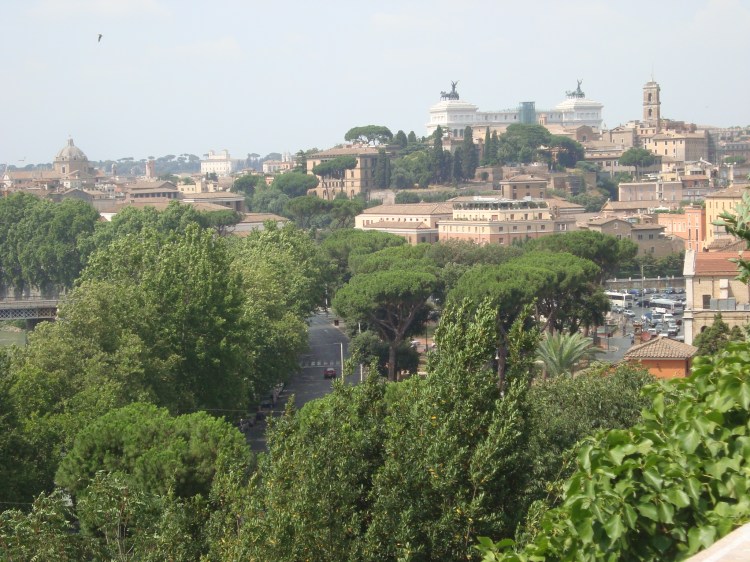
In late 1995 we moved to Rome, initially for 3 years but we ended up staying for 16. Tanya moved full time with us, but in January 1996 Shaun went back to continue his degree at UCT. This section is about our time in Rome and the parts of Italy we were able to explore, starting with first impressions and ending with some of our revisits after we moved back to South Africa.
It was hard to leave behind family, in particular Katherine and her son Luke, just over a year old, and Gregg, but we knew they would be able to visit us sooner or later. In the meantime we had to start adjusting to new beginnings.
ROMAN BEGINNINGS
This is not a tale of antiquity but the story of a “newly acceptable” South African family experiencing living in Europe for the first time.
FIRST IMPRESSIONS – November 1995
Early one Monday morning towards the end of November, we landed at Rome’s Leonardo da Vinci airport. It was still dark when we landed but clear, with the promise of a bright, sunny day to come. We waited expectantly around the baggage carousel for our luggage to appear. Finally it ground into action, but only for a few minutes, during which time no luggage appeared. This happened several more times before the bags began to roll down the chute onto the conveyer belt, only to be tipped off at the corners and left lying forlornly in heaps until claimed by their owners or restored to the uncertain flow by some kindly passenger still waiting for his bags. Have we left Africa, we wonder? Is this familiar and comforting, this sign of inefficiency, or is it simply the disregard of an over indulged society? We leave the airport, laughing about Italy being more Third World than the Third World.
The first few days were bright and cheerful, which was just as well as the battle with Italian beauracracy was only just beginning. Before you can open a bank account in Italy you need a “Codice fiscale” which basically tells the government that you are living in Italy and they can expect you to pay tax at some stage. This is apparently a fairly difficult process and was fortunately taken care of by the daughter of a friend of someone who works where my husband was employed. This matter of being able to get things done by a friend of a friend or relative, sometimes for a small consideration, is commonplace in Italy and perhaps gives some insight into how a conducive climate for greater corruption could have arisen. Before we arrived in Rome, we were aware of the “Mani Pulite” or Operation Clean Hands investigations which have dominated the Italian press in the last few years. It is easy to sit on the outside and be horrified at the extent to which “tangente” or bribes are part of the Italian way of life, but the lack of a leadership able to stay in power for more than a few months and the overabundance of petty, unenforceable laws which have been on the statute books for hundreds, if not thousands, of years are but two of the problems facing Italy today. An example of one of the more absurd laws was brought to my attention by my Italian teacher who, when teaching me how to ask for things in shops, reminded me that I must on no account leave the shop without a receipt for my purchases or I could be arrested! Ridiculous, of course. But, several weeks later, I began to see why such a law had been attempted when I realized that the receipts I received did not always reflect the full value of the purchase I had made or service that had been received.
But back to the bank. Having obtained the essential “codice fiscale” and eventually opened appropriate accounts, involving signing reams of pages covered in fine print Italian which most Italians don’t understand either , because the formal and legal forms of the Italian language are so out-dated that ordinary people cannot read them, it was time to actually do a normal transaction, such as depositing or withdrawing money. Our ATM cards were going to take a week or more to be ready so there was nothing for it but to take a number and wait. This may sound odd but is just what you do in Italian banks. Italians are so averse to queuing for anything that they go to the most ridiculous lengths to avoid it, which usually results in whatever you want to do taking three times as long as it would have, had you patiently queued. On entering the bank, you go to a little machine that generates numbers. You take the next number and consult the electronic board overhead. On this particular day the number I drew was number 92 but the number displayed on the board was number 67. This meant that 34 people had visited the bank and taken numbers before me. But where were they all? The bank appeared relatively quiet. Suddenly an electronic tone sounded and number 68 was read out. In a scramble from outside, number 68 came rushing up to the teller. A few minutes later the gong sounded again: number 69. Silence. Repeat: number 69. Still no scrambled response. Number 69 had better things to do. Pause. Gong again: number 70. Same procedure. Oh, well, I thought, perhaps with all these unclaimed numbers it won’t be long before 92 is called. Unfortunately, I didn’t realize that the next “living” customer had problems which involved the teller in several interminable trips to the nether regions of the bank, after which he had to take a smoke break, poor thing! BBy the end of the first week in Rome, the weather had broken and the rest of December passed in a blur of rain and depression. To arrive in a strange city just before Christmas, especially when it means having two winters in succession as it did for us coming from the southern hemisphere, is probably not a good idea. Friends and family are far away and you have not had time to make new friends, and those who might be future friends have already made plans with their friends. But we bought a small turkey, or “tachinella”, just for the four of us and made our tearful phone calls to loved ones in South Africa.
We determined not to stay at home for New Year and, after nearly giving up in despair, we found a party rather larger than we had expected. We originally set out too early in the evening for any action to have started, except for the increasing loudness of firecrackers thrown from balconies to alarm the casual passerby. Although it was a Saturday evening and shops are usually open till 8, practically every thing was closed and shuttered. So we took ourselves home again for coffee and some more of what Italians call Christmas cake, which is heavily preserved, vanilla flavoured brioche called “panettone”. We set out again at about 10 pm, parked close to the Circo Massimo and began to walk towards the “Centro Storico” looking for whatever action was going. By this time the noise from firecrackers going off all over the city was a constant background roar. We did not have far to go before we realized that there was a definite direction to the gradually increasing stream of people converging on the city. As we continued this stream became a river and then a huge flood which dammed up into a solid crush in the Piazza del Popolo. Without knowing what was happening ahead, we followed the example of many other festivity seekers and bought a bottle of Spumante with 4 plastic mugs from one of the opportunistic vendors lining the streets leading to the Piazza and continued to push our way through the crowds. By now we could discern the sound of music as well as the deafening roar of fireworks. The music emanating from a huge stage on the eastern side of the Piazza was typical Italian popular music, that mixture of mush and sentiment expressed with tuneful enthusiasm which Italians of all ages seem to love. We finally realized that we had stumbled on the televised “Concert for Sarajevo”, something we thought we had abandoned on our TV screen for the local manifestations of a Roman New Year. However, as this WAS the local fare for this year, we were definitely where it was all at. You can’t remain depressed and detached in a throng like that, which was mainly Italian but also had a fair sprinkling of “stranieri” like ourselves, and who were energetically and enthusiastically enjoying the moment. At midnight the most spectacular fireworks display I have ever seen erupted from the Pincio Hill, temporarily overshadowing the amateur attempts in and around the Piazza, which were becoming increasingly more abandoned and dangerous. Antonello Venditti serenaded us with his latest Italian hit “Ogni volta” (Every time) and the entire crowd, young and old, echoed every word. It is easy to be disparaging about Italian pop but it does seem to act as a linking factor; it joins the generations where other pop cultures separate. On that evening it not only brought together Italians of all generations but embraced the entire many cultured crowd, both in Italy and Sarajevo. We had begun our first year in Rome.

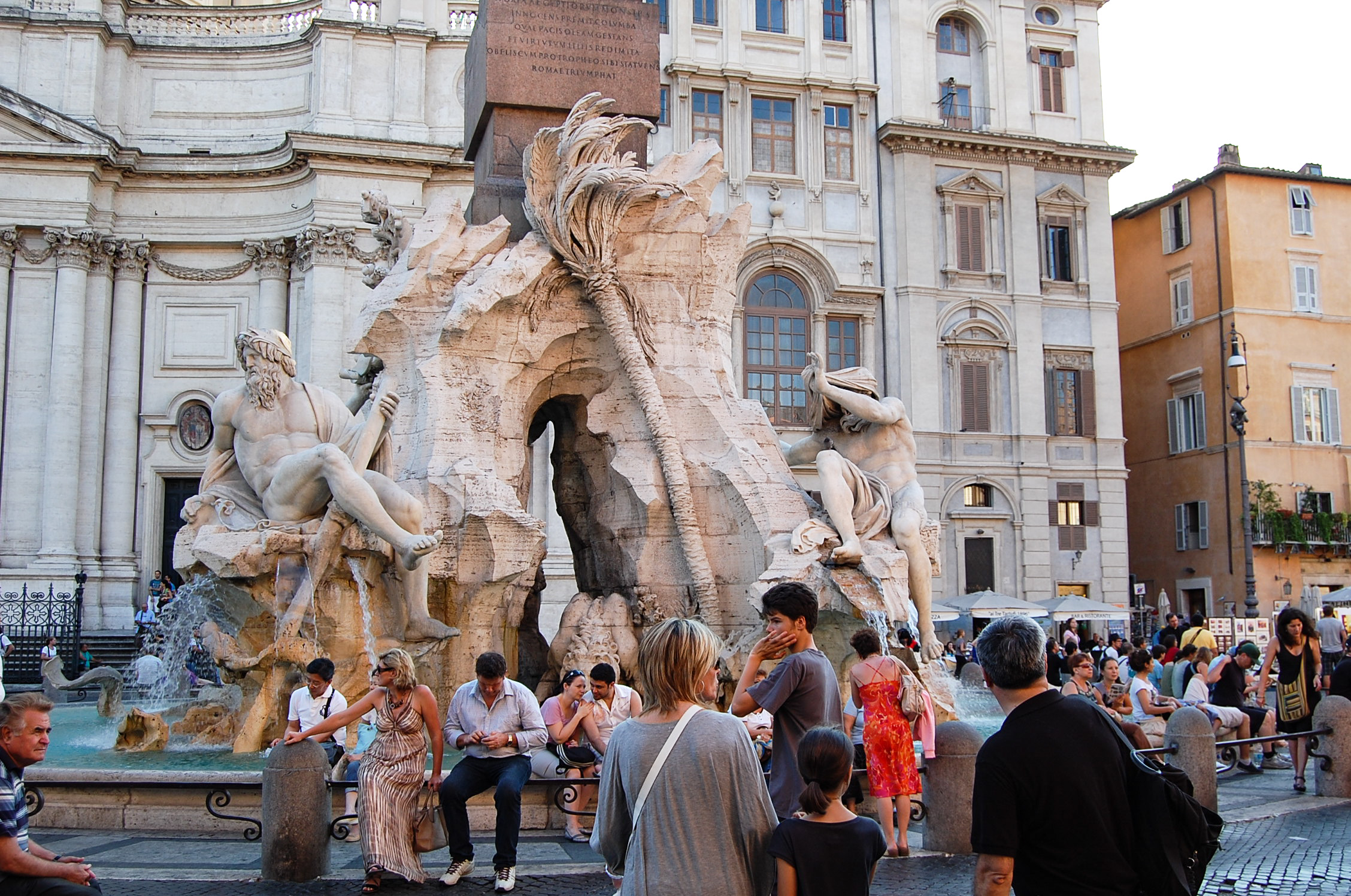
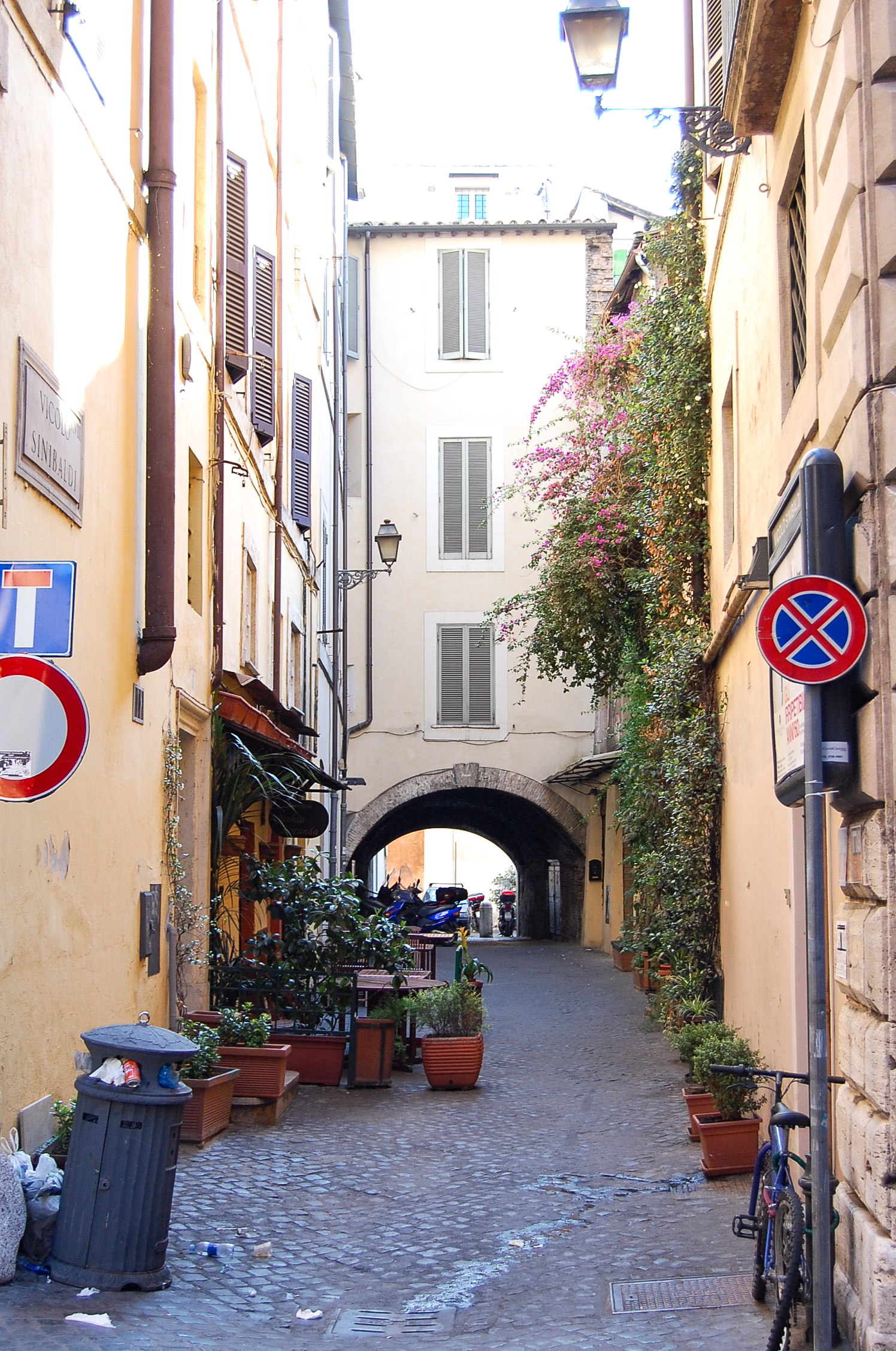
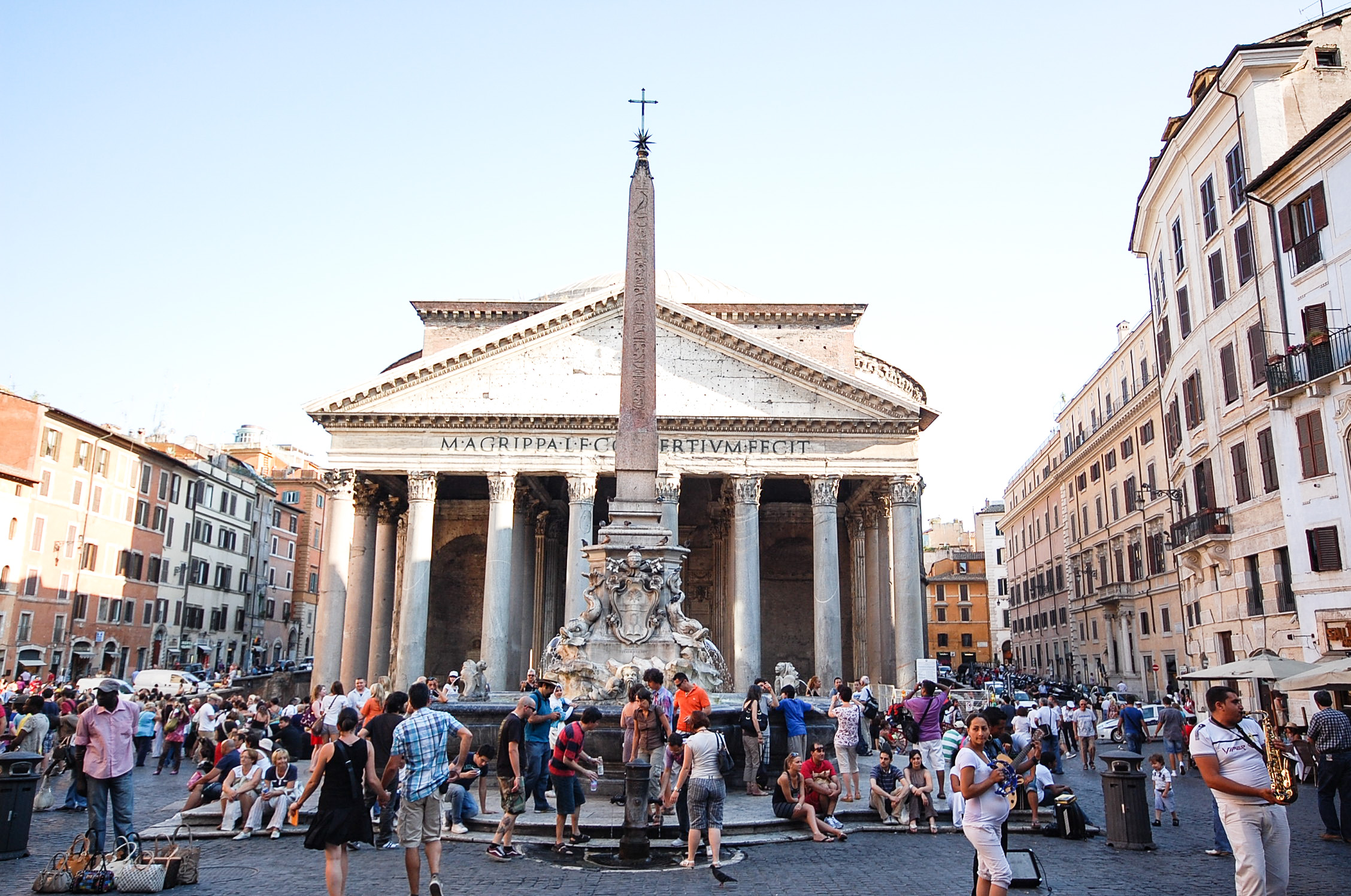
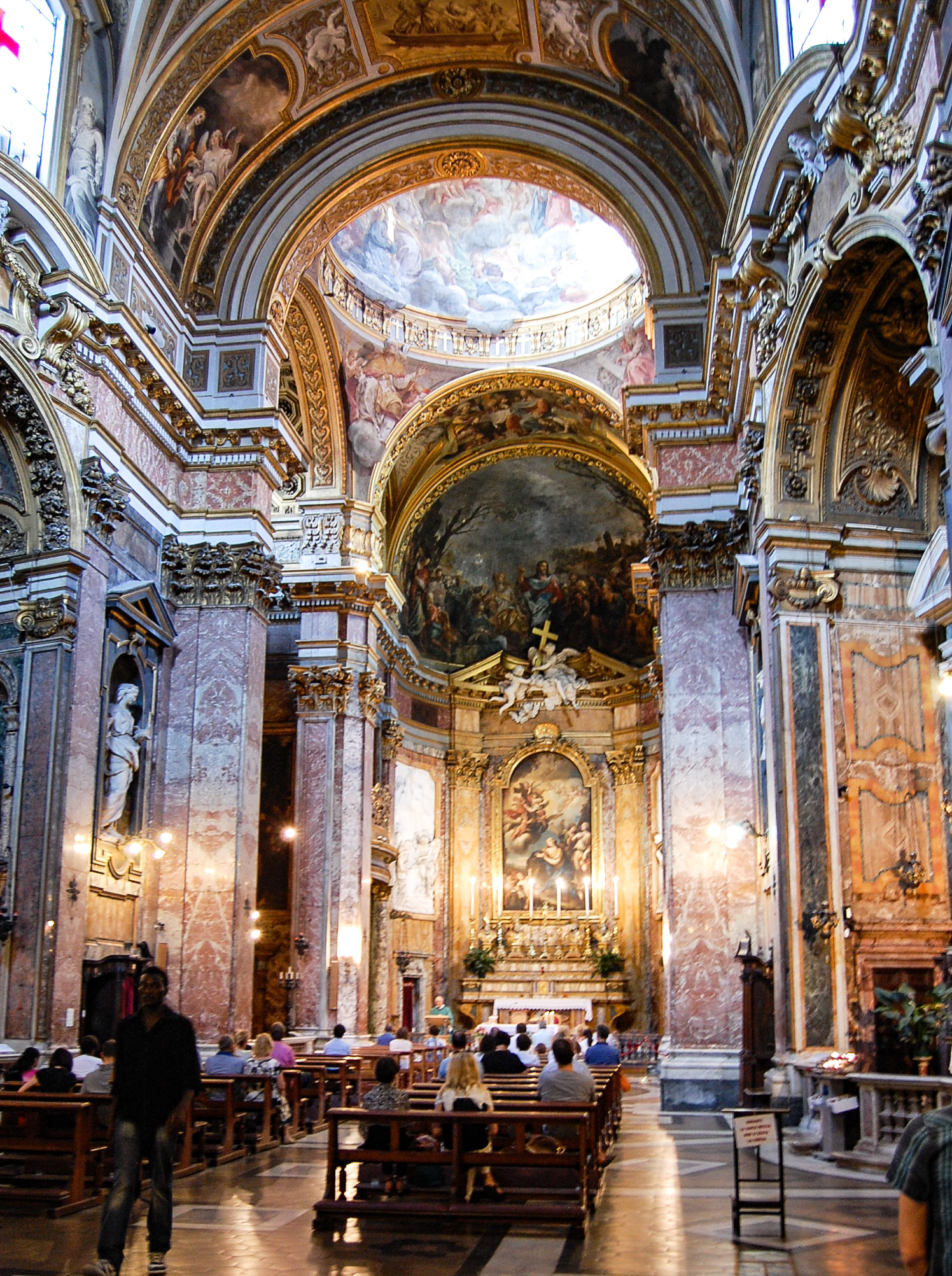

One of my earliest trips out of Rome was with a group of wives from the FAO to the Villa Lante about 50 km north of Rome.
THE GARDEN
A visit to the Villa Lante
The Garden of Eden, Paradise, Arcadia – these ideals of “garden” were those which inspired the construction of the Italian gardens of the Renaissance. It was a place in which to come closer to nature without having to face the dangers that lie hidden in untamed surroundings, a place in which to contemplate one’s position in the universality of things in the safety of a controlled environment. It was representative of the sophisticated culture of the Italian “rinascamente”, the new birth. For those more familiar with English culture and the famous gardens of England, it should be remembered that English gardens, at that time, were far more contrived and “useful”. They were still firmly walled to shut out uncontrolled nature, then cultivated to produce the herbs essential for the apothecary or the vegetables for the table. Later, in the 18th century, the fashionable English gardens were expanded into parklike areas, which were at first formal and geometric, relying on symmetry to please the eye. In the second half of the 18th century these gardens were given a “natural” style, which was almost as contrived in it’s use of asymmetry. Later still, the “picturesque” style attempted to bring into these English gardens a sense of the wilderness and to create a more romantic vision, and it is only then that the influence of Italian Renaissance gardens can be seen.
Three essential elements make up the Italian garden – they are stone, water and evergreen trees and shrubs. Colour produced by massed flowers is not part of a Mediterranean garden, as it is in English or French gardens in the wetter and more northerly parts of Europe. The timing here is different. Spring is usually much earlier and March and April are the months of abundant and prolific growth. By mid June the rain has gone and the heat begins to sap the landscape, turning the fresh greens of spring to brown, except that of the evergreens which can withstand the lack of summer rain and abundance of heat as well as the winter cold. The Italian garden is often set on a hillslope, using the natural landscape to good advantage to create the appearance of unspoiled nature. Another difference between the Italian garden and those further north is the breakdown of the garden wall. The garden was a space to be lived in, a space in which to meditate, a space between building and the wilderness. But the wilderness itself was not to be excluded, only the dangers it held were to be eliminated. The English landscape garden was not conceived as a space in which to live, but was sometimes almost a public space where one walked or picnicked and showed oneself off to one’s social peers. It was only later, with the advent of the “picturesque’ garden, that privacy became important and the influence of the Italian garden became apparent. The construction of the building in the garden was also important. A loggia was used to bridge the indoor space and the outdoor space, between the dark, cool interior and the hot, sun-drenched exterior. It was roofed but open to the garden through archways; it allowed light but not too much light. The loggia was decorated with frescoes which also contributed to the emergence into light. Within the garden itself other structures might be built where one could sit and contemplate man’s place in nature. The Renaissance was a time when science and knowledge had not yet diverged from faith. Mind and spirit were still linked and mystery was acknowledged.
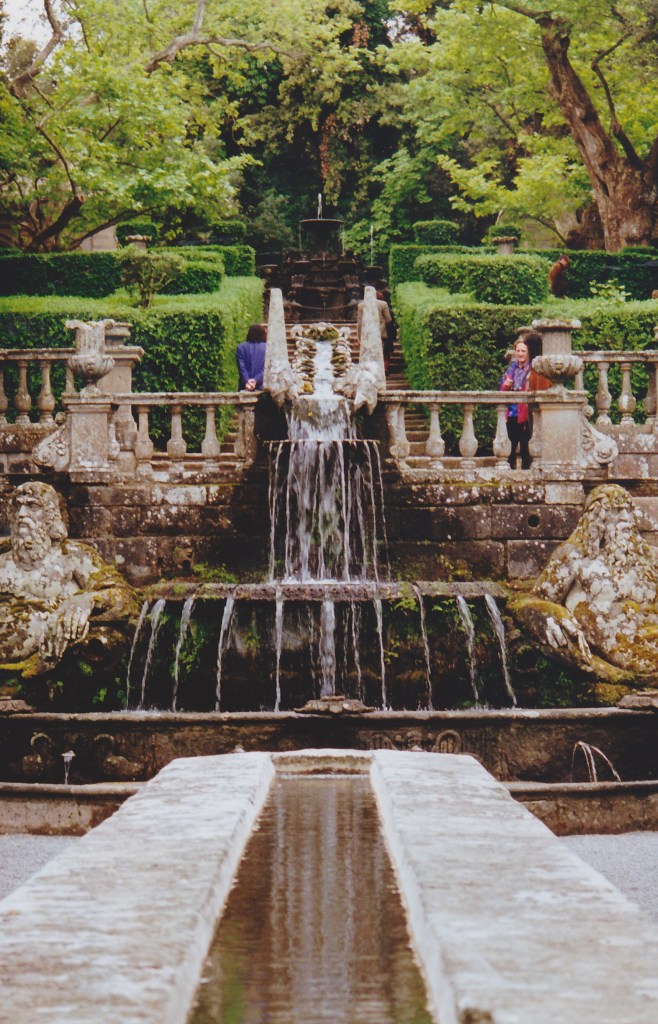
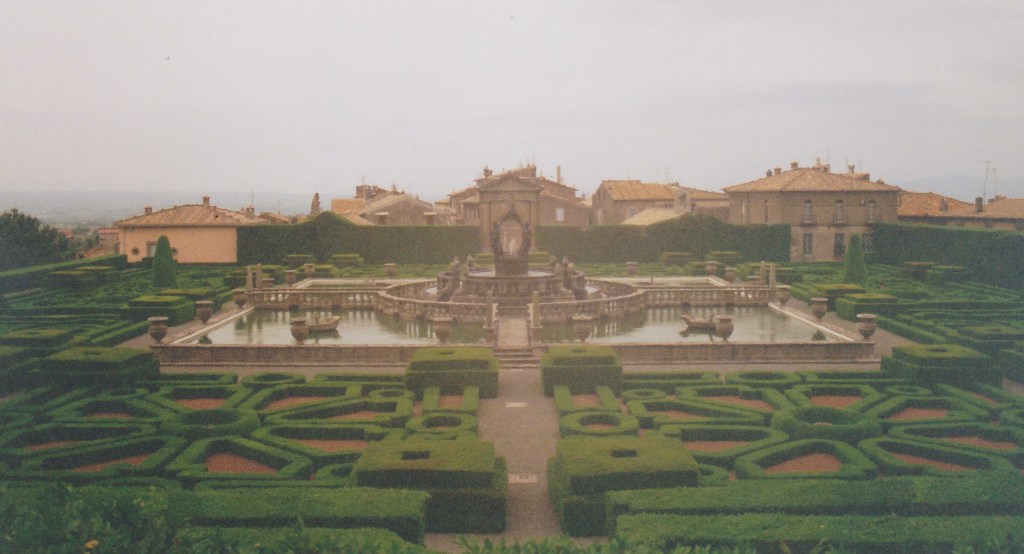
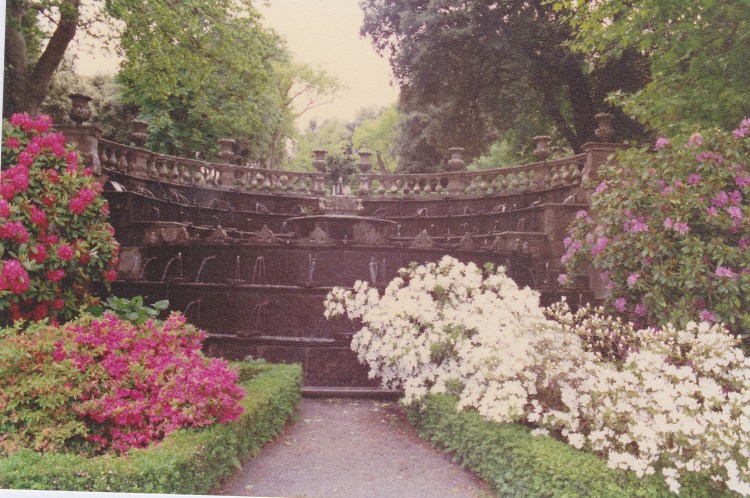
The Villa Lante has all these elements restored and preserved for us in the 20th century, so that we too can return to that high point in Italian, if not world, culture. The gate now used as the only entrance is close to one of the small casinos built originally for Cardinal Gambara in the 16th century. The garden itself was almost certainly designed by Vignola and work probably stared around 1566. The space on the village side of this entrance is occupied by a formal garden of box hedges in the centre of which is a large, circular fountain. The trimmed hedges represent the abstract elements, circles, squares, straight lines, only understood by man. The loggia of the casino contains frescoes of other gardens nearby with the coats-of arms of the patrons, while the coat-of-arms of Cardinal Gambara with it’s shrimp motif is used extensively on the ceiling along with the “grotesque”, the bizarre, mythical figures of the centaur, the chimaera and others. Entering the garden on this level is perhaps not the best way of interpreting it, as you are brought straight in to most sophisticated , man-made part of the garden. It is, possibly, a more logical approach to begin at the highest point in the garden and descend gradually through the several levels as the water does. In doing this, the progression is from least to most sophisticated. At the top of the slope the garden begins with a waterfall which almost looks as if it emerges naturally from a stream beyond the confines of the garden. It is overgrown with ferns and the roots of trees growing above form curtains in the cascades of water. It represents the wilderness or bosco but also forms a barrier beyond which the human inhabitants of the garden would not go, except when protected and equipped for hunting. The water is channeled into the Fountain of the dolphins, also representing wild creatures. From there it emerges from the claws of the Gambara coat-of-arms to descend the incredible Water Chain. Below the Water Chain is the Fountain of the River Gods, two gigantic carved figures representing the River Tiber (Rome) and the River Arno (Florence). Again the water is channeled through the gambera’s claws before splashing through two stone basins into the large pool below. The garden has now progressed into the time of gods and heroes, and it is here also that Cardinal Gambara could entertain a multitude of guests at a huge stone dining room table with water rushing through a channel in the middle of the table in which wine could be cooled. It is likely that the wine was not the only thing to be cooled by the splashing, cascading water, reflecting the bright sunlight and giving movement, sound and energy to the tranquil garden. Water jokes, in the form of unexpected liquid eruptions, were an integral part of gardens at that time. The water rushes onwards, down to the next level, through the Fountain of Candles, or Lights. A series of stone terraces are gently filled by many jets of water, looking like small candles with flames flickering in the breeze. Is this the light of civilization? In spring this fountain is almost hidden amongst the beautiful flowering shrubs , azaleas, rhododendrons, camellias. From this level, you can look down to the last terrace of the garden, with it’s regimented box hedges, introducing the abstract shapes of circles and squares, all encircling the final fountain, the Fountain of Moors. The Moors hold aloft the Montalto star and are set on an island in the centre of a large, still pool, in which barques set off on fresh voyages of discovery. This represents the ultimate state of man’s development, where he has control and influence.
On the hillside, alongside the fountains and channels of water, terraces and staircases have been created, loggias and grottoes constructed, and trees and shrubs planted creating an harmonious environment in which to meditate and “cultivate the soul”. Two rustic loggias were constructed on either side of the Fountain of the Deluge at the top of the slope, using darker and rougher stone to emphasize the link to the wilderness. Closer to the casinos two grottoes were built, using roughly shaped calcareous deposits to line the walls of the grottoes, making them dark and mysterious. The grotto was meant to represent the darker side of life and to acknowledge that mystery still existed, but were also used for water jokes, giving guests an unexpected shiver of disquiet.
Just outside the present day entrance is the fountain of Pegasus, a prancing horse in a pool surrounded by water-nymphs. This also represents a link between the formal part of the garden and, the bosco. From here paths meander off into the surrounding woods, giving a foretaste of the idea of a park, as opposed to land used only for hunting. It is also another indication of the use made of pagan origins in bringing together the past and the present to come to a greater understanding of human nature.
In this interaction of art and nature, the garden becomes much more than a place of pleasure, but it is not something instantly created and , like the trees growing in the garden, takes time absorb it’s magic.

