Before I start, though, I need to apologise for what may seem extremely colonial and even biased in parts. This because it was like that and it was wrong. My only excuse is that I was very young then and did not know any better. Things are different now but for many the hurt and injustice remain. We cannot rewrite history but the shame is that much history was NOT written and acknowledged when it should have been.
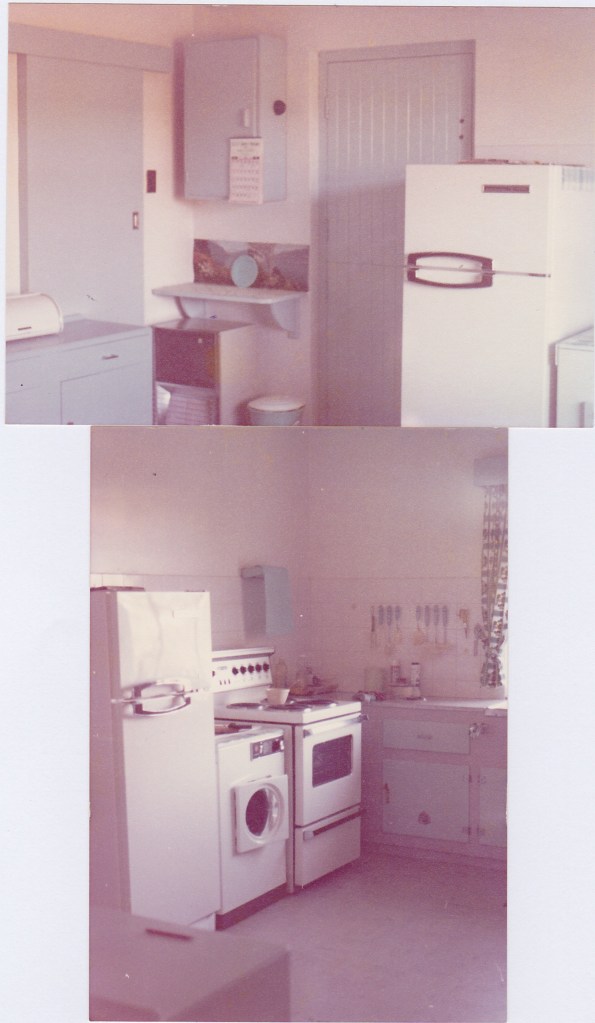
The first part finished with pictures of the new house that was built at 20 Constitution Street in 1957. My mother was very proud of the house at 20 Constitution Street, firstly because my father had designed it but also because she took great care in decorating it to her taste after so many years of living in rented houses.
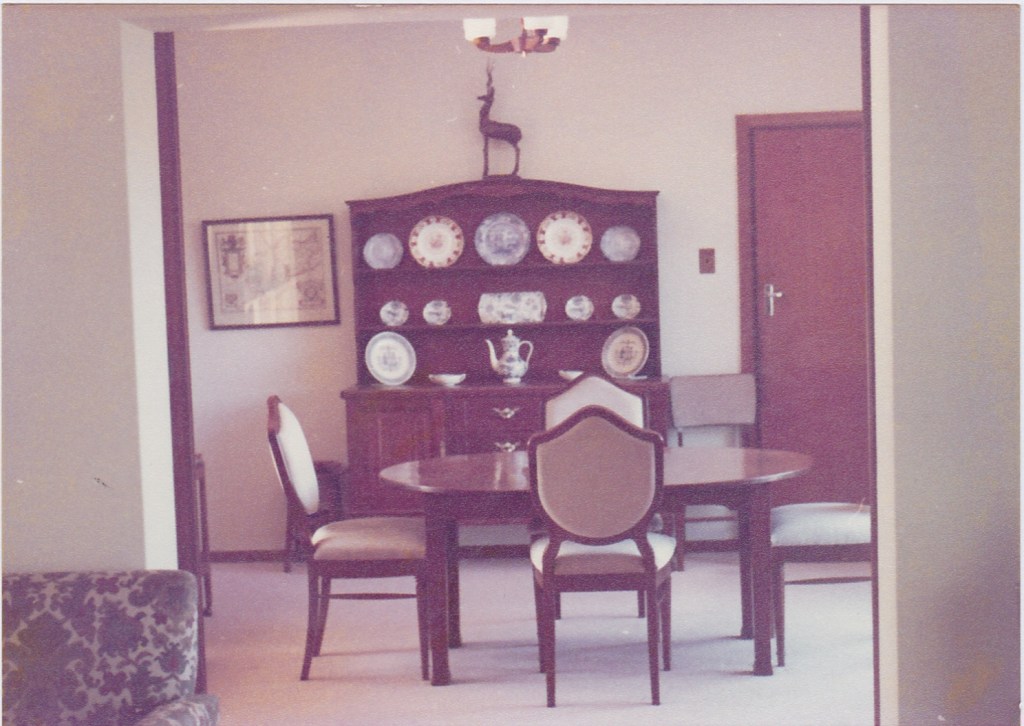
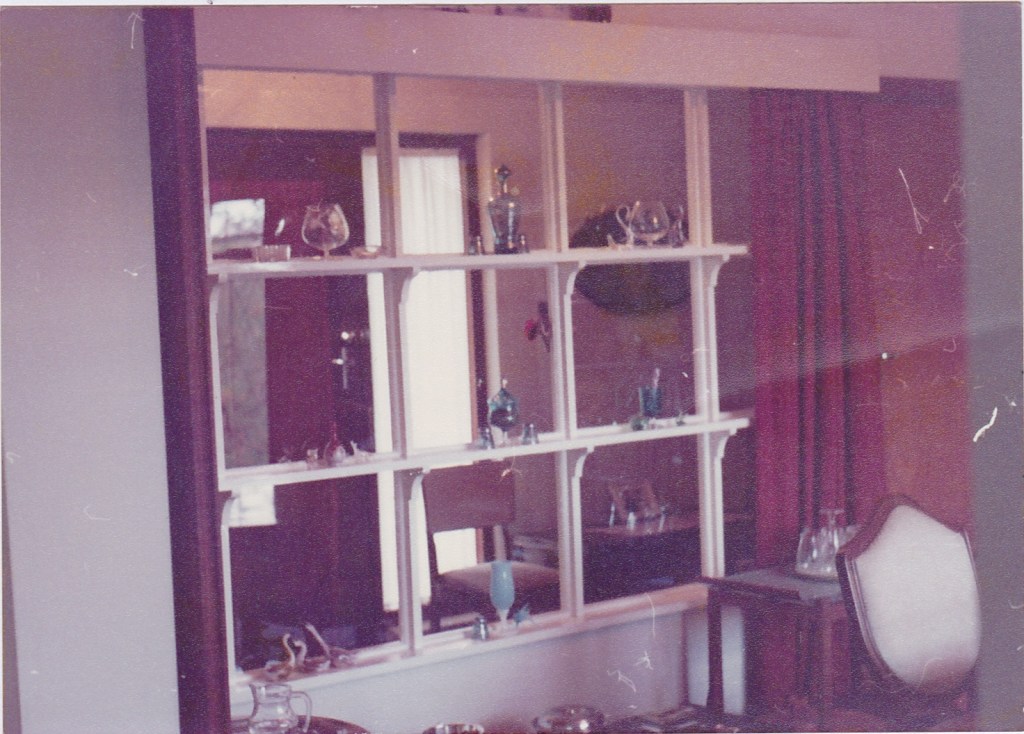
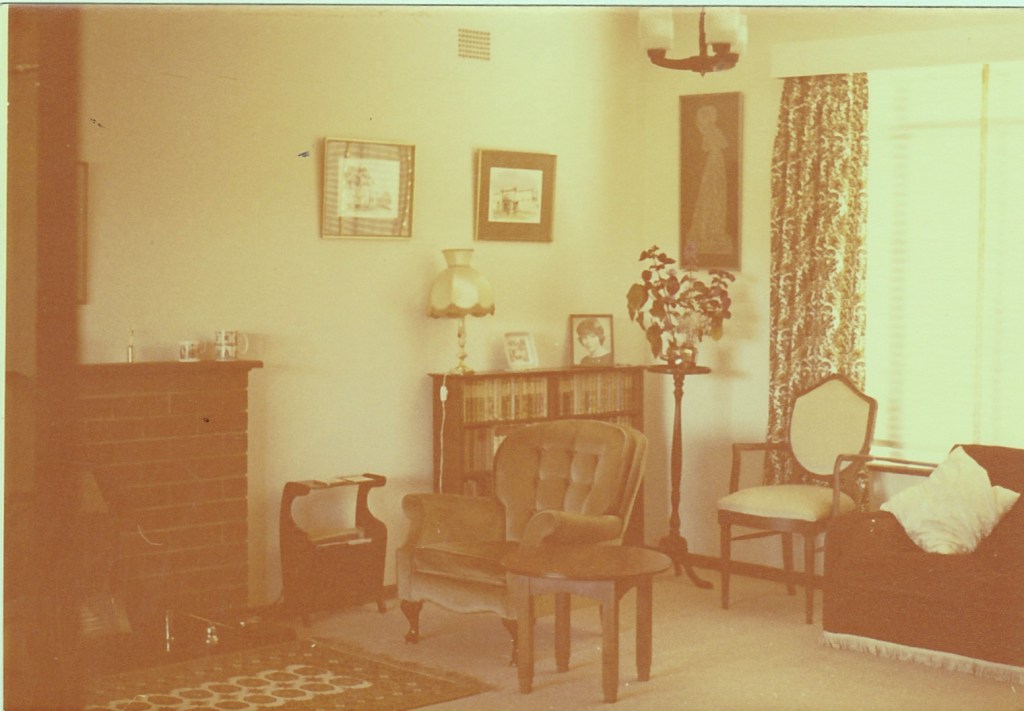
The dining room was quite unusual as it had a partially glassed wall between the dining room and the entrance hall and it was here that my mother displayed mementoes from their travels and other objet d’arte that my parents had collected. The lounge was a large comfortable room with room for a piano and plenty of bookcases.
After concentrating on the time sequence of events in the first part, I want to back track a bit and remember the way things were in those days as well as things that happened at various different times, not necessarily in a particular sequence.
Although I do remember having friends in England before we moved to South Africa, unfortunately I have not kept up with any of them. But fairly early on in our time in Grahamstown I made friends with people that I kept in contact with, at least on and off, for many years. As an only child, friends were very important to me and I have many happy memories of times spent with them. Mostly they were school friends or the offspring of my parents friends, but Grahamstown was such a small place in those days that it was easy to get to know lots of people.
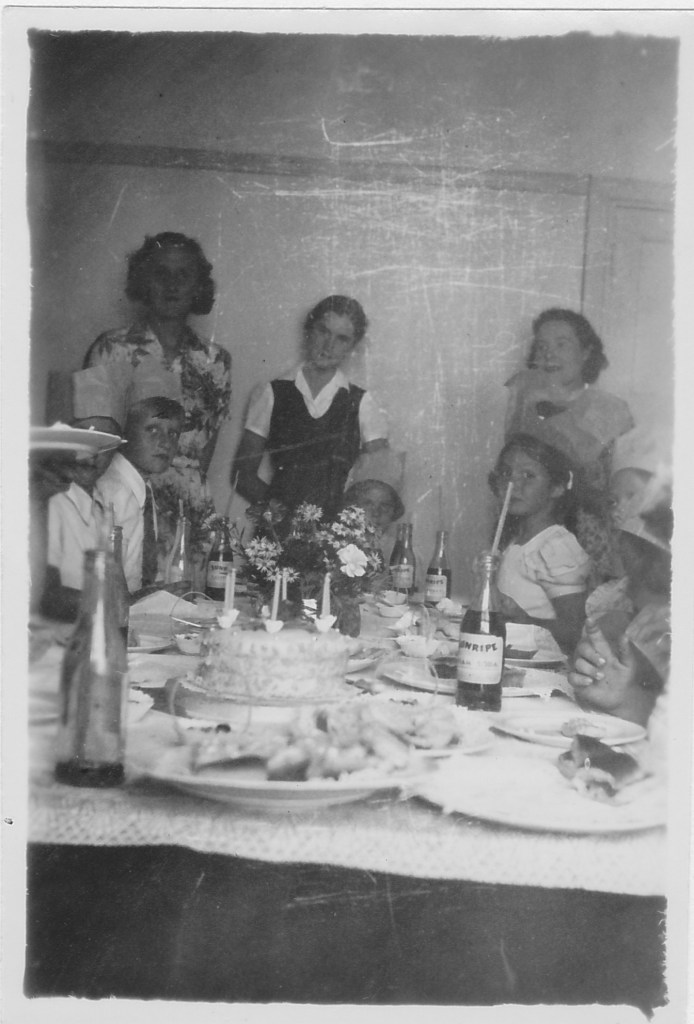
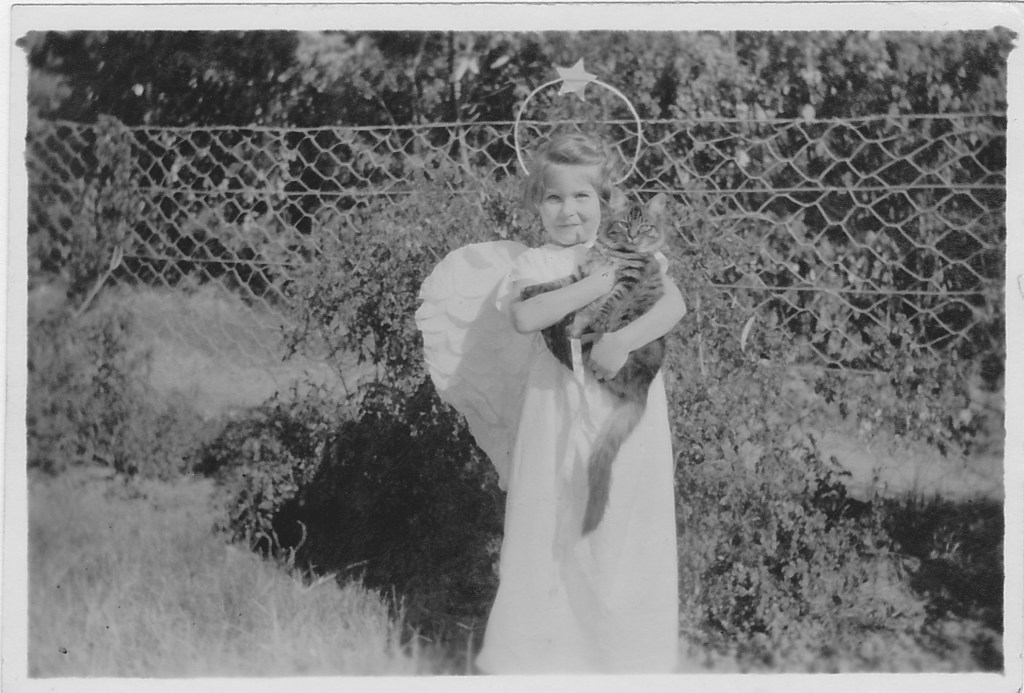
My sixth birthday party was held at the Prince Alfred Street house and I was given a beautiful tabby cat by the son of one of my father’s colleagues. I was absolutely thrilled and called the cat Peter after the boy who had given him to me. In retrospect I suspect this was engineered by the cat’s owner, who worked in the Botany Department with my father and was probably trying to find homes for a litter of kittens!
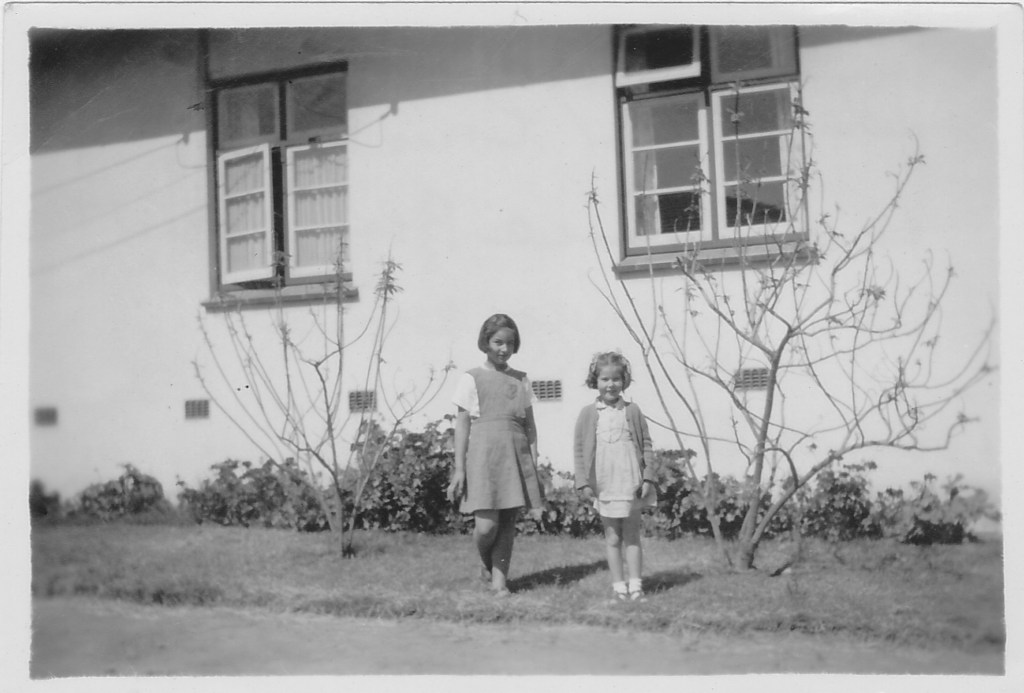
Among the earliest of my parents’ friends was the Rennie family. Prof Rennie was Professor of Geography at the time and the family were very kind to us in our early days in Grahamstown, inviting us to spend Christmas with them and making us feel welcomed in Grahamstown in general.
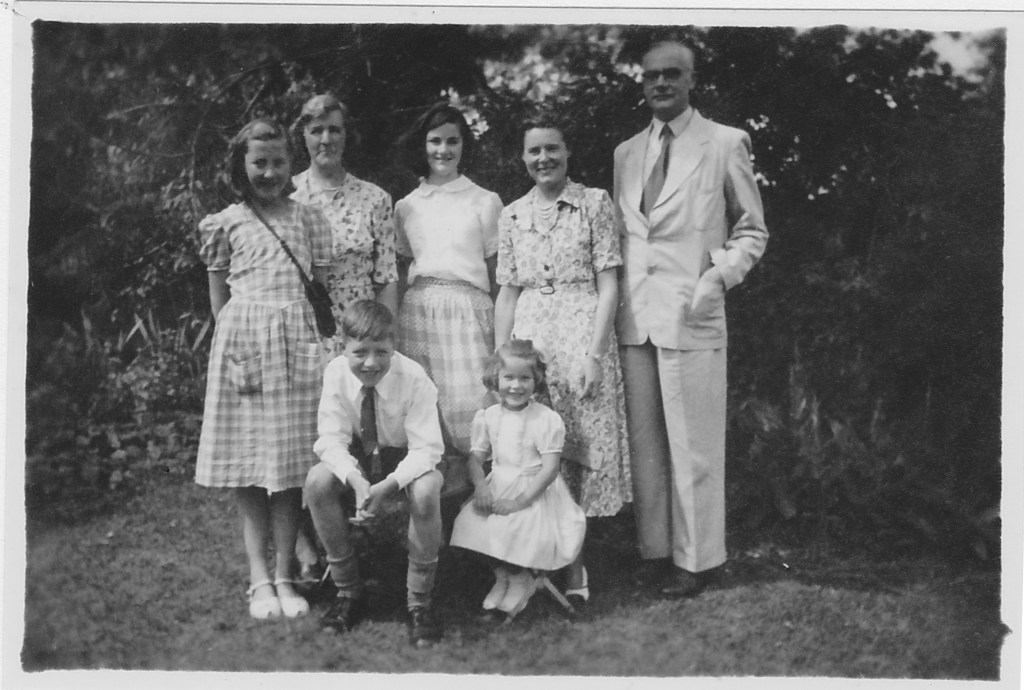
In my first year at Oatlands School, the other Hilary was in my class. She was the youngest daughter of friends of my parents, the Whitnalls. We both had wire-haired fox terriers as pets – Robby was definitely the more adventurous of the two, while Nobbie was much calmer and more staid! When I went to DSG Junior School, the other Hilary came too. We were known as Hilary one and Hilary two, but now I can’t remember which was which. After a few years the Whitnall family moved to Somerset West but we still kept in contact and I can remember one summer holiday when I travelled to Cape Town with my parents and we stayed with the Whitnalls for a couple of nights. At the time they lived on the African Explosives farm just outside Somerset West. The hay had just been cut and piled into rough haystacks, providing a wonderful hiding place to escape to and chat about our different schools and lives. One of the days we went to the beach at the Strand and floated around on big inner tubes from car tires. This was not a good thing as the currents at the Strand were unpredictable and we soon drifted out of our depth. Fortunately Hilary’s older brother Geoff was on hand to tow us back to safety.
My most long-lasting friendship started when I met Clare at DSG Junior School. Clare was the youngest daughter of the McKerron family and they were also friends of my parents. The McKerrons lived, at one point, in a house called Dingwall, set in a beautiful large garden. I remember they had two dogs – Zumo, a large black beast, who was actually quite friendly and Bitsie, a fluffy but energetic Pekinese. Clare and I were both horse-mad at one stage and the big garden became site of an African Grand National. We made Becher’s Brook, the Canal Turn, Valentine’s Brook and the Water jump come alive in a Grahamstown garden. We still remind each other to watch the Grand National each year!
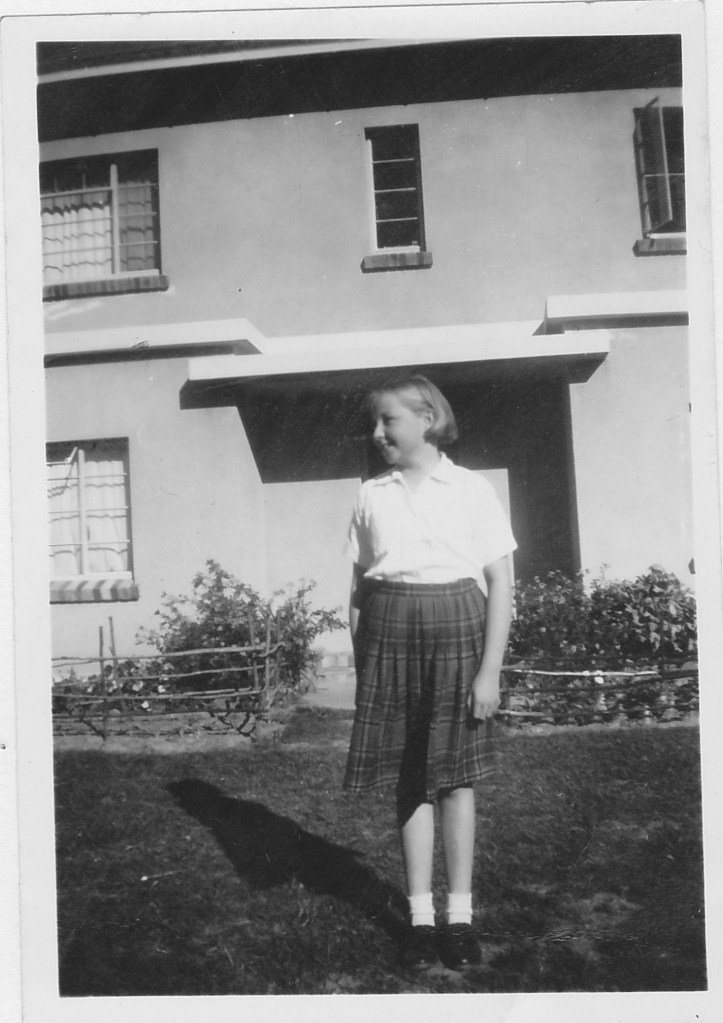
I don’t remember when I met Petrea Moscardi, who with Clare and myself became a close group of friends. Petrea always seemed quite exotic, having been born in India and practically brought up by her Ayah until the family moved to Grahamstown.
Grahamstown was a small place with only a couple of shopping streets so excursions to the bright lights of Port Elizabeth were quite frequent. Sometimes either Clare or Petrea would come with me and my parents to PE and sometimes I would be invited to go with their families. We often stayed at either the Grand Hotel or the Hotel Edward, both adjacent to the Donkin Reserve. I remember explorations in the long, carpeted passages and stairs of the hotel and driving along the main street at night to see the neon lights. We really were country bumpkins! The highlight was a visit to Happy Valley, with its fairy lights and meandering pathways under the willow trees, and colourful displays of scenes from story books.
Another attraction of visiting Port Elizabeth was the habour and being able to go aboard whichever Union Castle ship was berthed in the harbour at the time. My father actually disliked this activity and claimed just being on board an even stationary ship made him seasick!
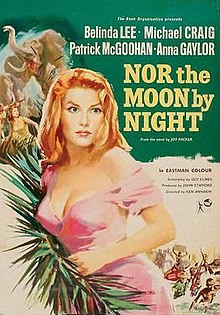
Port Elizabeth also meant the latest movies were available, as it was often months before they were shown in Grahamstown. I have always been an avid reader, probably also the result of being an only child and encouraged by my parents to occupy myself in this way. In the 1950s Joy Packer was a very popular author with her stories set in South Africa. One which had really appealed to me was “Nor the Moon by Night”, which was set in the Kruger National Park, and I was thrilled when it was made into a film, starring Belinda Lee and Patrick McGoohan. I don’t remember how many times I watched it on that visit to Port Elizabeth but it was definitely more than once. I never did go to Kruger as a child but ever since my first visit in the 1980s, I recall the excitement of watching that film.
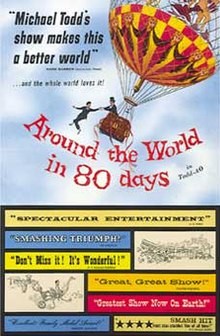
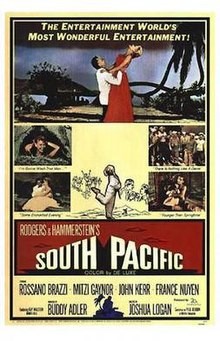
Both “Round the World in 80 Days, the Todd-AO version with David Niven and Shirley McClaine, and “South Pacific” with Mitzi Gaynor, Rossano Brazzi and John Kerr were films that I saw in PE and have remained favourites over the years.
Port Elizabeth was not the only place we went to the cinema or bioscope. Grahamstown actually had two cinemas – His Majesty’s on Hill Street and the Odeon on Beaufort street. Screenings were only twice a day. An afternoon matinee and an evening session. Before each session started God save the Queen was sung, right up until the time South Africa became a Republic. Age limits for films were much stricter in those days and my parents rigidly abided by them. Some of my friends were allowed to get away with seeing films that were deemed suitable for an older age group but not me! “Lady and the Tramp”, though, was definitely allowed, as was “The King and I”, with Deborah Kerr and Yul Brynner, although that would likely be censored in a different way today. Films about the Second World War were very popular in the 1950s and early 1960s and these played to full houses in Grahamstown – films like “The Bridge on the River Kwai” and “Reach for the Sky” and “Ice Cold in Alex”. British comedies were popular too, such as “the Doctor in the House” films with Dirk Bogarde and the “Carry On” films were beginning to appear around that time too. My mother’s favourite has always been Doris Day, so “Pillow Talk” and “Please don’t eat the Daisies” were allowed. As only one title was shown at a time, it was frustrating when films like “The Fly” and The Blob” – horror movies I didn’t want to see anyway – were on and you had to wait several days before something suitable might be being shown!
Although Grahamstown was small, it had a certain dignity to it, with the Cathedral of St Michael and St George dominating the High Street and the Drostdy Arch at the other end leading to Rhodes University.
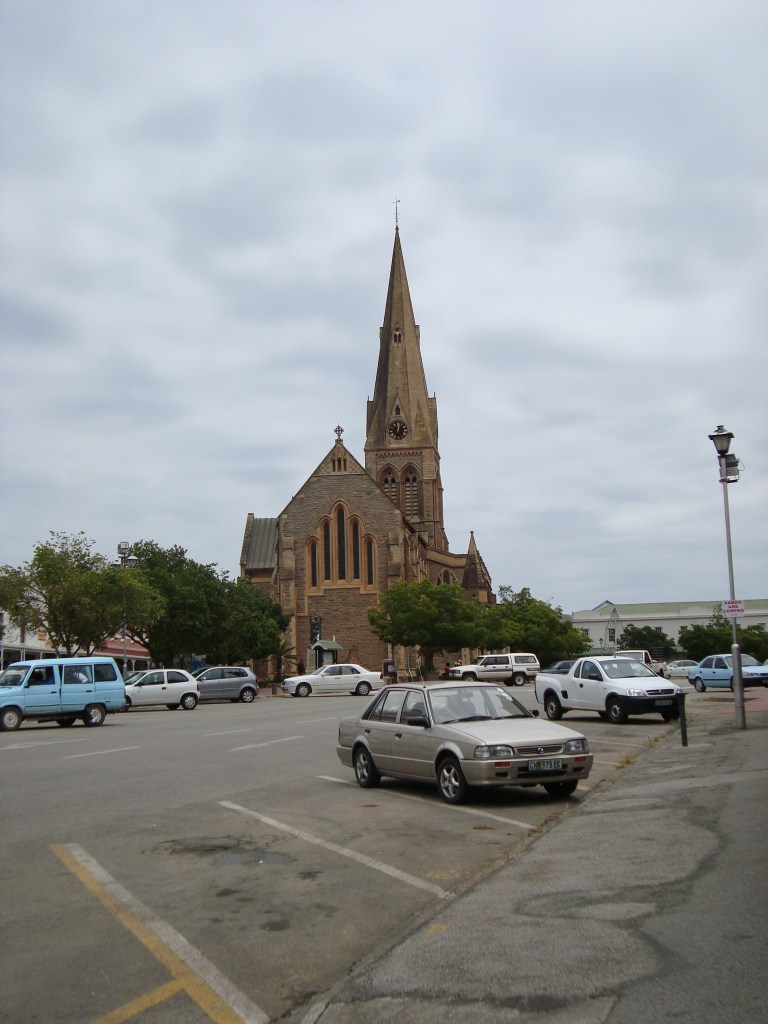
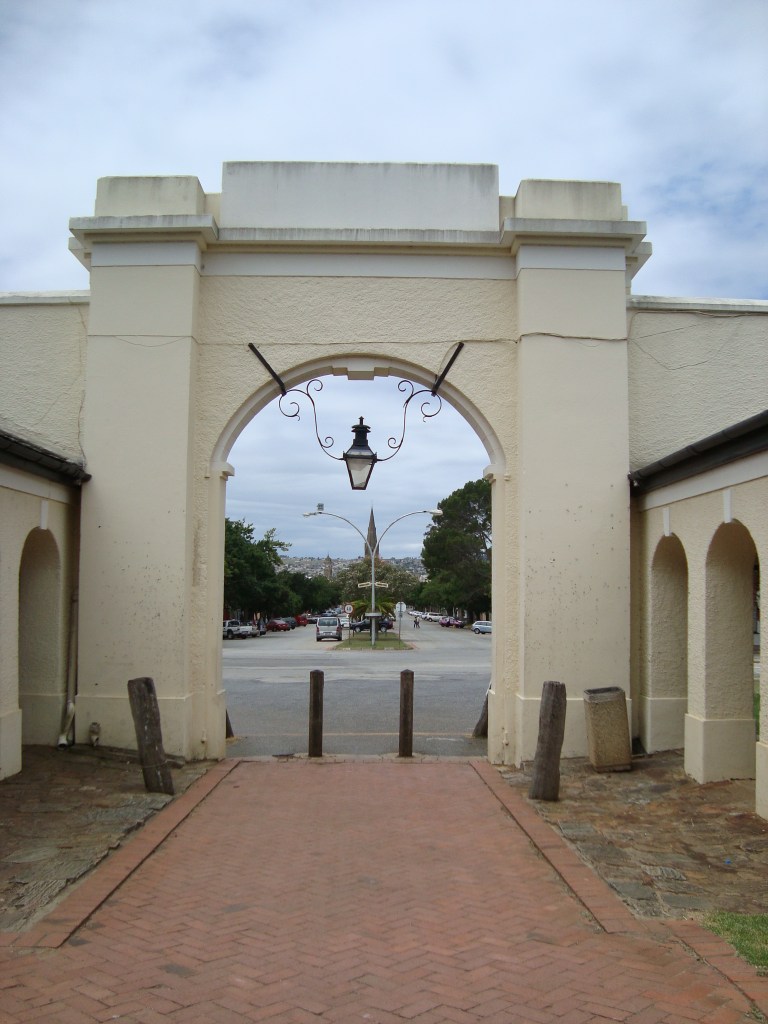
My mother took this dignity to heart and whenever she went shopping in those early 1950s days, she wore a hat and gloves. Very few of the shops remain as they were, although the last time I visited Grahamstown, Birch’s was still there, probably because it still supplies the University with academic gowns and other paraphernalia. Bay’s was the shop on the corner of High Street and Beaufort Street – it was almost a department store, but on one level. Knight’s shoe shop was further up towards the Cathedral, as was Grocott and Sherry, the bookshop. This building had been the birthplace of the Grocott’s Mail, the oldest private newspaper that still exists in South Africa. The Ramona Café was close by and it was here that my mother would go for tea on her shopping expeditions.
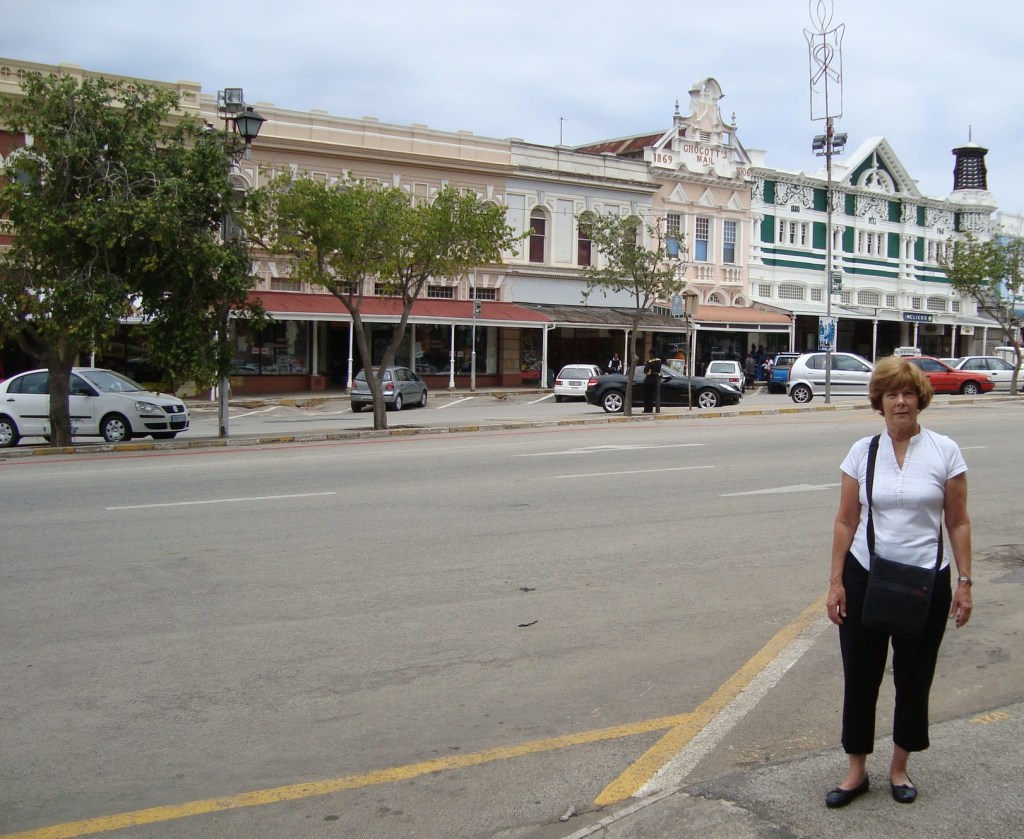
As my mother didn’t drive in those days, she would usually walk to town – not that far from Park Road or Henry Street but the Durban Street house and Constitution Street houses were quite a distance. And, of course, you couldn’t walk back carrying loads of groceries or anything else really. Also there were no supermarkets anyway! The way my mother did her grocery shopping was either to ring up Iverson’s (the shop was on Somerset Street) and place an order, which would be delivered later in the day, or to walk into the shop and stand behind the long counter to hand in the order. This was not a shop in which you could browse the shelves and pick out what you wanted – all the shelves and the goods on them were strictly the domain of the shopkeeper. So you placed your order very precisely as to what product, brand, quantity etc you wanted and hoped that the correct items would be delivered.
As I mentioned in the first part, my mother really did not like living in Grahamstown. At first I’m sure it was the strangeness of a foreign place, so far and so different from where she had grown up but it was also because she felt out-of-place among the academic wives at the University. My mother was the only member of her family to have any tertiary education. She trained as a teacher at Homerton College near Cambridge but she didn’t feel that brought her on a par with the other professors wives, so, while my father enjoyed the cut and thrust of University politics, my mother sought friends who had no connection with Rhodes. She was so nervous of embarrassing herself that she refused to join the activities of other academic wives, rather keeping to herself and the few friends she felt comfortable with. The one thing that brought her great comfort was being able to go regularly to services at the Cathedral, mostly on her own or with me in tow, as my father remained steadfastly agnostic, even though he loved church music and hymns particularly.
One place, though, that my mother loved and enjoyed many holidays there, was the Hogsback. In the 1950s this was a very small resort-like area. It is up in the Amatola Mountains, about 80 miles from Grahamstown. My father had discovered that this was an ideal area for botanical excursions and frequently took groups of students up there on field trips.
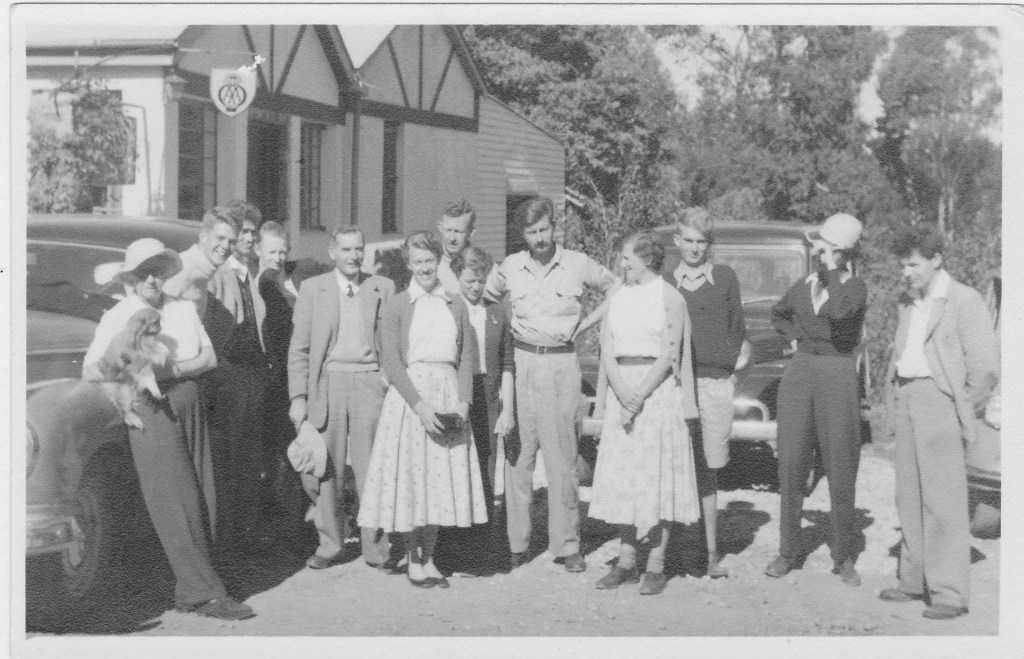
He always stayed at the Hogsback Inn and in time this became our annual retreat for the summer holiday and where we spent many Christmasses and New Years.
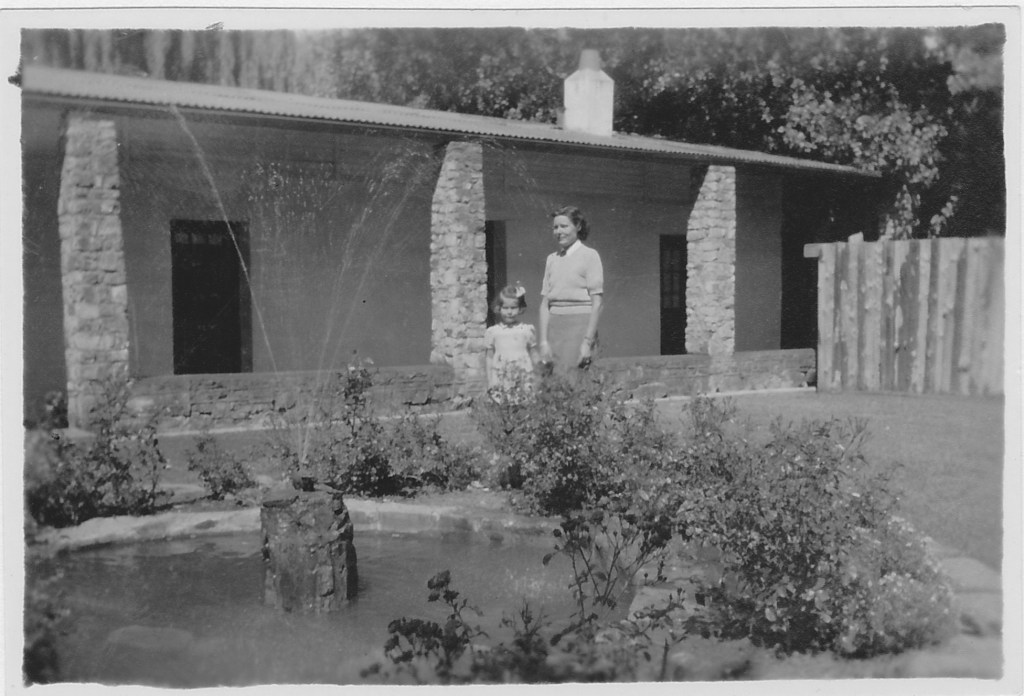
We often met the same families each year, some making the journey from Cape Town to spend Christmas at the Hogsback Inn or one of the other hotels close by – Arminel or King’s Lodge. On Christmas morning we would all assemble in the Oak Avenue for an outdoor church service before taking a walk in the surrounding forest or hiking to one of the well-known waterfalls. We would later celebrate with a wonderful Christmas dinner, heralded by the singing of N’kosi sikele Afrika, long before it became part of South Africa’s national anthem.
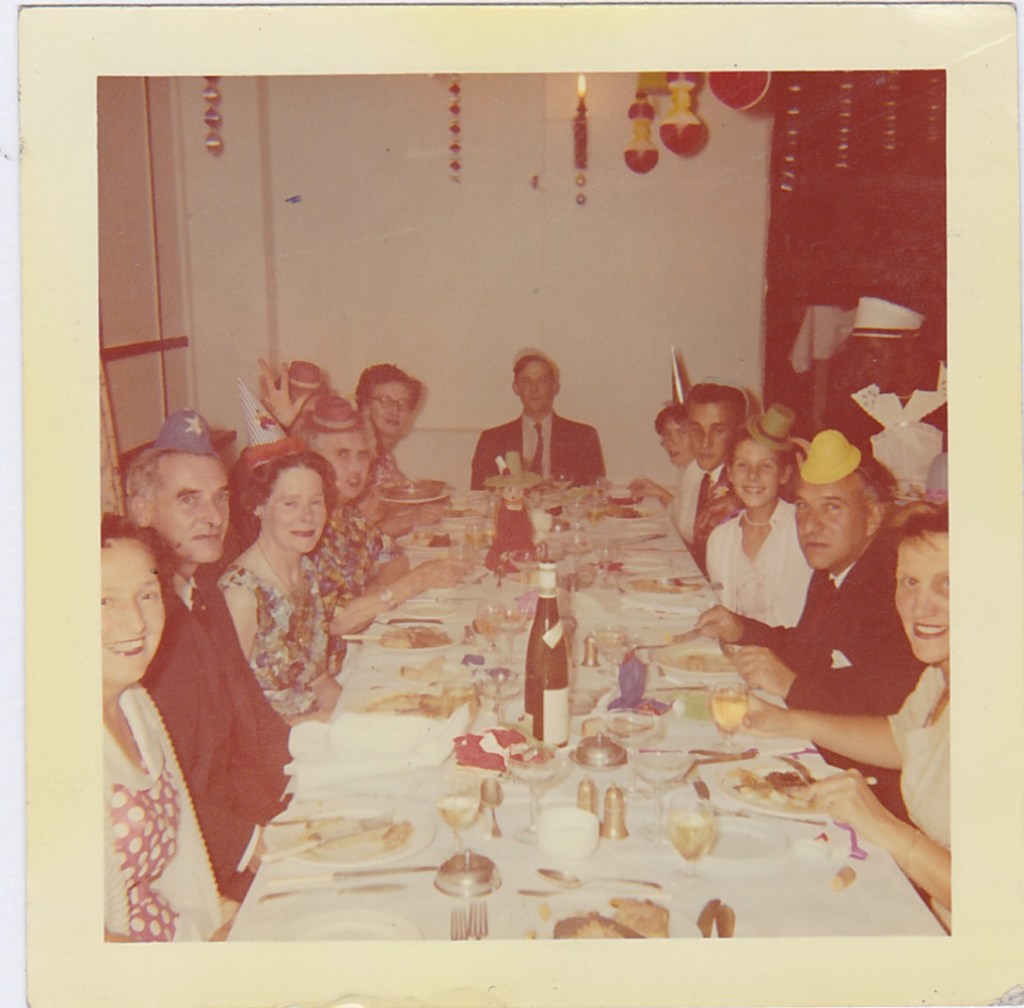
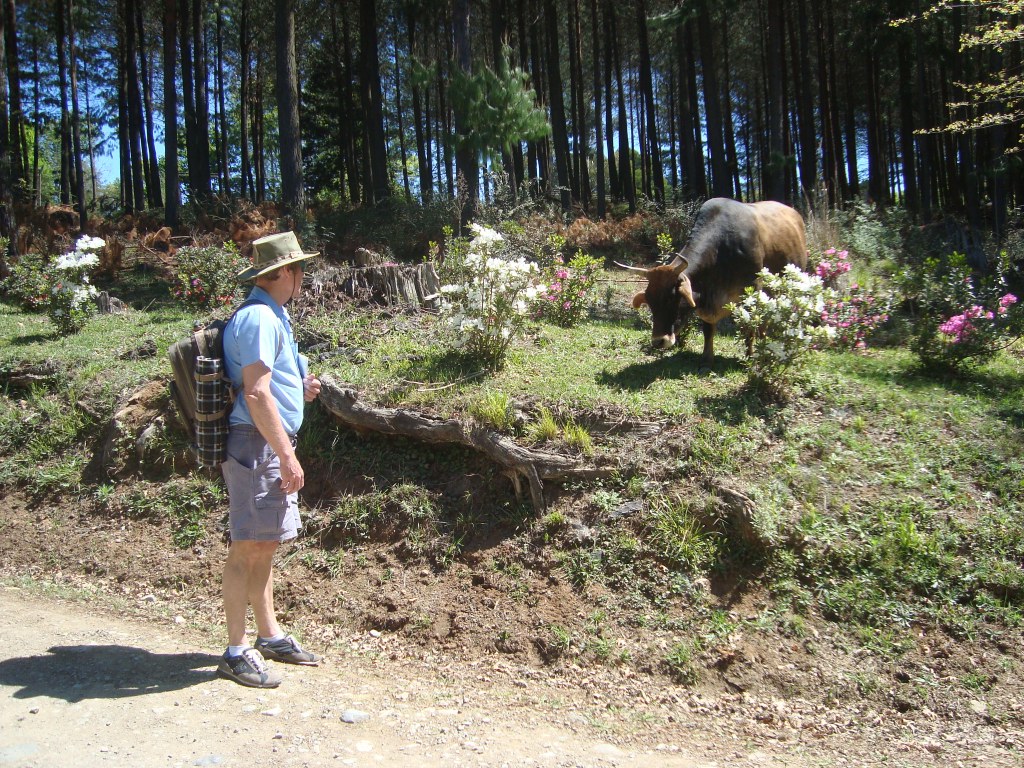
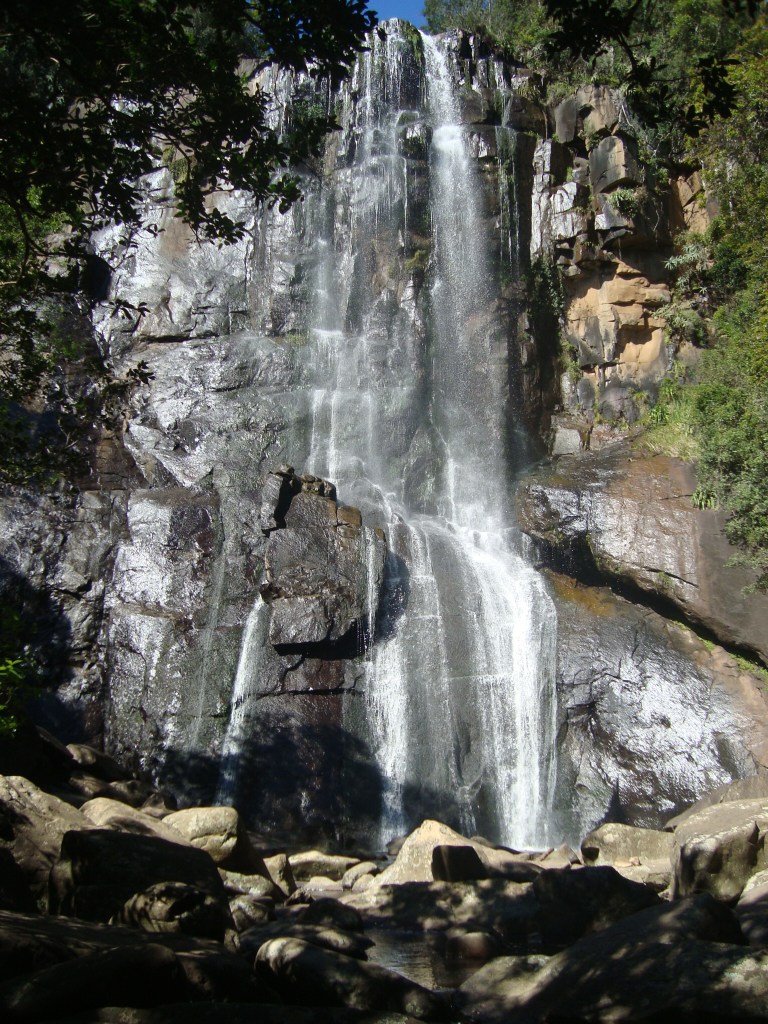
Even today the Hogsback remains a magical memory of childhood and innocence, of growing up and greater awareness, of friends I no longer know if they exist, of the sadness of departing each time and having to rejoin reality. Memories of walks in mysterious forests, to tumbling waterfalls like Swallowtail and the Madonna and Child and the long hard slog up to one of the three Hogsbacks or the top of Tor Doon; the sign on the gate which says “Beware the agapanther”, beyond which is an endless field of blue agapanthus flowers; swimming in the stone-lined pool, so dark you couldn’t see the bottom; having afternoon tea on the lawn; putting on shows in the little rondavel for parents to come and watch.
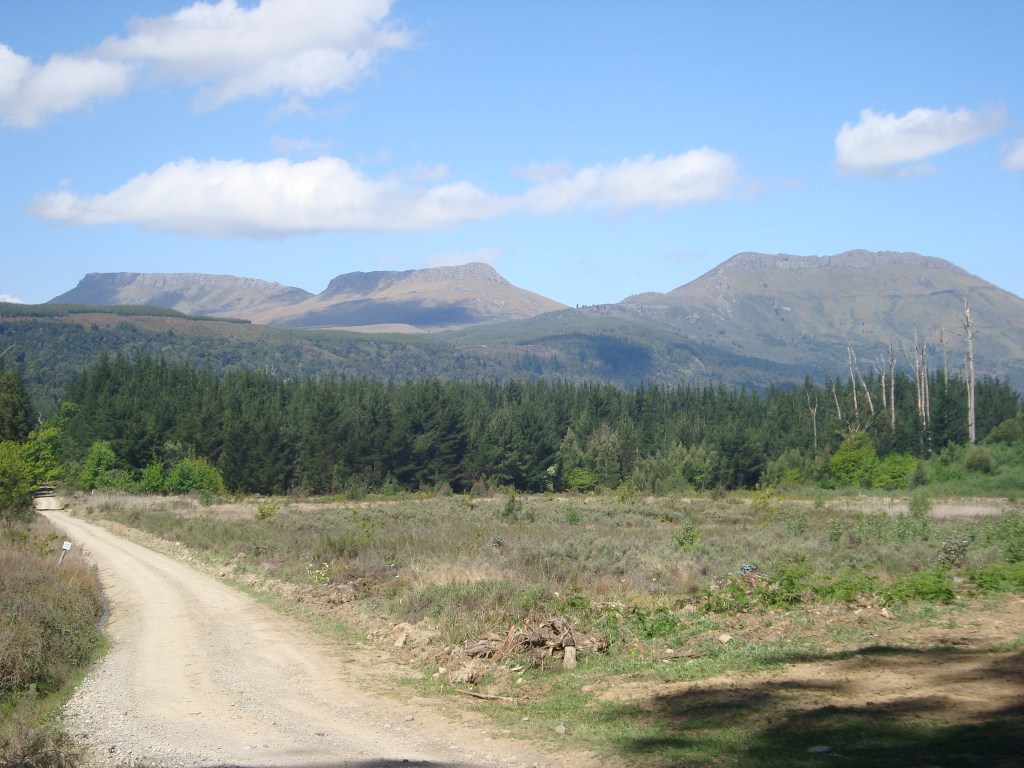
I am sad that I have no photographs that captured these special memories, though perhaps it is just as well for I would cry at the loss of joy and innocence we once had. The photos above and below were taken on a visit in 2012 when Kev and I drove up for the day from Grahamstown.
Another of our summer excursions was to travel to Cape Town, spending several days along the Garden route to get there and back. It was in the days before the toll route cut out all the passes up and down the numerous river gorges in the Tsitsikamma region, so the journey seemed to take forever. We sometimes stayed at a hotel right in the middle of the forests and I was fascinated by the possibility of seeing an elephant there. Of course we never did but there were probably several still inhabiting the area in those days. In recent years Kev and I have visited Storm’s River village and stayed at the Tsitsikamma Village Inn, which I think is the modern version of the hotel I stayed in as a child.
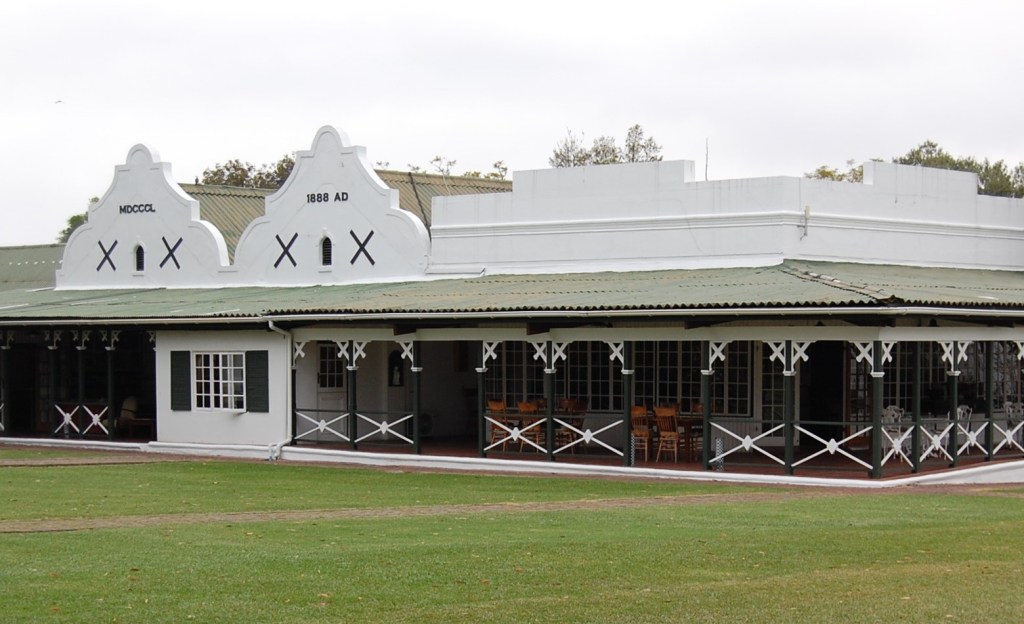
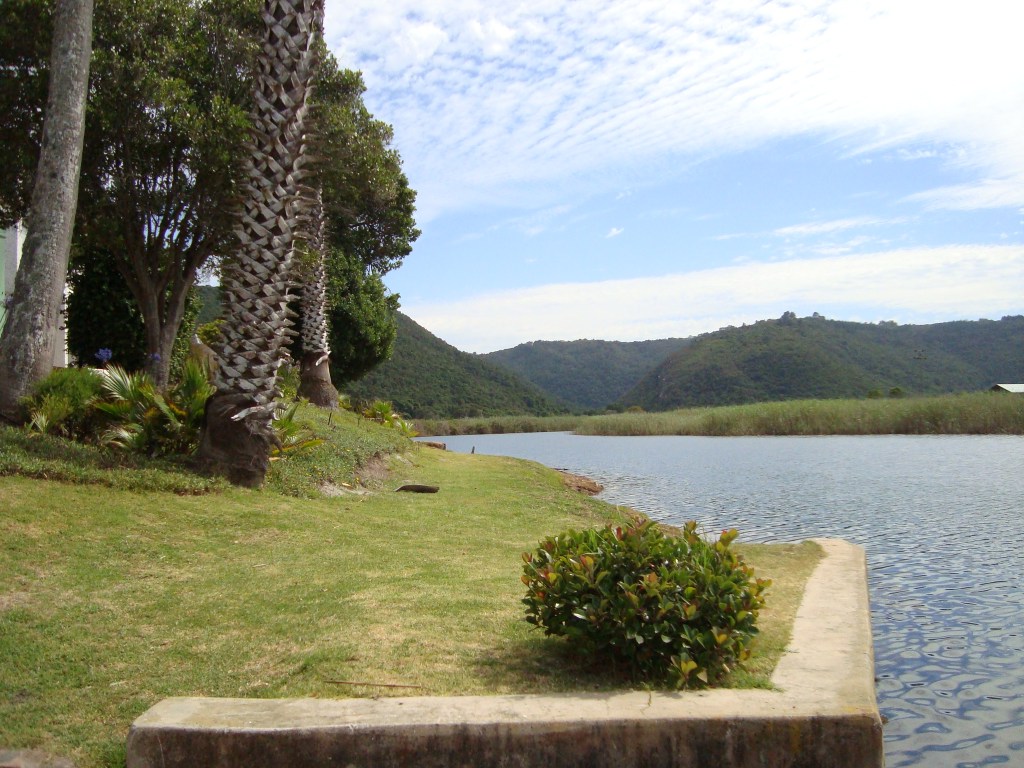
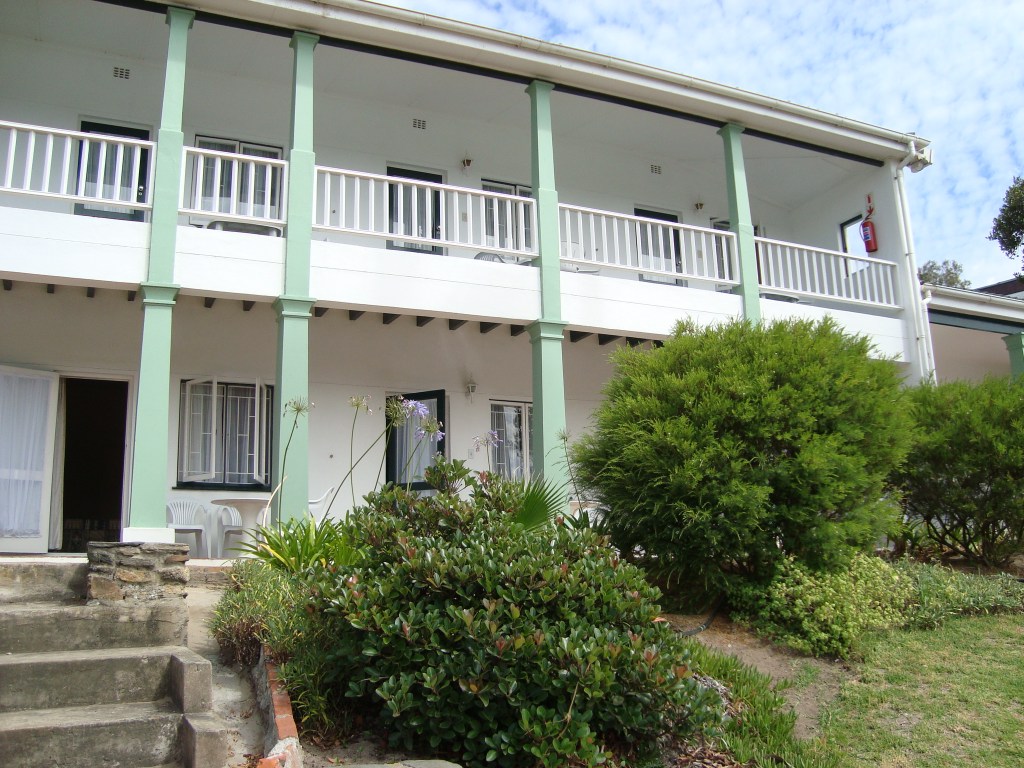
Another place my parents and I stayed at was the Faerie Knowe Hotel in the Wilderness. This beautiful hotel was (and still is) on the banks of the Touw river, which comes down from the …. Mountains and forms an estuary, sometimes open and sometimes not, at the Wilderness. Here I learned to row a boat on the wide, calm river, an activity that Kev and I undertook again many, many years later, visiting once more the memories of childhood.
One year, once we had reached Cape Town, we stayed at the Arthur’s Seat Hotel in Sea Point, but I must have been quite small then as I don’t remember much about that visit. On a later visit, we stayed in Muizenberg in the house of my father’s retired colleague, Dr Pocock, owner of Wu Sung. On that occasion we visited Groot Constantia, driving down from Rhodes Drive through the oak trees. We also drove down to Cape Point and I can still remember being amazed at the brilliant turquoise blue of the water. Cape Town made a great impression on me and when, a few years later, I read Joy Packer’s “Valley of the Vines”, I determined that one day I would live in Cape Town!
Coming back closer to Grahamstown, one excursion that was always a special treat was visiting Addo Elephant park to watch the elephants feeding on oranges. We now know it probably never should have been allowed but it certainly provided quite a spectacle for several years.
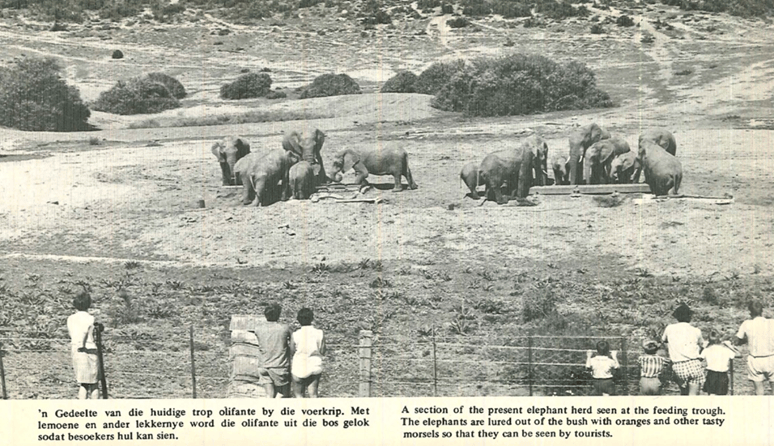
Elephants became a problem in the Sundays River valley in the late 1800s when they raided the citrus crops of local farmers. Over the years up till the mid 1920s the farmers allowed hunting of the elephants to take place to keep their farms from being damaged but eventually so few elephants were left that scientists and even the main hunter himself asked for protection for those that remained. In 1926 a bill was eventually passed which in time led to the establishment of the Addo Elephant National Park. A herd of only 16 elephants formed the basis of the Park but it was not until the early 1930s that serious attempts were made to confine the elephants and even then they had to be coerced into the area designated as they kept returning to farms to eat the much desired oranges. The ranger then in charge of the Park lured the elephants back to the area by feeding them hay and pumpkins as well as oranges and eventually the animals became habituated to the feeding sites and did not wander off as much. Another factor in being able to keep the elephants confined was the invention of the Armstrong fence – a fence finally robust enough to keep the elephants inside the reserve. In 1954 a fence was erected that kept the elephants from moving into the adjacent farmlands. For the next 25 years, although the Park had areas for other animals, the elephants were kept in only one of the camps. They were now to become a tourist attraction and stands were set up close to the fenced in an area close to where main Camp is today. At certain times the elephants were enticed out of the thick spekboom thickets into an open area where tons of oranges were poured down a chute onto the ground inside the camp. Eventually the elephants became stressed and aggressive towards each other in their desire to get to the fruit as quickly as possible and the practice was stopped in 1979.
I have gone off on a tangent and forgotten my friends, so I want to mention a few more of the special memories that friends conjure up.
The first is a sad memory as Pat Bray is no longer with us; in fact she died many years ago when she was only 21, just before she was due to get married. Pat was a border at DSG and I was a day pupil (pot) and quite often the days pots were friends with each other as the borders had friends in the hostels. But Pat was a special friend for me and she often came to spend a Saturday or Sunday with me whenever she had a leave-out. One holiday she invited me to spend a couple of weeks with her and her family on their trading station in the Transkei. It was a long and fairly rough drive from Grahamstown to somewhere passed Umtata and Libode on the way to the coast. I am not sure exactly where the trading post was and it is certainly not there now. It was an eye-opening experience into a world I did not know. The trading post was a miniature village – the old house where the Bray’s lived, the shop where everything under the sun was sold and the houses and huts of the nearby neighbours. It was quite remote from any other trading post or village but it’s unspoilt natural beauty was amazing, among the rolling, forested hills of the Transkei.
At the time (late 1950s or very early 1960s) white families owned many trading stations in the most remote parts of the Transkei. Here they provided a great social and commercial service to the surrounding population, bringing in staple goods like soap, tea, coffee, sugar, flour, tobacco and many other commodities. Once the apartheid regime became fully established, these traders were forced to sell up and by the 1970s and 80s they had all disappeared, depriving communities of much needed economic viability. Yes, it was a legacy of colonialism but taking away the traders left a vacuum that brought hardship and desolation to many communities.
For a few days during my stay the family went down to one of the many river mouths on the Transkei coast. We stayed in a very rustic shack and went fishing from the rocks every day. Every evening one of the local fisher’s would send over some fresh rock lobster for supper. It was magical to a city (yes Grahamstown is a city) child.
A happier holiday memory is that of going to stay on a holiday farm very close to Plettenberg Bay with Clare’s family and Petrea. We stayed in little thatched cottages on the farm and went to the beach in Plettenberg Bay.
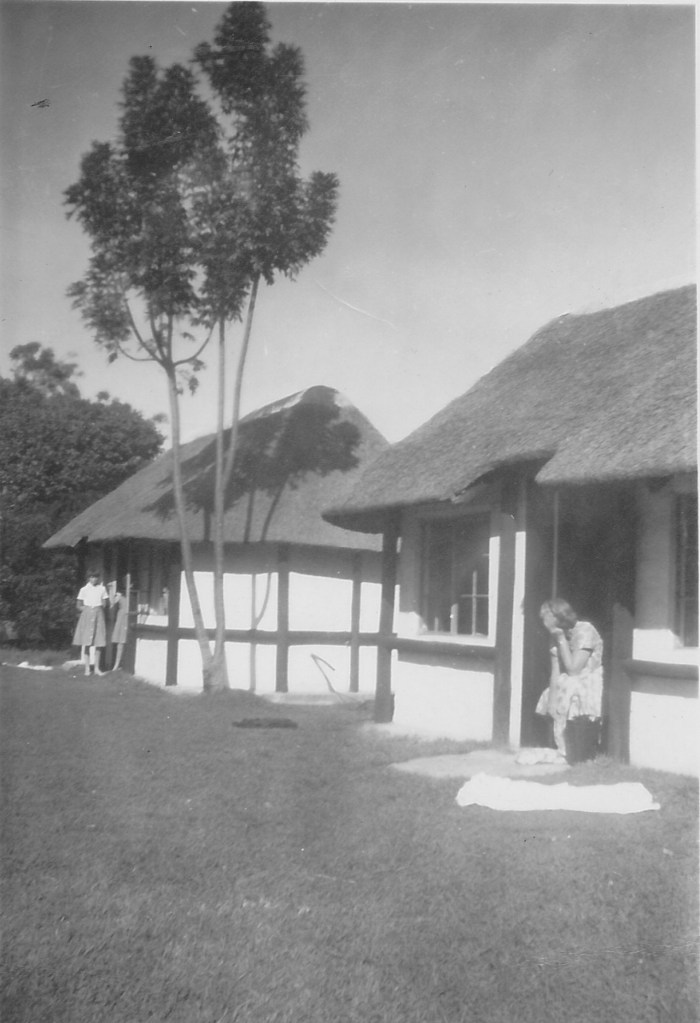
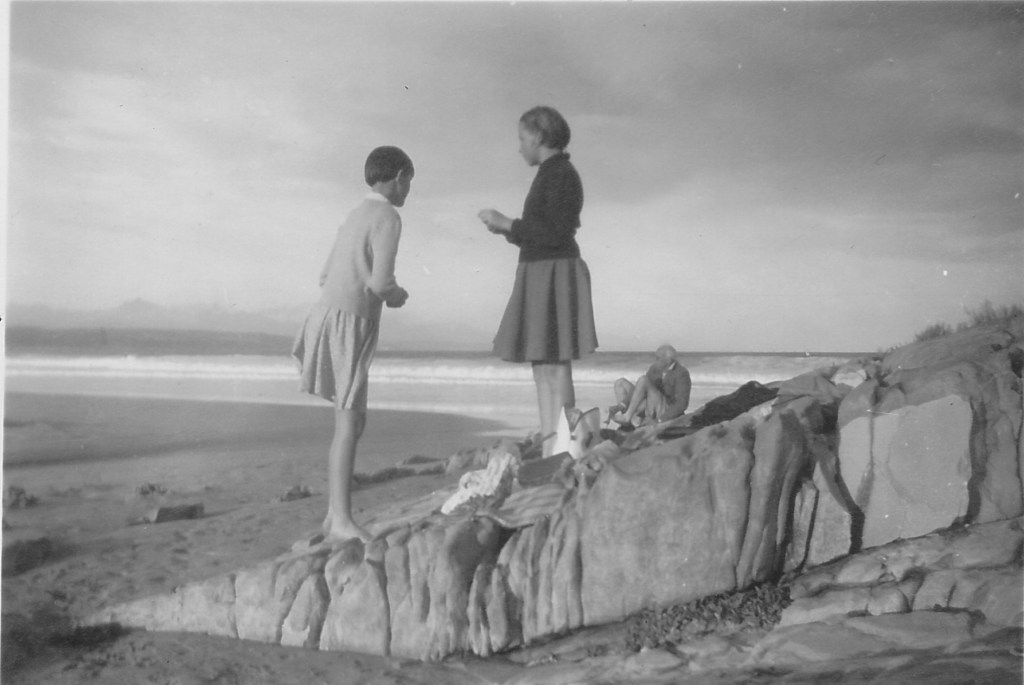
As Grahamstown is only 35 miles from the coast, visits to friends and families who had houses or cottages on rivers or in coastal towns (mainly Port Alfred or Kenton/Bushmans) were frequent. I still have photos of some of these visits with friends like Carolyn Creighton, the Whitnall family, Louise Denison-Clarke, Wendy Butler, Jenny Norton.
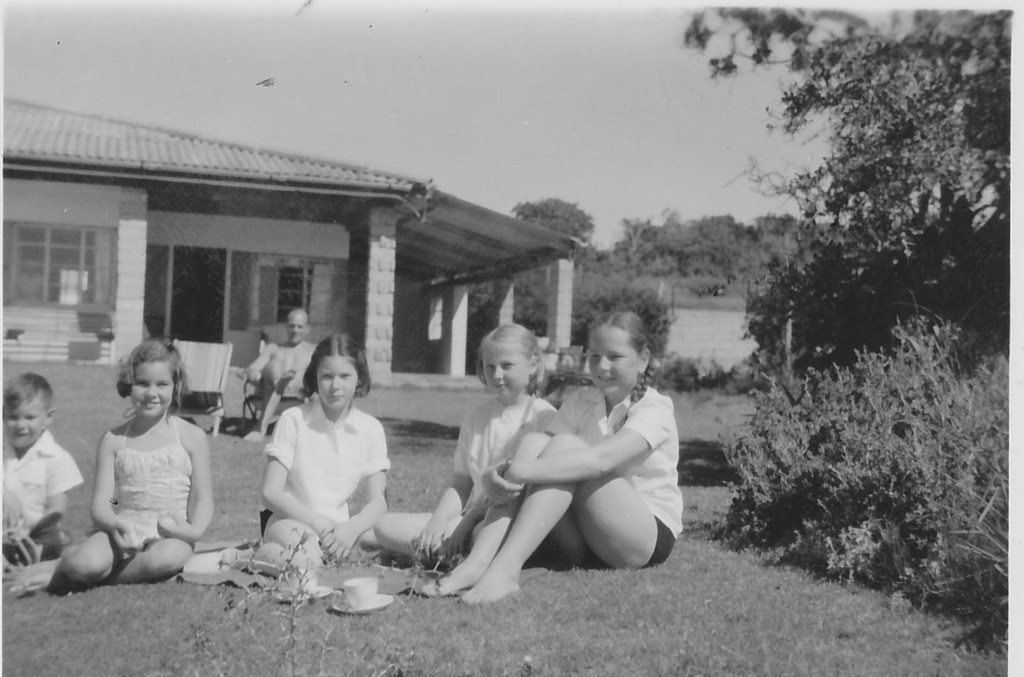
Louise’s family had a farm on the way to Highlands, not far out of Grahamstown and as Clare and I had had riding lessons we had enjoyed riding on the farm with Louise. Clare’s family knew other farmers in the area so we were able to ride on those farms as well. I wonder if Wendy remembers the brief holiday I spent with her and her family at Port Alfred. I suffered badly from homesickness as it was probably the first time I had been taken out of my comfort zone and confronted with a large, boisterous extended family in fairly rudimentary accommodation – I must have been a pain in the neck and I still feel embarrassed by my behaviour!
Jenny Norton was the daughter of a master at St Andrew’s College, next door to DSG. At one time the family lived in the big house on the corner of Cradock Road and Worcester Street. The garden surrounding the house was enormous but also had convenient trees for climbing up so you could sit on the high wall surrounding the property and watch the passers-by without being seen to be watching.
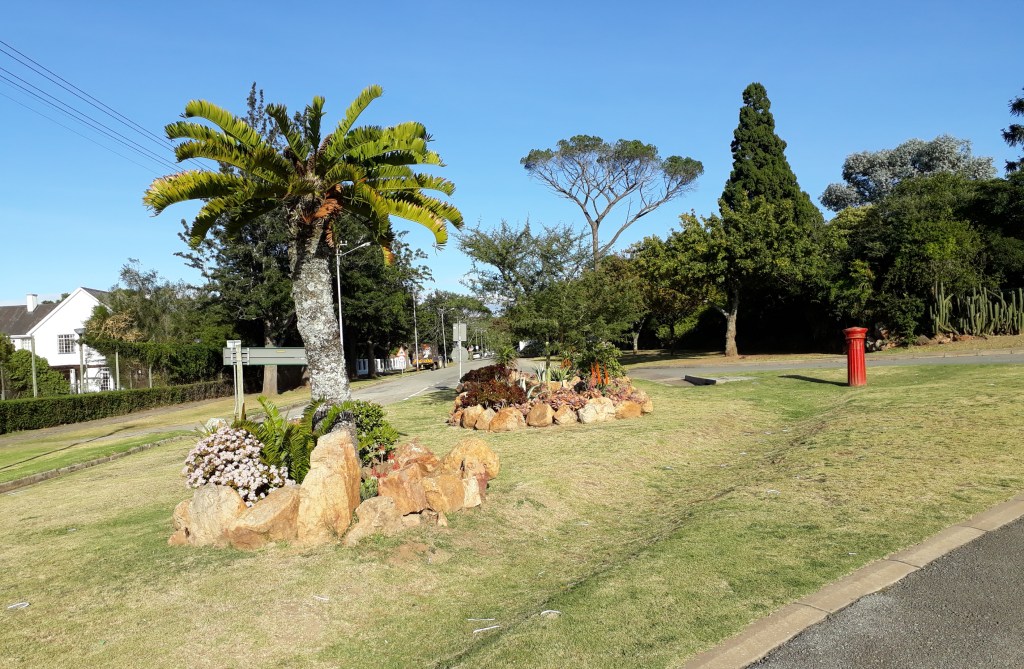
My mother always organised parties for me to celebrate my birthday in March and she often made special dresses for me for the occasion – she was very good with her hands and sewed, knitted and embroidered beautifully right up to the time when she no longer remembered how to do it. In later life she made intricate patchwork quilts using, amongst other pieces of cloth, material that she had made my dresses out of. So even today I have a visual memory of many of the dresses I wore as a child and even into my teens.
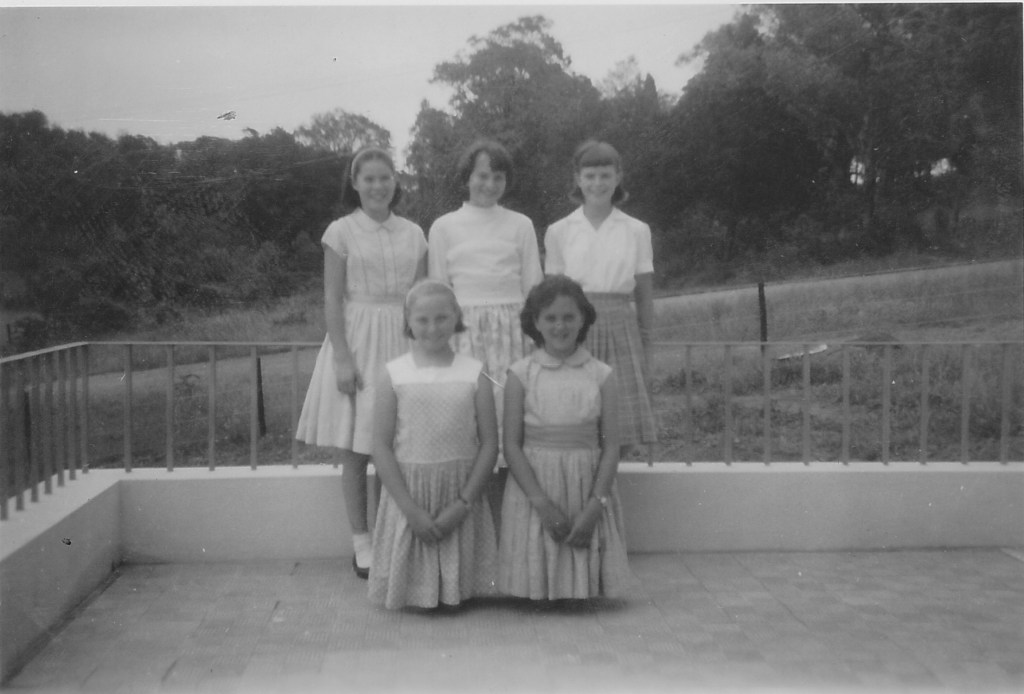
Clare McKerron and Claire Shields)
When friends weren’t available to visit, I would indulge in things that I still enjoy – reading and listening to music. Grocott and Sherry was a wonderful book shop and much pocket money was spent adding to my collection of various Enid Blyton series – the Famous Five, the Secret Seven and the Malory Towers books. Later on it was spent on Lorna Hill’s Sadler’s Wells ballet books. Ballet was another of my passions. I did ballet in the church hall near the Deanery for most of the years I was growing up in Grahamstown and have great memories of the shows that were put on at the Town Hall. Claire Shields, pictured above, was one of my ballet class friends.
The first pop music song that sticks in my memory is Elvis Presley’s Teddy Bear! Then comes I’m all shook up! This must have been in 1957, before we moved from the Henry Street House to Constitution street because I can picture the radio playing in the kitchen there. Once in the Constitution Street House, Cliff Richard and Livin’ Doll was in the charts and my allegiance shifted! At about that time I was given a wind-up gramophone and now my pocket money was saved for records. One of my favourites of the time was the long-playing record of the musical Carousel. I’d somehow missed seeing the film but nevertheless loved the music. Records by the band leader Ray Coniff were also among my favourites and a few years ago I managed to get the same recordings on CD.
Looking back and now with older eyes I see that many of my memories are of things I did on my own. I guess I was an fairly solitary child, not lonely but content to spend time on my own reading, playing records, getting absorbed in movies.
My Upper 5th year in 1961 was the last year I was at DSG. Mid-way through the year my father’s sister, my Aunt May came to visit and suggested that it would be a good idea for me to go to school in England. She would arrange and pay for me to go to a good semi-private school in Worcester where I would receive a top-class education and I could live with her and keep her company now that her husband, my Uncle Guy, had died. My parents thought this was a wonderful offer and encouraged me to agree to it, which I did, although somewhat apprehensively. I guess I thought it sounded like an exciting adventure, an extension in some ways of my imaginary world lived through books and movies.
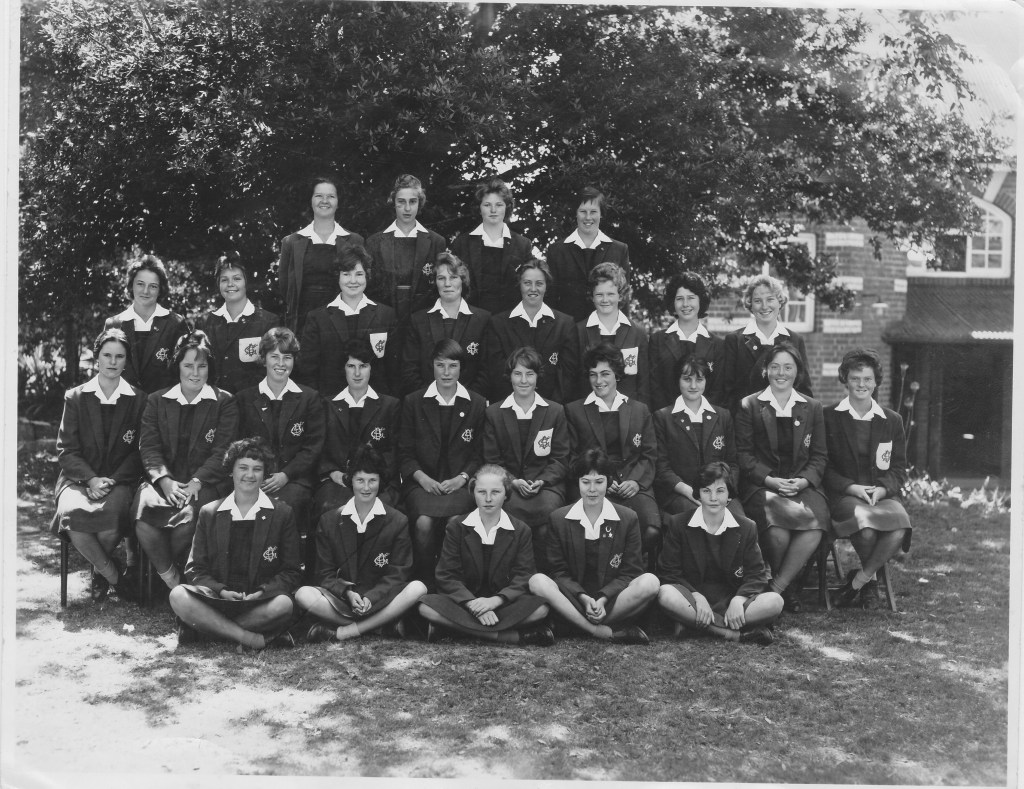
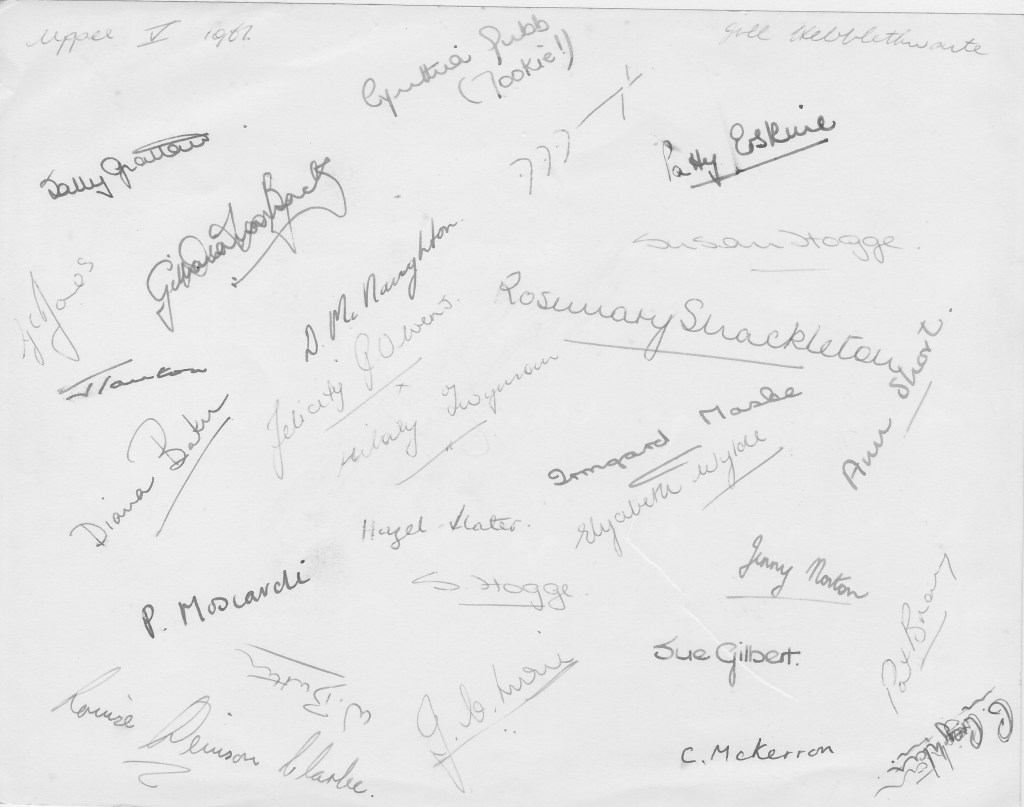
This marks the end of a particular part of my life – the in between childhood and adult years. The next phase, in England, was a steeper growing and learning curve.

