This page is for all those countries visited that are not covered under the Discover and Explore pages. While we lived in Rome we were lucky enough to get to travel fairly extensively to other countries as a result of my husband’s work. Since we returned home to South Africa we have also had opportunities to travel as well and a few years ago we discovered the joys of cruising. This first section is about a cruise from Abu Dhabi to Singapore, undertaken two years ago.
Cruise from Abu Dhabi to Singapore 23 March-7 April 2018
We left Cape Town on the evening of 22 March arriving in Dubai around 5.30 in the morning and caught an Emirates Airline bus to downtown Abu Dhabi. Most of the way we could see very little because of the heavy mist but it did clear before we got into Abu Dhabi. The foggy phenomenon does not occur that often but happens sometime between November and March during the cooler months of the year but also when temperatures can be warm and humid during the day and cooling rapidly at night, giving rise to the early morning fog and mist. Flight disruptions and traffic difficulties are not uncommon. Usually the mist burns off by 9 am. What we could see along the way was sand and more sand interspersed by signs of more and more development.
We did seem to drive through the main thoroughfare of Dubai at some stage, although it was difficult to tell, but we did pass many expensive-looking and very high-rise buildings crowded along the road.
Abu Dhabi is situated on several islands with the Corniche bordering the sea in the main part of Abu Dhabi. Andre met us at the Emirates bus terminus outside the main Emirates Airline offices. He had driven in from Al Ain about 100+ kms away. As it was Friday the Grand Mosque was not open to tourists so Andre suggested that we go to the Abu Dhabi Louvre, which opened late the previous year. The gallery/museum is situated in the cultural district of Abu Dhabi on Saadiyat Island and is the first of several others to be built in this complex. The Louvre was designed by French architect Jean Nouvel and the project is a collaboration between the city of Abu Dhabi and the French government. The building is described as a “seemingly floating dome structure” and the web-patterned dome is meant to represent “rays of sunlight passing through date palm fronds in an oasis”.


The museum is defined as an art and civilisation museum, with particular focus on bridging the gap between Western and Eastern art. It was very interesting to see that the religious sensibilities of Muslim countries did not prohibit the depiction of Christian subjects in the Museum – on the contrary any religion was represented in any time period if appropriate. The arrangement of the rooms in the Museum was chronological rather than by country or type of exhibit so showing development across the world for any given time period. Leonardo da Vinci’s Salvator Mundi, at the moment the most expensive painting ever sold, is displayed in the Museum.
As we had to be at the cruise ship terminal around 12.30 it was rather a rushed visit but a very interesting and worthwhile one nevertheless.

Andre kindly drove us to the cruise ship terminal where our luggage was whisked away while we were left to queue for quite some time before finally getting on board, to find Kev’s suitcase but not mine. Mine was eventually tracked down a few anxious hours later! The long queue was not too bad as most people were cheerful and looking forward to the cruise ahead. Funnily enough we chatted briefly to a couple who we did see and greet occasionally on board but then met up with on the street in Singapore on their last afternoon there and found out more about them!
We left Abu Dhabi promptly at 6 pm on the smooth and glassy sea of the Arabian Gulf. Early morning noises of the bow thrusters easing us gently into the berth in Dubai woke us before 7 am. We had decided not to do an organised tour in Dubai and intended to spend the day on board. But when we discovered that there was a free shuttle to one of Dubai’s many malls we decided to take advantage of that and went for a few hours to have a look round. We were taken to Wafi Mall, a development with the theme of Ancient Egypt. It also had a famous Souk, a replica of an ancient Arabian market, with 150 shops selling Arab garments, carpets, perfume and incense and traditional crafts. The main parts of the mall are lit from beautiful stained glass pyramidal roofs and there is an enormous multi-story stained-glass window in one part of the mall.

It was very quiet on a Friday but well worth visiting as an attraction rather than to shop. We did find a Starbucks to have a coffee and connect to wifi so we could let various offspring know where we were. The bus trip to and from the mall gave us a chance to see the Burj Khalifa in the distance, as well as Zabeel Park and the Dubai Frame, a 150 metre high viewing platform from which you can see old Dubai in one direction and “new” Dubai in the opposite direction.


We were back on board in plenty of time for the 4 pm departure for Muscat, an overnight voyage, arriving at 12 noon the next day. The Showtime entertainment this evening was a “boy band” called the Barricade Boys – we arrived a bit late so didn’t see the whole show but really enjoyed what we did hear.

We enjoyed a lazy start to the morning as we were not due in Muscat till midday. We had booked an excursion here – a walking tour of Muscat which only started at 3.30 as the day got a bit cooler. A short bus ride took us out of the port area and then we walked through some of the old part of Muscat to the Bait Al Baranda (villa with a veranda) Museum. The Museum is housed in what used to be the American mission to Oman in the 1930’s and later belonged to the British Council. It was then renovated and taken over by the Muscat Municipality and shows the history of Muscat and Oman from earliest times to the present day. It was a very interesting Museum and our guide also provided much additional information on the history of the region, including the geology, the start of the Muslim people, the various countries that had invaded Oman, in particular the Portuguese, but also the conquest of parts of Africa (Zanzibar among others) by Oman itself. We then walked along the Corniche to the Muttrah Souq, passed the blue minaret of the Mosque and 18th century houses lining the Corniche.

We could see the current Sultan and Ruler’s superyacht in the bay, as well as a beautiful old dhow.

The Souq was very colourful and well patronised by locals. There were a lot of tourist shops but also places were the residents could by everyday goods.

We wandered through the Souq and into some normal shopping streets beyond then retraced our steps to have a Turkish coffee at a little coffee shop overlooking the bay.


Although we did not see much of Muscat, we really enjoyed our brief visit and learning about the long and important history of the region. In a way it was a sort of Arabian Nights experience. The dramatic backdrop of stark mountains and old Portuguese forts and the huge white incense burner, the symbol of the Sultanate of Oman at the entrance to the habour added to the sense of mystery.

It was almost dark when we left Muscat habour at 8 pm. We could see the clusters of lights of the beach resorts along the coast where some passengers had spent the day soaking up the sun. We also became aware of a glow of lights over the mountains behind the old port and realised there was another large part of Muscat that we had not seen at all – another time perhaps.


The next morning we awoke somewhere in the Arabian Sea. We had slept really well and quite late for us, only to realise that it was even later than we thought because the clocks had been put forward one and a half hours during the night in anticipation of the time in India. But we soon adjusted to the idea as sea days are calm and relaxing and there is no need to do anything or be anywhere specific unless you want to. We did go along to the first of several General Knowledge Trivia quizzes that afternoon and did very well, winning ourselves 4 prize tickets. We did do quite well on other occasions but other teams really got into quiz mode and came out on top so we never did add more to our meagre tally. But we did enjoy trying and often stayed for the music quiz which came afterwards. That we never did very well in except for the Beatles songs where we got close to a perfect score but another team did get them all right.

The next day was another sea day with hardly any swell and the sea calm and blue with only the occasional ship passing in the distance. Strangely there were almost no birds. We did see a couple but had no way of identifying them. They followed the ship for quite some time swooping and diving and occasionally coming up with a fish. The colour of the sea was a dark blue although the wake was a paler turquoise – it did not look as if it was a very productive area. In the Arabian Sea we saw very little trash but this was not the case further east in the Andaman Sea.
After two quiet and relaxing days we were again alerted to our next port of call early in the morning as we came in to dock in Mumbai at 6 am. But as soon as we had docked Kev was required to present himself to the authorities to be cleared for immigration into India, this despite having obtained full tourist visas in our passports before leaving South Africa. Our passports were kept by the Guest Relations team while we were on board – something we were not entirely comfortable with to start with but was actually designed to make coming and going on shore excursions much easier for passengers. We were never certain why Kev was chosen to receive this special attention but we were told that the people (about 100) who had to report so early to the authorities were chosen at random.
With the permission sorted out we were ready to leave on our excursion by mid-morning. Again this was well organised by the crew – we were given a time to report to the Theatre where we each were given a sticker with the number of our tour on it. We then waited, usually only a few minutes for our tour number to be called before heading down to the deck where the gangplank was situated. Once off the ship the Indian authorities checked documentation and we were shown to our bus ready for the tour.

The city of Mumbai was formed by uniting seven islands in a series of land reclamation projects which were completed by 1845. The tour we had chosen was a walking tour through the historic parts of Mumbai. We had a short bus ride to the point of departure at Horniman Circle close to St Thomas Cathedral. The Cathedral was built in 1718 and was the first Anglican cathedral in Mumbai. The nearby station and in fact the area around the Cathedral is called “Churchgate”.


We walked passed the Floral Fountain but it was being renovated so we carried on across streams of traffic following our guide who was quite fearless in the face of oncoming vehicles!

We walked passed the High Court which is still called the Bombay High Court, even though the name of the city was changed in 1995. The building was completed in 1878 and the architecture is described as Gothic Revival in Early English style. It is built of Black Stone (volcanic origin?). Further along on the same side of the road is the Rajabai clock tower on the campus of the University of Mumbai. It was designed by Sir Gilbert George Scott and based on Big Ben. Like the High Court it was completed in 1878.


After a couple more turns and nerve-wracking road crossings we stood opposite a very dilapidated building that, nevertheless, had an interesting history, although some of it may be urban legend rather than truth. Our guide told us that the building had originally been a hotel, built of cast iron, constructed in England and constructed on site during the 1860’s. It was owned by John Watson and named after him – Watson’s Esplanade Hotel. It was opened as an exclusively Europeans only hotel and was one of the most renowned in its day. The legend concerns the Indian industrialist Jamsetji Tata, who was allegedly denied entrance to the hotel because he was not European. He then decided to build the Taj Hotel, which would be open to all. The Taj Hotel was opened in 1903 and still stands today close to the Gateway to India as a modern luxury hotel. By the 1960’s Watson’s Hotel had ceased to exist as a hotel and was rented out as office and living space but it was already falling into decline and is currently in a very dilapidated state. It has been listed as a heritage structure and plans have been drawn up for its restoration but this has yet to happen.


Further along the road is the David Sassoon Library and Reading Room, which we visited briefly as a cool respite from the hustle and bustle of the main roads. The building was completed in 1870. It was originally aimed at providing a library for mechanical models and architectural design and space to read for mechanics and foremen at the Royal Mint and Government Dockyard. It still provides a quiet space for reading and consulting the books in the library today, in an old world atmosphere of period furniture and shady gardens.


Next to the David Sassoon Library is Elphinstone College, established in 1856 and is affiliated to the University of Mumbai. It is named after Mountstuart Elphinstone, a governor of Bombay who was responsible for starting higher education in the city. It is listed as a heritage building and a symbol of the British Raj. Further along we passed the National Gallery of Modern Art and on the opposite side of the road the Chhatrapati Shivaji Maharaj Vastu Sangrahalaya, the main Museum of Mumbai. It was formerly known as the Prince of Wales Museum of Western India and was founded in the early part of the 1900’s.


All along the streets through which we walked were many street stalls attracting customers, including the sugarcane juice vendors. Fresh shoots of the sugarcane plant are pressed in a mill to extract the juice which is mixed with water and ice.
After walking for an hour or so, we went back to the bus to be taken to the Gateway of India. This is a monumental arch built in the early 20th century for the arrival of King George V and Queen Mary at Apollo Bunder in 1911. (Bunder refers to a port) However, the arch was not ready in time for the visit and a cardboard model greeted them instead. The arch was finally completed in 1924. The Gateway faces out to Mumbai habour and the Arabian Sea. Two statues can be found close to the gateway – one is of Chhatrapati Shivaji Maharaj, the Maratha king who lived in the 17th century and the other is of Swami Vivekanda, a Hindu monk credited with introducing Indian philosophies, like yoga, to the Western world.


Very close to the Gateway is the famous Taj Mahal Palace Hotel and Tower. The older part of the hotel was opened in 1903, before the land now occupied by the Gateway of India had been reclaimed. The Tower was added in 1973. In 2008 the Hotel suffered a terrorist attack during which hostages were taken and 31 people died in the hotel. Other attacks were launched across Mumbai and the motive for the attacks was to “strike a blow against a symbol of Indian wealth and progress”. They were carried out an Islamic terrorist organisation based in Pakistan – at least 167 people died as a result.

Since the attack restrictions have been placed on entering the precinct of the Gateway and people queuing to go through the Gateway Plaza showed a colourful cross-section of people waiting to pass through security.

Back on the bus we were taken to the nearby Gaylord’s restaurant for tea and sandwiches and a welcome toilet break! It was also a chance to sit in cool surrounding and quickly connect to their wifi and let various offspring know that we were still alive and kicking.
As we discovered with all of our tours the guide is always anxious to keep on schedule so we were rounded up after 30 minutes to get back on the bus for a tour around other important sights in Mumbai’s historic centre. We were taken past the Bombay Gymkhana (or sports arena), established in 1875 and originally a British-only club. It hosted the first cricket test match in 1933. Cricket is still played here in winter months and rugby and football in the monsoon seasons. It was also a men only club up until the early 2000s when women were allowed to join. Adjoining the Bombay Gymkhana is the Azad Maiden, a triangular-shaped sports ground known for its cricket pitches, as was abundantly apparent to us as we passed by – the day were we in Mumbai was a public holiday although this did not seem to make a difference to the traffic or number of people in this central part of the city.

A little bit further on we could see the historic railway station, formerly called Victoria Terminus and called Chhatrapati Shivaji Maharaj Terminus in honour of the founder of the Maratha Empire. It is now a UNESCO World Heritage site. It was built in 1887 and is an example of Victorian Italianate Gothic Revival Architecture – and it showed! It is a very ornate building which to some extent resembles St Pancras Station in London. The columns at the entrance are topped with a lion on the one side, representing Britain and a tiger on the other, denoting India. Unfortunately you can’t see them in the picture below because of the amount of traffic!

On the opposite corner of the street is the Municipal Corporation of Greater Mumbai also housed in a listed heritage building of Gothic design, which was completed in 1893.

We were driven back to the ship along the opposite side of the Azad Maiden and all the cricketers, and passed many of the sights we had seen on the walking tour. As the journey was fairly slow because of the chaotic Mumbai traffic our guide told us about some interesting cultural aspects of living in Mumbai, a city of more than 22 million people. There is an area of Mumbai called Dhobi Ghat, where thousands of dhobi-wallahs (laundry workers) tackle the cities dirty washing in the world’s largest open air laundry. The laundry comes from local laundry pick-up points, hotels and restaurants and private homes and is still mostly washed by hand. The dabba-wallahs are another group who do food deliveries from homes to the workers in town. In India home-made food is preferred to buying takeaways for lunch so wives make lunch at home for their worker husbands which is picked up and delivered in town while still hot to the worker by the dabba-wallahs. This entails considerable organisation in sorting, packing and transporting numerous lunches and delivering them to the right place. Because most of the dabba-wallahs cannot read a sort of code of numbers and letters denoting buildings has been devised to make sure the lunches get to the right person.
The sunset as we left Mumbai was spectacular, but before that we were back on board in time to watch the special Bollywood show in the Theatre, put on by a group from Mumbai who had to be off the ship before it could leave.


It was pure Bollywood! In the theatre on board the ship.
As the ship slowly made its way away from Mumbai we could see the skyline unfolding far into the distance and it was brought home to us what a small fraction of Mumbai we had seen.

As we got further out we could see this amazing structure – a rig of some sort perhaps – silhouetted again the darkening sky.

The next port of call was only a night away. We docked in Mormugao, Goa mid-morning and were on our tour shortly after that. The tour we had chosen was a combination of bus and walking in the old capital city of Panjim. The city is about an hour’s drive from the port and first took us through the port town of Vasco de Gama, then through country roads passed typical local houses painted in vibrant colours and areas of rice paddy fields ending up at the Se Catedral de Santa Catarina, which was built to commemorate the capture of the city of Goa by the Portuguese in 1510.


By this stage one priority was a toilet break but as with most women’s toilets there was a long queue and by the time I had had my turn it was time to get back on the bus! So I had to rely on Kev taking photos.


We continued on to the outskirts of Panjim to the old Portuguese quarter and were given 30 minutes to explore the area. All the houses were brightly painted with plaques showing the names of the Portuguese families who had lived there. Examples of Portuguese tiles and architectural features made this an interesting walk.


On the way back to the bus we spotted this taxi rank of colourful yellow and black tuk tuks or three-wheel motorcycle taxis – a cheap and cheerful mode of transport found in many parts of Asia.

We continued on passed huge areas of construction, including a bridge that as already in use in spite of not being finished.

The city itself is on the banks of the River Mandovi, on which there seemed to be numerous casinos. Panjim is the largest urban settlement in Goa with a population of 114 000 thousand plus. We parked outside a little museum, which we went into on the way back from our wander around the city. We were again given strict time constraints and had to be back on the bus in one hour. We first made our way to Our Lady of the Immaculate Conception Church, a white colonial Portuguese baroque style building on a hill overlooking the centre of Panjim.

From there we went into the town shopping area to look for suitable presents for grandchildren. The town itself was fairly run down and not particularly interesting – we wandered through the Municipal Garden. We found a large bazaar (Bombay Bazaar) on the main street selling just about everything including some cute painted elephants that we bought to give to Hannah.


We then made our way back to the Museum and the bus. The Museum was quite small but had some interesting artefacts and also some pictures and items from the Portuguese period of Goa, as well as photos of the Indian invasion in 1961. Panjim was only annexed by India in 1961 after the Indian invasion.
The bus trip back to the ship took about 45 minutes and passed through some of the areas we had seen on the way. The vegetation was very lush and green and we crossed over a couple of wide rivers. There are nine main rivers in Goa, which is the smallest state in India. Coming from Cape Town with its current lack of rainfall we felt very envious of the abundance of water and green vegetation.

We were back on the ship by mid-afternoon and had time to relax before dinner. We only left the port after dark so woke up the next morning somewhere along the coast of India on the way to Cochin in Kerala, our next port-of-call.
We woke up to another beautiful calm day. It was quite a relief to be able to have a relaxing day after the last two busy days in Mumbai and Goa. We spent the time reading, wandering about the decks and just contemplating the horizon! As we kept fairly close to the coast of India we saw quite a number of small fishing vessels.


We had a fairly early arrival in Cochin at 7am and could see all the tour buses lined up on the quay ready for the passengers to come ashore.

Our tour started mid-morning and was called “the Cultures of Cochin” and again involved quite a bit of walking. To start with though, we were taken by bus to the Church of St Francis in Fort Cochin. It was the first European church to be built in Kerala and was initially built of wood in 1503 but later rebuilt in stone. The Portuguese navigator Vasco de Gama died here in 1524 and was initially buried in the church but was later removed and taken to be buried in Lisbon. There is still the gravestone marking the spot in the church where he was first buried.


From the church we walked through part of Fort Cochin down to the Chinese fishing nets on the Vembanad Lake part of the Calvathy River. We passed the Santa Cruz Cathedral Basilica and streets with old houses built by successive Portuguese, Dutch and British colonialists over several centuries.

To get to the shoreline we also walked through Jawahar Park, with its colourful playground for children.


The Chinese fishing nets were fascinating – they have been operated in this area since the 14th century when Chinese explorers first came to this part of India. The name Co- Chi (Kochi or Cochin) possibly means “like China”. The nets are fixed on the shore and operated by a team of up to six fishermen. The huge nets are suspended from huge arched structures holding them over the water and counterbalanced by stone weights. The fishermen lower and raise the nets by hand.


Our next visit was to the so called Dutch Palace properly known as Mattancherry Palace. It is famous for the beautiful murals depicting Kerala scenes of the Rajas of Kochi and Hindu religious art. Unfortunately photography is allowed only in certain rooms so we don’t have a complete record of what we saw. The palace was originally built in the mid-1500s but renovated in the mid-1600s by the Dutch, after which it became known as the Dutch Palace.


The area close to the Dutch Palace is known as Jew Town and one of the last remaining synagogues is here, built in the 16th century by the Paradesi Jews of Cochin. This Jewish community came from Spain and Portugal in the 15th and 16th centuries to escape persecution in the home countries.
The streets leading to the synagogue are now filled with shops selling antiques, spices and mementos for tourist to take home with them.

On the way to Jew Town we called in at the Ginger House Restaurant to look at the display of heritage arts and sculptures, including an enormously long “snake” boat canoe. The restaurant is situated right on the river in an attractive garden setting.


As with Mumbai and Panjim, the local people were friendly and even the souvenir sellers were not aggressively marketing their wares. We felt quite safe and never threatened walking the streets of these places.

Cochin was a wonderful place – the few hours we spent there just gave us a taste a what could be found there. The colours, the diversity and the warmth of the people made it place to want to revisit and spend longer there.


Once back on board we relaxed in the jacuzzi and in the indoor thalassotherapy (seawater) pool in the Solarium.

That night there was an amazing full moon which we tried to take pictures of. Later in the evening a full moon party was held on the pool deck.


The following day was another relaxing sea day as we cruised south from Cochin to Colombo, Sri Lanka.
We arrived in Colombo around 6 in the morning and on our way to breakfast we could see and hear the welcoming party of traditionally dressed Sri Lankans on the quayside.


We had selected a private tour to a tea plantation for our activity in Sri Lanka and were taken their in a minibus with only a small group from the ship. The drive to the plantation took just less than two hours. It was interesting to see some of the outskirts of Colombo as well as the countryside on the way to the hilly area to the southeast of the city. The port area was also interesting – it is called Fort Colombo and houses the military headquarters and several government buildings, as well as the Presidential palace and gardens. Much of it is closed to the general public. We also passed a number of Buddhist stupas and temples. Buddhism is the main religion of the country.


The plantation was called Rayigam Estate and is part of the much larger Lankem Tea and Rubber Plantations Company. Rubber trees are also grown on the estate and we were shown the rubber tapping process on the way to the tea factory.


As we arrived at the factory we were all given garlands to wear made of fragrant tea leaves, while we watched the tea being picked from the bushes close to the factory. A long rod is used to show the height at which the two leaves and a bud should be plucked from the tea bushes. The bushes are fairly low-growing, barely reaching waist height. The tea pickers carry a sack on their backs with a hoop keeping the sack open so the leaves can be tossed in easily. Between 15 and 20 kgs can be picked in a day. Tea picking is a very labour intensive exercise and must be very tiring. The Sri Lankan people are not usually employed as tea pickers because they do not like this kind of hard labour so Tamil Indians are usually employed to do the picking. Most of this workforce is made up of young women. Shade trees are planted at intervals throughout the tea plantation to simulate the forest conditions which is the natural habitat of Camellia chinensis, the tea bush.


The tea factory itself was also very interesting but we were not allowed to take photos inside the processing areas. After picking the tea is dried in a process called withering which can last for about 18 hours during which warm air is blown through the leaves spread out on long trays. This removes the moisture from the leaves and also allows chemical alterations that give the tea its distinctive flavours. The leaves are then placed in the rolling machines where they are broken up into small pieces. This process also breaks down the cell structure and releases chemical compounds and fluids that aid in the fermentation process. Rolling takes place several times breaking the leaves down into smaller and smaller pieces. The next stage is the fermentation process during which the tea is laid out on long open trays in cool but humid rooms to facilitate the development of flavour and aroma of the tea. It has to be controlled very carefully. Once sufficient fermentation has taken place the leaves are placed in ovens to stop the fermentation and to dry out the leaves. Again this must be carefully controlled so that the leaves do not get burnt. After this firing process is complete the leaves are graded and sorted before being packed ready for transportation and export.


After being shown through the factory we were given a chance to taste some of the teas produced there. We were told to take the tea infusion into our mouth with a sucking sound to aerate the tea and allow it to travel over the tongue to be able to assess the freshness and flavour of each different tea.
The group was then taken up to the plantation manager’s house for a tea party and a chance to buy tea and to explore the house and garden of the manager. The house was an old colonial style house with large airy rooms and verandas.


We had tea served in the garden and were instructed how to make and pour it properly, making sure the tea was well aerated by pouring it from a height and agitating it vigorously in the cup. Tea should be served with milk as well. It was then back in the bus for our return journey to the ship.


After several days of tours to cities we decided not to go into the centre of Colombo but to relax on board again. Leaving the habour in the late afternoon we could see the giant Sambodhi Chaithaya stupa, a Buddhist shrine at the entrance to the port of Colombo, with some of the cities high-rise buildings in the background.

The next two days were both sea days and we spent much time watching hundreds of little flying fish literally flying like stones skimming across the water alongside the ship.
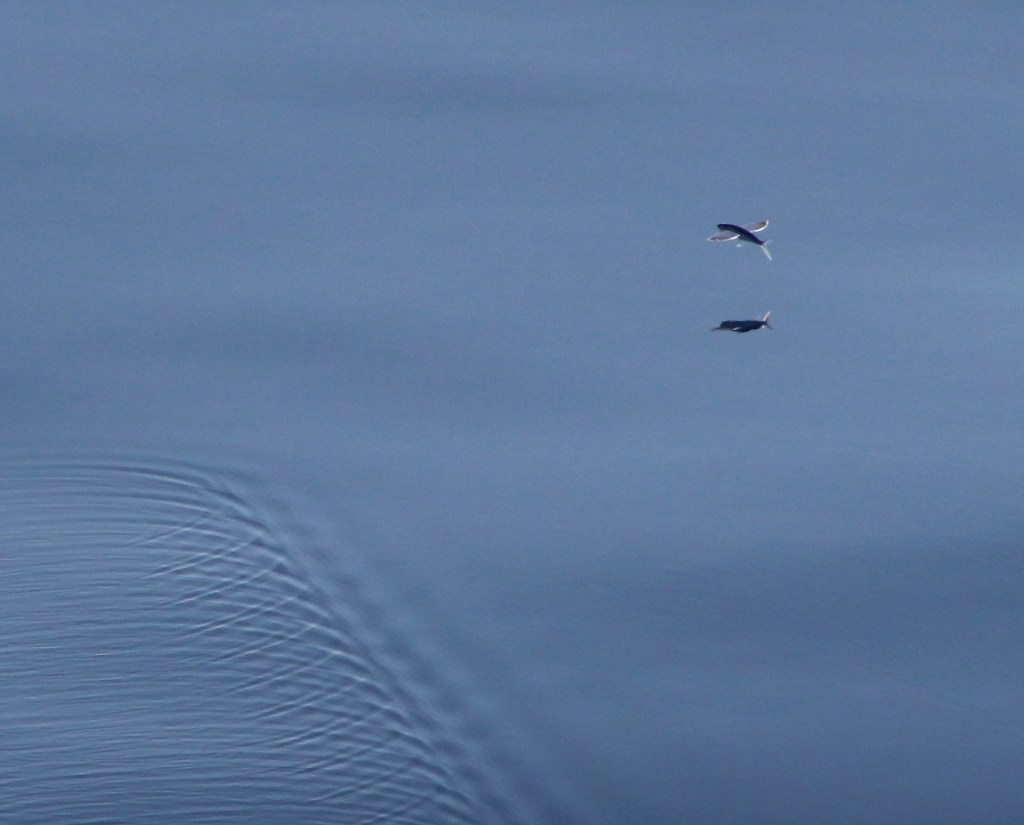
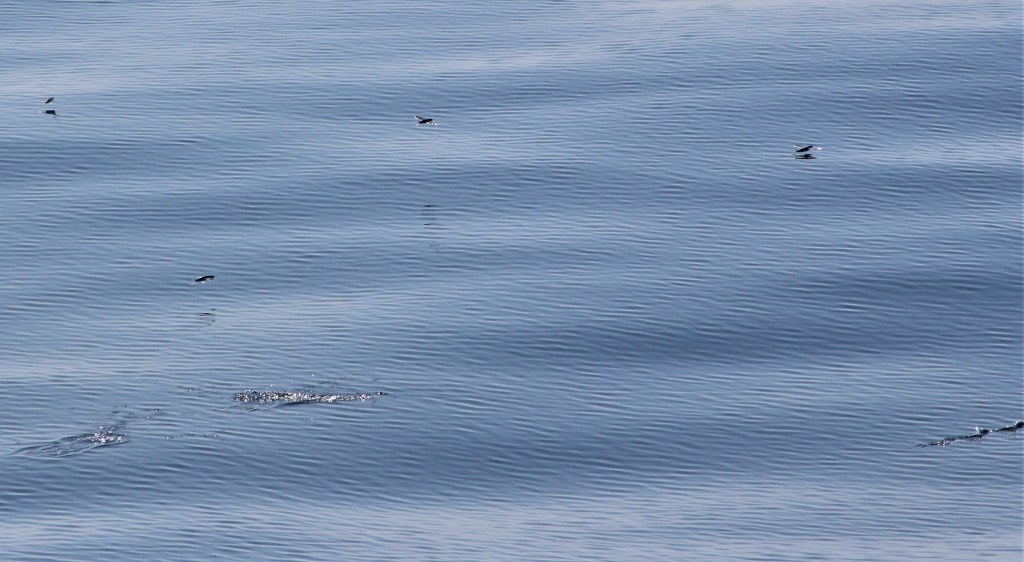
We also enjoyed going to the Trivia quizzes every afternoon – both the general knowledge and music ones. The evenings were busy with making sure we listened to the resident guitarist’s latest tribute sessions and going to shows in the Celebrity Theatre, as well as having dinner, usually in the spectacular main dining room.
Our next port of call and the last before Singapore was Phuket. As there is no habour deep enough at Phuket the ship dropped anchor several hundred metres off shore and we were ferried to the jetty by tender.
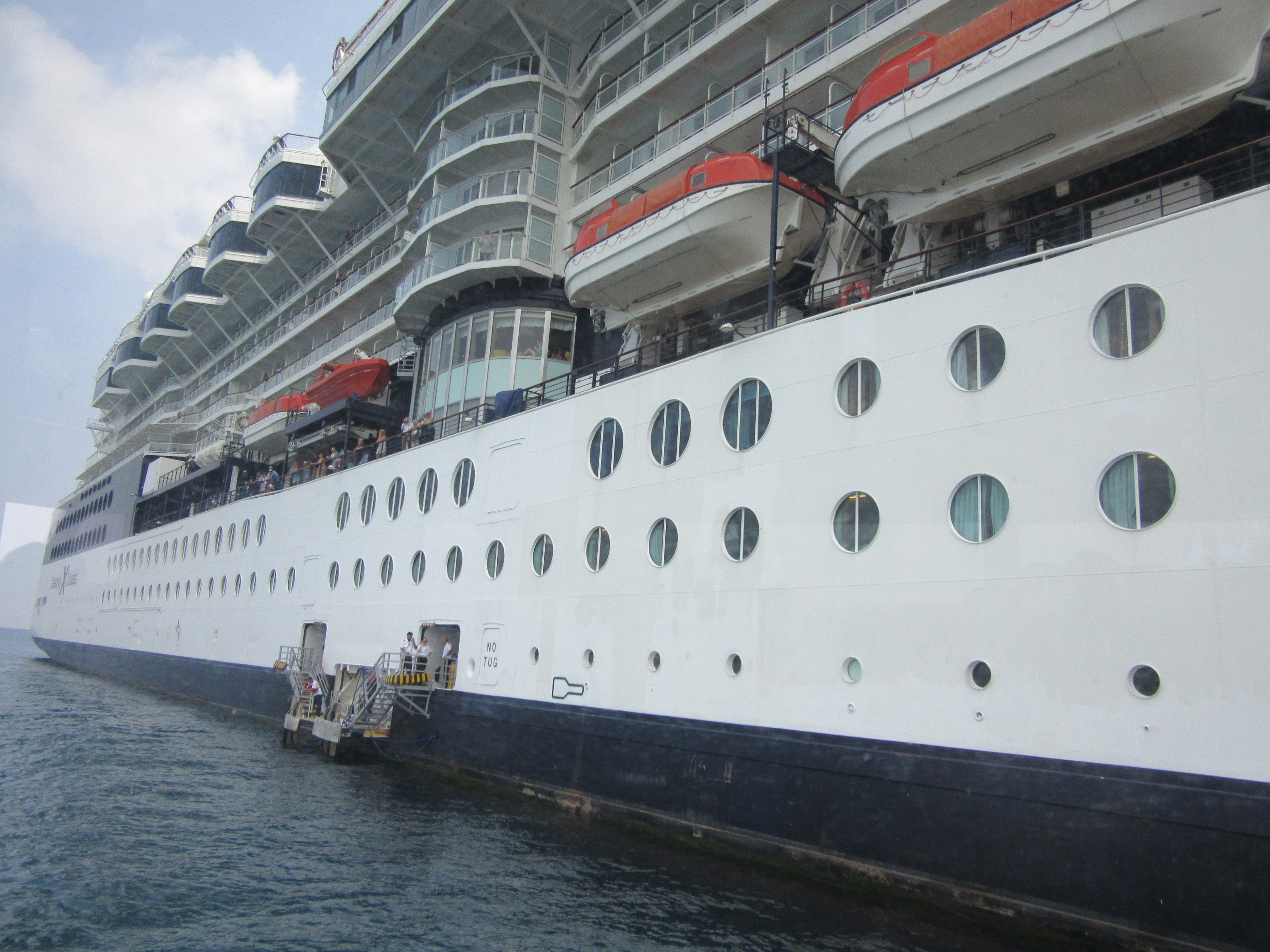
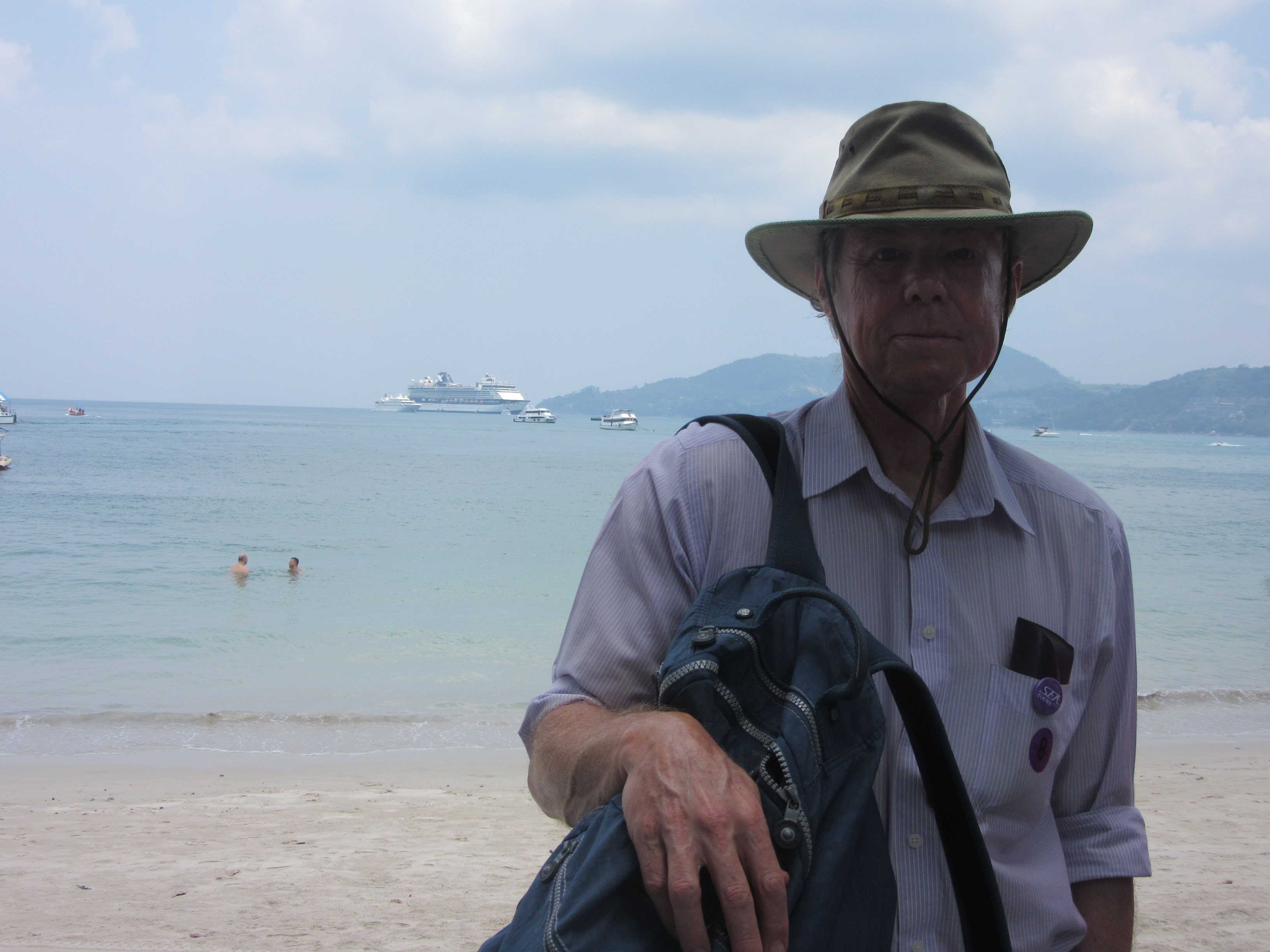
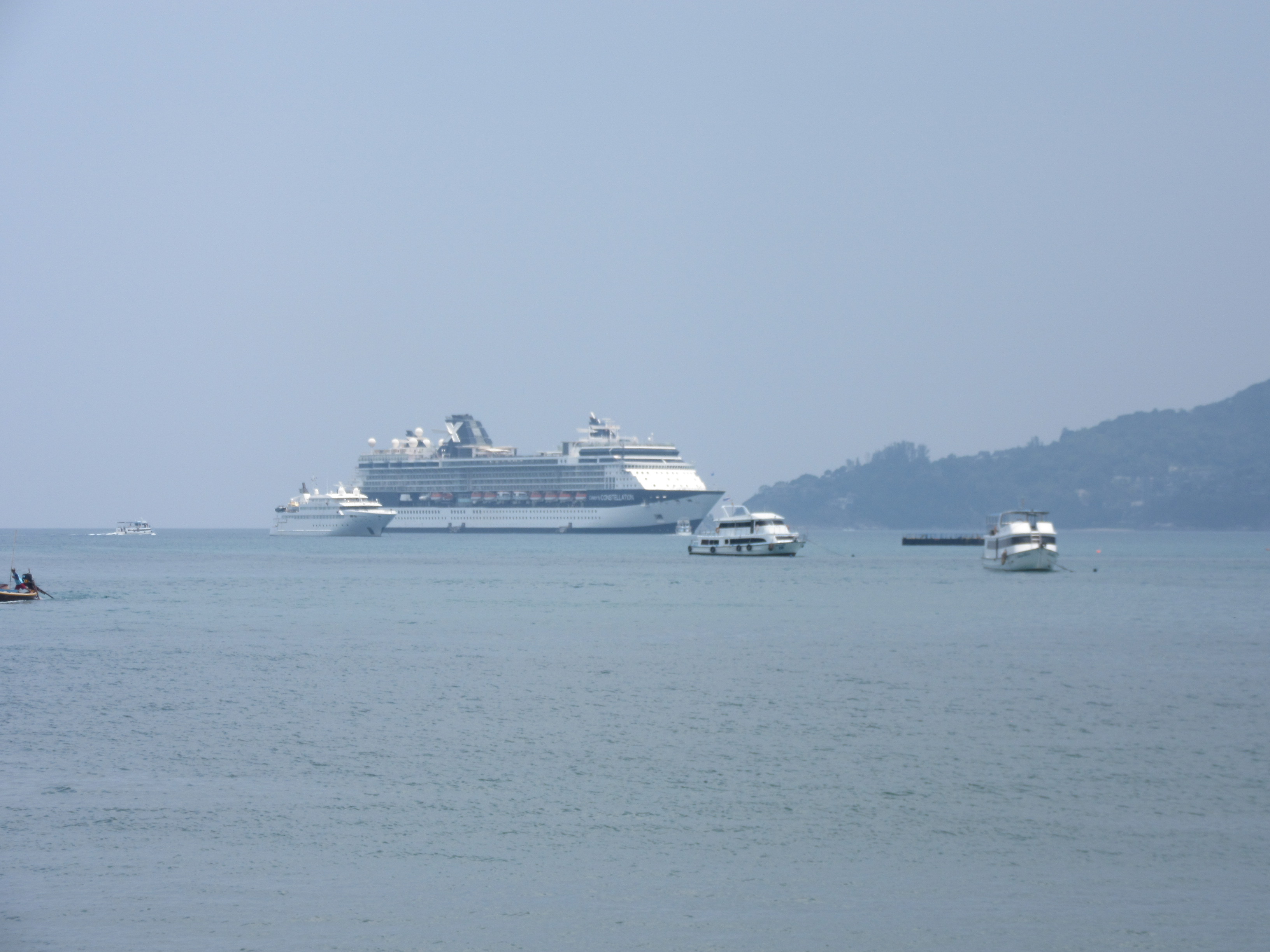
The tour we had chosen was the longest so far and involved a bus trip of a couple of hours all the way to the north of Phuket Island and across the bridge onto mainland Thailand. From there we turned eastward following the coast to Phang Nga Bay.
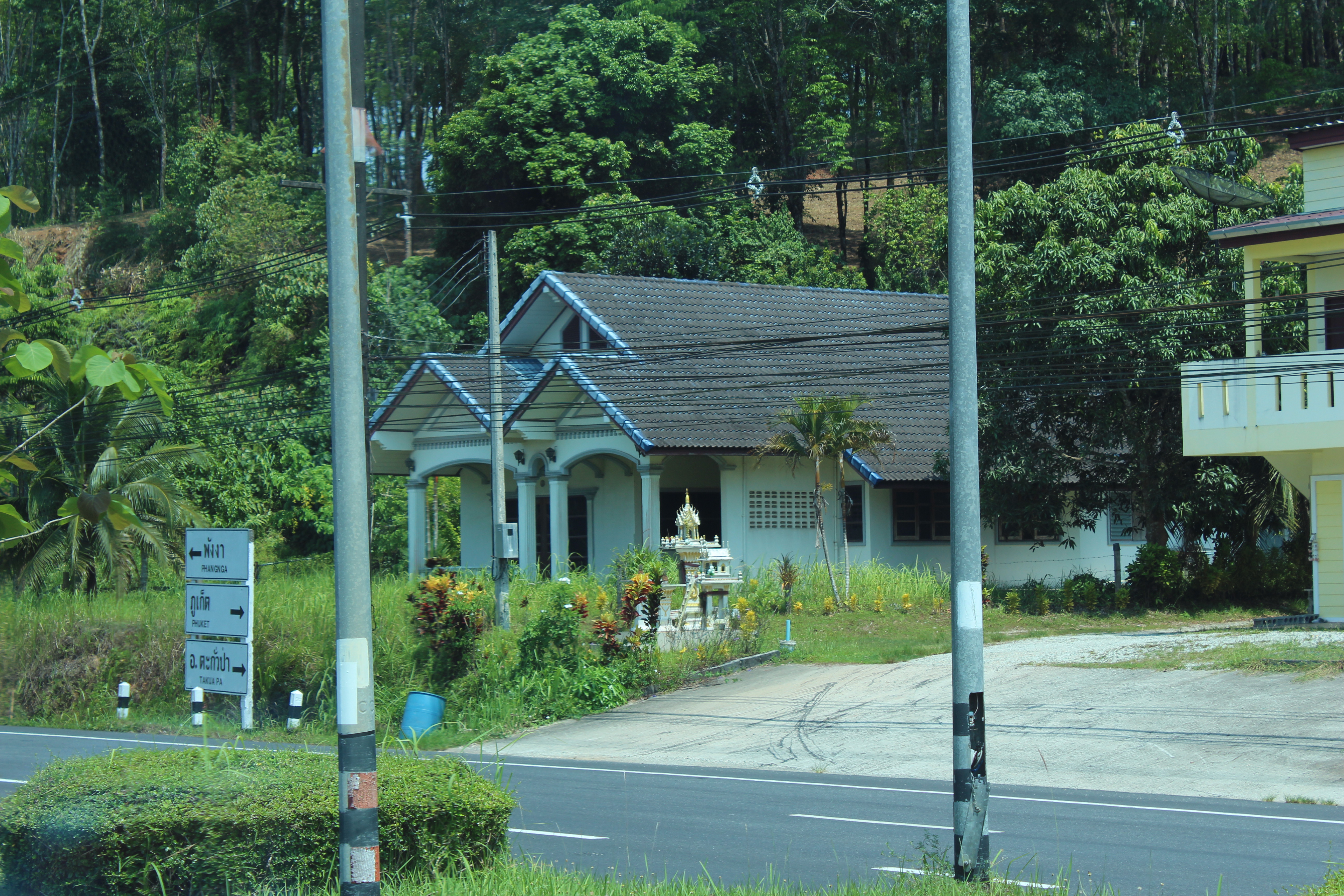
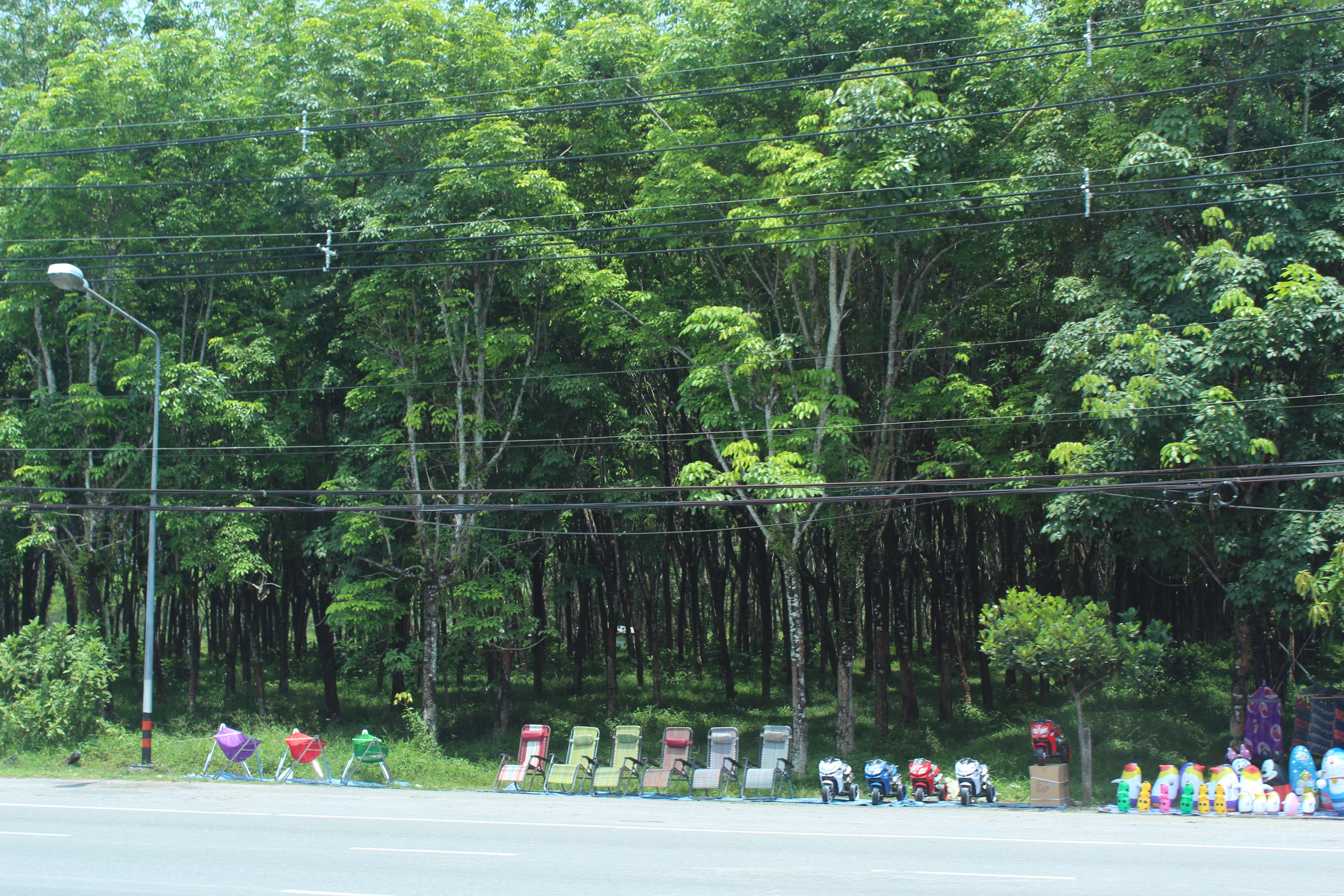
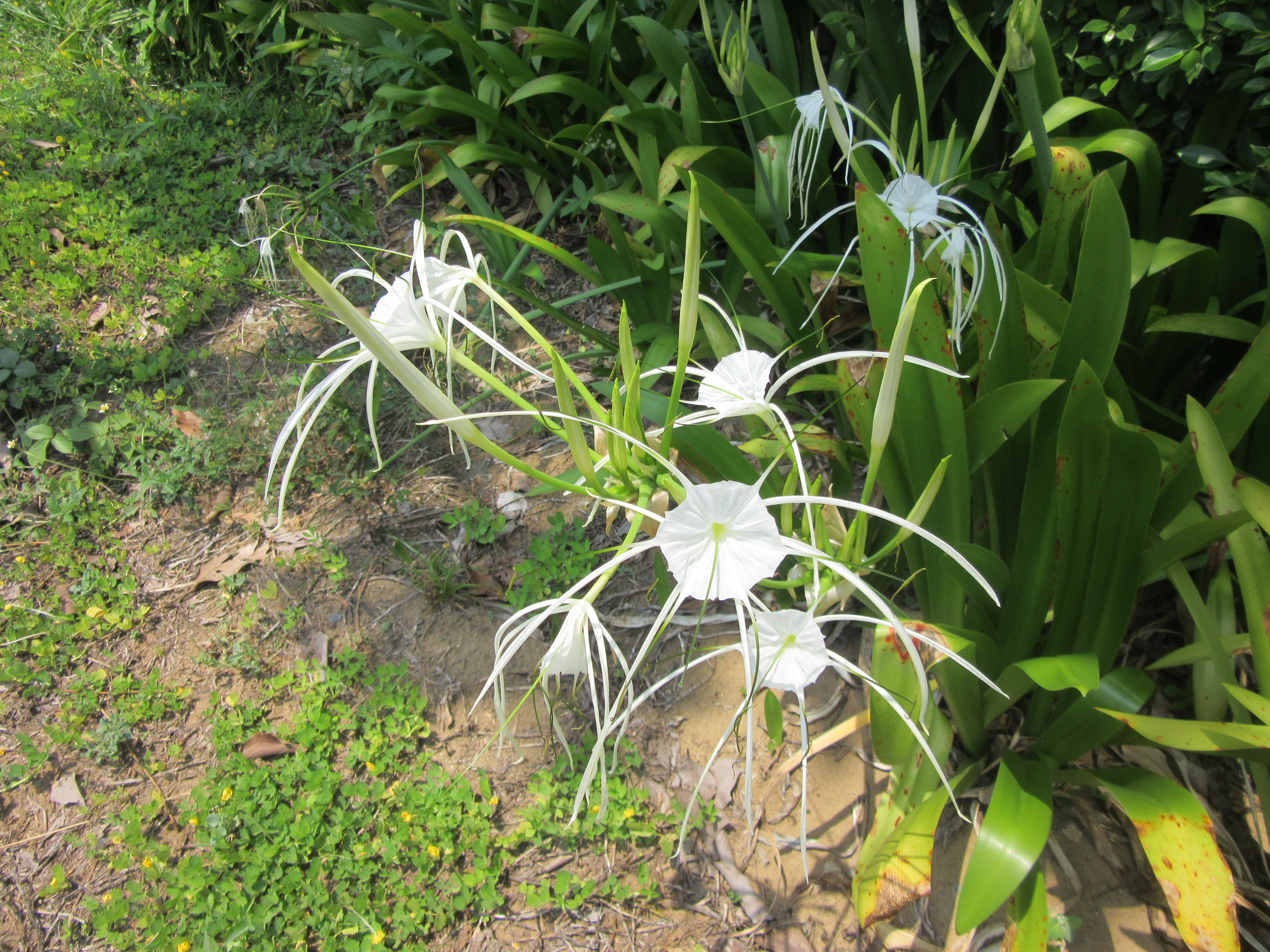
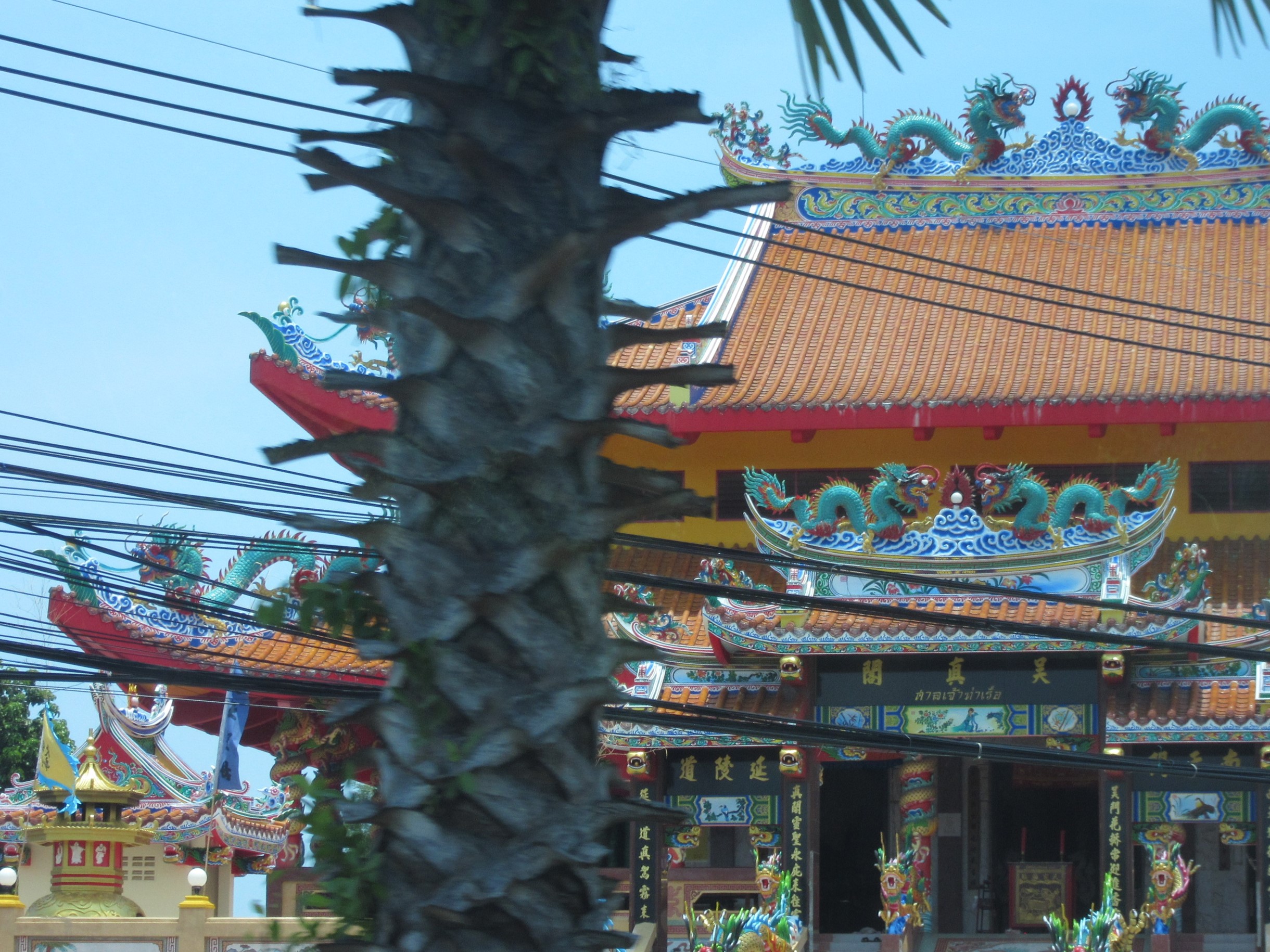
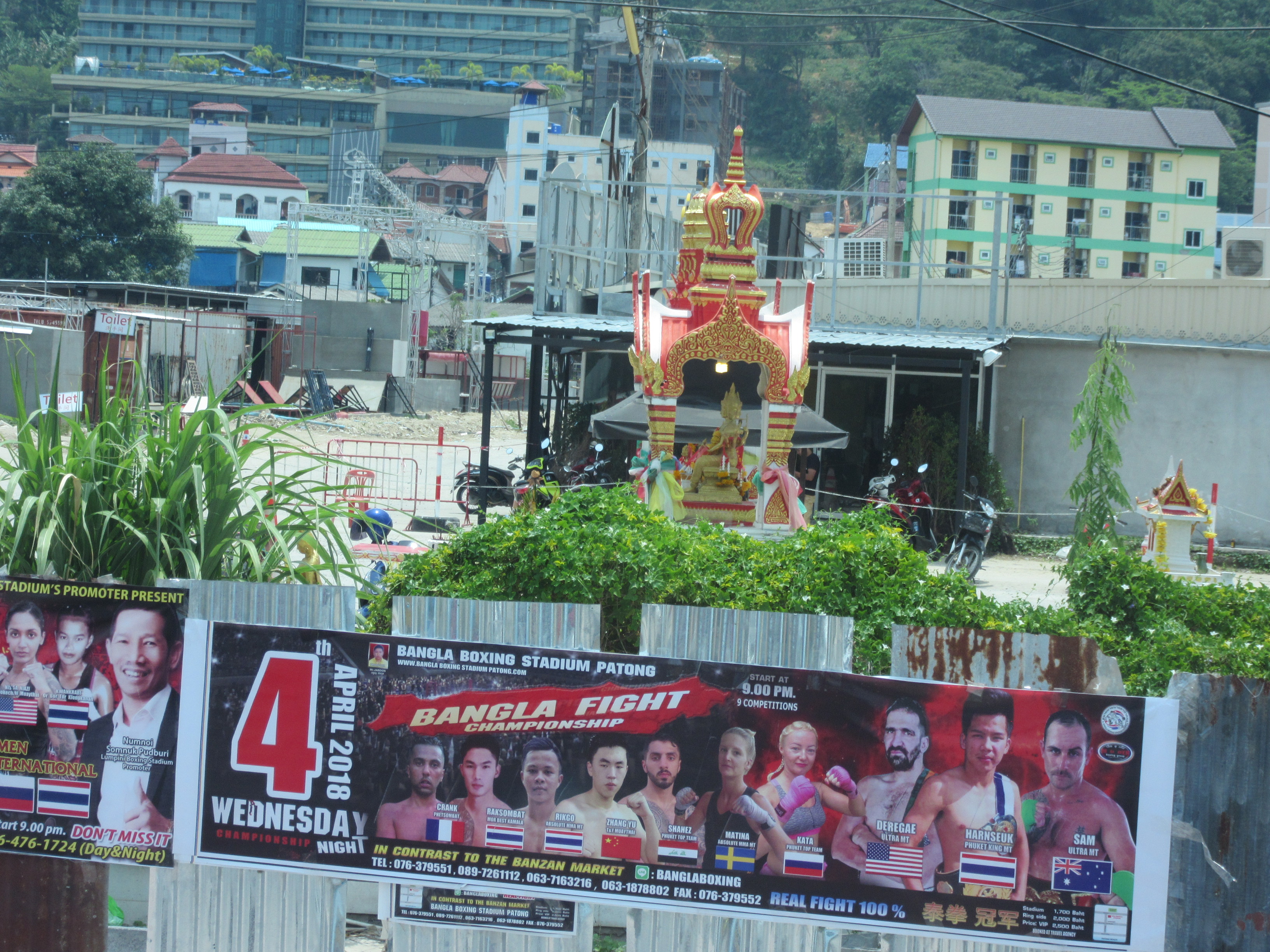
We arrived just in time to have lunch at the Phang Nga Bay resort on the banks of a river bordering the Phang Nga National Park – a tasty buffet spread of typical Thai dishes.
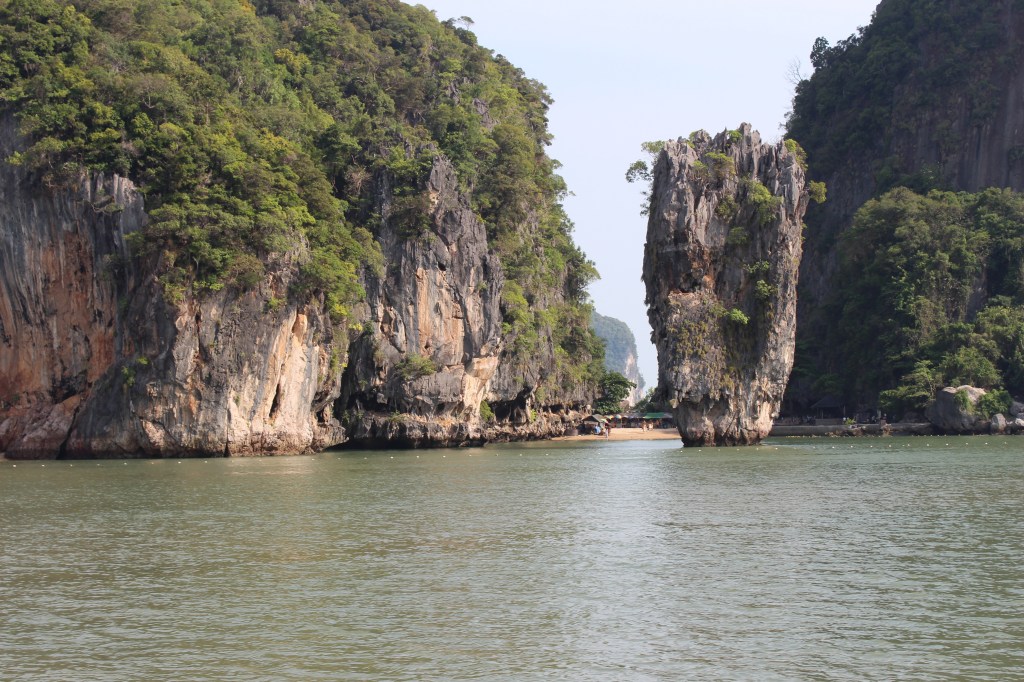
The main highlight of this tour was a trip on a long-tail boat with an inboard engine with a typical very long propeller shaft on Phang Nga Bay and to the James Bond Island featured in “The Man with the Golden Gun”.
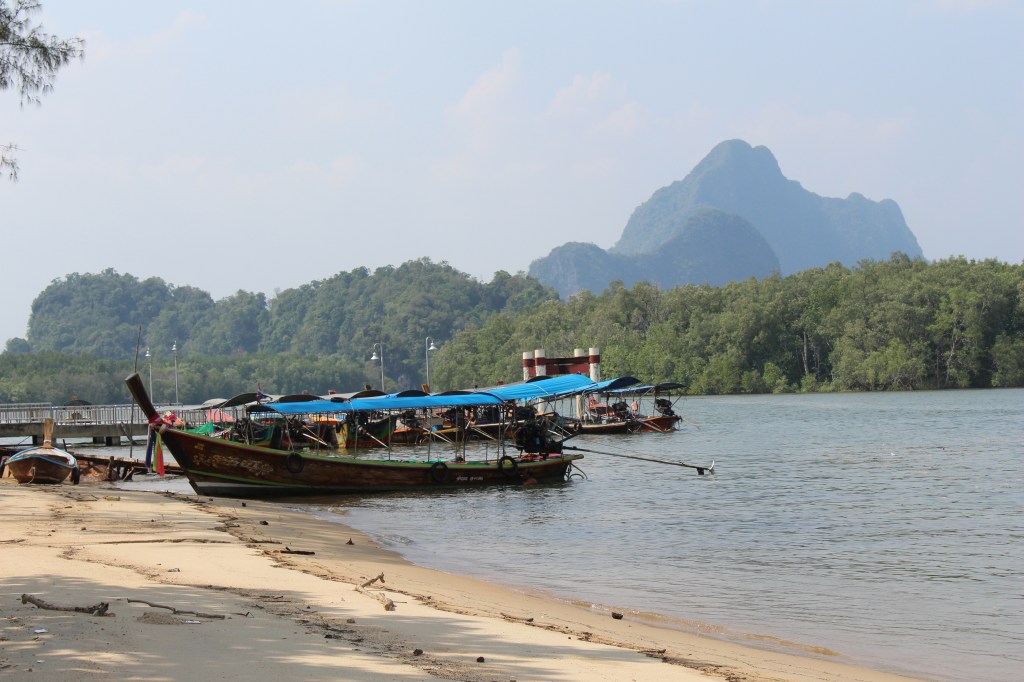
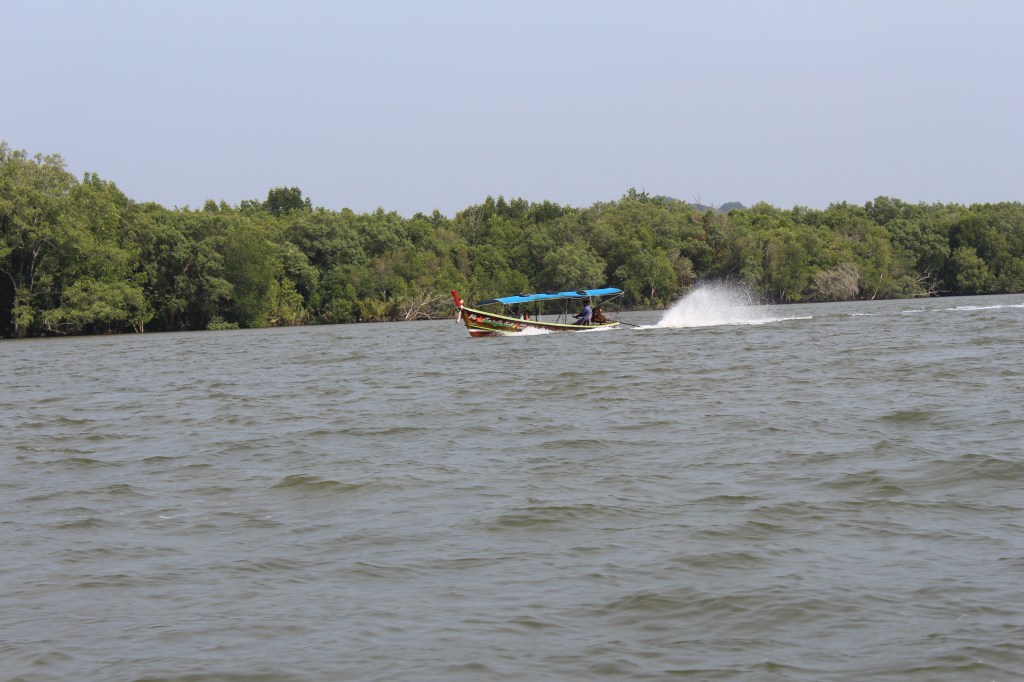
The bay is characterised by limestone cliffs and islands that are being continuously undercut by wave action forming interesting rock formations. Mangroves are prolific along the shoreline. The James Bond Island consists of two hills separated by a small sandy beach that is guarded by a third needle-like formation.
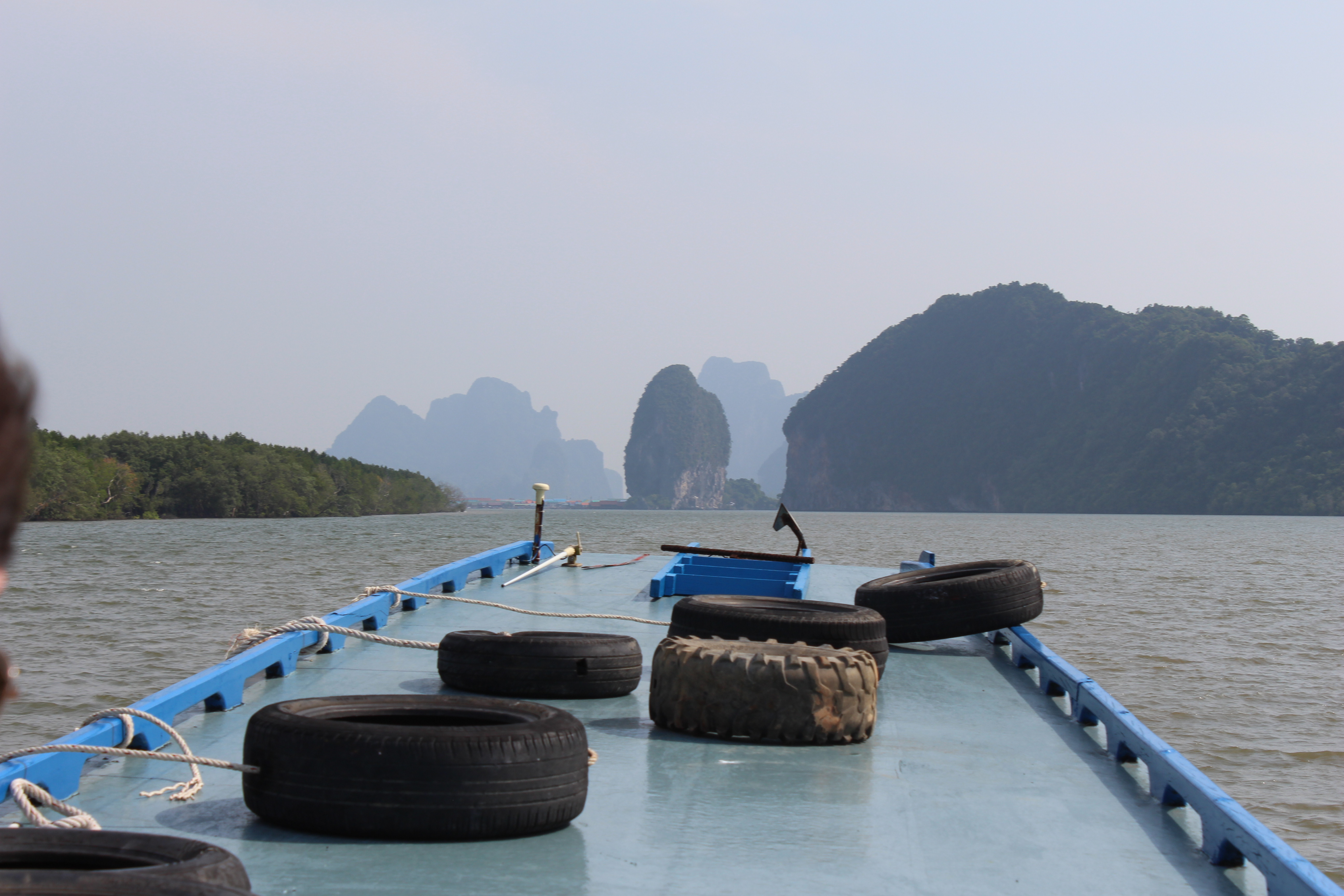
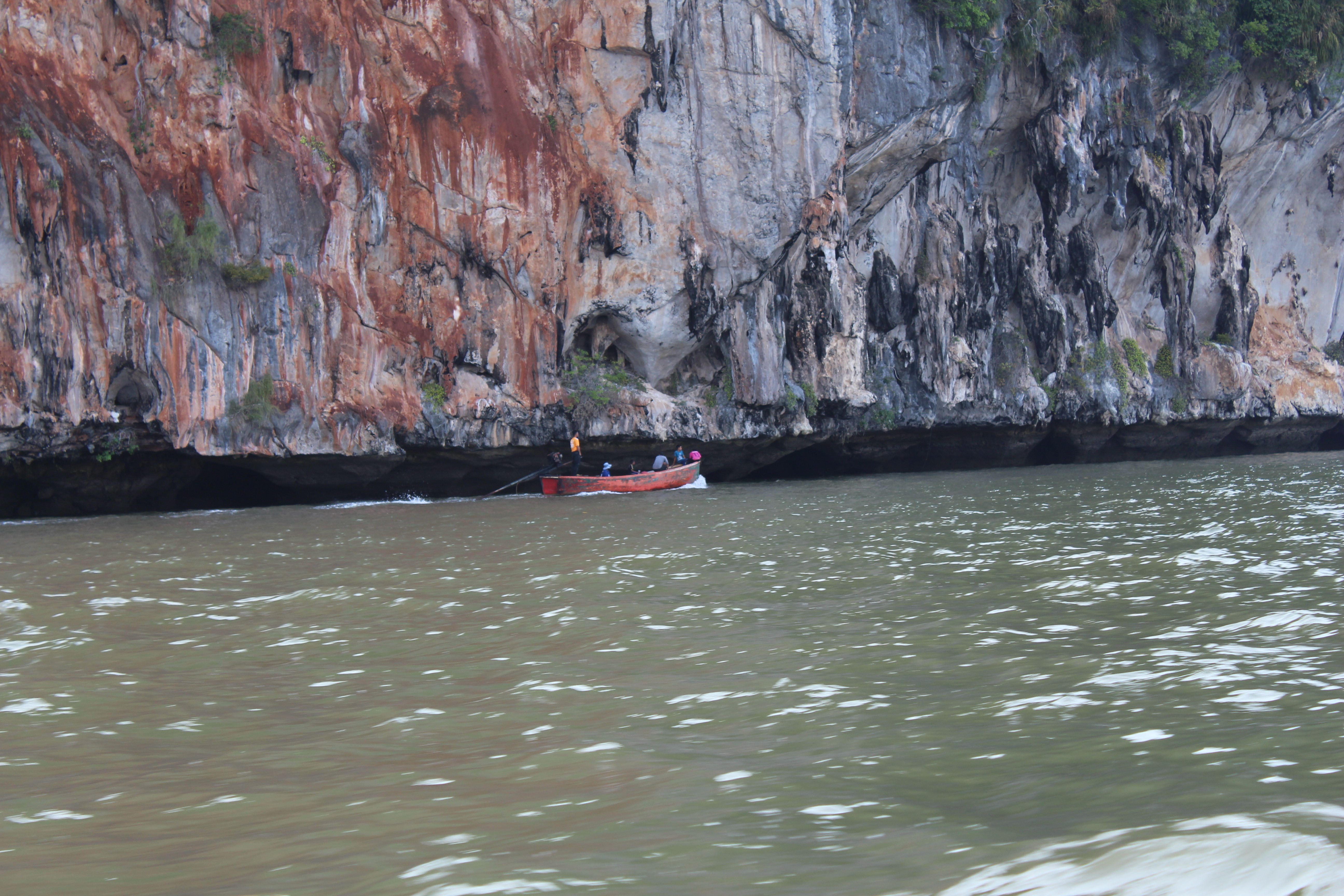
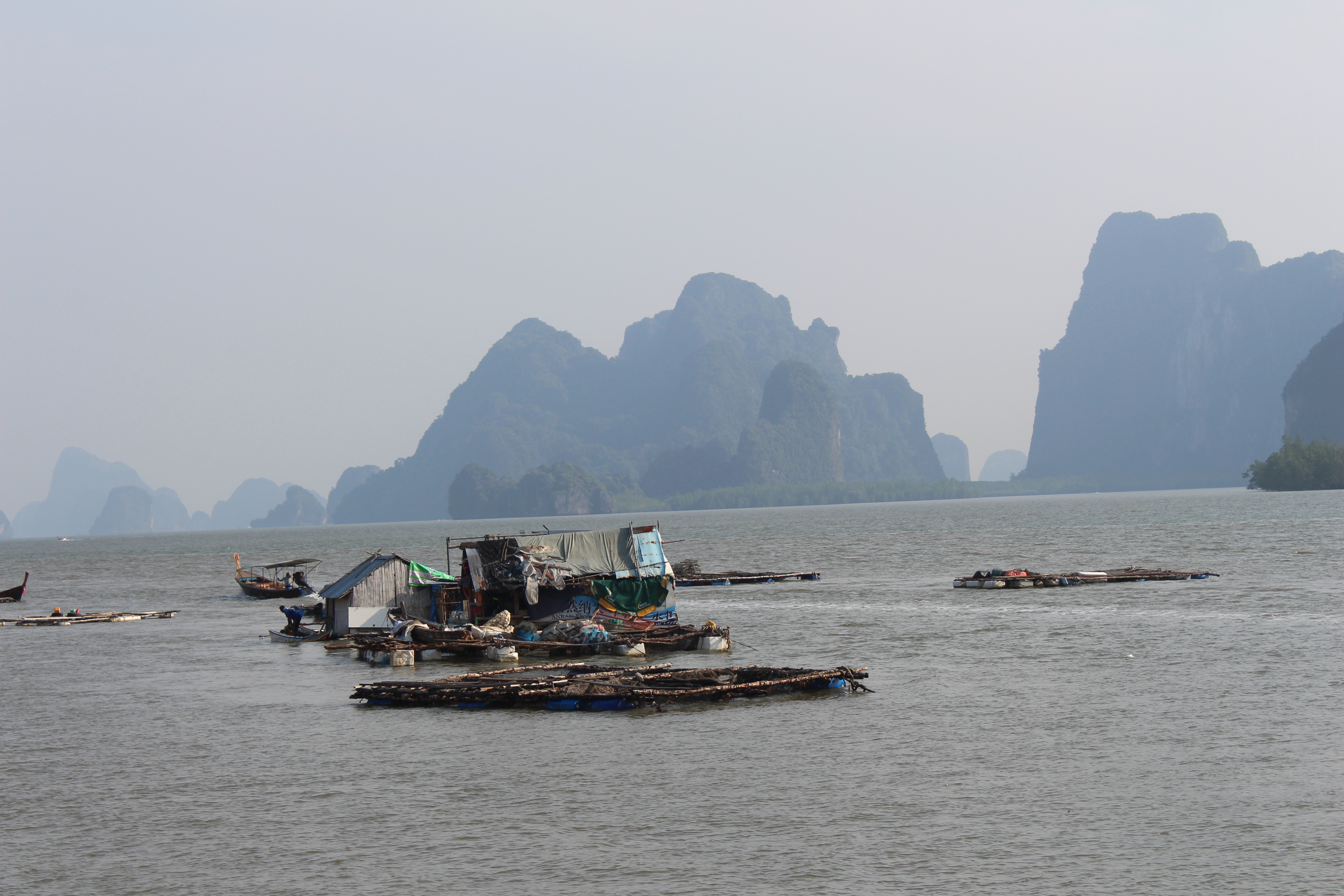
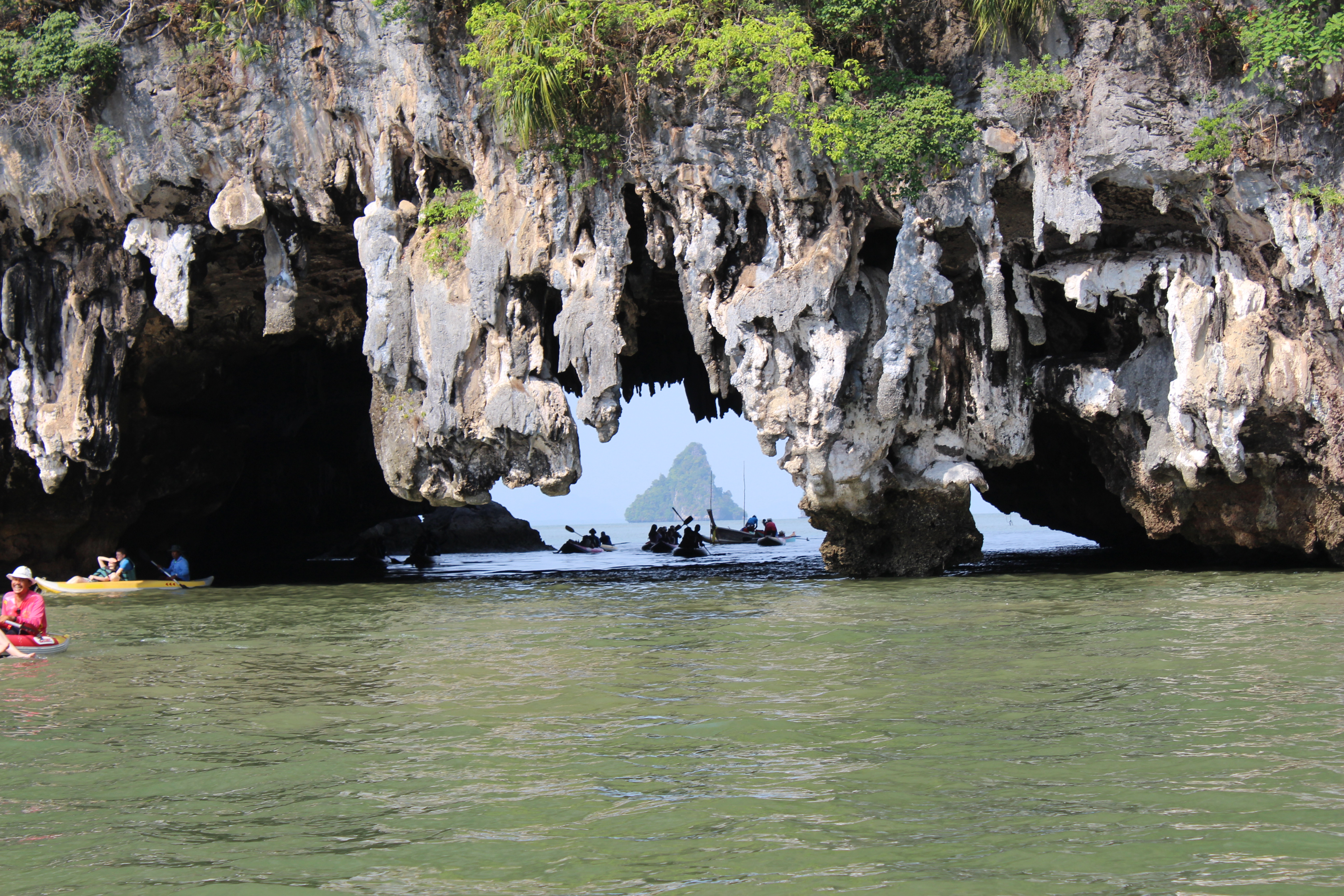
Phanga Nga Bay
Also in Phang Nga Bay is a floating Muslim fishing village called Ko Panyi. There is a Mosque, which is actually built on the island next to the community but most of the house are either built on stilts or floating as well as the school. A large market selling many tourist items makes this a regular stop off point for tourists.
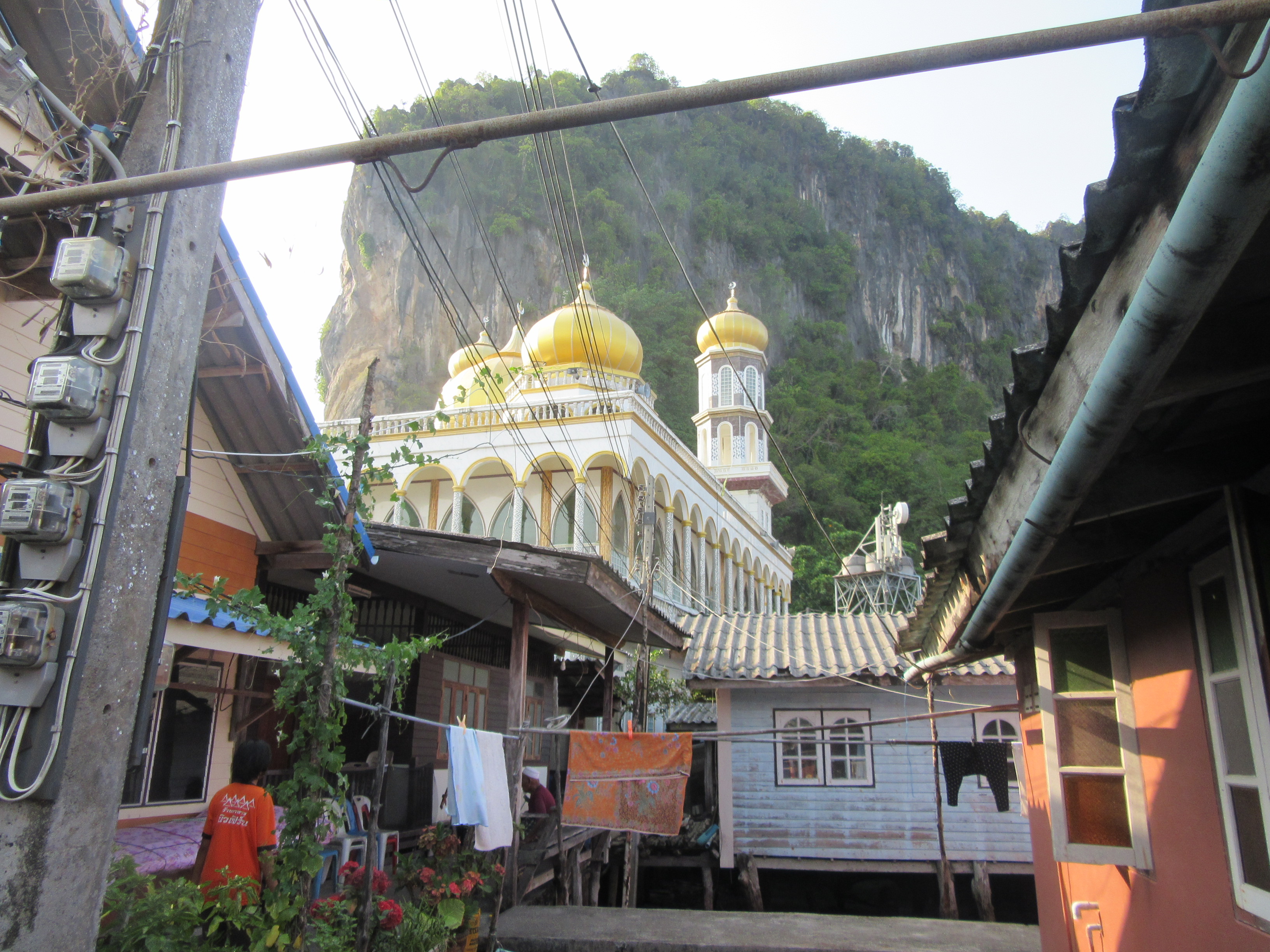
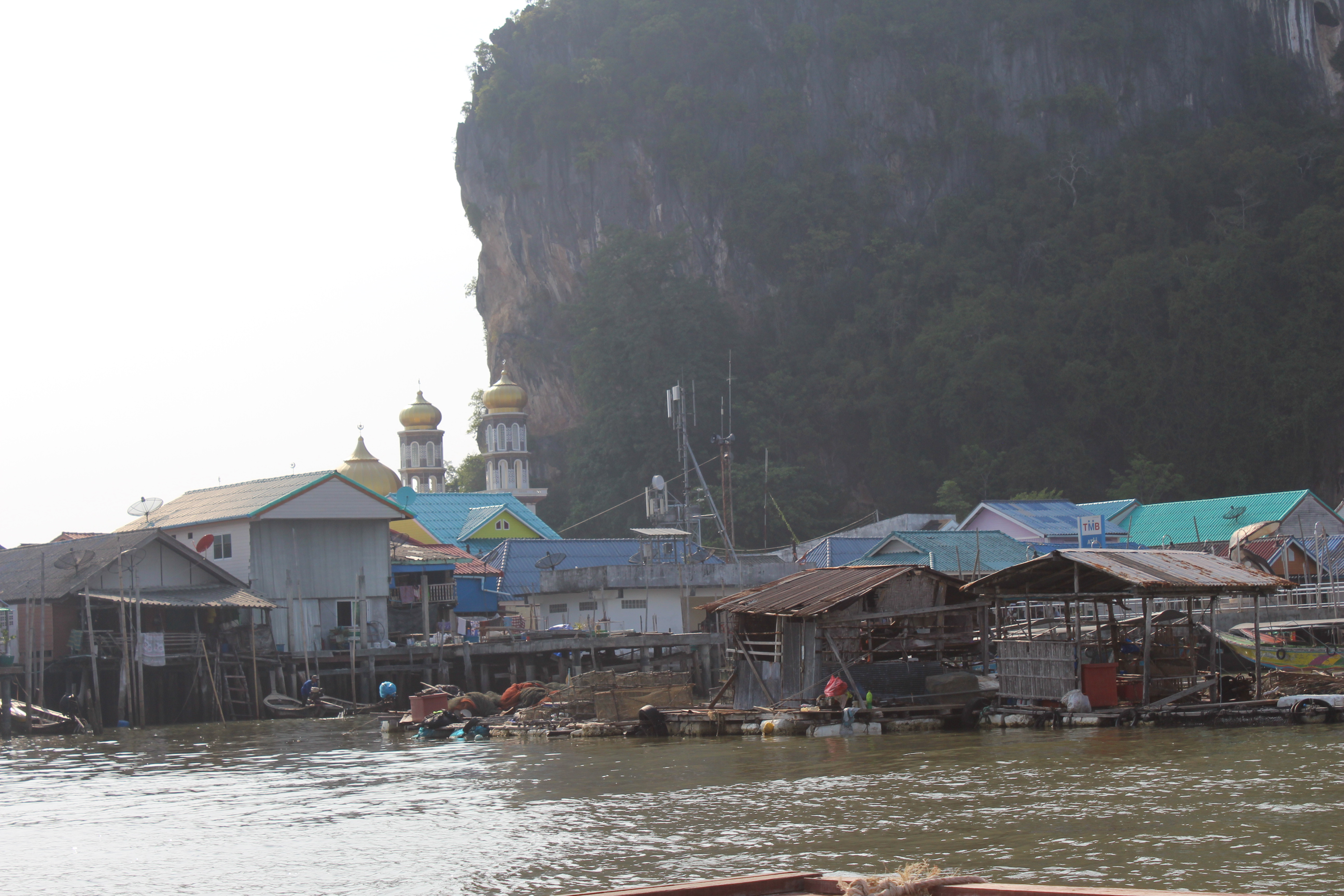
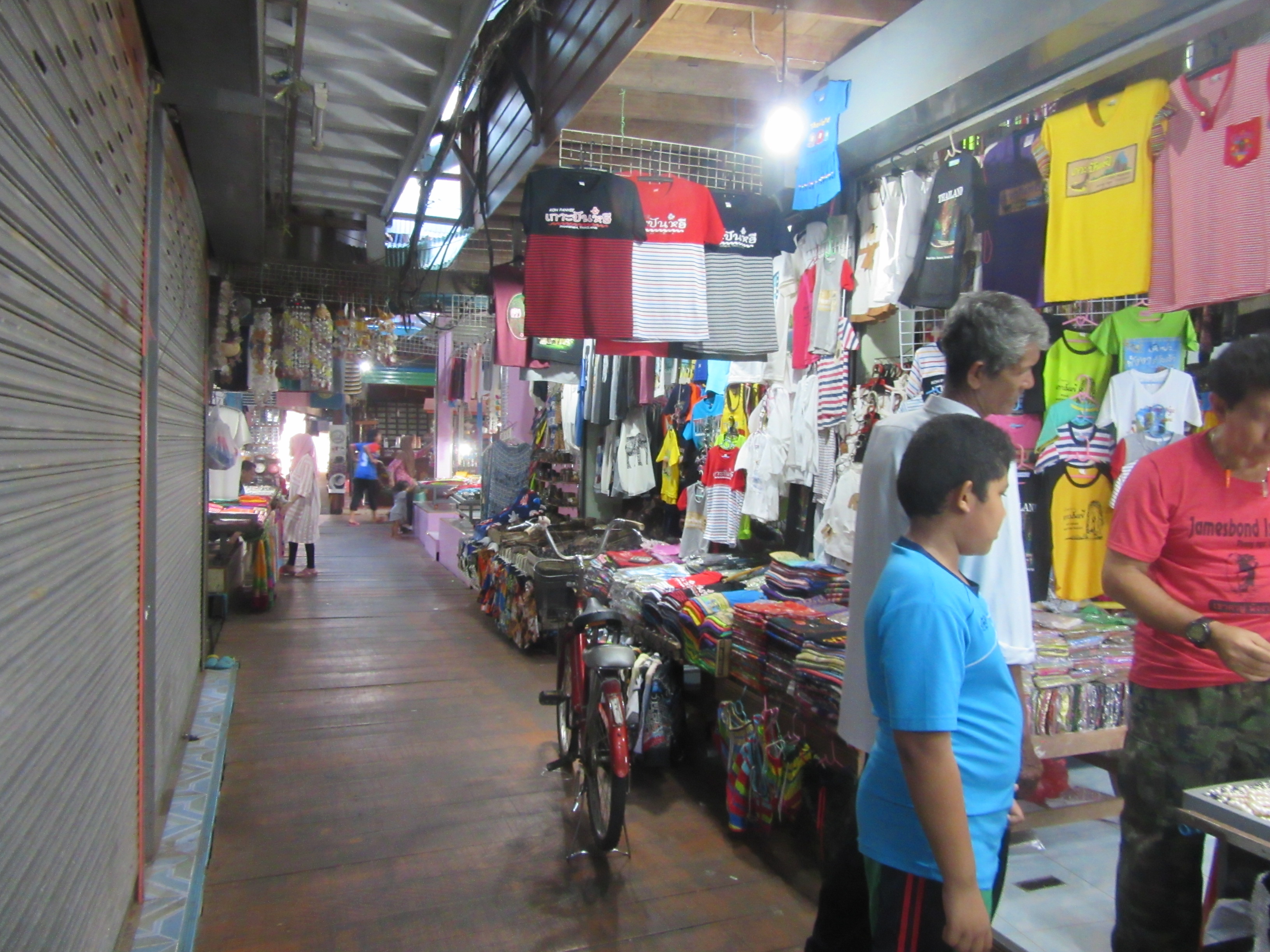
Ko Panyi
Back in the bus, we arrived in Phuket in time to catch one of the last tenders back to the ship before it weighed anchor and set off for Singapore.
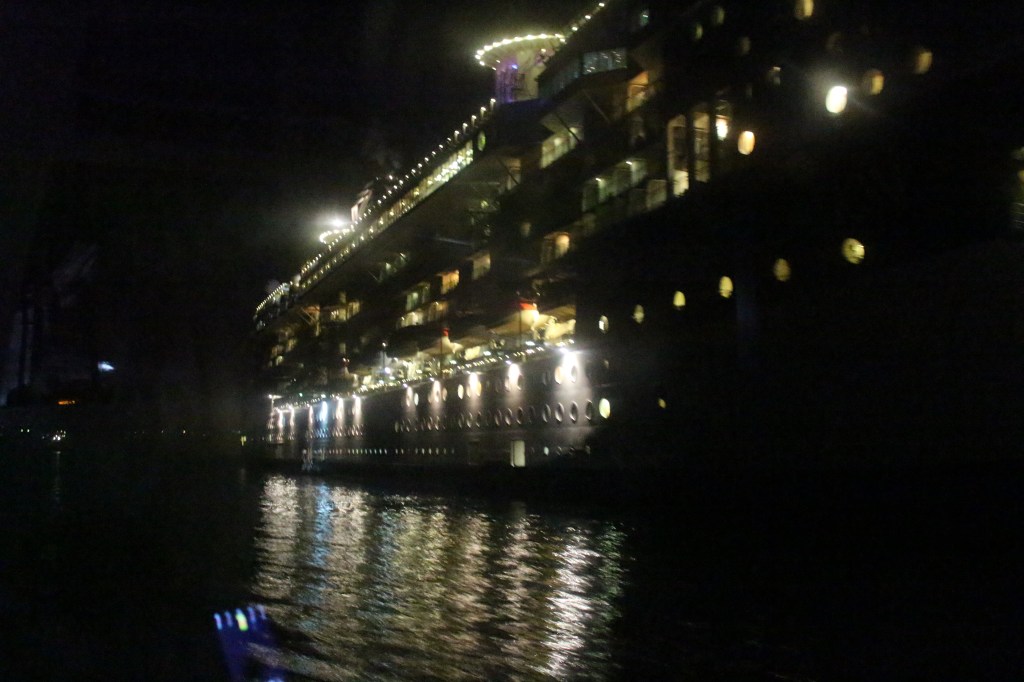
One last day at sea – we had to collect our passports and pack our suitcases ready to be picked up in the evening. It was quite sad to think this was our last day and night on the ship that had been home for the last two weeks.
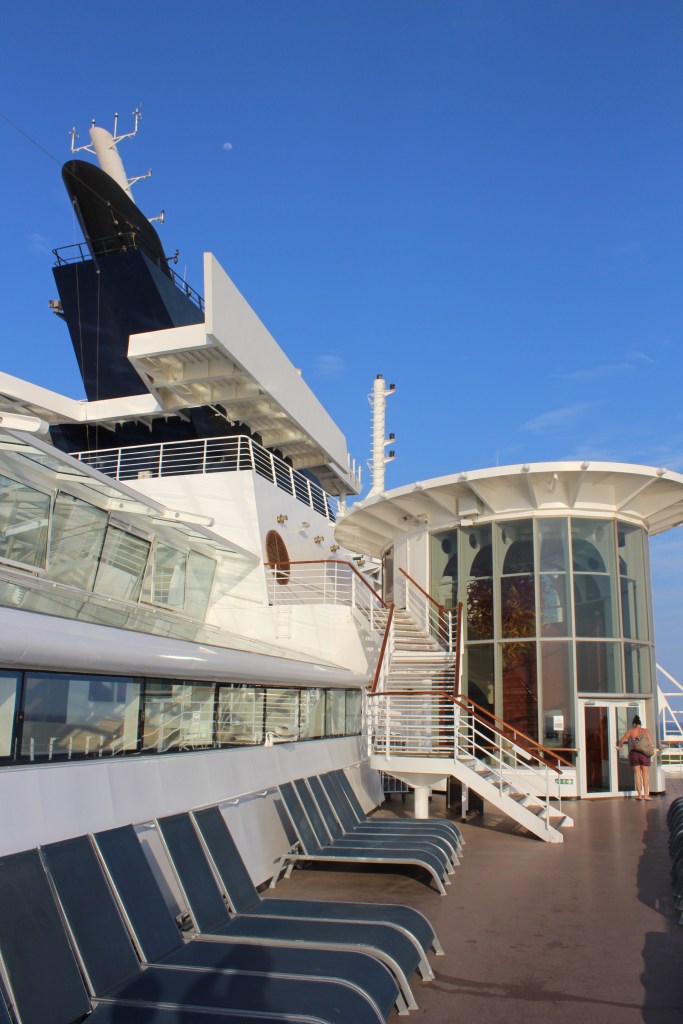
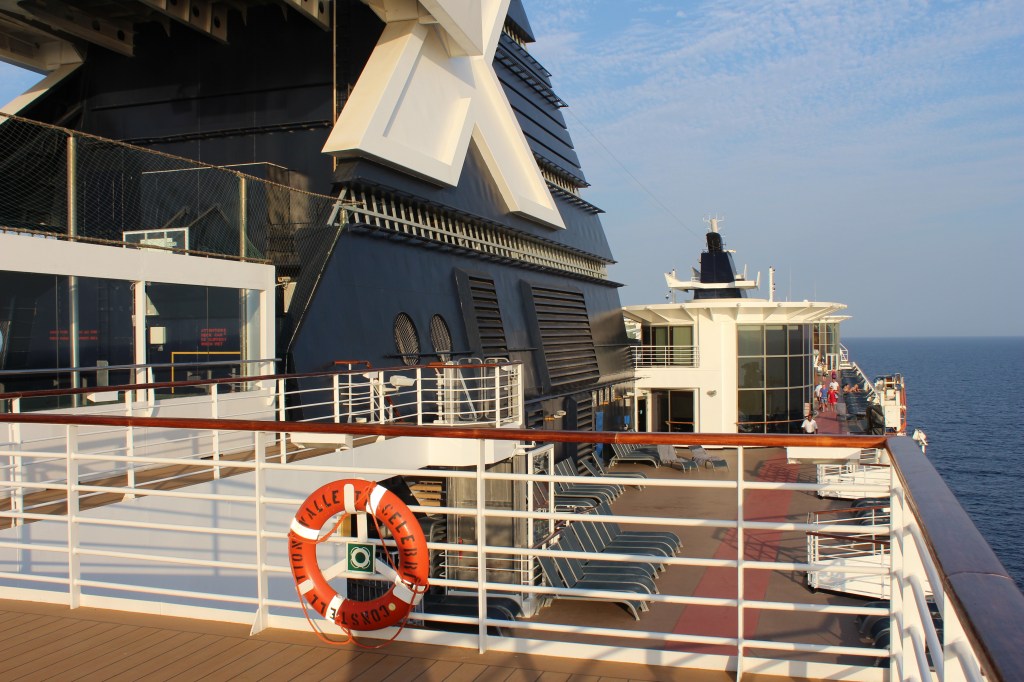
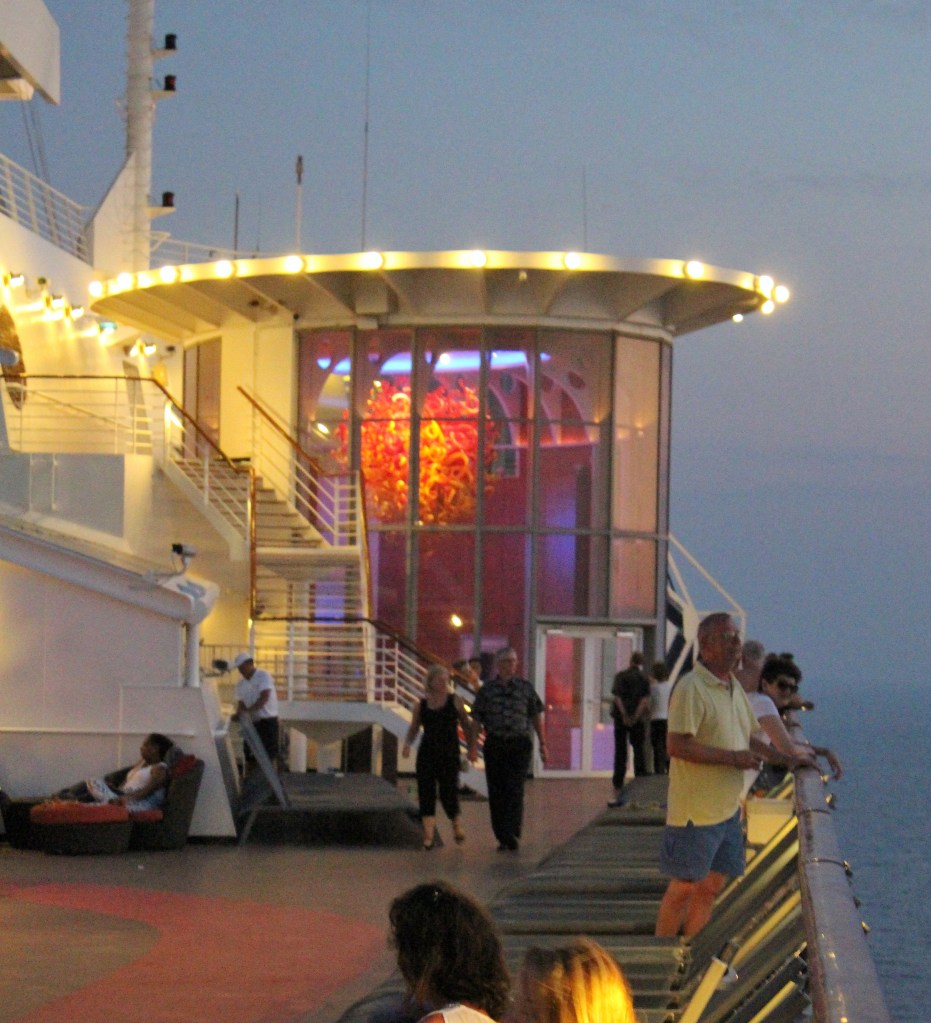
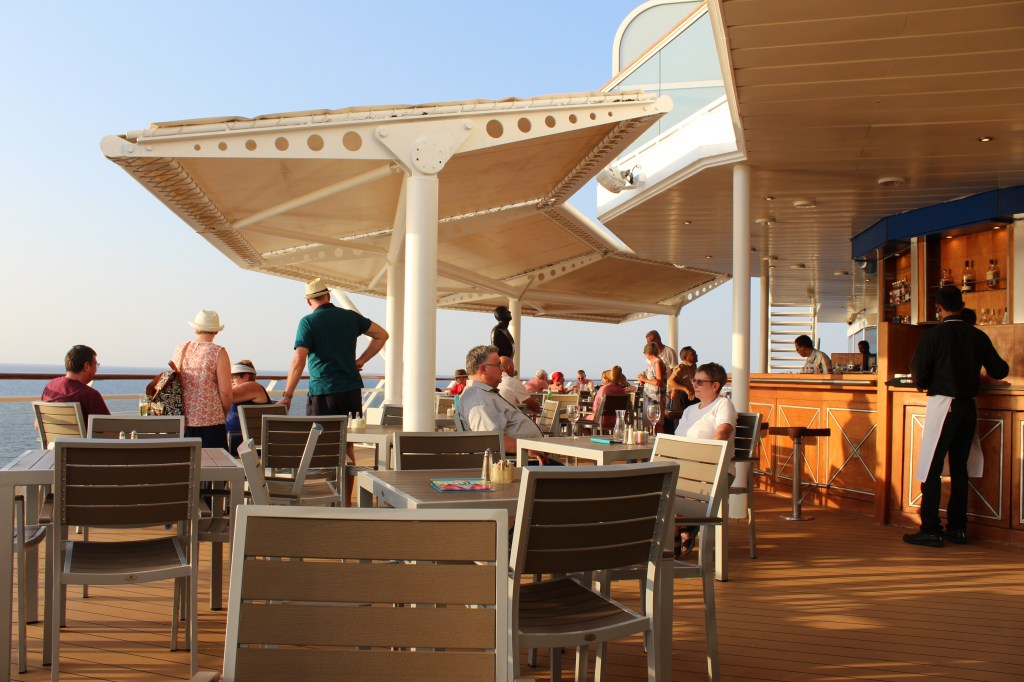
We had enjoyed our time on board just as much as all the tours we had done. Just to wander around the ship and see what could be seen on different sides was interesting. The weather was amazing every single day and the sea mostly glassy smooth – no need for seasickness precautions. The Arabian Sea from Muscat to the Indian coast was very clean, but with little in the way of bird or fish life that we could see. Once we got into the Andaman Sea and close to Thailand and then in the Malacca Straits we saw a lot of evidence of pollution and at times were not out of sight of some floating debris, some quite large containers and pieces of plastic and styrofoam. But even so, we spent hours watching the passing scene, counting the number of ships we saw and wondering where they were going.
The pools were made use of frequently, although the outside pool got very crowded, especially as the passengers were mostly British just wanting to lie in the sun all day every day. It was amazing how many over-pink bodies we saw! The indoor seawater pool and Jacuzzi area was the one we used most. We also managed several visits to the gym to cycle and walk/run on the treadmills. Most days we managed to do a couple of kilometres walking on Deck 4, which was a long open deck and where we also sometimes found a couple of reclining chairs to relax in to read the daily news reports from around the world. We usually chose the UK, USA and Italy to catch up with.
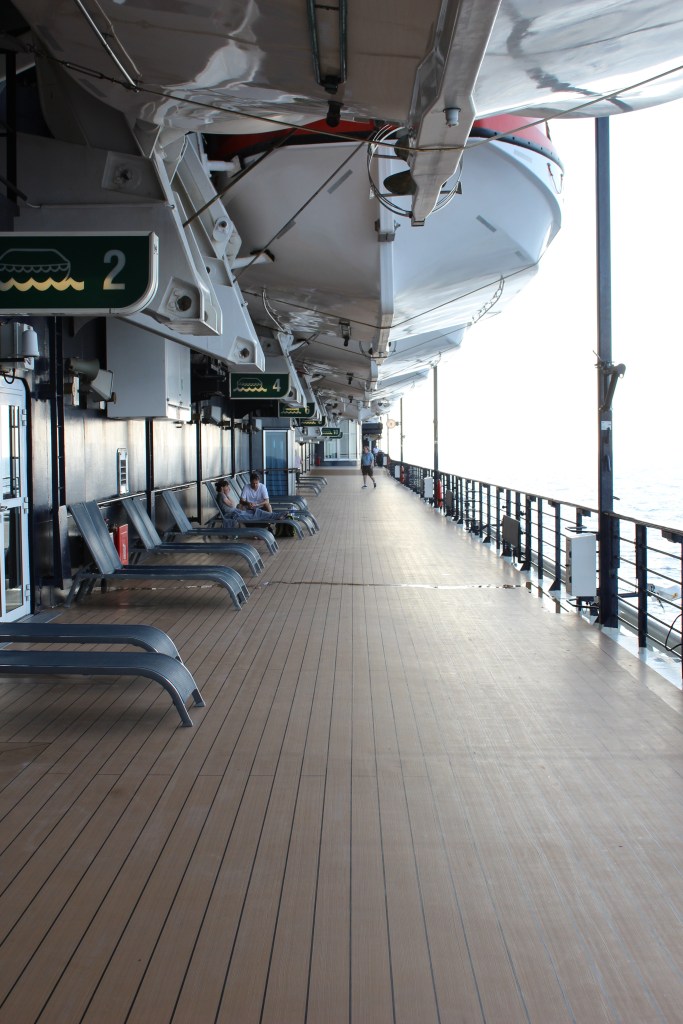
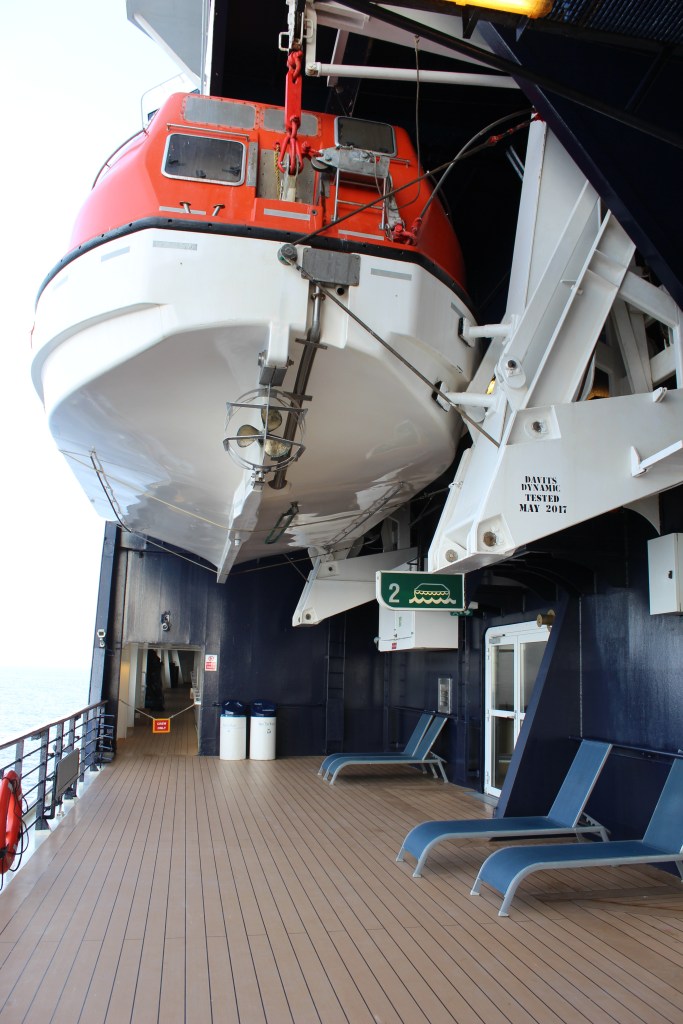
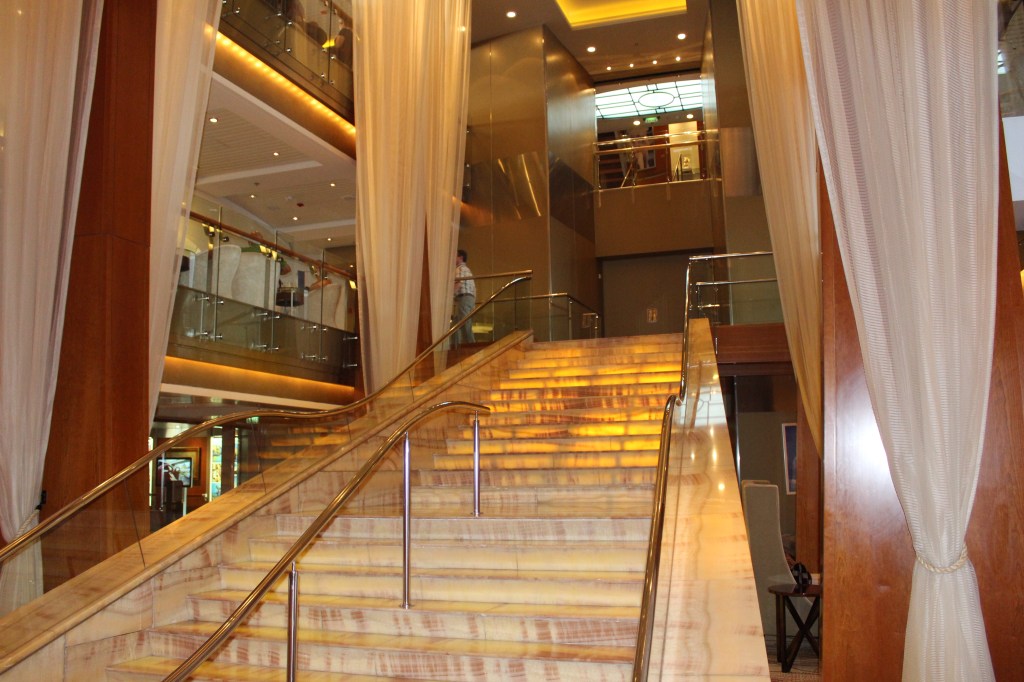
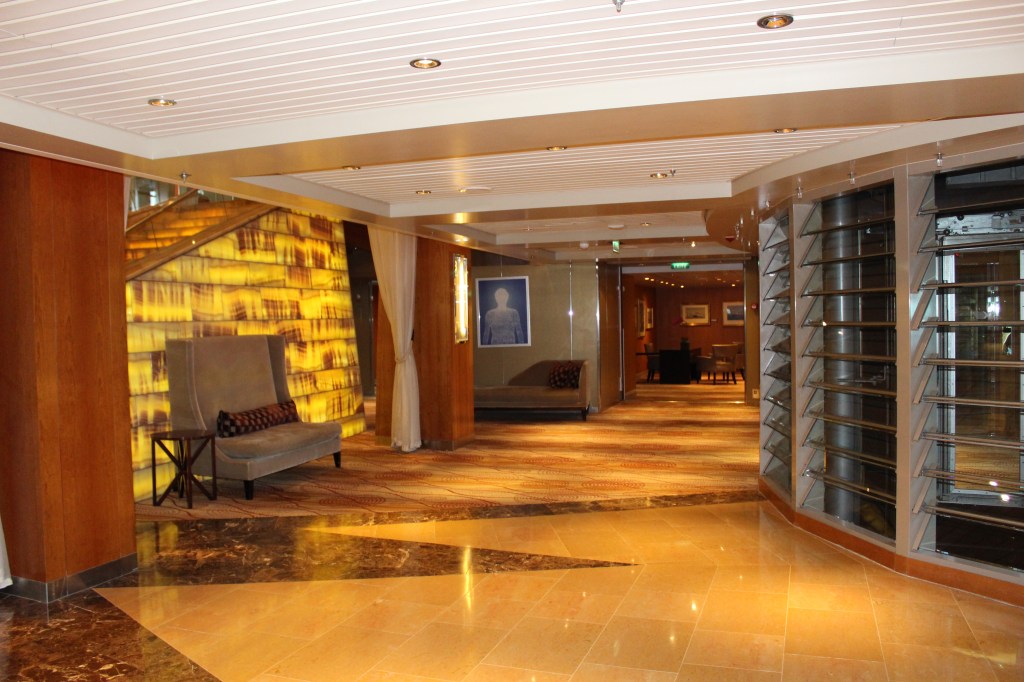
Most late afternoons were taken up with grabbing a cup of tea and scones and hoping to make it in time for the Trivia quizzes in the Rendezvous lounge. We did pretty well at the general knowledge quizzes but not so well at the Music trivia, except for the one on the Beatles. There were some very good teams that competed for the Progressive tournament – testament to the popularity of Pub quizzing in the UK.
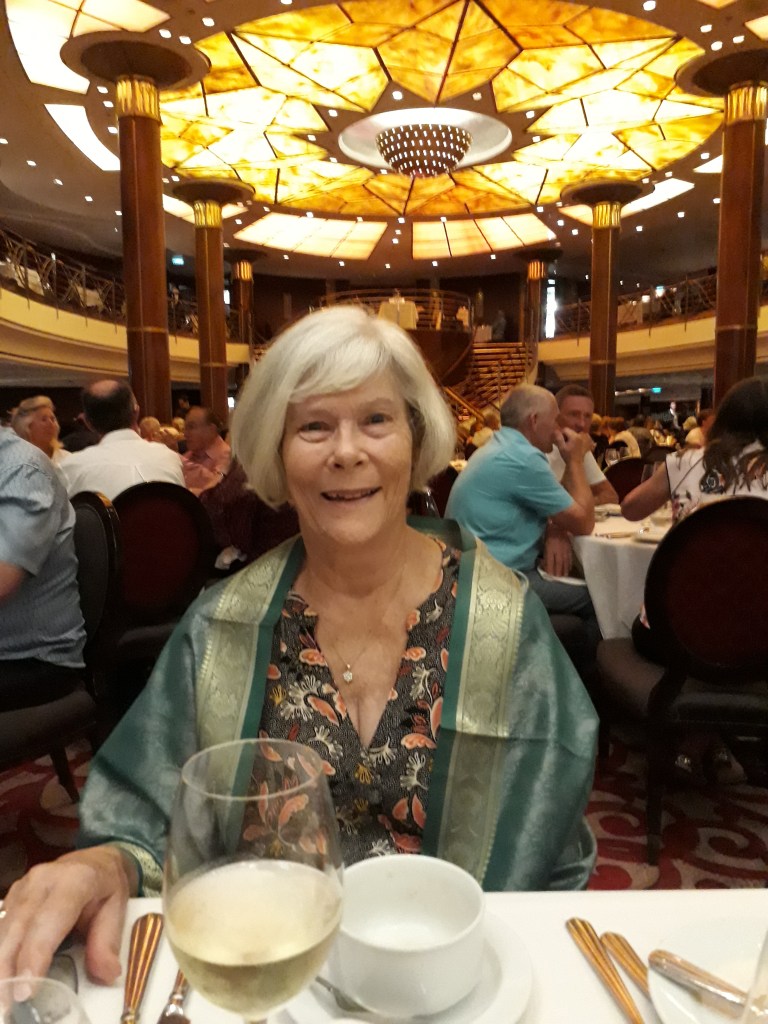
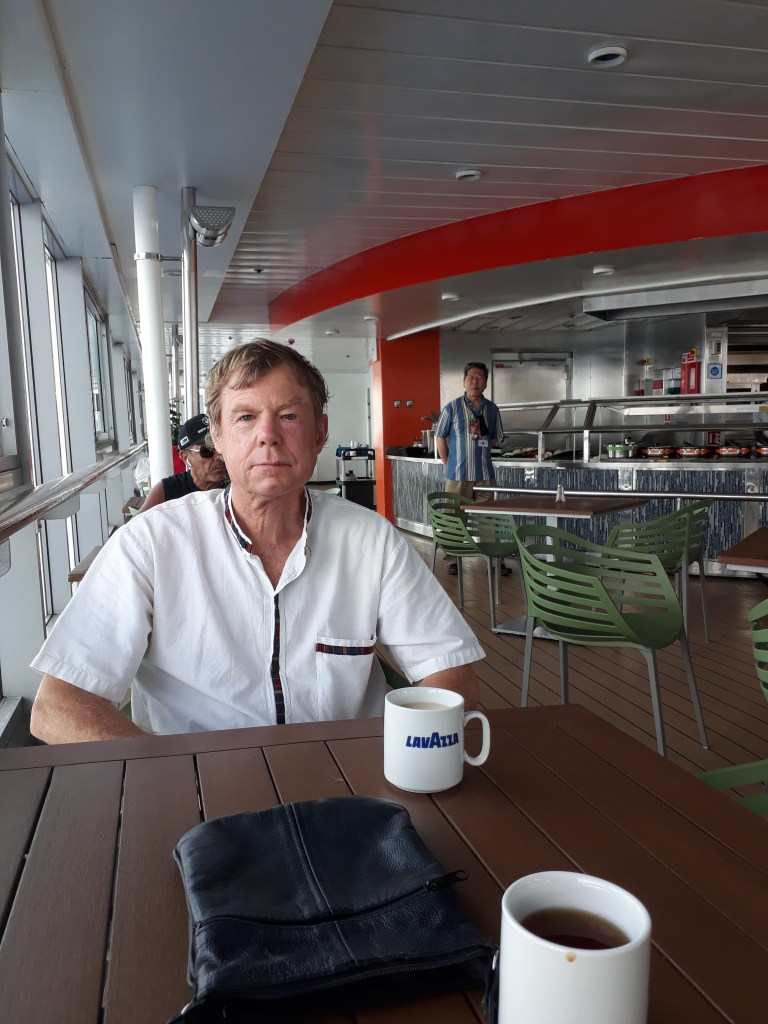
Evenings had to be planned quite carefully, to fit in all the activities we wanted to do. It also depended on how long we had to wait for a table in the San Marco Restaurant. We tried to time it carefully to miss the most popular times but it didn’t always work. Occasionally we had dinner in the buffet restaurant on the 10th deck but we always had breakfast there as well as lunch. It meant we could be free to go whenever we felt like it.
Every evening there were several music sessions or theatre performances that we were keen to see. The Celebrity Theatre put on shows every evening at 7.00pm and 9.00pm so we could either eat early and go to the 9.00pm performance or go to the show first, and then eat. We also found fairly early on in the cruise that the resident guitarist/singer Gordon Daniels, played our sort of music in his sessions, which took place at different times in the evening – most often we rushed up to his late evening session after the show in the theatre. The theatre shows we most enjoyed were the Barricade Boys, Elton Jack (an Elton John look alike), a striking female violin player, iMusicals – Music and memories from Hollywood, Amie Atkinson (sparkly singer), the Celebrity entertainers Panto, Shane Hampshire (rather like Michael Buble) and the Celebrate the World show by the Celebrity entertainers. Gordon Daniels did tribute sessions to various well-known singers, often suggested or requested by the passengers. He did a couple of sessions with Beatles music, one of Willie Nelson classics and another of Johnny Cash favourites, as well as CCR. Unfortunately we didn’t keep a record of all the tributes he did but there were several more that we enjoyed, often sitting on Deck 11 in the cool evenings, sometimes with a late night cocktail in hand.
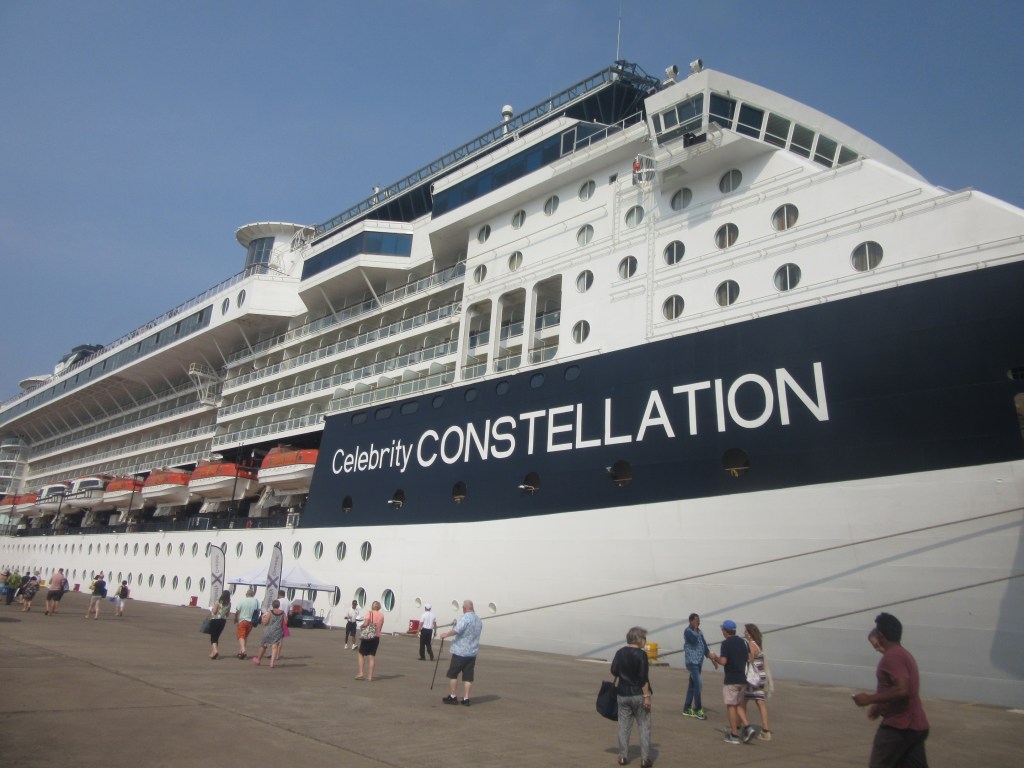
We were up fairly early on the last morning as we had to have breakfast and be ready for our tour by 9am. We had a last quick look around the ship and some photos of the habour and Singapore skyline from the upper decks before going to the Theatre to await our tour.
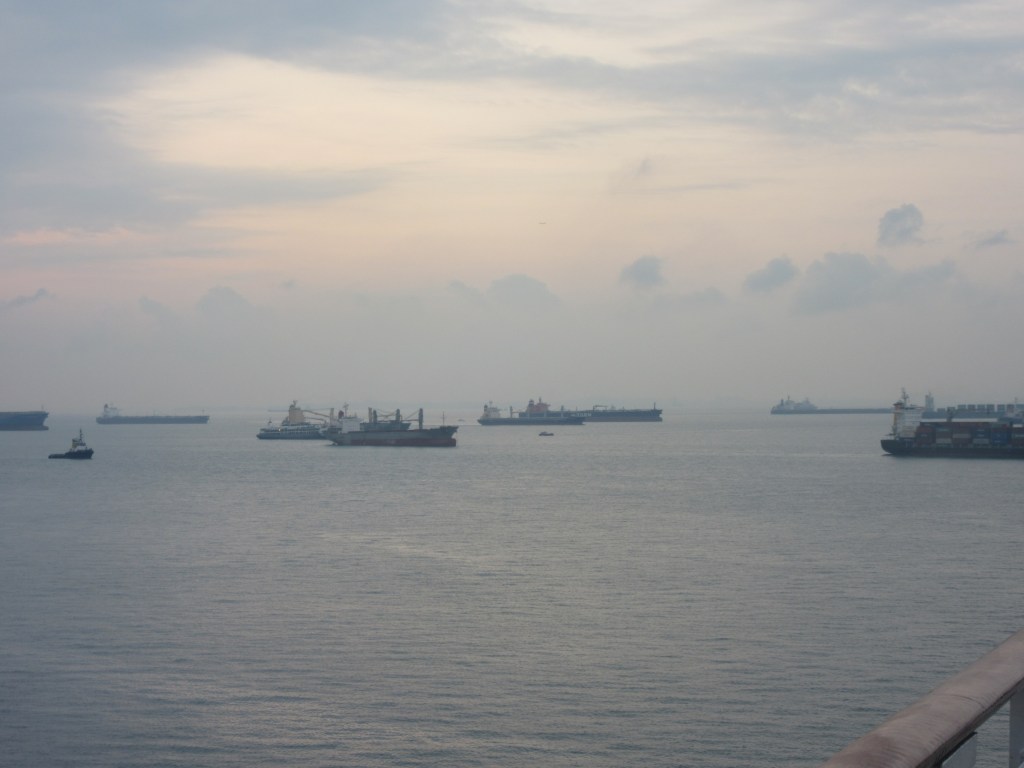
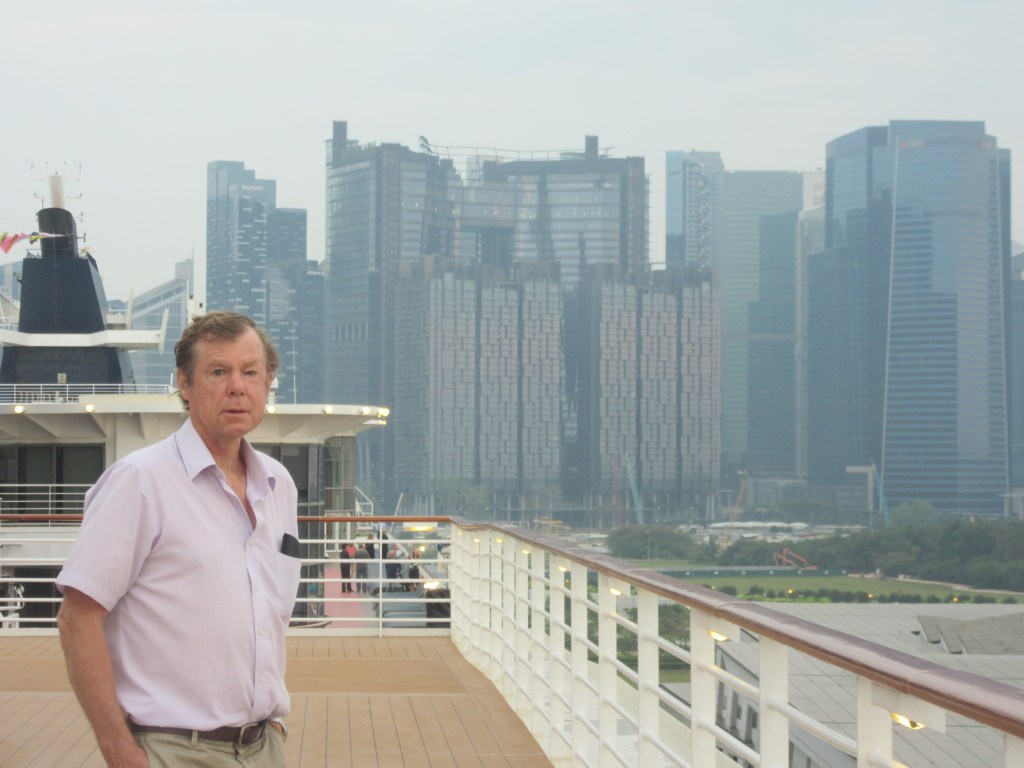
As we were going to spend two nights in Singapore we had booked a hotel that was on the list for dropping off passengers. The guide on our bus was quite entertaining and very adamant about keeping us strictly to the time schedule. He was also very informative about Singapore and the sights we passed on the way, initially to the Botanic Gardens. Most high rise apartment accommodation in Singapore is built and owned by the government and rented out by the Housing and Development Board. Attractive subsidies are given, making them affordable to most people. More than 80% of the population of Singapore live in HDB flats, which are also sold on a 99-year lease agreement.
Our guide also pointed out that car ownership and driving in the centre of the city is discouraged by various measures, including the requirement of obtaining a certificate of entitlement costing more than S$ 80 000 to enable a car owner to drive in Singapore. Even when it is obtained this only entitles ownership of the vehicle for 10 years after which the vehicle must be scrapped or a further amount paid to extend the COE. Certain road and expressways are also subject to an electronic road pricing system. The increasing price of parking is also designed to encourage people to use public transport. Both the metro system and public buses are very convenient and cover all of Singapore.
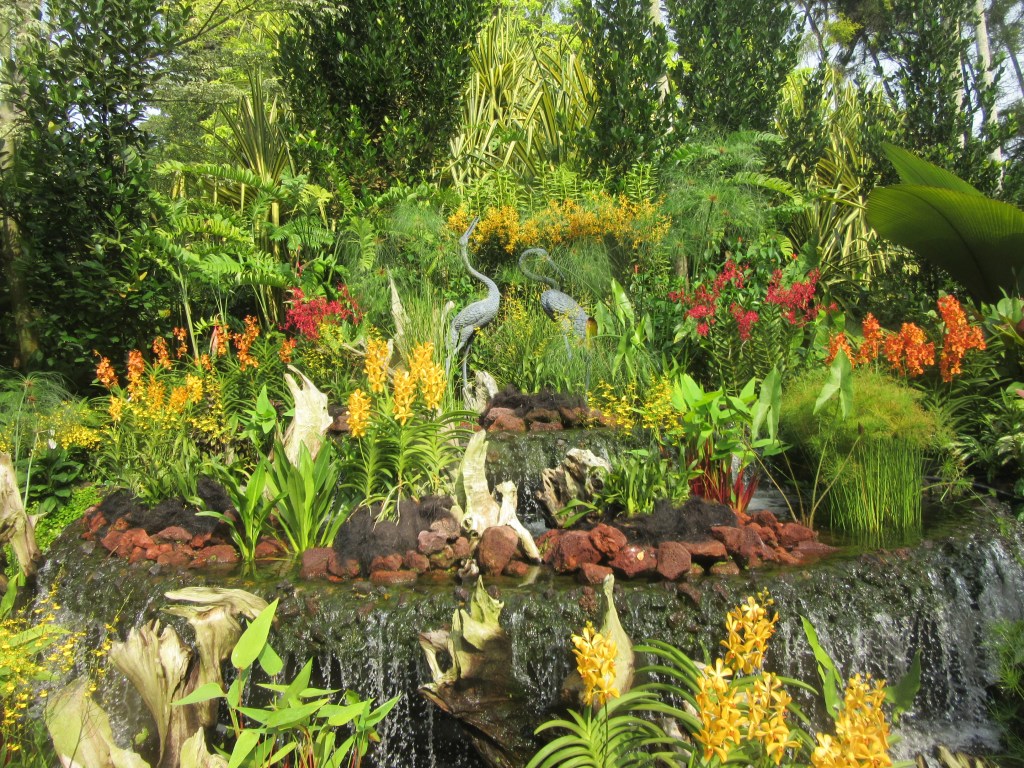
Our first stop was the Singapore Botanic Gardens, which incorporates the National Orchid Garden. Once outside the pleasantly air-conditioned bus we could feel the tropical warmth and humidity of a country that is only a few degrees north of the equator. The Orchid garden was really spectacular and the colour and variety of the orchids was stunning.
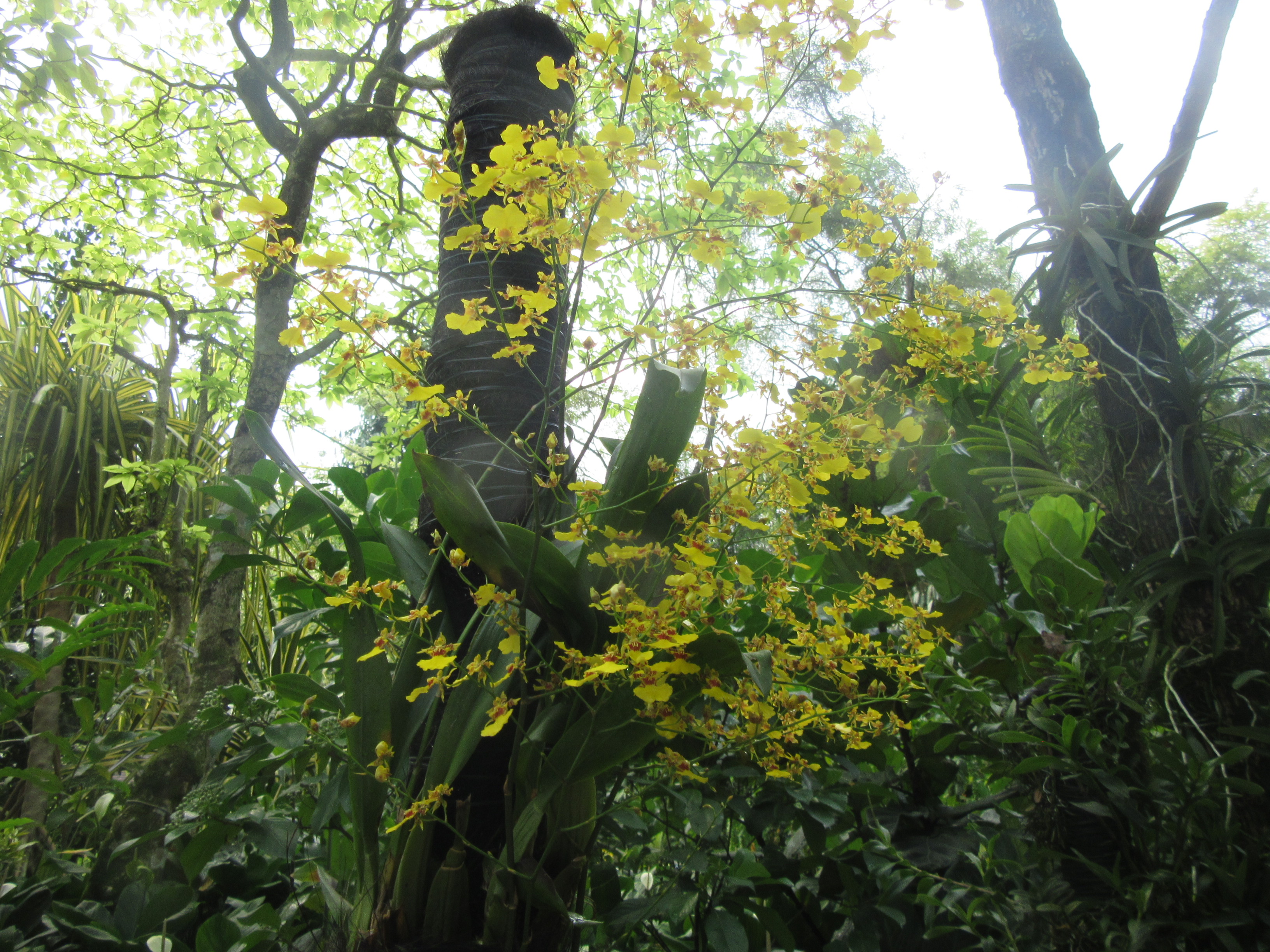
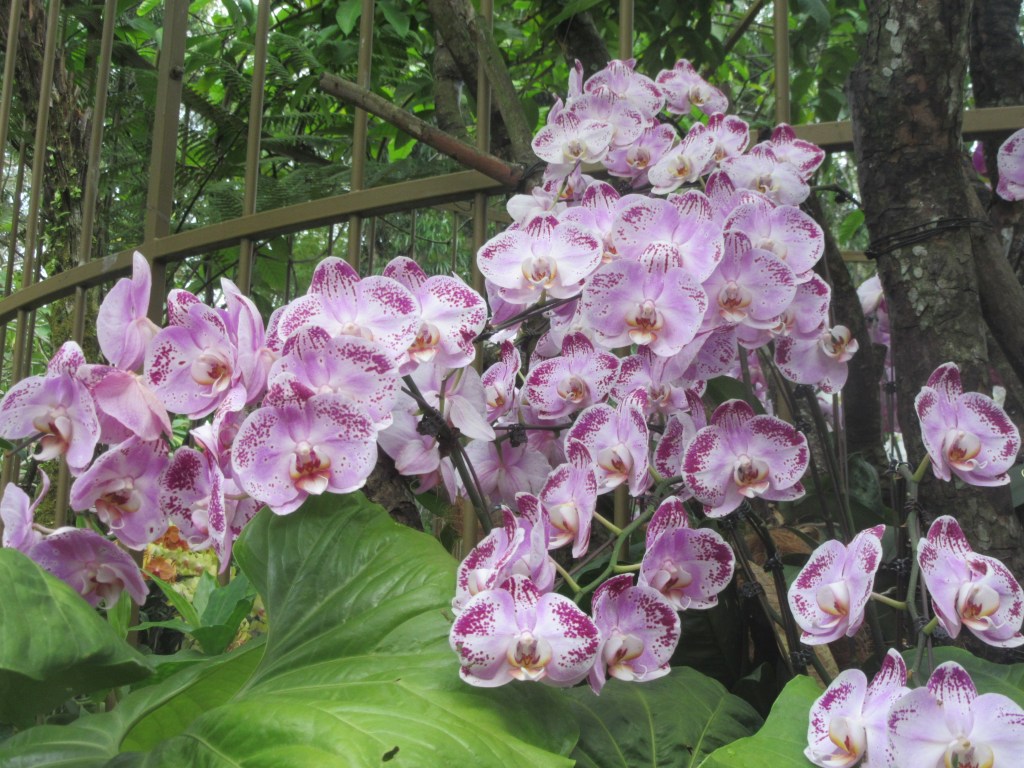
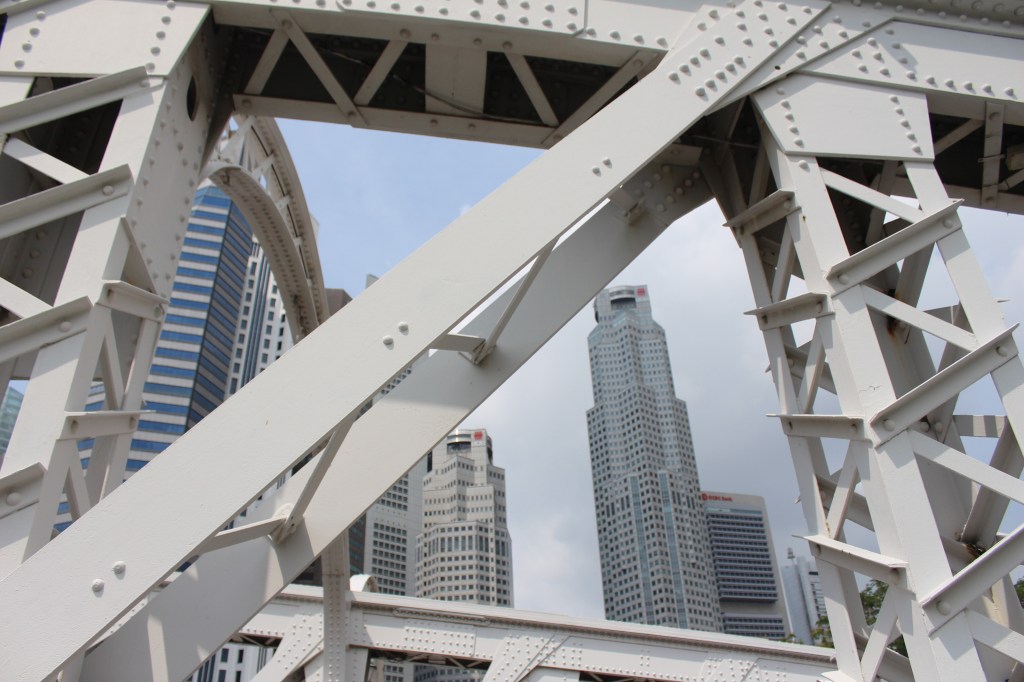
We were fortunate in knowing that we would probably be able to visit the gardens the following day as the time allowed by our guide seemed all to short and we were soon coerced back onto the bus for our next visit. We were driven back into the centre of the city and parked next to the Esplanade Park, near the statue of Raffles outside the Victoria Theatre. From there we walked across the Anderson Bridge that spans the Singapore River. The bridge was completed in 1910 and comprises three steel arches supported by steel ribs linking the arches. Archways at either end mark the entrances to the bridge. It is still used for vehicles but another modern bridge has been built for easier access to the Marina bay area.
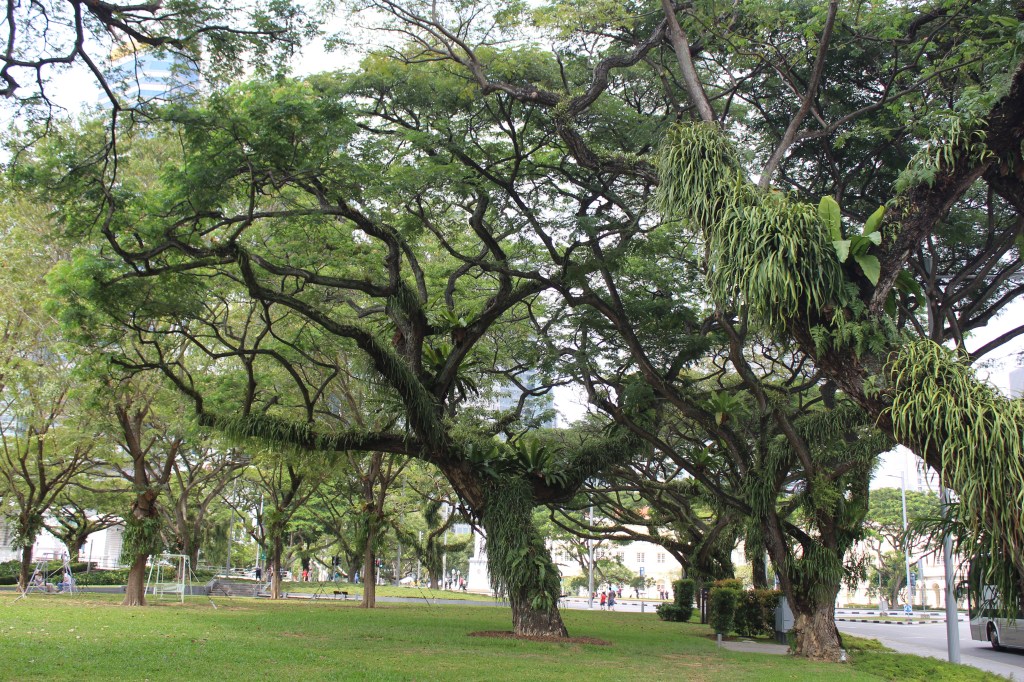
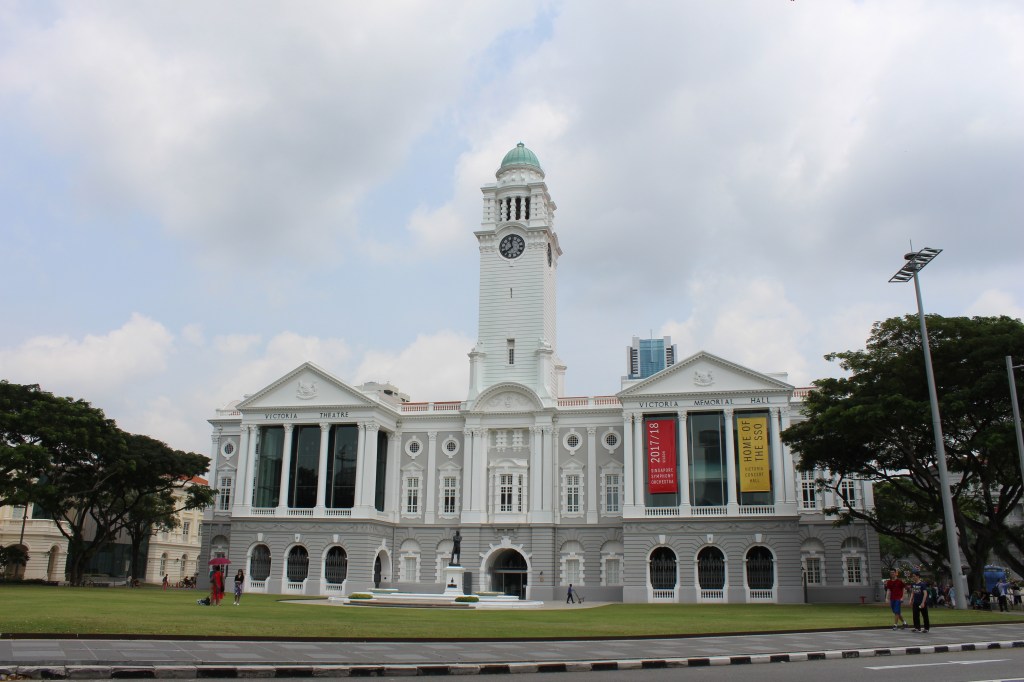
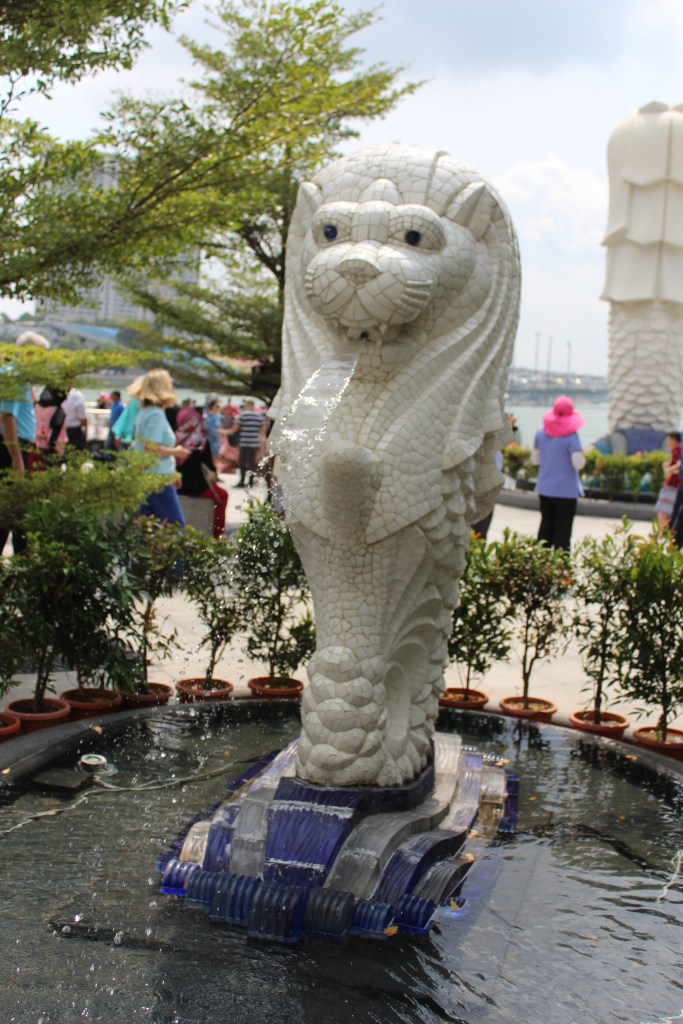
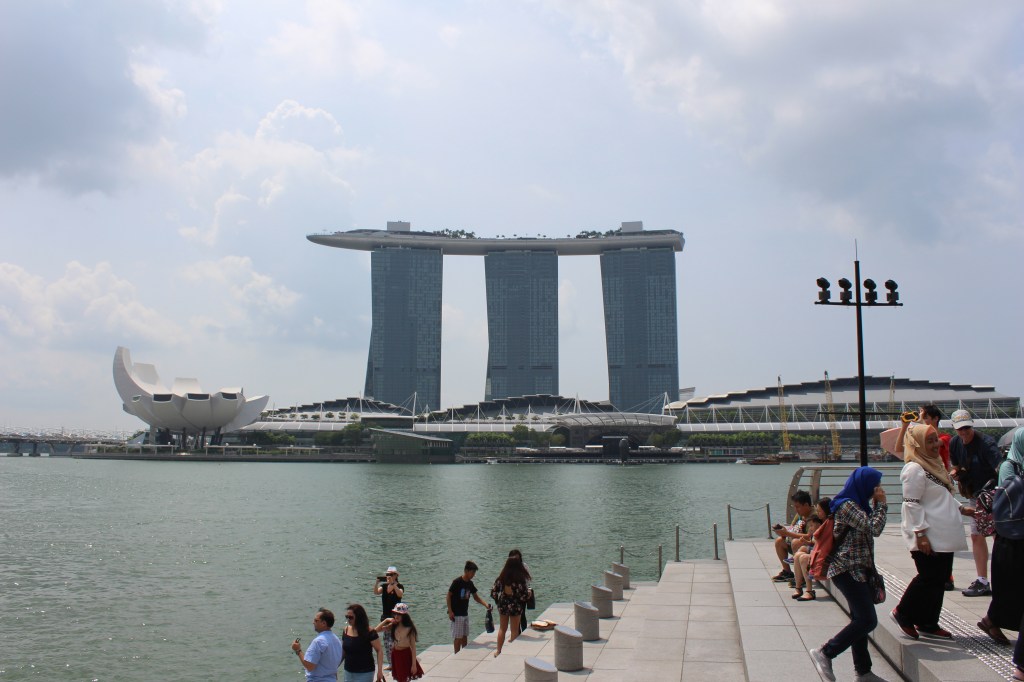
On the Bay itself is the Merlion Park. Approaching from the direction from which we came, the first Merlion you see is a miniature one, known as the Merlion cub. The large one stands 8.6 metres tall and weighs 70 tons. It has water spouting from its mouth into Marina Bay. The Merlion is half lion and half fish and is the mascot of Singapore. The first statue was unveiled in 1972, although the symbol was trademarked in 1966.
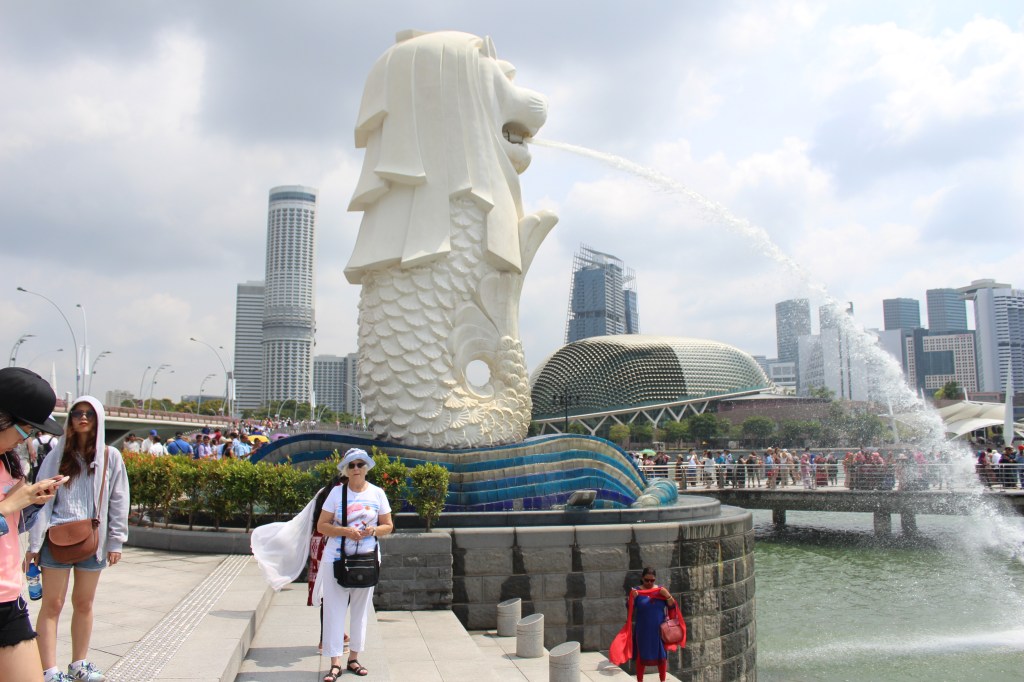
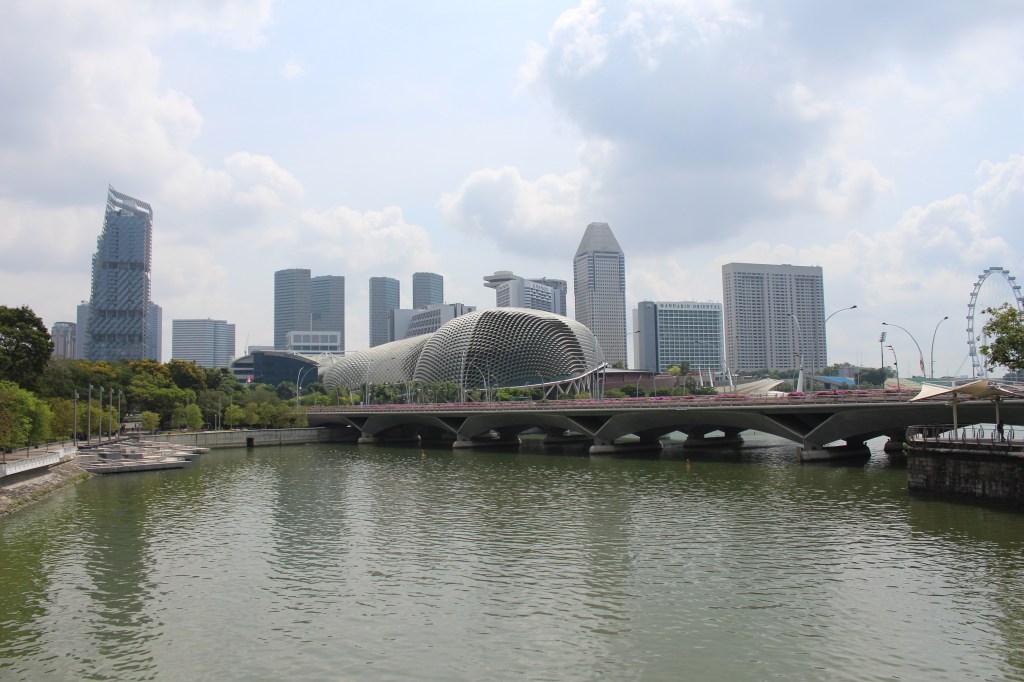
From the Park we could see beautiful views across the bay to the Marina Bay Sands hotel and the Arts and Science Museum.
Back on the bus, we headed for Chinatown and the Buddha Tooth Relic Temple. This is a 4-story temple and museum complex, although we only had time to visit the temple on the ground floor and have a brief look at the surrounding Chinatown street market. The complex was only completed in 2007. The tooth is only allowed to be seen at certain times so we were not able to see it. However, it is unlikely that is actually genuine! But the temple itself is very ornate and lavish. In the Universal Wisdom Hall the walls are lined with one hundred Buddha statues and in the Hall of one hundred dragons is the seated Buddha Maitreya flanked by two Bodhisattvas. There are eight Buddhist guardian deities of the 12 signs of the zodiac and each statue was marked with the appropriate years so we were able to find which ones were ours. Kev’s is Samantabhhadra or Universal Virtue, usually depicted atop an elephant. Mine is Amithabha meaning “infinite Light” and “immeasurable Life”.
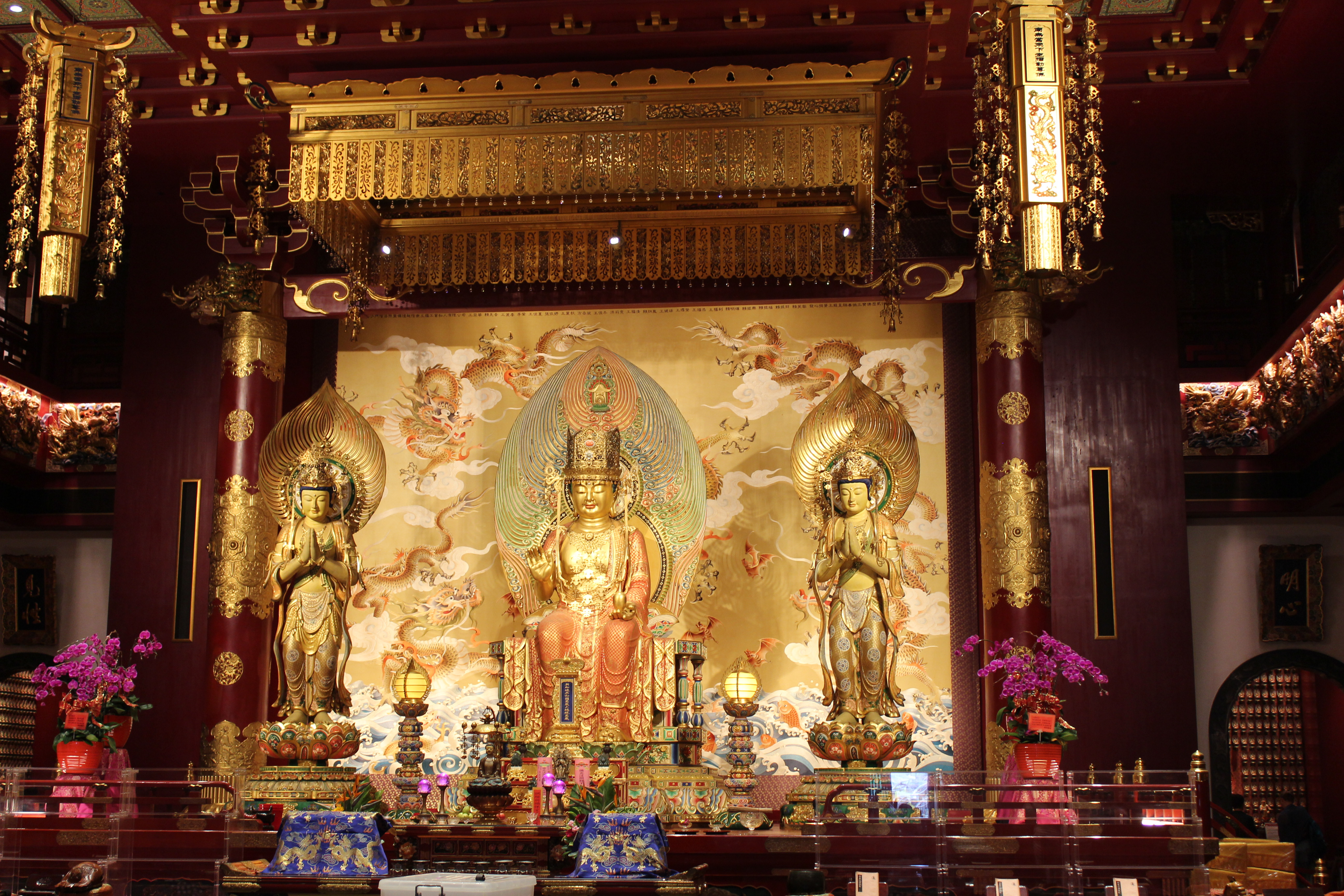
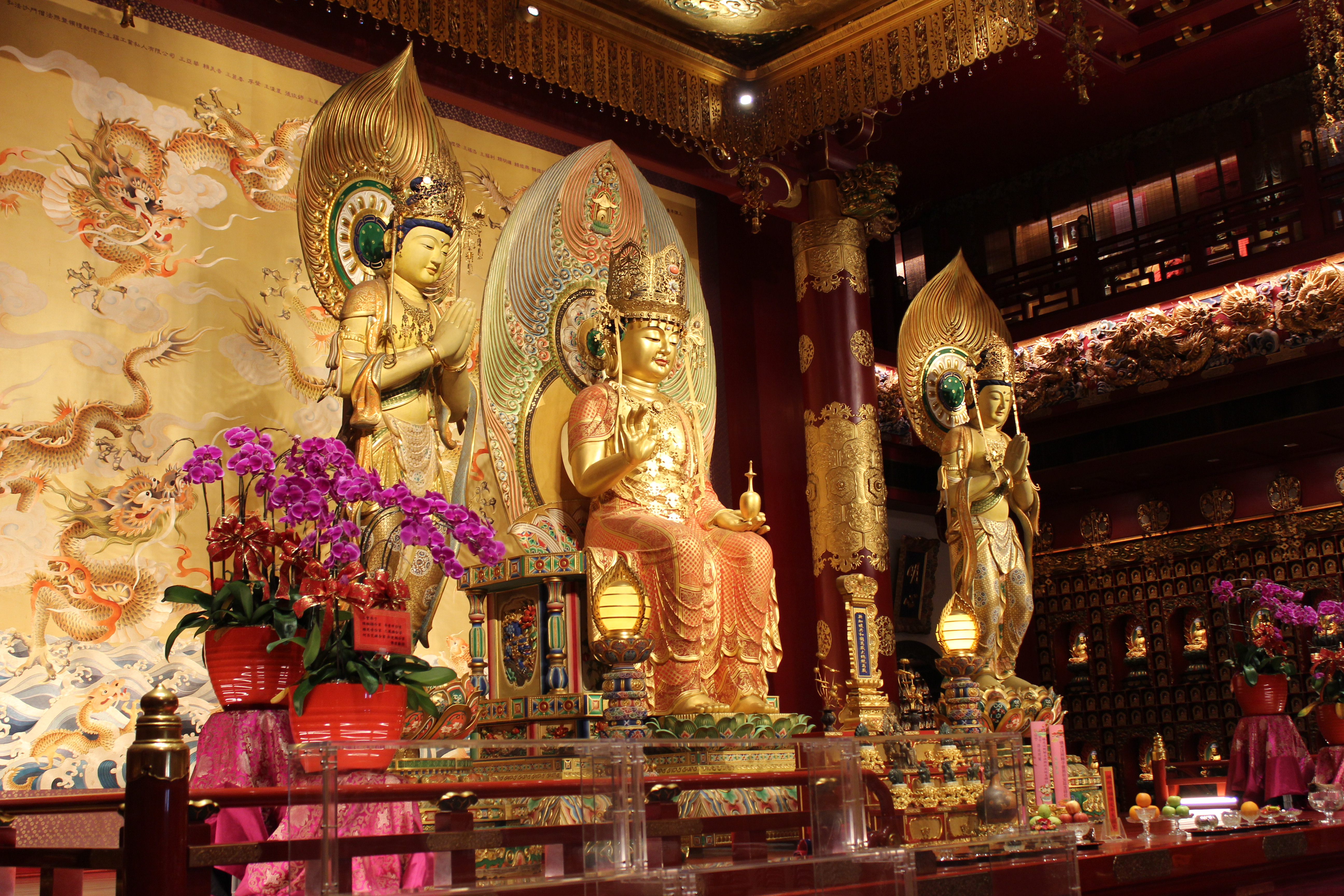
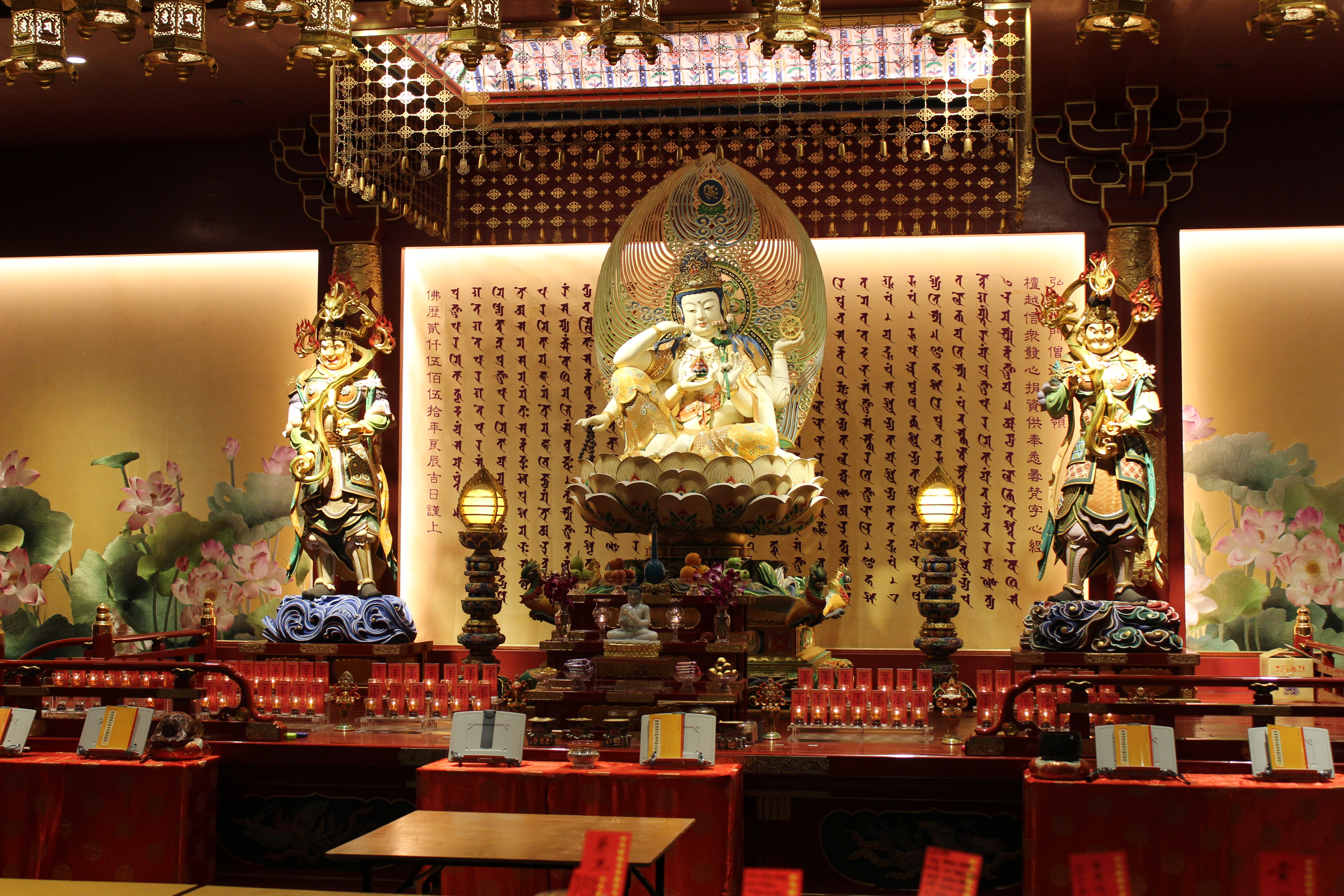
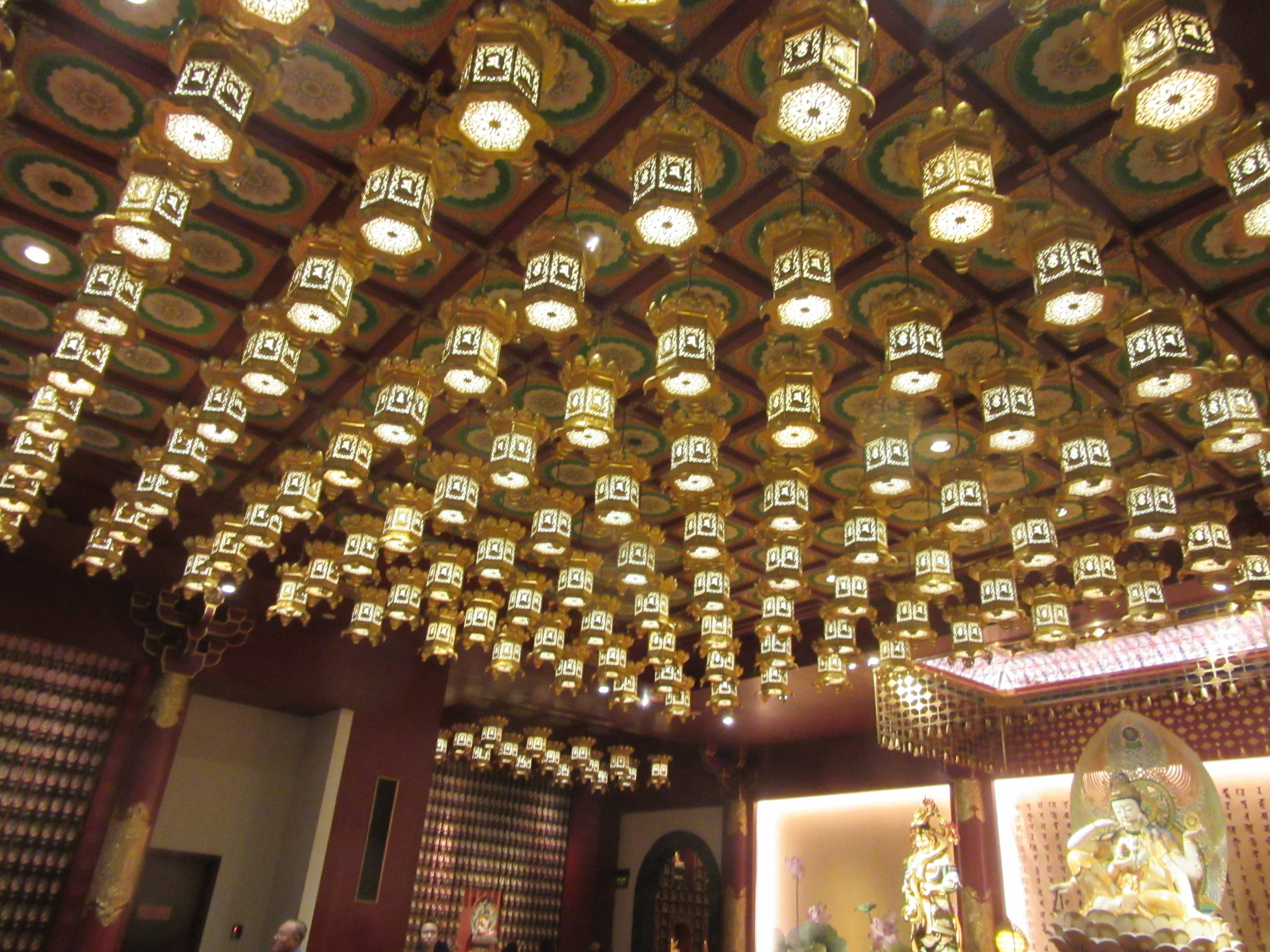
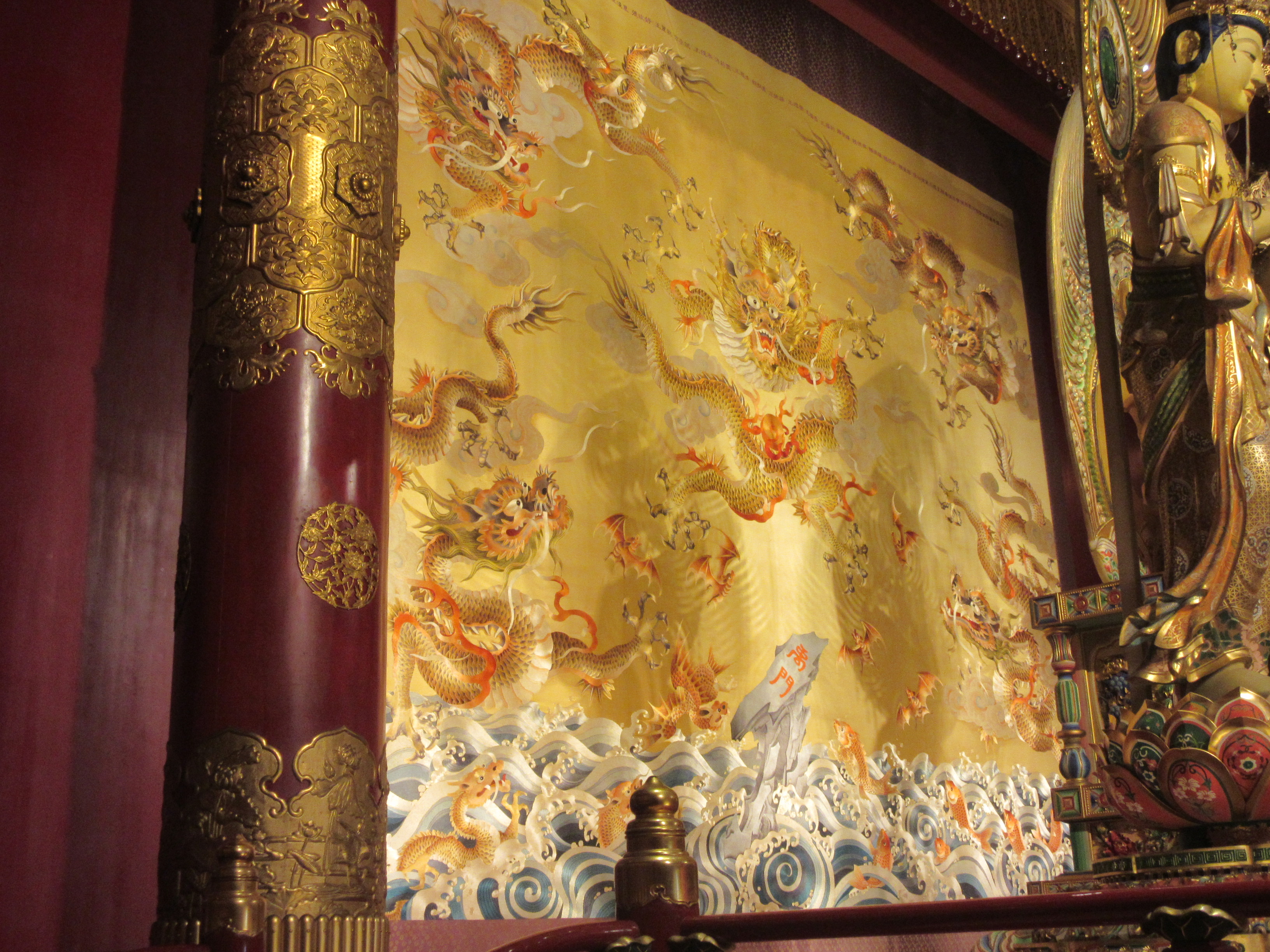
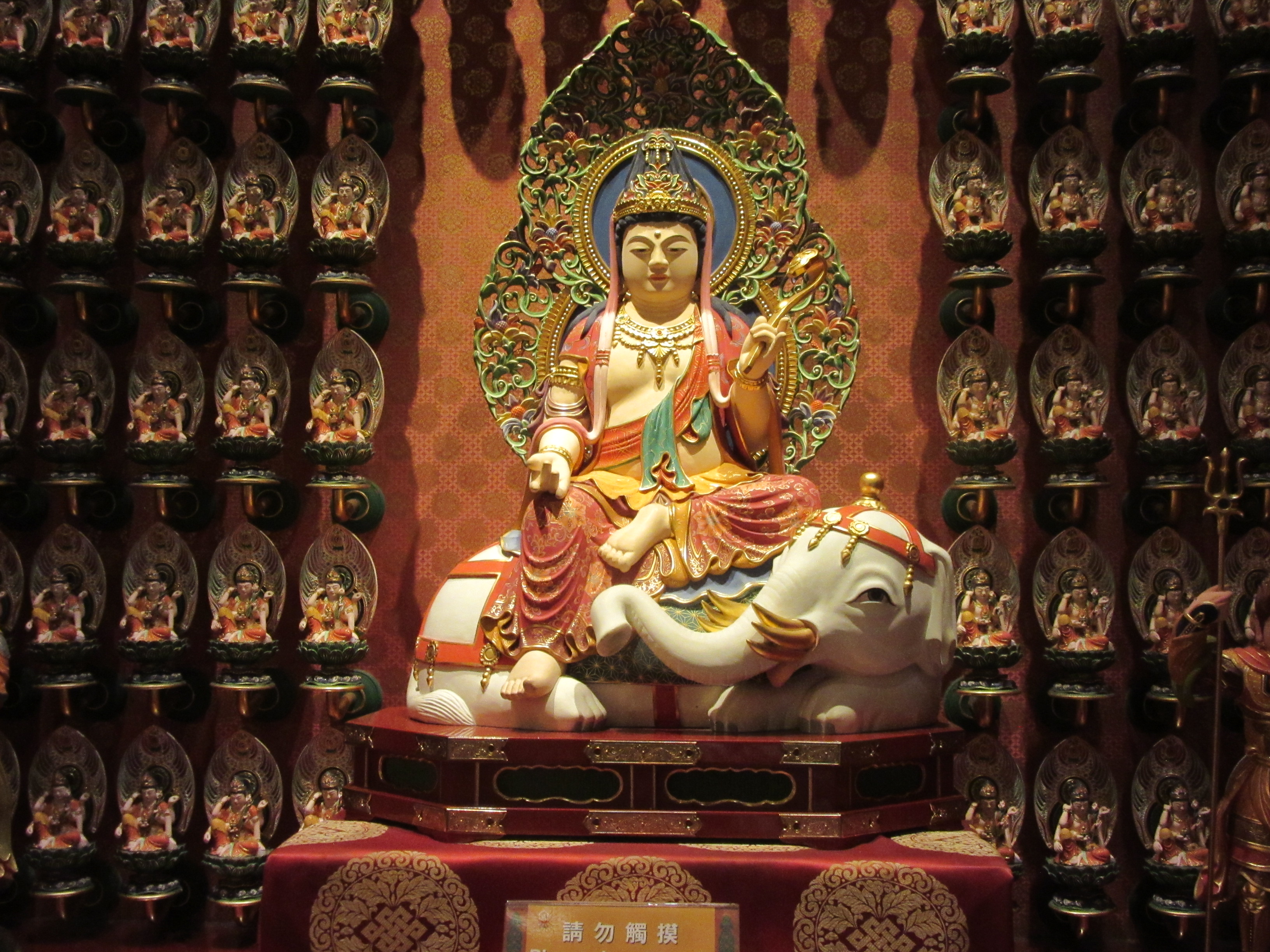
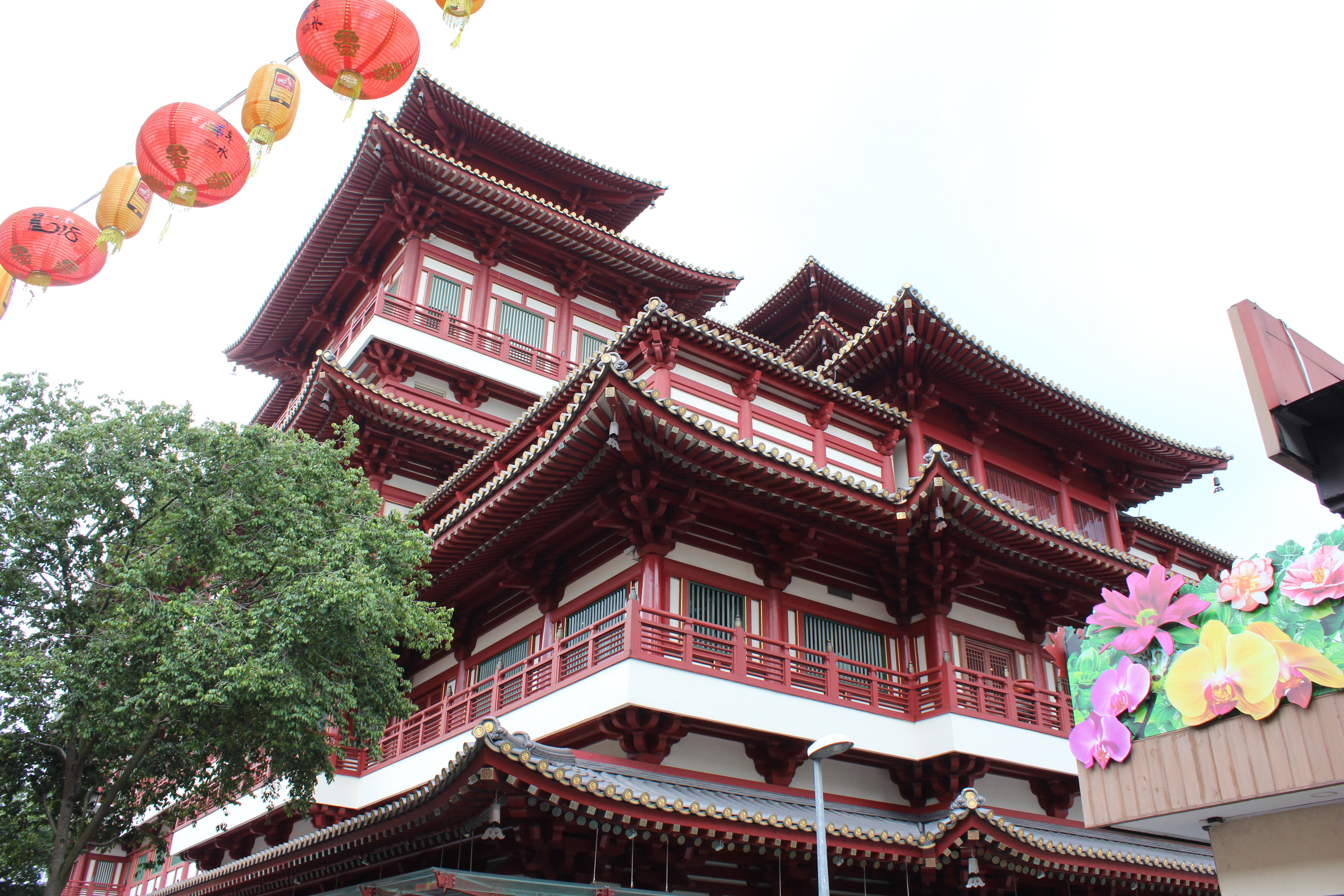
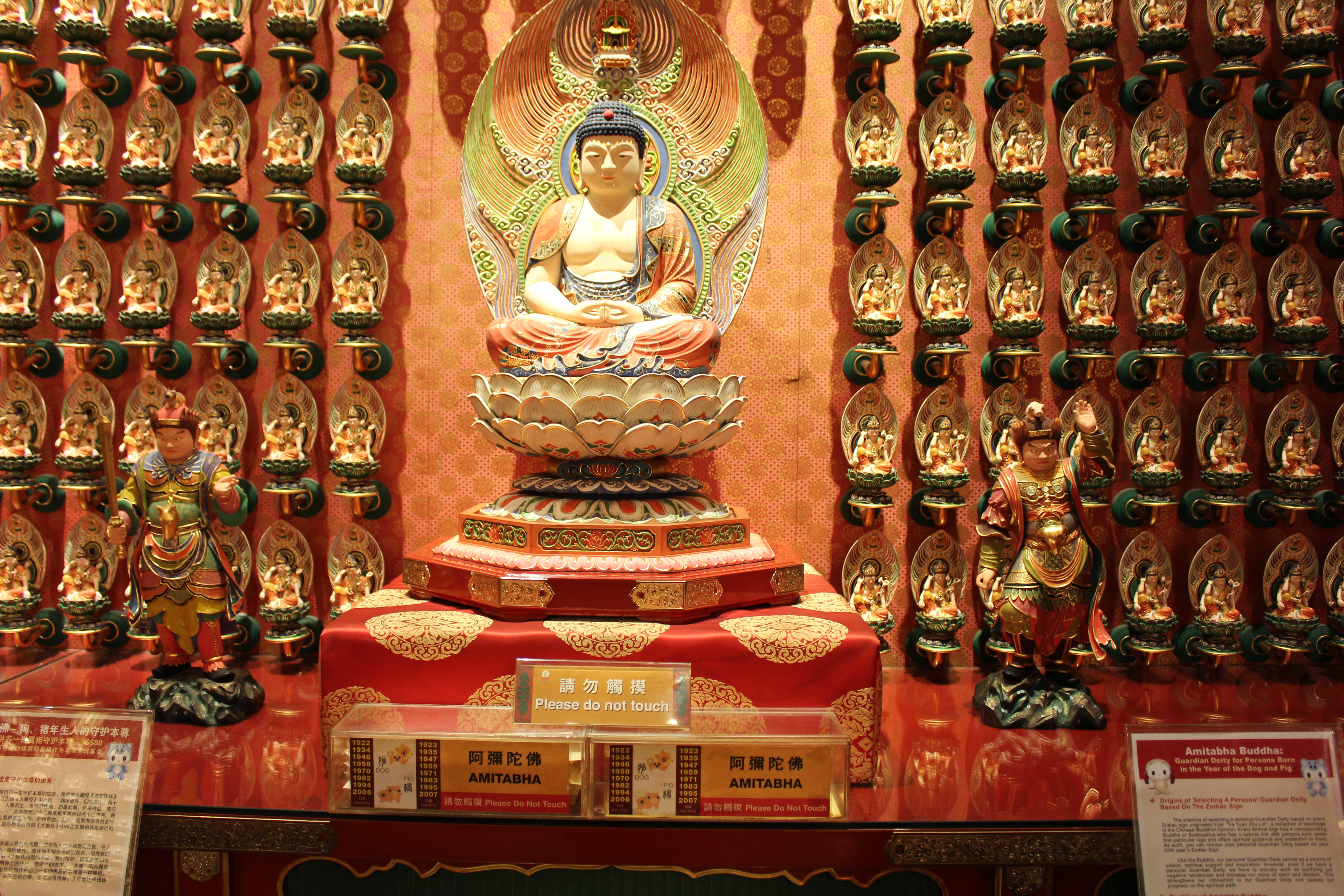
Chinatown and the Buddha Tooth Relic Temple
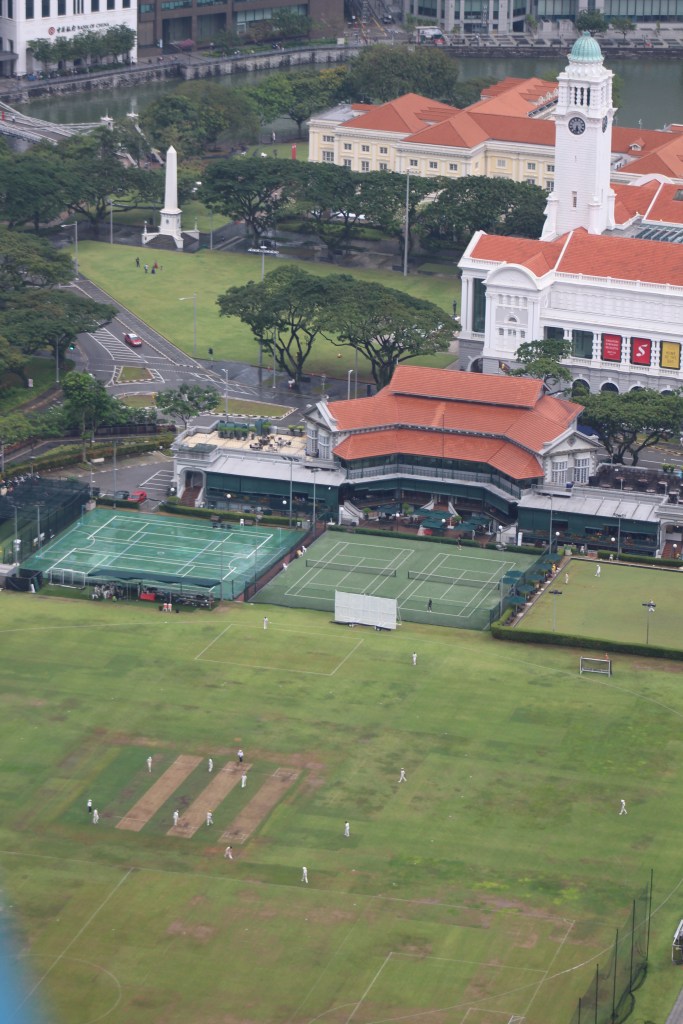
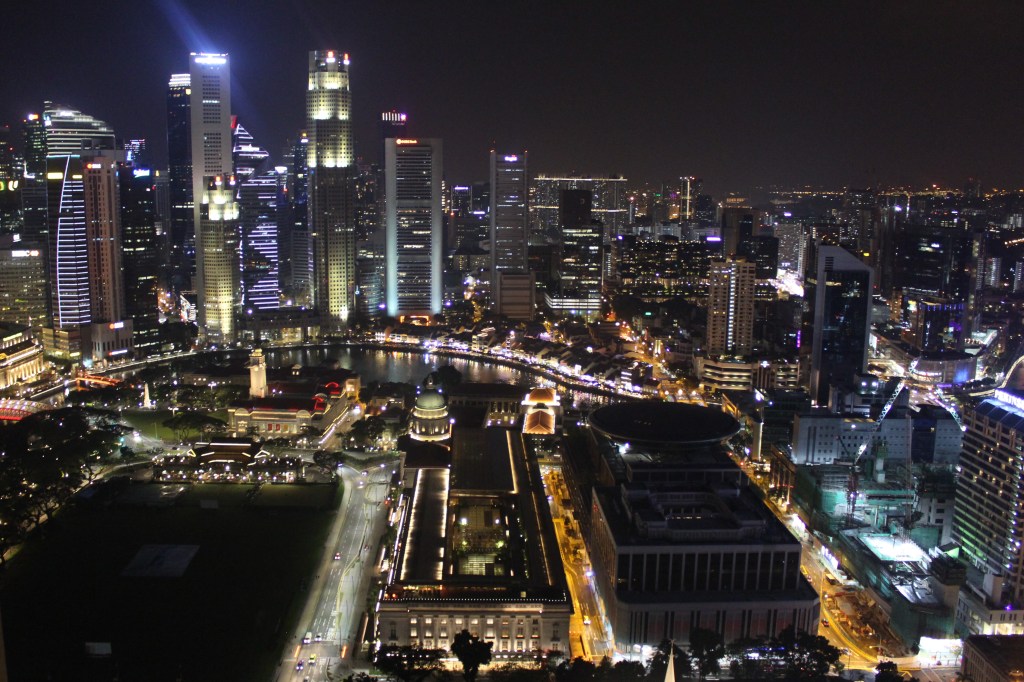
Once we had all been rounded up again and on the bus, we were taken to our various hotels. We had booked to stay at the Swisshotel, the Stamford, which turned out to be a good choice. We had a very big and comfortable room with amazing views. We looked down on a cricket match being played in the sport’s fields next to the Victoria Theatre. At night we had spectacular views across the Singapore River to the multi-coloured lights of the high-rise buildings beyond, as well as a panorama to the north of the city.