Earliest remembrances
I was born in Solihull on March 1946, a place few outside of the UK have heard of so I usually say Birmingham, as that is where my parents actually lived. So I was taken home to Rotten Park Road, in Edgbaston, famous for its cricket ground and university, where my father was a lecturer in the Botany department. I have very few memories of the time spent there, as we left for South Africa when I was five and a half but these are the few that I have been told about or do actually have some recollection of.
My mother used to tell a story of how she dumped me in a waste bin when she missed her footing getting off a bus, but probably fortunately, I was too young to remember that!
I have a vague memory of having a very high fever and being ill with measles, also having to be kept in a darkened room for weeks in case the disease affected my sight.
And for some strange reason I can remember making rose water perfume and collecting all the rose petals in the garden, three floors below our top floor flat in Rotten Park Road. The perfume didn’t turn out very well.
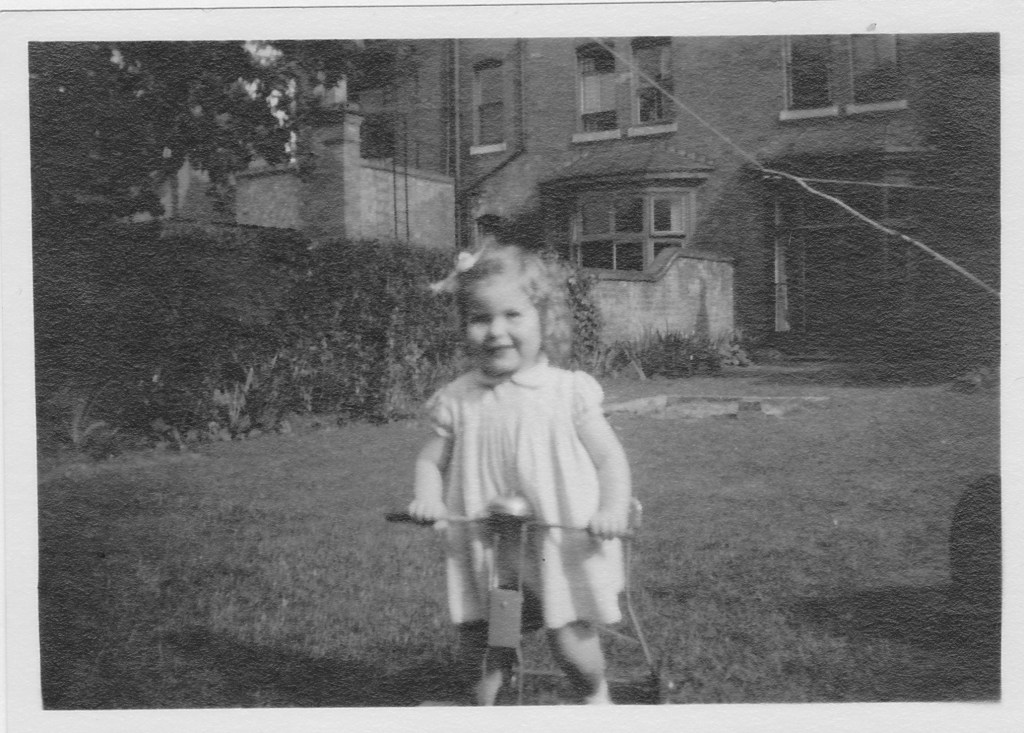
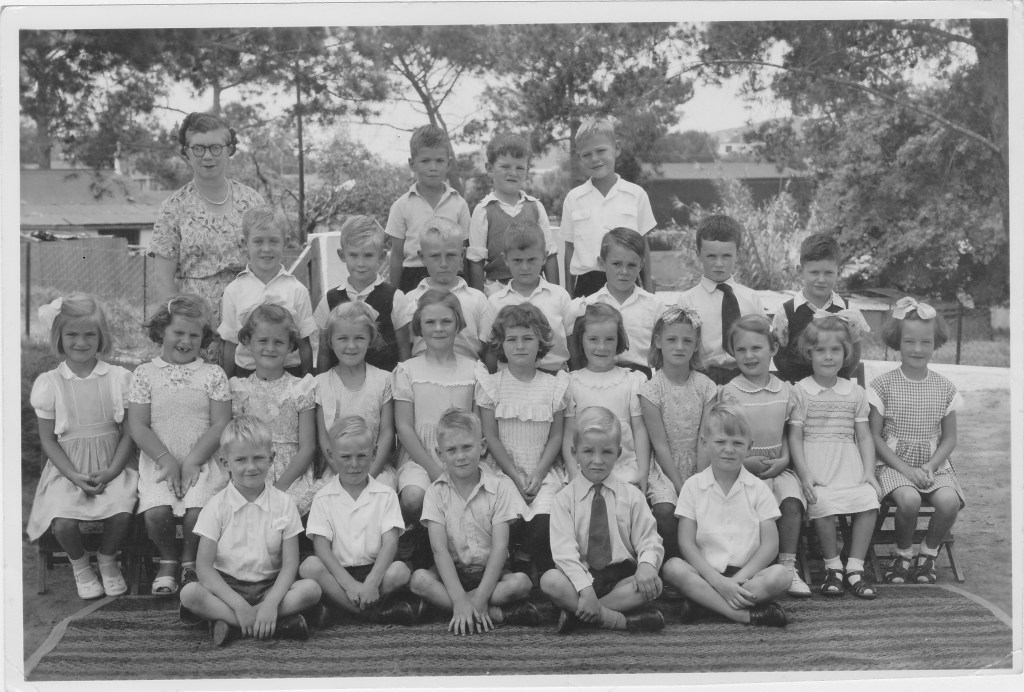
A name I recall from those times is Hannah Elks – a little girl a bit younger than me, I think, who lived in the flat below us. Another name is Sally Cronn, who was in the ballet class I attended. I can remember the white dresses we wore with bright red sashes. I loved those classes and a love of ballet has remained with me ever since. I have a picture of the class I was in at Edgbaston Pre Primary School and several of the faces still look familiar but there are no names on the back of the photo, just “School Hilary aged 4”. Sometimes you wish photos could talk!
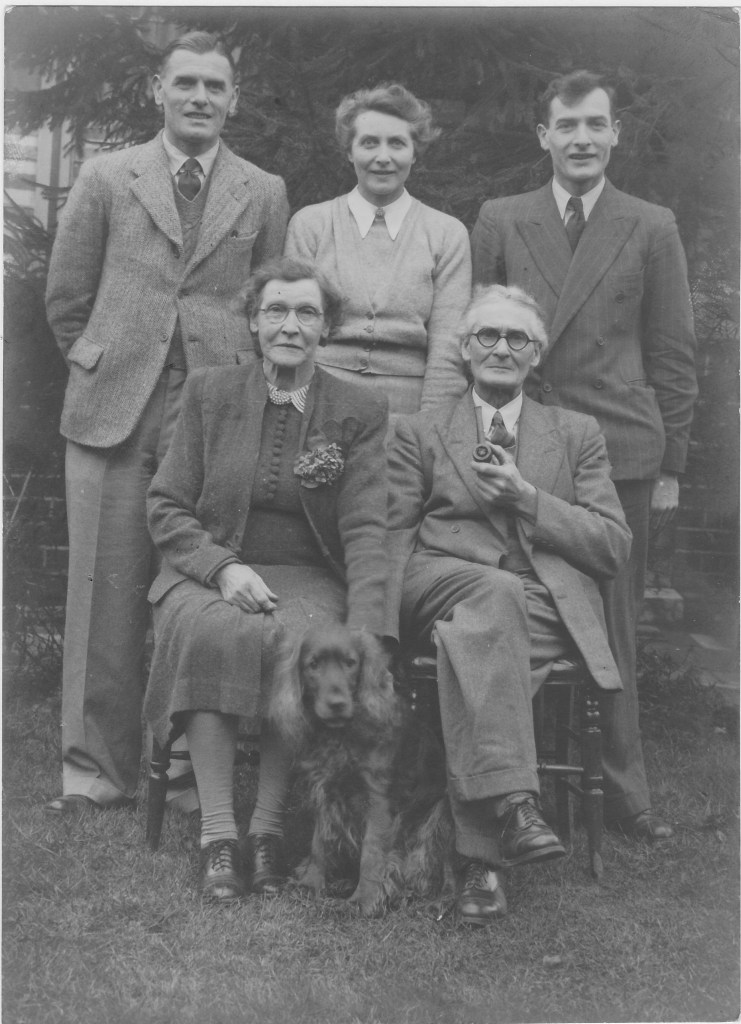
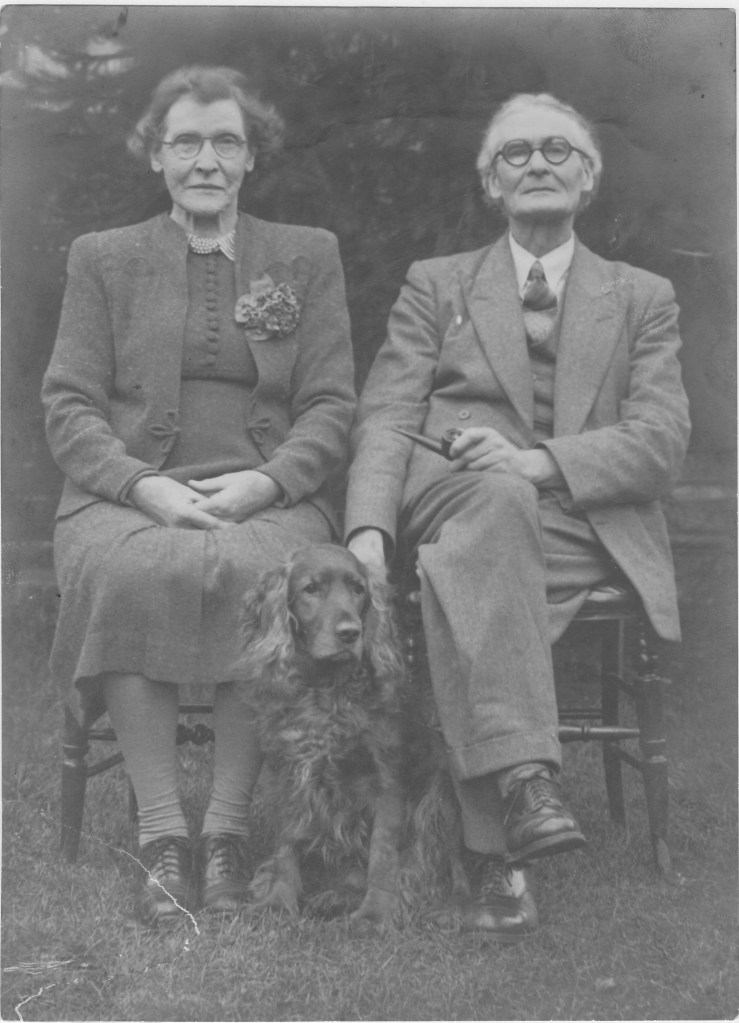
My Grandmother on my father’s side died before I was a year old but I do remember visiting Grandpa Twyman in his house called Sunnyhurst on Blossom Field Road in Solihull. My father’s older brother, my Uncle Edwin, was often there. He was a pilot in the Royal Airforce and a great favourite because he was always lively and full of fun.
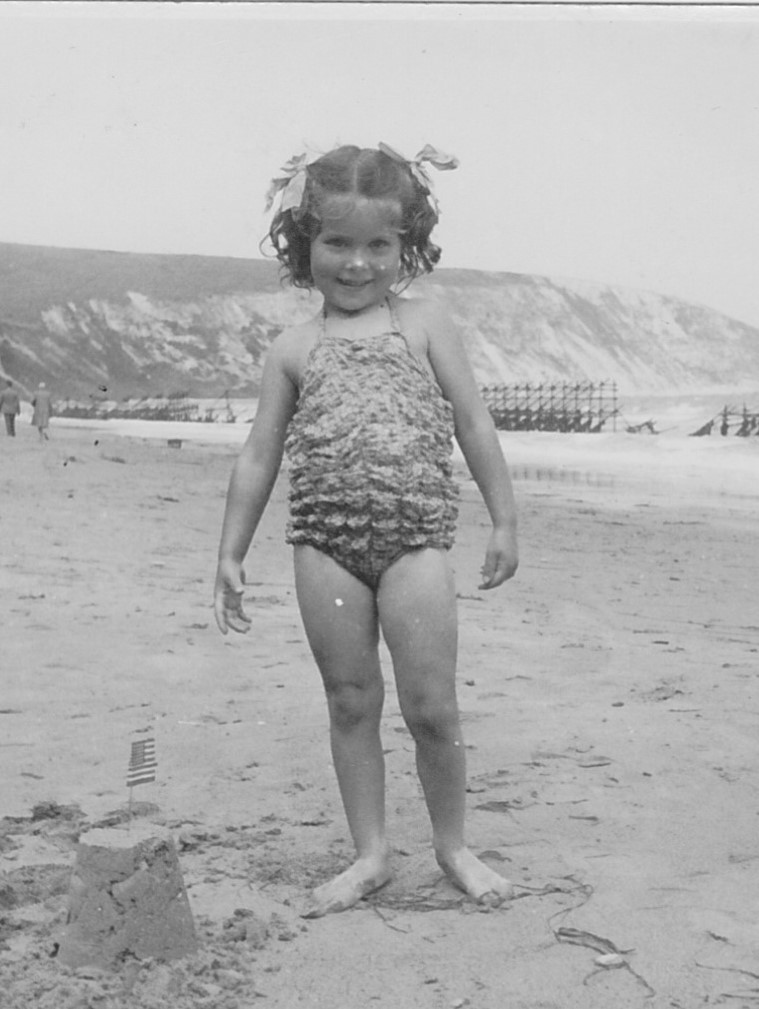
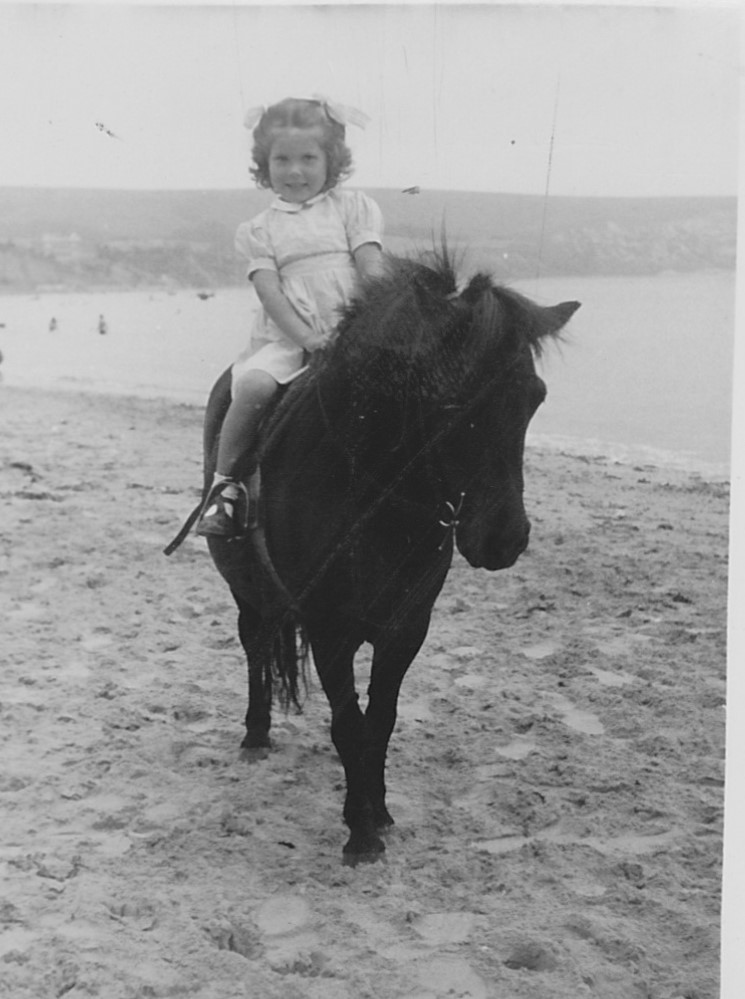
Another distant memory is of going on holiday to Swanage (in July 1950), a seaside town near Bournemouth, and getting lost on the beach. The beach had been divided by wooden breakwaters and I still have a vivid memory of trying to find which section of the beach my parents were in and going passed endless wooden fences. Perhaps that is why I look so uneasy in the pictures of me riding a pony on that same holiday.
When I was five and a half, my father was appointed as Professor of Botany at Rhodes University in Grahamstown, South Africa. I subsequently discovered that he had a choice between the post at Rhodes and a post at the university in Colombo, Ceylon (now Sri Lanka). I don’t think he regretted the choice but my mother might have felt differently.
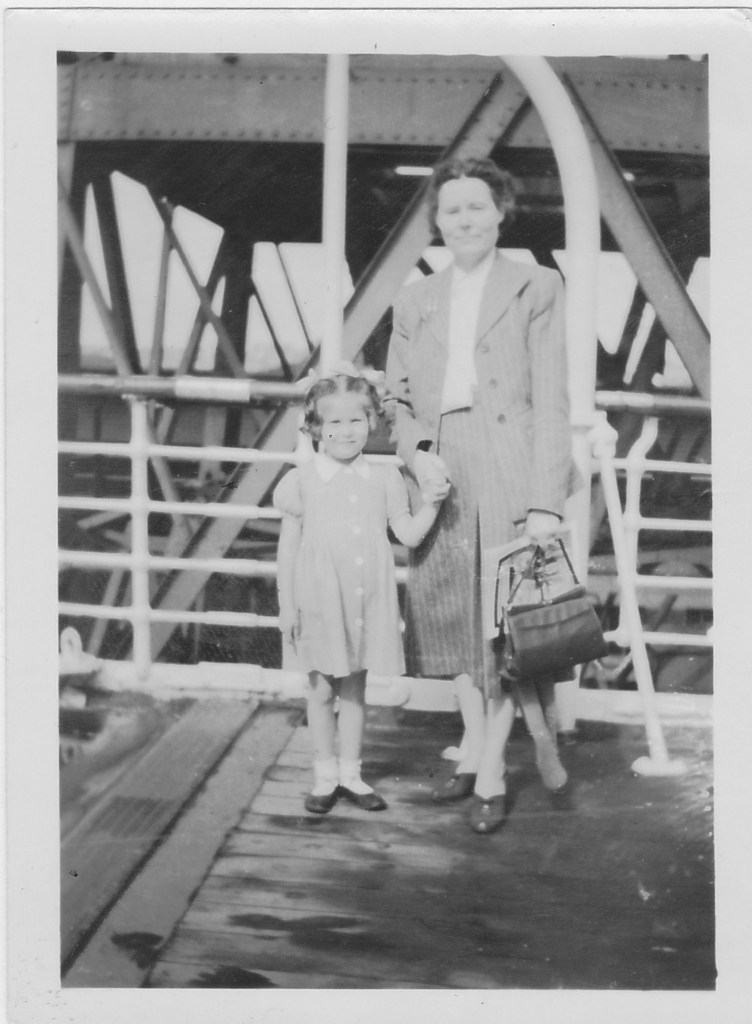
We sailed from Southampton on the Athlone Castle, one of the Union Castle Company liners. I have vague memories of bands playing and streamers being thrown to connect the passengers with loved ones on the quay side but that may be a fanciful memory from films I have seen. However, many years later, when my husband, Kevern, and I were in Bremen, we visited the German Emigration Centre at Bremerhaven. It is a museum dedicated to the history of German emigration, especially to the USA. It is an extremely evocative museum with interactive exhibits and a reconstruction of a liner leaving the dockside with passengers saying goodbye to their families some of whom remain behind. I was surprised at how emotional I felt being immersed in this scene and wondered if it triggered some long-buried memory. Another colleague, who emigrated to New Zealand as a young child, was similarly moved by the experience.
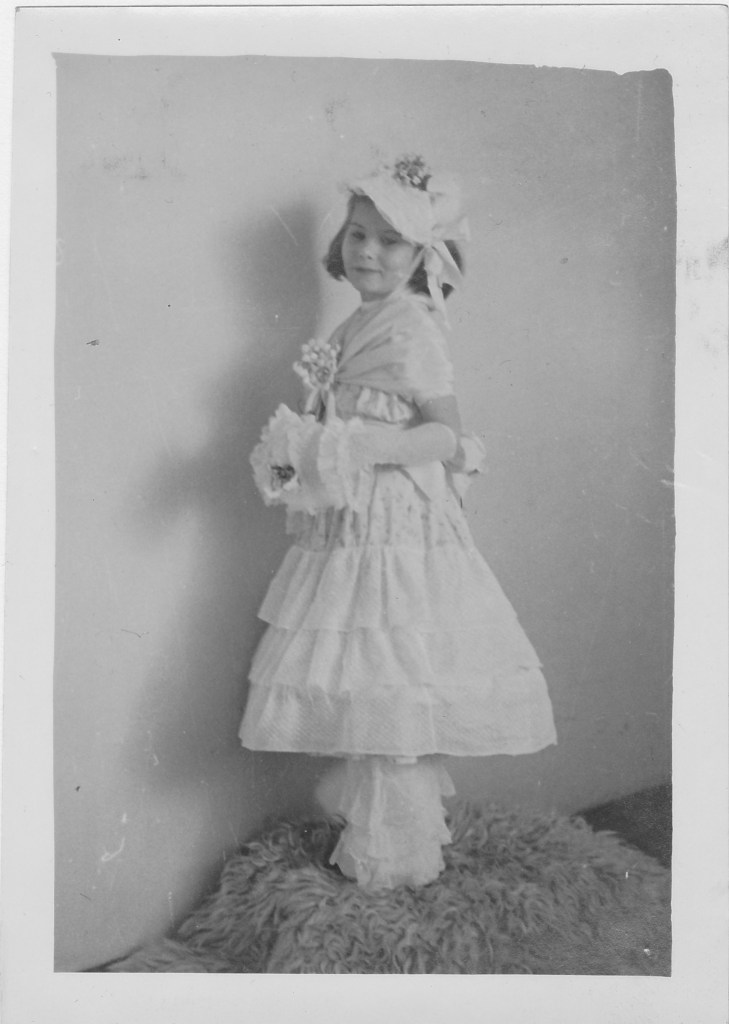
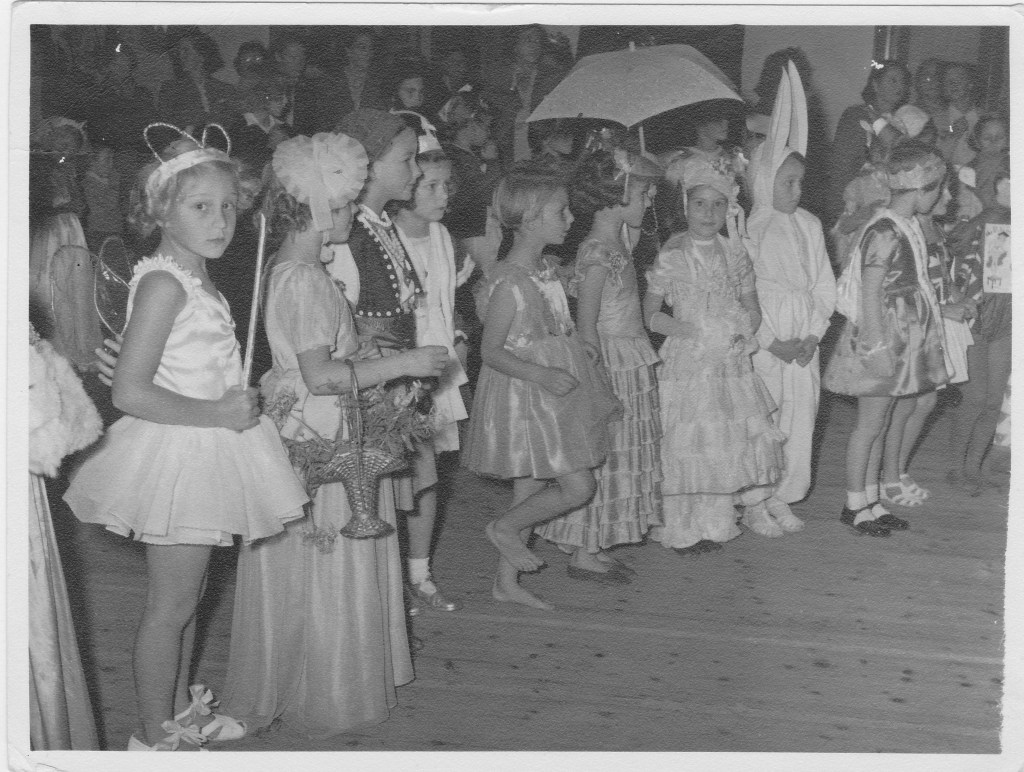
I don’t remember too much about the sea voyage, apart from being sea-sick and having to dress up as a flower fairy for the fancy dress competition. I still have a picture of me scowling at the camera.
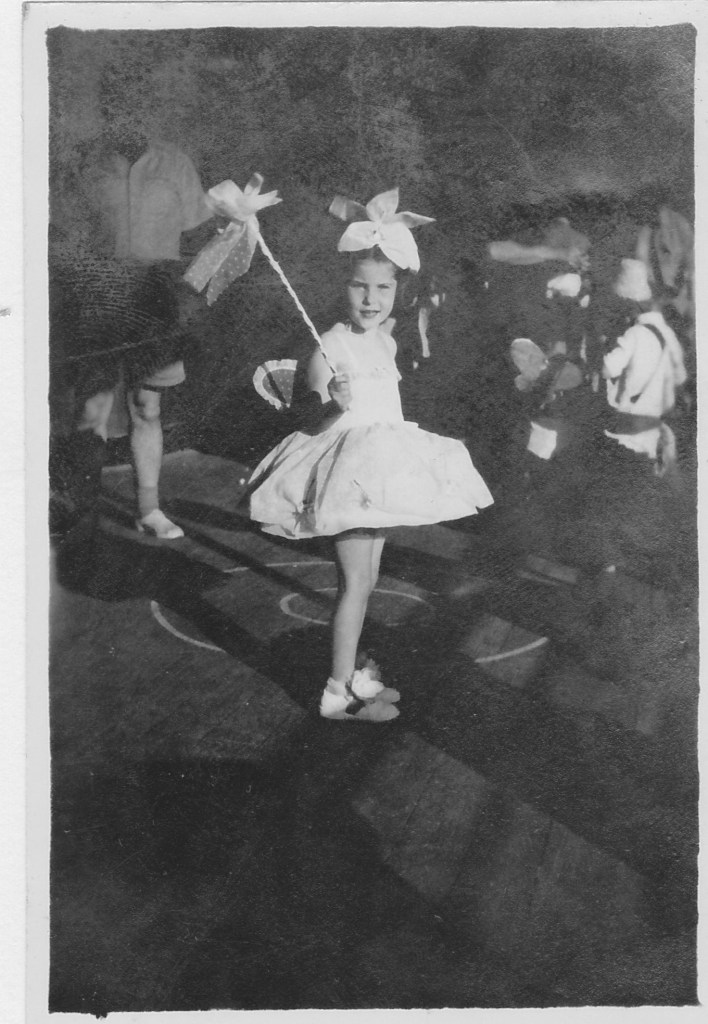
I didn’t win, but my mother was not deterred by that failure and many early memories involve being dressed up as an angel, a Victorian lady and several others things I am not. The Victorian lady was the most successful design and did win prizes!
Grahamstown was our destination in South Africa, after more than two weeks at sea, a week in Cape Town on the way and then the drive from Port Elizabeth up to Grahamstown.
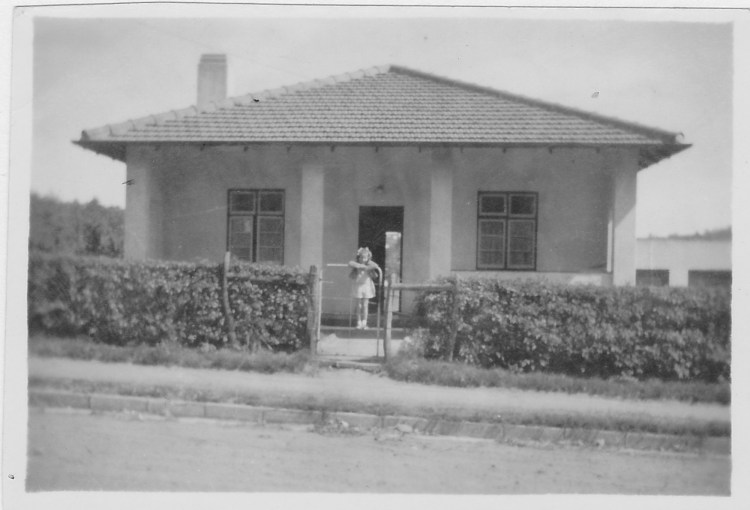
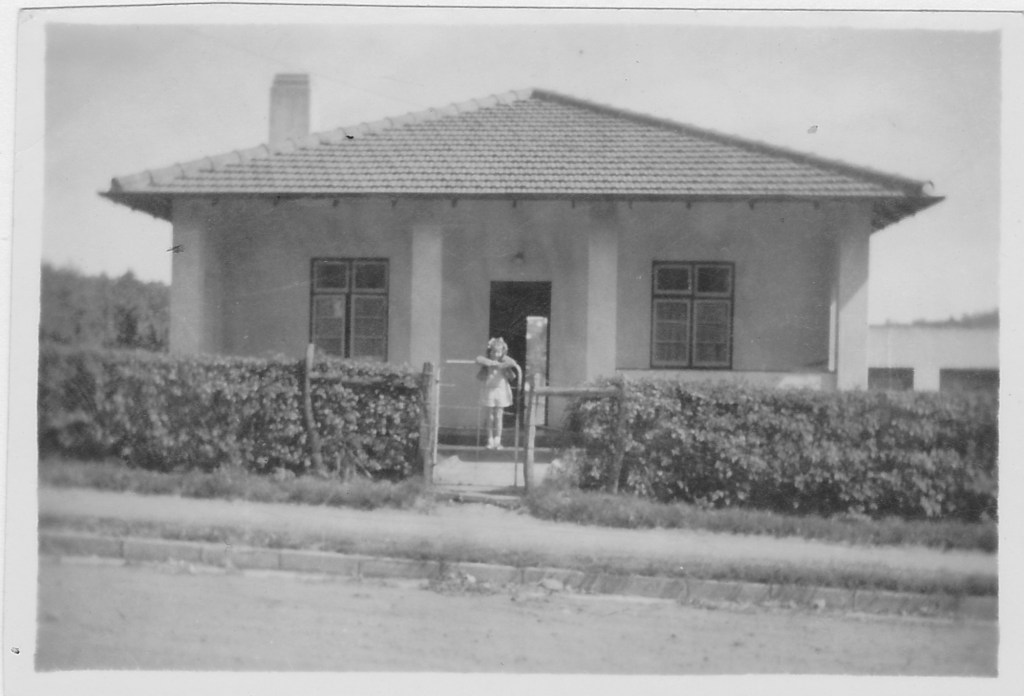
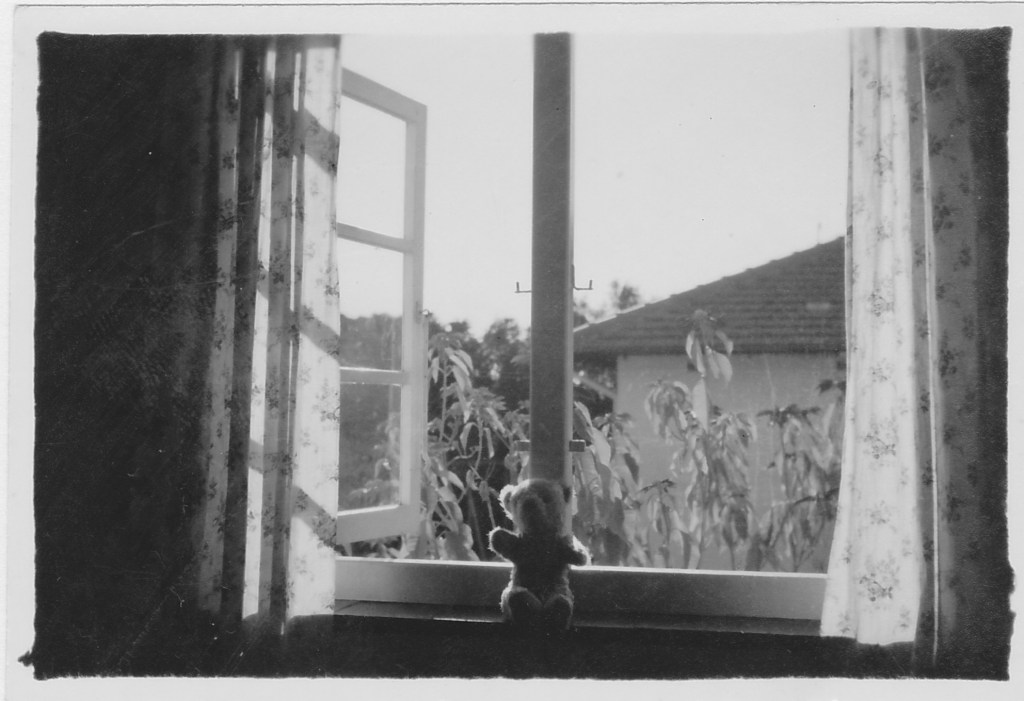
When I look at old pictures of Grahamstown, often in sepia tones, it does not seem much different from my memories – I seem to remember it in monochrome. I am not sure why, as it was not an unhappy time for me. I discovered many years later that my mother hated it, as least to start with. For a young child growing up there in the 1950’s, it was a place of safe freedom. Initially we lived in a small house opposite the Rhodes University residence for first year men. My first Christmas there I was given a bicycle, which I learned to ride on the fields of the Physical Education faculty not far from our house. Once mastered, riding my bicycle was one of my greatest pleasures and led me to discover all parts of Grahamstown, quite often all alone, something that mothers these days in many parts of the world would be horrified by. One of my favourite excursions was to a rocky hill on the outskirts of Grahamstown – up Fitzroy street and left along Trollope street to the end.
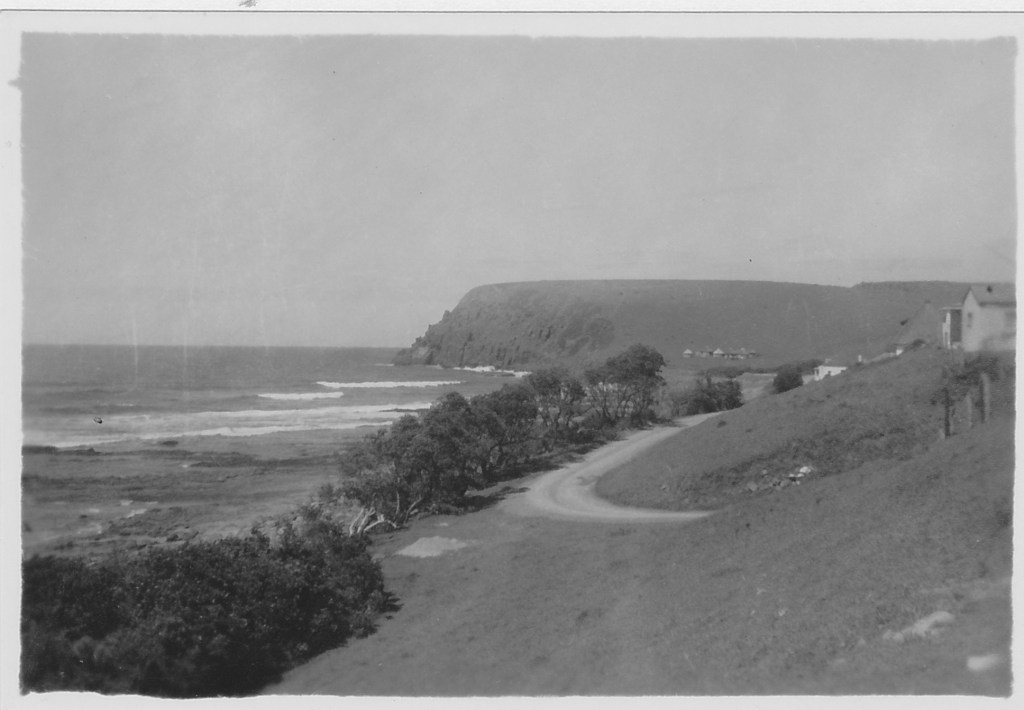
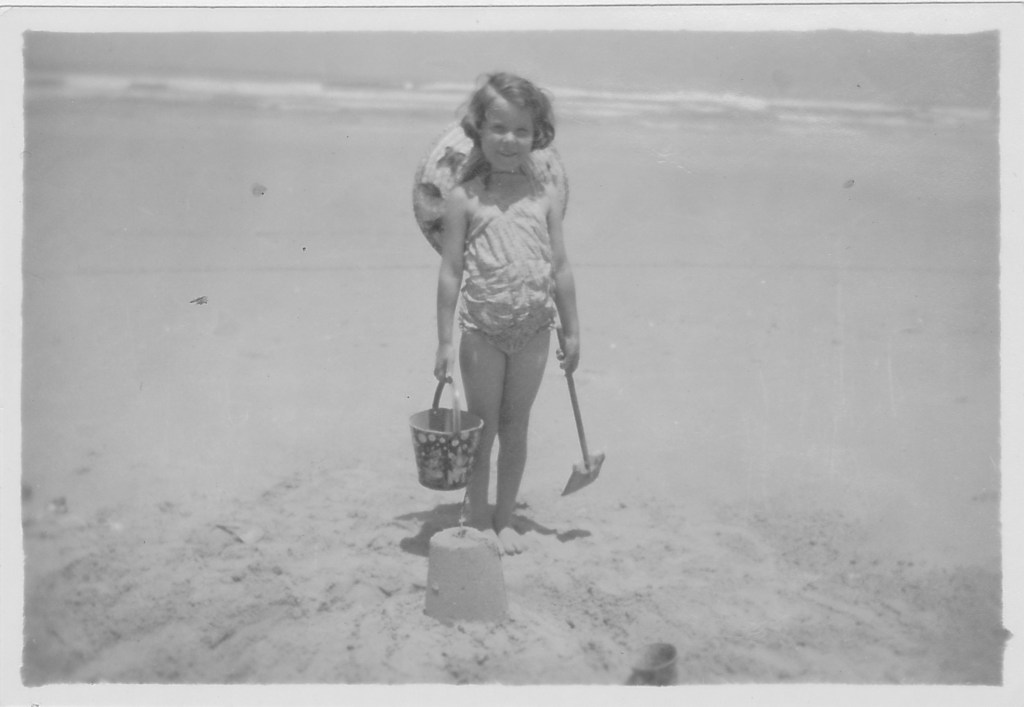
Our first holiday in South Africa, over New Year 1952, was to the beautiful resort of Morgan Bay – quite remote and unspoilt but not too far from Grahamstown. We stayed in the Morgan Bay Hotel and I remembered being very unimpressed with the meal time arrangements. All children were expected to take their meals together, separately from their parents, to give adults a chance to relax and enjoy their meal without noisy, demanding encumbrances. As an only child I found this rather intimidating as most other children had siblings to talk to and keep them company, so I felt rather left out. But the amazing stretch of unspoiled beach made up for miserable mealtimes!
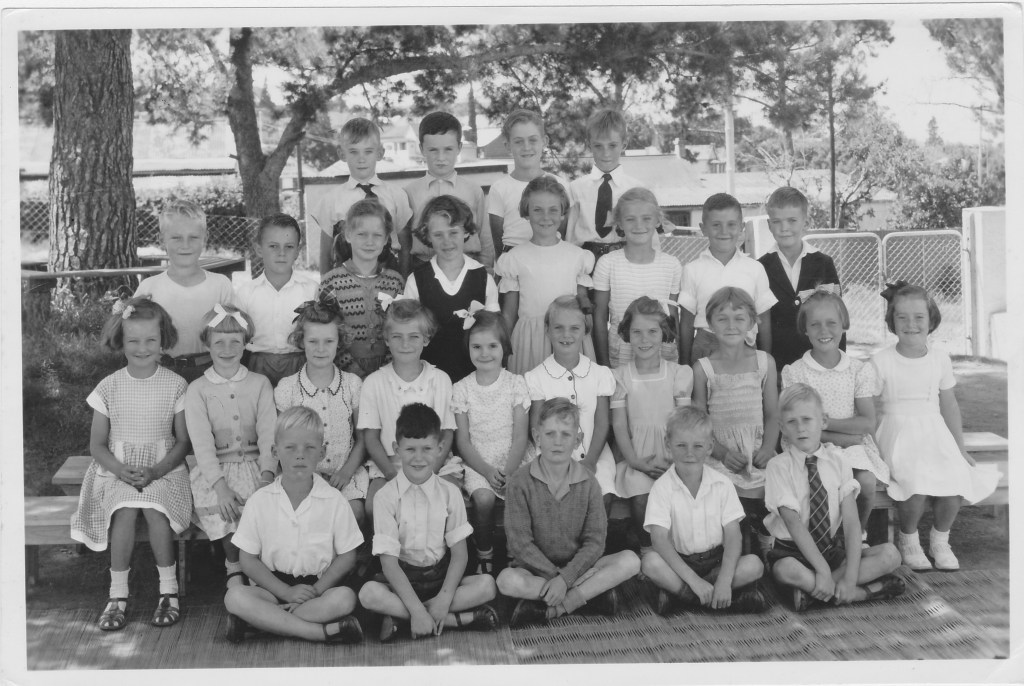
In England, I had been to school from the age of 4 and a half, but when we moved in the September of 1951, I was not eligible to go to a South African one so had to wait until January 1952 to begin school again. The first school I went to was a government primary school call Oatlands School. It was here that I rebelled against being called ‘Hilary’ and insisted on using my second name ‘Margaret’. But the rebellion didn’t last long!
I stayed at this school for the next 3 years but have very little memory of the school, although it is still there on African street opposite the park bounded by Oatlands road and Henry street.
At the end of my first year at Oatlands, our next holiday was closer to home in Kenton-on-Sea. For New Year 1953, my parents rented a cottage at Kenton, on the Bushman’s River. I remember the cottage being very rustic, even for those simpler times of the 1950’s, probably because dwellings were not connected to municipal services in those days, so tanks of rainwater and paraffin lamps were the norm. Again, the beach was the highlight of the holiday, especially the natural rock pools along the coast between the Bushmans and Kariega rivers.
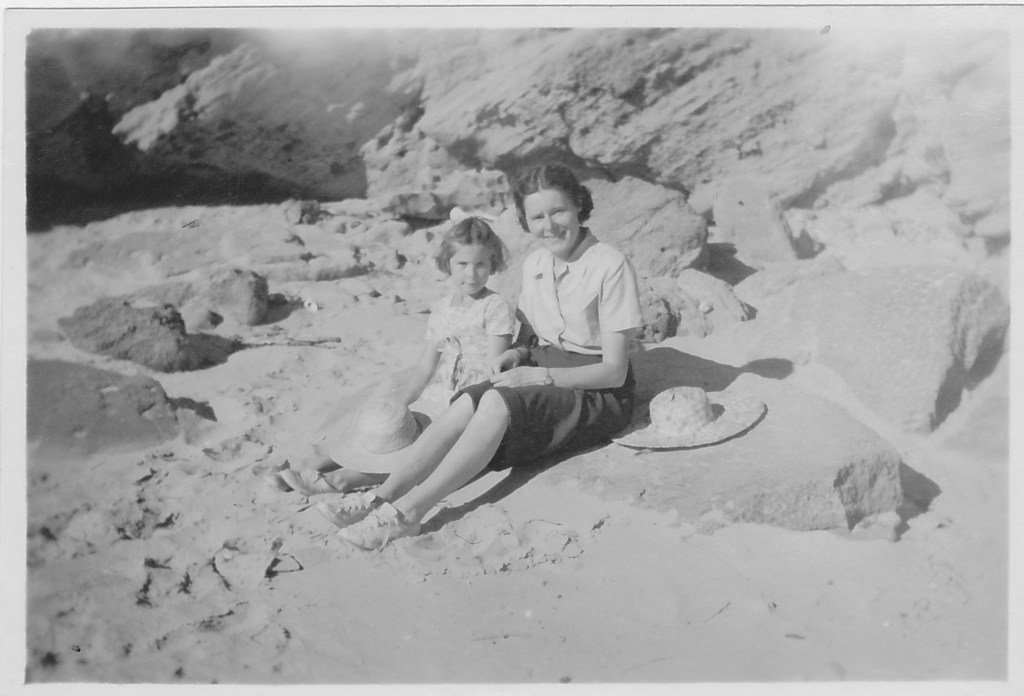
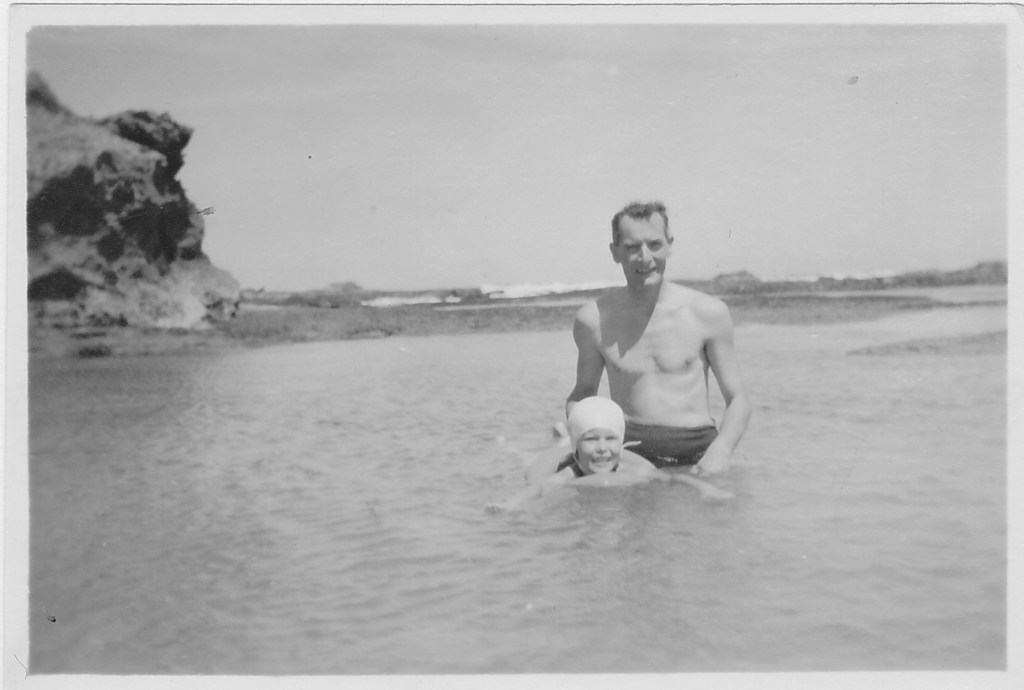
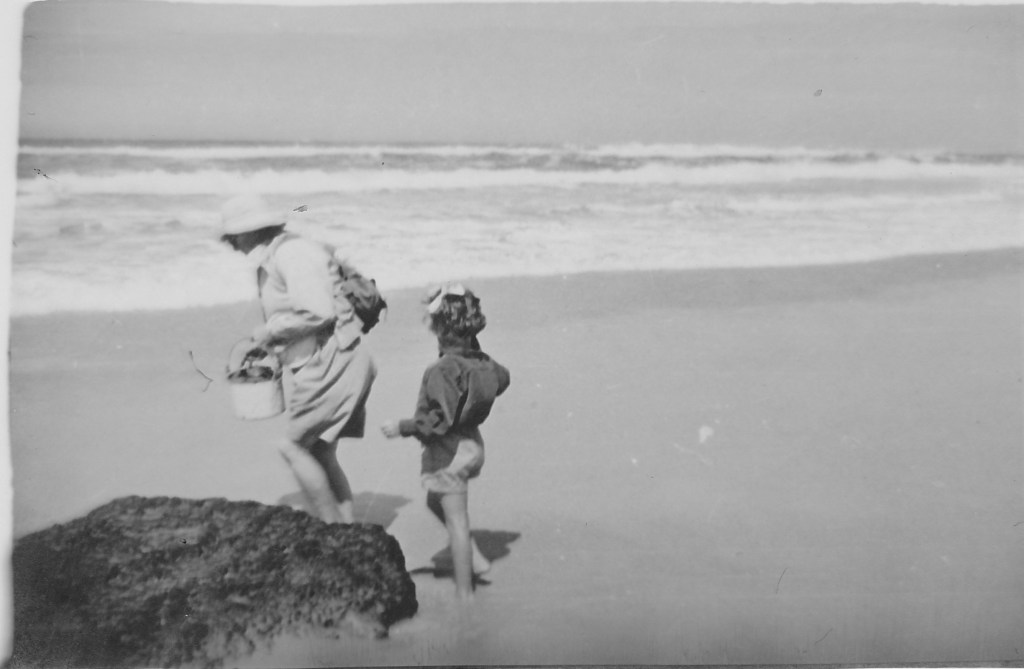
In February 1953, we were back at Kenton for the day, with my father’s retired colleague, Dr Pocock. Dr Pocock was an algologist – a word I probably didn’t know then but I did know that she was always collecting seaweed from the many pools and rocky inlets along the Eastern Cape coast, as well as freshwater algae from farm dams and reservoirs. This day was for seaweed and I was following closely in Dr Pocock’s footsteps, anxious to see what she would find. She was usually accompanied by her beloved pet Pekinese called Wu Sung, a rather overfed and smelly individual!
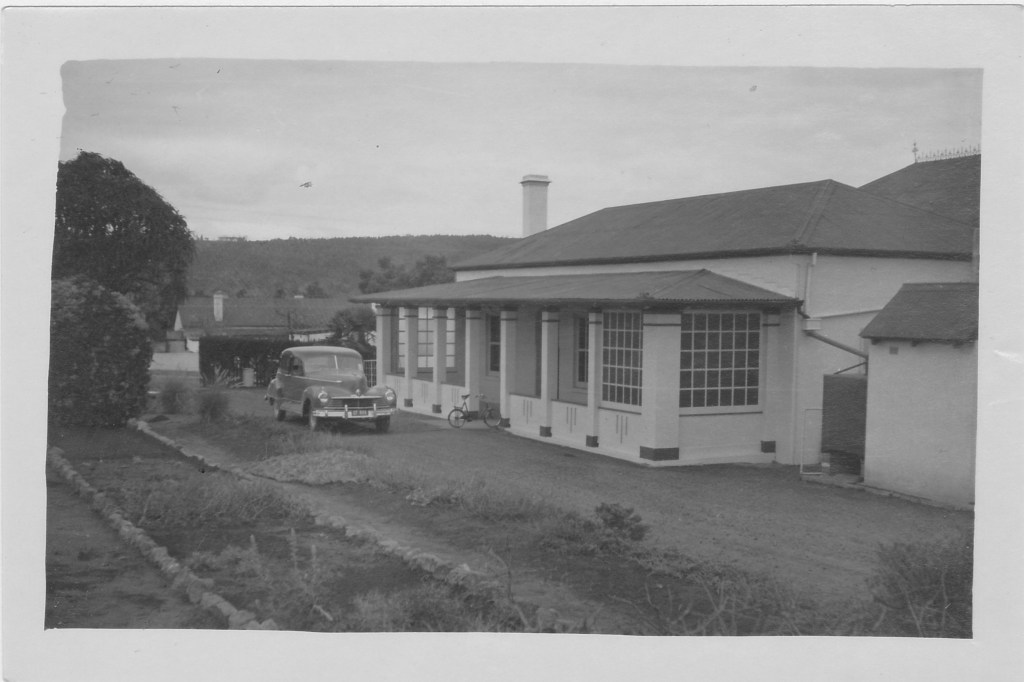
By this time we had moved to the Stirk’s house in Park Road. This was a bigger house with wide verandas set in a well-established, if rather overgrown garden with a tennis court. I don’t think we played tennis there – I seem to think it was where we hung out the washing. This was where I first learned about the storm water canals that kept the streets from flooding when it rained. There was access to them at the dip in Charles street. However, this was not an activity to be undertaken alone, and probably best kept from parents as well. Marguerite Poland describes them in her book “ Iron Love”, which, even though set 50 years before my time in Grahamstown, still evokes strong memories of my own school days there.
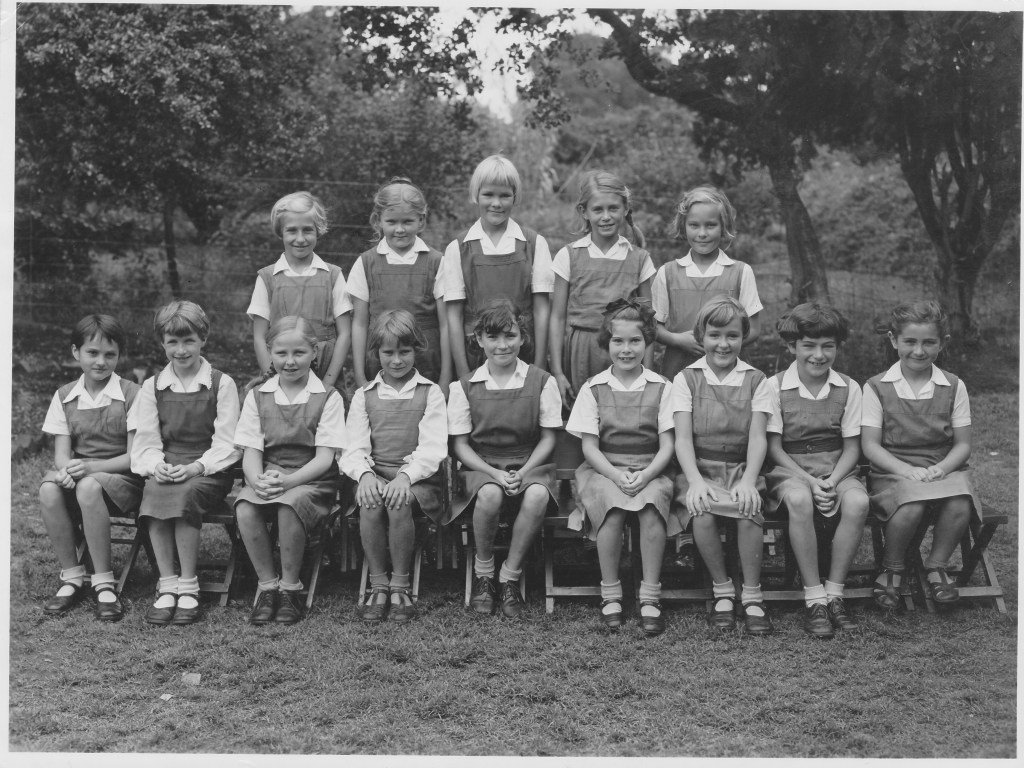
At the beginning of 1955, I started at the junior school of the Diocesan School for Girls. During this time we moved from the house in Park Road to a smaller house on Durban Street in the West Hill part of Grahamstown, which was very close to the junior school part of DSG. At that time it was housed in Josie Wood House on the corner of Graham Street and Durban Street. I seem to remember the transition from Oatlands to DSG was very easy as I already knew several classmates, being offspring of my parent’s friends. It was a small school with a friendly intimate feel and remember being very happy there.
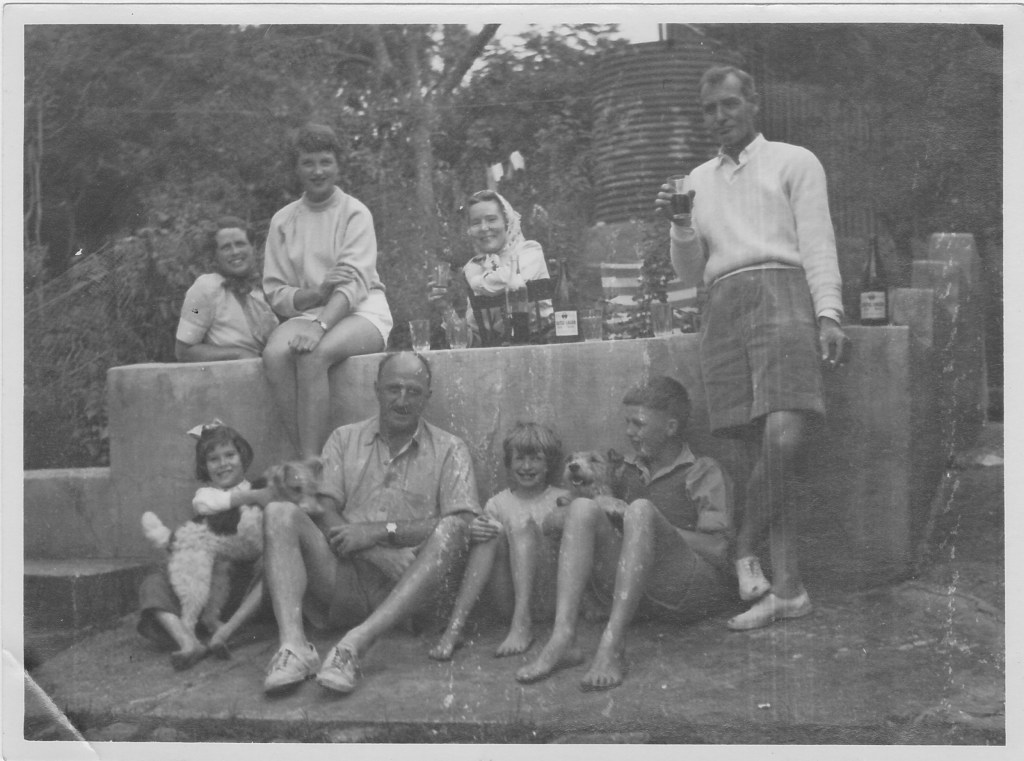
One incident, unrelated to the junior school, that occurred during those years remains firmly in my memory. Early on in our move to Grahamstown my parents acquired a dog – a wire-haired fox terrier we named Robby. Robby lived up to the excitable, adventurous nature of his breed and was always getting into scrapes. This time it nearly ended very badly. The garden in our Durban street house was not secure enough to keep Robby from getting out and going on expeditions around the neighbourhood. Two streets down was the senior part of DSG and at the time the Nonnie Mullins Hall was being built. Robby had probably gone down there hoping for scraps from the workmen’s lunches but missed his footing somehow and cut his back leg severely on some corrugated iron. He managed to get back to our house but collapsed on the front porch. My mother was at home but as Robby was too weak to bark or scratch at the door she didn’t know he was there. Fortunately some of the senior girls at DSG became aware that something bad had happened – whether they saw Robby or just saw the trail of blood I don’t know but they had the presence of mind to follow that trail and arrived at our house in time to alert my mother and help get Robby to the vet in time. He had cut an artery in his back leg and was very close to bleeding to death but this amazing thoughtfulness of the girls meant a happy ending. Eventually, later in 1956 when we were due to go to England for my father’s sabbatical year, it was decided that Robby would be happier back on the farm he had come from, where he would have more freedom to pursue his adventures away from the hazards of town life.
Another place that we lived in, giving even easier access to the storm water canals, was Sir Charles Somerset’s Lodge on Henry Street. In those days it belonged to friends of my parents, who had moved to Somerset West but did not want to sell the house. Actually we shared it with another family, as it would have been much too large for us, a family of three, on our own. It was a long low house, with verandas on either side. The passage in the middle of the house was wide and lit from above by a long peaked sky light. Unfortunately, every time it rained we had to put out all sorts of containers to catch the drips and negotiating the passage became quite difficult, especially at night. The huge garden was a wonderful place and had at least two trees in which to be transported to the Faraway Tree and magical lands beyond. Under one of them was an old cooling closet, with its double mesh walls filled with acorns. By climbing on this you could get into the lower branches of the oak tree and from there it was easy to disappear into another world. In the other one was a tree-house, with pieces of wood nailed to the main trunk to give easy access to the little room perched in the branches.
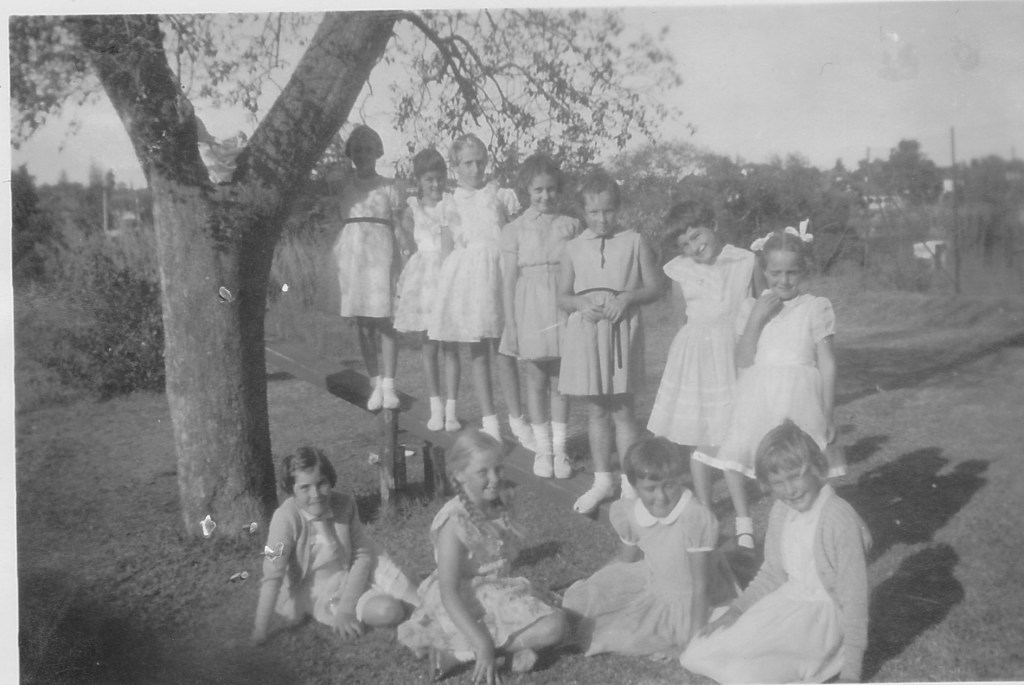
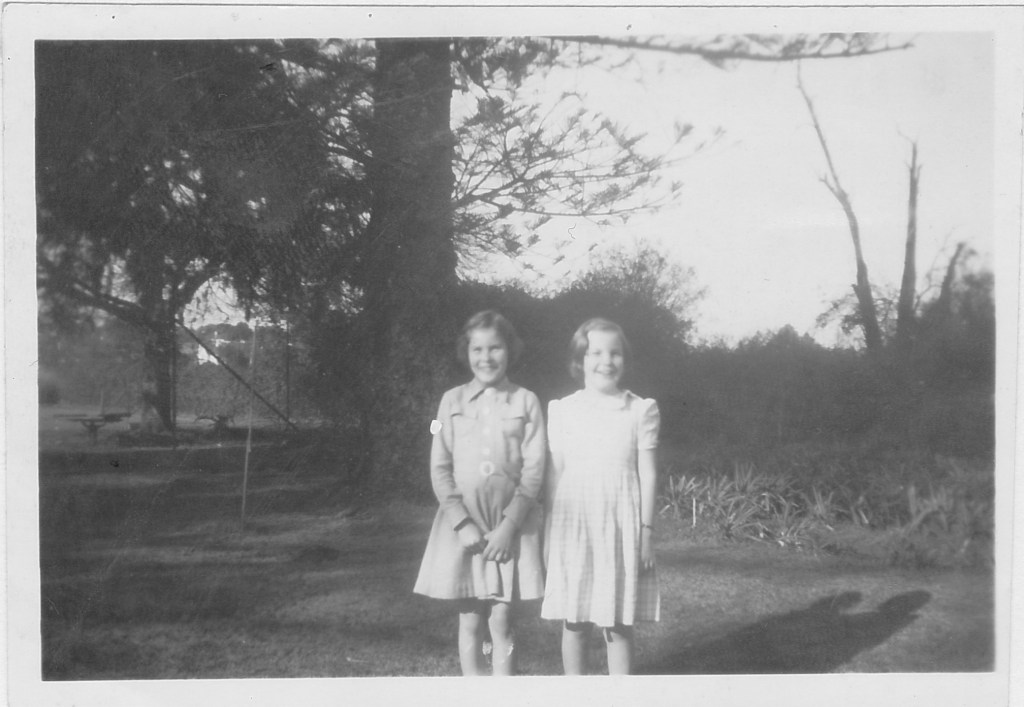
The garden had many plants in it that still remind me of those times and that always attract me when looking for plants for our garden. One of the plants that particularly reminds me of the Henry Street house is plumbago, and we have one that has flowers the iconic shade of blue. It also threatens to take over much of the border between us and our neighbours. In Henry Street there was an area, almost as big as a field, of pale blue agapanthus. There was also bright orange tecoma, black-eyed Susan hiding in the hedges, and a cactus whose name I don’t remember with huge trumpet shaped pink flowers and strelitzias with bird of paradise flowers. On the pavement outside we used to pick up lucky beans that had fallen from the Erythrinas lining the street, and in jacaranda season you had to be careful not to stand on the purple blossoms that bees seemed to love.
Horse-riding was another skill my parents thought I should learn (and which I did enjoy), along with ballet, piano-playing and various sports played at school. As an only child, I had to be kept busy.
My father played the piano and the violin. He loved to have students round to the house on special occasions and regale them with songs from the Scottish Students Song Book, which they joined in with heartily. He had a very good ear and could listen to something on the radio and pick out the tune on the piano immediately. Not a skill I was endowed with, so piano lessons were a bit of a trial for me.
He was also Chairman of the rugby club and some of my earliest Grahamstown memories are of being dressed up neatly in my little English winter coat, long socks and buckle shoes to accompany my father to the Saturday afternoon first team rugby match. It is still a game I love watching.
Towards the end of 1956, at the end of my second year at DSG Junior school, we went back to England for almost a year for my father’s sabbatical from Rhodes after his first 5 year stint at the university. I was excited to go, though not looking forward to the long sea voyage and getting seasick again. There was also a sense of apprehension as I would have to go to school there – another new start and in a place where I would not know anyone.
We sailed back to Southampton in early December on the Arundel Castle. My mother had packed my Victorian Lady outfit in anticipation of the crossing-the-line fancy dress competition – this time I won!
Otherwise, I don’t remember much of that trip. Once we landed in England we went to stay with my father’s sister, my Aunt May, and her husband Uncle Guy. They lived in a small village about 11 miles from Worcester, with a cat called Moley and a dog, a toy poodle, named Prue. I think we drove up to Newport in Shropshire to stay with my grandparents on my mother’s side for Christmas although I am not entirely sure. I know we did drive up there and stay with both my grandparents and with my mother’s youngest sister, Aunt Vi, at that time of year as I can remember getting stuck in the snow on the way back to Aunt May’s house.
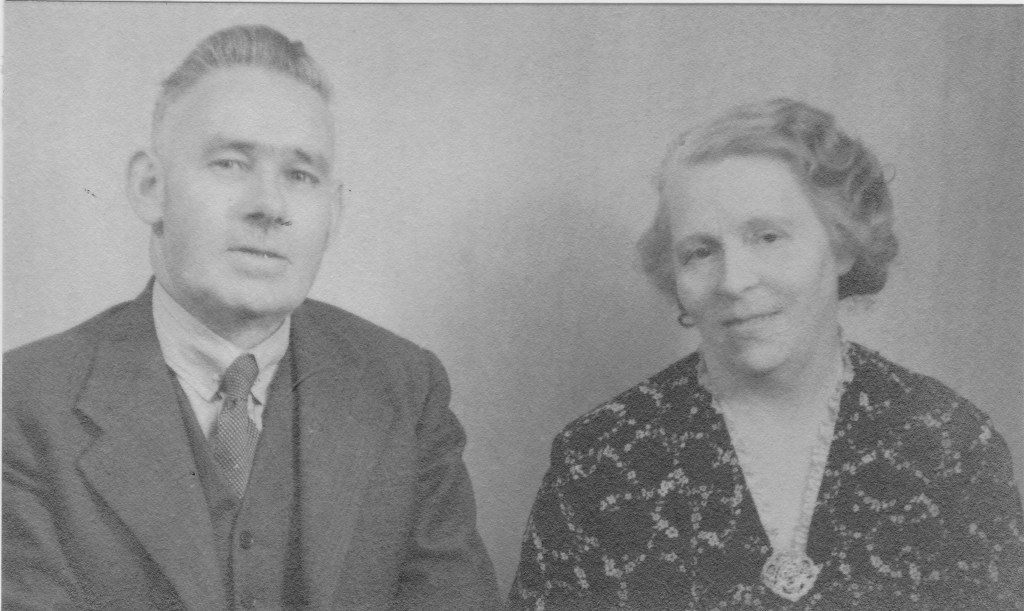
My grandparents house was a typical two up two down terrace house in a street fairly close to the town centre of Newport. The house itself was warm and comfortable but it did not have an indoor toilet so going to the bathroom was definitely a challenge in the cold weather of December. I was very relieved when we went to stay with Aunt Vi and Uncle John as they had a modern indoor bathroom and toilet! At some point in that time we also drove up to Stafford to see Aunt Lucy and Uncle Dennis and my three cousins.
Another memory is going to a theatre in Stratford to see the play “Toad of Toad Hall” which was great fun and made a lasting impression.
In January we spent a week in London, staying somewhere near Gloucester Road tube station. We went everywhere by tube so I had no idea how big or small the area was or where anything was in relation to anything else. It was many, many years later before I was able to explore London on foot and realise where everything fitted in. I was kept extremely well entertained for that week although I can’t remember all the details of the shows and entertainments I was taken to. They included a Famous Five play (just me and my mother as my father went to see The Mousetrap instead!), a ballet (Coppelia with Nadia Nerina, a famous South African ballerina), a circus (Bertram Mills circus at Olympia, I think), a festival at the Royal Albert Hall of the English Folk Dance and Song Society (including Morris dancers!), visits to the National Gallery and the Wallace collection, Buckingham Palace and the changing of the Guards among others. I remember the weather being sunny, if a bit chilly, most of the time and we even sat out in one of the parks while we had a picnic lunch!
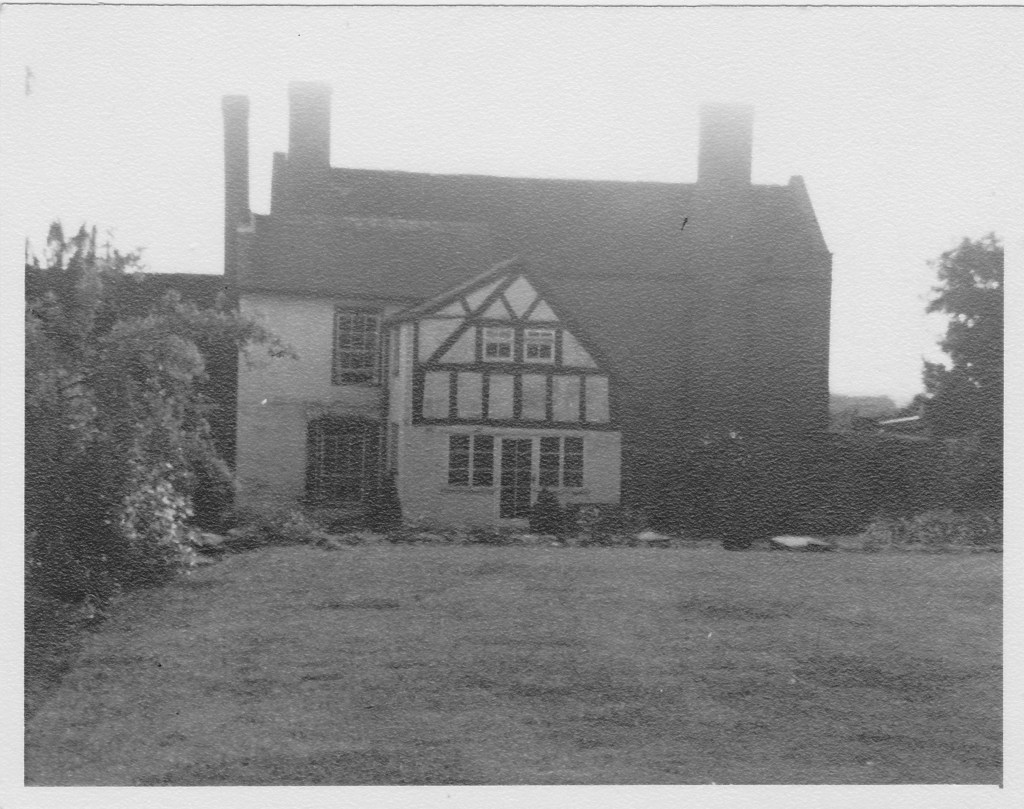
Sometime soon after that week, we left Aunt May’s house and went to live in a flat belonging to the Selly Oak Colleges in Birmingham. It was also time for me to start school again. I was sent to a Montessori school on the other side of the Bristol Road from the Selly Oak flat. I was quite nervous of going to school as most children of my age were preparing for the 11-plus exam at the end of their primary school years. As we would be back in South Africa later that year and there was no need for me to do the exam, I did not attend some of the classes in Maths, for example, as I would not have been able to keep up. It meant I did not do as much academic work as the other pupils but enjoyed the music and movement classes that I went to instead. I settled in reasonably well but never felt really comfortable as I realised I was just marking time till we returned to Grahamstown and then I would have some serious catching up to do.
One other evocative memory is of crossing the Bristol road to get to school on cold and foggy mornings. Sometimes the fog was so thick you had to risk your life dashing, first across to the middle island of the double carriageway, then across to the other side.
One really exciting event occurred during this time – a visit to the Cadbury chocolate factory in Bourneville! Uncle Guy’s sister was married to a Cadbury relation and we were given a special private tour and allowed to taste and eat as many chocolates as we wanted!
Another memorable event was my first trip to the continent – somehow we didn’t think of it being Europe but rather the Continent, as opposed to Britain being an island, I suppose. Once we had crossed the Channel on the ferry we boarded a sleeper train which took us across Belgium, through Germany to our first destination of Vienna. My main memories of Vienna are of the Schoenbrunn Palace and the Spanish Riding School, as well as visiting a restaurant in Grinzing and listening to traditional music there.
Our next stop and an overnight train journey away was Venice. We stayed in a hotel fairly close to the station but also not far from the Grand Canal. I think it was the first time I had come across a bidet and was rather confused about its function. Venice had its ups and downs – finding a nice public beach was definitely a down, having to walk miles along a dusty uninteresting road only to find a small uninspiring patch of sand and mucky water. Ups were travelling on vaporettos between different sites as well as out to the glass-blowing island of Murano. St Mark’s Basilica and the Campanile and the Doges Palace were other places we visited, as well as watching the movements on the famous clock tower in St Mark’s square. The Rialto Bridge with its quaint shops was also fascinating.
After a few days we were back on the train again and heading for Switzerland, where we spent nearly a week in a little village just above Vevey on Lake Geneva. The train took us first to Milan, where we had a few hours to explore the great Cathedral and admire La Scala Opera house from the outside. Then on through the Alps via the Simplon tunnel. The village we stayed in was called Chardonne and was reached by an inclined railway line from the centre of Vevey. It was also possible to walk down into the town, a route that took us through vineyards and passed the estate of Charlie Chaplin. I remember really loving this small taste of Switzerland, taking a trip on the lake and via the steep cog railway up to the view site at Rochers de Naye, from where you can see all the way from the Eiger to Mont Blanc and down to Lake Geneva. We also explored the Chateau Chillon on a little island near Montreux and were told chilling stories of the time it was used as a prison and were shown the chain and rut where a prisoner could only walk to the length of his chain and back. The Chateau has a long history not much of which is related to the time as a prison, but this is the part an 11 year remembers!
From Switzerland we continued to our final port of call – Paris. We visited the Louvre to see the Mona Lisa and the Venus de Milo. We saw the Eiffel tower but didn’t go to the top. We walked along the Left Bank and to Notre Dame. We took a sight-seeing bus tour around many of the other famous places in Paris, but I was more interested in making friends with two American children about my age. By the end of the tour I was speaking with an accent like theirs! Then back to the Gare du Lyon and on the train to Calais again.
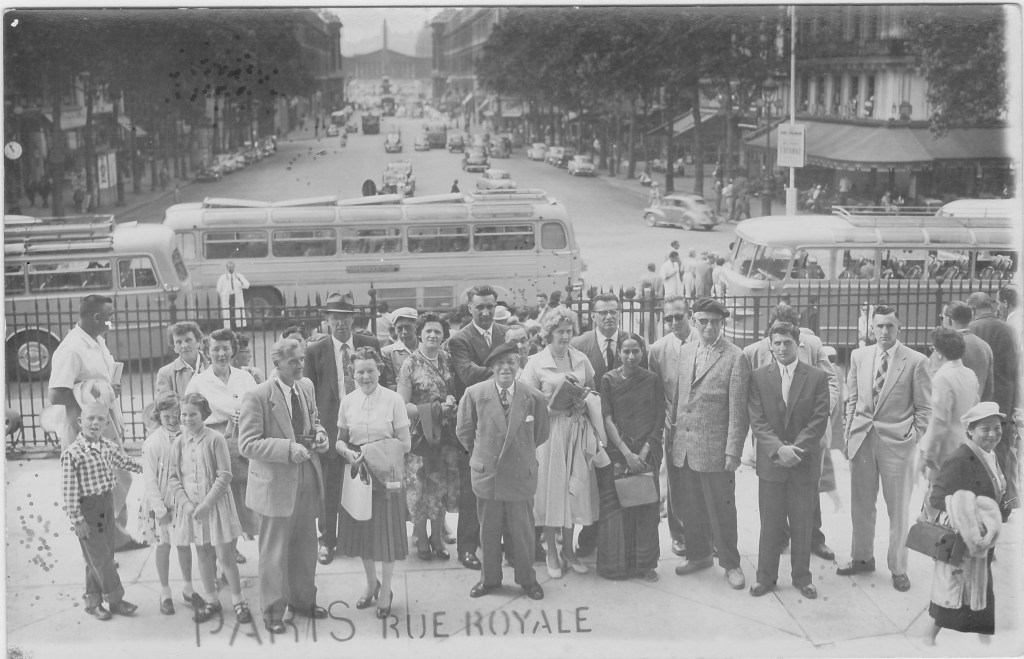
I don’t remember too much of the rest of our time in England – we visited aunts and uncles and grandparents again and stayed with friends of my parents in Sheffield in a house that became the basic design of a house that would be built for us back in Grahamstown.
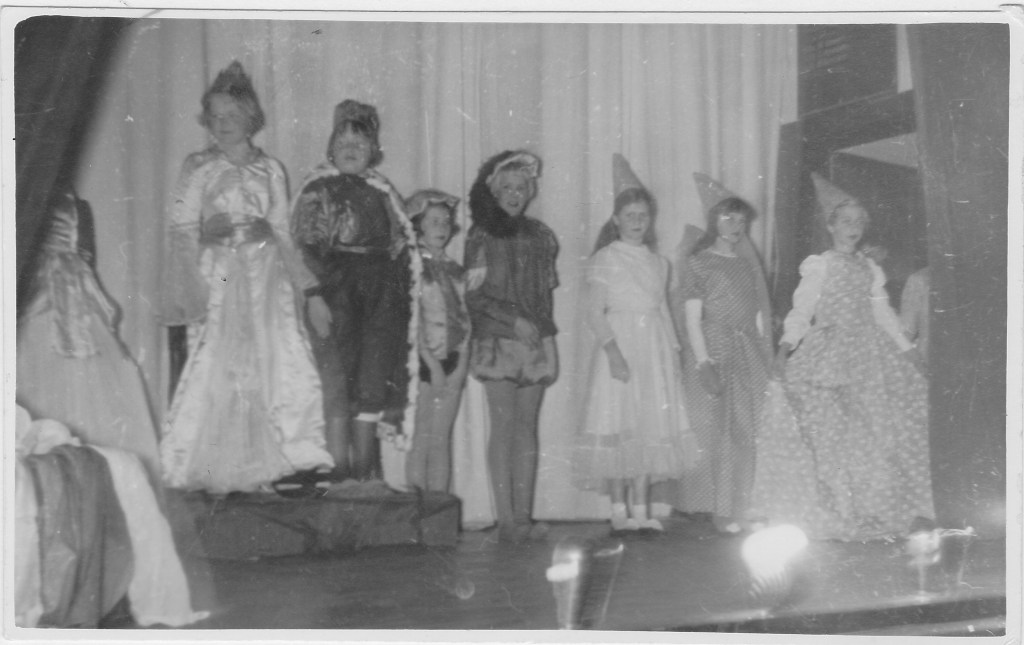
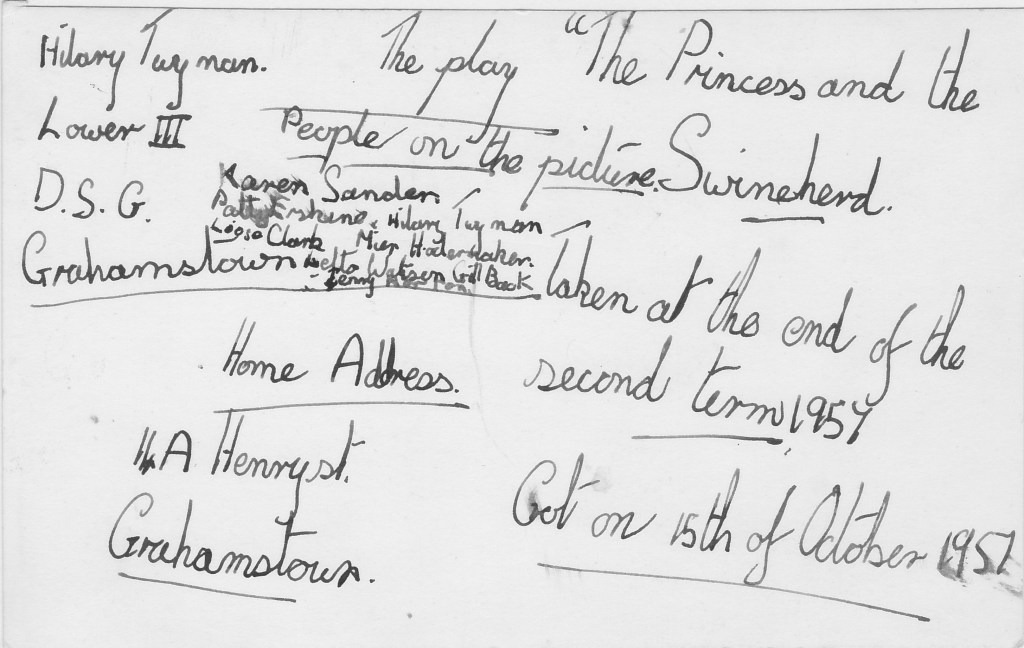
After nearly 10 months away we finally arrived back home in September, in time for me to go back to school at DSG and begin to catch up all that I had missed, especially Afrikaans. I had to have extra lessons in that but somehow never did manage to catch up properly and it always remained my weakest subject. A bonus of being back in a familiar school, though, was taking part in the annual play. This time it was the Princess and the Swineherd. I was some sort of courtier, I think. At any rate I was still one of the smallest in my class.
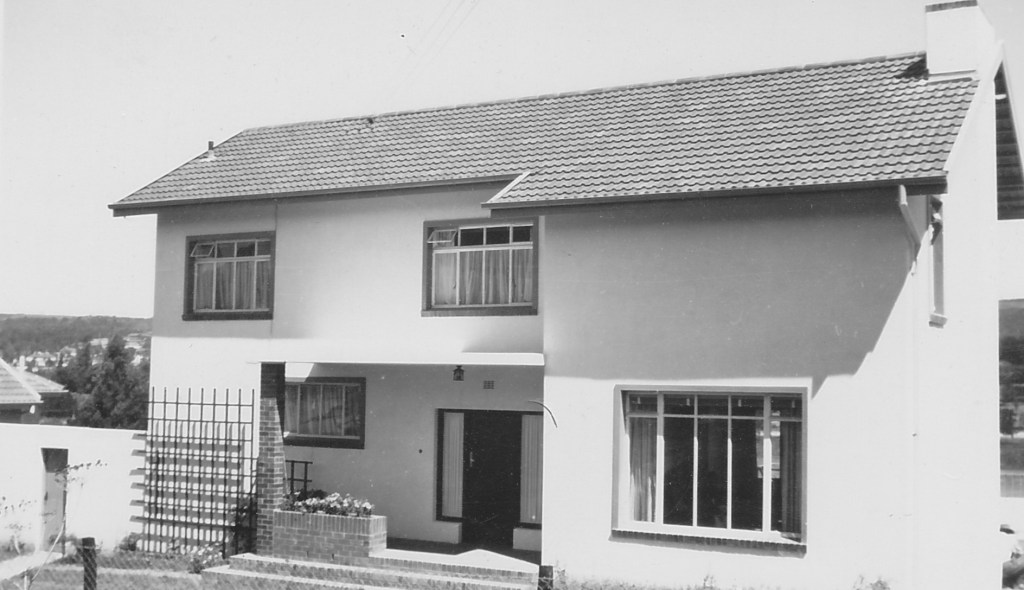
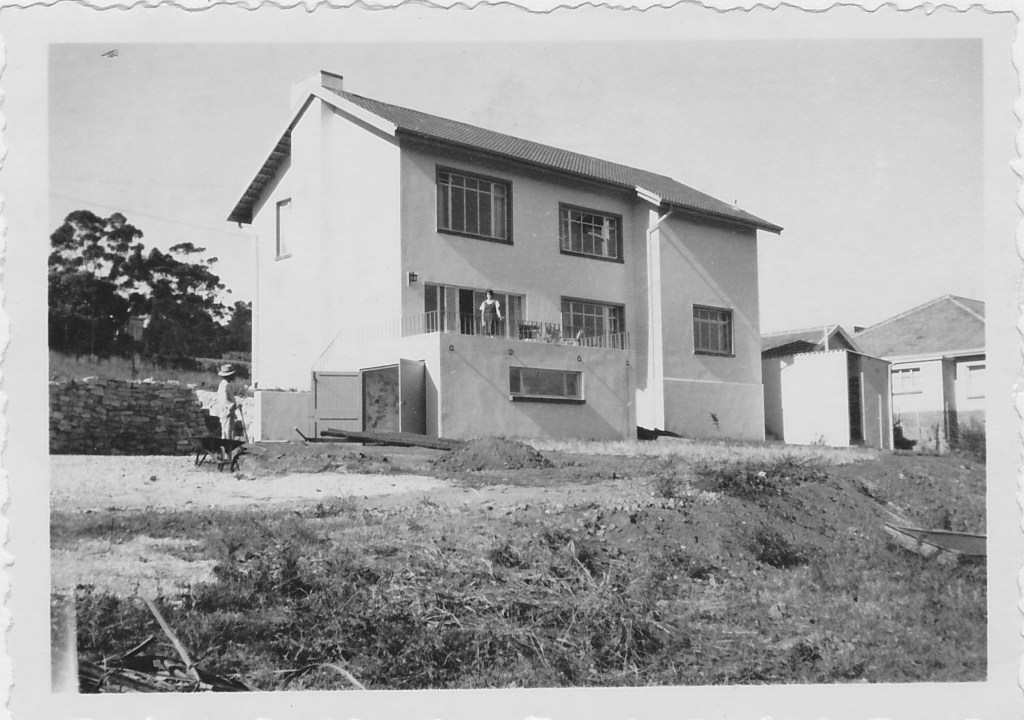
We were still living in our half of the Hermitage but shortly after we got back my parents bought a plot right at the end of Constitution street and my father took his design copied from his friend’s house in Sheffield to the builders. Soon a double story house was taking shape and we were able to move into it in 1958.