Waking to very little movement of the ship, peering out into the misty dawn, we could just make out ships all around us as we crept slowly towards our berth in Singapore habour.
We did not have the pleasure of a late lie-in as we had to have breakfast and be ready to leave the ship by 9am. We had a last quick look around the ship and some photos of the habour and Singapore skyline from the upper decks before going to the Theatre to await our departure.
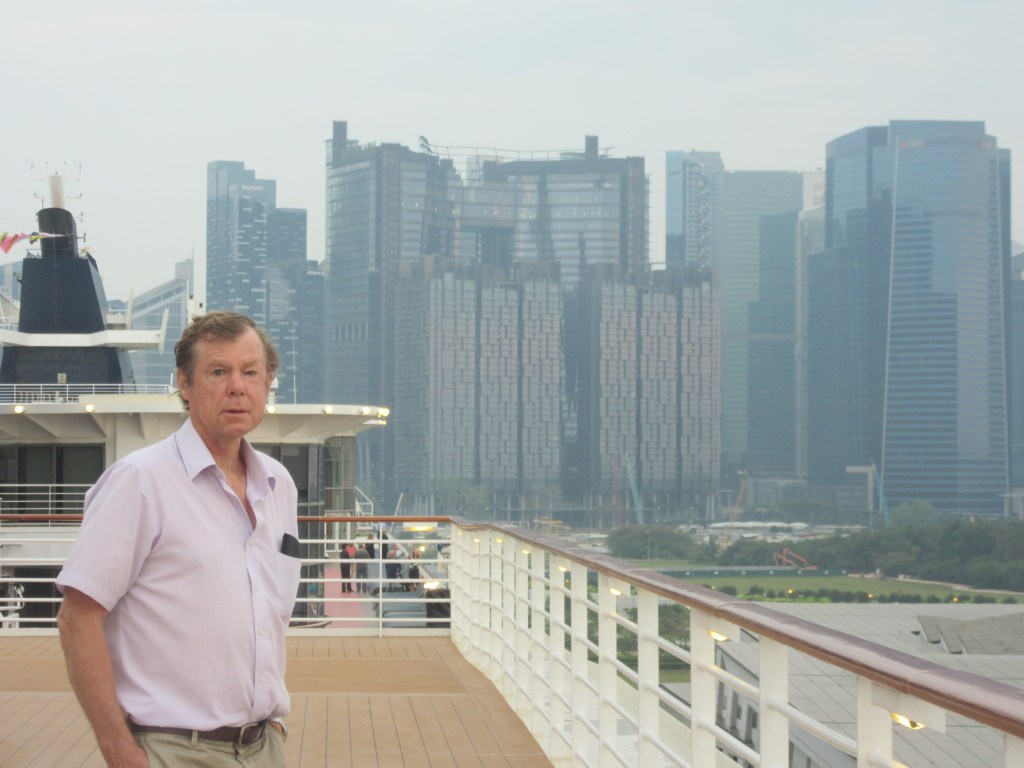
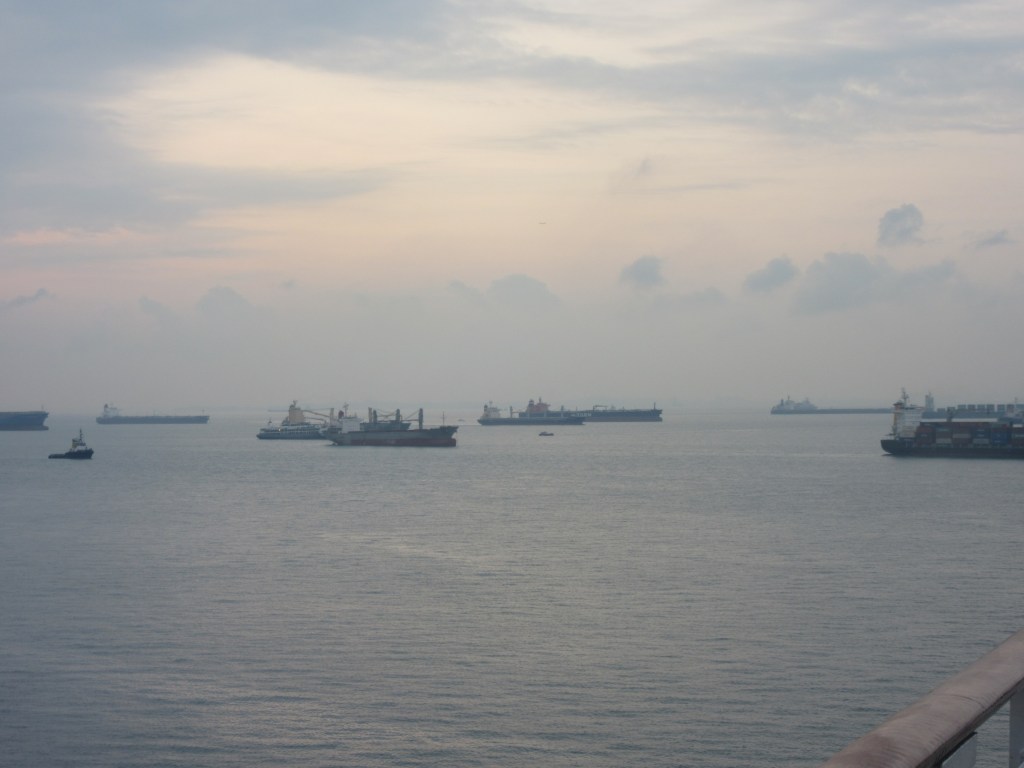
The previous night we had packed our suitcases and put them outside the cabin door to be collected by the steward and passed on to the tour company who would deliver us and our luggage to our chosen hotel. As we were going to spend two nights in Singapore we had booked a hotel that was on the list for dropping off passengers. When our tour number was announced our group made its way to the quayside, now in bright sunshine and temperatures warming up rapidly.
The guide on our bus was quite entertaining and very adamant about keeping us strictly to the time schedule. He was also very informative about Singapore and the sights we passed on the way, initially to the Botanic Gardens. Most high-rise apartment accommodation in Singapore is built and owned by the government and rented out by the Housing and Development Board. Attractive subsidies are given, making them affordable to most people. More than 80% of the population of Singapore live in HDB flats, which are also sold on a 99-year lease agreement.
Our guide also pointed out that car ownership and driving in the centre of the city is discouraged by various measures, including the requirement of obtaining a certificate of entitlement costing more than S$ 80 000 (almost USD 60 000) to enable a car owner to drive in Singapore. Even when it is obtained this only entitles ownership of the vehicle for 10 years after which the vehicle must be scrapped or a further amount paid to extend the COE. Certain road and expressways are also subject to an electronic road pricing system. The increasing price of parking is also designed to encourage people to use public transport. Both the metro system and public buses are very convenient and cover all of Singapore.
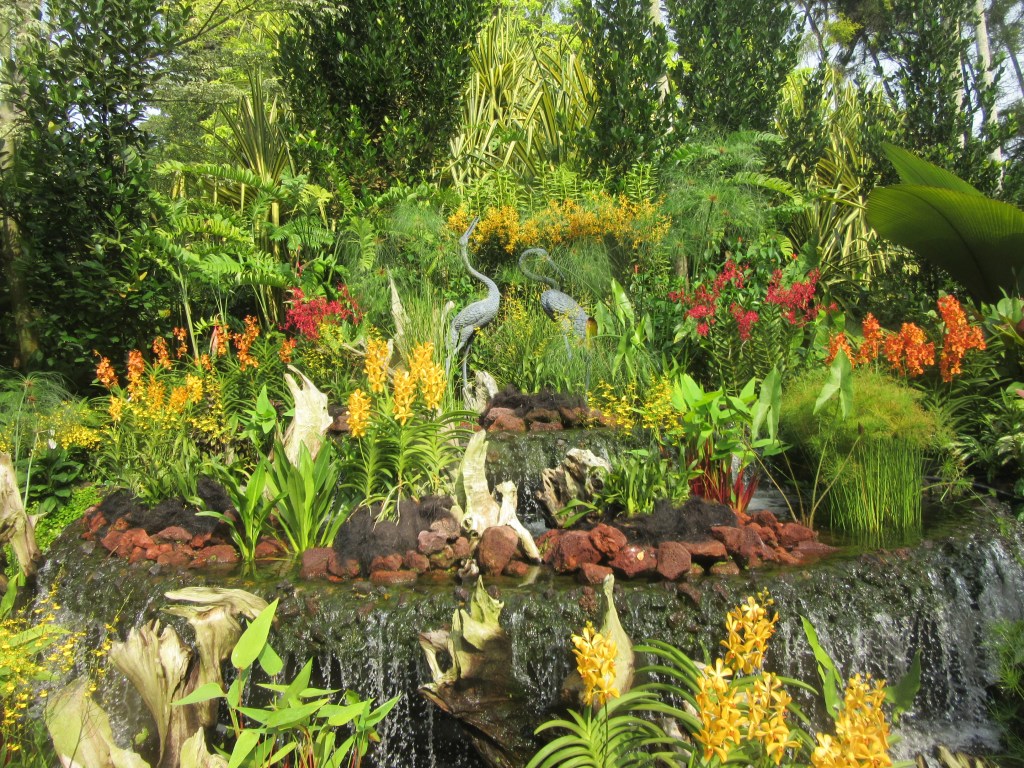
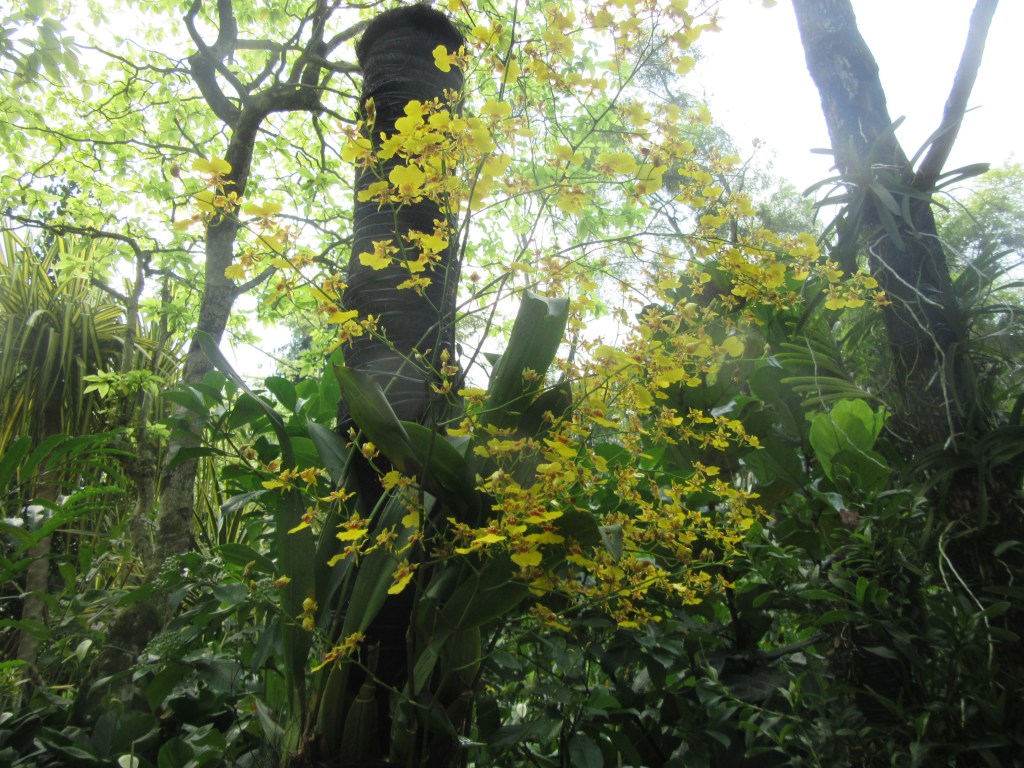
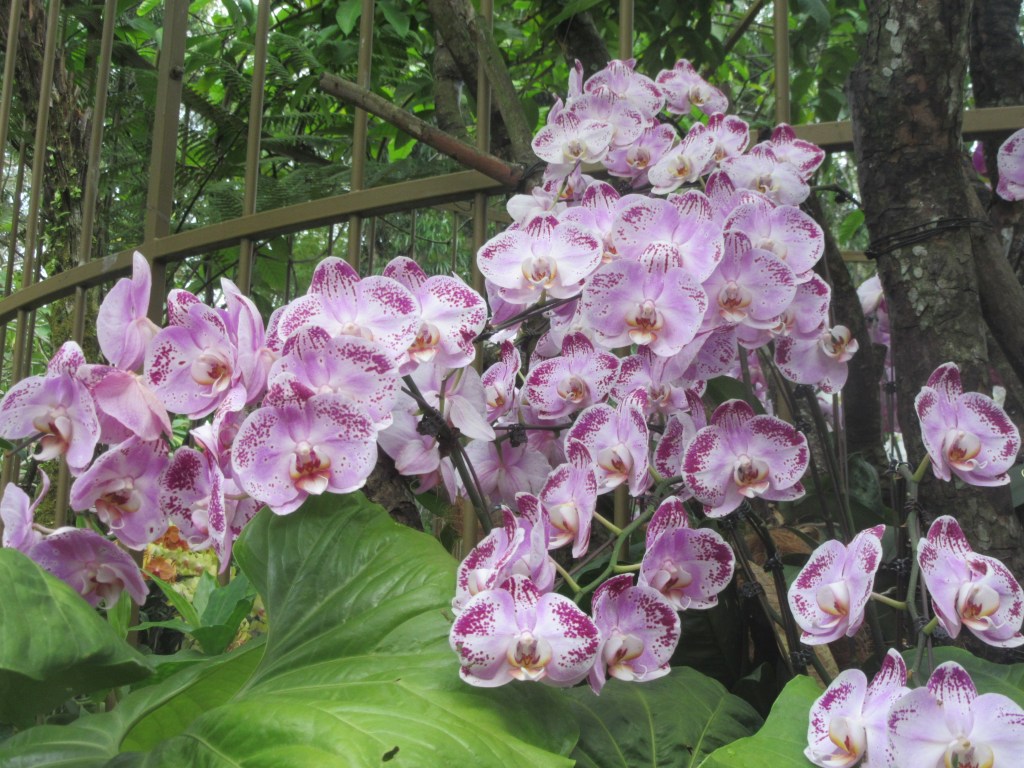
Our first stop was the Singapore Botanic Gardens, which incorporates the National Orchid Garden. Once outside the pleasantly air-conditioned bus we could feel the tropical warmth and humidity of a country that is only a few degrees north of the equator. The Orchid garden was really spectacular and the colour and variety of the orchids was stunning.
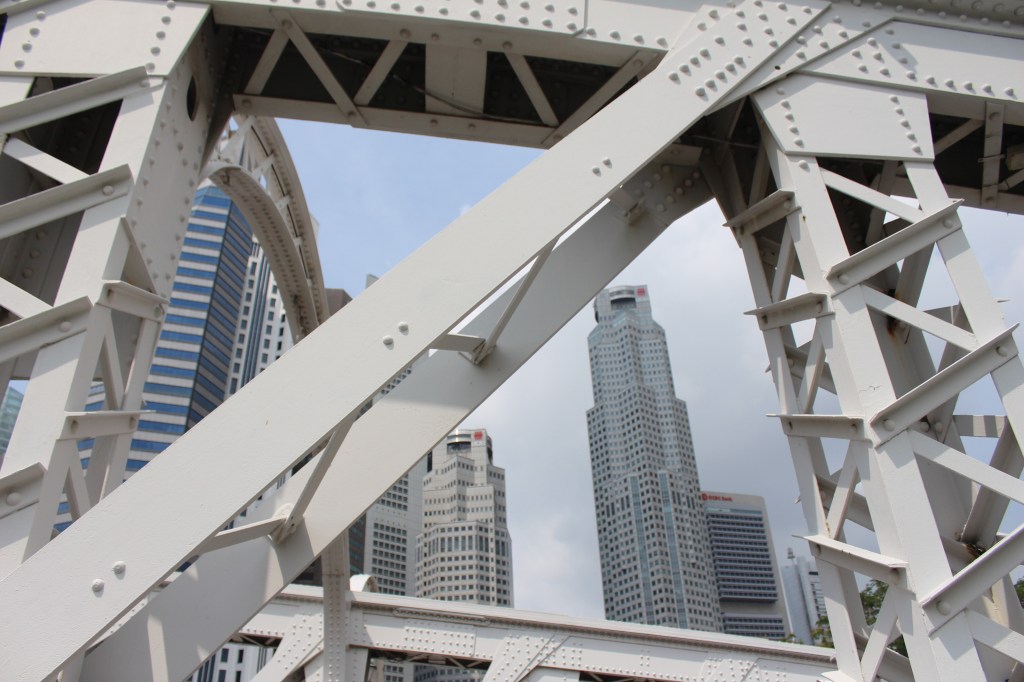
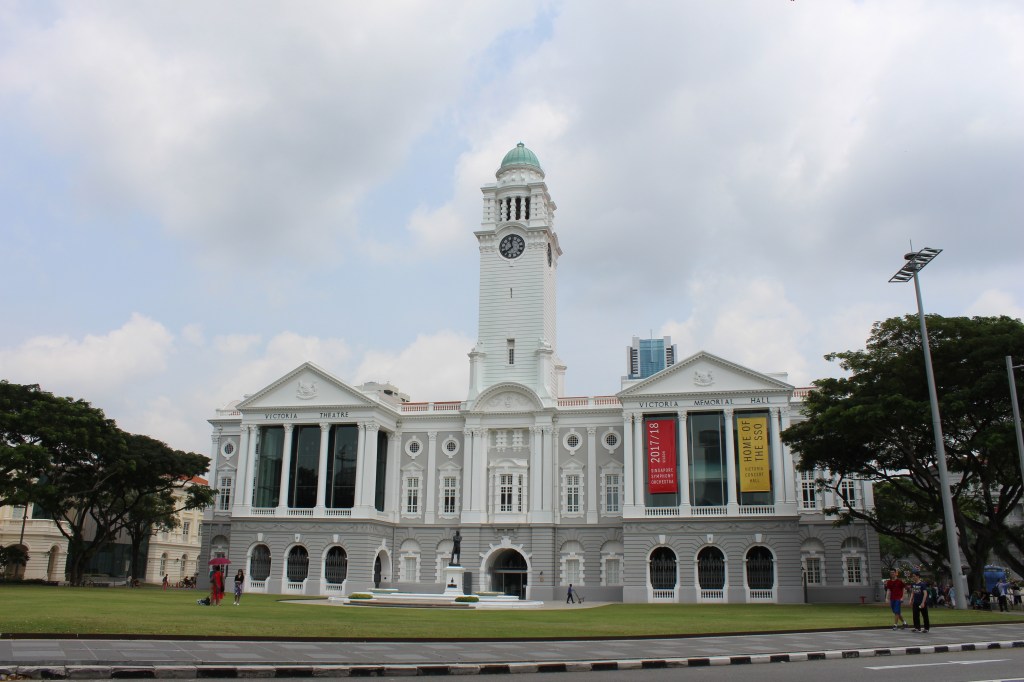
We were fortunate in knowing that we would probably be able to visit the gardens the following day as the time allowed by our guide seemed all to short and we were soon coerced back onto the bus for our next visit. We were driven back into the centre of the city and parked next to the Esplanade Park, near the statue of Raffles outside the Victoria Theatre. From there we walked across the Anderson Bridge that spans the Singapore River. The bridge was completed in 1910 and comprises three steel arches supported by steel ribs linking the arches. Archways at either end mark the entrances to the bridge. It is still used for vehicles but another modern bridge has been built for easier access to the Marina bay area.
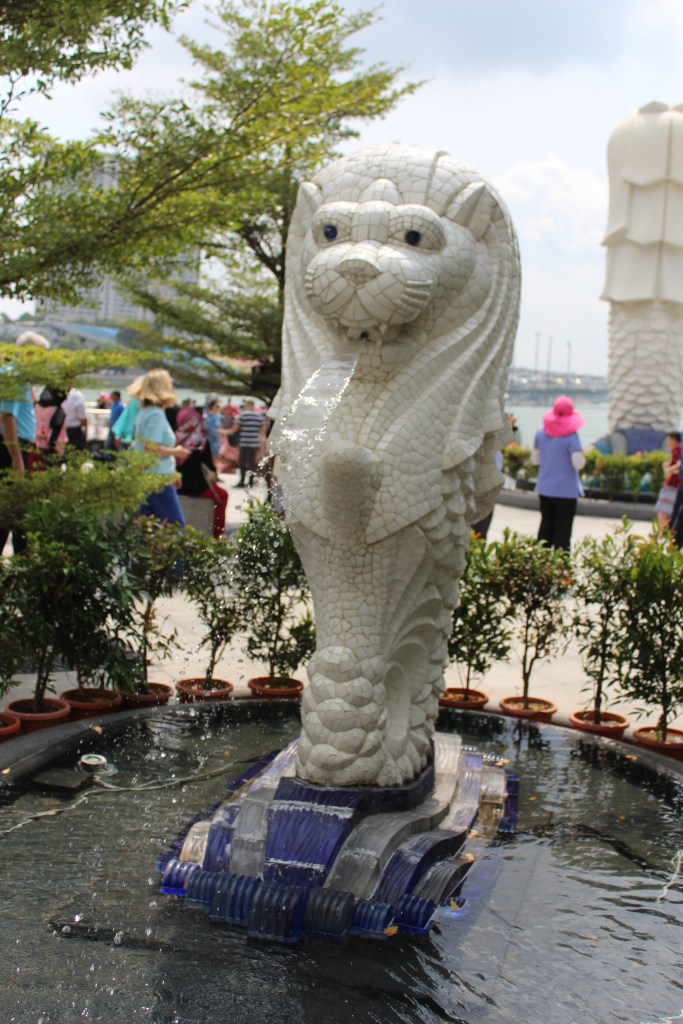
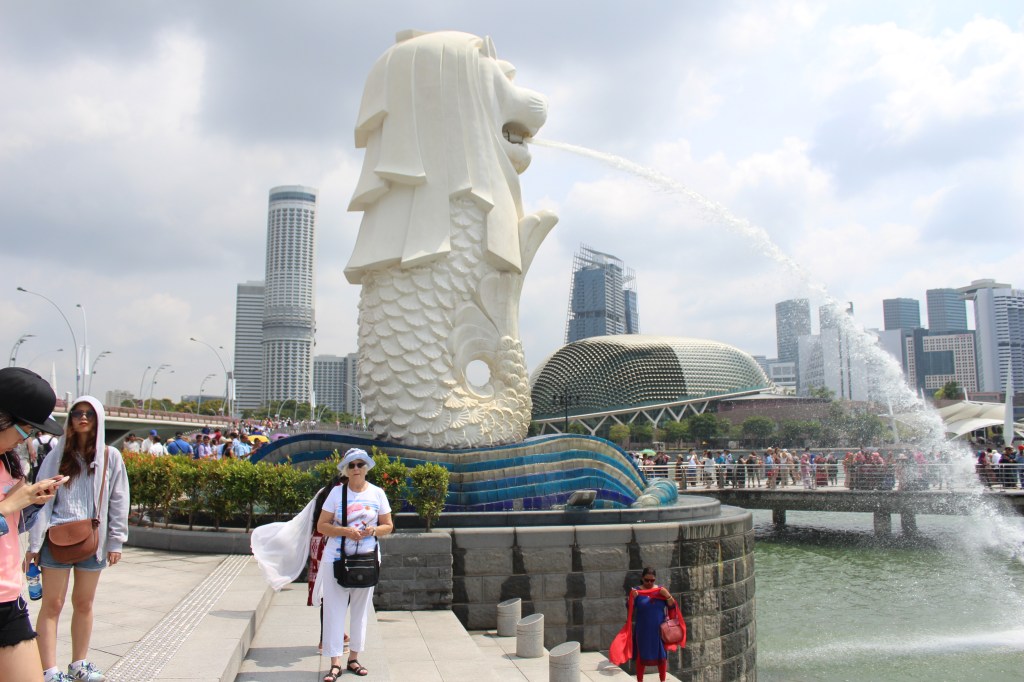
On the Bay itself is the Merlion Park. Approaching from the direction from which we came, the first Merlion you see is a miniature one, known as the Merlion cub. The large one stands 8.6 metres tall and weighs 70 tons. It has water spouting from its mouth into Marina Bay. The Merlion is half lion and half fish and is the mascot of Singapore. The first statue was unveiled in 1972, although the symbol was trademarked in 1966.
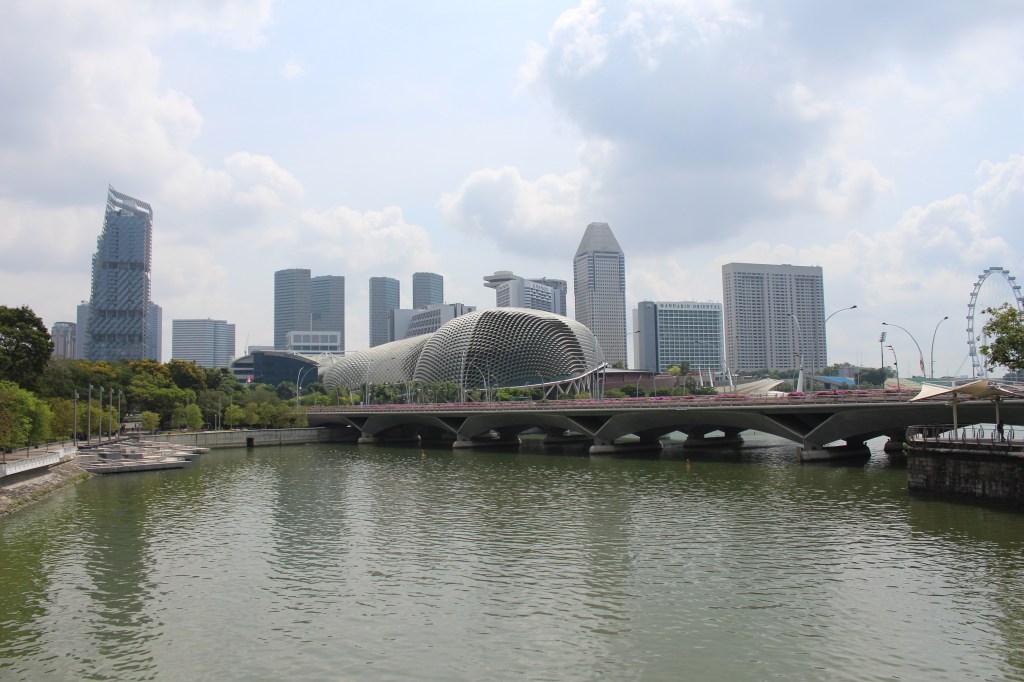
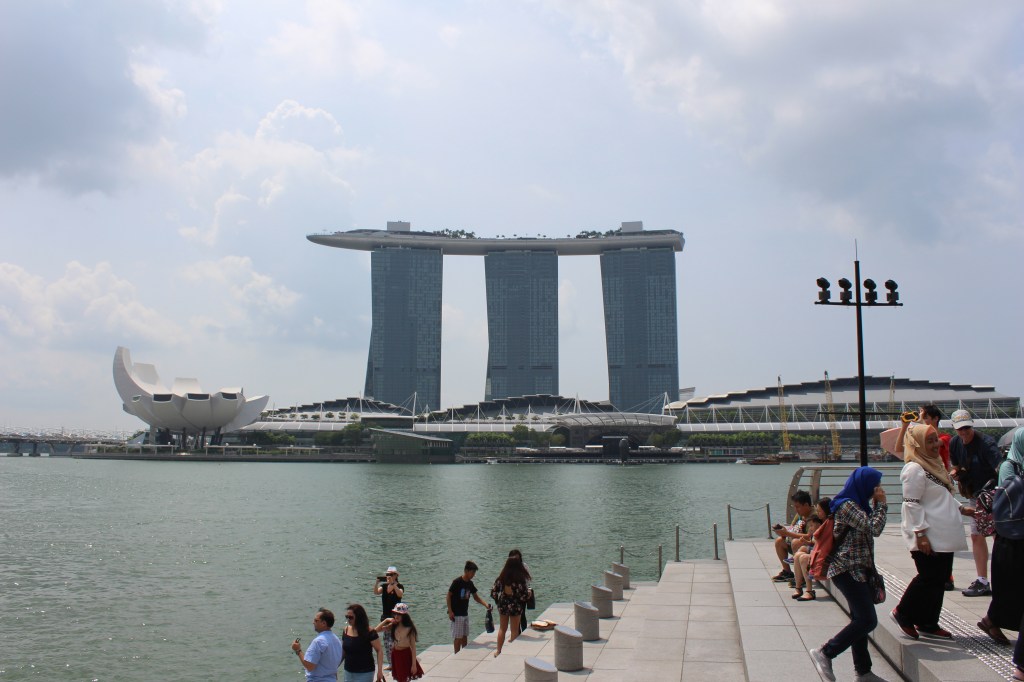
From the Park we could see beautiful views across the bay to the Marina Bay Sands hotel and the Arts and Science Museum.
Back on the bus, we headed for Chinatown and the Buddha Tooth Relic Temple. This is a 4-story temple and museum complex, although we only had time to visit the temple on the ground floor and have a brief look at the surrounding Chinatown street market. The complex was only completed in 2007. The tooth is only allowed to be seen at certain times so we were not able to see it. However, it is unlikely that is actually genuine! But the temple itself is very ornate and lavish. In the Universal Wisdom Hall the walls are lined with one hundred Buddha statues and in the Hall of One Hundred Dragons is the seated Buddha Maitreya flanked by two Bodhisattvas. There are eight Buddhist guardian deities of the 12 signs of the zodiac and each statue was marked with the appropriate years so we were able to find which ones were ours. Kev’s is Samantabhhadra or Universal Virtue, usually depicted atop an elephant (see the image at bottom left below). Mine is Amithabha meaning “infinite Light” and “immeasurable Life” (see the image at bottom right below)
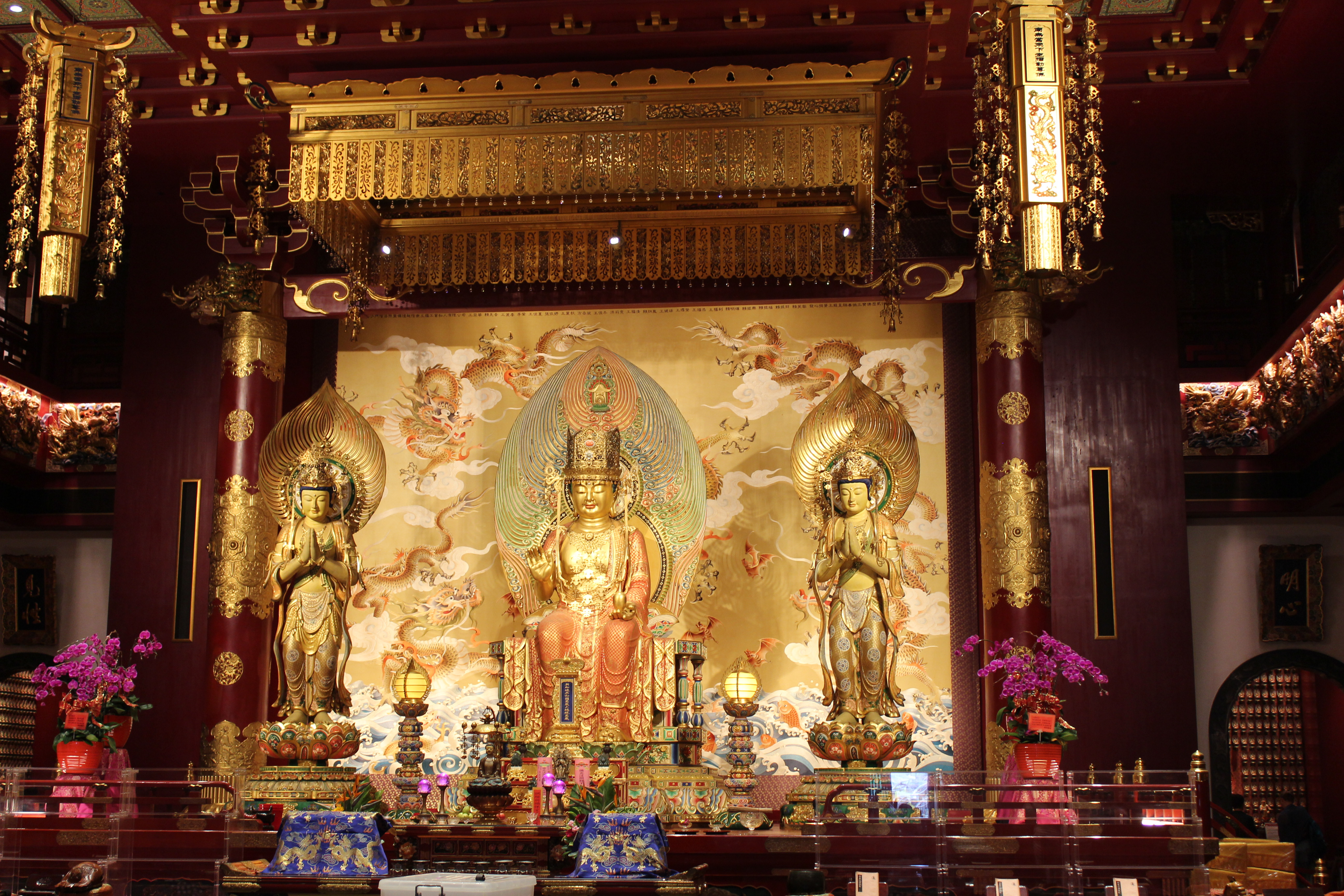
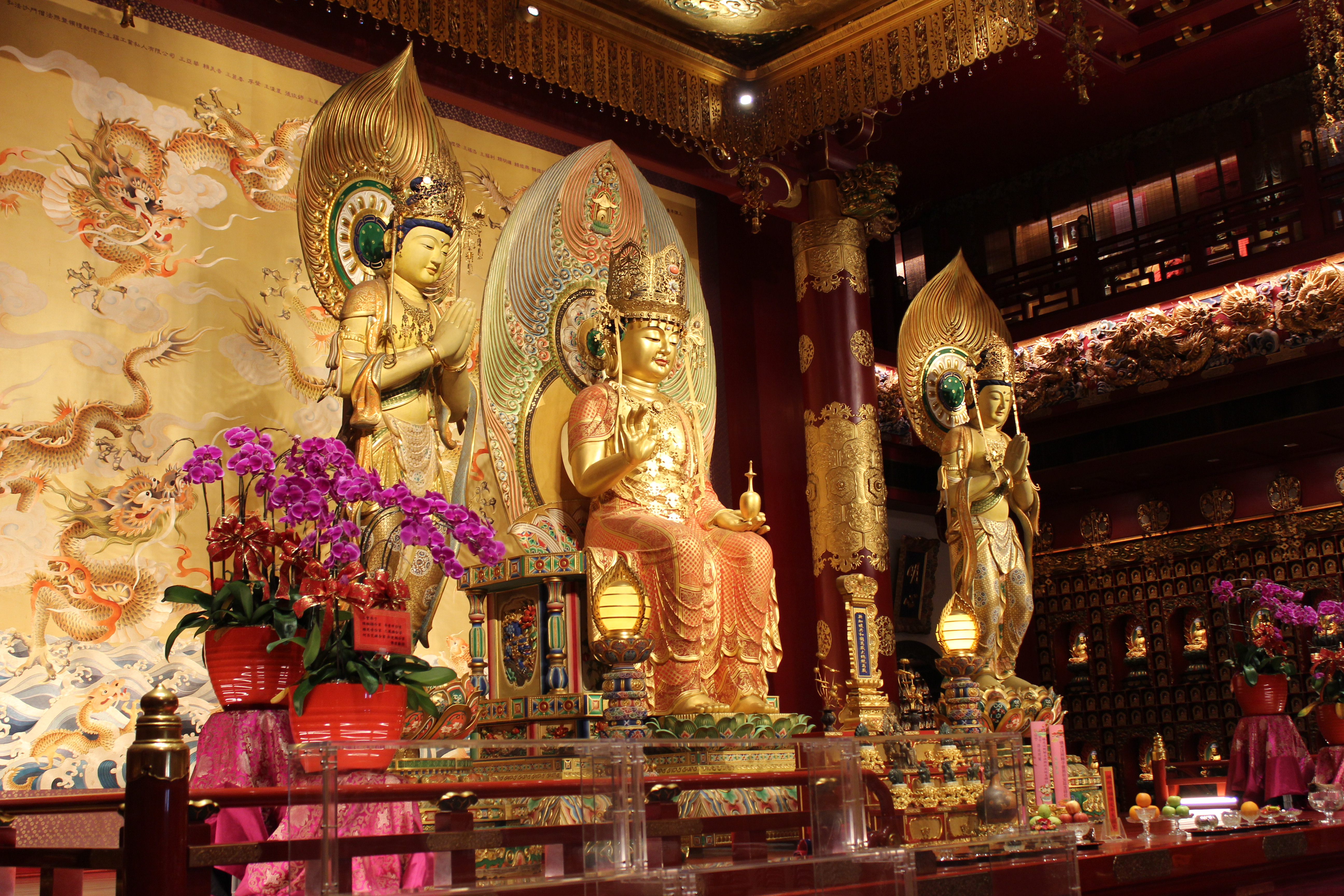
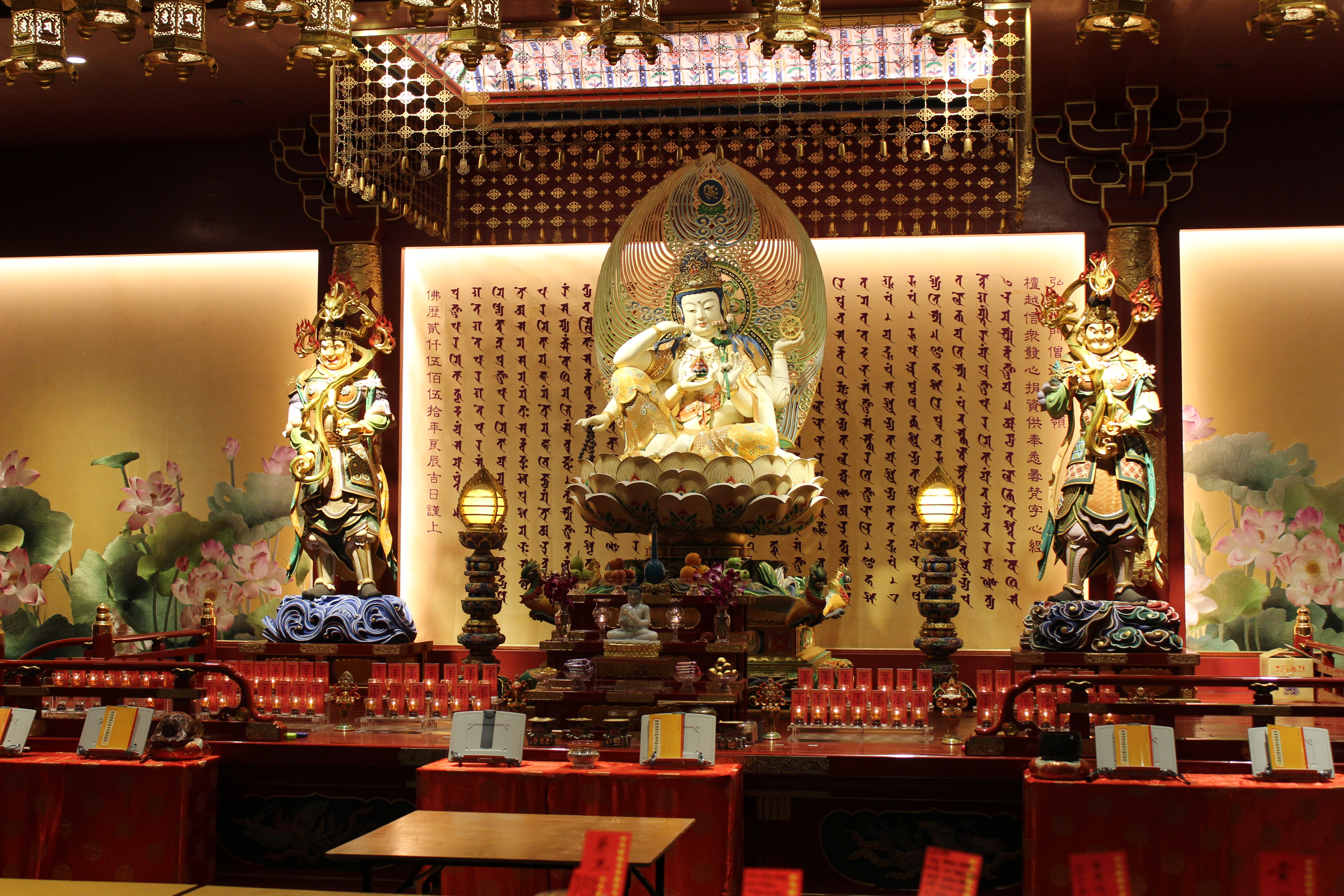
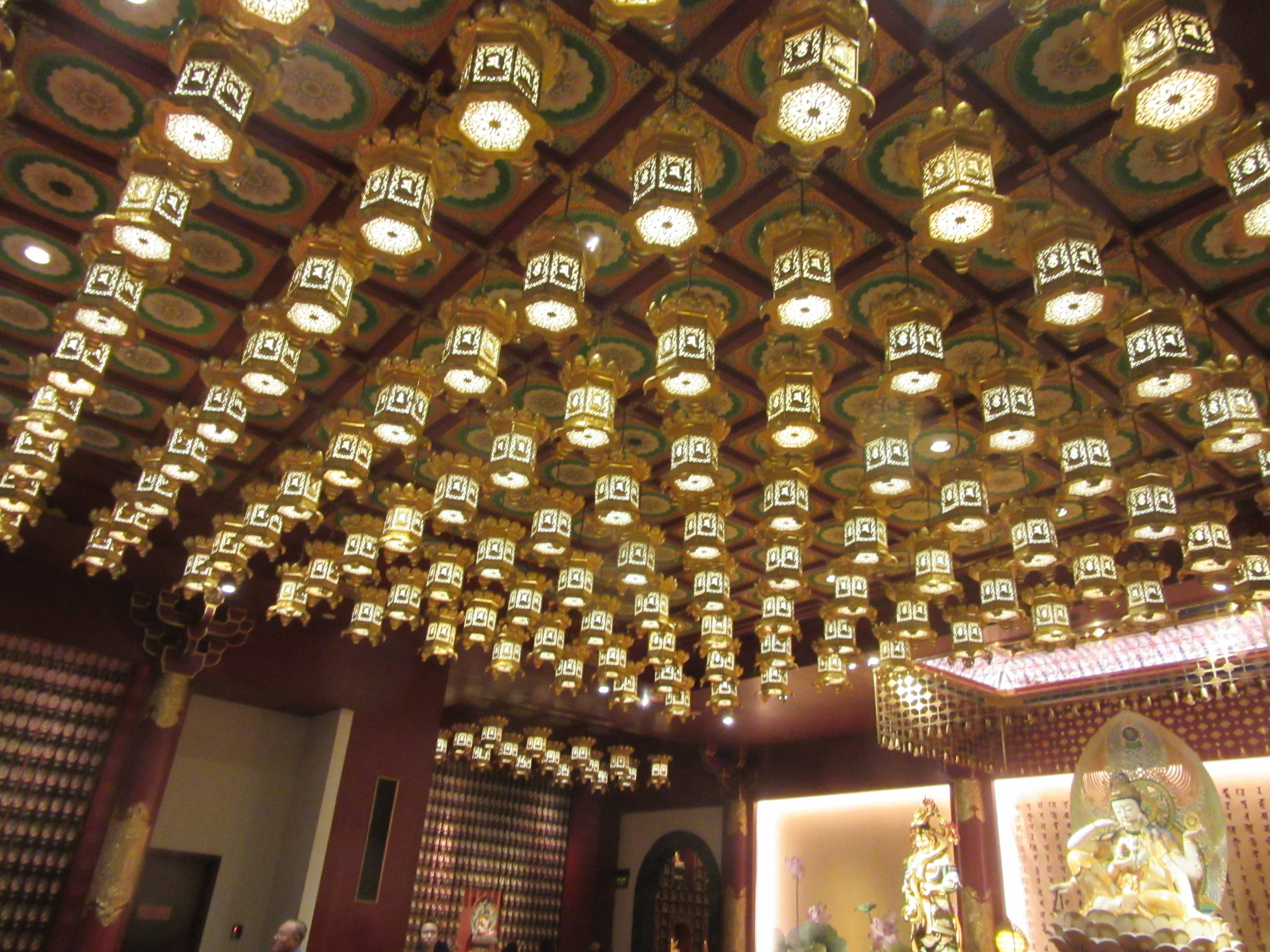
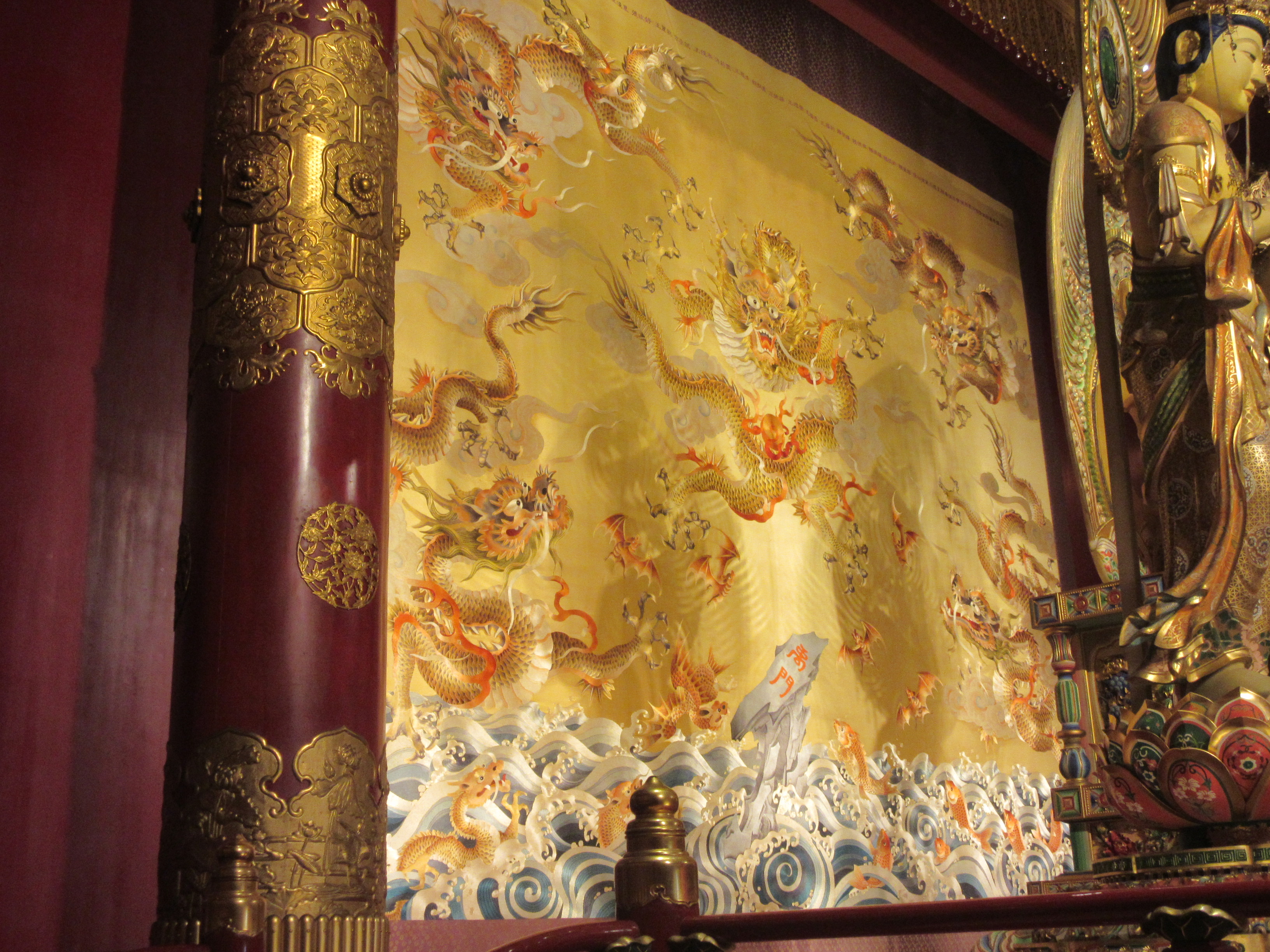
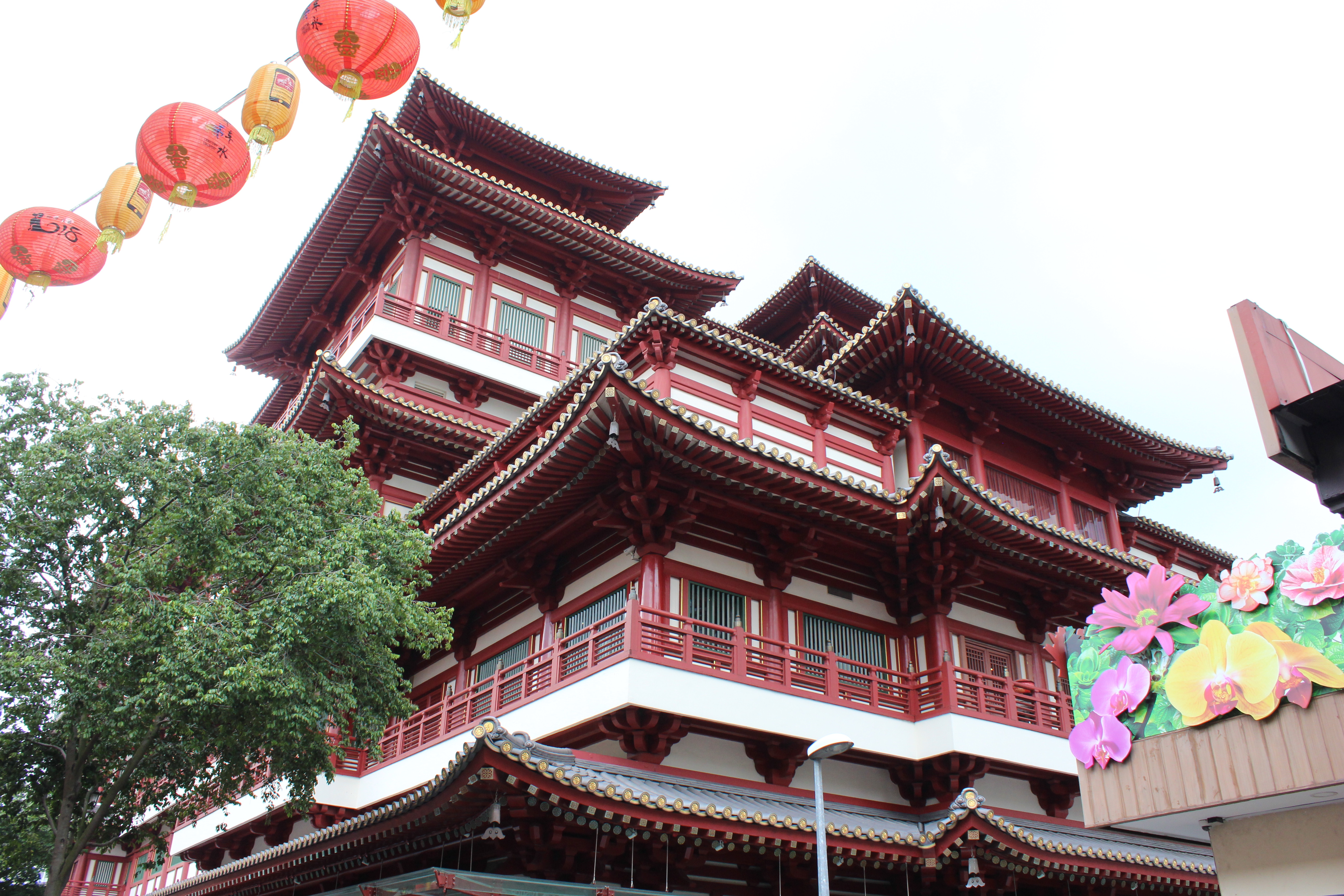
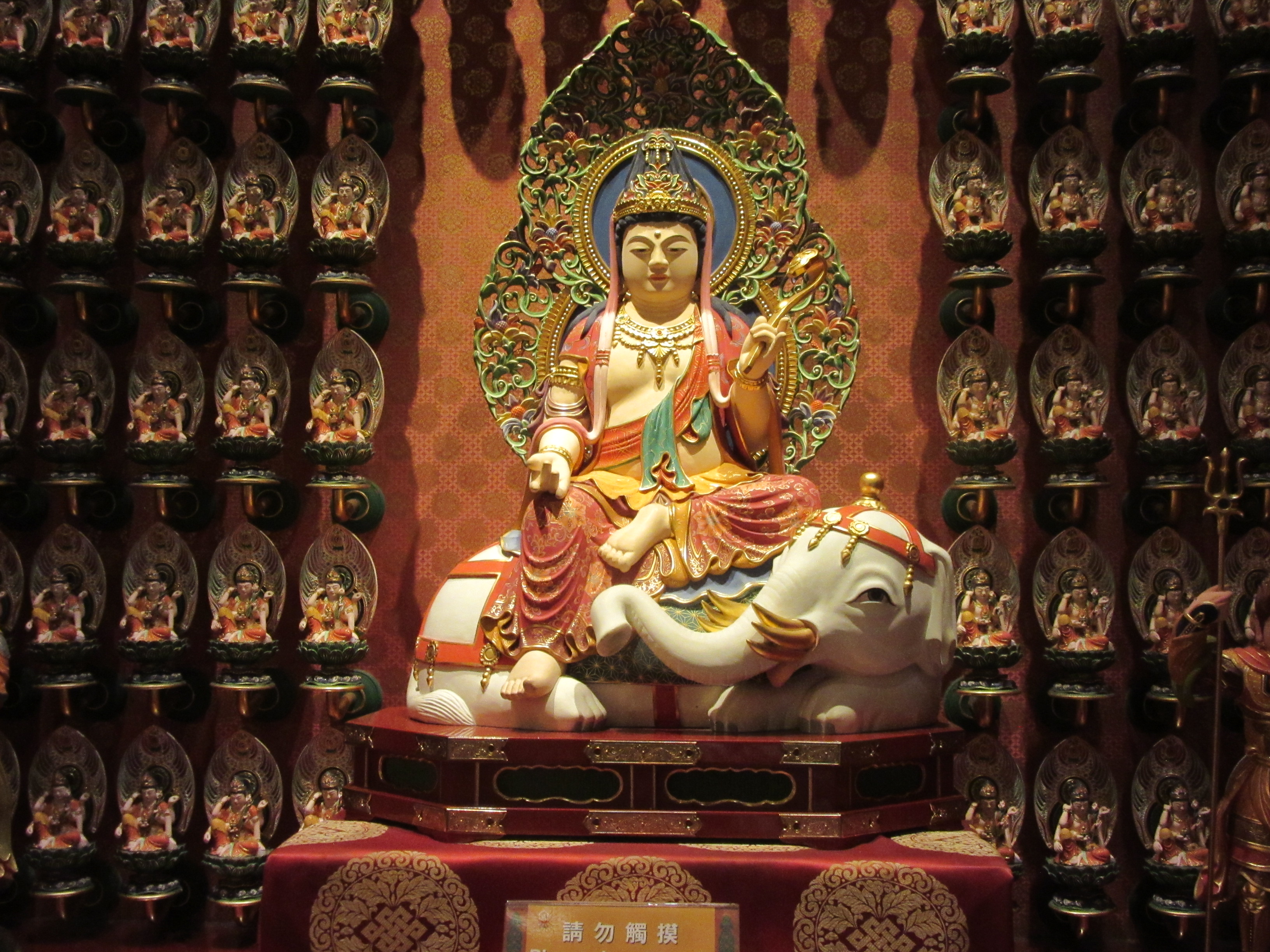
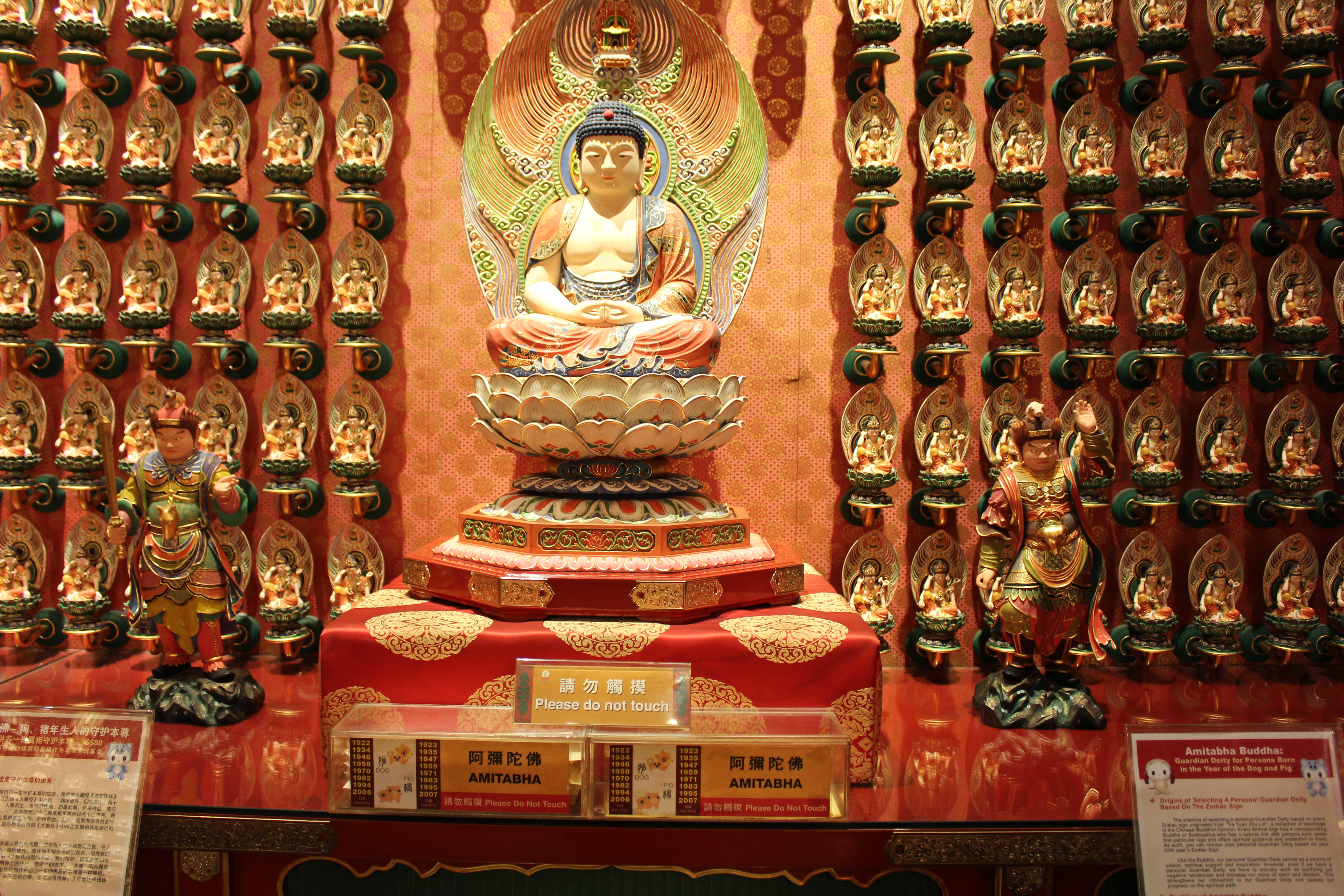
Chinatown and the Buddha Tooth Relic Temple
Once we had all been rounded up again and on the bus, we were taken to our various hotels. We had booked to stay at the Swisshotel, the Stamford, which turned out to be a good choice. We had a very big and comfortable room with amazing views. We looked down on a cricket match being played in the sport’s fields next to the Victoria Theatre as well as St Andrew’s church.
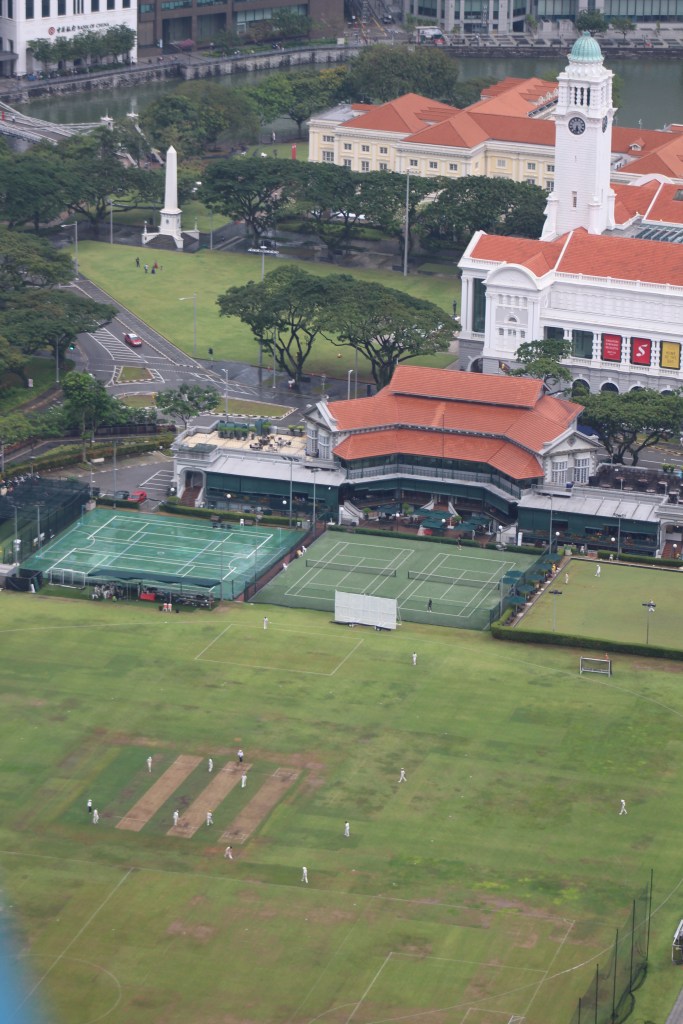
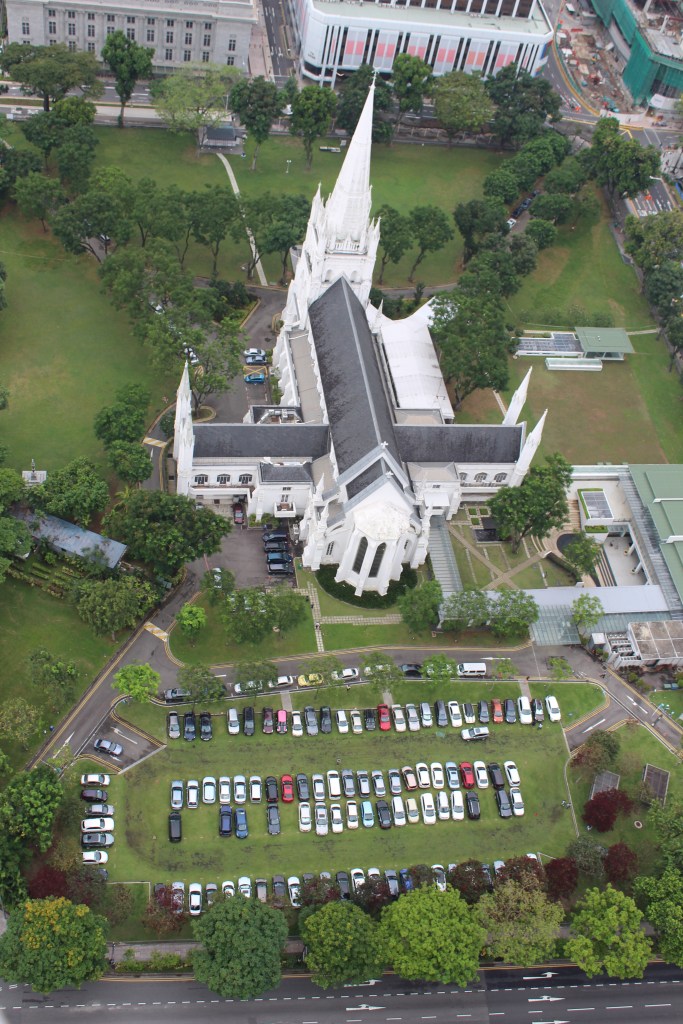
Views from our room at the Stamford Hotel
The Stamford Hotel was named for Sir Thomas Stamford Raffles, the founder of modern Singapore. In 1819, he established a post at the southern tip of the Malay Peninsula, and, after establishing that there was no Dutch presence on the island just to the south, he was able to negotiate a formal treaty with local chiefs, eventually transferring control of the island to the East India Company. Raffles also established schools and churches in native languages and allowed missionaries and businesses to flourish. A European town began to be built up in early part of 1819 and by late 1822, the colony had grown enormously and was already a centre for trade and economic activity.
When the hotel was opened in 1968, it was the tallest hotel in the world. It now forms part of the Raffles City Complex and is just across the road from the famous Raffles Hotel. It is also passed by the Formula 1 cars competing in the Singapore Grand Prix.
After a well-earned rest in the afternoon, we set out to find the Lau Pa Sat Festival market, which had been recommended to us by Sian (the daughter of friends, who had lived for 10 years in Singapore) as a good place to eat satay. We did get there although by a somewhat circuitous route – as is our custom! But it was worth it – we had a variety of satay including chicken, beef and lamb plus dipping sauces, as well as some local Tiger beer. The building the market is housed in is a Victorian cast iron structure. A big range of stalls can be found inside but the satay stalls all seemed to be on the outside.
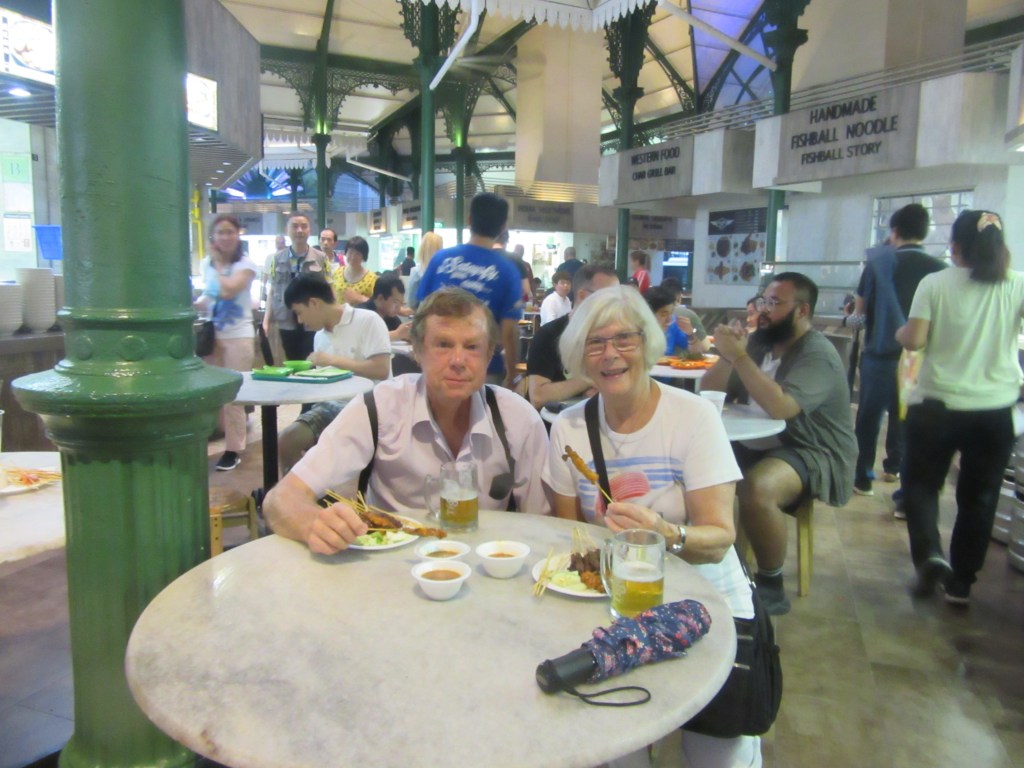
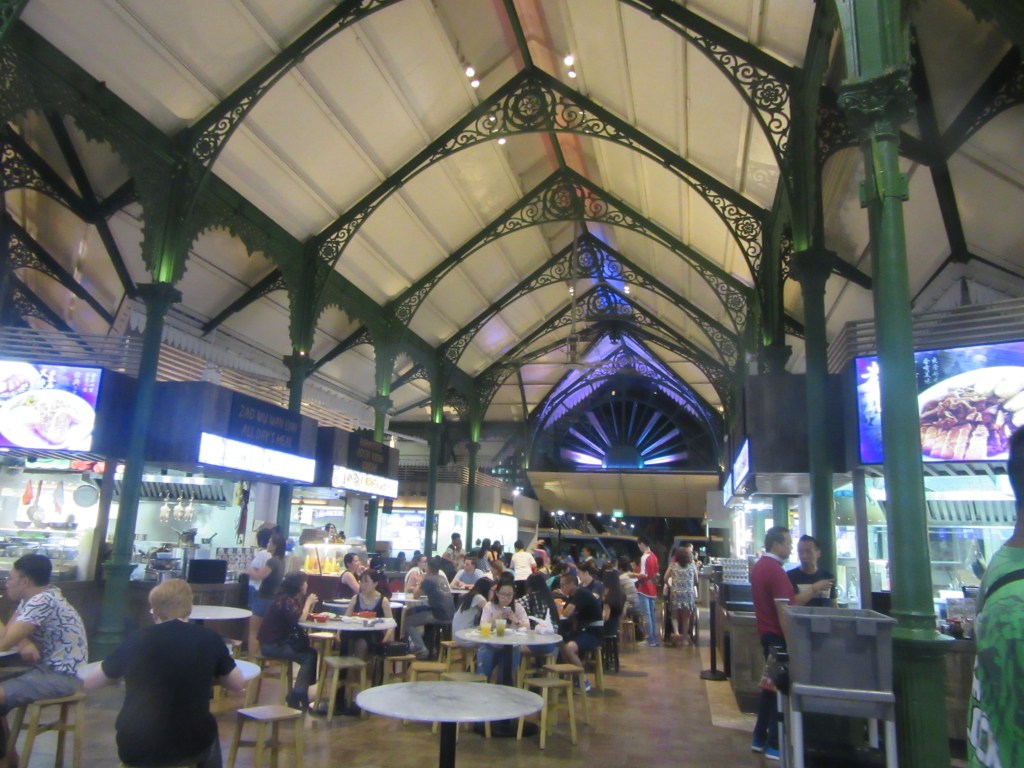
Eating satay at Lau Pa Sat Festival market
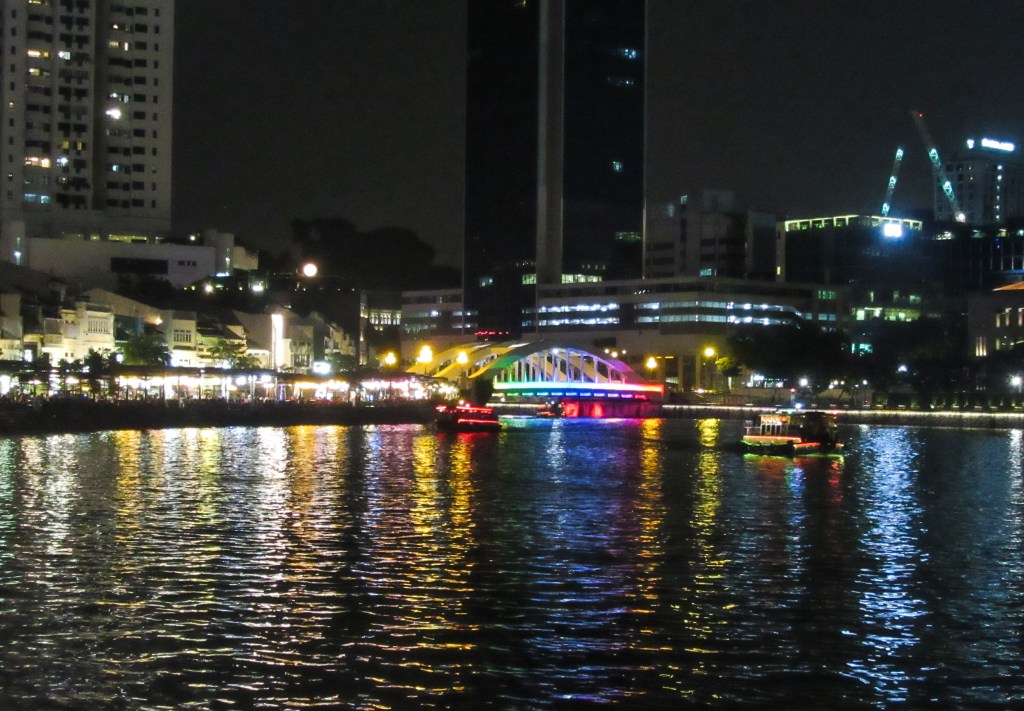
We wandered back to the hotel via the Singapore River and over the Elgin Bridge, beautifully lit up at night.
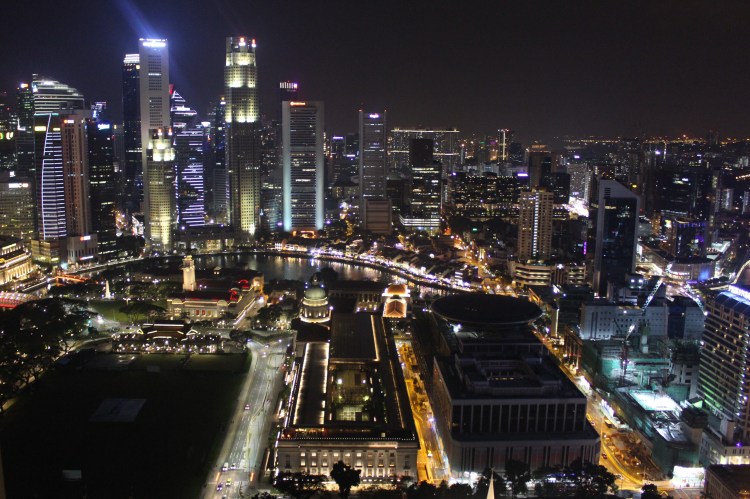
Back in our room we admired the panoramic night-time views across the Singapore River to the multi-coloured lights of the high-rise buildings beyond, as well as a panorama to the north of the city.
It seemed strange going to bed that night – on dry land for the first time in two weeks. But we slept well and woke up looking forward to exploring more of Singapore.

