The end of the first week brought us to the shelter of the St Lawrence River and the approach to Quebec City.
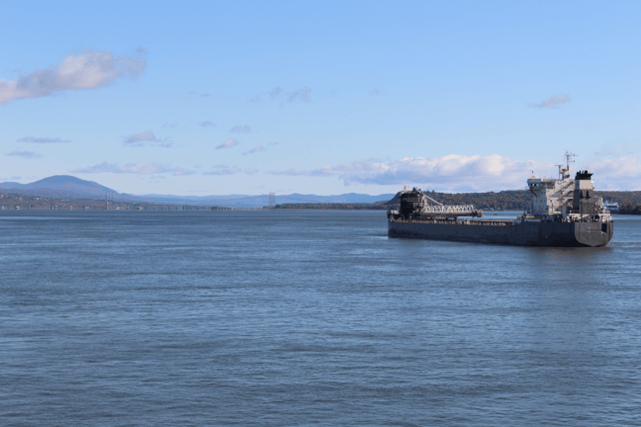
We only docked at 10am so we had decided to do a tour on the second day we were in port and have the first day to explore on our own. The weather had cleared up but was a lot colder than further south. Along the shores of the river we could see beautiful autumn colours in the trees.
Once the ship had berthed at the Cruise terminal adjacent to the Lower Town, we were ready to go ashore and make the most of the day. As we were making our way towards the Funiculaire that goes to the Upper Town, we came across a small square with a fountain sculpture commemorating the founding of the FAO. We had not known about it before this so quickly read up about it as it has significance for both of us, as former employees of FAO.
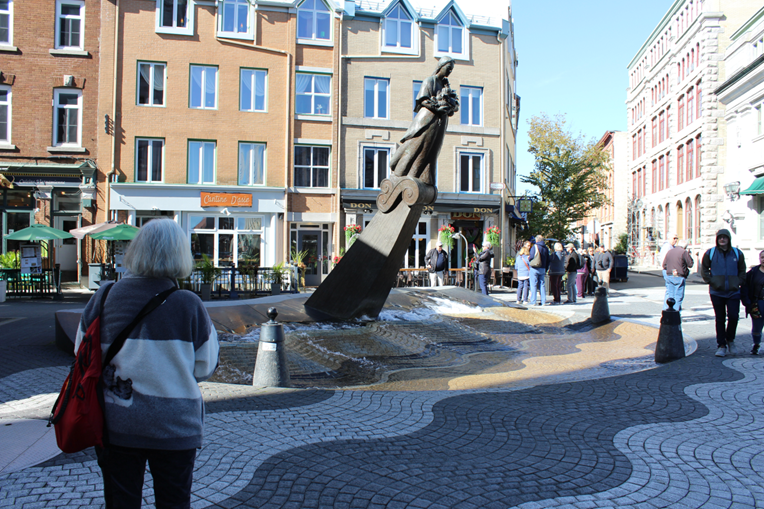
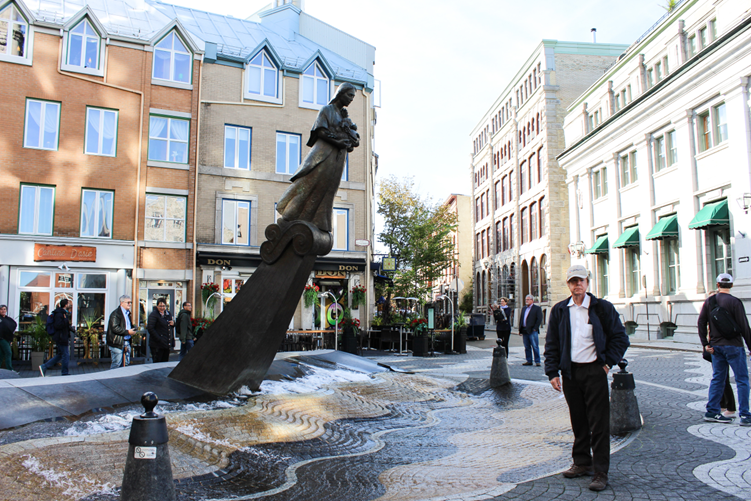
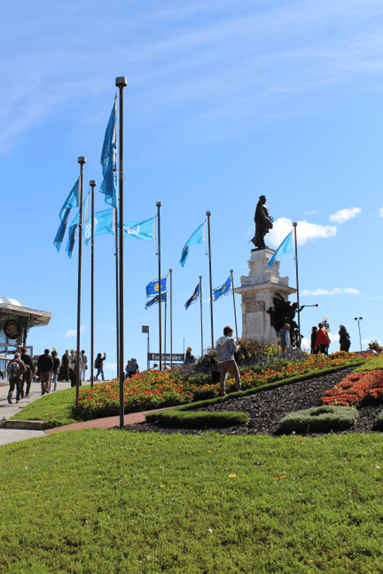
Place de la FAO and the statue of La Vivriére
In 1945, 44 nations met to initiate the creation of the Food and Agriculture Organization of the United Nations. The aim of the Organization was, and still is, to assist developing countries in the fight against hunger and malnutrition. This was particularly relevant in the immediate post-war period in 1945. Initially the Headquarters of the FAO was in Washington DC but in 1951 it was moved to Rome, Italy. One of the main reasons for the move was that Rome had been the Headquarters of FAO’s predecessor, the International Institute of Agriculture, which was the first international organisation to deal with agriculture.
The square in the Lower Town of Quebec City is named the Place de la FAO and the bronze fountain sculpture is called La Vivriére. It resembles a figurehead on the prow of a ship, similar to the decorative goddesses who protected sailors against storms. Here it represents a woman carrying food to all parts of the world and is a figurehead to ward off hunger. The shoreline of the St Lawrence River used to come up to the position of the square and the bricks laid on the street and pavements around the fountain are arranged in a wavy pattern to represent the extent of the river, which was eventually pushed back to its present position by infilling when the port was created. The square was inaugurated in 1995, marking the 50th anniversary of the creation of FAO in Quebec.
Moving further into the Lower Town area, we explored the Place Royale and the Quartier du Petit-Champlain and eventually made our way to the Funiculaire.
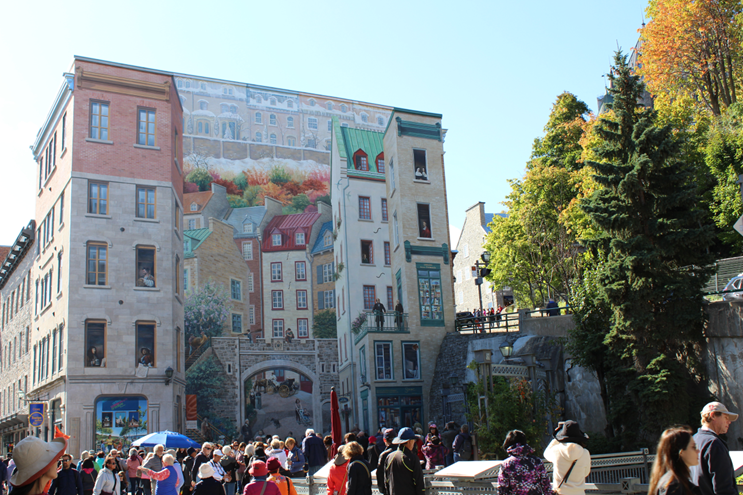
In the Quartier du Petit-Champlain, we spotted this amazing building – it is three stories high and one side is covered with an incredible trompe l’oeil painted mural of historic scenes of the city.
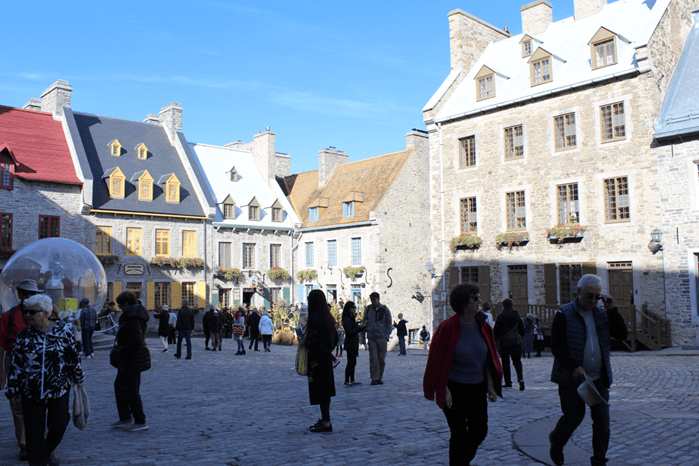
The Place Royale is a quaint little square in the Lower Town. It was the focus of a major renovation project between 1960 and 1980 when several buildings were rebuilt in the style of the 18th century and others were extensively renovated. The appearance created is the of the Place du Marche, which was Quebec’s commercial centre until the mid 19th century.
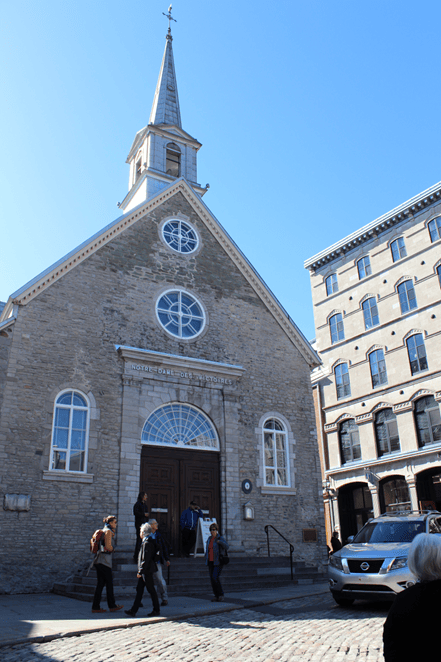
The picture above shows the Notre-Dame-des-Victoires church in the Place Royale. It is the oldest stone church in North America, built in 1688.
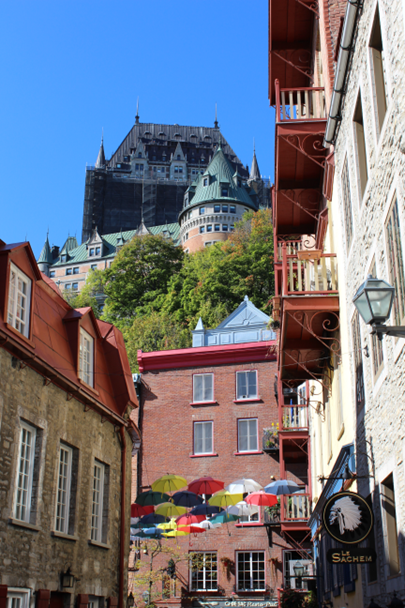
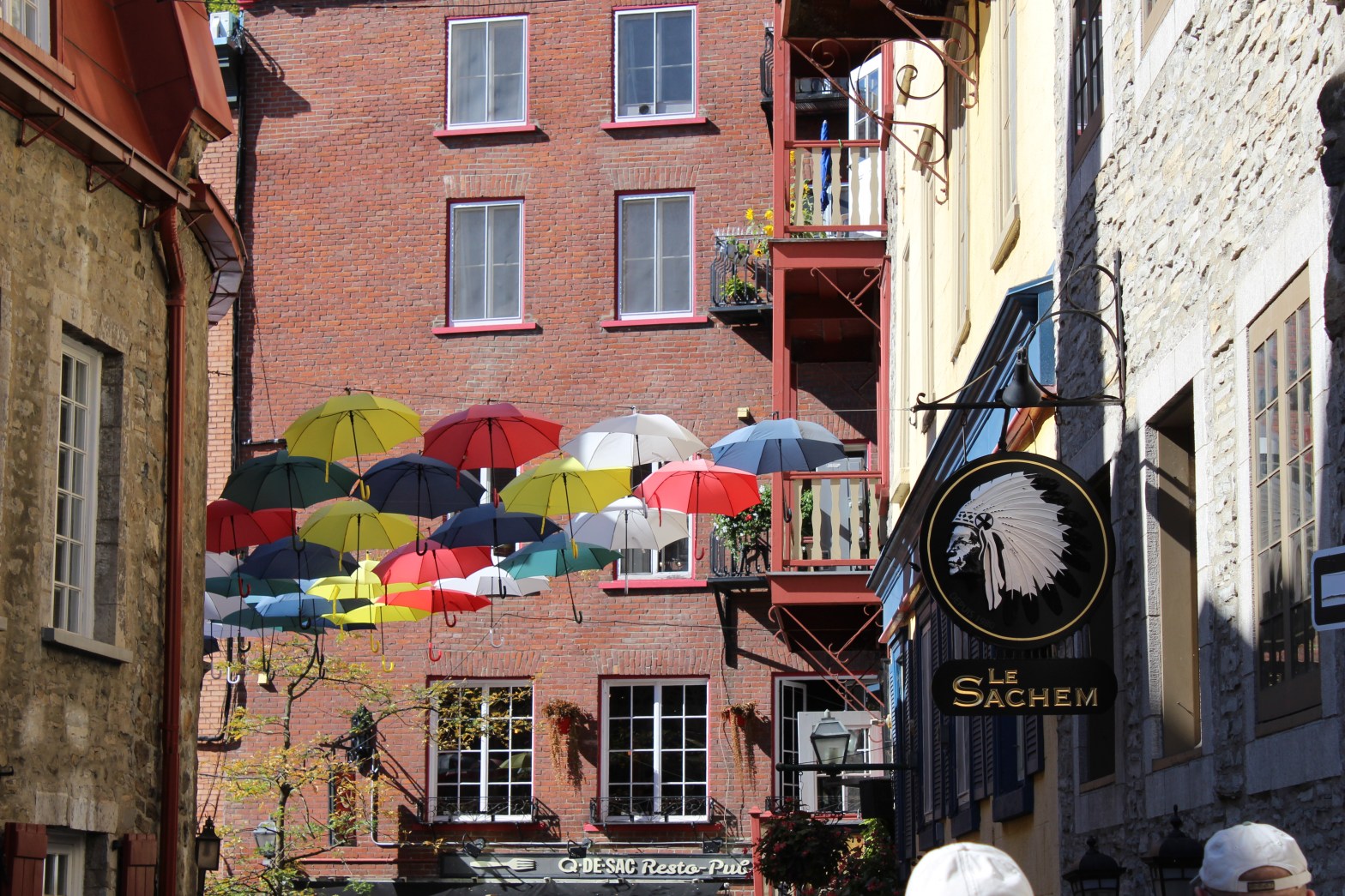
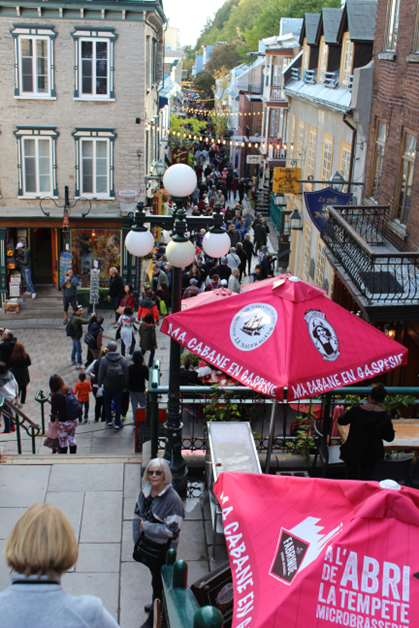
This is the view from the Lower Town looking along the street of umbrellas and up to the Hotel Frontenac in the Old City. Just around the corner is the entrance to the Funiculaire.
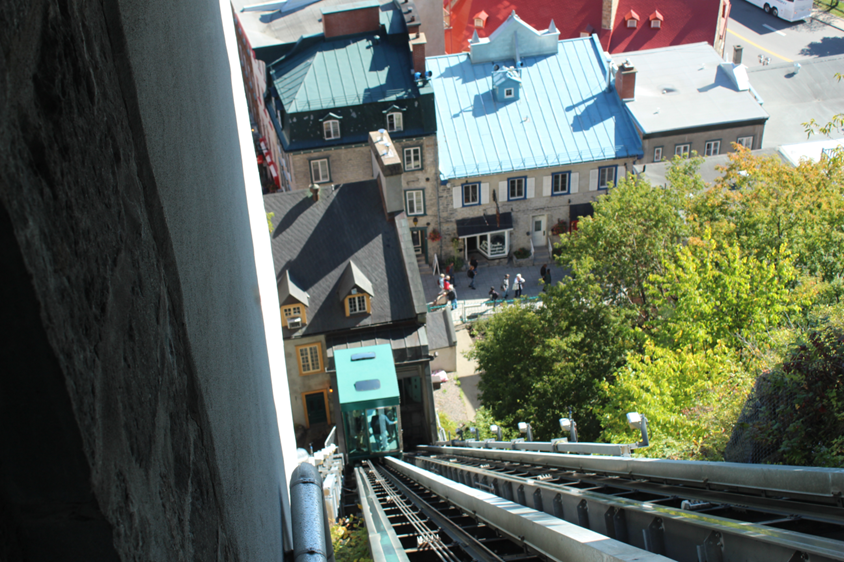
The Funiculaire took us up to the top of the cliff and brought us out very close to the Frontenac Hotel, which we could see from the ship. As the elevation of the cliff ranges from 160 to 300 feet above sea level – a climb equivalent to a 13 to 27 story building, the Funiculaire is a good option, although the queues can be quite long!
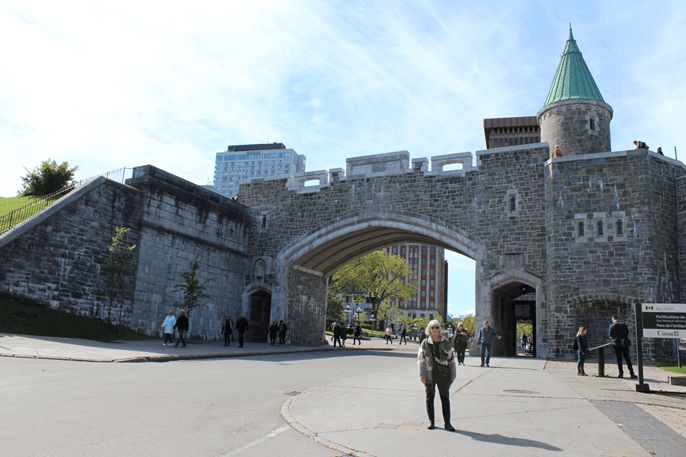
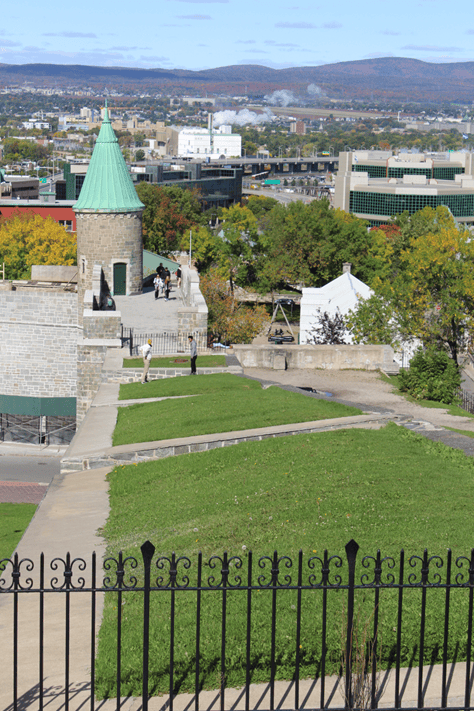
We were now in Old Quebec City, a fortified part of the Upper Town. Our first objective was to find a pharmacy to replenish our sunscreen/moisturiser which had run out. We managed to find out how to get to the nearest one, which meant a pleasant walk through several streets of Old Quebec. Mission accomplished, we then set out to explore the city fortifications, which we were able to walk along in the direction of the Citadel.
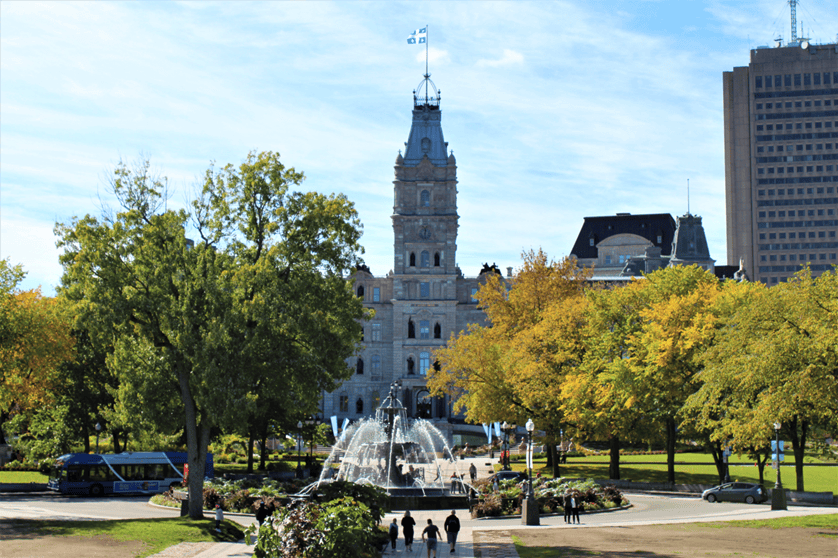
At one point we passed the handsome Parliament Building, with a pretty fountain in front of it and framed by trees in autumn colours.
Eventually we found ourselves at the Citadel and the observation platform at the end of the Gouverneur’s Promenade, with the Plains of Abraham behind us.
This is a National Historic Site and sits on top of Cap Diamant. The star shaped Citadel represents 300 years of history and is known as the Gibraltar of the Americas because of its strategic position. The views across the St Lawrence River and down towards the city itself are spectacular.
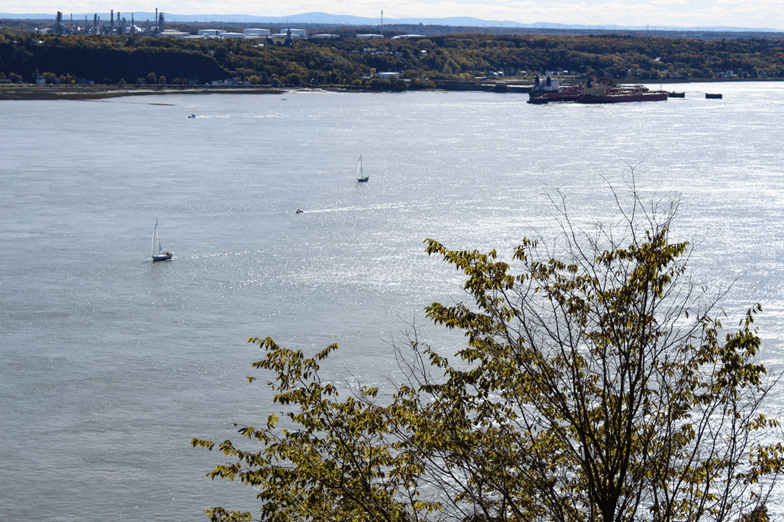
To the west of the Citadel is Battlefields Park and the Plains of Abraham are an historic area within this Park. It is the site of a battle which took place in 1759, as part of the French and Indian War, a conflict within the Seven Year’s War between the British and French Forces. Both the British commander, General Wolfe and the French commander, the Marquis de Montcalm, died of wounds sustained during the battle, but the British forces did defeat the French in a surprise attack by climbing the steep cliff under cover of darkness. The battle only lasted 30 minutes and Quebec City was then controlled by the British.
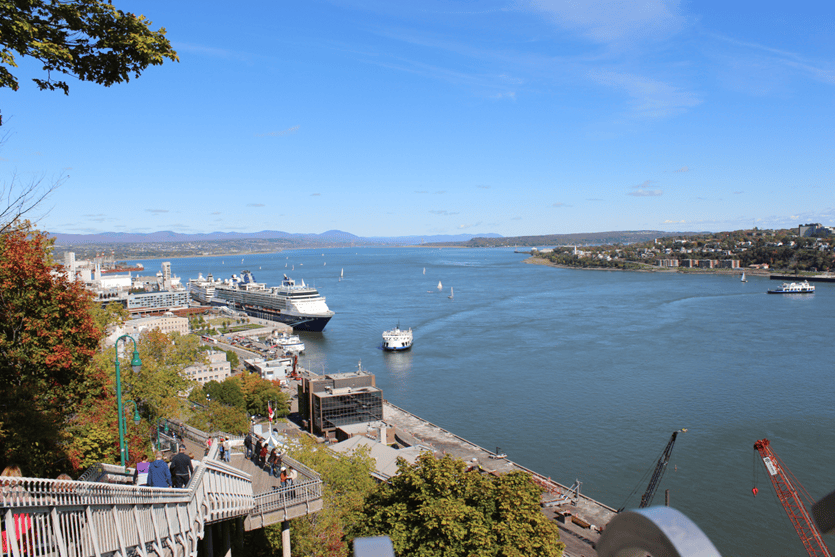
After having a bit of a rest, we set off back towards Old Quebec along the Governors Walk, which affords really amazing views over the St Lawrence River towards the Old Town and the port.
Once we got to the Terrace Dufferin, coffee and something to eat became a priority, which fortunately was achieved quickly at a kiosk on the Terrace itself. The Terrace was named for the Marquess of Dufferin, who was the Governor-General of Canada at the time the terrace was built. It was inaugurated in 1897 and features a wooden boardwalk, a number of gazebos and benches as well as the stairs leading up to the Citadel.
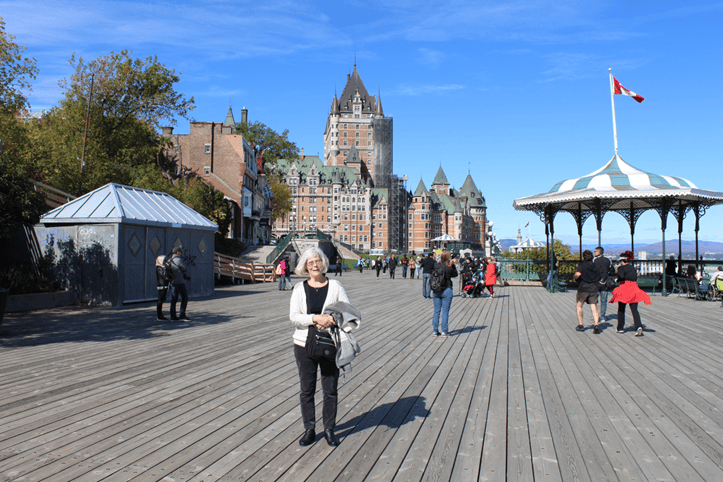
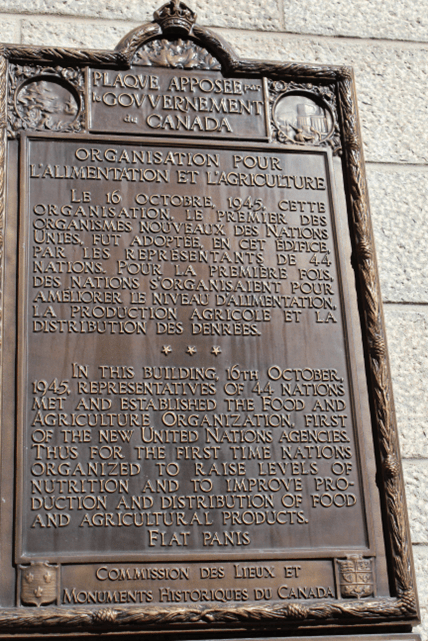
We then had a closer look at the Hotel Frontenac and even went inside the foyer area. This was the venue for the first gathering of 44 nations on 16 October 1945 to found the FAO. 171 member nations met again on the same date in 1995 to reaffirm the principles and objectives of this organisation. There are plaques commemorating these events.
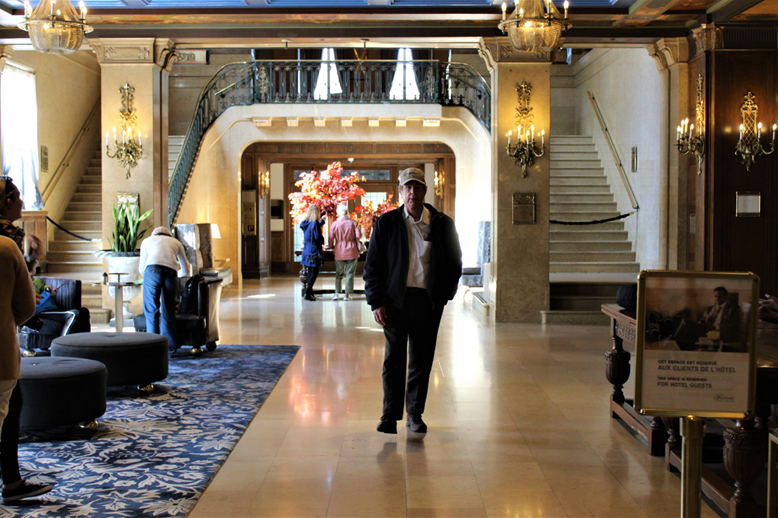
Lester B Pearson, who was Canadian Ambassador to the UN at the time of the founding of the FAO, had played a leading role in pushing for the creation of an organization to become actively involved in the fields of food and agriculture. He later became Prime Minister and was awarded the Nobel Peace Prize in 1957 for his exceptional role as a diplomat.
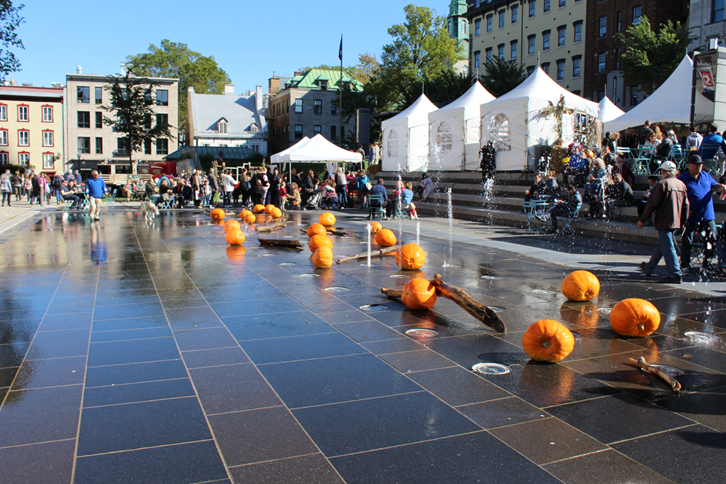
We continued our exploration of the Old Town, visiting the Basilique-cathedrale Notre-Dame de Quebec and walking passed a pumpkin festival. Anticipating Halloween no doubt!
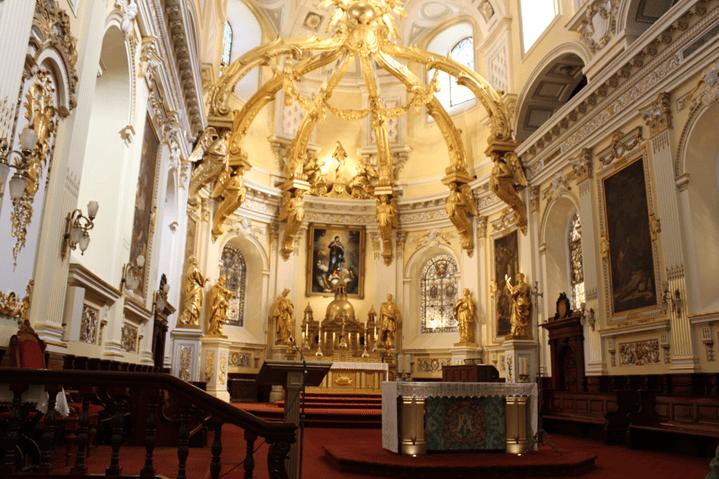
Building of the catherdral began in 1647 on the site of a chapel originally built by Samuel de Champlain in 1633. This building was destroyed by fire in 1759 during the Siege of Quebec but was rebuilt from plans that had been drawn up earlier. Another fire in 1922, attributed to the Canadian Klu Klux Klan, gutted the building but it was subsequently restored. The interior of the church is richly decorated with gold statues, a golden baldaquin and stained glass windows.
We decided not to take the Funiculaire to return to the Lower Town but to walk down the steep streets and stairs and back through Place Royale to the port.
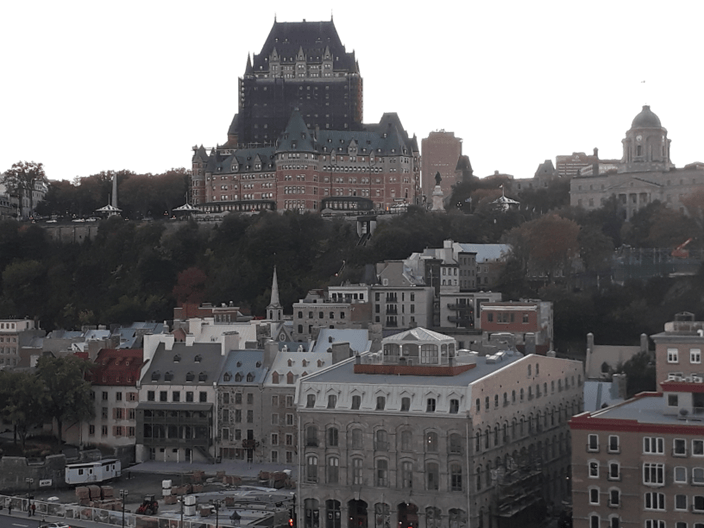
After a long day and quite a walk we relaxed in the jacuzzi before dinner and the show (Bande Artistique with Emile and Marie-Claude. From the jacuzzi we could look out on spectacular views of Quebec City and the Old Town, including the Chateau Frontenac.
Although the day had been long and quite tiring the show by Bande Artistique was very entertaining and kept us enthralled and amused at the same time. They were billed as showcasing a taste of Montreal’s cultural comedy and we were warned to expect the unexpected. It certainly lived up to expectations, with a mixture of juggling, magic tricks, singing, multiple costume changes in a slick non-stop series of routines.
Then off to get a good night’s rest before an early start to join our tour of the area around Quebec City.

