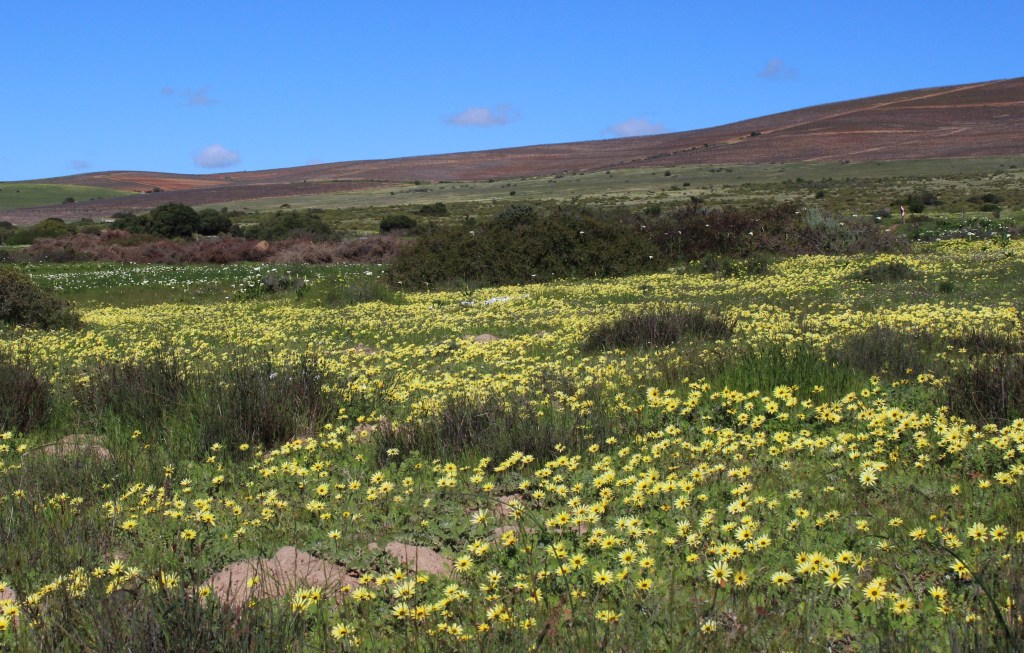
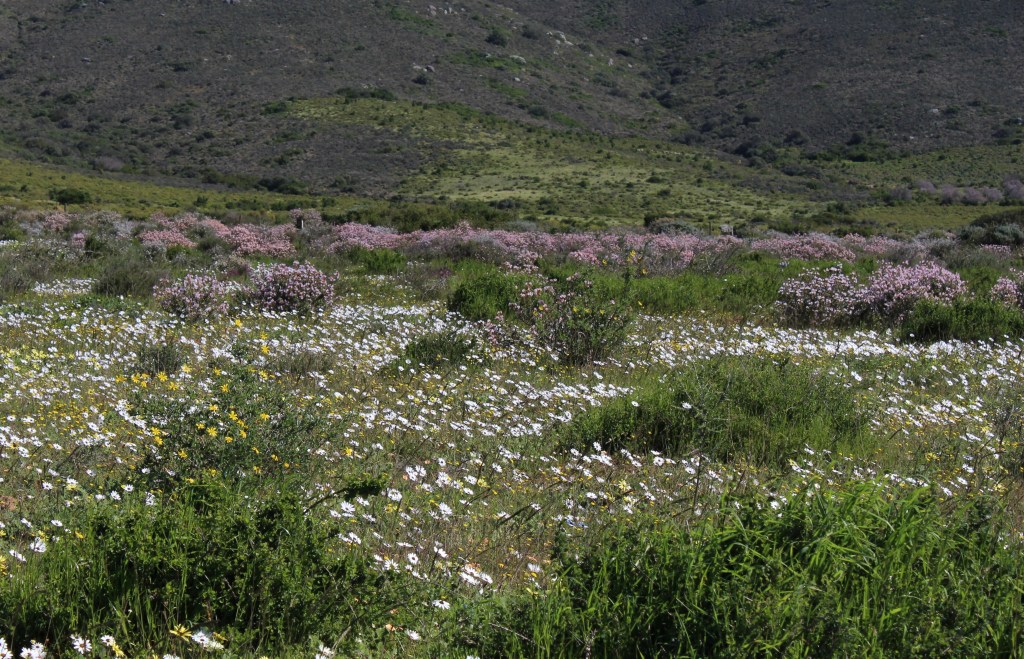
South Africa’s Wildflower Season on the West Coast and Namaqualand is world famous for amazing displays of colourful daisies and other plants that flower every year for a few short weeks in the months of August and September. Carpets of yellow, orange, white and pink can stretch to the horizon in especially good years. In amongst these mass displays are other less numerous but no less interesting and colorful plant species.
This is the first time that we have done more than a day trip to see the spectacle of the Spring flower season on the West Coast of South Africa. This August we spent 4 nights in the little West Coast town of Velddrif and had several days exploring further afield than afforded by day trips from Cape Town.
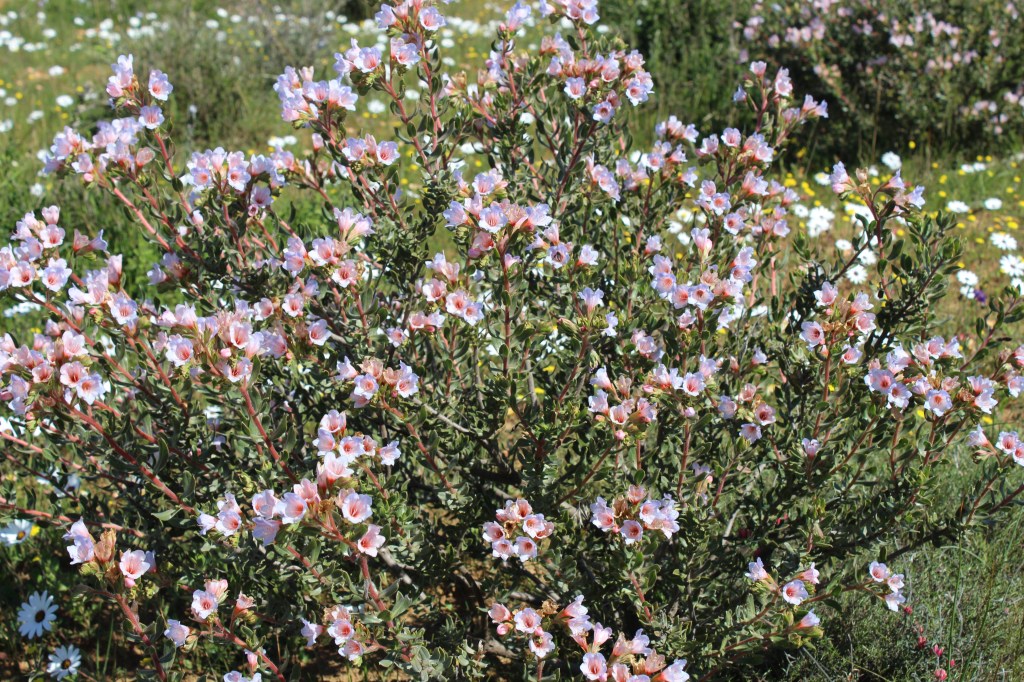
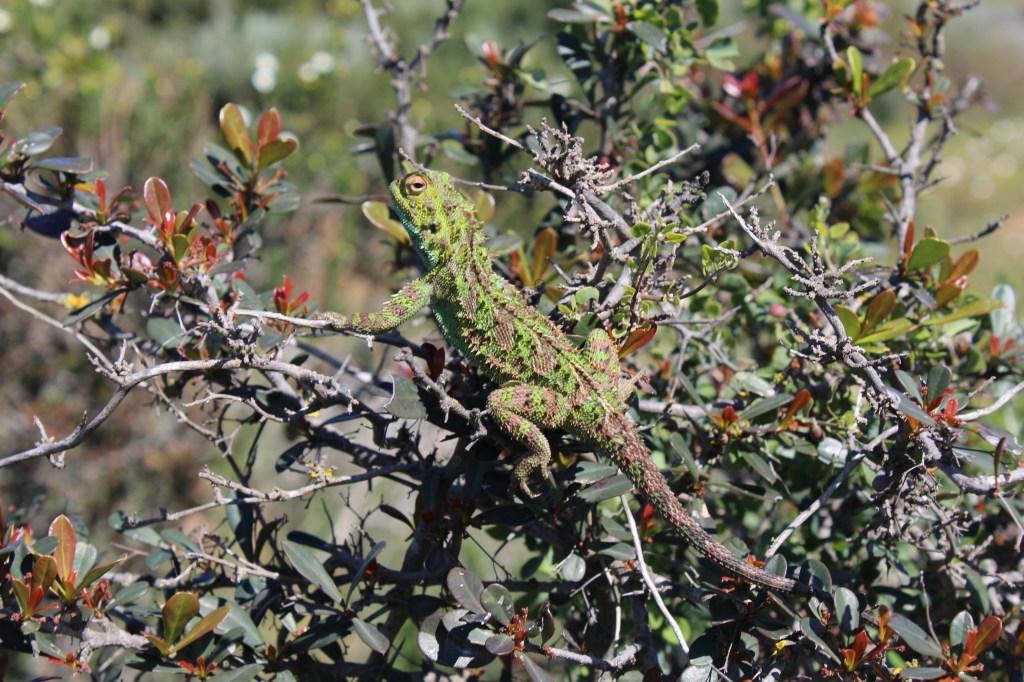
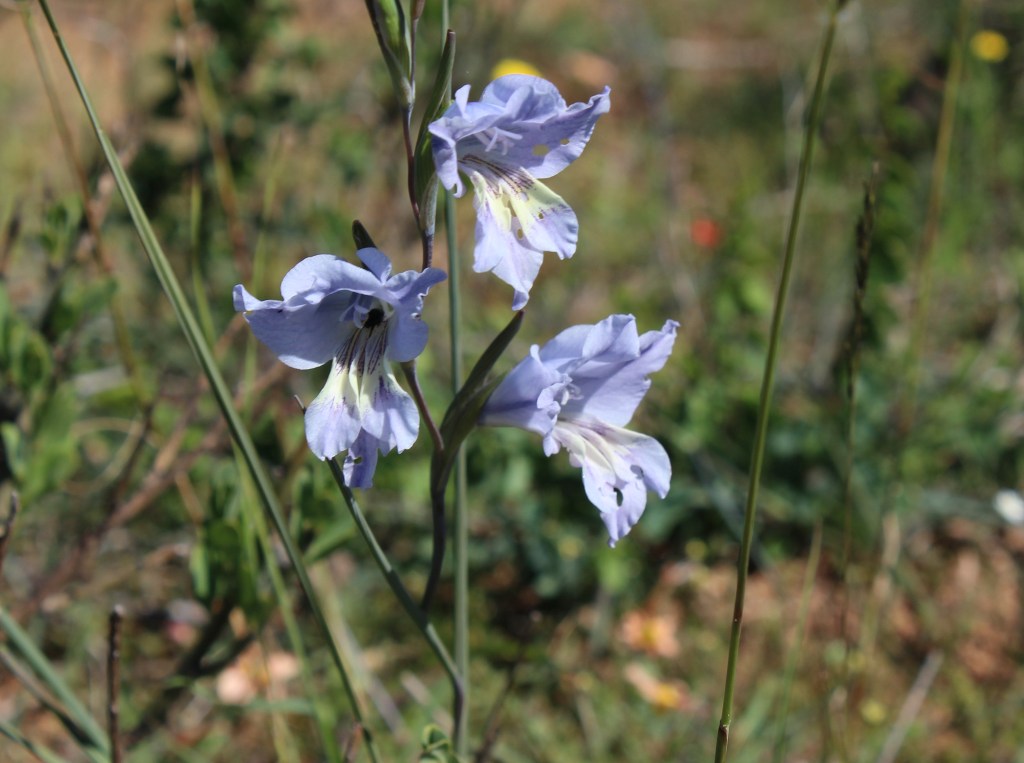
On the way to our first night in Velddrif we stopped off at the Waylands Wild Flower Reserve a few kilometers outside the town of Darling to see their display of Spring flowers. A fairly rough track winds through the Reserve so you can drive around or stop and walk through the flowers as you wish. Every twist and turn brings new vistas of brightly coloured or dazzling white daisies. It is also worth stopping here and there to see some of the small, less abundant treasures whose beauty you would otherwise miss, such as the delicate Gladiolus gracilis, not to mention the strange little dragon-like Southern Spiny Agama. There are over 300 species of plants that flower particularly during August and September months, including fields of yellow and white daisies as well as pretty pink blooms on small shrubs.
Strictly speaking our accommodation was probably in Laaiplek rather than Velddrif as it was on the north side of the Port Owen Marina fairly close to where the Berg River enters the sea. The little studio apartment we stayed in had wonderful views of the estuary, across the wetland and towards the sea. We could see the fishmeal factory and the harbour at Laaiplek to the north, as well as the towns of St Helena and Stompneus Bay to the south all the way across St Helena Bay. The constant comings and goings of many different bird species provided an endless source of interest, as well as a herd of eland on the opposite bank.
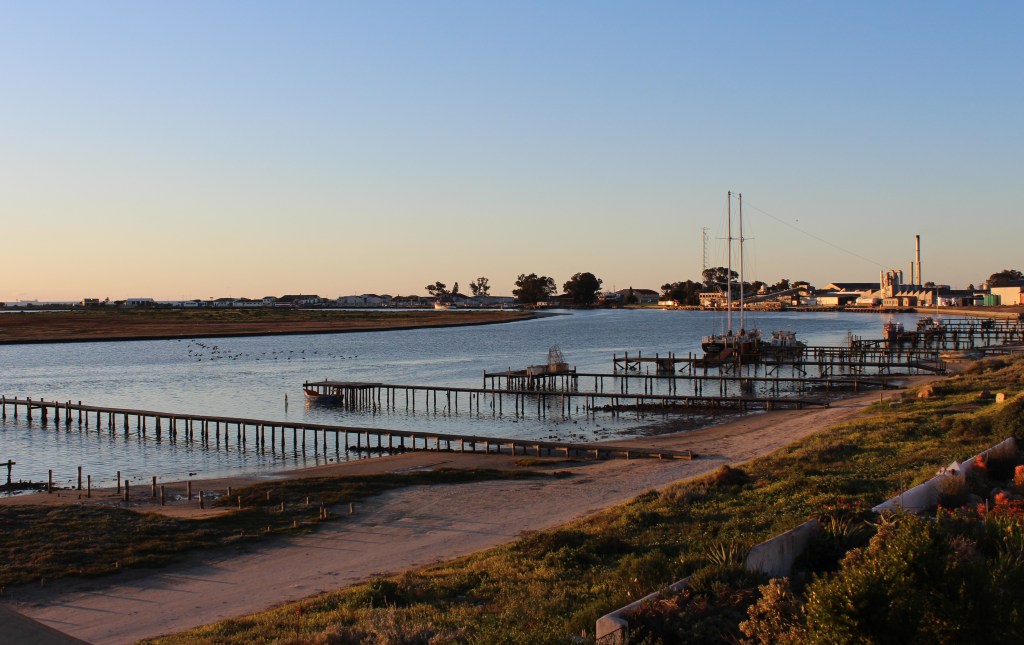
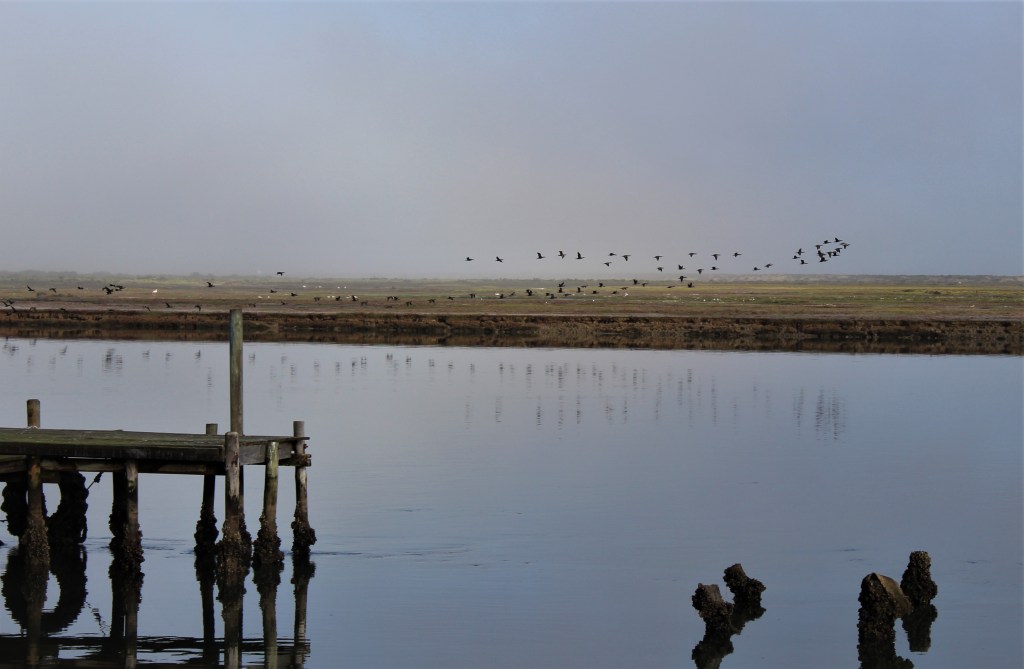
After a walk along the river and exploring the Port Owen Marina, we returned to our apartment to watch the thousands of cormorants returning from their fishing grounds to roost overnight further up river at the salt pans.
The next morning we were greeted by the sight of the same cormorants heading out along the river, following it all the way to the mouth before dispersing to find fish. While we were having our breakfast, out of the corners of our eyes, we caught sight of some sort of agitation on the river opposite our apartment. Going to the end of our balcony we could see quite a commotion with birds splashing down and flapping about in the water. At first wondered if the cormorants were catching fish in the river, but after watching for a while, we realised that they were deliberately landing on the water, splashing around for a bit and then flying off again.
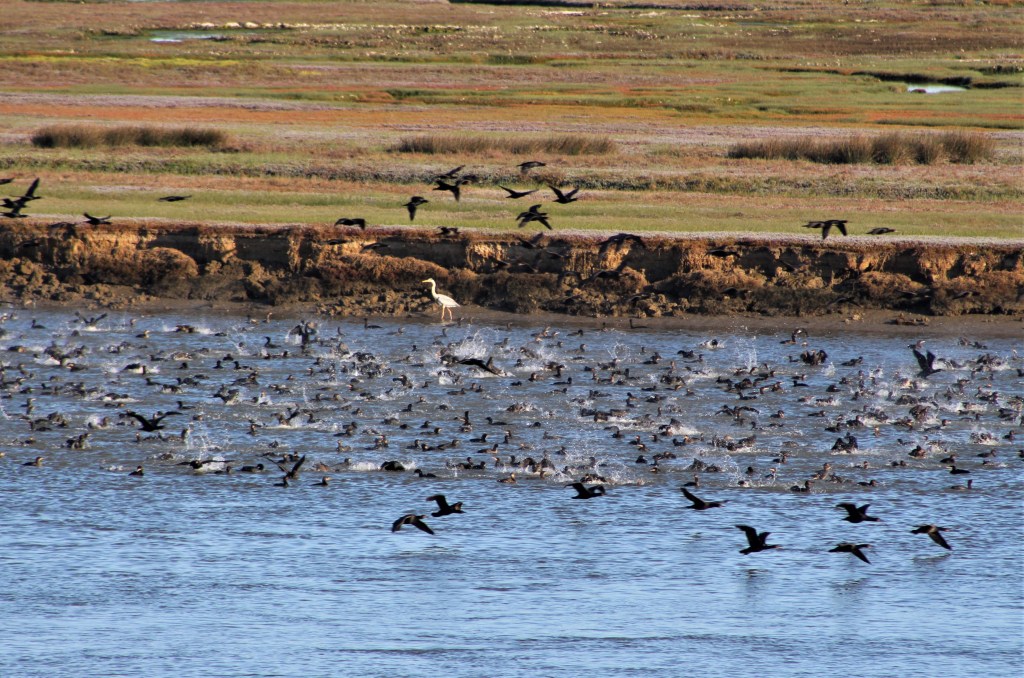
Having tried, without success, to find some record of this kind of behaviour, we surmised that perhaps it was a mechanism to rinse off their feathers after a night’s roosting in close proximity to others. Also perhaps, having dried their wings overnight, they need to wet them again to reduce buoyancy and enable them to dive more easily. Birders estimate that there can be as many as 60 000 birds flying out and returning each day, but locals reckon there are many more. Certainly we watched for up to 45 minutes while a constant stream of birds flew by. The most abundant species is the Cape Cormorant but the Crowned and White-breasted are also found.
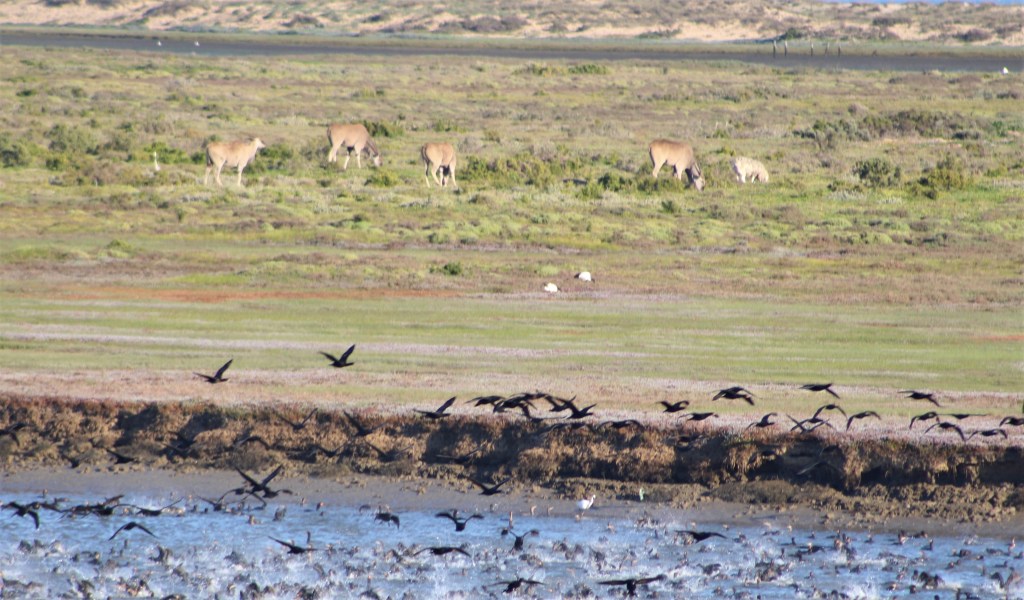
These cormorants did not seem to be early risers and on most mornings the outward migration would start around 8.30. to 9am and continue for 30 to 45 minutes. The birds always seemed to follow the course of the river almost exactly, except for the morning when the coastal mist lingered much later and did not begin go clear until well after 9am. That morning the migration started much later than on other days and did not get going until the mist had almost disappeared. Only then did we see, first a few, and then gathering numbers of birds making their way down river. At first they followed the river as usual but then some birds, getting close to the fish factory veered off across the wetland and made straight for the open sea, instead of following the bends in the river. Then most birds followed this quicker route to the sea. It was almost as if they realised they needed to get fishing as soon as possible!