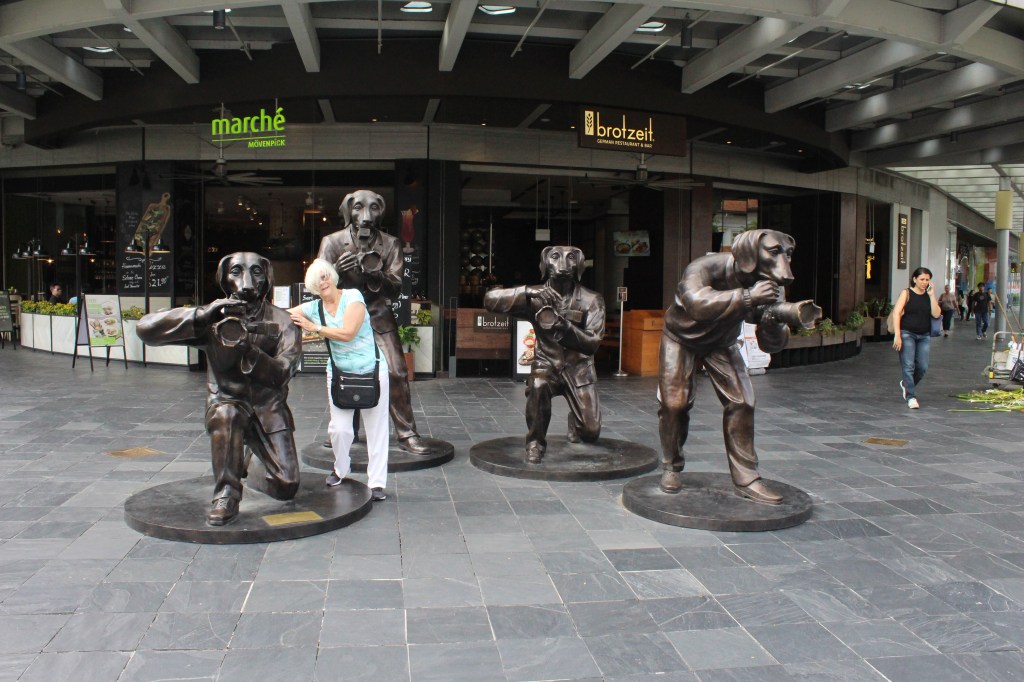
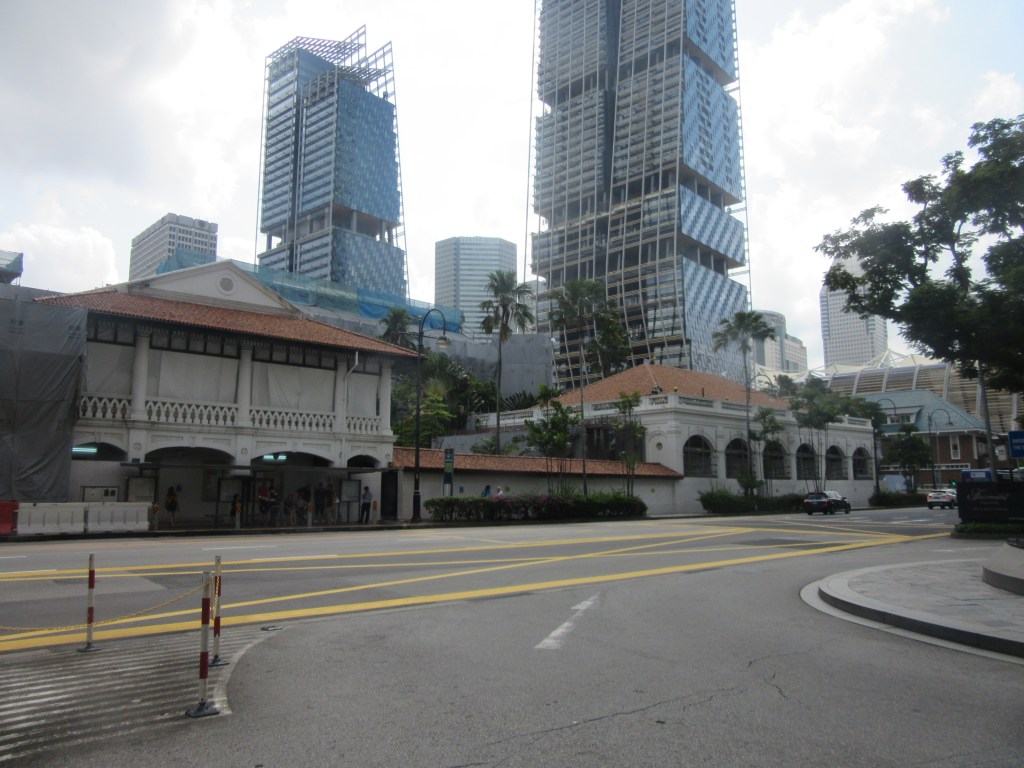
On the following day, as our flight back home was only in the evening, we decided to pay extra so that we could keep the room at the hotel till six in the evening and come back to pack and shower just before then. Once that was negotiated we had breakfast again at the nearby Starbucks and wandered around to look at Raffles Hotel, which was just around the corner from our hotel. It was being renovated so not a good time to see it but we also came across the Paparazzi Dogs outside one of the entrances to the Raffles City Shopping Mall. They are sculptures by Gillie and Marc and have the names of the British Royal family, in a reference to the hounding of Princess Diana by the media and her ultimate death.
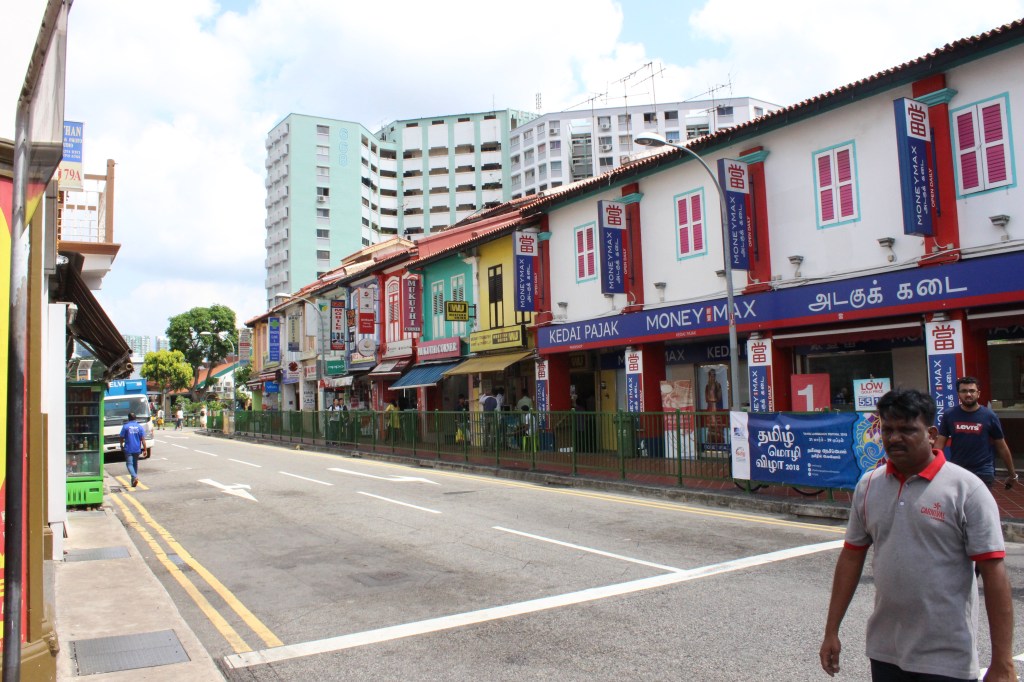
Next on our list of must do sights was a visit to Little India and one of the top 10 sights in Singapore – according to our guide book. Again it was an easy trip by Metro and a short walk along the main street through Little India to get to the Sri Veeramakaliamman Temple.
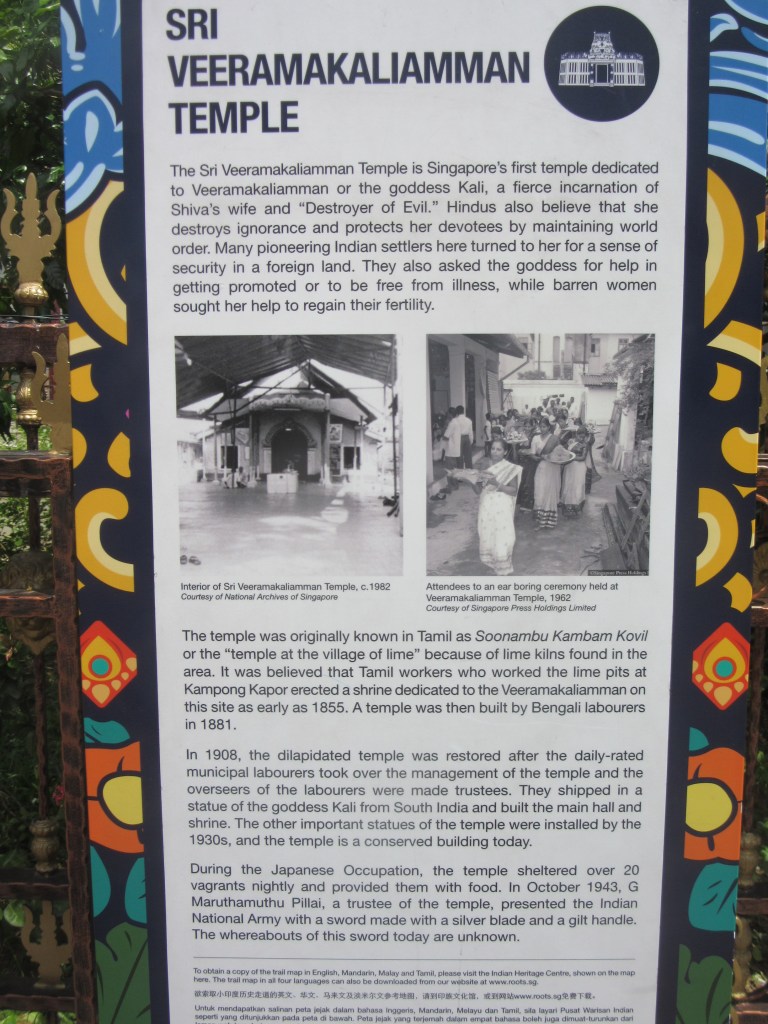
The Sri Veeramakaliamm is one of the oldest temples in Singapore and was originally built in 1881 by Indian pioneers who came to work here.
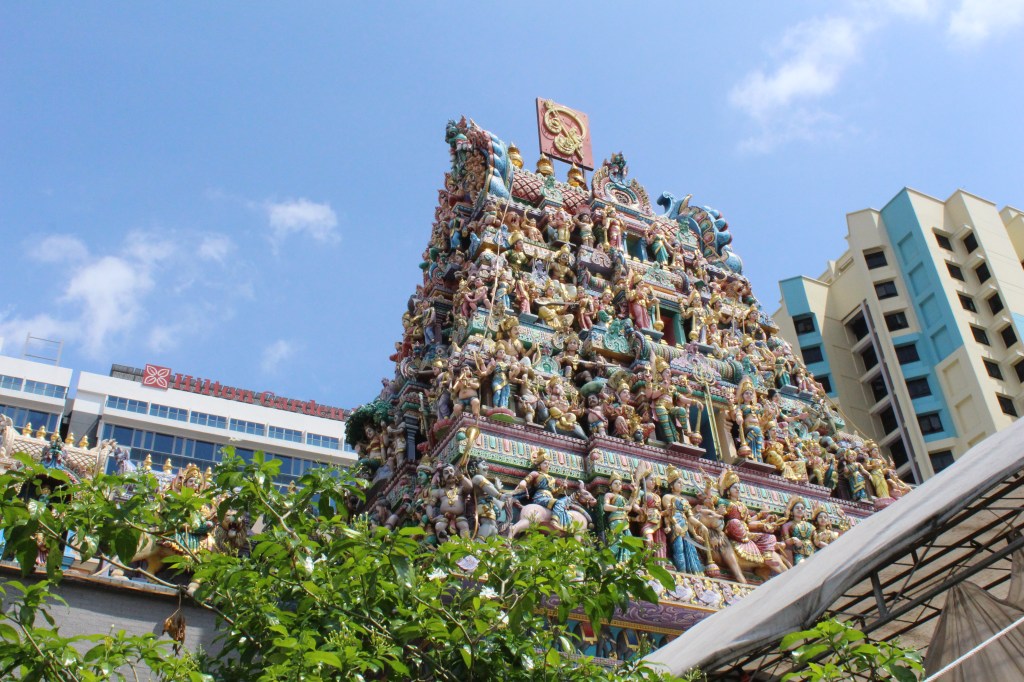
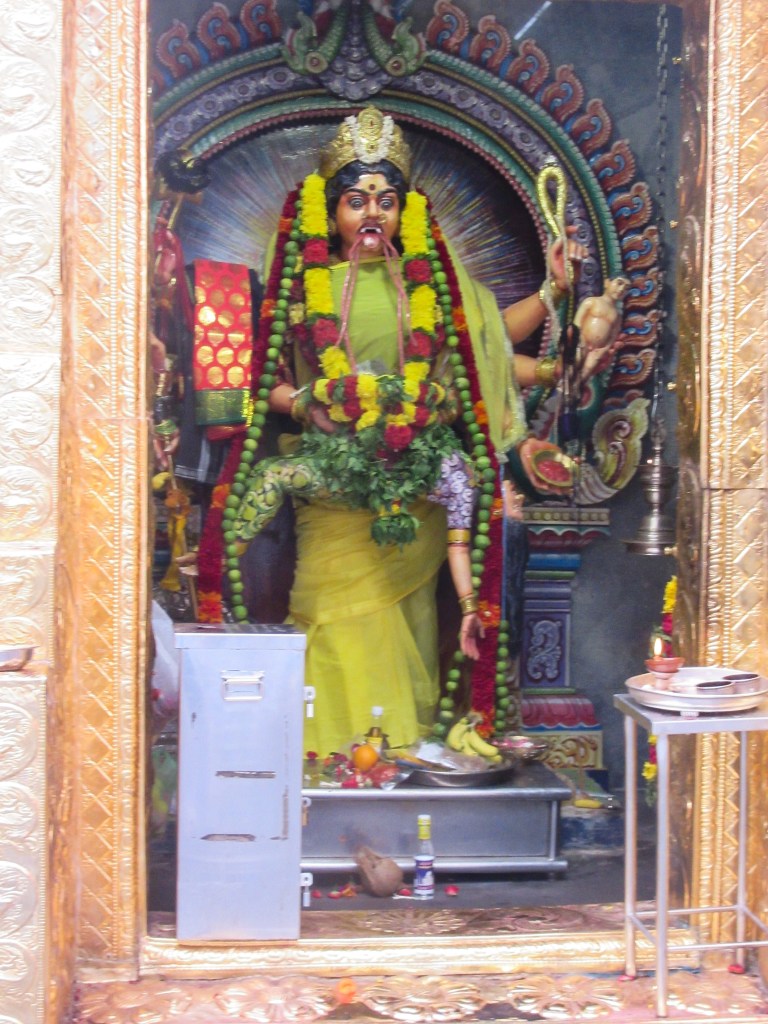
The goddess chosen as the namesake of the temple is Kali. She is a powerful goddess, the Divine Mother and Destroyer of Evil, and she represented an important need of the early migrants – the need to feel secure in a new land. Rebuilding of the temple as it is today began in 1983 and was completed in 1986. The style of the temple is similar to those found in the Tamil Nadu province of India. The gateway from the street is topped by the gopuram made up of brightly painted carvings of rows of figures representing Hindu deities. To enter the temple you must remove your shoes and also wear suitably respectful clothing.
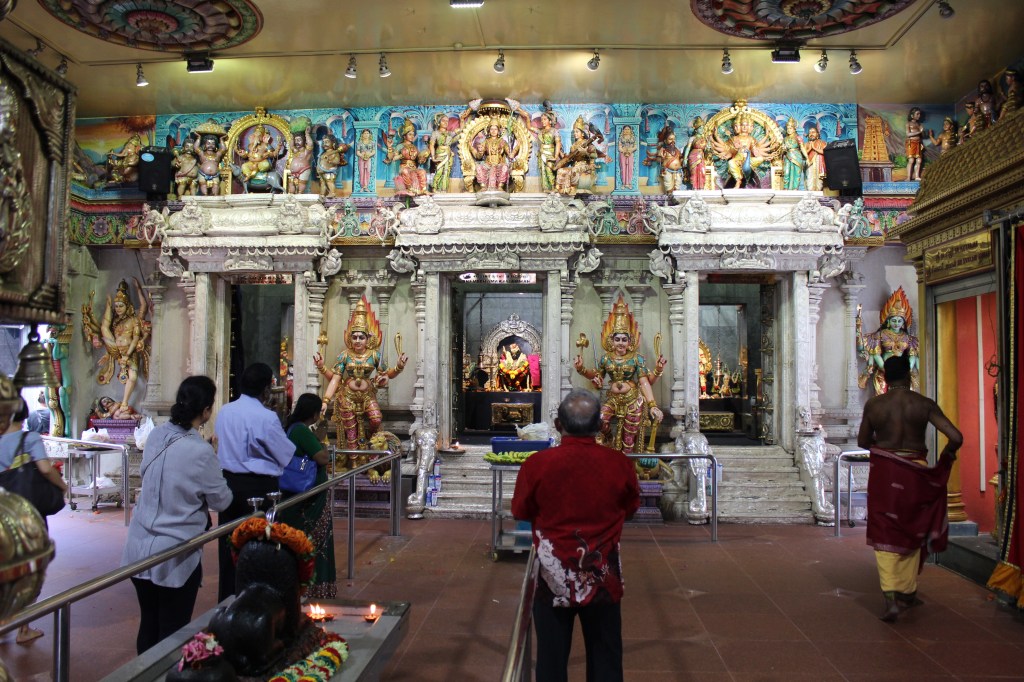
On entering the temple, you see statues of Kali on the main altar. Kali is often depicted as black in colour, also sometimes blue, with a headdress of flames. One commom depiction is with a red tongue protruding from her mouth. She can have two or more arms, often 8 or 10, in which she carries weapons to destroy evil. The statues in this temple seemed to reflect a more benevolent side of Kali, not the angry, ferocious destroyer of evil seen in other temples.
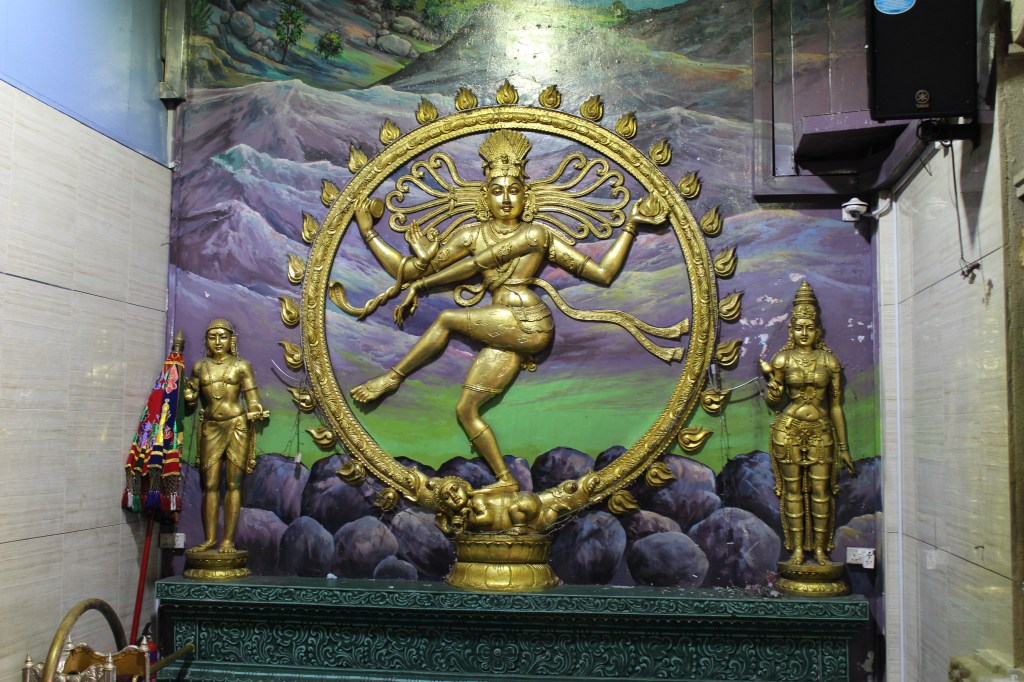
On a wall to the left is a beautiful image of Shiva engaged in the Nataraja dance. The sculpture is symbolic of Shiva as the lord of the dance and also symbolises the connection between religion and the arts.
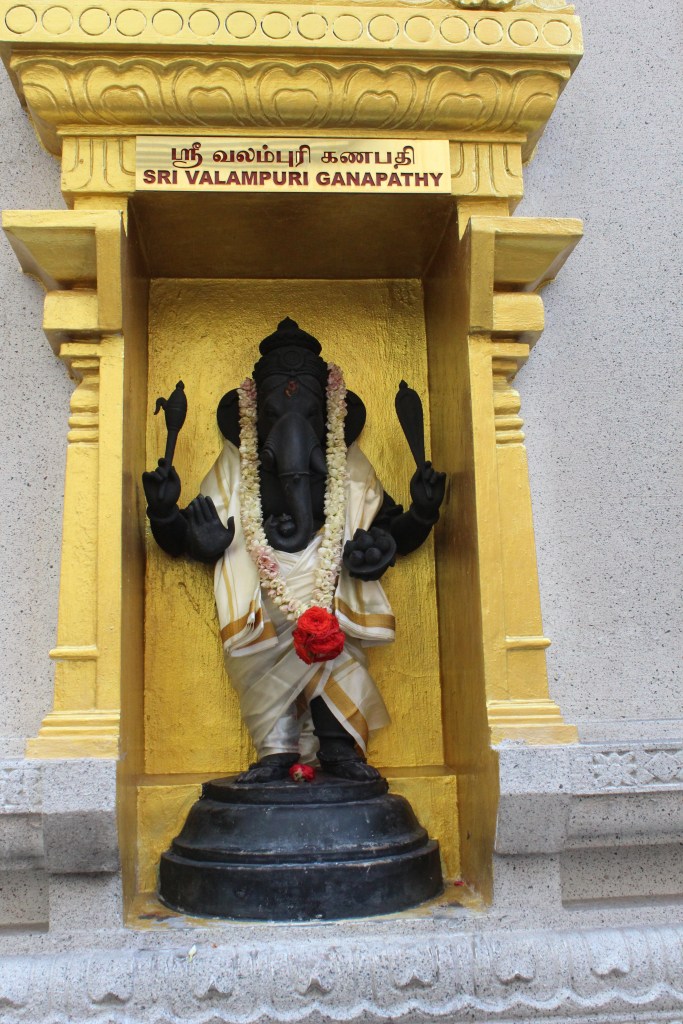
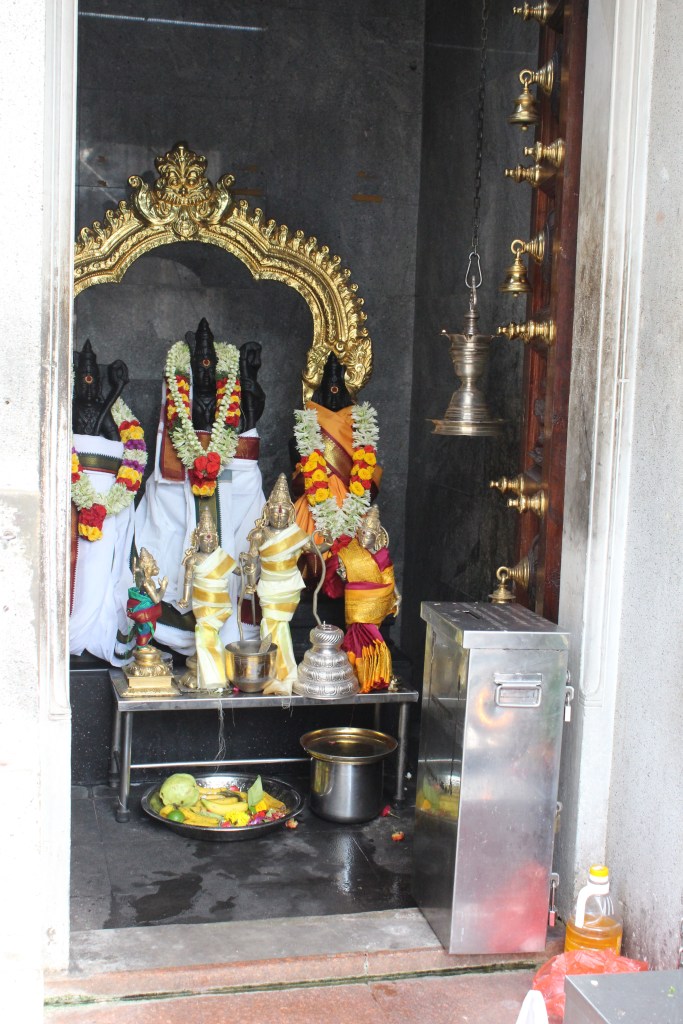
Throughout the temple are many statues to various Hindu deities including Lord Ganesha (with the head of an elephant), Muraga, Sri Periyachi Amman and Sri Lakshmi Durgai with her 18 arms.
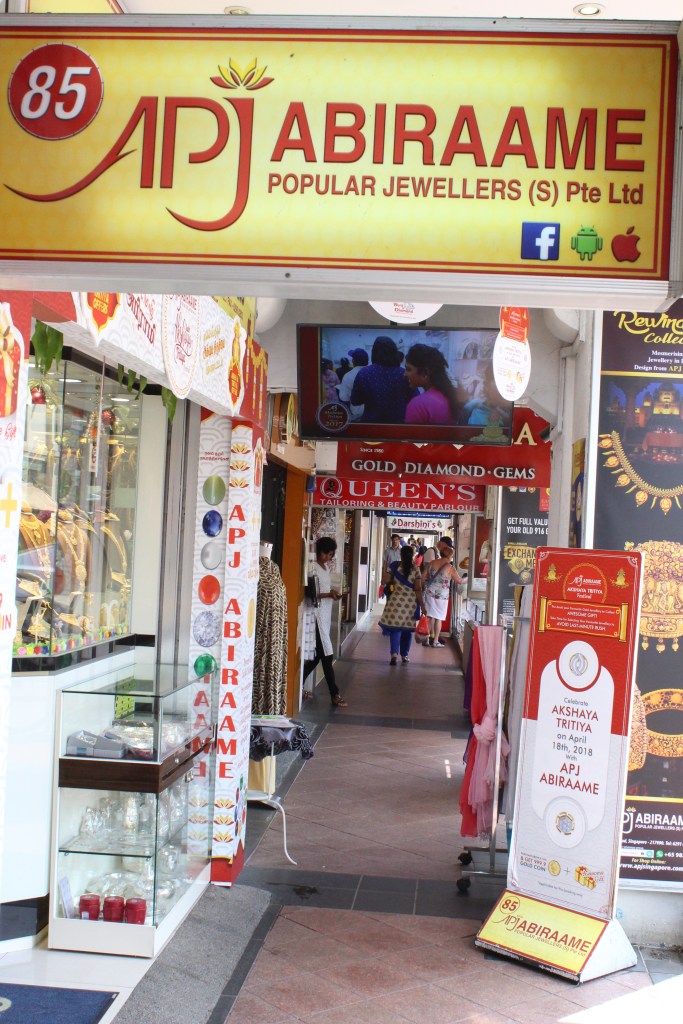
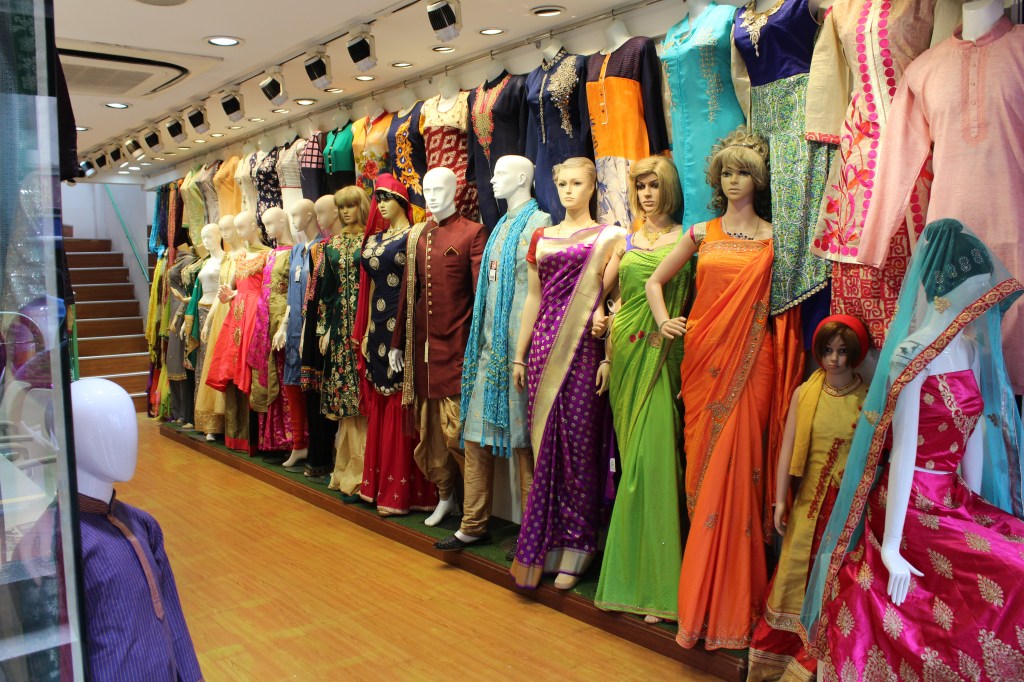
We walked back to the Metro passed the shops selling colourful saris, gold jewellery and other tourist items.
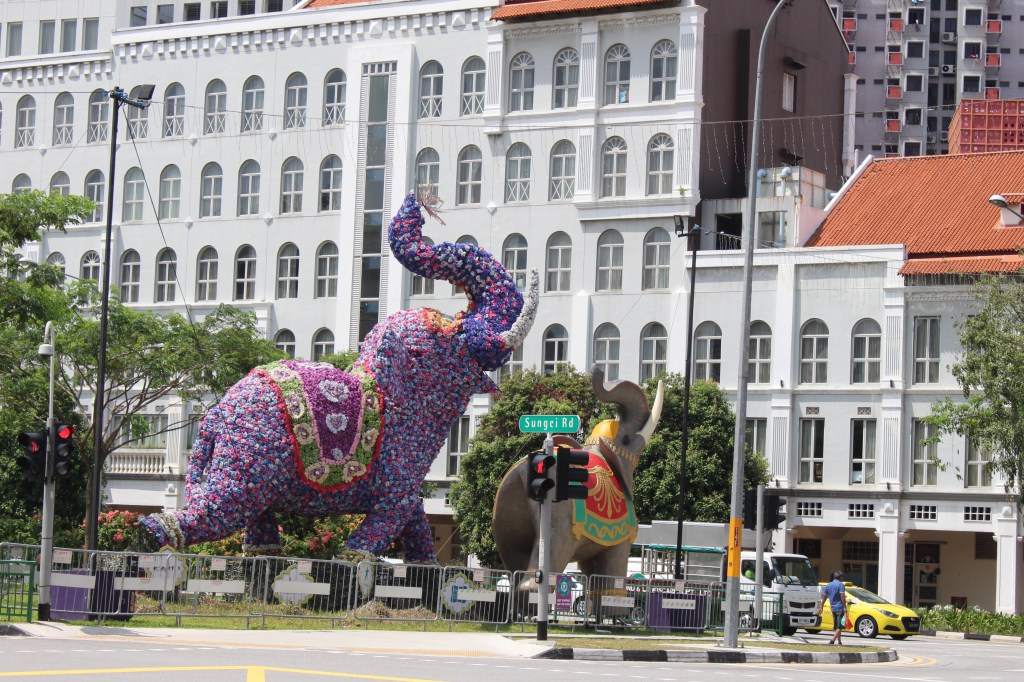
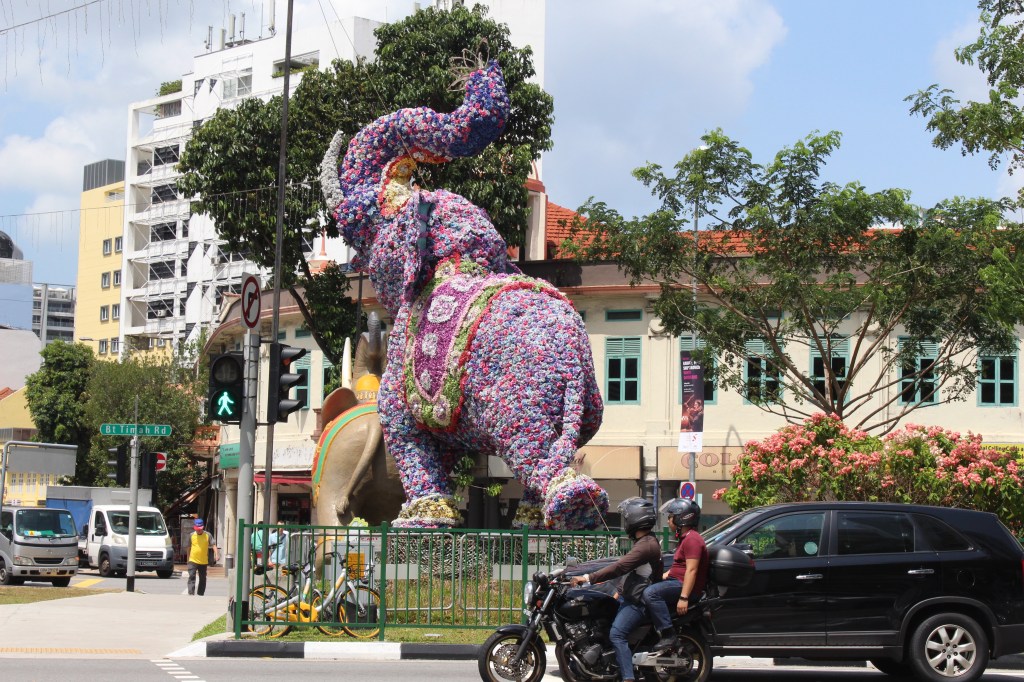
At the entrance to the Little India area are two colourful elephants guarding the start of Serangoon road.
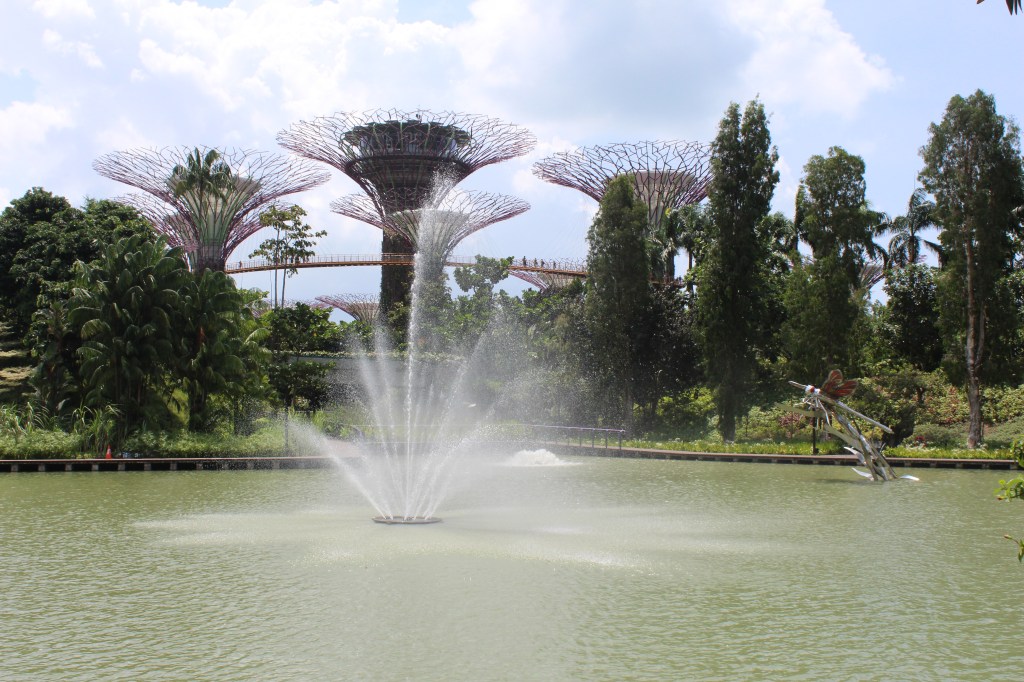
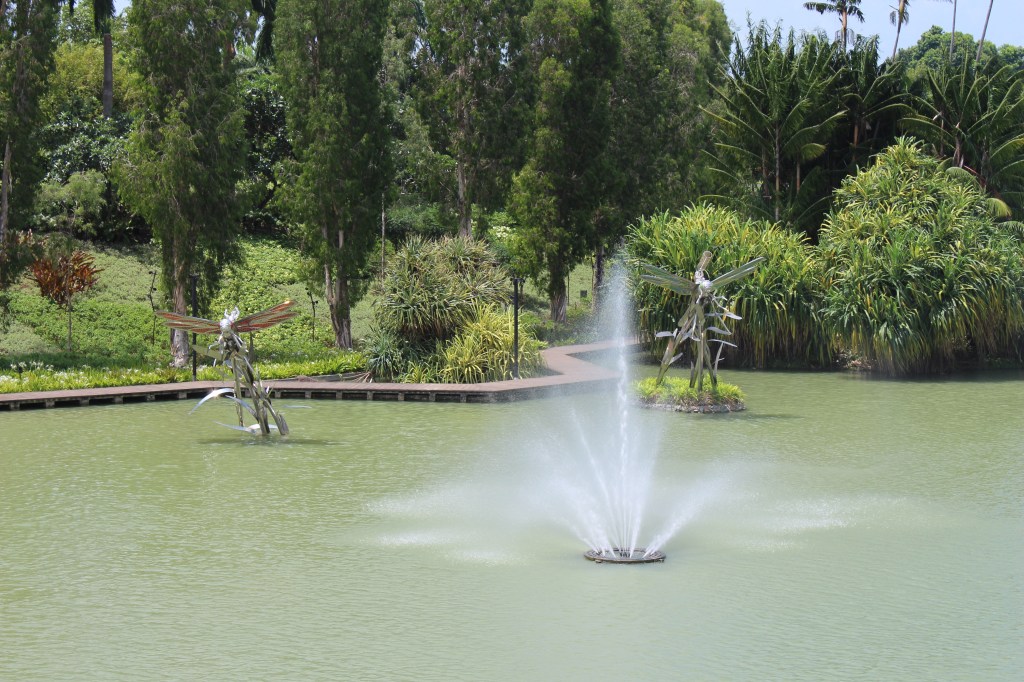
Back on the Metro we headed for Marina Bay Gardens once again, this time to visit the Flower Dome. We took a long route to get there so we could see the Super Trees in the daylight and also look at other parts of the gardens, including the Dragonfly Lake.
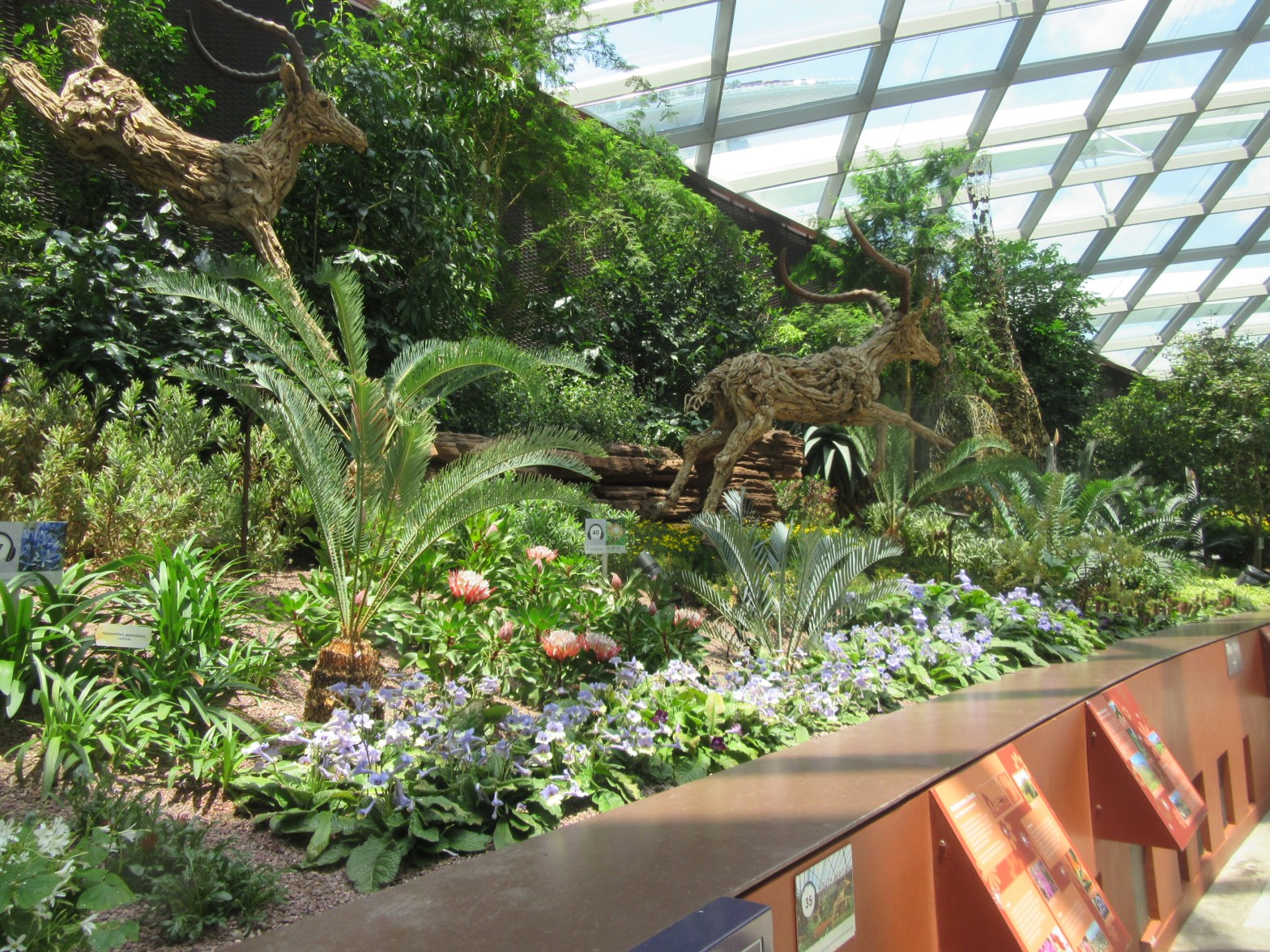
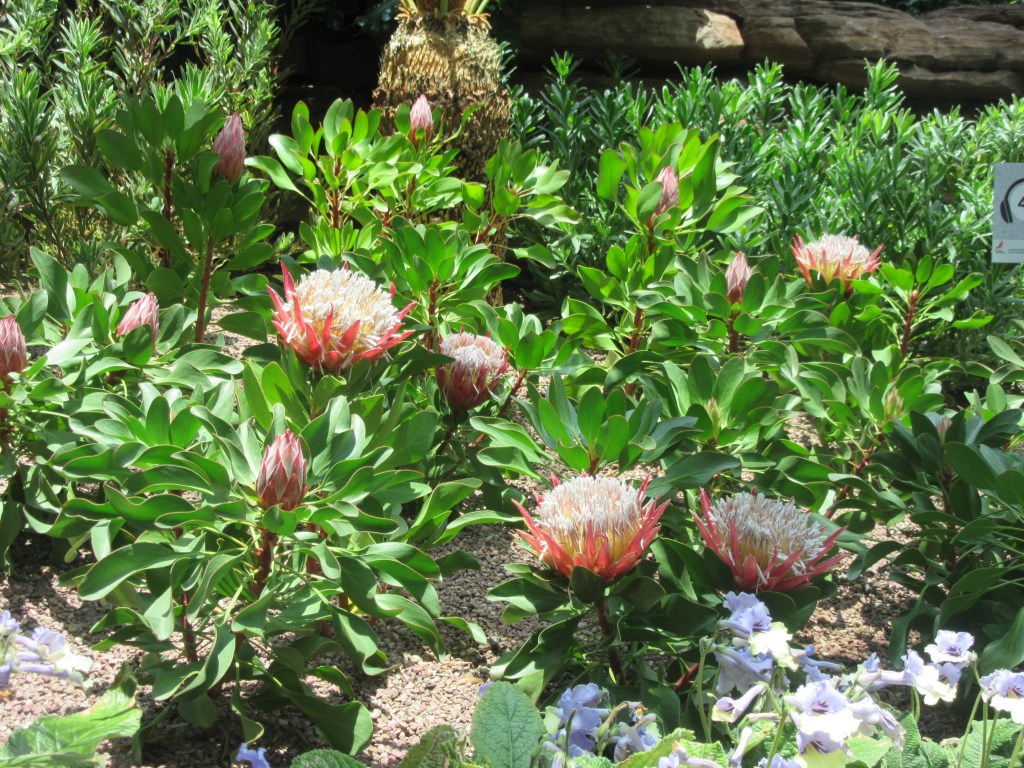
Once inside the Flower Dome we found the South Africa display almost immediately, although we had to negotiate passed the Australian garden first!
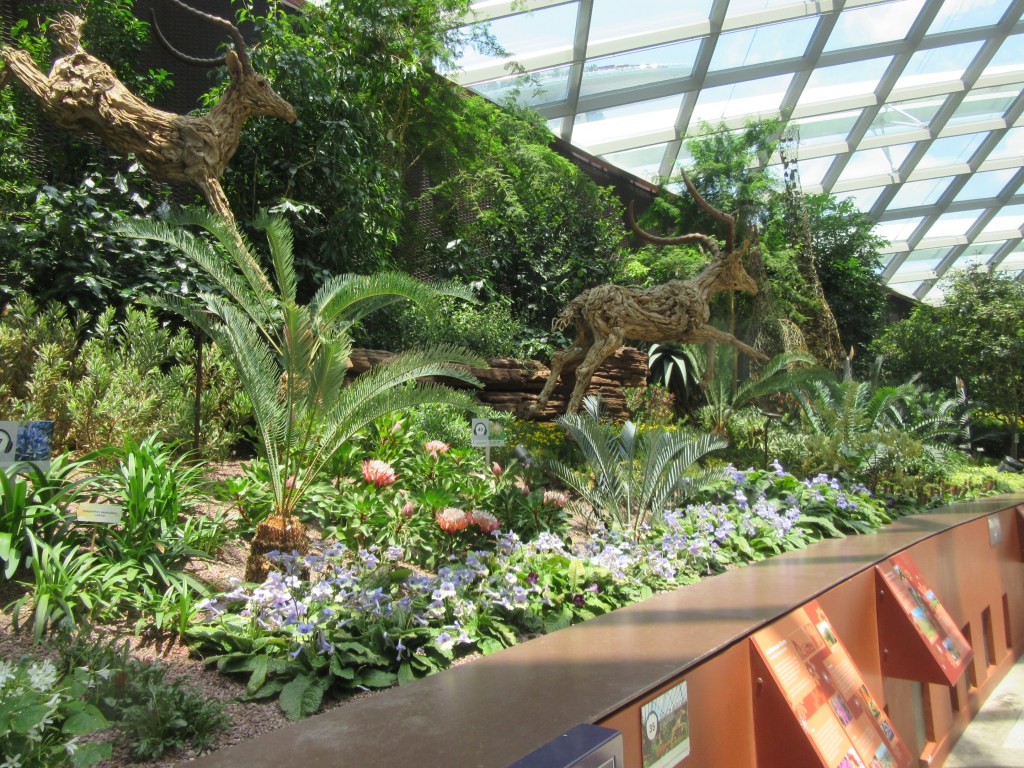
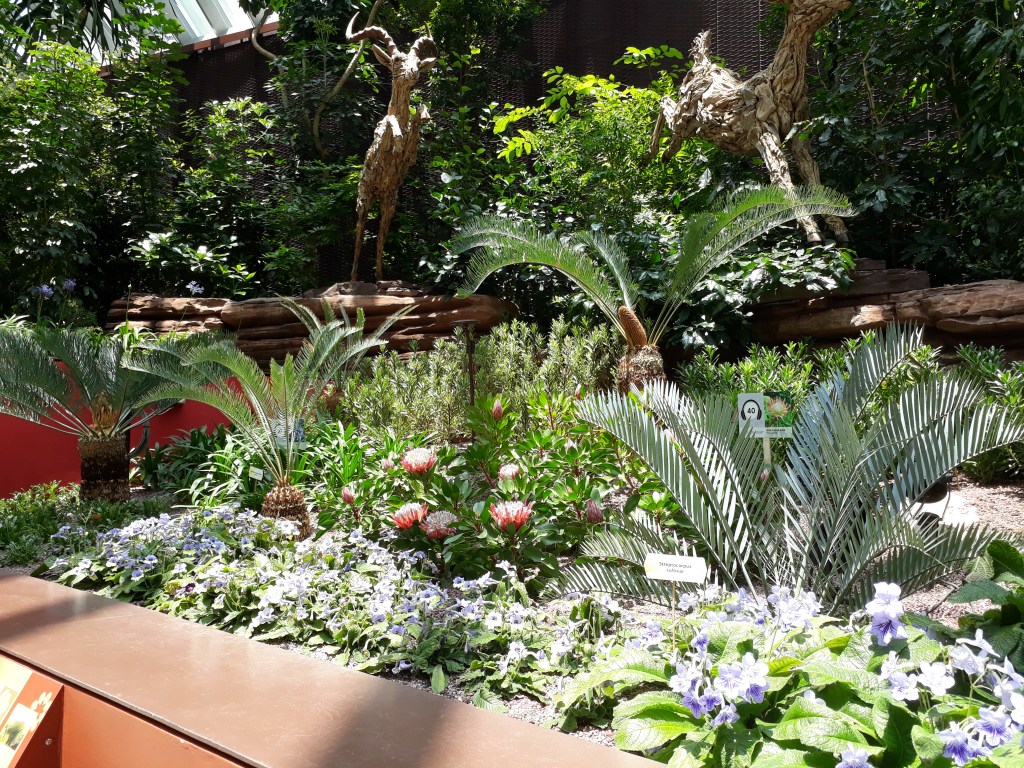
Among the many sculptures in the Flower Dome, are some beautiful Zimbabwe sculptures, including a Chapungu type stone sculpture and a Multiple maternity sculpture, made up of three women figures, each carrying a child. Chapungu (metaphor for bataleur eagle) is the name given to Zimbabwean stone sculpture movement, starting in the late 1950s.
ying a child
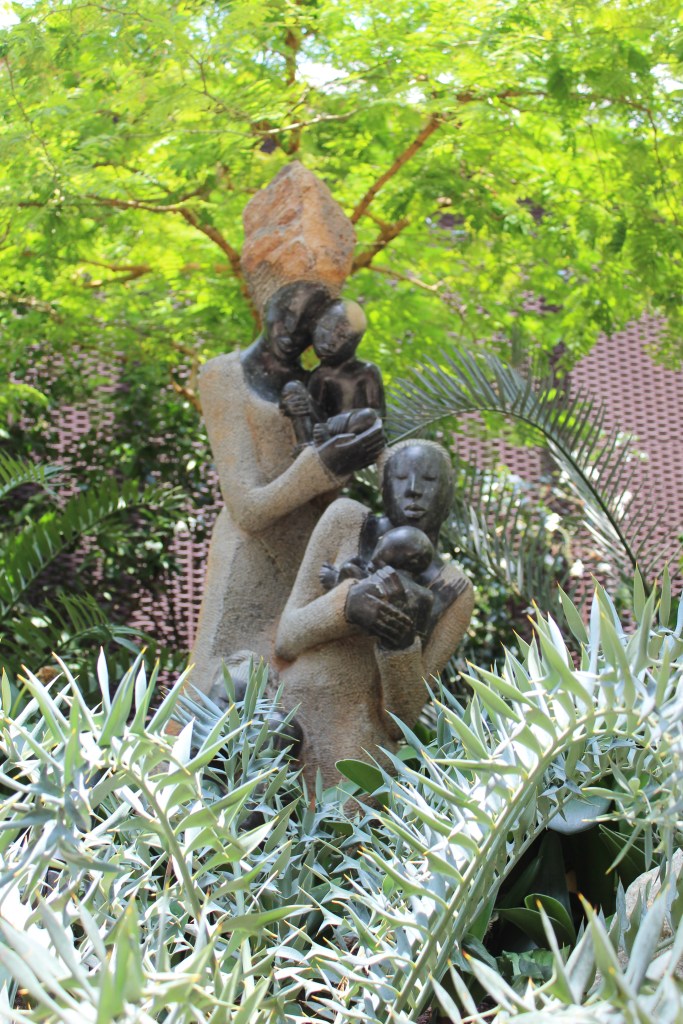
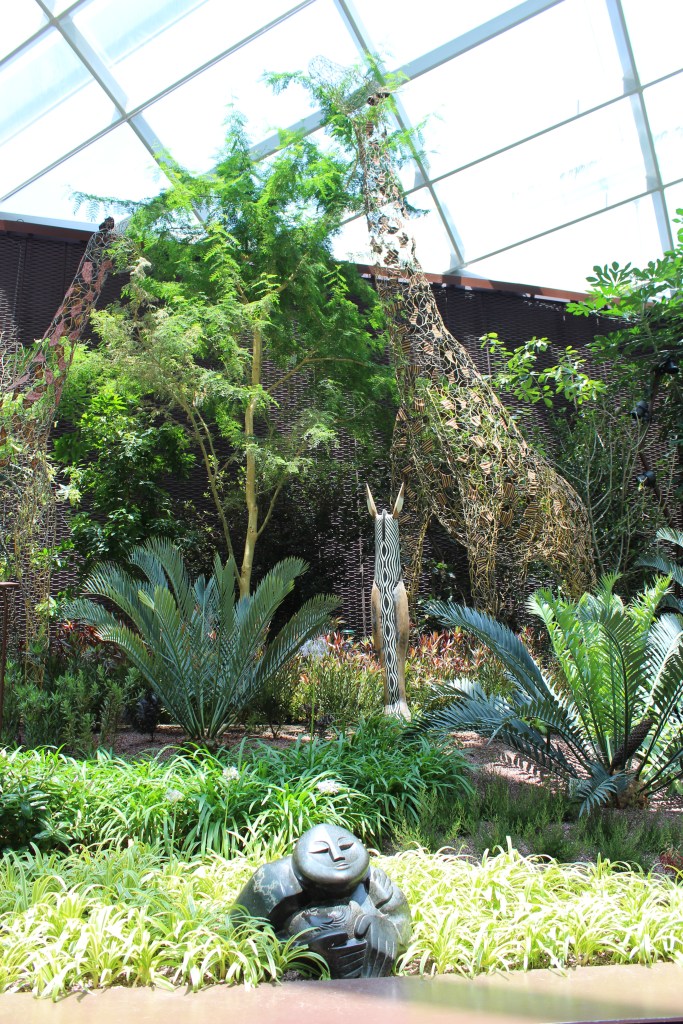
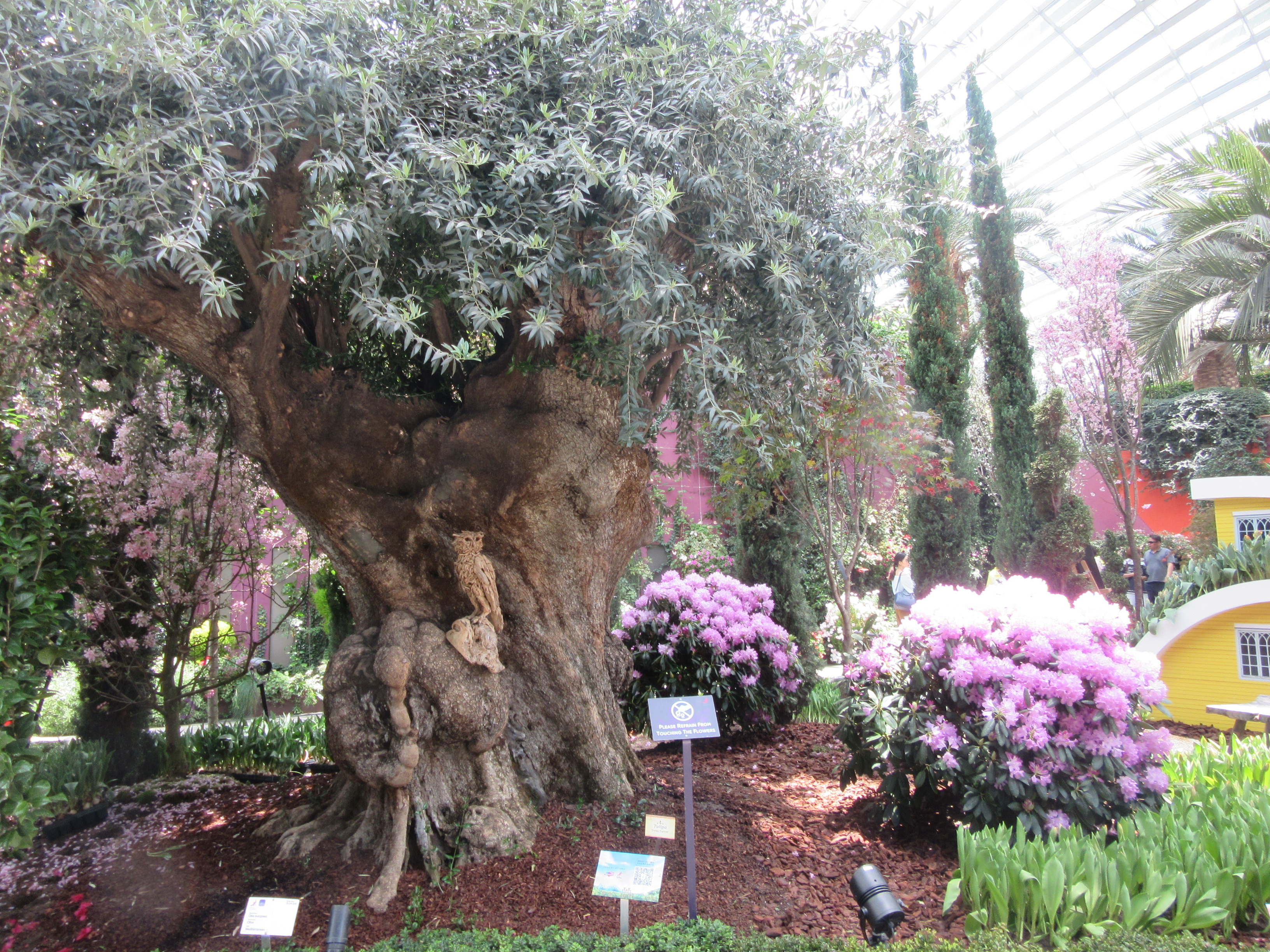
The Flower Dome replicates the cool and dry Mediterranean climate, and showcases exotic plants from five continents which are displayed in nine different Gardens. The Flower Dome is the lower than the Cloud Forest conservatory but is the larger of the two, at 1.2 hectares (3.0 acres). The ground floor also features a South American garden, a Californian garden, a Mediterranean garden and an olive grove.
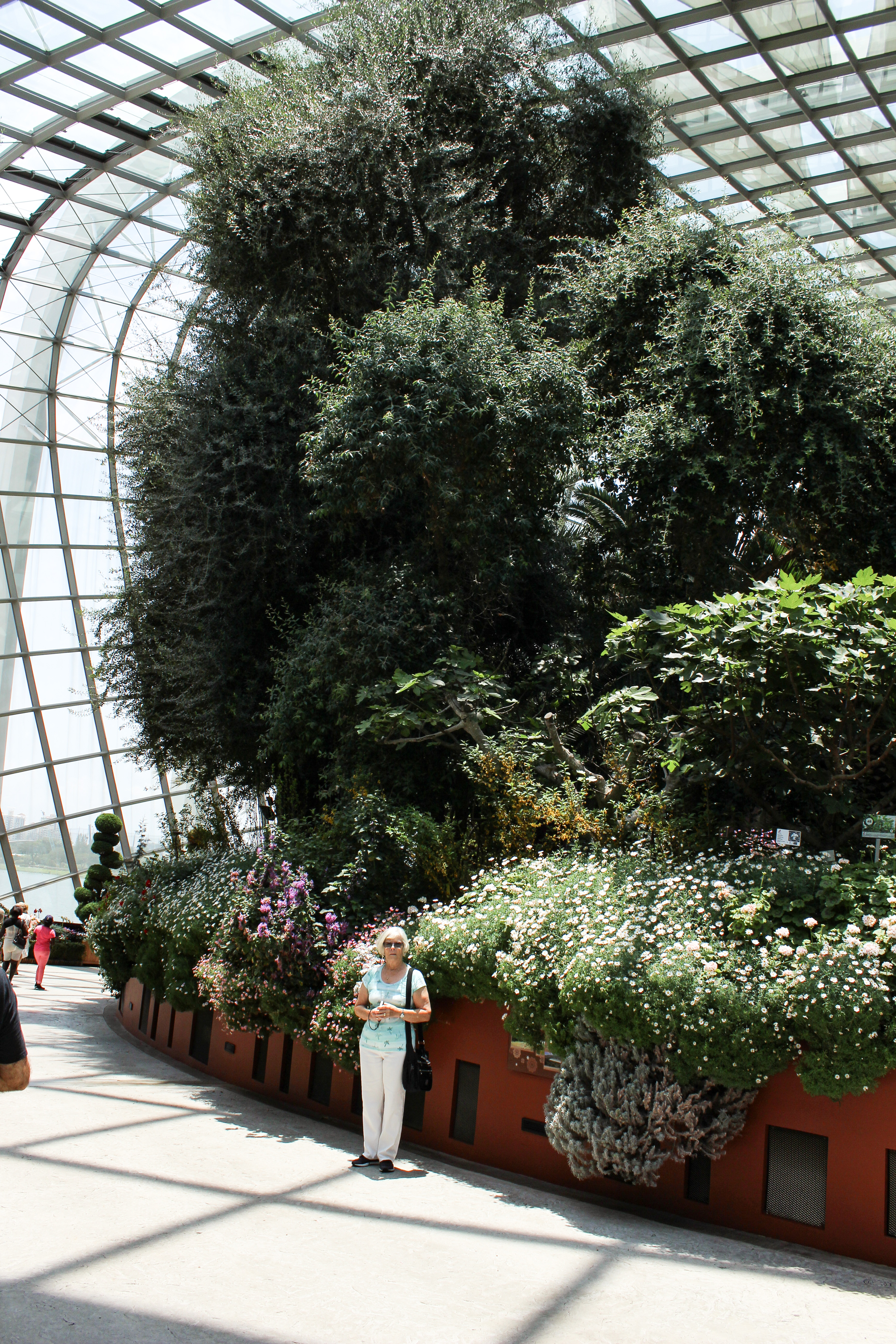
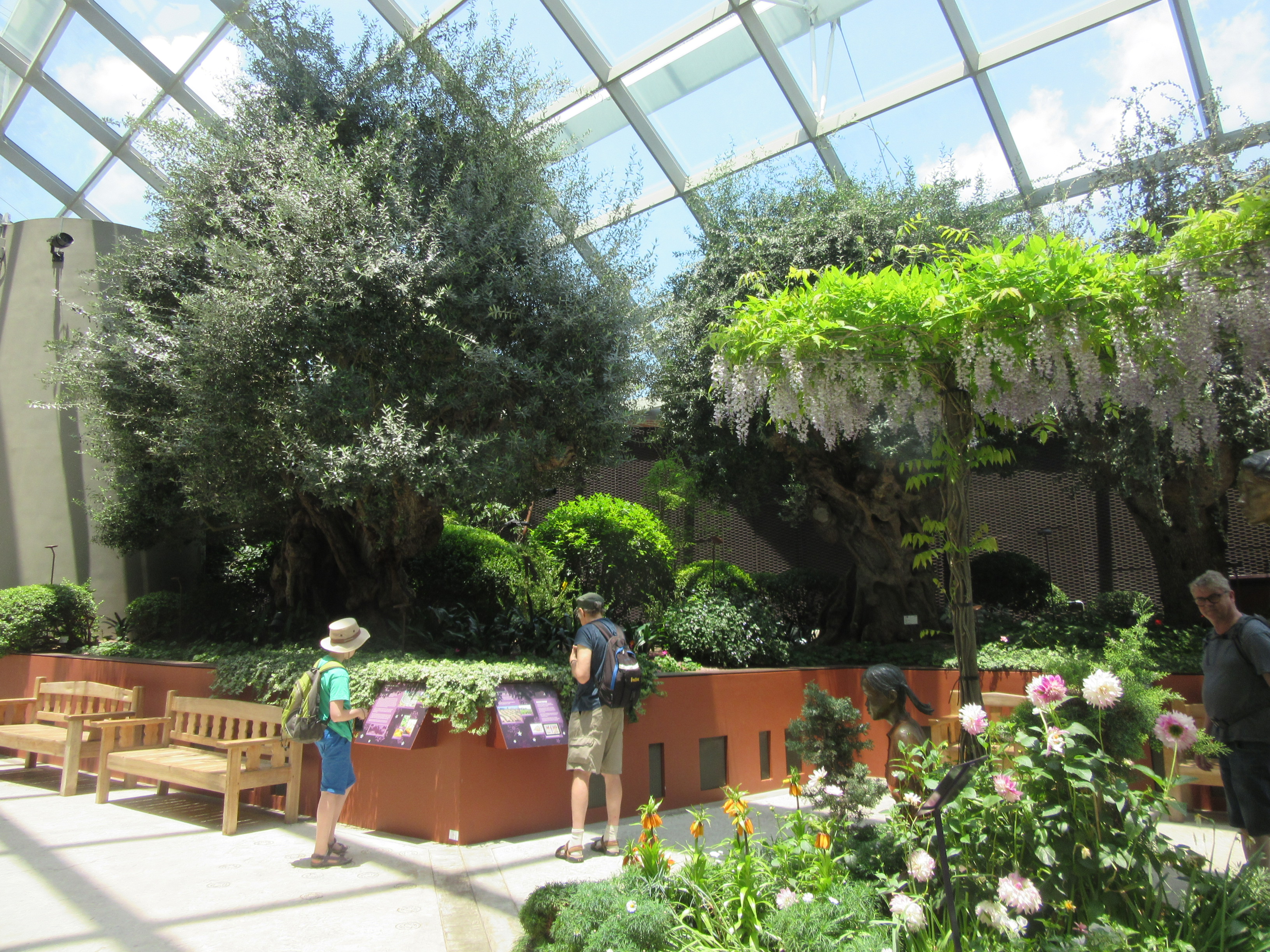
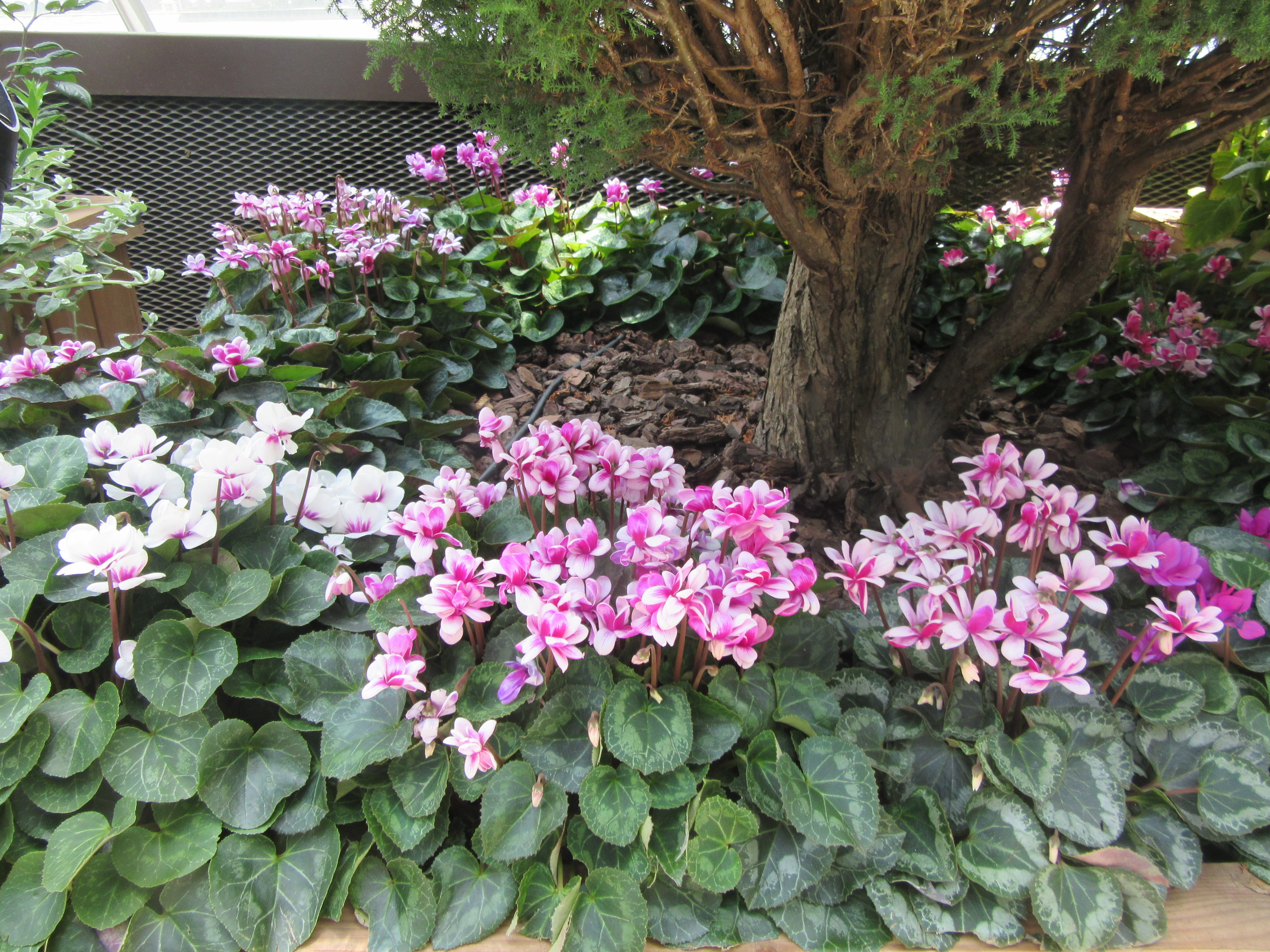
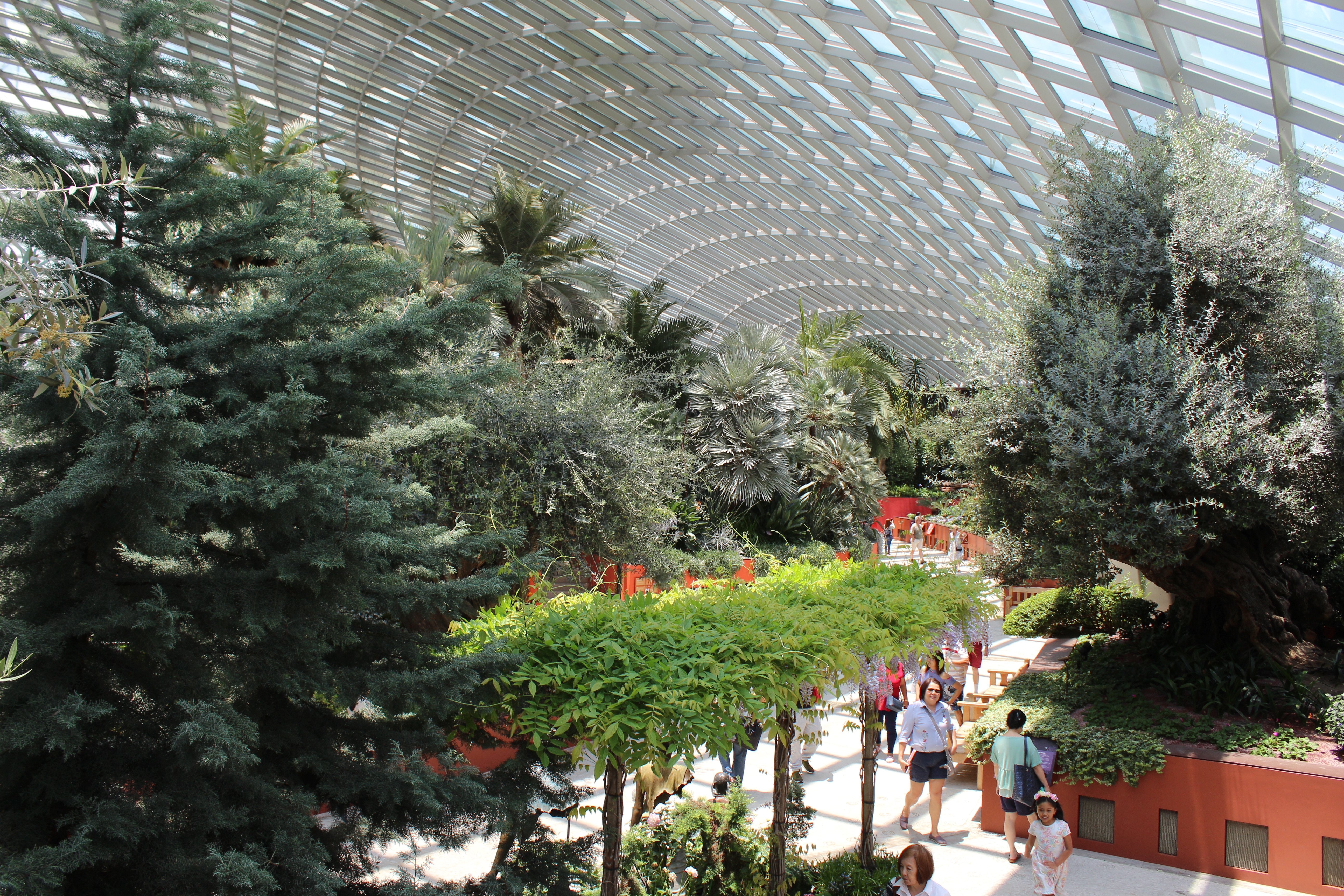
Giant olive tree, and colourful cyclamens in the Mediterranean garden
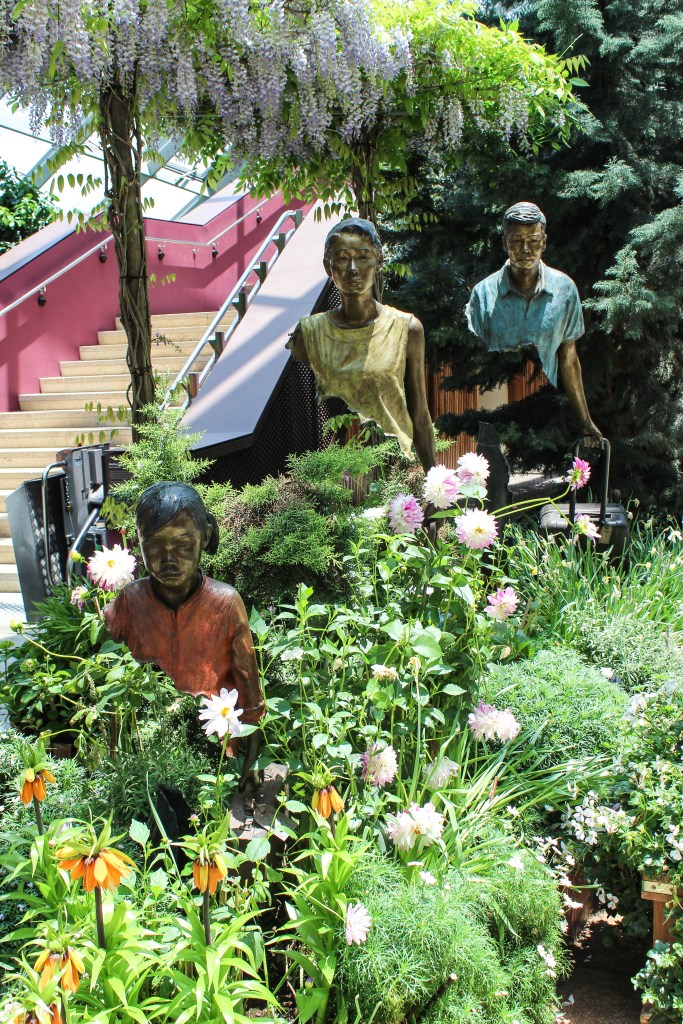
One particular sculpture caught our attention. It was “La Famille de Voyageurs” (A travelling family). It shows a family visiting the Gardens before going back home. The bodies of the people are not whole but are “dashed” and “lack volume”, inviting the viewer to imagine that they take with them beautiful memories but leave something of themselves behind. It was inspired by the universal theme of travel and created by French sculptor Bruno Catalano.
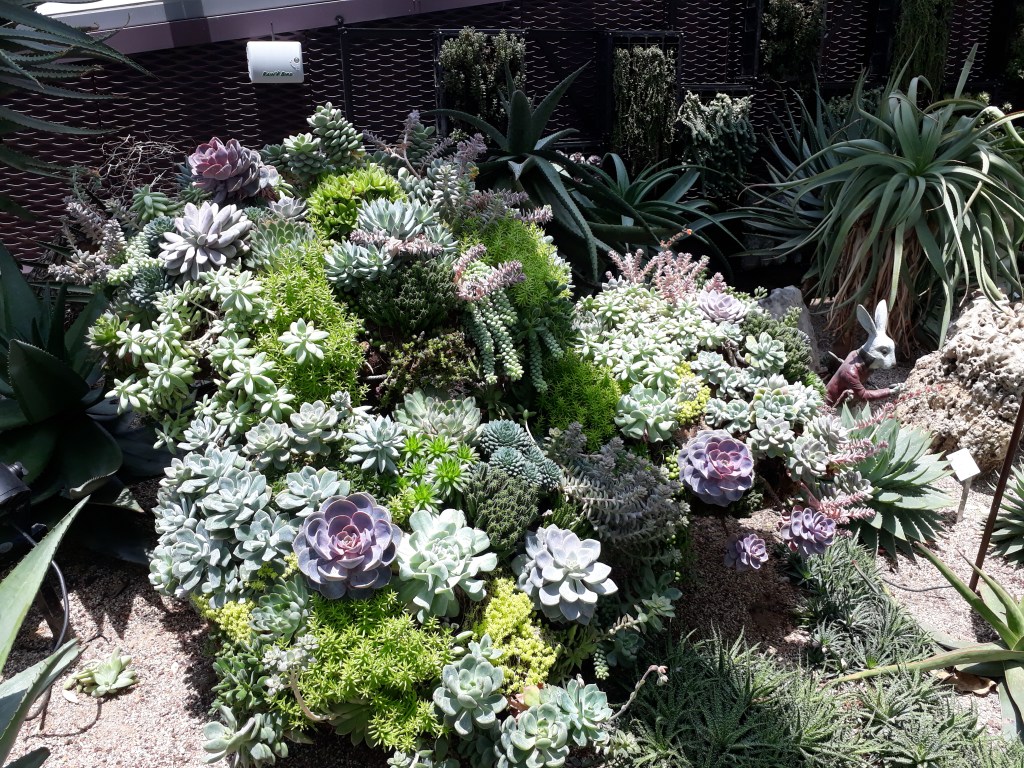
On the elevated level is a beautiful succulent garden enhanced by thematic references to Alice in Wonderland.
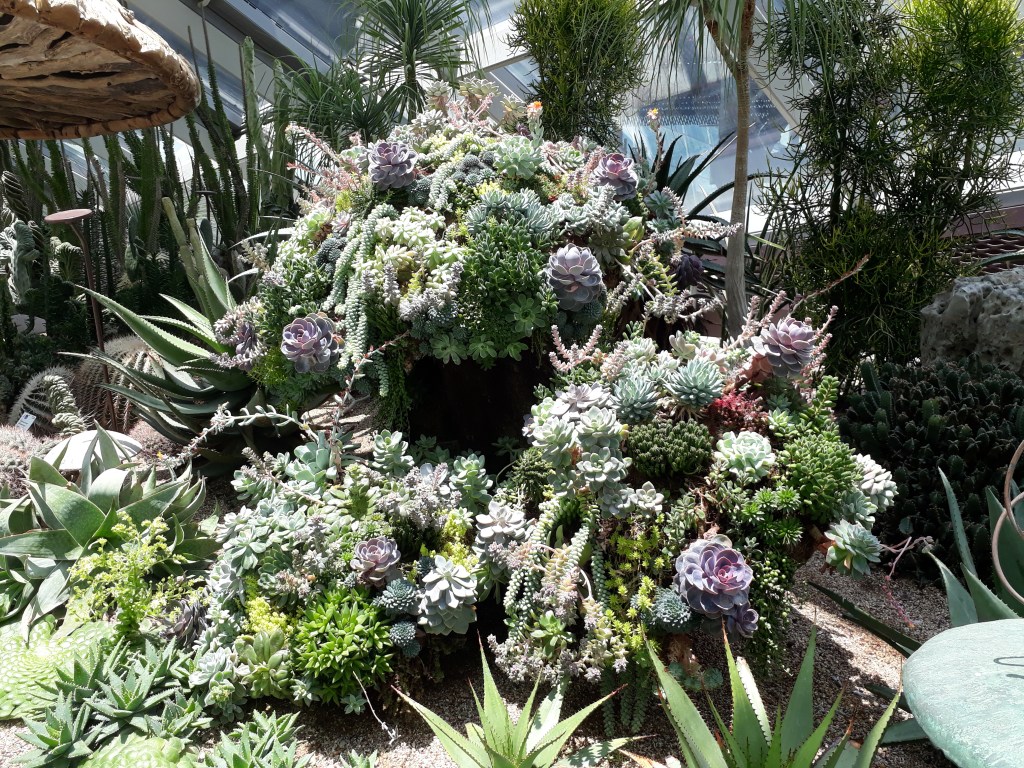
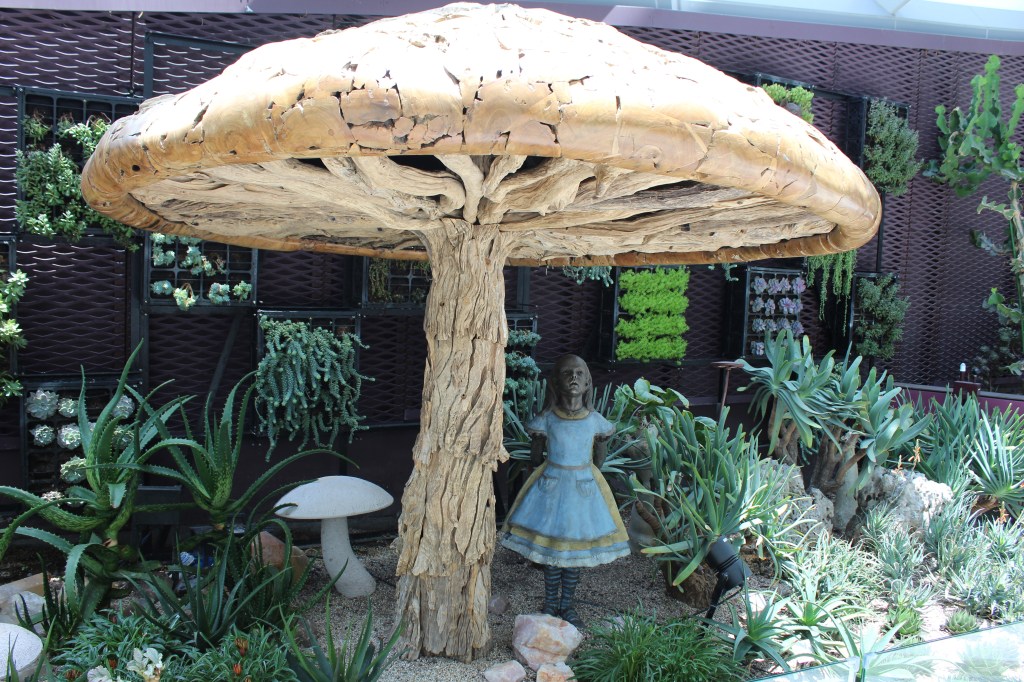
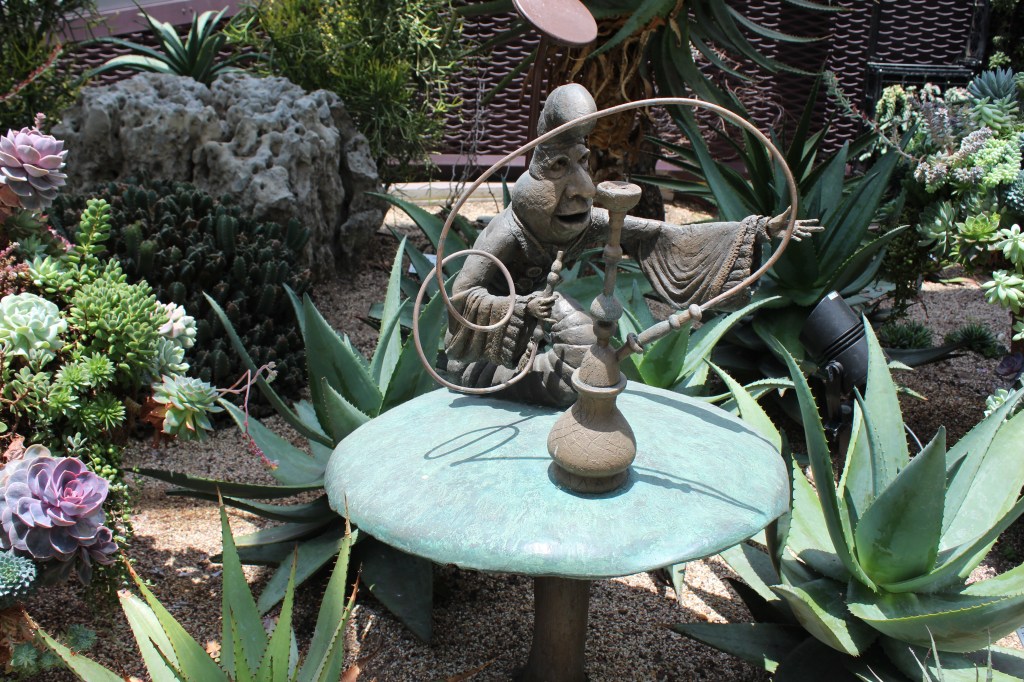
Further along is the baobab garden, with baobabs from all the different countries where they are found as well as many other plants that grow in fairly arid areas.
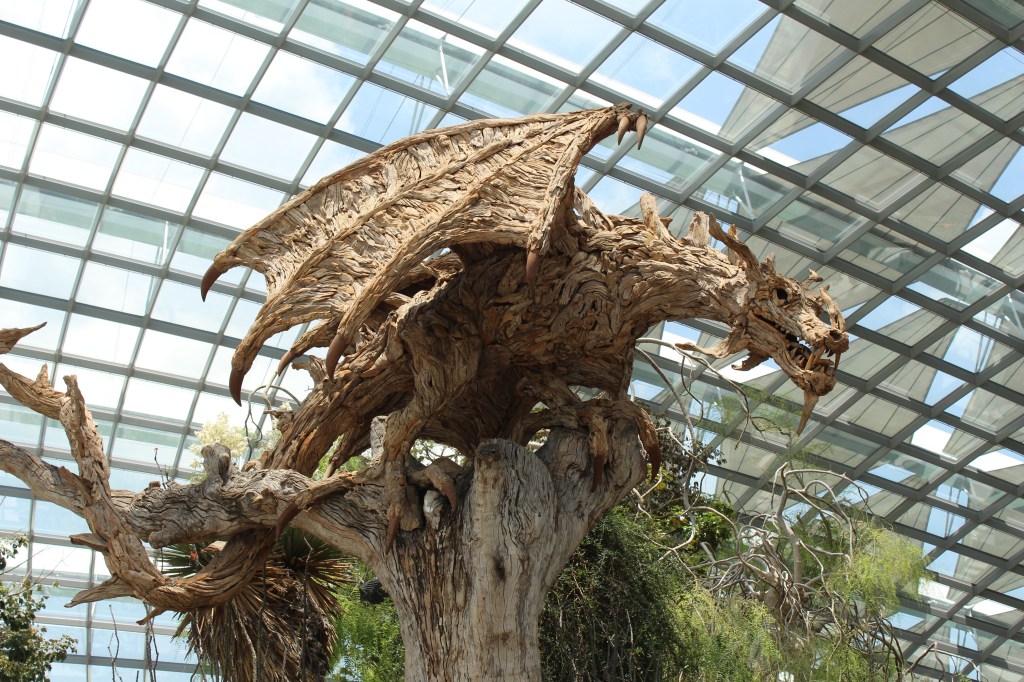
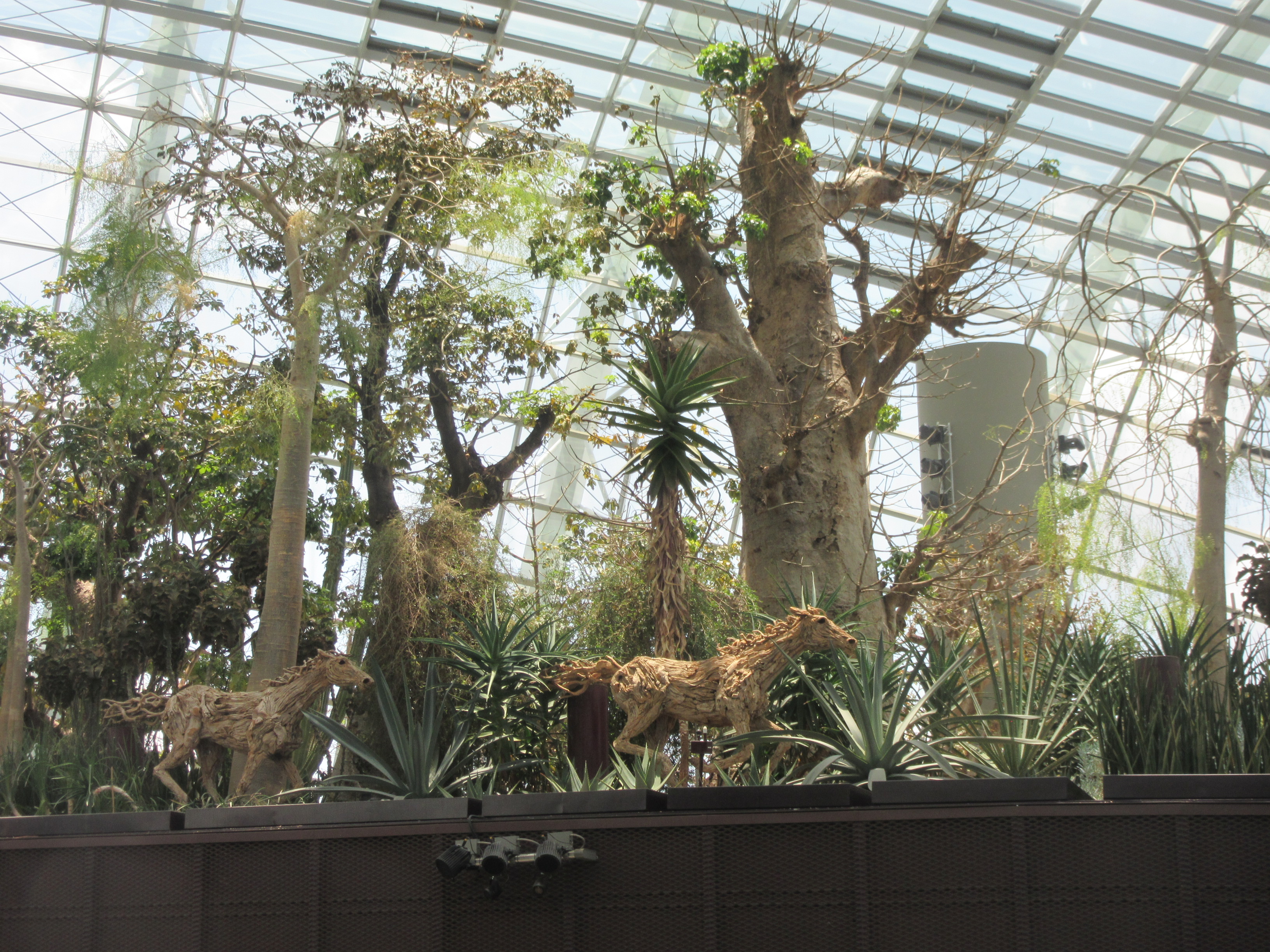
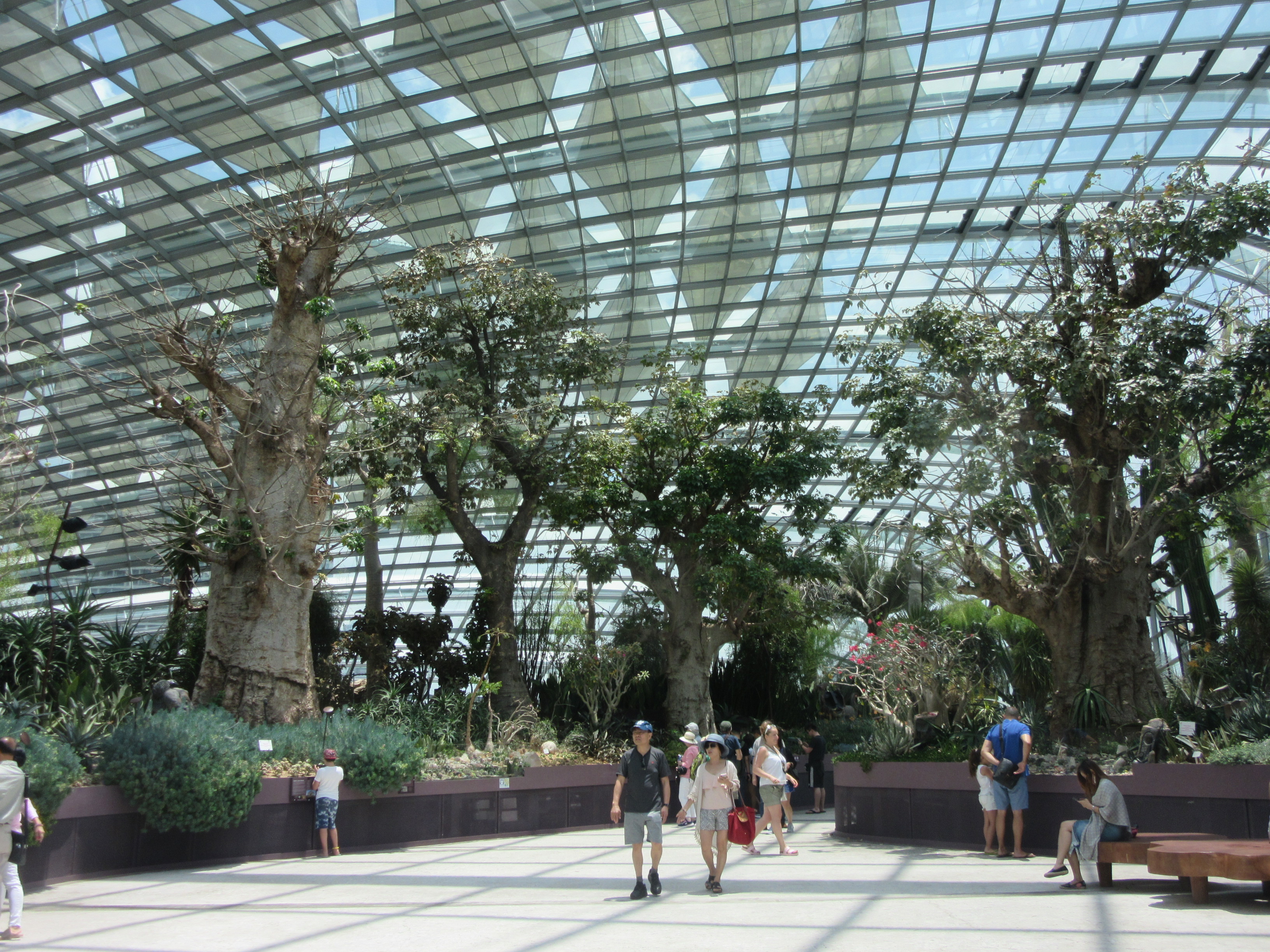
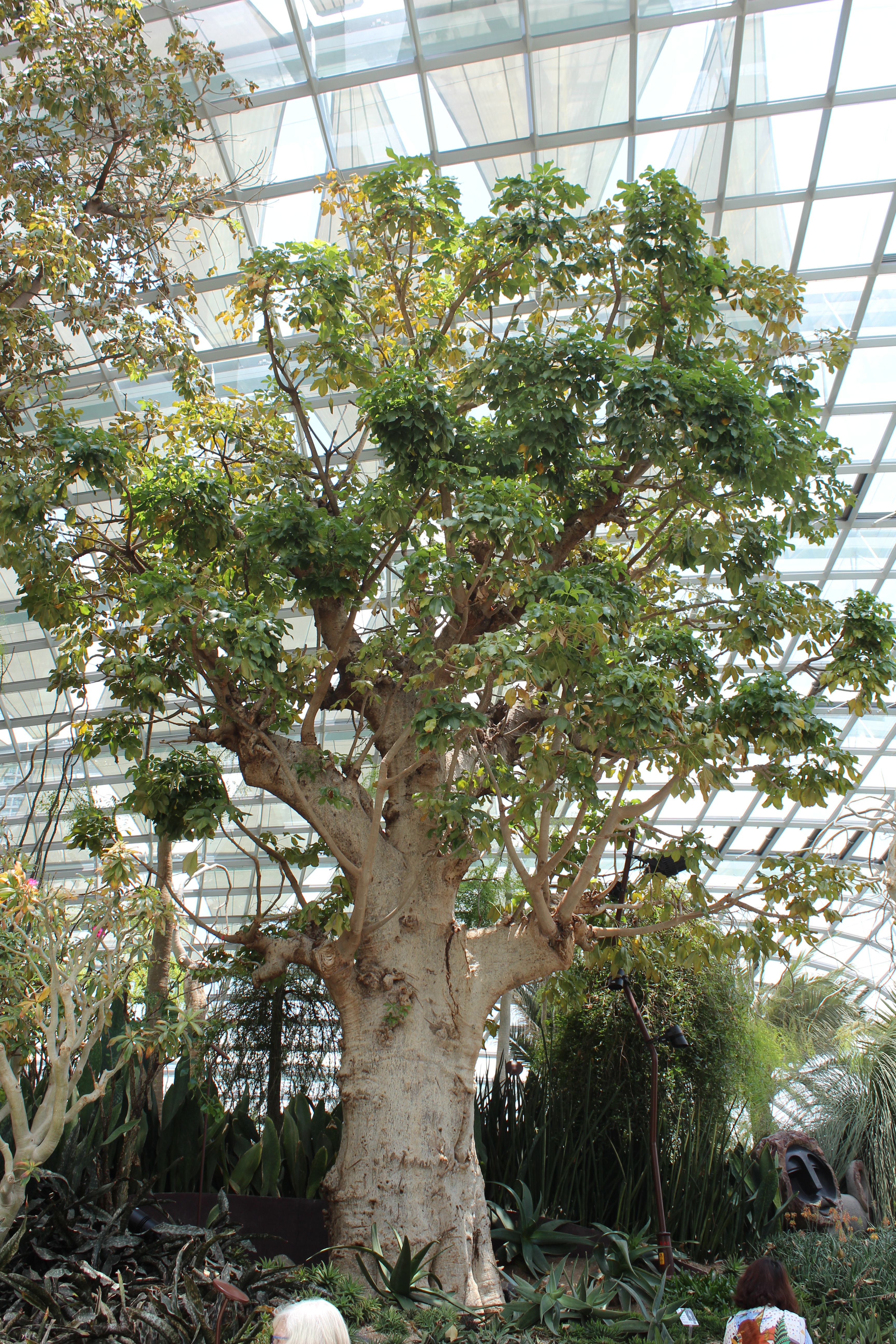
Baobabs for different countries and other plants from arid areas
Back downstairs we also visited the flower garden, where the theme was Japanese springtime, although they were beginning to change it to springtime in the Netherlands with lots of tulips ready to burst into flower. But the cherry trees and azaleas were still looking beautiful among the Japanese figures and red torii gates.
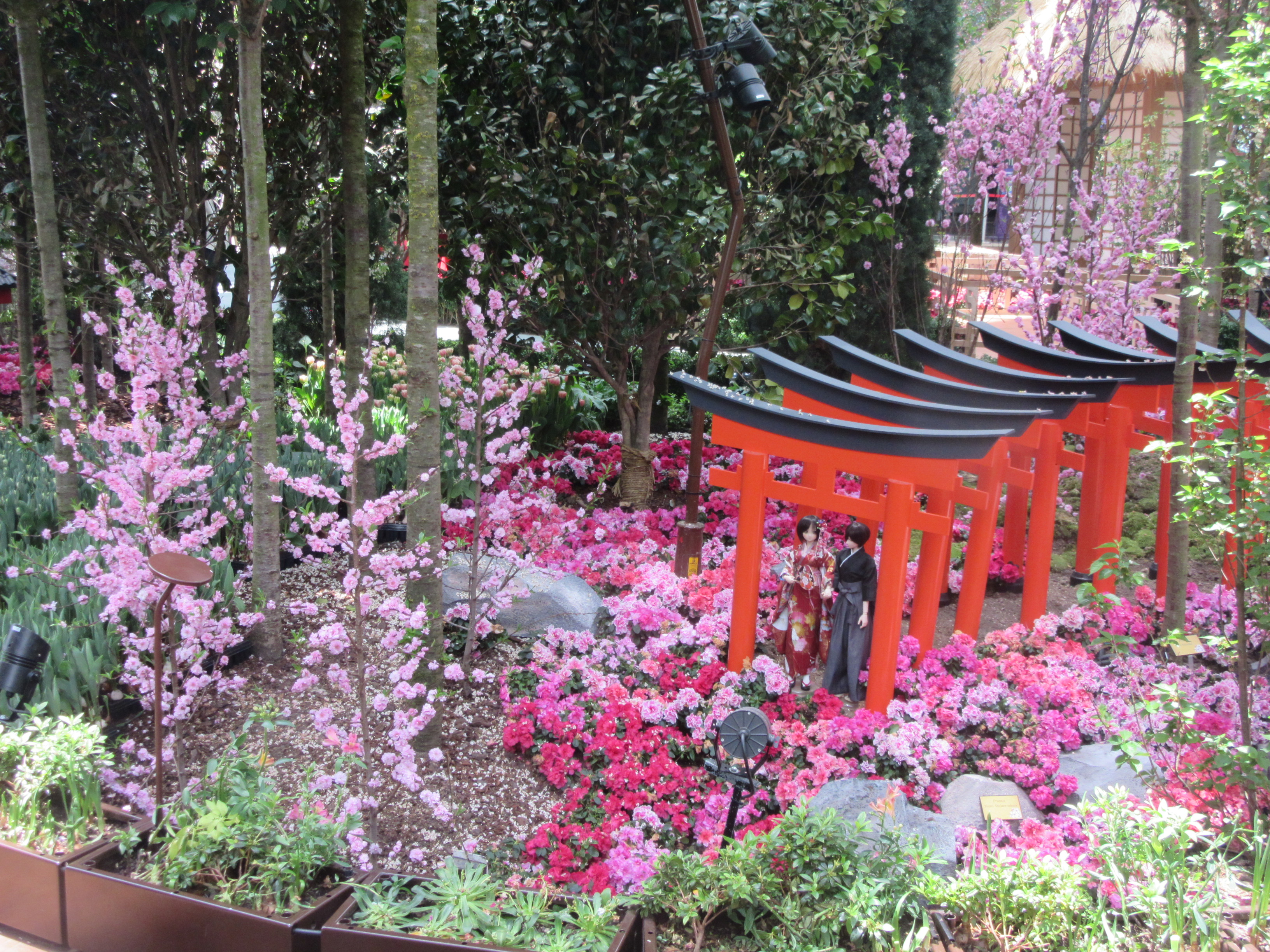
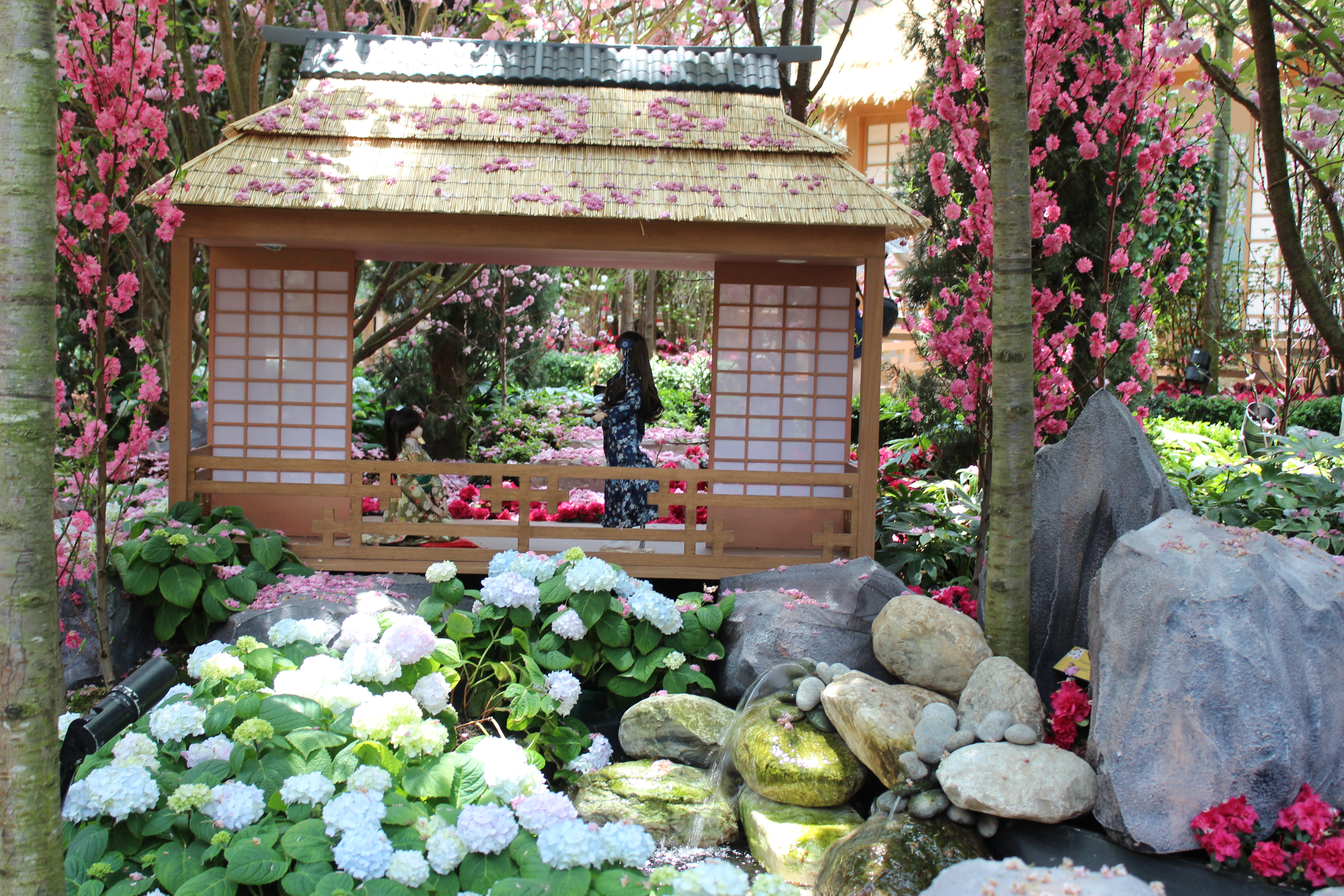
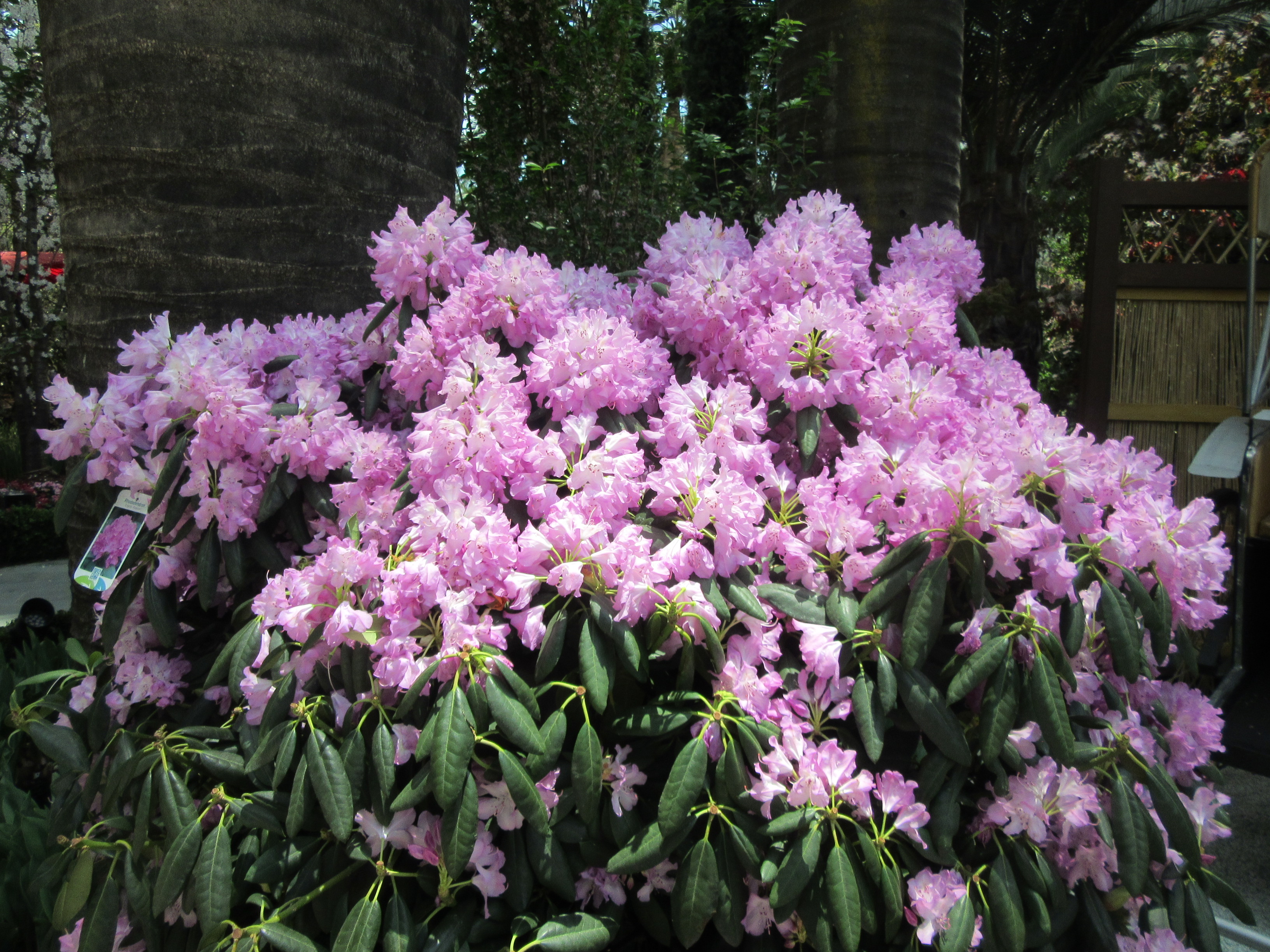
Cherry trees, azaleas and red torii gates in the Japanese Garden
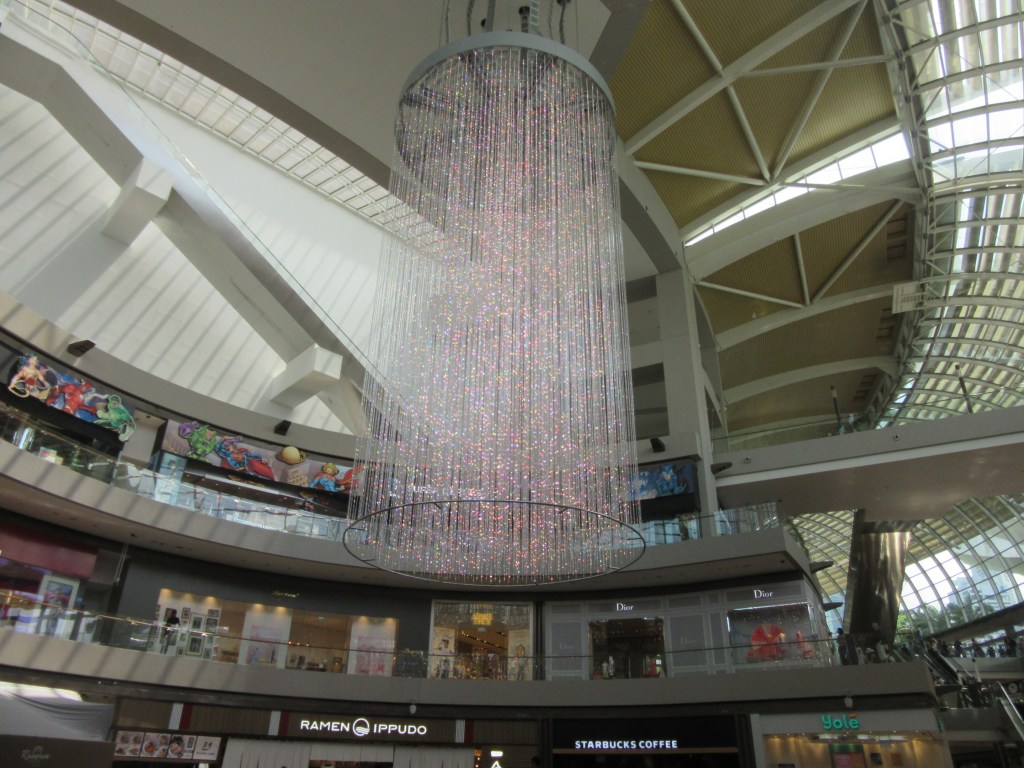
We strolled back through the gardens and into the Shoppes at Marina Bay Sands, hoping to find a reasonable souvenir shop and lunch, which we did find eventually, after wandering passed all the expensive shops featuring brand names that we would never buy! The souvenir type shops were found later in the Raffles City Mall right near our hotel.
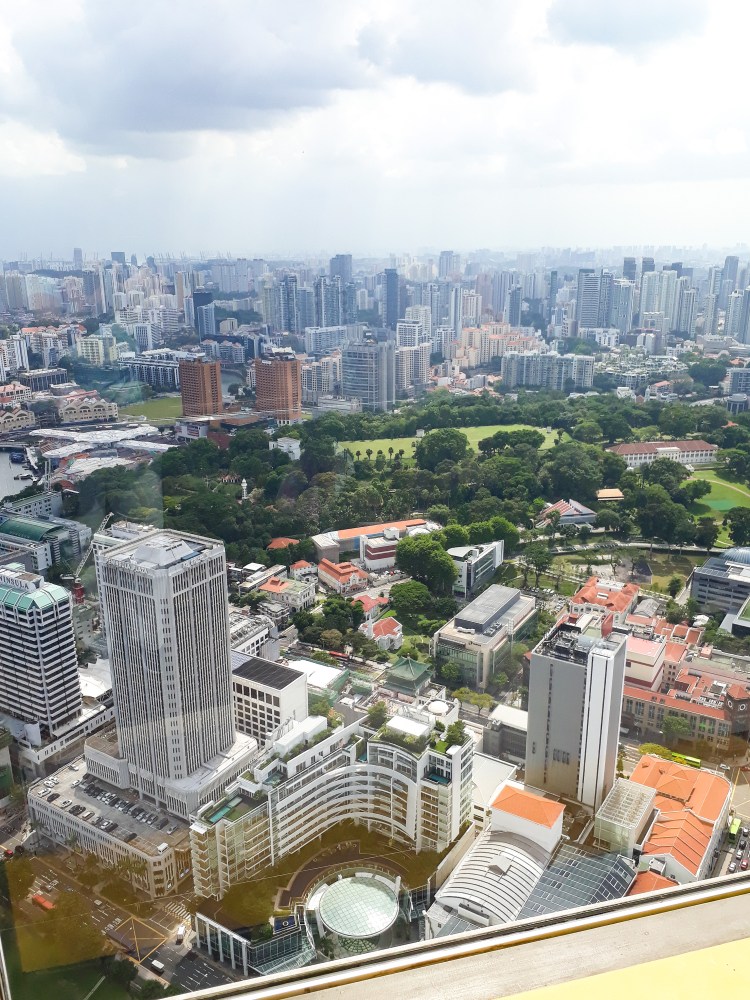
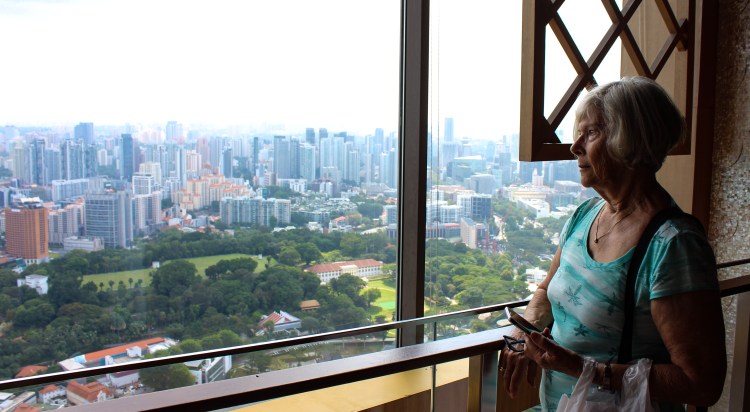
Finally we staggered back to the hotel, having made our last minute purchases, to pack and get ready for the flight that evening. Our last port of call was to go up to the restaurant at the top of the hotel, unfortunately not to eat but to see the amazing views all across Singapore.
At the airport we treated ourselves to well-earned cocktails, though not Singapore Slings which we had enjoyed on the cruise, before getting on first one then another Emirates flight back to Cape Town.

