This piece should have been written more than 10 years ago, soon after we moved back to South Africa, but so many new and exciting adventures engaged us in those years that it is only now that I am finally getting around to celebrating our sixteen years of living in Rome.
Even before the beginning of 2011, we knew that this would be our last year of living in Rome. My husband, Kev, had taken early retirement from FAO, to begin at the end of January 2012. So 2011 was a rather nostalgic time for us as we were conscious of making the most of our remaining time in Rome. In early July we took a number of photos to remind us of some of the places that held special memories for us.
Kev worked at FAO Headquarters, which had been Mussolini’s Ministry of Italian Africa and was repurposed after the Second World War, and I also worked there on a part-time contract. The FAO building is situated near the Circo Massimo, the Terme delle Caracalla and the Giardino degli Aranci. The views of some of Rome’s iconic sights from the terrace on the 8th floor of FAO were amazing. And we often strolled around some of these areas on lunch-time walks.
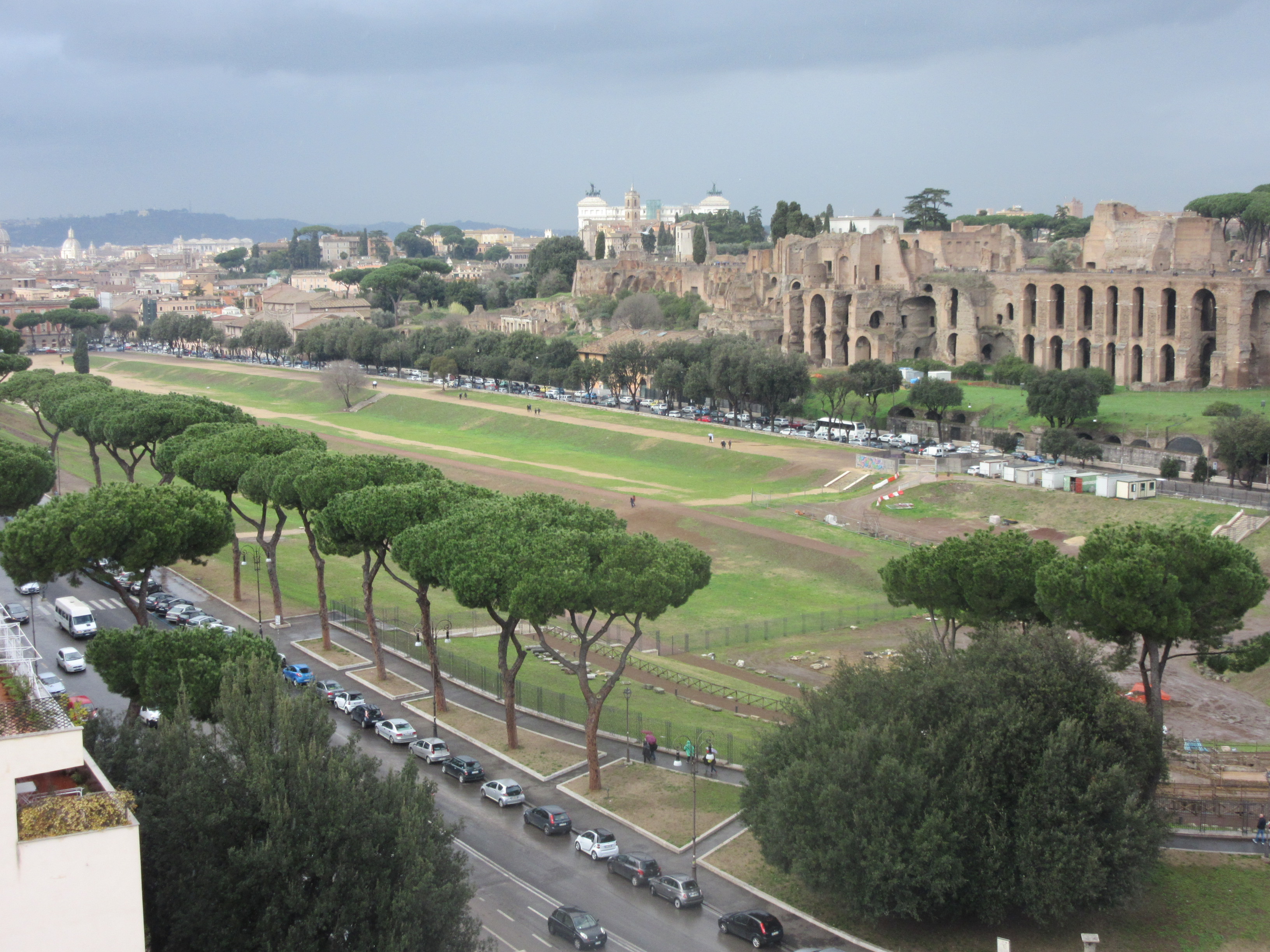
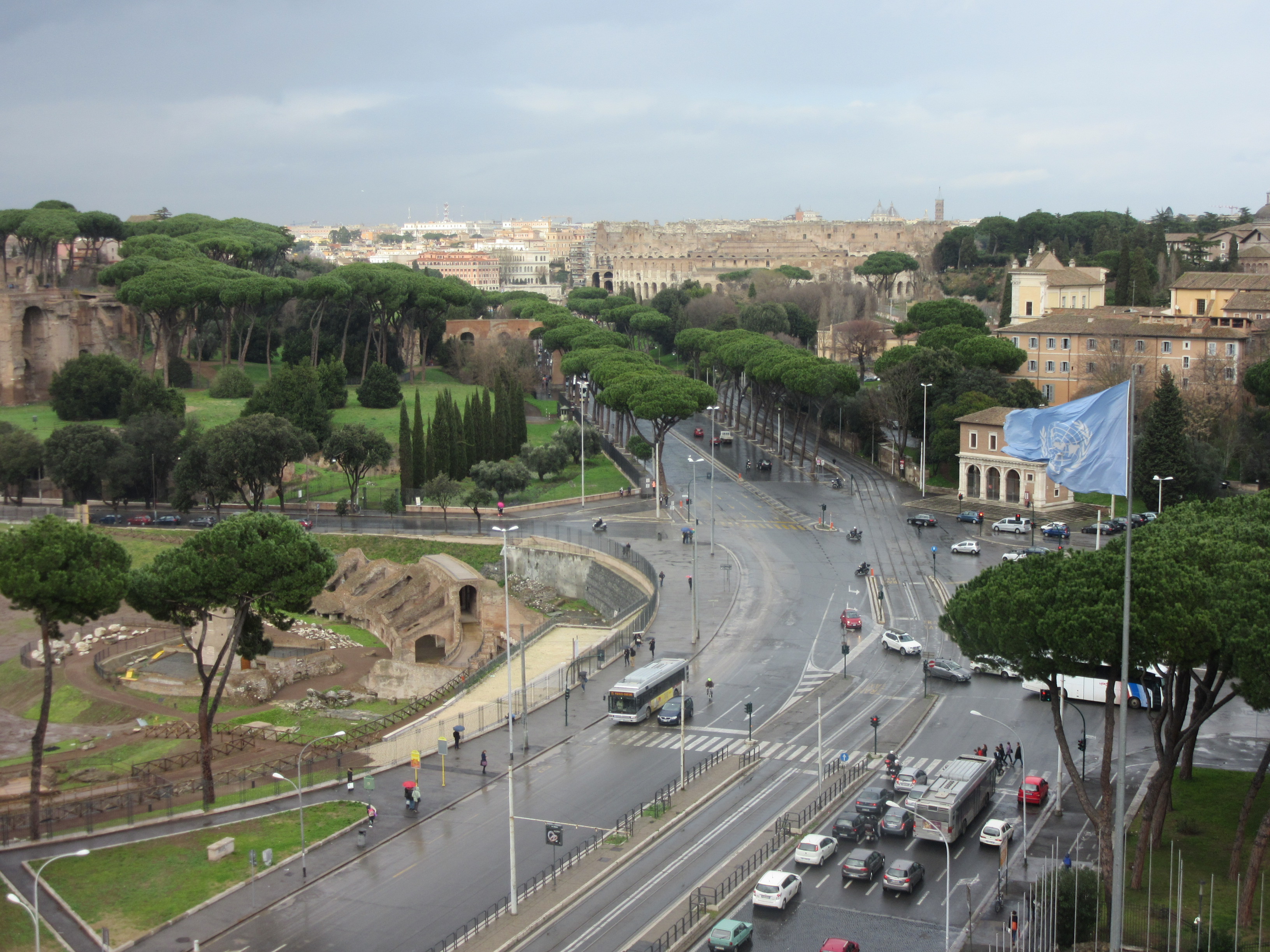
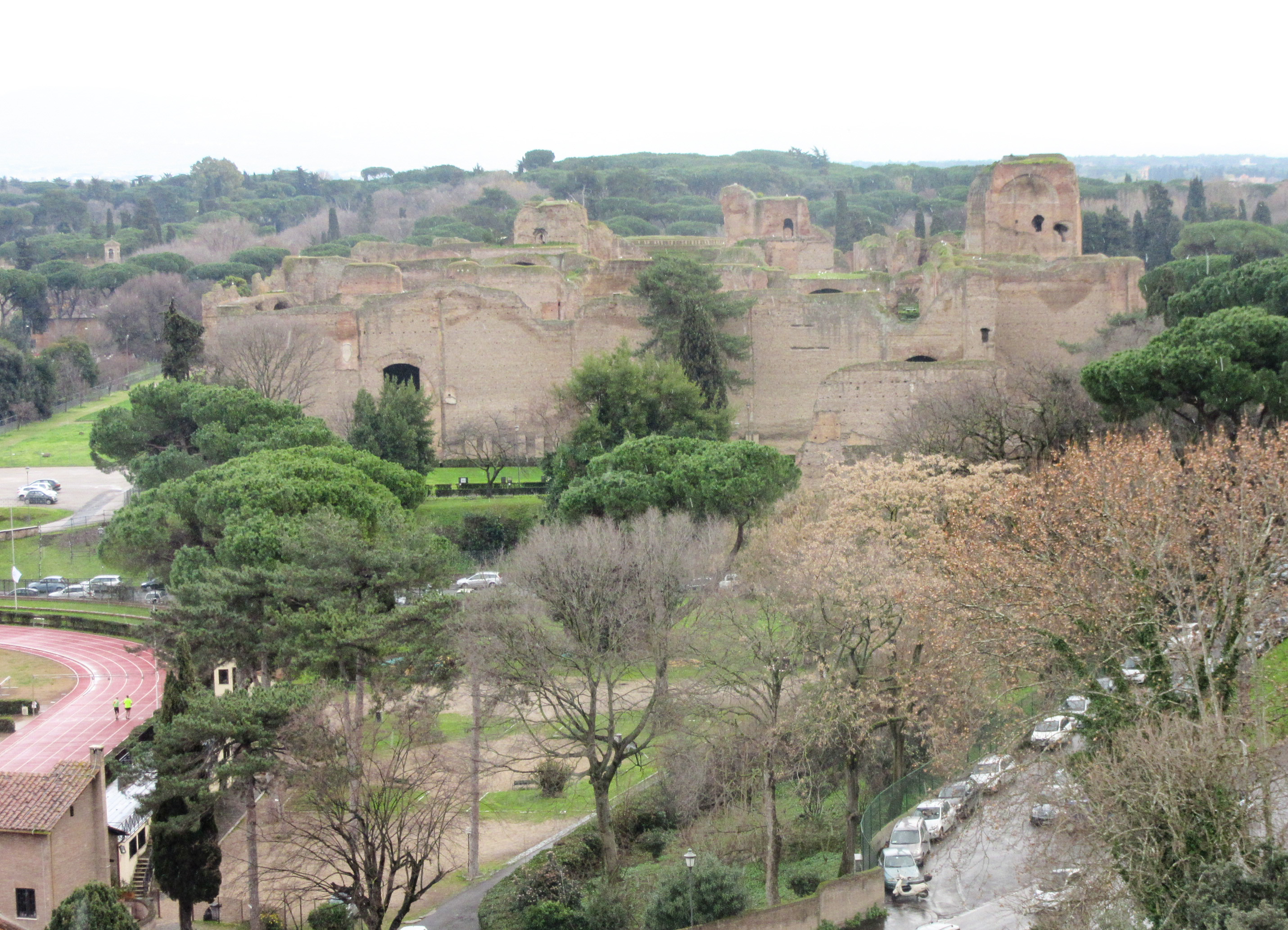
Views from the terrace at the top of FAO – Circo Massimo on the left, at the top the junction on which FAO sits with the Coliseum in the background, below is the Terme di Caracalla.
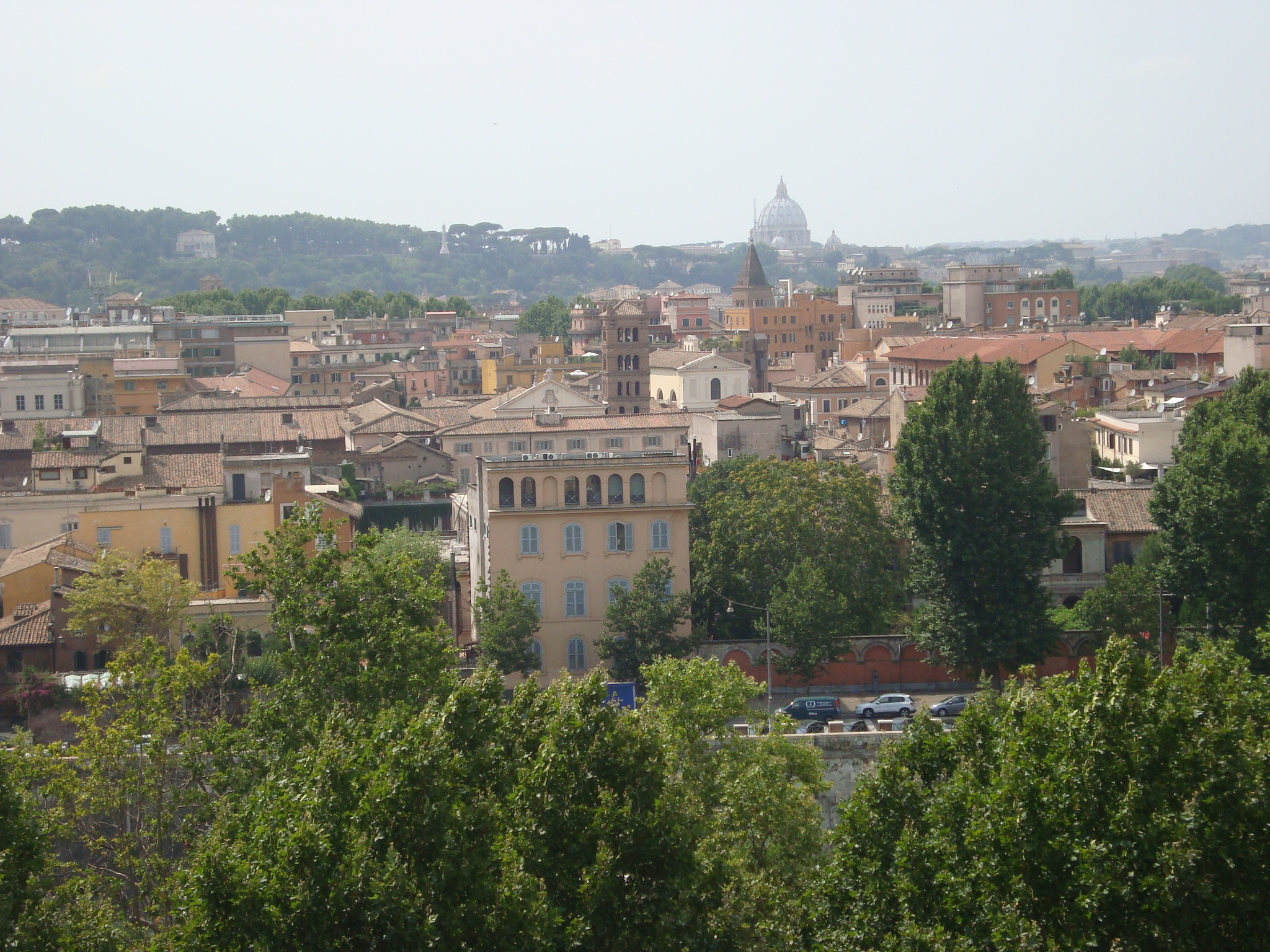
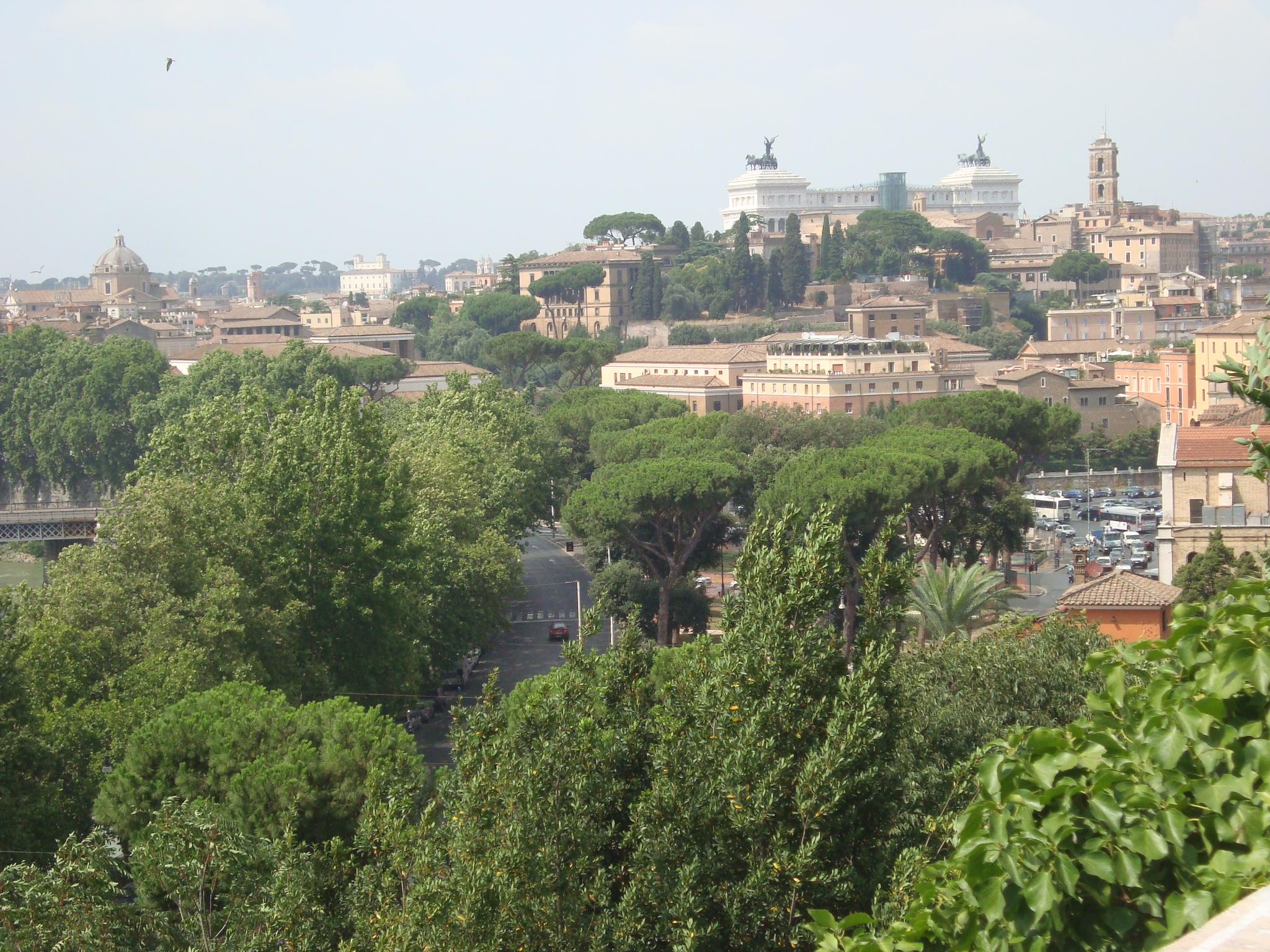
Views across Rome from the Giardino degli Aranci – St Peter’s dome on the skyline on the left and the monument to Vittorio Emanuele II on the right.
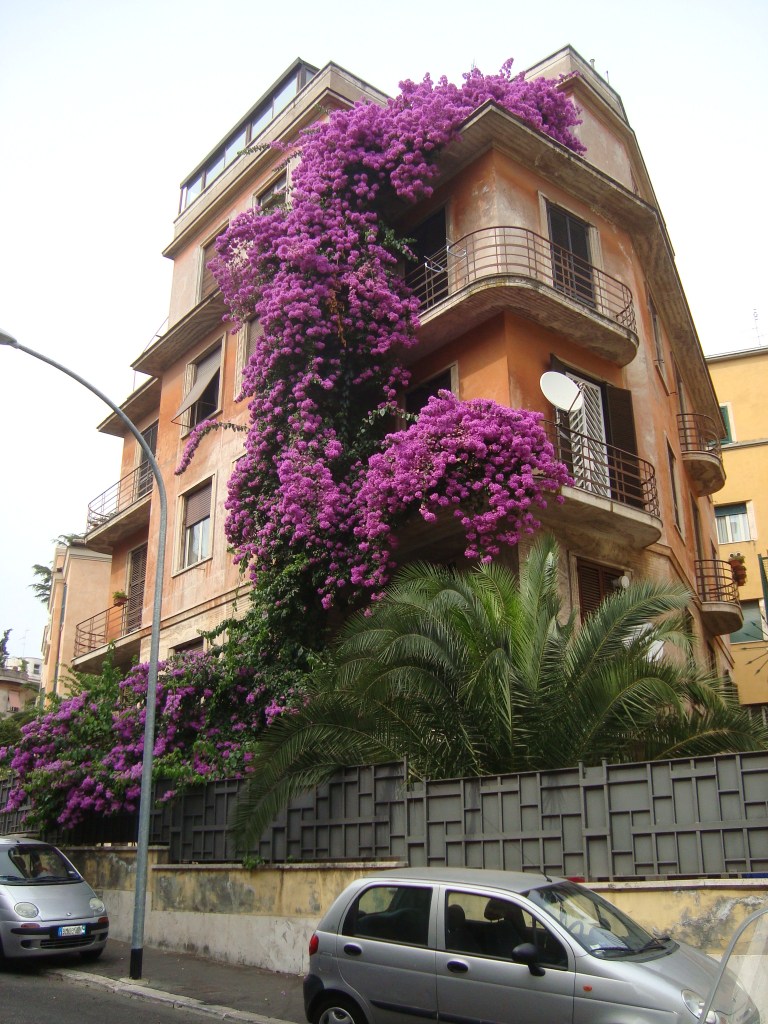
An amazing bouganvillia climbing up a villa on the Aventino hill on the way to the Giardino degli Aranci.
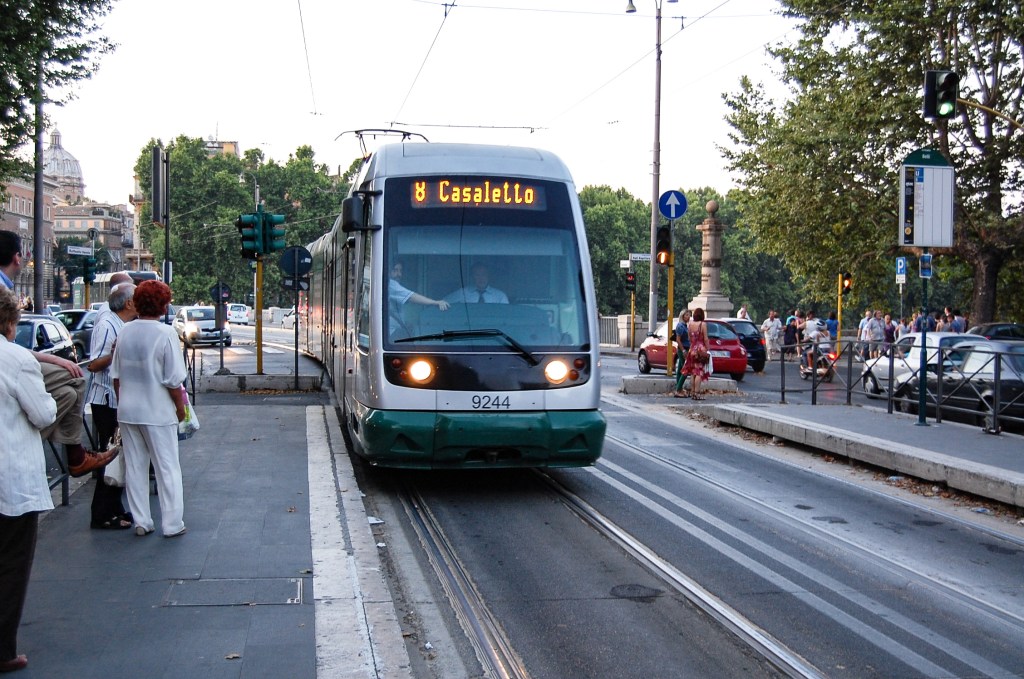
One of our favourite weekend activities was to take the tram from the top of via del Casaletto, the road on which we lived, to the end of the line in Largo Argentina, in the centre of Rome. From there we would wander through the narrow cobbled streets and passageways to the Piazza della Rotunda, passed the Pantheon and on to Piazza Navona, sometimes visiting churches we had not been into before, stopping for a gelato or a coffee. Towards evening we would make our way across the River Tevere to Trastevere and our favourite Enoteca for a glass of wine and aperitivi.
On the first Saturday afternoon in July we decided to join the tourists and head into the centre, taking our camera with us to record the places we visited as a memento of our time in Rome.
As usual, we took the number 8 tram from the top of Via del Casaletto all the way into Largo di Torre Argentina (commonly abbreviated to Largo Argentina). This is a large square in the centre of which are the remains of four Roman era temples as well as the remains of Pompey’s theatre. The temples all date from the 4th century BC to the second century BC. The 18th century Teatro Argentina is also on the square. One of our early memories of our time in Rome is finding last minute tickets to a performance of Mozart’s Don Giovanni on New Year’s Eve. We sat in a small box, shared with two others, on rather uncomfortable chairs. Opera is taken very seriously by Italians and most people bring the libretto along with them and even join in at times. Italians are also quick to applaud great singing but equally quick to show their displeasure when things are not great! It was a wonderful experience.
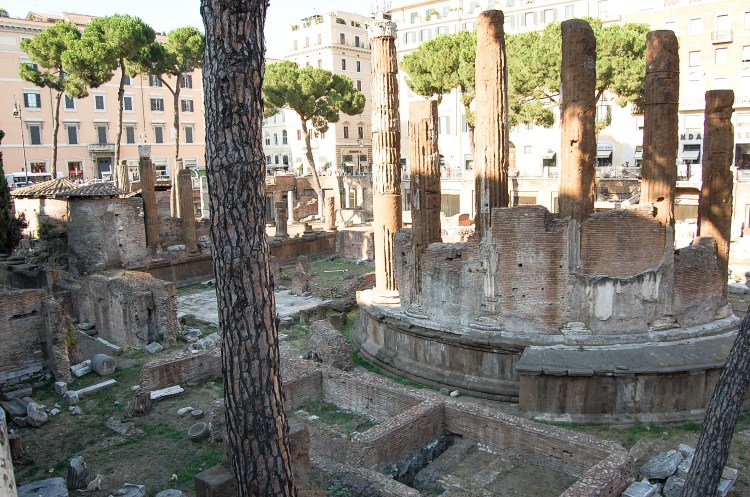
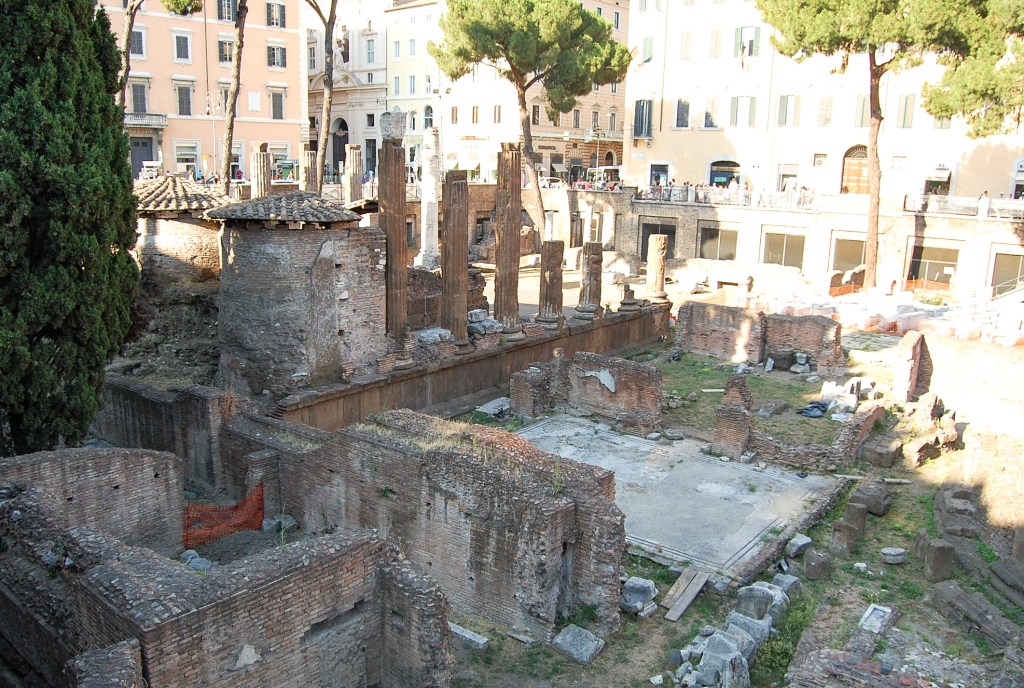
Two views of the ruined Roman temples preserved in the Largo di Torre Argentina
Another activity for which Largo Argentina is known for now is the cat shelter hidden away in the ruins of one of the temples. It was founded in 1993 and is protected by law enacted by the Italian Parliament that allows the cats to live freely and recognises the rights of those who care for the cats. After having a look around the ruins to spot some of the cats hidden in various places amongst the stones, we started on our meandering way towards the Piazza della Rotunda and the Pantheon, down shaded and cobbled streets until we came out on a small piazza with a church we had not visited before.
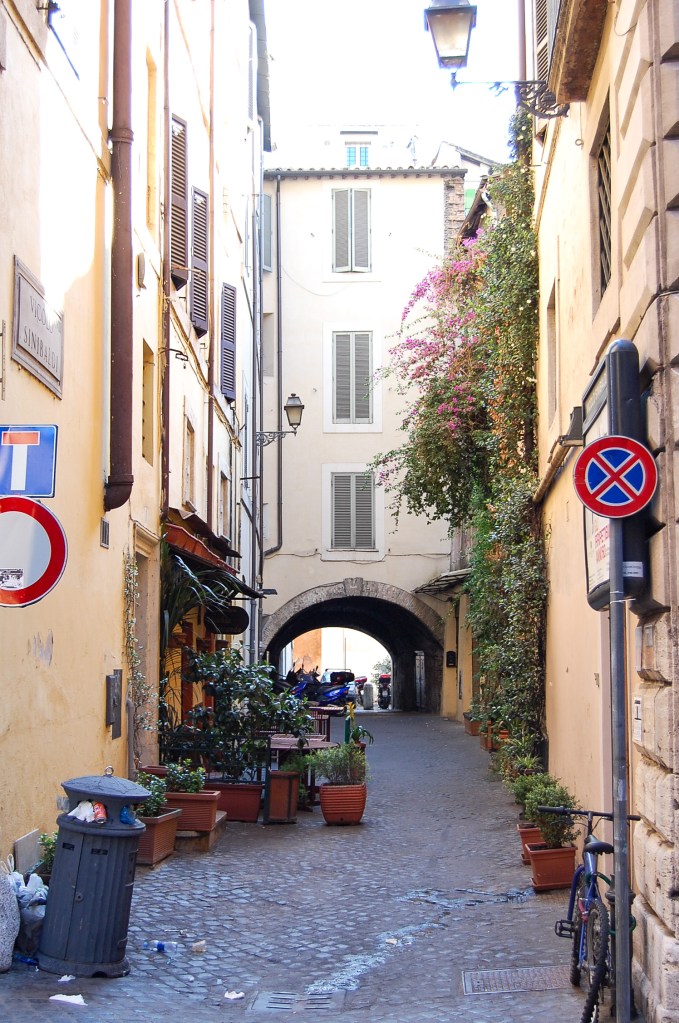
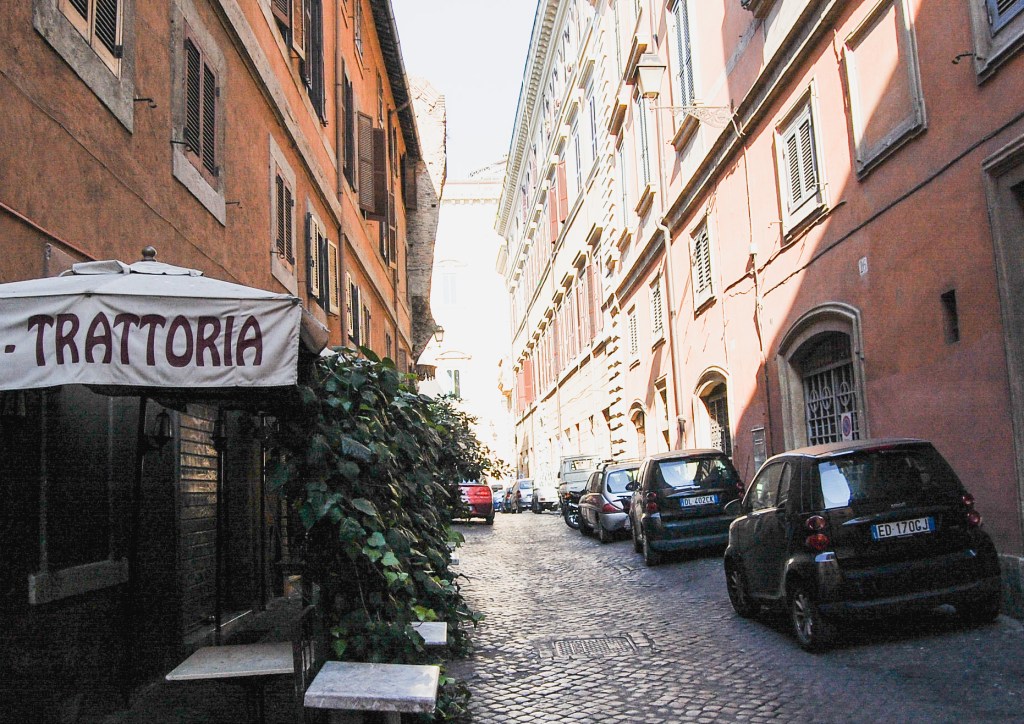
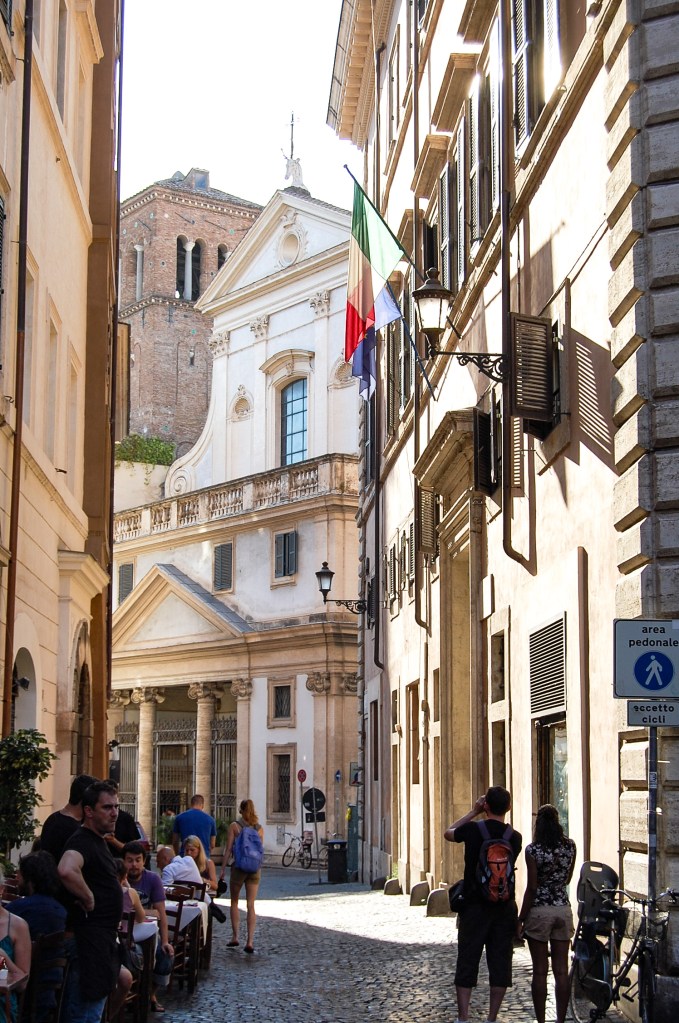
Narrow cobbled streets between Largo Argentina and the Pantheon, with the facede of Sant’Eustachio peeping out in the right-hand photo.
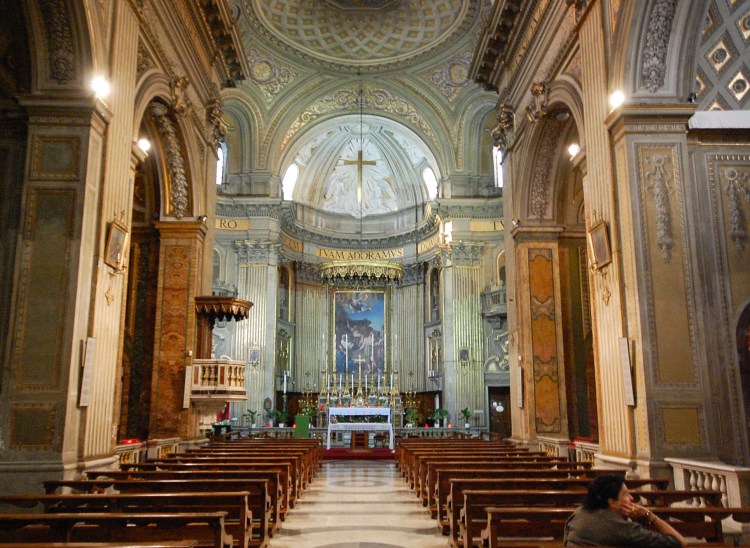
It is one of the minor Basilicas of Rome and is dedicated to Sant’Eustachio, originally built in 1793. We wandered inside and found a baroque style nave with pillars on either side covered with fluted white marble. Unlike some of the more ornate churches which have richly painted ceilings, the vaulted ceiling here was stuccoed with flowers and leaves. The painting behind the altar shows the Martyrdom of St Eustace and his family in AD 118. High above the altar is a simple gold cross and the light streaming down from the dome above, shining on the gilded wooden baldachin bathed the church in an almost ethereal light.
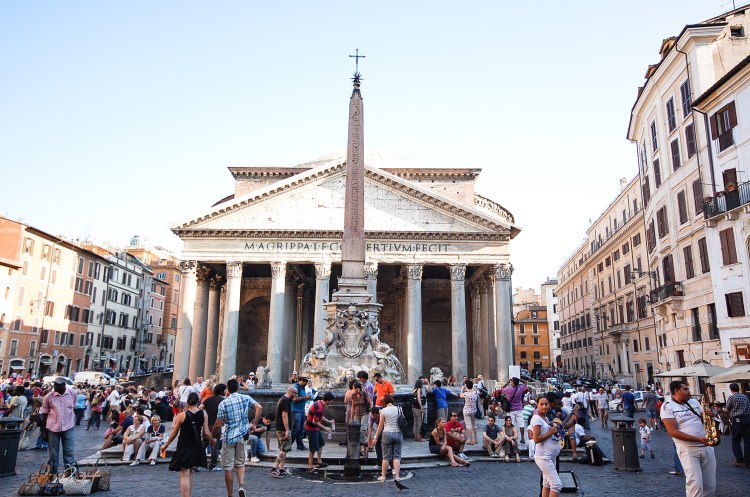
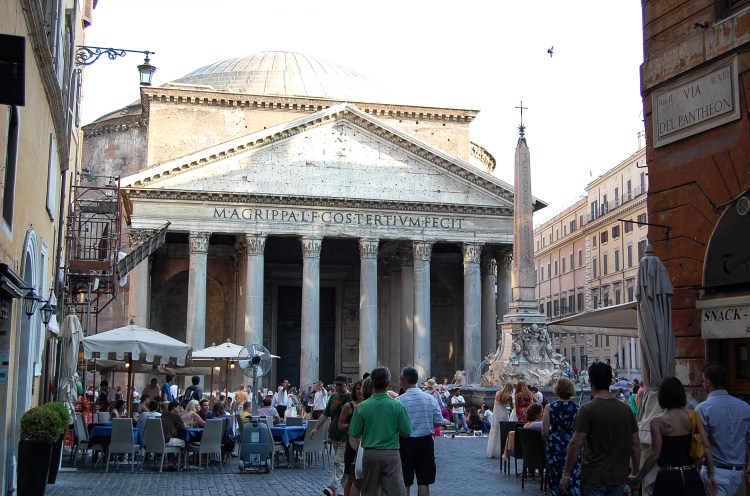
Back outside in the heat of July in Rome, it was only a short stroll to the Pantheon, where the crowds of tourists were avidly taking photos or sitting in the shade of the fountain for some respite from the hot sun. We took a few photos for our remembrance record before wending our way through more narrow streets to Piazza Navona.
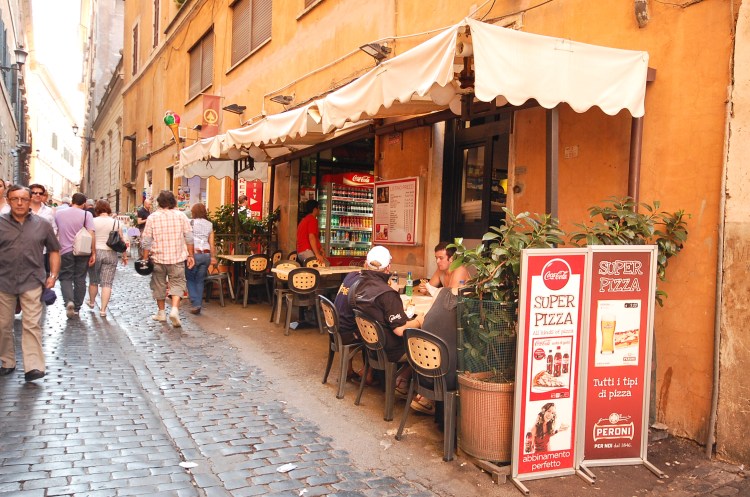
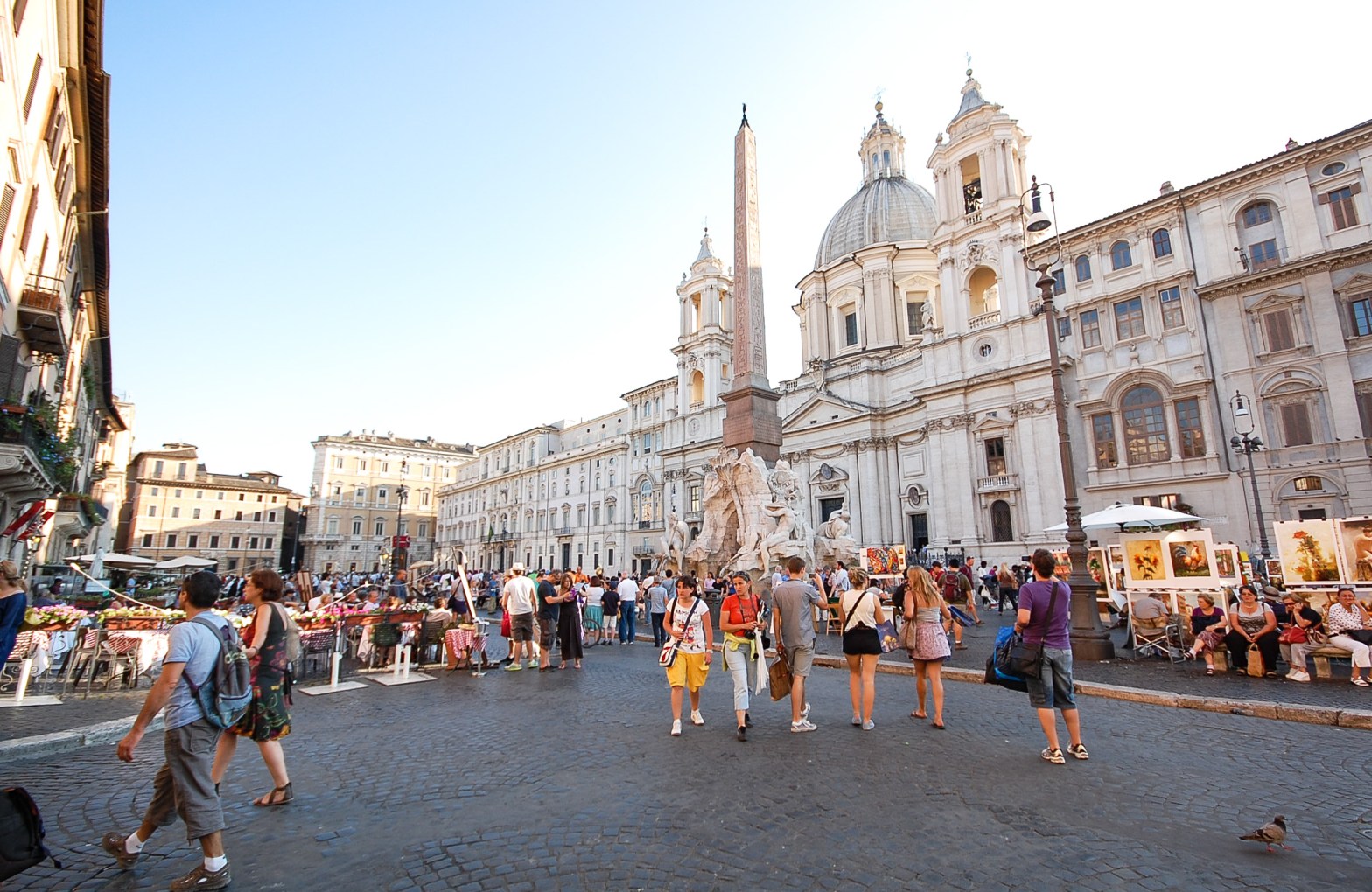
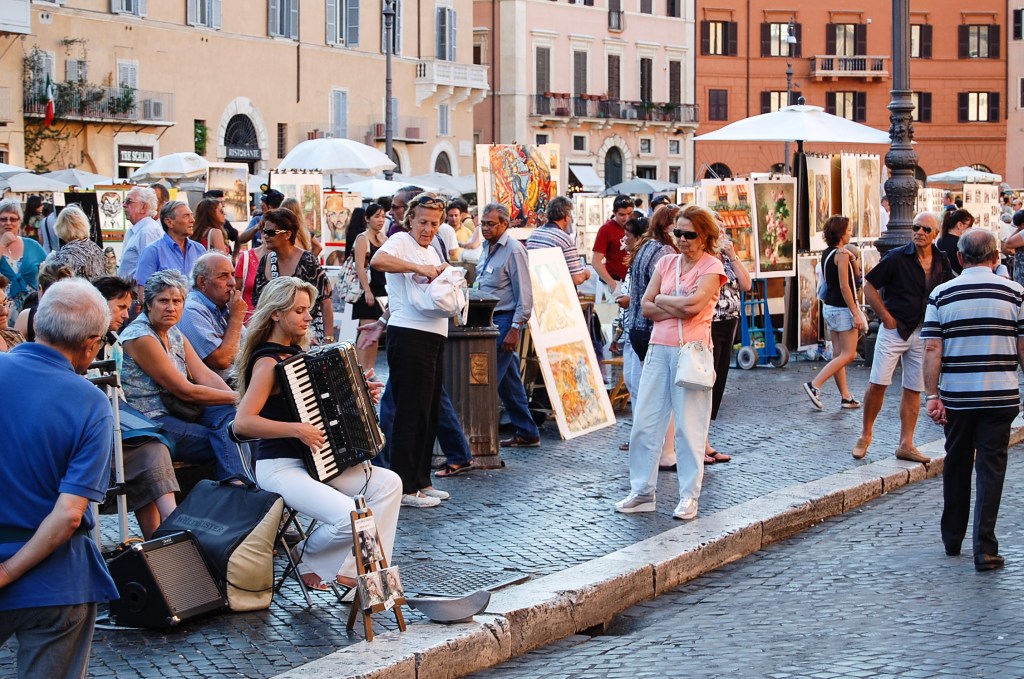
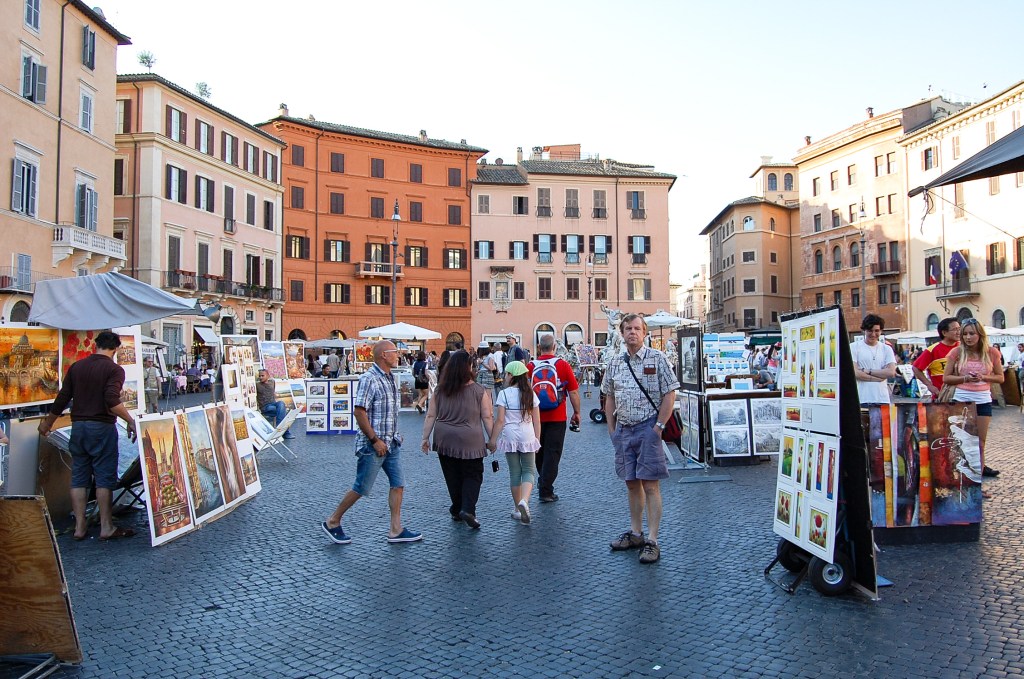
Here more tourists crowded the outdoor cafes and restaurants and wandered among the stalls selling artworks and paintings depicting scenes of Rome, listening to musicians playing and singing typical Roman music. Piazza Navona is one of the most beautiful and most visited piazzas in all Rome. The area was originally the site of the Stadium of Domitian built in 80 AD, where Romans came to watch the games. Nothing remains of the stadium today but the highly refined Baroque buildings, dating from the 17th century, that line the piazza today follow the same outline as the stadium.
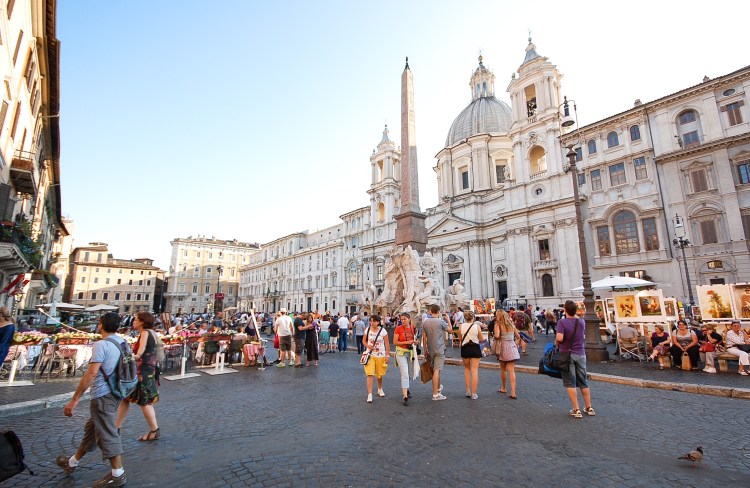
The church of Sant’Agnese in Agone dominates one side of the piazza and in front of it is the magnificent fountain called the Fountain of the Four Rivers or Fontana dei Quattro Fiume by Gian Lorenzo Bernini. The fountain is topped by the Obelisk of Domitian, which was brought in pieces from the Circus of Maxentius on the Via Appia. The Church of Sant’Agnese is largely the work of Francesco Borromini, as well as Girolamo Rainaldi and his son Carlo. Bernini and Borromini were great rivals for commissions in 17th century Rome but their styles of art and architecture were very different. Borromini was far more rational and liked symmetry and geometry to influence his architecture whereas Bernini was far more dramatic and theatrical. An apocryphal story is frequently told about the relationship between the fountain and the church in which it is said that two of the figures on Bernini’s fountain are holding up their arms in horror to shield themselves from the awful sight of Borromini’s church. However, as the fountain pre-dates the building of the church, the story, unfortunately, cannot be true.
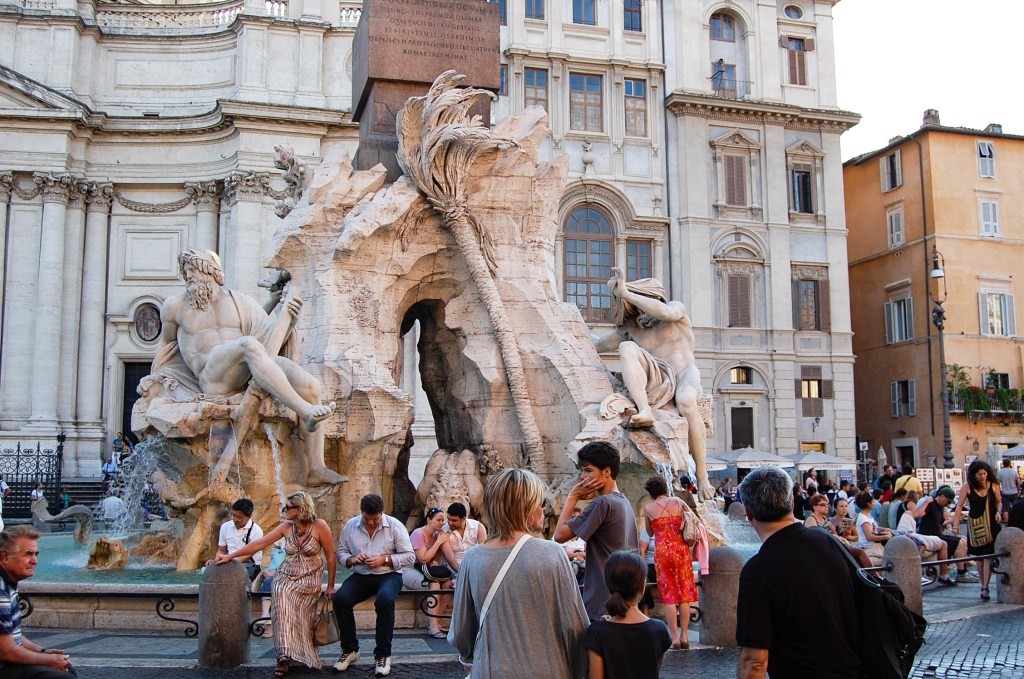
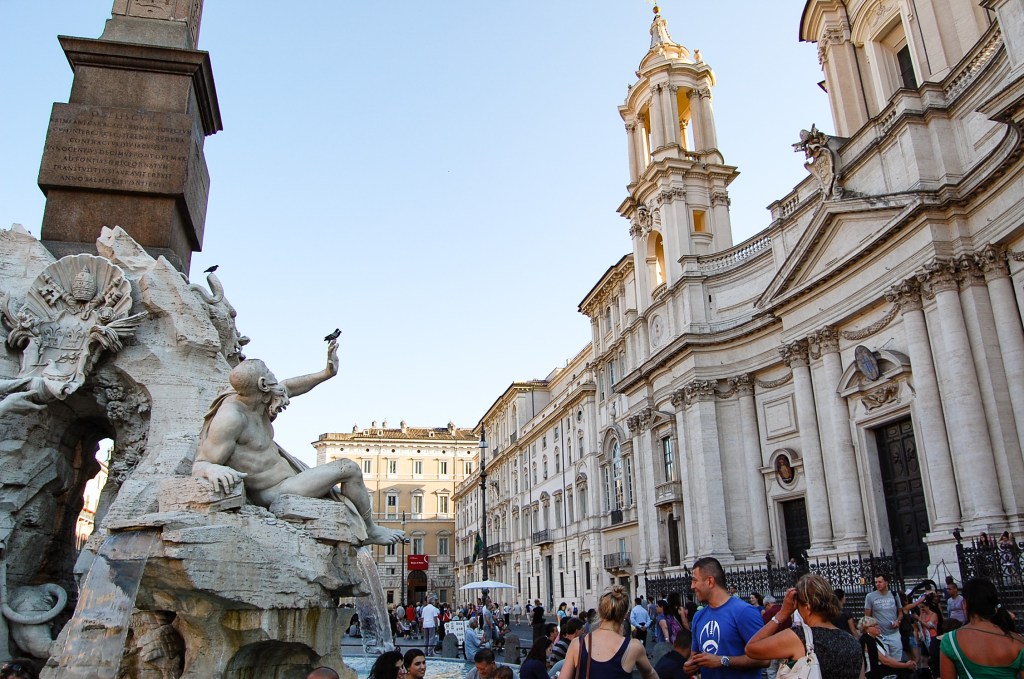
The Fountain of the Rivers and the facade of the church of Sant’Agnese in Agone.
After browsing through some of the paintings on offer, we made our way towards another church we had wanted to visit but had not managed to do so yet.
This is the Church of Santa Maria Maddelena, in a small street just off the Piazza della Rotunda on the way towards Montecitorio, which houses the Chamber of Deputies of the Italian government.
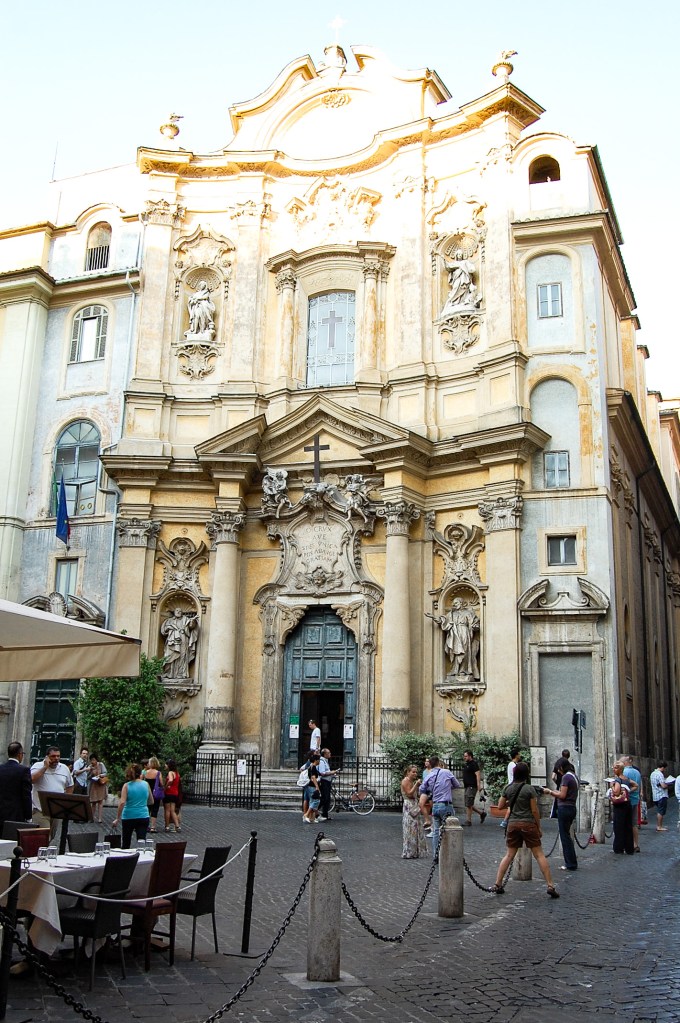
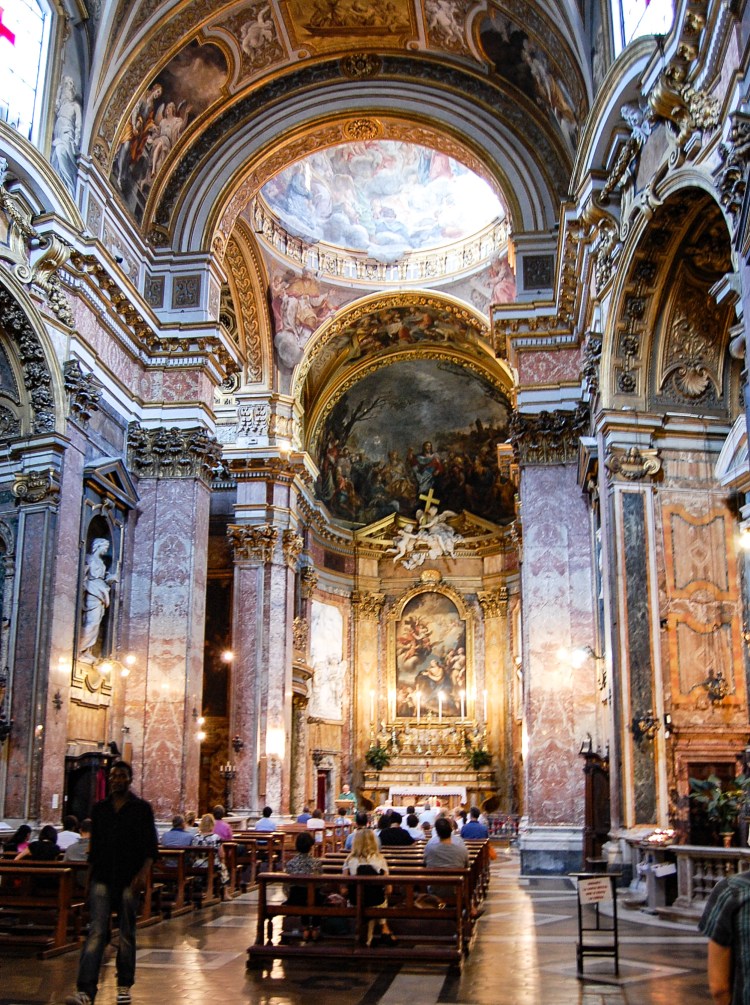
The Church of Santa Maria Maddelena was built on the site of a 14th century chapel and is the regional church for the people of the Abruzzo region of Italy. The Abruzzo is a mountainous region to the east of Rome and has suffered terrible earthquakes in the past, in particular one just two years earlier (2009) that had devastated the city of L’Aquila. In addition, in the 16th century the order of St Camillus de Lellis (patron saint of the sick, hospitals, nurses and doctors), was set up in the church to administer to the sick and its emblem is a large red cross. The church was rebuilt and expanded in the 17th century, hence the beautiful Roccoco façade which faces the street today. The painting above the altar shows Mary Magdalene adoring the cross and the Roccoco style is continued inside with pillars covered with polychrome marble, giving the church an unusually ornate appearance, which has given rise to the nickname ”sugar church”.
We then made our way back to the Piazza della Rotunda, where the crowds were thinning out slightly as the afternoon drew towards evening.
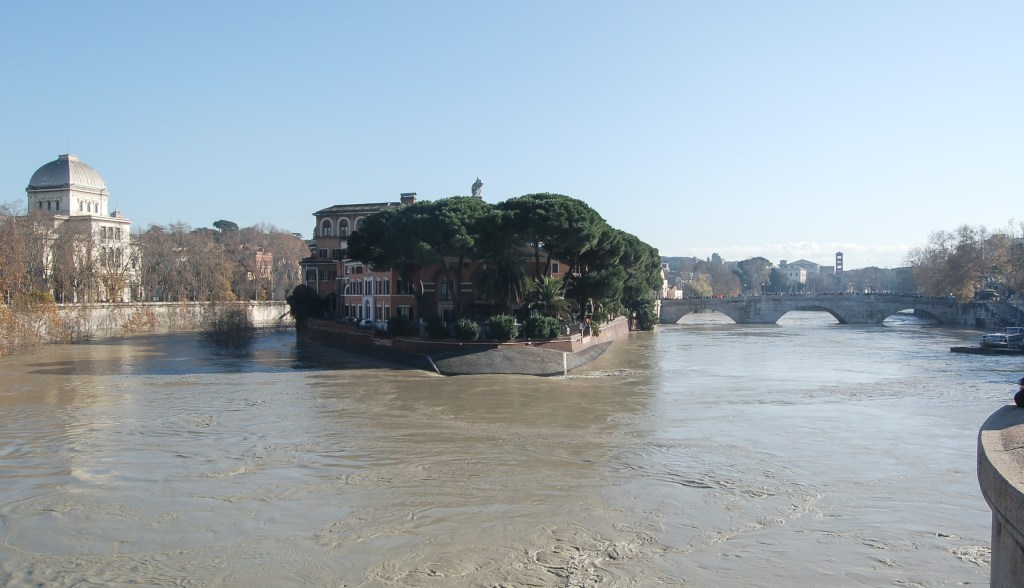
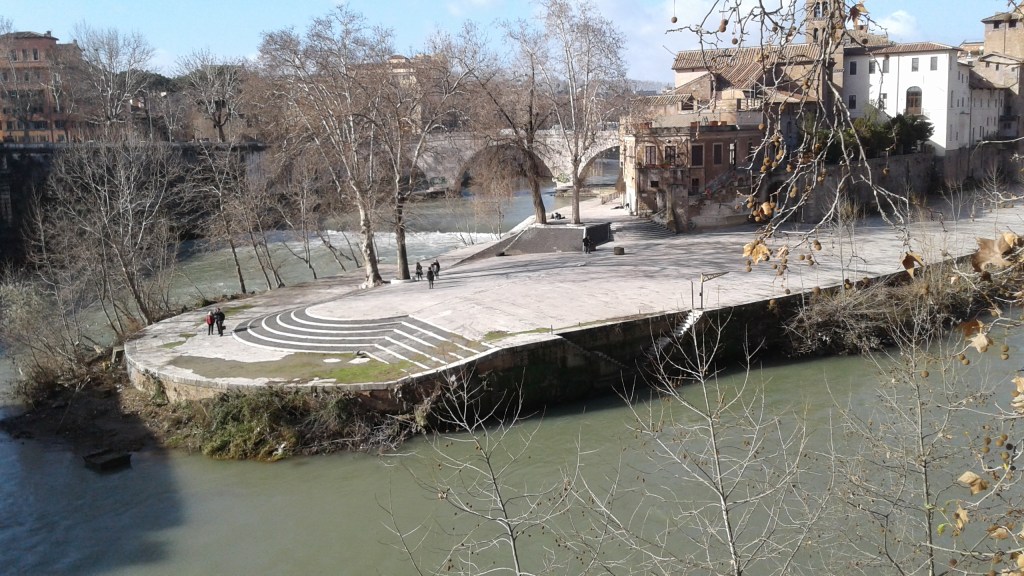
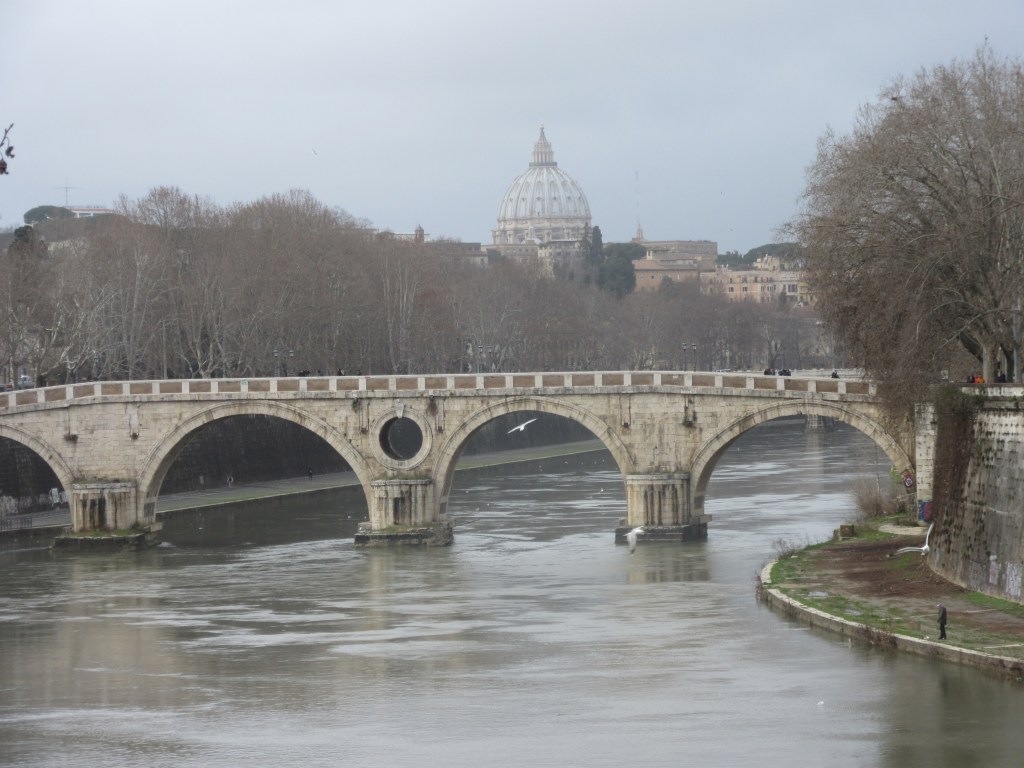
We wandered back through narrow streets, cooler now that the heat of the middle of the day had faded, passing Largo Argentina again, down Via Arenula and onto the Ponte Garibaldi. The views from this bridge are beautiful. Downstream you can see the Isola Tiberina and the Fatebenefratelli hospital, and upstream is the famous Ponte Sisto, with the dome of St Peter’s in the distance. The Ponte Sisto is a pedestrian bridge constructed between 1473 and 1479, reusing the foundations of an earlier Roman bridge.
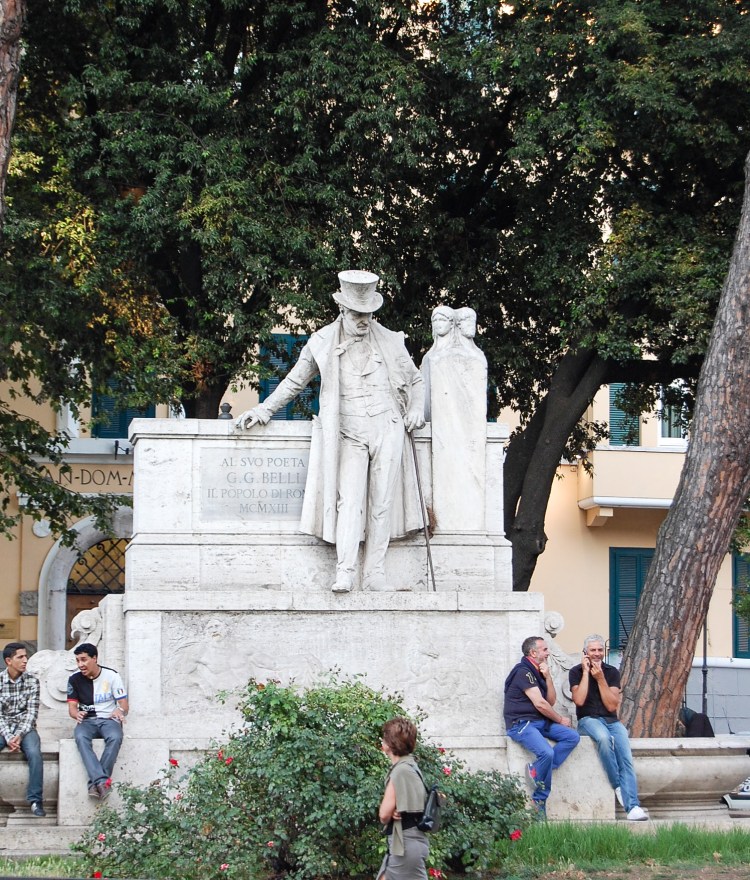
Across the river and just on the Trastervere side is an iconic statue in white marble that looks down on passers-by and pedestrians walking by or making themselves comfortable on the lower ledges of the plinth. This is a monument to Guiseppe Gioachino Belli, a 19th century poet who wrote mainly in the Roman dialect. On the lower parts of the plinth are depictions of Roman history in the form of the she-wolf suckling Romulus and Remus and a Neptune-like figure representing the River Tevere. Belli was originally holding a wooden walking stick but this was repeatedly stolen and the current one is made of iron.
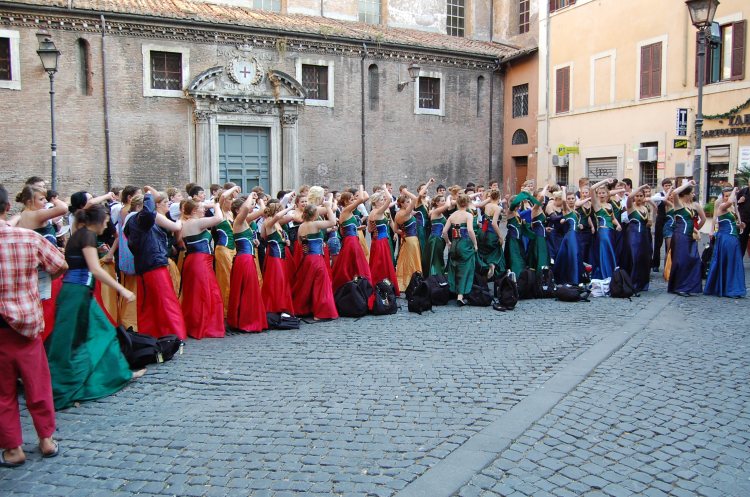
As we crossed Viale Trastervere on our way to our favourite Enoteca, or wine bar, we heard sounds of singing and following the music came across a choir rehearsing their repertoire. Not only that but with surprise we recognised their costumes as being like South African flags! They were a youth choir that had taken just part in a European competition for choirs.
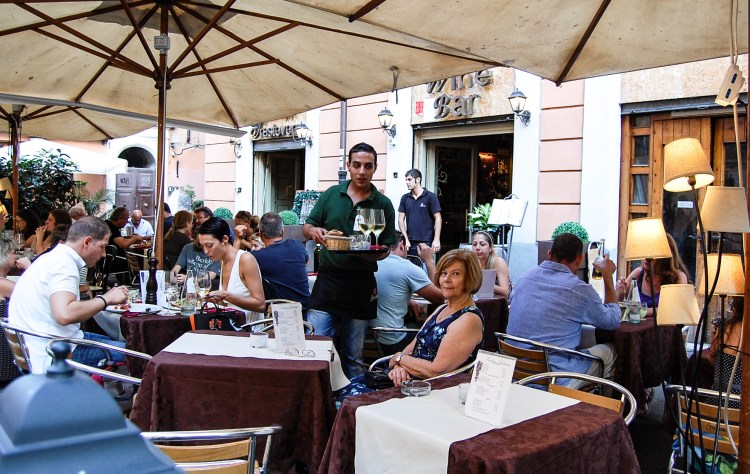
Finally we made it to the Enoteca and relaxed under the umbrellas with a welcome glass of wine with some salumi and formaggio.
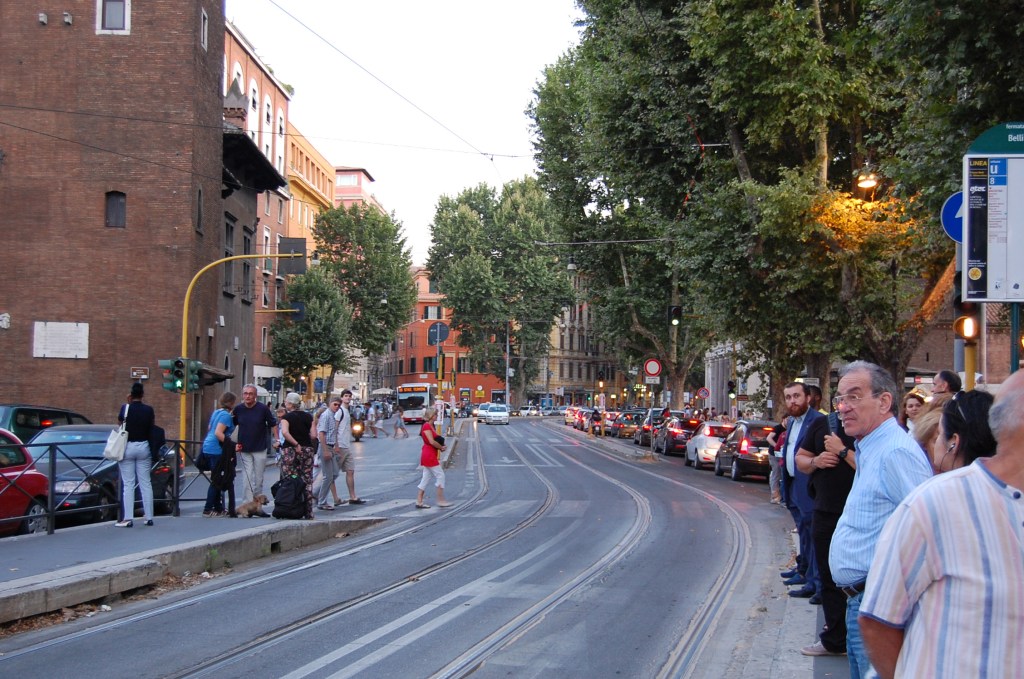
Then back to the tram stop on Viale Trastevere to wait for the number 8 to Casaletto and home.
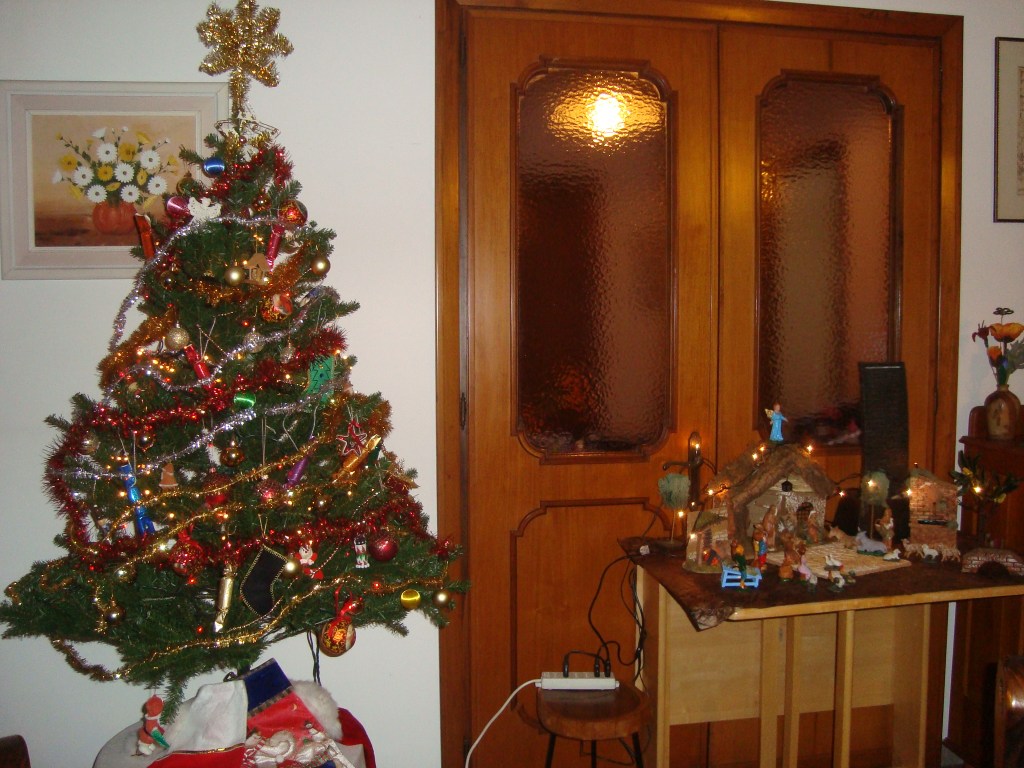
The rest of the year passed in a whirl with trips back to South Africa to take ownership of the house and work trips for Kev, including a wonderful trip to San Franscico that I was able to go on too. That brought us to our last Christmas in Rome.
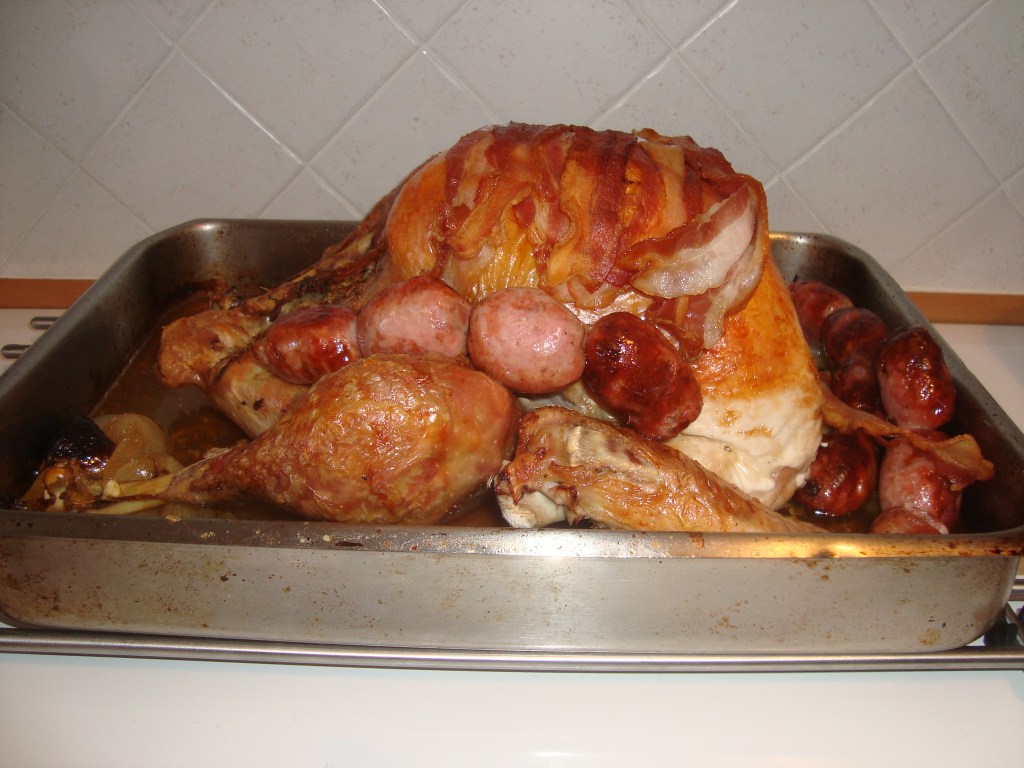
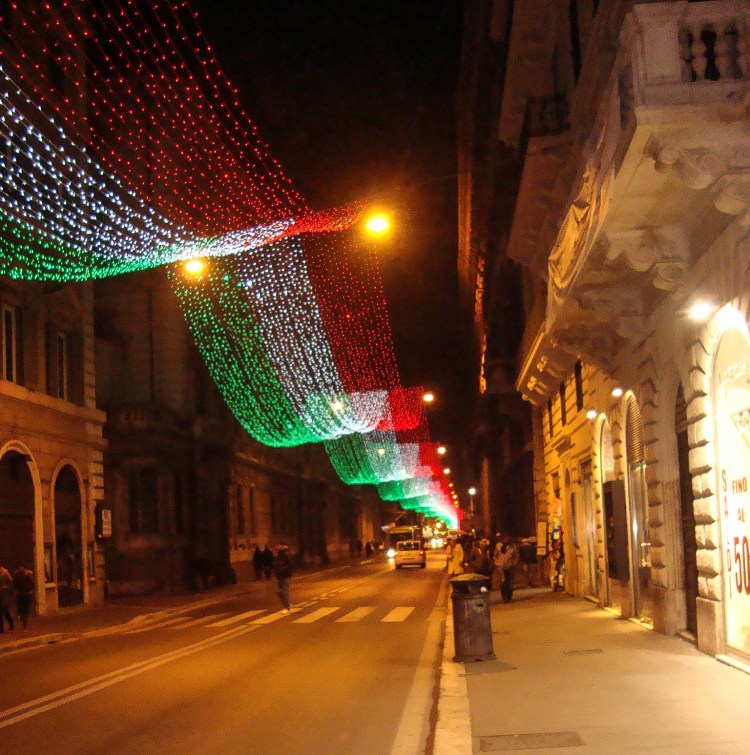
After New Year the serious sorting out and packing started as the shipping company was scheduled to collect our consignment before the end of the month. This meant that we had to spend a few nights in a hotel close to FAO for our last days there, then we moved out to Parco Leonardo in Fiumicino to stay with our daughter, Tanya, and her husband, Antonio, for the remaining time before our flight back to Cape Town.
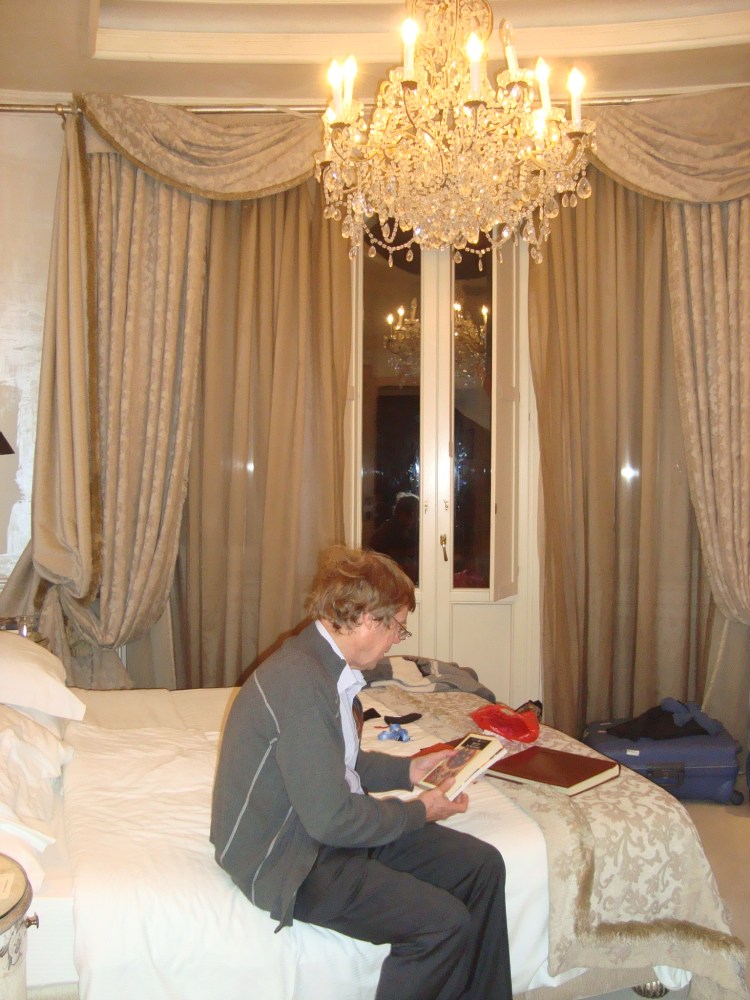
The hotel we stayed in near FAO was the Hotel San Anselmo, which is located in a large villa on the Aventino Hill opposite the Collegio Sant’Anselmo, an international Benedictine college.
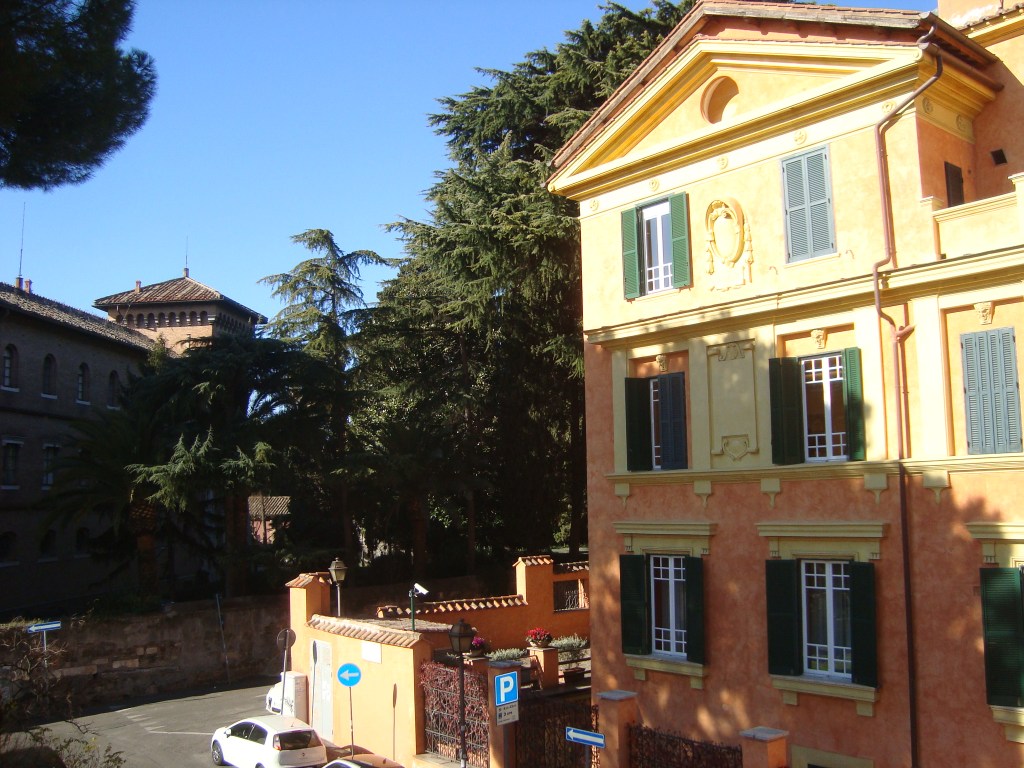
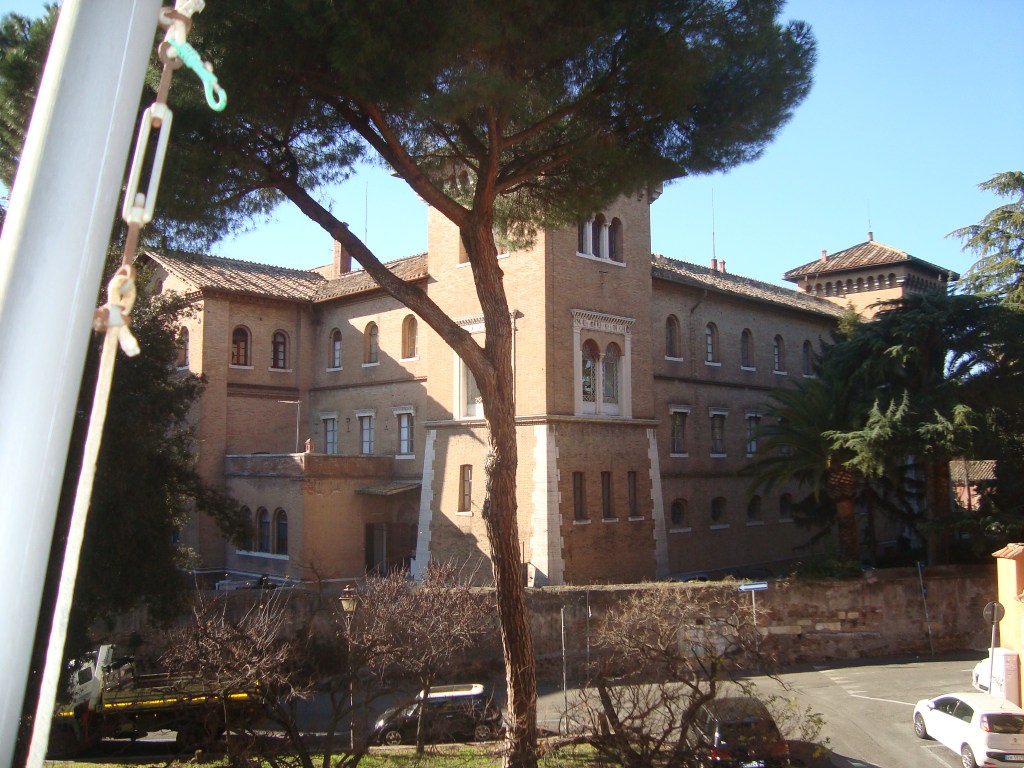
The rooms in the Hotel are beautifully decorated but definitely rather ornate for our taste. It was a hotel recommended to visitors to FAO so we knew what a lovely, quiet place it is and it gave us a few days of luxury before going back to reality.
As we prepared to move out to Parco Leonardo, the weather seemed to turn against us and a heavy snowfall (by Rome standards!) made travelling around the city somewhat hazardous, but it did look beautiful in the morning from Tanya and Antonio’s terrazzo.
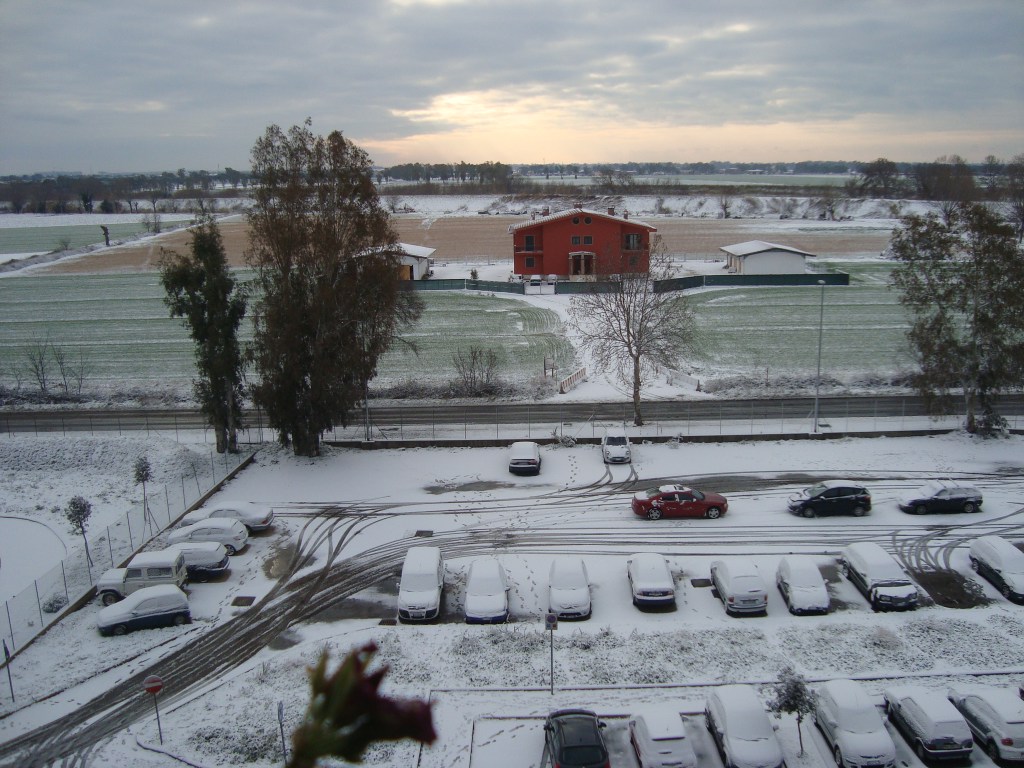
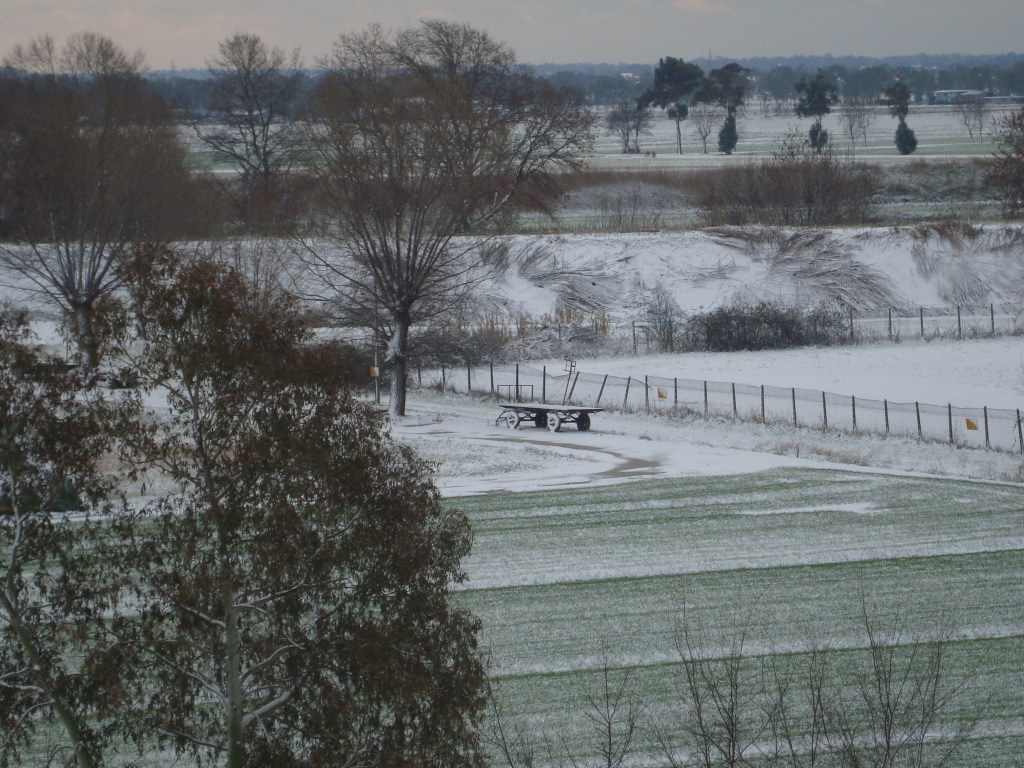
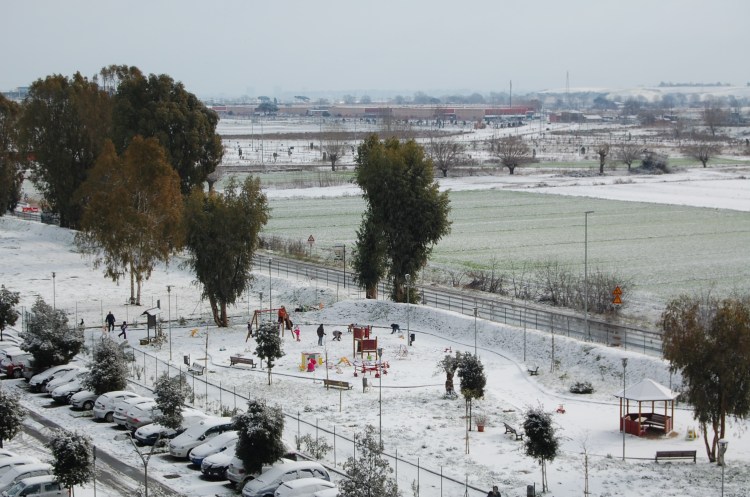
Snowy views from Tanya and Antonio’s terrazzo looking east towards the River Tevere, and children braving the cold in the playground below.
Although we would no longer live in Rome, it would by no means be the last time we were in Rome. Rome will always be a part of our lives – sixteen years is not an insignificant period of our lives and we always look forward to returning.

