Day 3 brought us to the beautiful city of Boston, Massachusetts. We did not want to do an organised tour as we had done on the previous cruise to India and Singapore, as we figured it would be easier in the US and Canada because of language. So we set off to explore on our own as soon as we were allowed ashore.
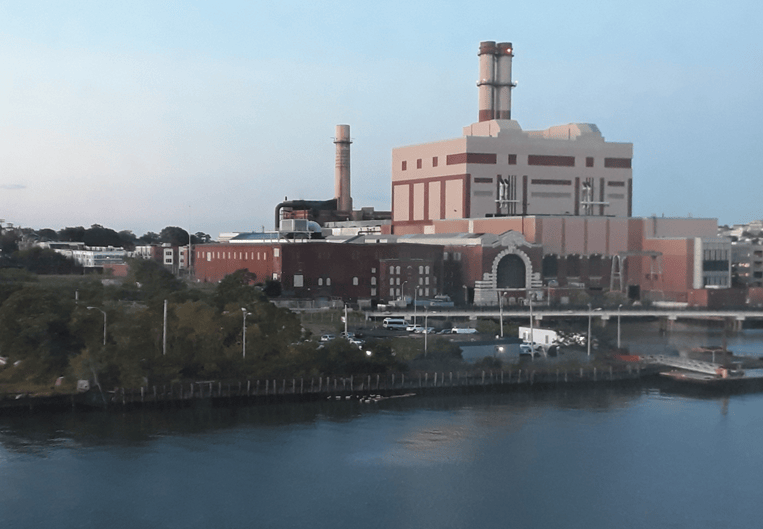
We wanted to visit Harvard, which is just the other side of the Charles River and we found that it was easy to get to by public transport. Once we were allowed off the ship we walked to the Metro (MBTA) station where we caught a train to Cambridge. On the way we were discussing what to do on the way back and a fellow passenger overheard our conversation. She suggested that we get off just before we crossed the River Charles and walk through Beacon Hill to Boston Public Gardens and Boston Common. So we had a good idea of what our plan for the day was.
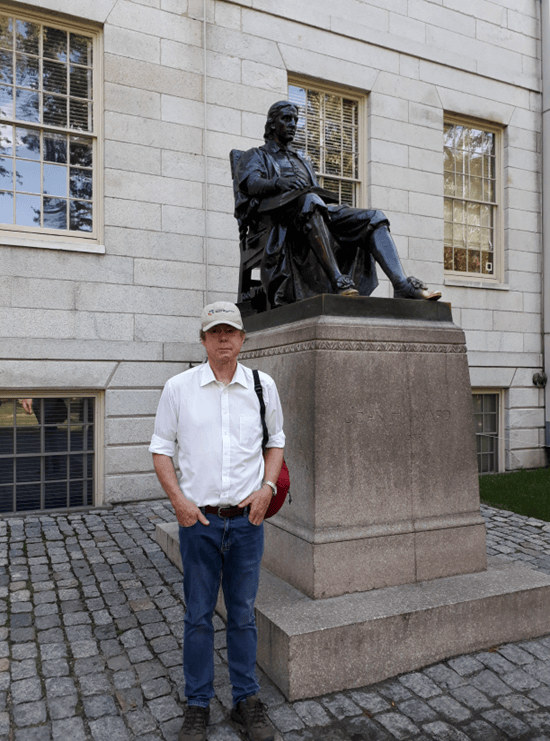
We got off the MBTA at the Harvard stop and started to wander around the campus, starting in Harvard Yard, where the statue of John Harvard is found. His deathbed wish was for the establishment of a College and he left money and his scholarly library for the founding of the College.
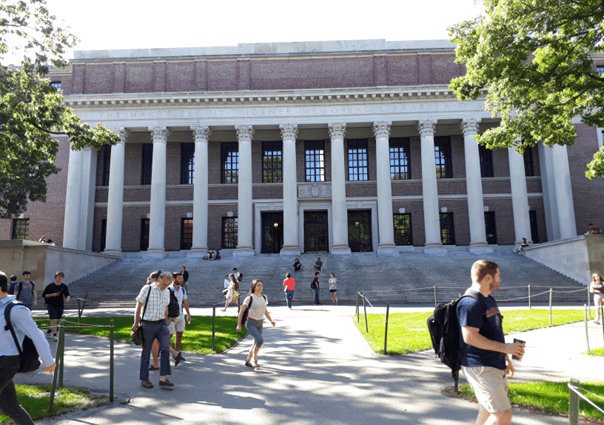
Fortunately for late September, the weather was beautiful and warm and we spent a few hours exploring the extensive campus. This is the Widener Library, which houses some 3.5 million books and is the main library in the Harvard Library System. It was built by Eleanor Elkins Widener in memory of her son, Harry Elkins Widener, who was a graduate of Harvard and a book collector. In 1912 he died in the sinking of the Titianic.
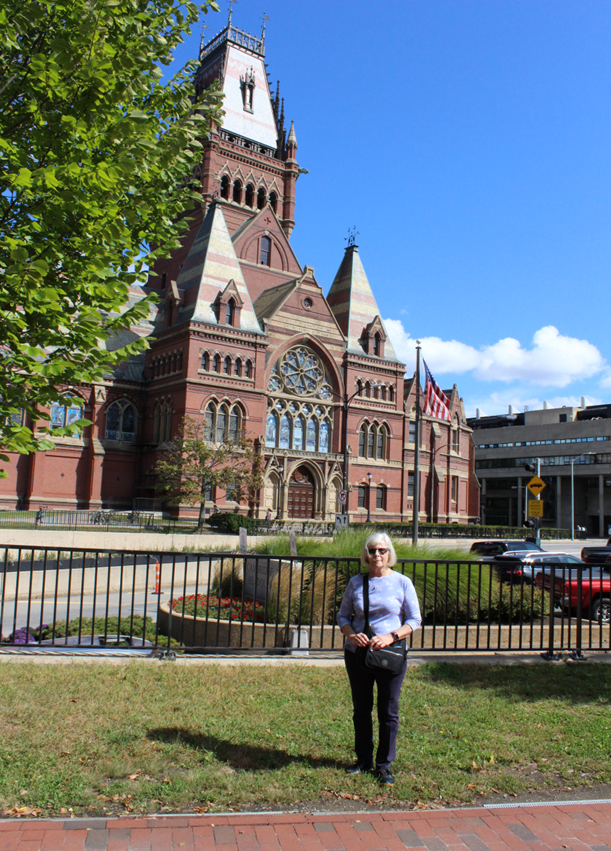
Across the road from Harvard yard is the Memorial Hall. This High Victorian Gothic building was built between 1865 and 1868, in memory of Harvard men who fought for the Union in the American Civil War.
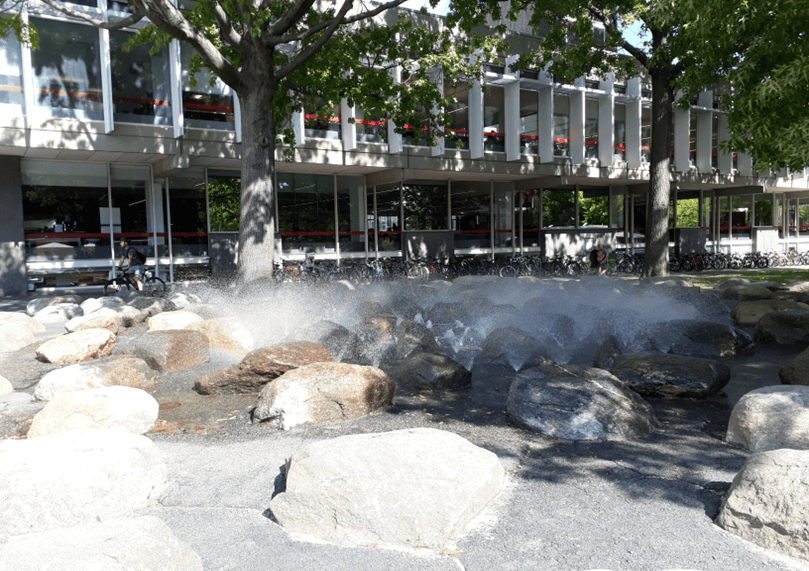
The Tanner Fountain in the Plaza outside the Science Centre consist of more than 150 granite boulders laid in concentric circles over existing roads and pathways, with water coming from the centre of the circle.
Before heading back on the MBTA to continue our walking tour of Boston, we had a welcome break for coffee and a bite to eat.
Heading back towards Boston on the MBTA, we got off at the Kendal/MIT stop and began our walk by crossing the Charles River on the Longfellow Bridge.
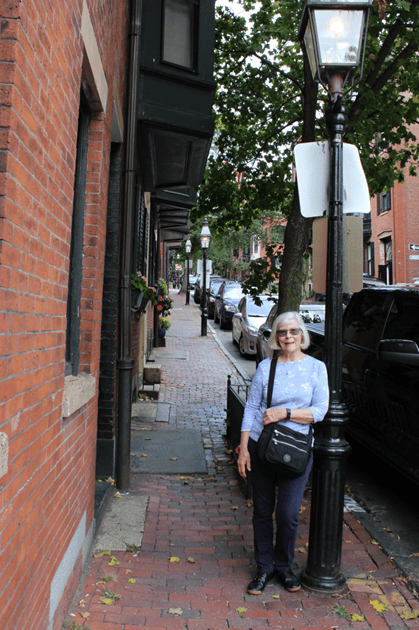
Just across the river is the upmarket suburb of Beacon Hill, with narrow gaslight streets and picturesque Victorian brick row houses.
Further down Charles Street, the road passes through Boston Public Gardens on the left and Boston Common on the right. The Garden was established in 1837 and was the first public garden to be created in America. The Common had been established for much longer, first coming into use in 1634, as a pastoral space with walkways for cross town travel.
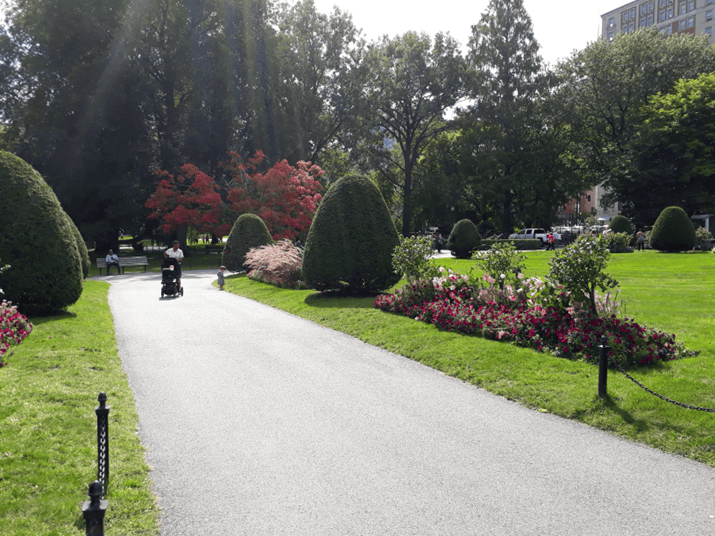
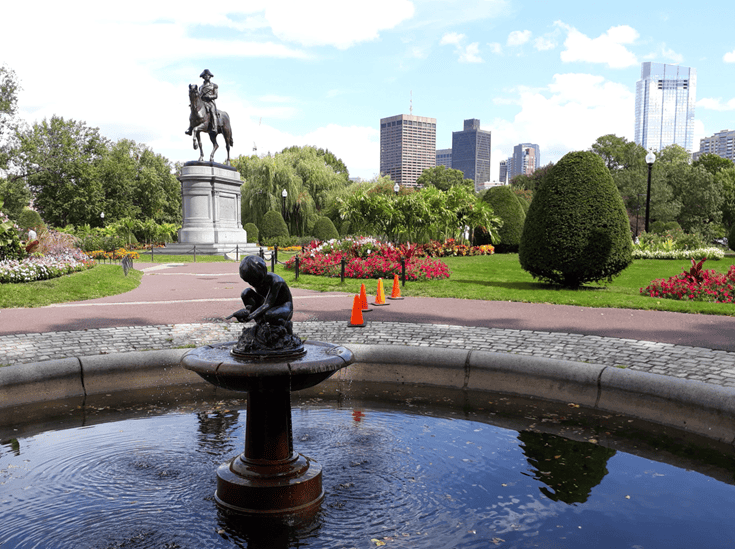
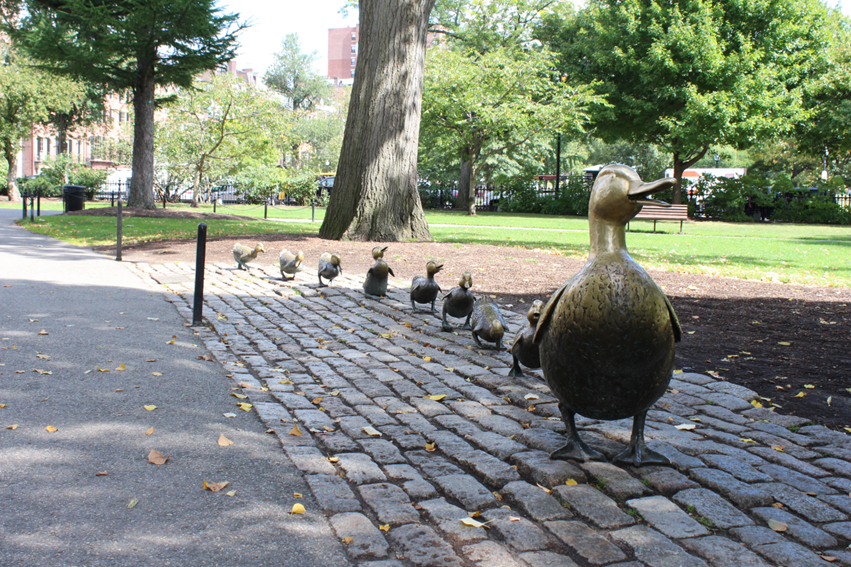
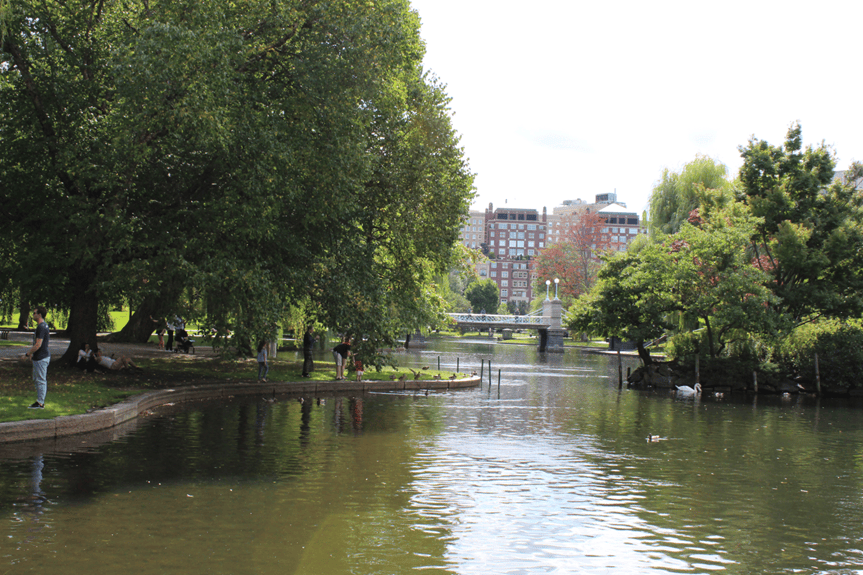
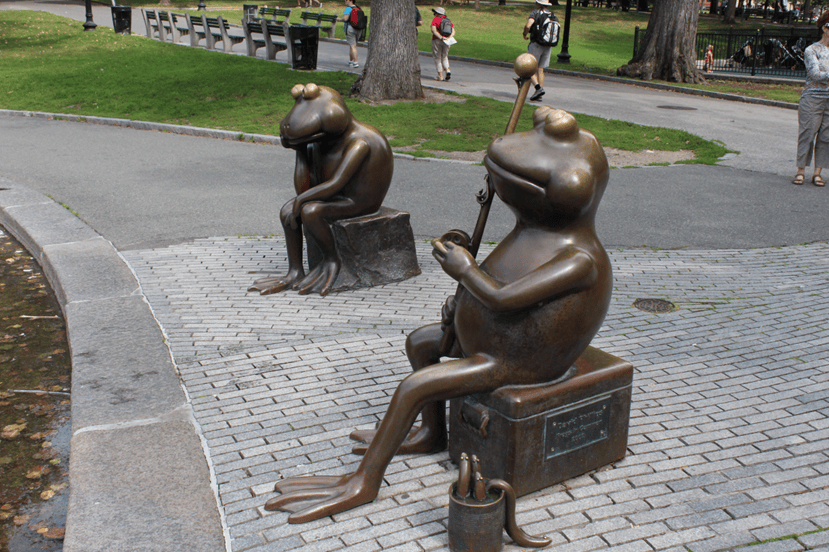
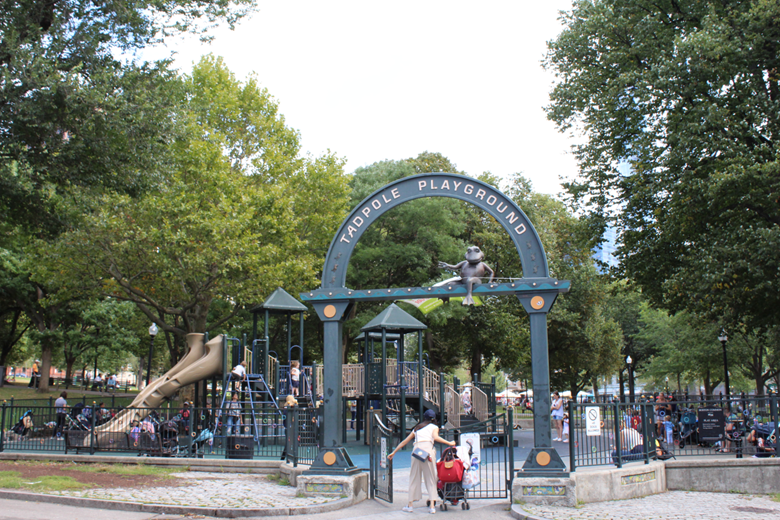
Boston Common, on the other side of Charles Street, is home to Frog Pond, which becomes a skating rink in winter.
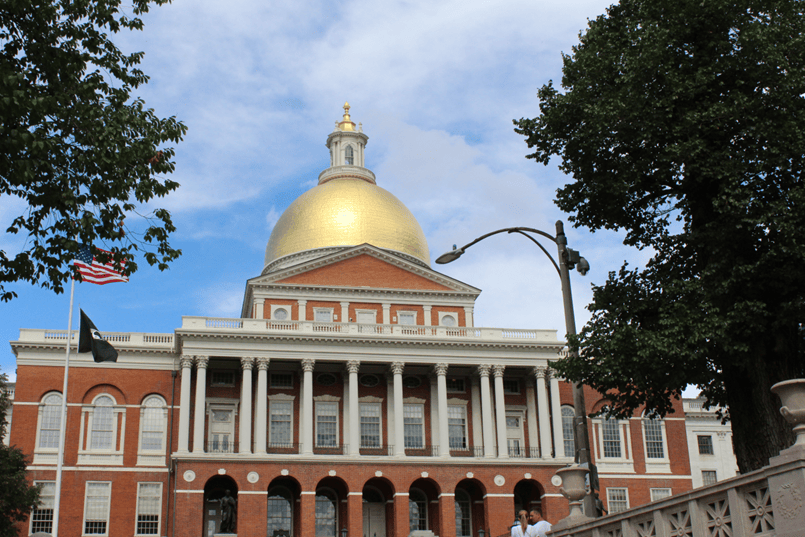
Overlooking Boston Common is the Massachusetts State House, the seat of government for the Commonwealth of Massachusetts. With its red brick, white columns and gold dome, it is a striking .example of Federal architecture. It was completed in 1798 but has been added to since then, particularly in 1895 and 1917, when the east and west wings were added.
From the visitors centre on Boston Common, we followed an abbreviated version of the Freedom Trail downhill past several historic sites ending up at Faneuil Hall and Quincy Market, where we had a welcome lunch break.
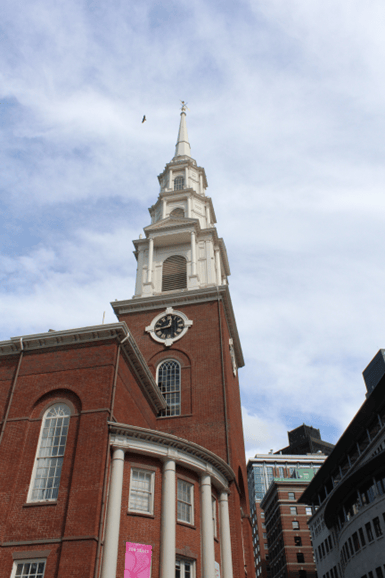
First stop on the Freedom Trail was the Park Street church, which held the first Sunday school in the US in1818 and where abolitionist William Lloyd Garrison made his first anti-slavery speech in 1829.
Next to the church is the Granary Burial Ground, where several notable historic figures are buried, including Paul Revere and Samuel Adams.
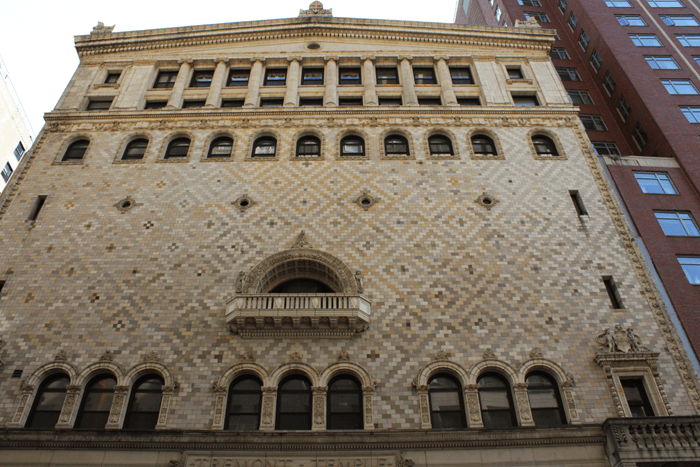
Opposite the Granary Burial Ground is a rather spectacular church – the Tremont Temple Baptist Church. It is a multi-storied building opened in 1896, in Rennaisance Revival style, originally designed to have shops on the ground floor and also housing an auditorium that has been used at various times to show films and theatrical productions.
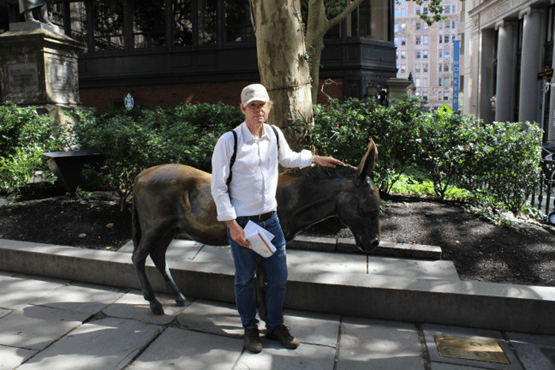
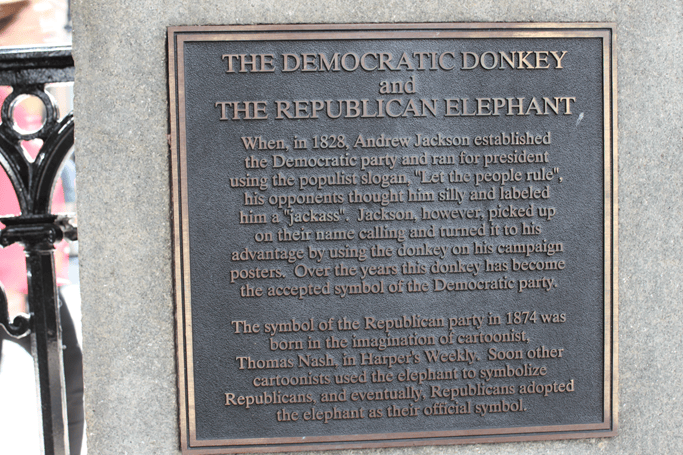
Turning into School street, we went past the Boston Latin School, where Benjamin Franklin went to school. Next door to the school is the old City Hall and in the grounds outside it is a rather unusual bronze statue of a donkey. This is the Democratic donkey – symbol of the Democratic Party in the US. It was brought to Boston from Italy and installed outside the Old City Hall in 1998. If you look closely at the photo you can see that the donkey is staring intently at two footprints which contain the elephant symbol of the Republican party. A plaque nearby explains the significance of these symbols.
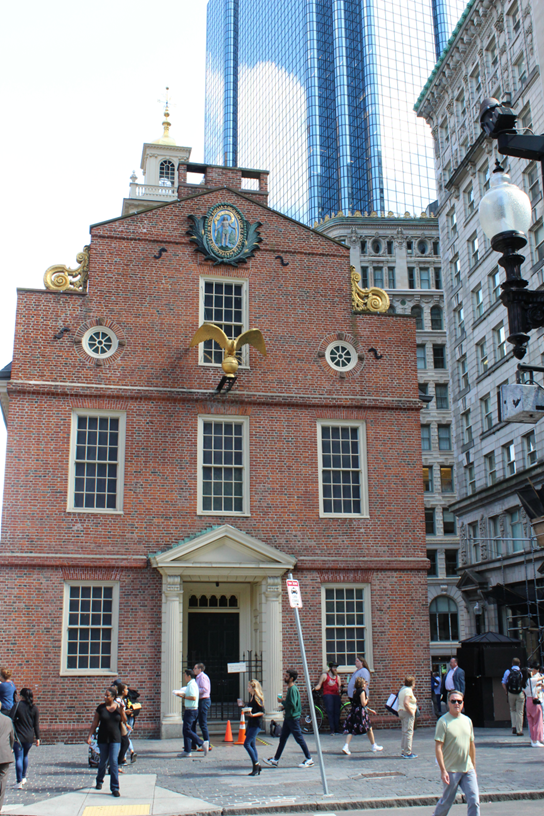
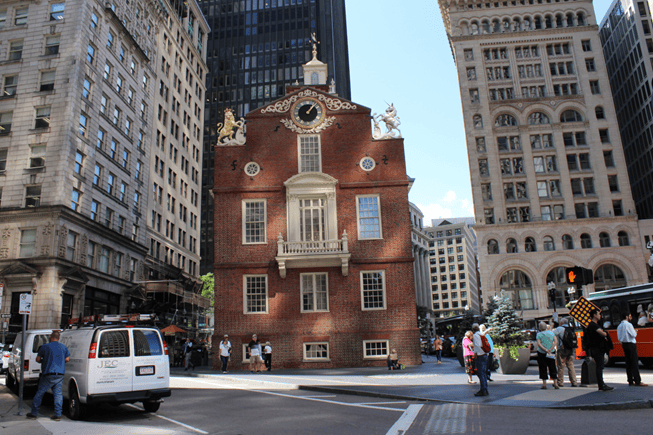
Next on the Freedom Trail was the Old State House, the oldest public building in Boston, built in 1713. In 1770 the Boston Massacre, in which British soldiers killed five men protesting the British occupation of Boston, took place outside the building and the first public reading of the Declaration of Independence in Boston was heard here in 1776.
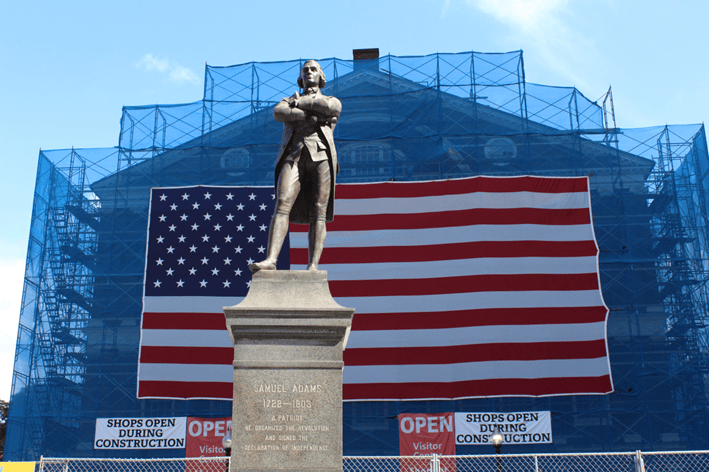
Our last stop on the Freedom Trail was Faneuil Hall – unfortunately under scaffolding when we visited but the statue of Samual Adams stood bolding against the American flag! Samuel Adams (1722-1803) was one of the Founding Fathers of the United States and second cousin to the President John Adams. He was a statesman and politician and one of the promotors of American Republicanism. He is reputed to have played a leading role in the events that led to the Boston Tea Party in 1773 but now perhaps his name is better remembered as a brand of beer!
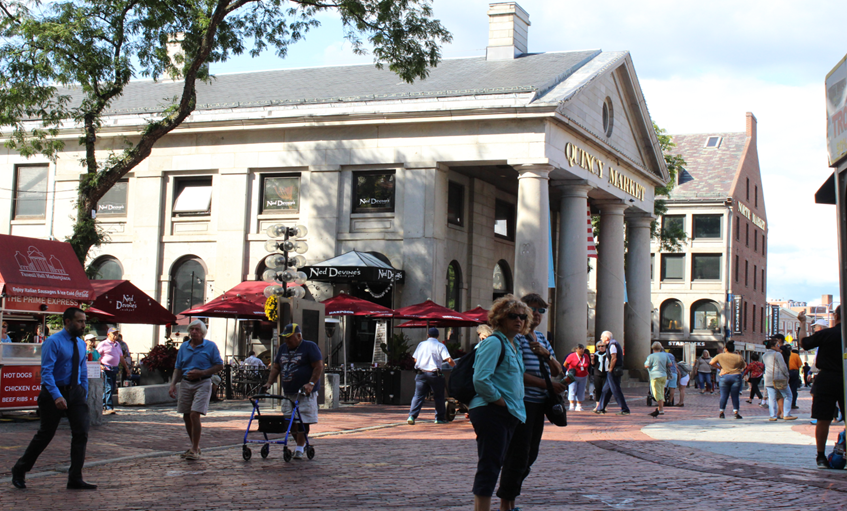
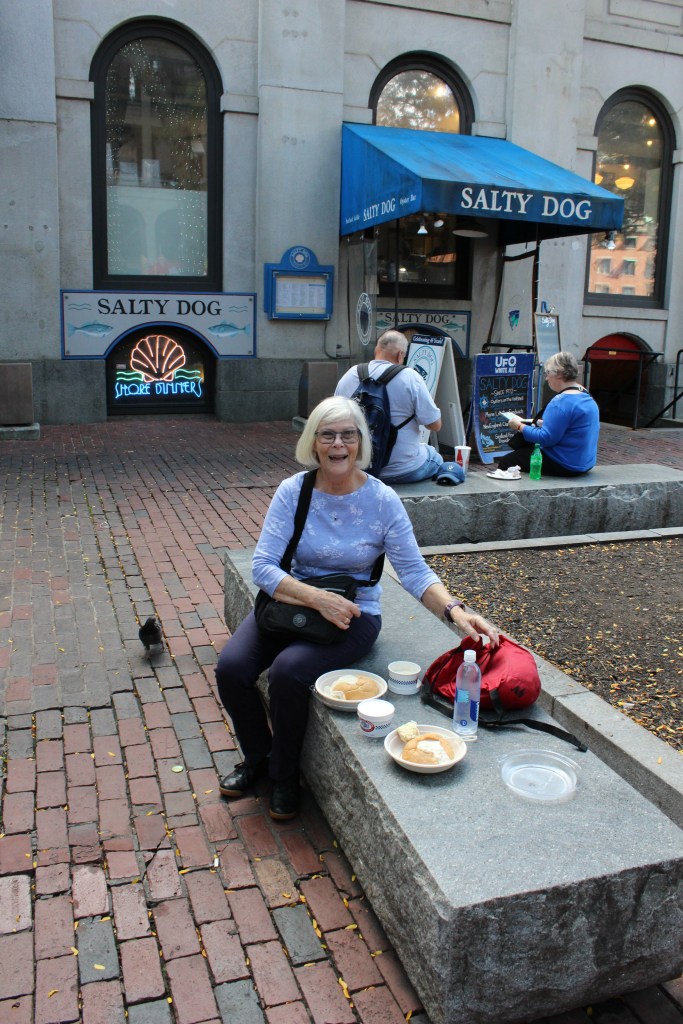
Quincy Market is also part of the original buildings making up Faneuil Marketplace and now houses a variety of stalls offering food, drinks and souvenirs. We bought our lunch (clam chowder bread bowl) from one of the stalls and took it to eat outside in the sun.
From there we wandered back along the road running parallel to the habour until we finally made it back onboard.
We were so exhausted that evening after a long day exploring Boston that we gave the show in the ship’s theatre a miss and retired early, anticipating another busy day in Portland, which was our next port of call the following morning. But not before we had had dinner in the main dining room on the ship, the Cosmopolitan Restaurant. There are two sittings in the dining room because, although it is very large, with just over 2000 passengers on board not everyone can be seated at once. To secure a place, passengers arrive at the entrance to the dining room at whichever time suits them best, checks in with the crew member on duty who asks if you want to sit at a table for two or if you are happy to share with others. If you share a table for 4 or 8 people you are likely to be seated fairly quickly but if you want a table for two you often have to wait quite a while, unless you have arrived very early. Even the tables for two are close together so it provides a good opportunity to get to know fellow passengers. We generally opted for a table for two and that is how we met an Australian couple, with whom we became friendly and often joined up with for meals during the rest of the cruise.
The Celebrity Summit is a medium sized cruise ship of 91 000 tons, with 11 decks. Even though 2000 passengers sounds a lot (plus 999 crew), the size of the ship means that you are not constantly bumping into people and that you actually have a lot of privacy, not just in your own cabin but can wander around the deck areas and lounges without feeling crowded. But you also have the chance to meet interesting people! There are also other restaurants and bars and of course the Celebrity Theatre. Here, again, there are two shows each evening so that everyone has a chance to see the show. That evening, though, we were happy to enjoy a more leisurely meal and get to bed early!

