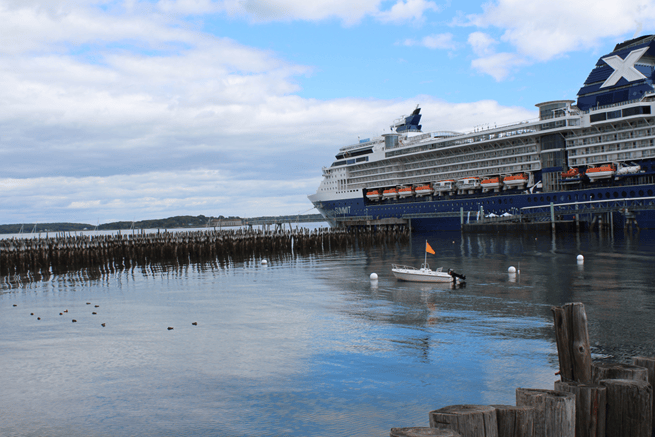
We arrived early the next morning as Portland is not far from Boston. Our ship docked alongside a floating pier at the Ocean Gateway Terminal close to Portland’s waterfront area. The harbour seemed to be full of old wooden dock pilings, which gave an old-world character to the otherwise rather ordinary waterfront.
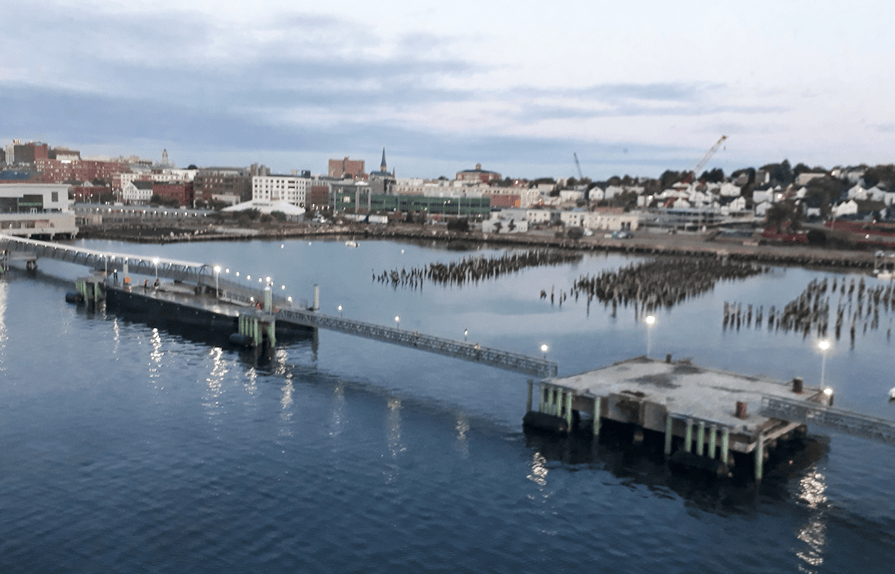
Portland is the most populated city in Maine and is found on a peninsula in Casco Bay about 100 miles north of Boston. The area around Portland was first settled by the British in the 17th century but suffered much damage during the American Revolution. In 1786 the town was named Portland and was rebuilt, becoming an important shipbuilding centre in the early 19th century. It was also a major fishing port.
Again, no tour was booked and once we were allowed to disembark, we set out to wander around and explore for ourselves.
We followed some of Portland’s history by walking some of the way along the Freedom Trail of Portland. Slaves escaping from the southern states of the US quite often came as stowaways on ships that docked in Portland before they joined one of the routes heading to Canada. Several Portland residents were anti-slavery activists and their homes and local churches were places of refuge for slaves. On our wandering around we came across the Wadsworth-Longfellow House and decided to make this out main visit in this city. The beautiful little garden is free to visit and provides a shaded, peaceful retreat from the city centre.
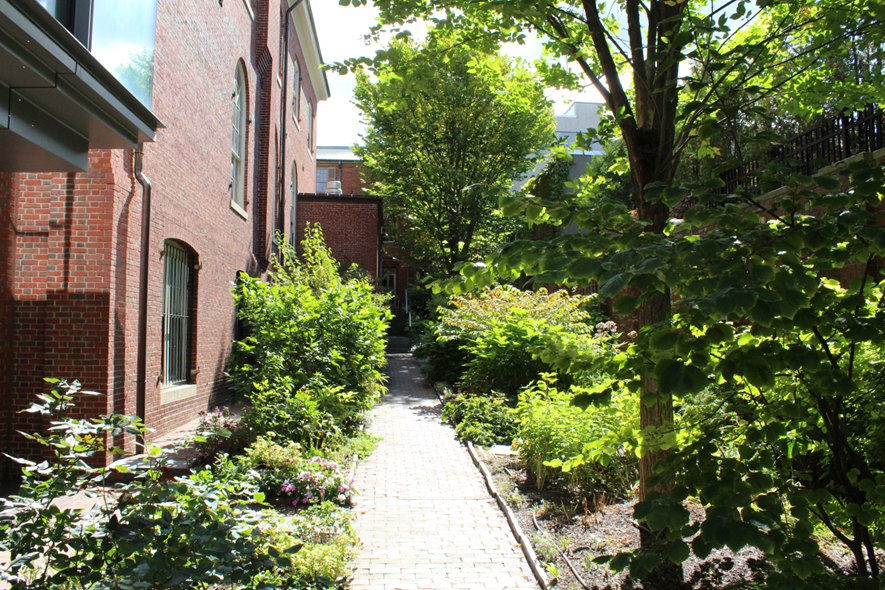
After we had wandered around the garden, we decided to find out more and opted to do a guided tour of the house, which was very interesting. The property and all its contents were bequeathed to the Maine Historical Society in 1901 and it has been restored to look as it did in 1851. This was the boyhood home of poet Henry Wadsworth Longfellow. Henry’s father was a lawyer and used the downstairs dining-living room as his law office, with a small waiting room next door. This is where Henry used to sit and write when he was still a child. His first poem was published in the Portland Gazette in 1820 when he was only 13. Below is the first stanza of the patriotic poem about the conflict between the colonialists and native North Americans.
Cold, cold is the north wind and rude is the blast
That sweeps like a hurricane loudly and fast,
As it moans through the tall waving pines lone and drear,
Sighs a requiem sad o’er the warrior’s bier.
From the Portland Gazette 1820
The Song of Hiawatha is Longfellow’s most well-known poem. It is an epic poem of 22 chapters and is based on oral traditions of Native North American people. Longfellow was friends with and had discussions with the Indian chief Kahge-ga-gah-bowh, who visited Longfellow’s home. The poem was and still is very popular but also attracted considerable controversy when it was published in 1855. Here are the first lines from the final chapter of the Song of Hiawatha, as he prepares to depart forever.
By the shore of Gitche Gumee,
By the shining Big-Sea-Water,
At the doorway of his wigwam,
In the pleasant Summer morning,
Hiawatha stood and waited.
All the air was full of freshness,
All the earth was bright and joyous,
And before him, through the sunshine,
Westward toward the neighboring forest
Passed in golden swarms the Ahmo,
Passed the bees, the honey-makers,
Burning, singing in the sunshine.
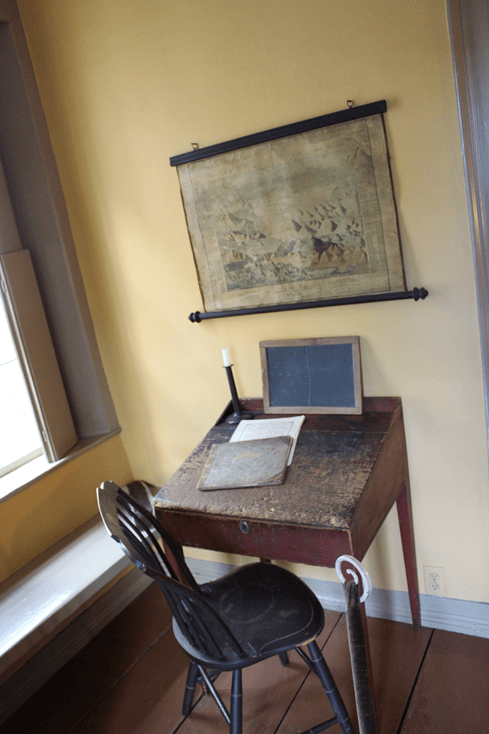
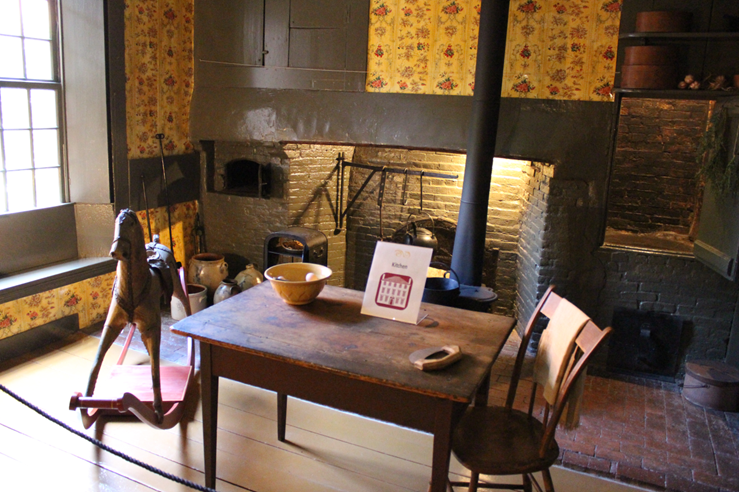
The visit to Longfellow’s house left us with lasting images and impression of life in 19th century Portland and small town America. In the mid 1800’s, the town experienced the Portland Rum Riot, a response to the banning of alcohol in the state of Maine and in 1863 the town was the site of one of the northernmost battles in the American Civil War, the Battle of Portland Habour. In 1866, during Independence Day celebrations, a fire started which destroyed most of the commercial centre, many churches and hundreds of homes. The rail link with Montreal in Canada, finished in 1853, proved important for many years, initially as it was an ice-free port accessible by ships in winter enabling Canadian exports to continue. In the early 20th century it was the port to which returning Canadian soldiers came to continue their northward journey by railroad. With much to think about and still fairly exhausted after our marathon walk around Boston, we headed back to the ship fairly early.
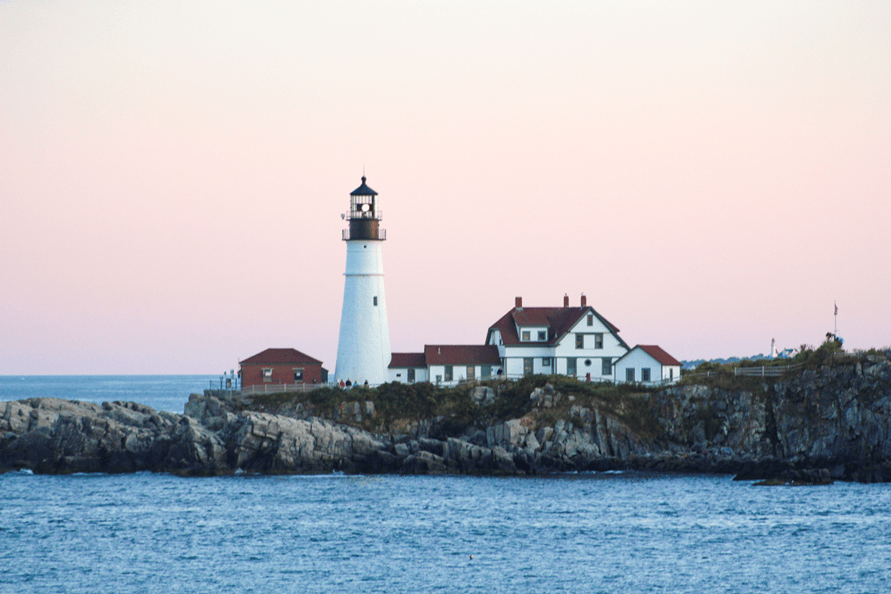
It was still light when we left Portland and we had beautiful views of Portland Head Light on Cape Elizabeth. It is the most photographed lighthouse in America! The Portland Head Light is the oldest lighthouse in Maine, and was completed in 1791, under the instruction of George Washington. Originally, whale oil lamps were used for illumination but a special type of aerobeacon is used now. The range of the light is 24 nautical miles and the light station is fully automated. The former lighthouse keeper’s house was built in 1891 and is now a museum.
That evening we went to a show by Domenick Allen, a Scottish musician who plays a variety of different instruments and once toured with the band Foreigner. He was incredibly talented and had an amazing voice. Then back to our cabin for a good night’s rest before an early morning start in Bar Harbour, our next port-of-call.

