Two stops are included in this blog – the first to the capital of Prince Edward Island and the second to Sydney, Cape Breton on the St Lawrence River side of Nova Scotia.
We only arrived in Charlottetown on Prince Edward Island in the late morning and were scheduled to leave again at 5.30 so we had not booked a tour and had decided to explore the city on our own.
Our first port of call was the cruise terminal, located on the quay close to the ship. One of the main reasons was to access their free wifi, as getting access to internet on board ship is exorbitantly expensive. So we relied on the free wifi access offered at most ports. We also had a look in Founders Hall, which was close by to see if there was any information that could be useful in guiding our walk.
However, as it was definitely lunchtime by now, we decided to head straight for a small restaurant we had heard good reports of and which was close to the port. It was a chilly and rainy day so a good meal of local food was very appealing. The restaurant was called the Water Prince Corner Shop and we were fortunate to get a table fairly quickly as it was obviously very popular. We went for the local options of lobster roll and Island blue mussels – both delicious. The name sounds a bit odd but is just a reflection of the fact that it stands on the corner of Water and Prince streets!
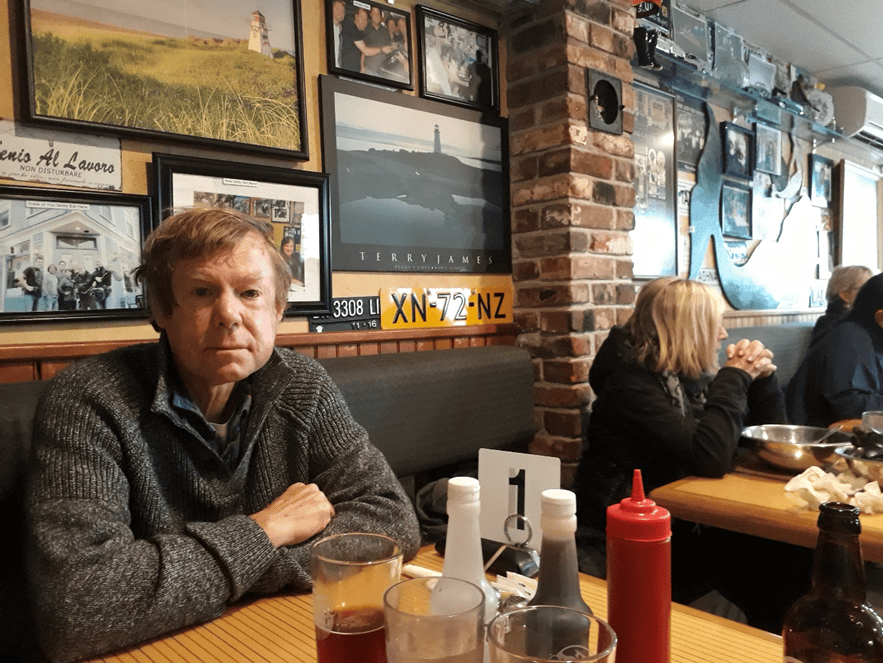
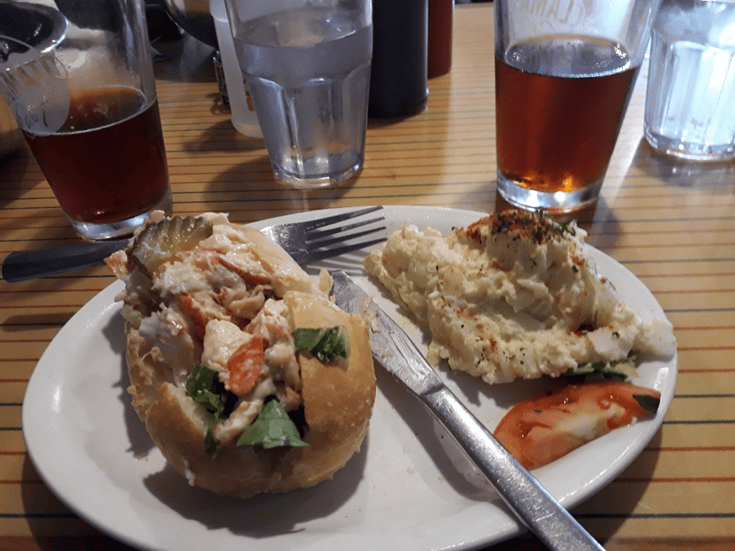
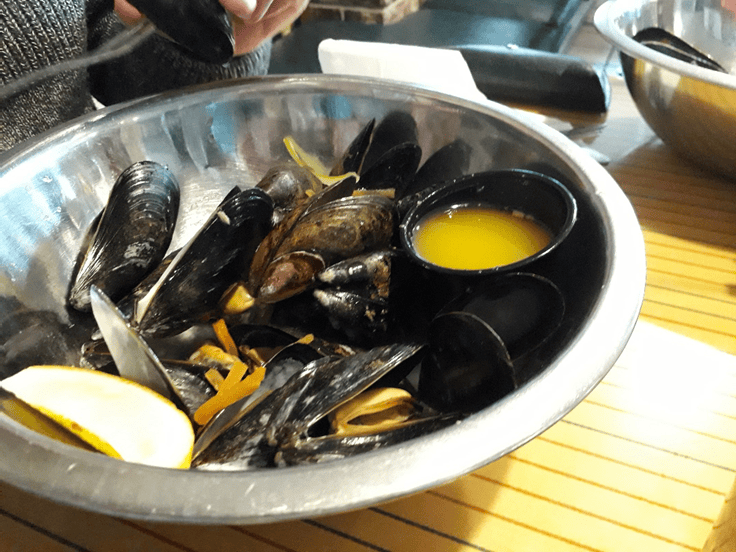
Lunch has arrived! Lobster roll and Island blue mussels
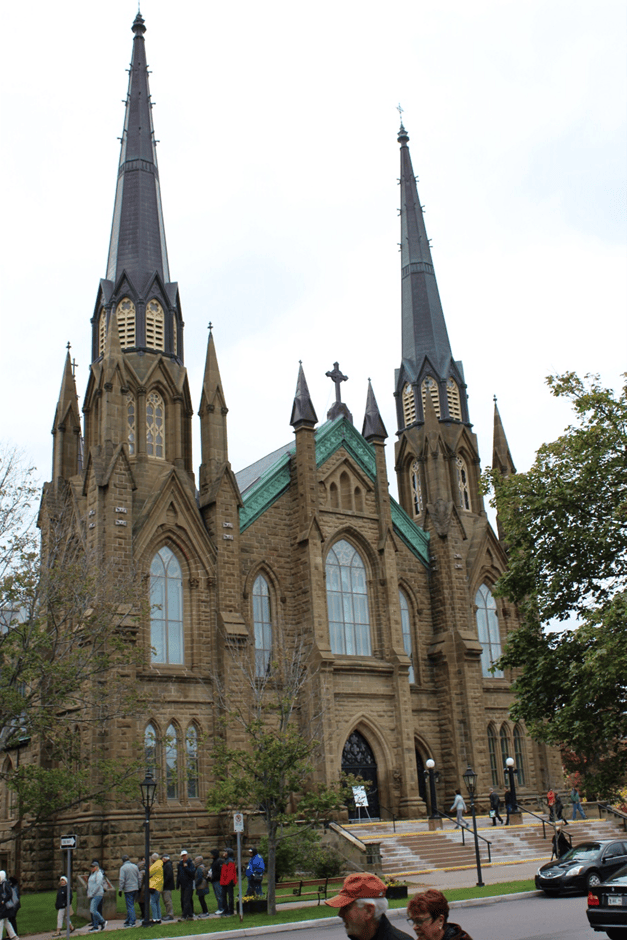
By the time we had finished the rain had eased off and we started to explore the town. We wandered up Great George street towards St Dunstan’s Basilica. This is a French Gothic church that was built of stone in 1913. Some of the stones were remains of an earlier church that had been destroyed by fire. It is also the only Roman Catholic cathedral in the Province of Prince Edward Island and one of the most elaborate churches, with its intricate spires.
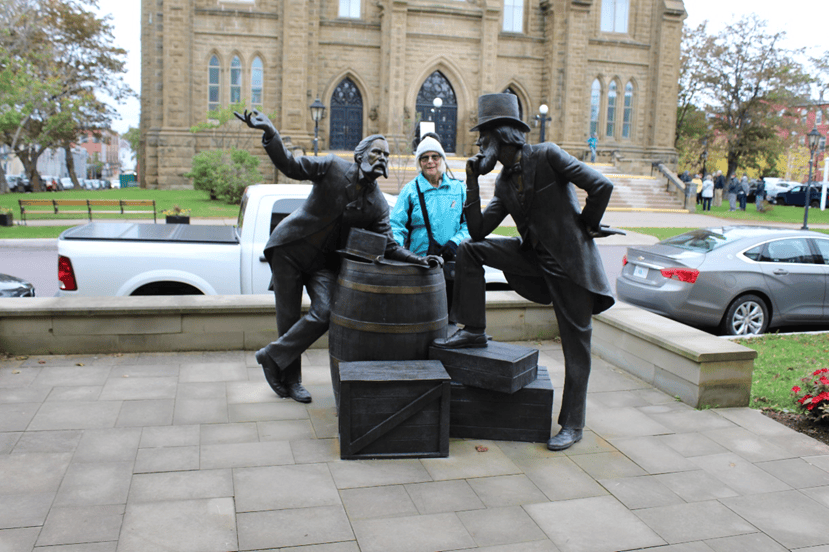
On the corner opposite the Basilica there is a statue of two fathers of the Confederation, both named John Hamilton Gray. It was erected in 2014.
Continuing on our walk, we went looking for Province House to see where the signing of the formation of the Confederation took place. Unfortunately it was closed for renovations but a notice outside indicated that there was an exhibition at the Confederation Centre Theatre nearby.
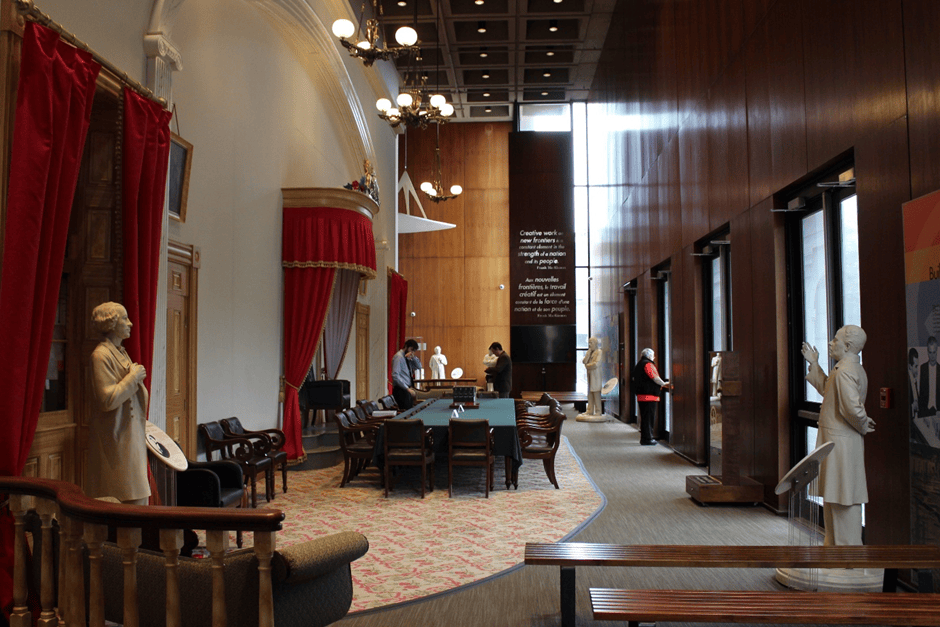
Prince Edward Island is best known for being the place where the journey to form the country of Canada began to take shape. In 1864, delegates from Nova Scotia, New Brunswick, Prince Edward Island and, at the last minute, the Province of Canada (Ontario and Quebec) met at Province House. The discussions were seen to be positive enough to hold further meetings in Quebec and London and eventually, in 1867, the Dominion of Canada was declared.
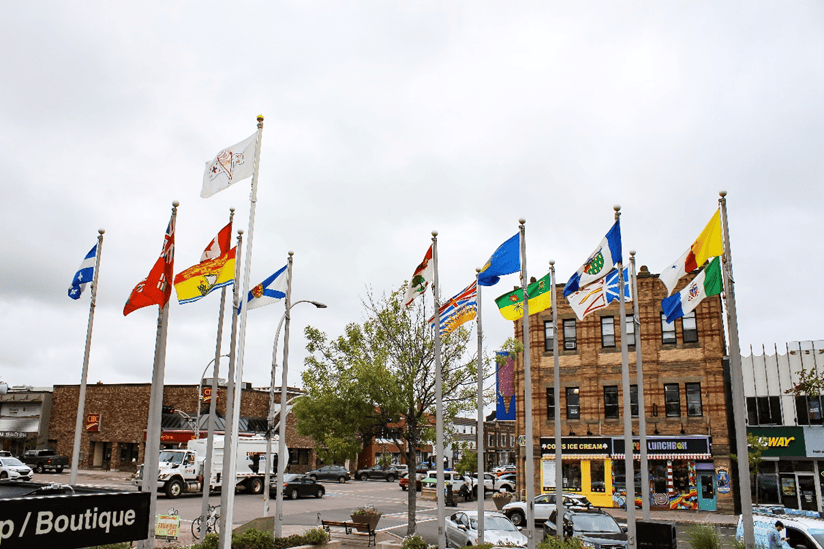
The exhibition in the Art Gallery section of the Centre was very interesting as was the video presentation about the event. On a terrace outside the building all the Confederation flags (and more) were flying, making a colourful splash against the grey skies.
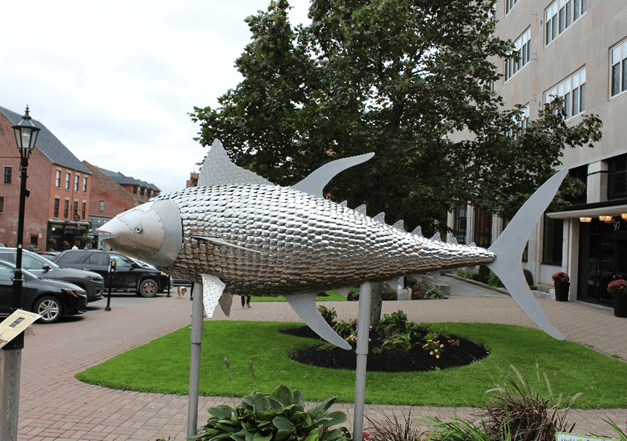
Just across the road there was a giant metal sculpture of a fish, called the Bluefin Bullet. It was made by a local Prince Edward Island artist, Gerald Beaulieu and the scales of the fish are made from overlapping stainless steel spoons.
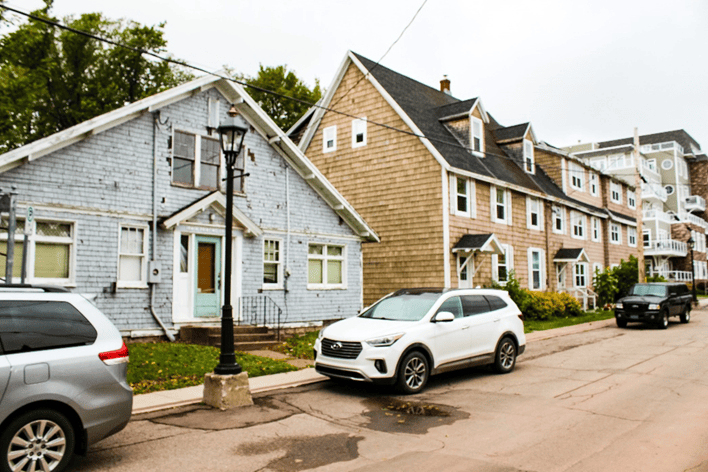
We then started to make our way to Victoria Park along streets with typical Prince Edward Island houses with wooden cladding. The weather was pretty chilly with rain in the air but it was interesting to see the different coloured houses lining the streets and to stretch our legs in the Park.
The site of the city was originally the landing place of French settlers in 1720 but by 1758 the British took control and deported the French settlers.
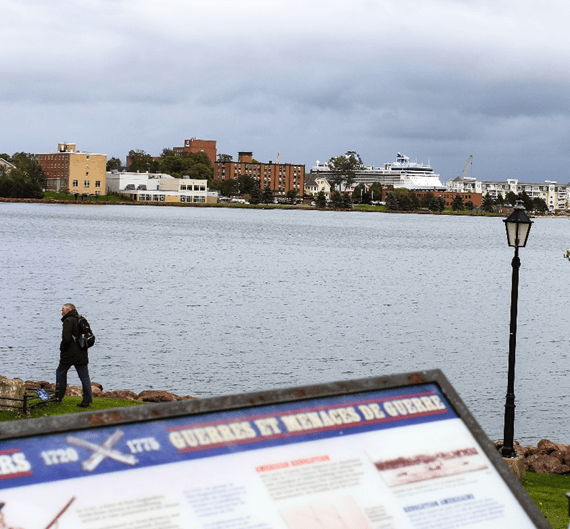
The park itself was named after Queen Victoria. Even in the rainy conditions it looked very pretty with tree-lined walks, tennis courts and sports fields. We walked along the Boardwalk as far as the Prince Edward Battery and Magazine, from where we could see the ship tied up to the quay in Charlottetown.
Back on board, we watched the evening departure from one of the top decks before getting ready for the evening’s entertainment. This was Liam Ryder, a vocalist-piano player singing and playing some old favourites.
Day 12 3October
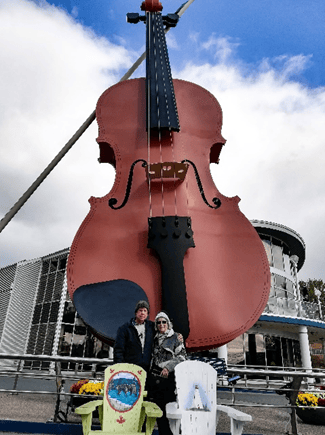
Just an overnight sail to Sydney on Cape Breton Island, which is part of Nova Scotia. We docked about 8am and had plenty of time till our walking tour at 1pm. We did go ashore during the morning and wandered around ourselves. On thing Sydney is famous for is the world’s largest fiddle, located on the dockside right next to our ship. It is about 50 feet tall and weighs about 10 tons!
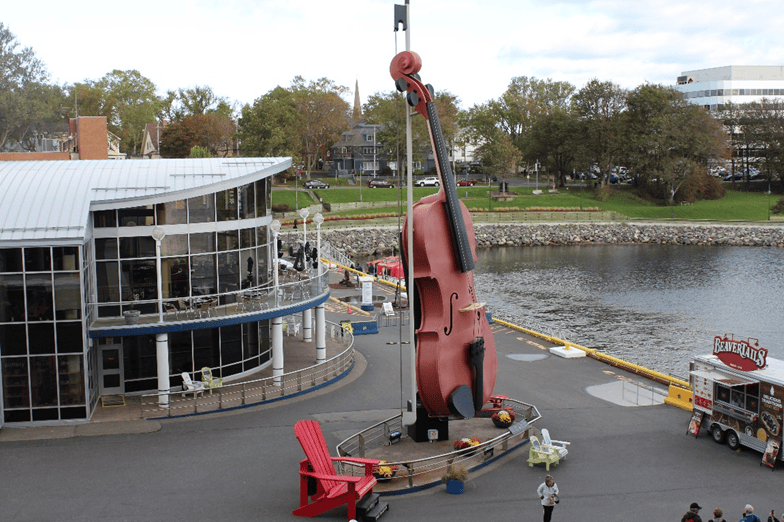
The Big Fiddle Market was housed in the Cruise Terminal so we looked around there and, as usual, made use of the free wifi. We wandered the Boardwalk next to the harbour all the way to Wentworth Park. This is a very pretty park with a lake and fountains in the lake – lots of ducks hoping to be fed! Lovely historic houses all around. On the way back we chose the city streets and came across a rather quaint little statue.
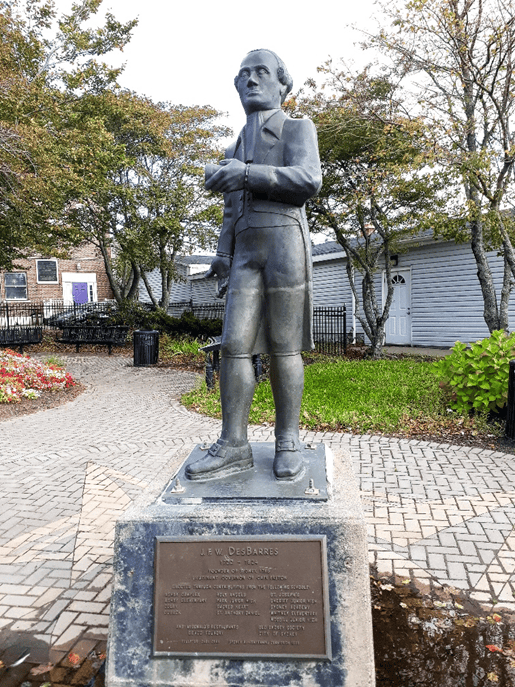
The statue is of a man called JFW DesBarres, who was Lieutenant Governor of Cape Breton from 1784 to 1787. He laid out the original plan of the capital, Sydney. As he was trained in military surveying and had been involved in surveying and charting the Gulf of St Lawrence and the approaches to Quebec, he was well equipped for the task.
Back at the harbour, we met up with the tour group and set off on our exploration of some of the historical sites of Sydney. Our guide, and others we met along the way, were all dressed in historical clothes of the 18th and 19th centuries. First stop was a small church – St Patrick’s Church and Museum. The church was originally built in 1828 as a Roman Catholic church. In the early decades of the 20th century many Lebanese and Syrian immigrants came to live in Sydney. Most of these immigrants were Maronites, one of the Eastern Rites of the Catholic Church, and they began to use St Patrick’s Church as their place of worship. The church continued until 1950, when the priest retired but in 1966 it became a museum as a means to preserve the church.
At the diagonally opposite corner of the block was another museum, the Jost Heritage House Museum. This house remained in the Jost family from 1836, when it was first purchased, until 1971. In the early 1900s, the house was enlarged by adding a second story. An 18th century kitchen has been recreated in the basement and the ground floor contains many items collected by local people that illustrate how life was lived in the 19th and early 20th centuries. The room set up as an apothecary shop is very interesting as is the Marine room, with exhibits of models of ships, including the local ferry, that called at the port of Sydney in days gone by.
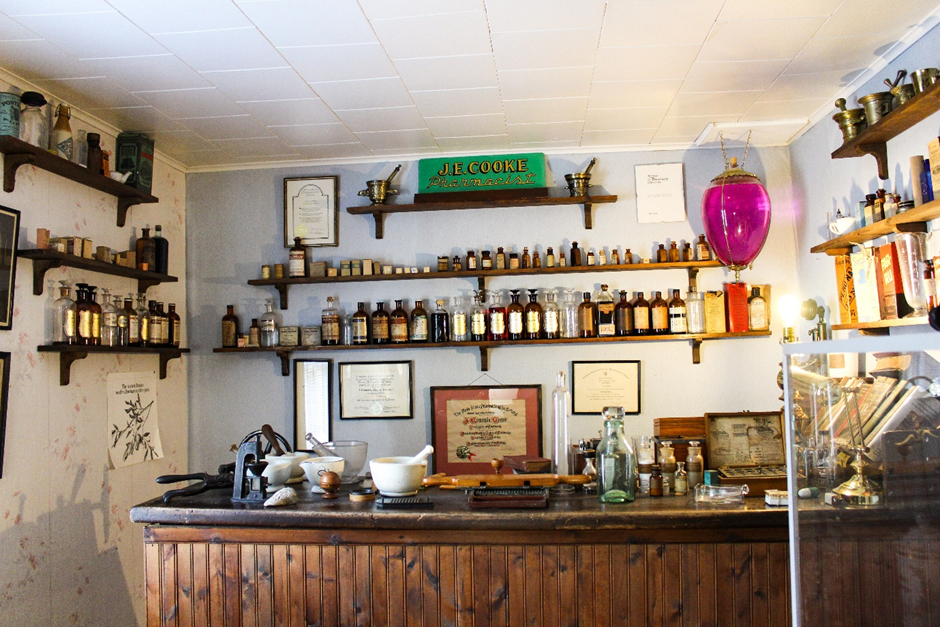
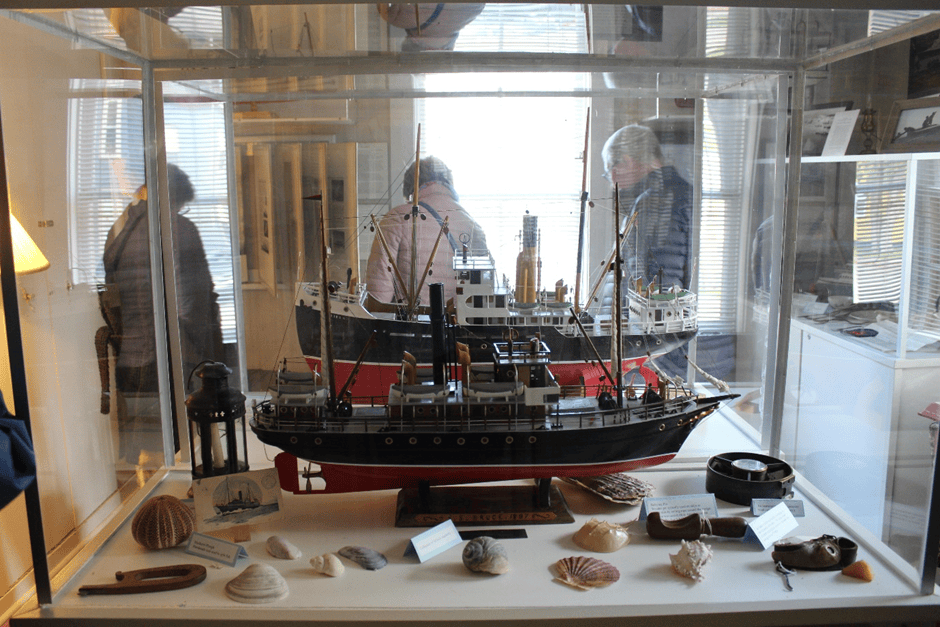
The next house we visited was Cossit House Museum diagonally across the road. The house was originally built in 1787 and is one of the oldest surviving houses in Sydney. The Reverend Ranna Cossit, an Anglican minister from New Hampshire, was given various incentives to move to Cape Breton Island in 1785 but on arrival he found nothing, not even the church, had been built. He eventually returned in 1787 and built the house at his own expense. He was accompanied by his wife, Thankful, who bore him 13 children but died in childbirth aged 46. Cossit himself became an influential contributor to Sydney’s social and political development. Unfortunately, in time, disputes between different factions involved in the administration of Cape Breton led to the Bishop of Halifax persuading him to leave the colony for fear that further scandal regarding Cossit’s political conflicts could damage the church.
Our guides told this tale of the hardships and difficulties of living in such an inhospitable environment. We also learned how to make and were invited to taste a drink made from pine and spruce needles, which was drunk to provide vitamin C in the diet. Needless to say it did not taste good!
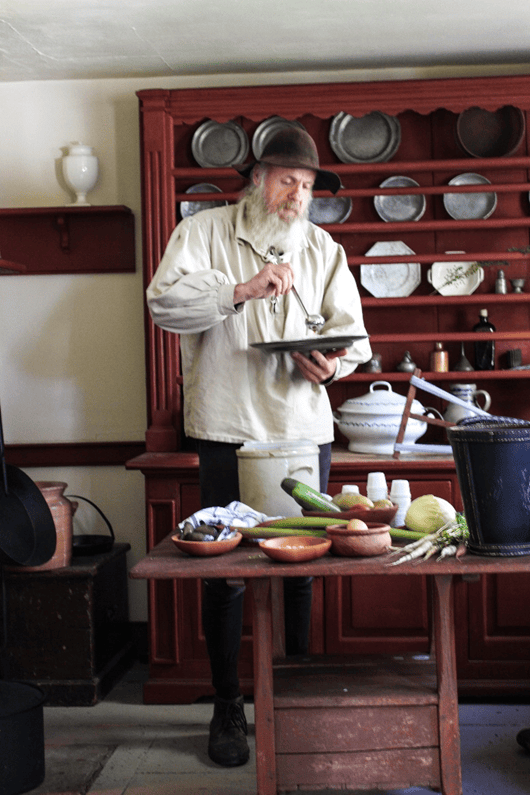
We were then taken a little further along the street to another church, St George’s Anglican Church, where we were entertained by our guide and two women from the Historical Society who told us, in very entertaining fashion, about the history of the church – about who visited the Church and who sat where, including the visit of the Queen Mother.
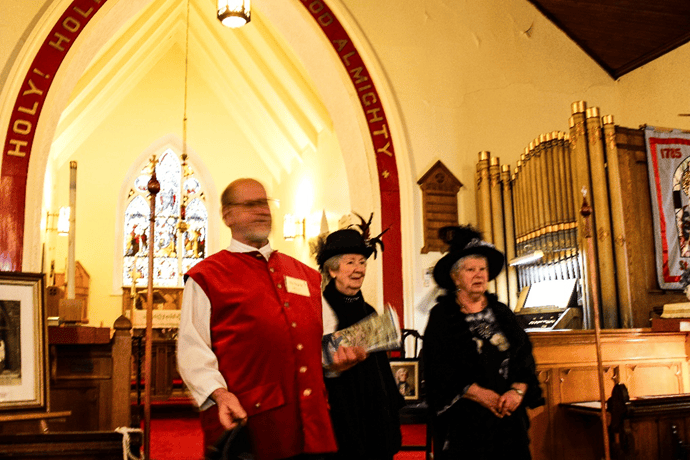
St George’s is the oldest Anglican Church in Cape Breton and it also served as a British garrison chapel. In that capacity it was granted a Royal Pew, which became the official place of worship for members of the Royal family – hence the Queen Mother’s place of honour on her visit.
Finally, we walked along to the Sydney Museum, which is the headquarters of the Old Sydney Society, whose members were the guides for our tour. We were treated to tea or coffee and delicious biscuits and given the recipe for the biscuits!
One slightly disappointing aspect was that the emphasis of the tour was on the history relating to the settlers on Cape Breton Island and very little about the indigenous inhabitants, mainly the Mi’kmaq Nation. The Mi’kmaq people relied heavily on fishing and hunting because the conditions for agriculture were not very favourable. This reliance on the sea brought them into early contact with the first explorers from Europe, including John Cabot, who reportedly visited the island in 1497. Over the next centuries, as European settlers became more and more active in Cape Breton, this did have a negative effect on the Mi’kmaq language and culture, although the indigenous peoples were able to adapt to some extent. One of the main problems for the Mi’kmaq people was that they did not permanently occupy a particular area of land because they fished on the coast during summer but moved inland to hunt later in the year, although by the late 18th century they had a more permanent settlement on the island. Today, the Mi’kmaq are recognised as one of the First Nations in Nova Scotia.
Before getting back on board, we took some more pictures of the Big Fiddle, as advised to do at this time when the crowds had dispersed and most people were queuing to get back to the ship.
A fairly early departure so we had time to relax before the evening dinner and entertainment, this time a magician by the name of Jason Bishop – remarkable illusionist.

