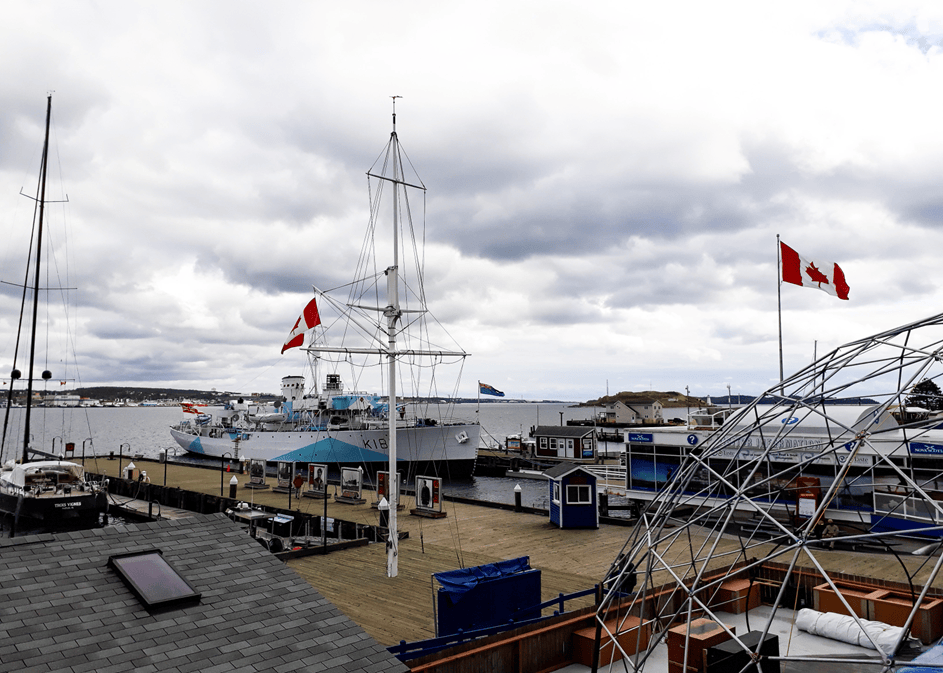
By Day 13, 4 October, the weather was beginning to change in the Maritime Provinces of Canada as we approached Halifax, our last port of call before heading back to Newark.
We docked in Halifax around 9.30am on a rather grey and drizzly day, which was also pretty chilly! We had tickets for the hop-on hop-off bus so were planning on our own tour of Halifax with a little help from the bus company. We were ready to disembark soon after arrival in Halifax and, as had become our custom, went straight to the Cruise ship terminal to check in to internet and catch up briefly with family.
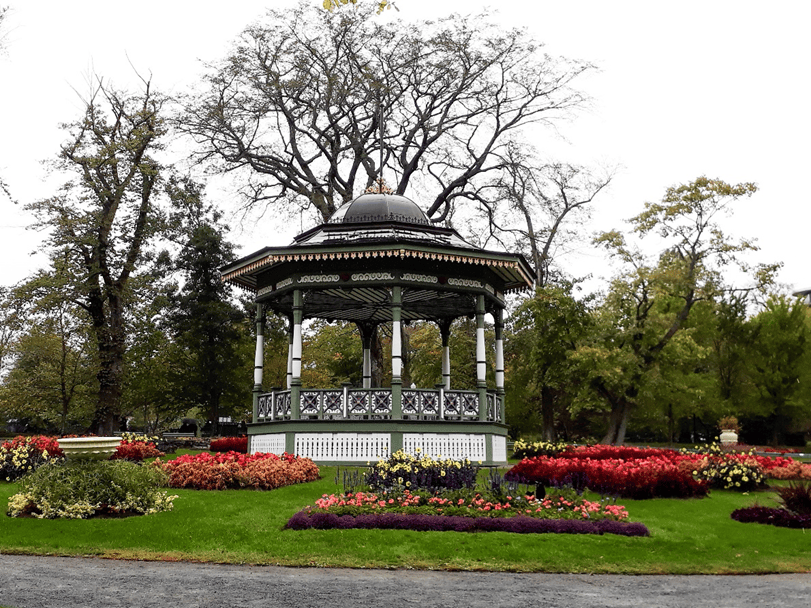
The first stop on the bus route was right outside the terminal building so we hopped on the bus and quickly looked at the route map provided by the company. We decided to skip the first few stops and continue on to stop 5, which brought us to the Public Gardens just north of the centre of Halifax. Although it was still raining a bit when we got off, it soon eased up at least enough for us to enjoy wandering around the gardens. Part of the gardens were first planted in 1837 and a public park was established in 1867. These gardens were amalgamated in 1874 to form the Victorian-style gardens still in existence today. A centrally placed gazebo was built to commemorate Queen Victoria’s golden jubilee in 1887.
Tucked away in a corner of the garden, we came across an unexpected sight – a Boer War statue and fountain. The statue is of a soldier carrying a rifle and an ammunition belt on top of a pillar decorated with four cranes surrounded by daffodils. The inscription on the plinth commemorates the service of Canadian soldiers in the Boer War of 1899-1901, in which they supported British troops.
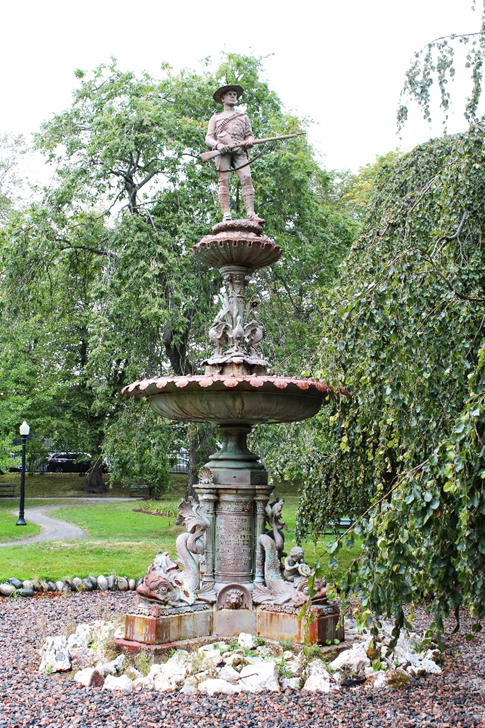
Next to the fountain, a spectacular weeping European beech and a ring of elm trees have been planted, one of which was donated by the family of a Canadian soldier who died in the conflict.
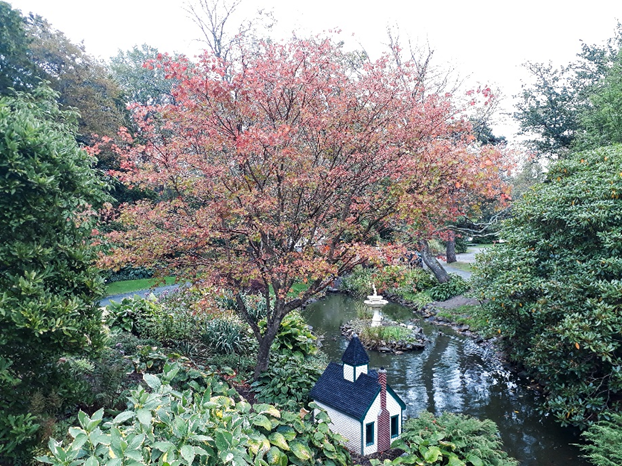
As we were visiting in autumn we expected to see some pretty fall colours and we were not disappointed. Colourful flower plantings were also on display.
Then it was back on the bus and on to our next chosen stop, which was the Citadel National Historic site. We did not want to spend time inside the Citadel but got off the bus to take photos of the views from the site on a hill overlooking the central part of Halifax and the harbour.
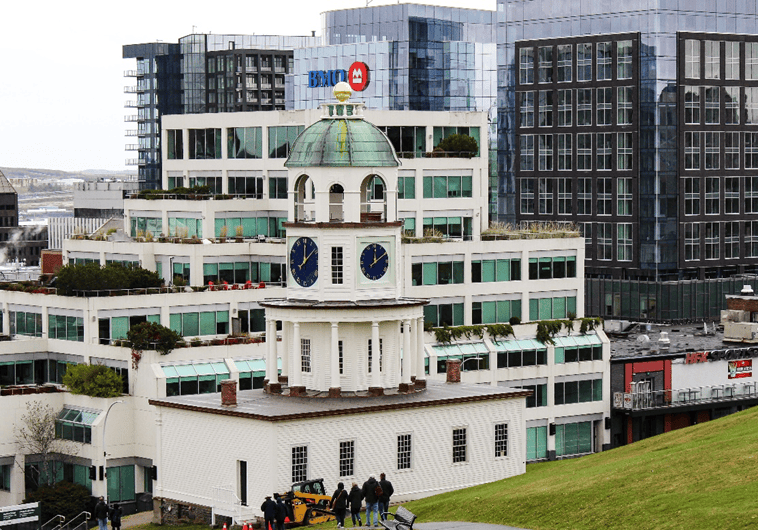
Almost immediately below the hill is the Old Town Clock, a gift from Prince Edward, which has stood at the base of the Citadel hill since 1803. We had to wait sometime for the next bus to come along and took shelter in the entrance to the Citadel as it was cold and exposed on the hillside!
Back in the warmth of the bus, we relaxed while travelling on to the Hydrostone District, which is also a National Historic site. Our first objective when we got off the bus was to find a place for coffee and fortunately there was a Starbucks right where the bus stopped!
While having our coffee we read up a bit about the neighbourhood. The area was initially set aside for providing houses for families displaced by the terrible Halifax Explosion in 1917, which devastated large parts of Halifax, including the community of Richmond on this northern extremity of Halifax. As it was quite close to the river where the accident occurred and even though it was on higher ground, the area bore the brunt of the explosion. The architect, Thomas Adams, was commissioned to design the neighbourhood in which working-class families could be housed. The design was based on an English Garden suburb model and is made up of row houses in groups of four or six, with larger two story houses on one end of each block. The name Hydrostone comes from the type of building material used to construct the new houses.
Before the explosion most houses had been made of wood and had coal-fired stoves in them. The intense heat that the explosion generated set fire to most buildings in the city and many wooden houses were completely destroyed in the ongoing fires. To avoid this happening again in future architectural designers proposed the use of non-combustible hydrostone for the reconstruction of this area. A Chicago firm patented the process of making concrete blocks finished with crushed granite, giving the blocks the appearance of cut stone. To get the completed blocks uphill to the building site, new diagonal roads had to be constructed making it to easier to haul the blocks up the slope.
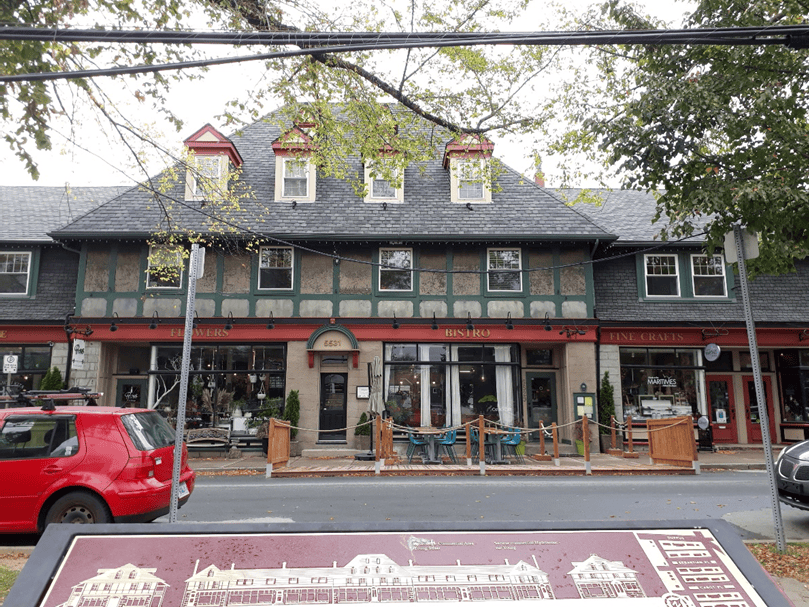
After we had warmed up and invigorated by coffee, we set off the explore the area. On the opposite side of the street is the Hydrostone Market, with boutique shops housed under an attractively and accurately restored façade rebuilt in 1995. As we made our way down one of the main streets of the district we were drawn to a Park on the righthand side of the road. This is Fort Needham Memorial Park, which includes the Halifax Explosion Memorial Bell Tower. We decided to take a detour to explore the park and learn more about the Halifax Explosion.
In 1917, the French steamship Mont Blanc and the Norwegian vessel Imo, an empty vessel chartered to bring relief supplies from New York to Belgium, collided in the Narrows of Halifax Harbour. The French ship was fully loaded with explosives, including gun powder, guncotton, picric acid, TNT and benzol. After the collision the benzol caught fire and the ship began to drift towards the shore, and soon after that, it exploded. The blast was so extensive that it levelled areas on both shores – the Halifax side and the Dartmouth side. Every building within a 2.6 kilometre radius was destroyed or damaged. Nearly 2000 people were killed and thousands of others maimed or blinded. It was one of the largest artificial non-nuclear explosions. The blast was felt as far away as Cape Breton and Prince Edward Island. Rescue efforts in Halifax and from outside were hampered by a blizzard that dumped 16 inches of snow on Halifax the day after the explosion.
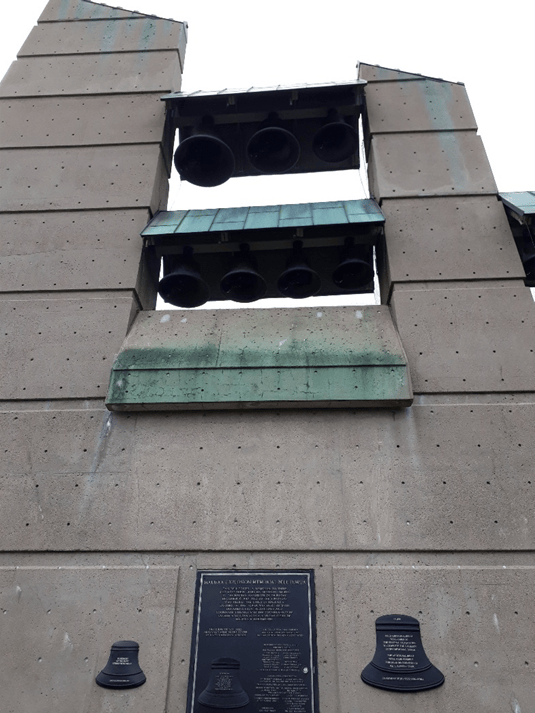
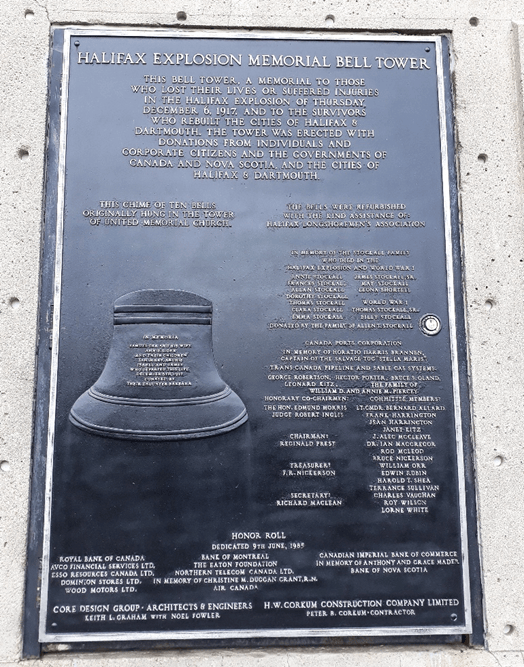
It was quite a walk across the park to reach the site of the Bell Tower but from there is a beautiful view down to the harbour and across to the Dartmouth side of the narrow entrance to Halifax harbour. It was sobering to think of the terrible destruction and loss of life and livelihoods that a simple accident caused. The Memorial Bells were built in 1985, when memorial carillon bells from a nearby church were relocated to large concrete structure in the park. It faces the river where the explosion took place.
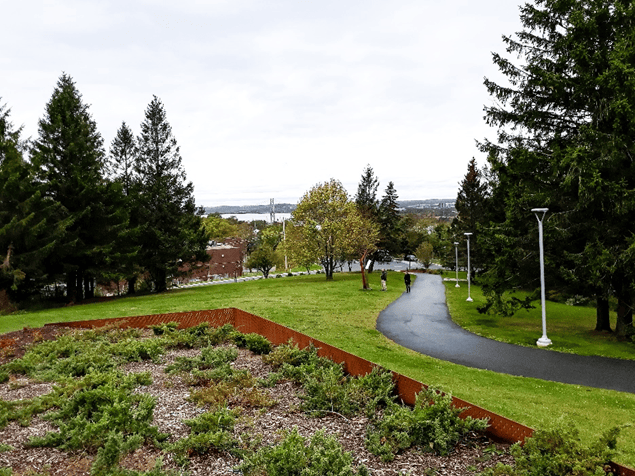
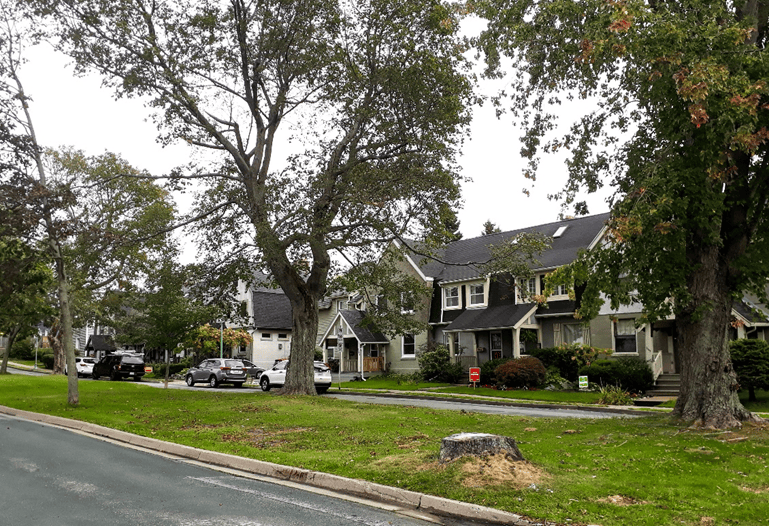
We walked back to the Hydrostone District and wandered up and down some of the peaceful, attractive streets lain out in English Garden City style, initially for workers displaced by the explosion but now remodelled and popular with the young and trendy.
Back on the bus once more and glad to sit for a while after our long walk, we were taken passed the Fairview Lawn Cemetery, also known as the Titanic Cemetery. It was not open to the public at the time we were there but we would not have wanted to visit anyway. It is another tragic event in the history of Halifax as the final resting place of over 100 victims of the sinking of the Titanic. Halifax was chosen as the main burial site because it was deemed to have good connections for relatives to come to and would enable them to take the bodies home for those who could afford it. The Titanic sank on 14 April 1912, 700 nautical miles from Halifax, in the North Atlantic just off the Grand Banks.
The route back towards the harbour and our ship took us along the shore, passed the Novascotian Crystal Factory. Started in 1996 by Irish craftsmen wanting to preserve the art of mouth-blown, hand-cut crystal, it is the only Canadian company that produces this type of world-class, quality crystal.
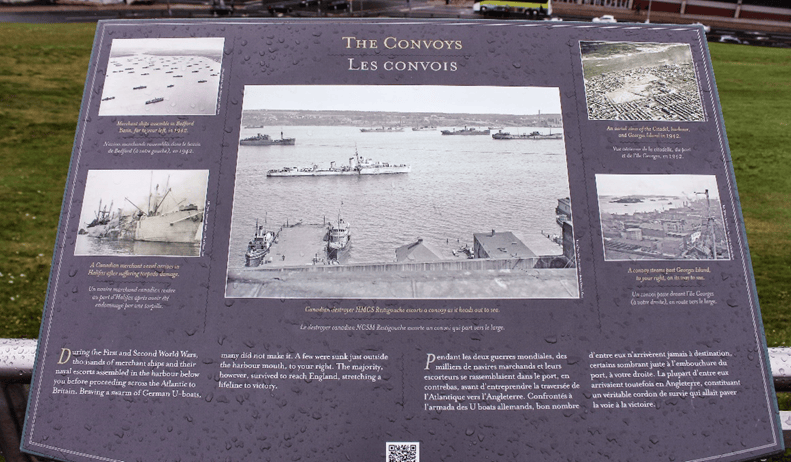
We got off the bus at its last stop opposite Province House, now an art gallery, and walked down to the Maritime Museum of the Atlantic. It was quite an interesting little museum, with exhibits about the Titanic and her sister ships, as well as the Halifax Explosion. The Navy gallery has an exhibit about the convoys that crossed the Atlantic during World War II, reminding me of my mother’s experiences at that time. She had gone out to teach in Vancouver, Canada in 1939, before the Second World War began and had not been able to return to England as planned. Instead she had to remain in North America until 1942 or 3 before she was able to be repatriated on a ship in one of the convoys.
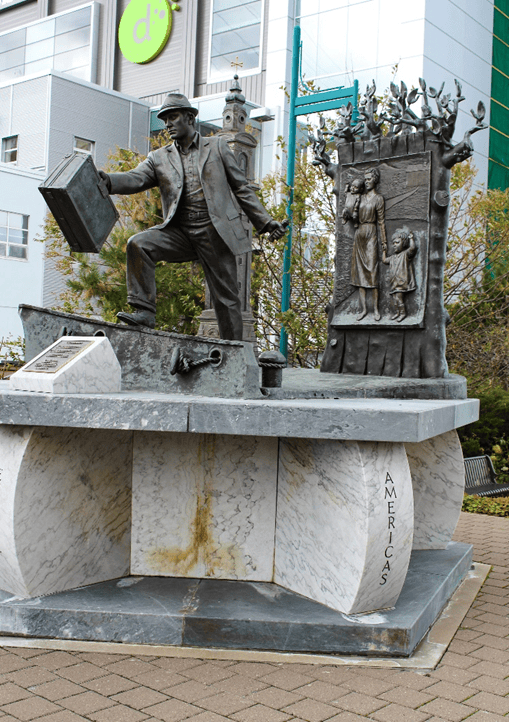
We did a bit of souvenir shopping in a little market area at the back of the museum before wending our way back to the ship along the quayside. We found a rather poignant little statute, called The Emigrant, dedicated to all those who left their homes to settle in Canada.
Before boarding though, we fortified ourselves with a flight of beers in Garrison’s Brewery.
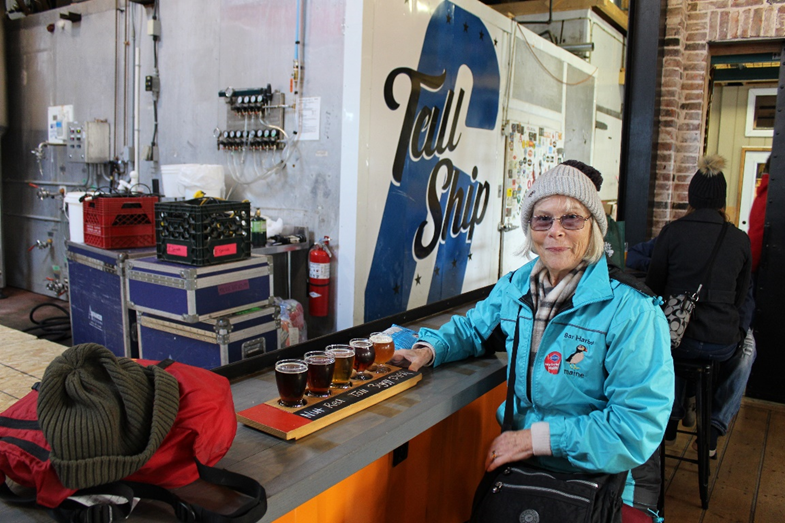
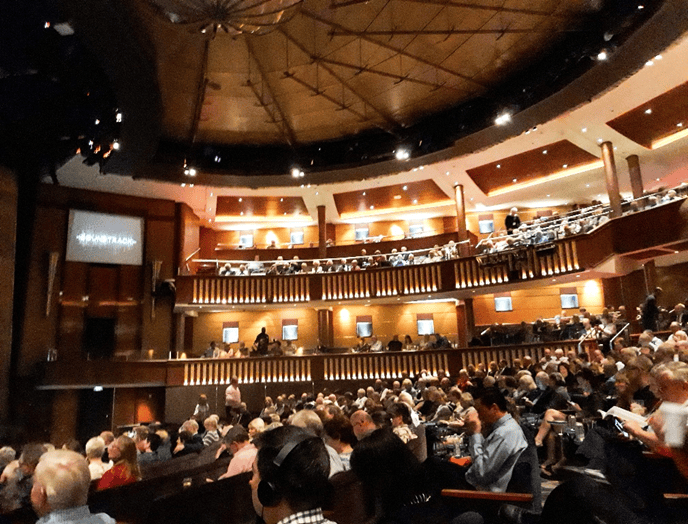
Back on board for a chic night and a special show by the Celebrity Summit Singers, performers and orchestra entitled Soundtrack.
Now on 5 October we had been on the cruise for two weeks and had just one day left to enjoy the amenities on the ship, relaxing and recuperating before facing New York! It was pleasant to take it easy in the warmth of the ship, as the weather was still cool and cloudy, and do the usual things on board for the last time – the last chance to try our luck at the Music Trivia and General Knowledge Trivia competitions! And one last visit to the Celebrity Summit Theatre to be entertained by Jason Neistadt and Liam Ryder on a high-energy musical journey!
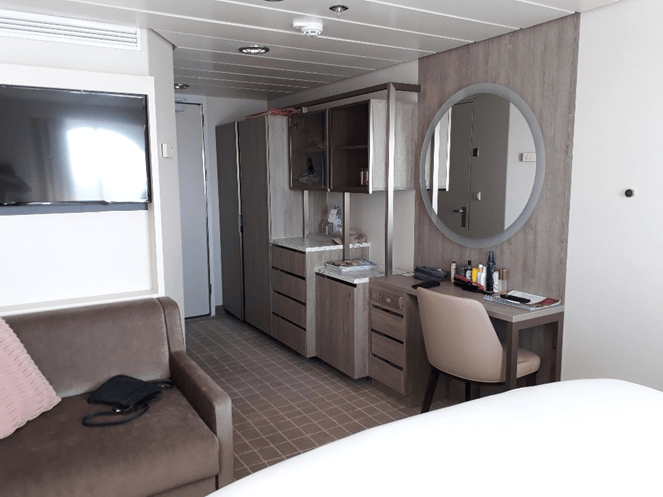
We also took some photos of our cabin as a reminder of our comfortable accommodation for the past two weeks.
Before heading to dinner we had our suitcases packed and ready to put out in the passage to be collected by the stewards. They would be waiting for us in the cruise terminal when we disembarked in Newark in the morning. The night was shortened by the last time change to get us back onto New York time.
We arrived in Newark at 8am but had to wait our turn to be allowed to disembark. We had a last breakfast in the Oceanview Café on Deck 10 before collecting our overnight bags and heading to our designated waiting station to await the permission to go ashore.
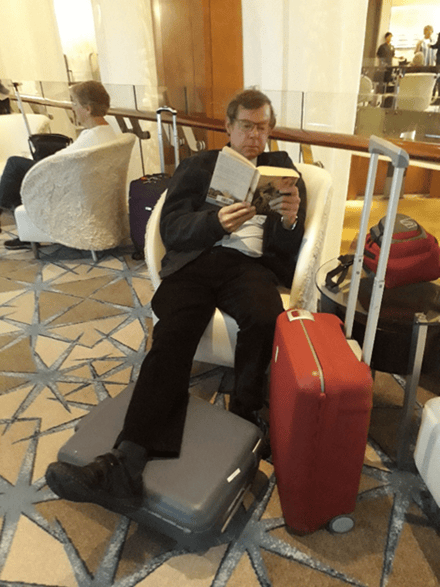
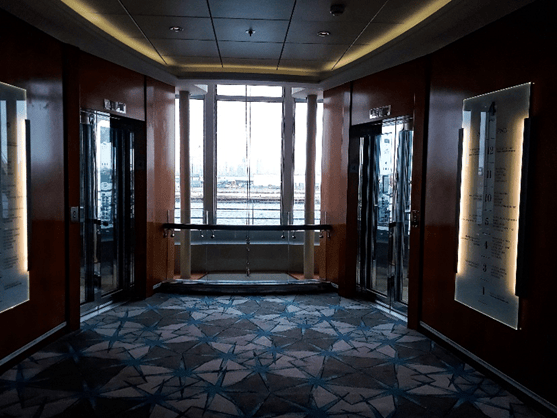
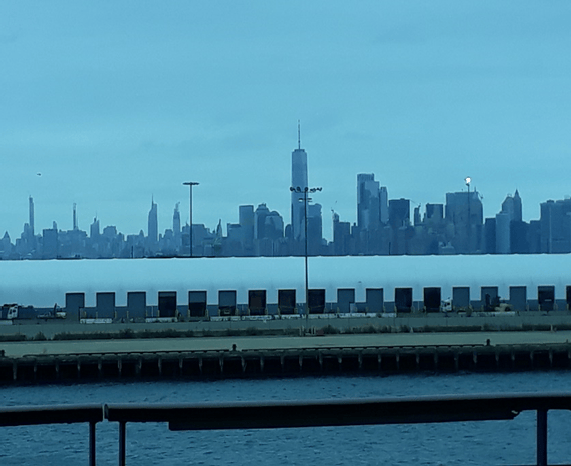
It was not too long to wait but while Kev read his book, I took some last minute photos of the interior of the ship and the view towards the Manhattan skyline on the other side of the East River.
Once onshore, we quickly found our suitcases and then managed to team up with a few other passengers who were also going to stay in New York so that we could share a taxi and also costs.
Little did we know then that it would be quite some time before we could think about doing another cruise, as in four months’ time the world was shutting down under the threat of Covid.

