Our visit to New York was an add-on to a two week cruise from Newark to Quebec City and back. We had docked fairly early on a Sunday morning but had to wait our turn to be allowed to disembark and collect our luggage. Once on dry land again we were able to share a taxi with other passengers also heading in to New York. Fortunately the traffic wasn’t bad – it was probably lucky that we had arrived on a Sunday! But it was still mid-morning by the time we were dropped off at our hotel.
The hotel we had booked was a Hampton Inn in Mid-town Manhattan, close to Madison Square Garden on 31st street between 6th and 7th Avenues, so pretty centrally situated for exploring on foot. Once checked in we almost dropped our suitcases on the floor and went off out again to see what New York had to offer. We headed in the direction of 5th Avenue and the Empire State Building. Perhaps because it was a Sunday and rather a chilly day as well, the queue to go up to the top of the Empire State Building was not long at all so we decided there and then to do it!.
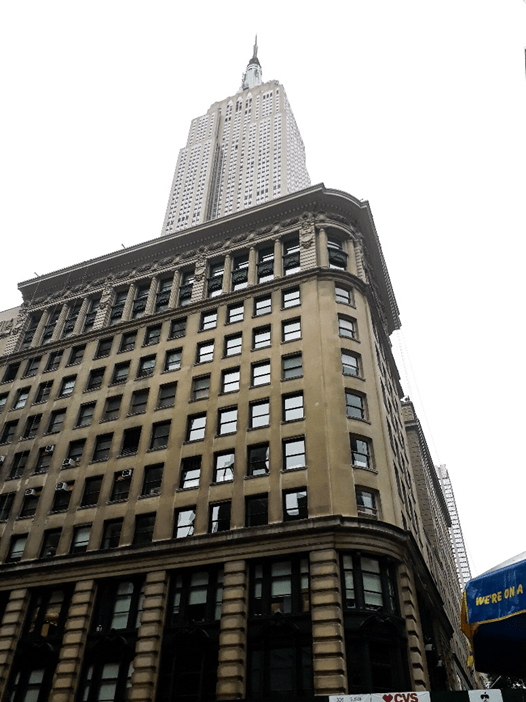
Before midday we were at the top and looking over all of New York. It is an iconic building and maybe a cliché to feel you have to do it when in New York but it was still very exciting to be there and looking at all those familiar but never seen in real life before sights.
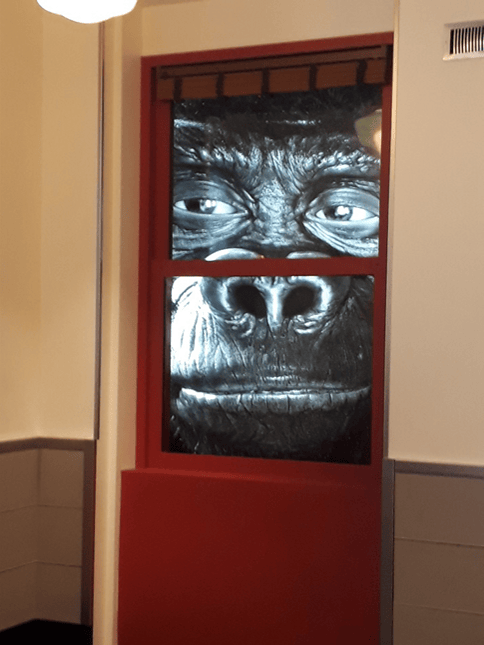
Before being taken up to the viewing platform in the high speed elevator, there are several rooms on the second floor that constitute a museum of the history of the Empire State Building. Starting with the way the area looked in the 1920s to the start of construction in 1930, through the whole construction process and the initial opening of the building, then going on to more modern times and the installation of the special elevators that now take visitors to the observatory. The final rooms are dedicated to the way in which the Empire State Building has become an icon in present day culture, from movies, to pop culture and TV shows. One room is even dedicated to King Kong – you can look through a window and see him climbing the outside of the building and even stand in his hands where they pierce the walls!
The skyscraper itself is 102 stories high, designed in Art Deco style by Shreve, Lamb and Harmon. Building started in 1930 and was completed 18 months later. The name is derived from the nickname of “Empire State” given to the State of New York. The building stands 1 250 feet (380 m) from ground level but if the antenna are included it reaches 1 454 feet (443.2 m). At the time it was opened, it was the tallest building in the world and this was only topped in 1970 by the first tower of the World Trade Centre. After the 9/11 attacks , the Empire State building again became the tallest building in New York until the One World Trade Centre was completed in 2012. The outside of the building is covered in pale coloured Indiana limestone panels, which came from a quarry in Indiana.
Our ticket took us to the observation deck on the 86th floor, which has an interior viewing area and also allows you to go to an outer open area viewing deck as well.
When we eventually reached the observatory level, we circled the inside viewing deck picking out those well-known names, as well as trying to see if we could see the cruise ship that had been our home till a few hours ago on the New Jersey shore.
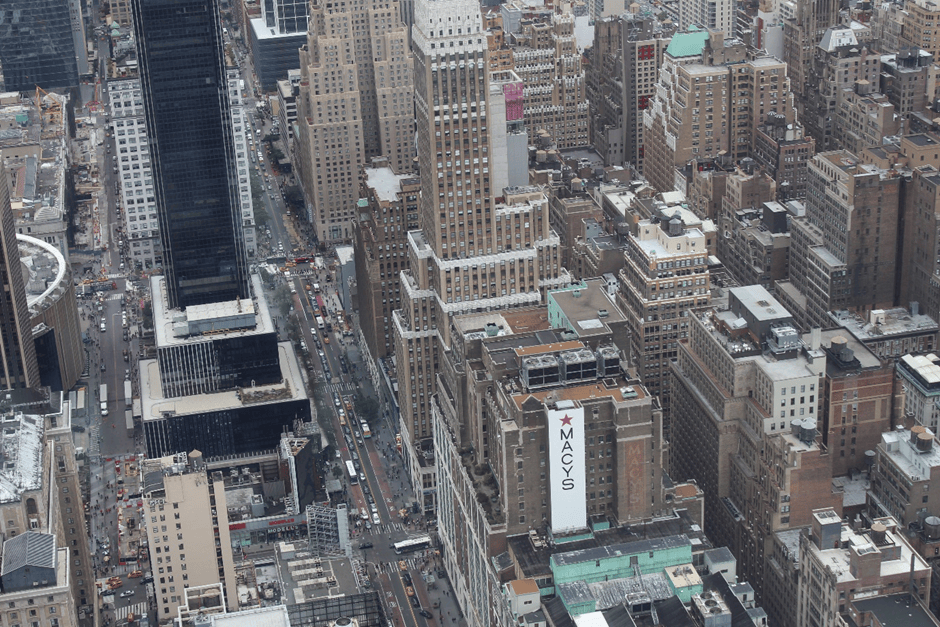
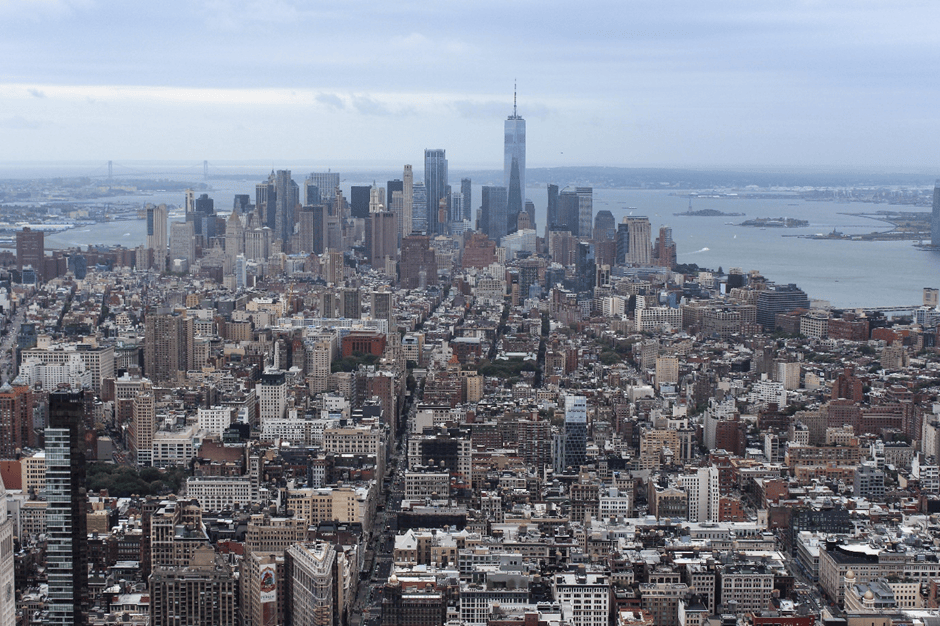
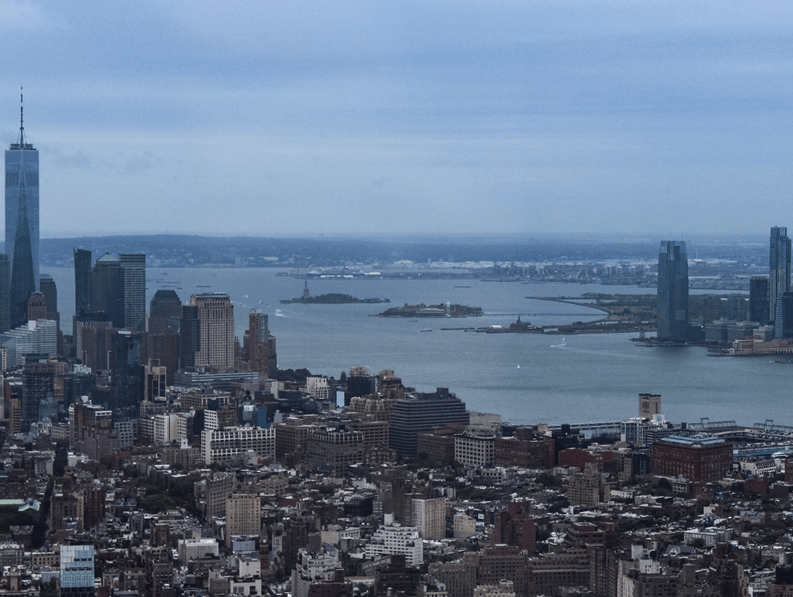
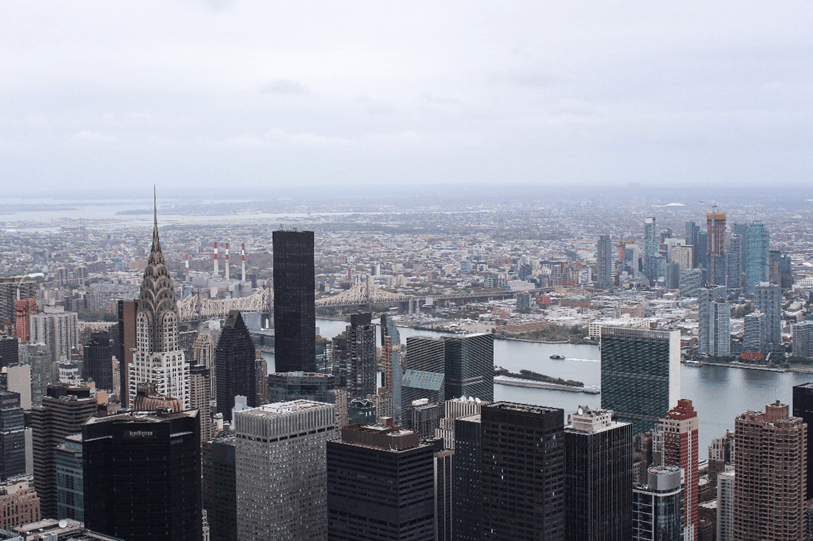
Jutting out from behind the Chrysler Building is the Queensboro Bridge spanning the East River. The bridge is also known as the 59th Street Bridge – shades of “Feelin Groovy” by Simon and Garfunkel. Paul Simon wrote the song after an early morning walk across the bridge inspired him.
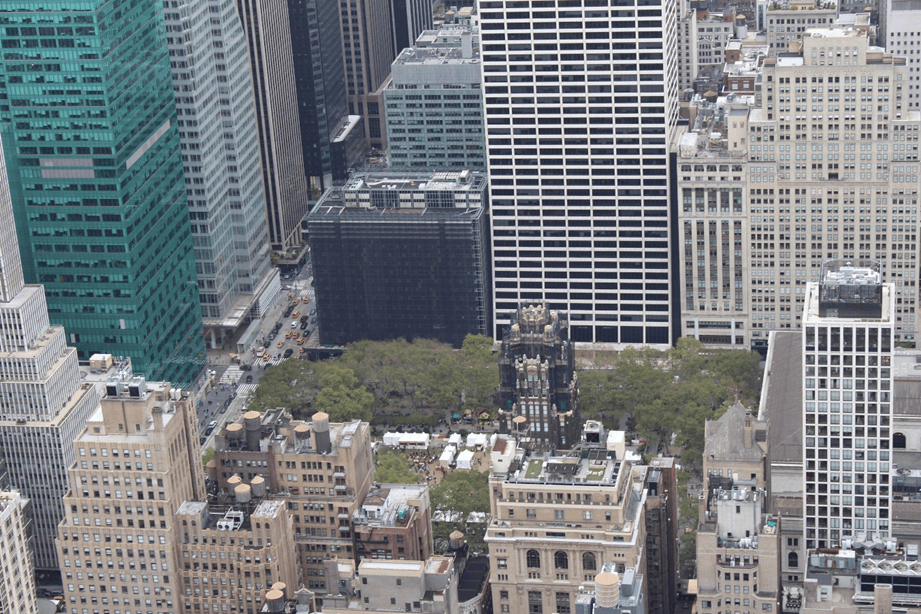
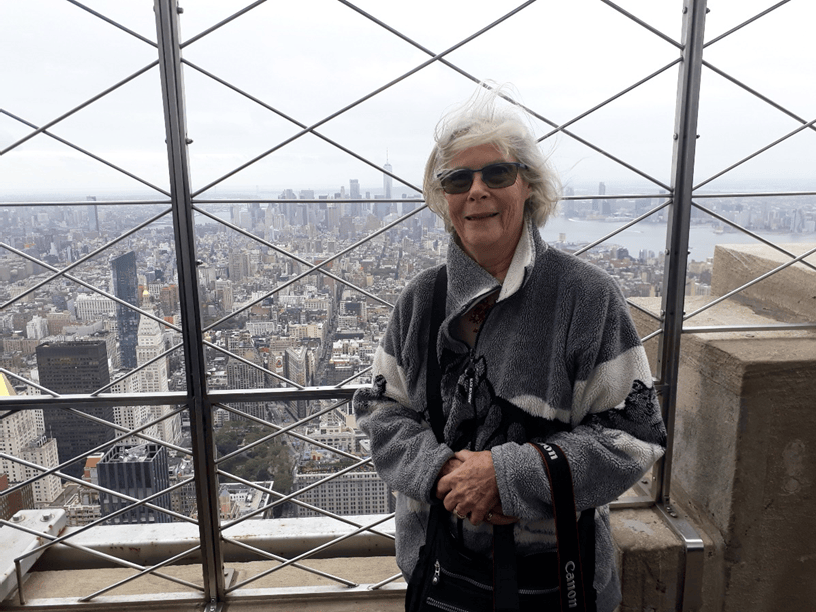
. Although it was rather chilly and quite windy, we did brave the outside terrace to get further views over New York.
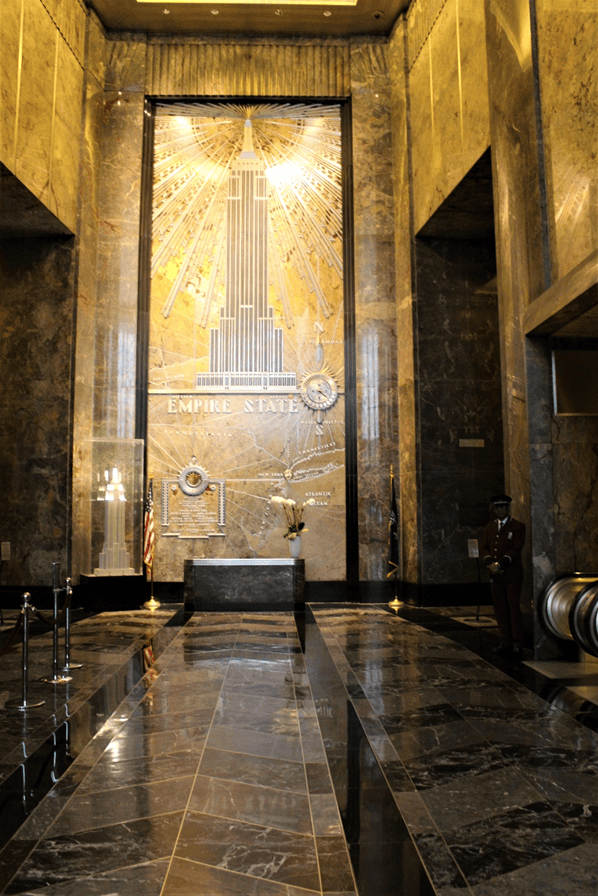
On the way out we were able to see the main lobby of the building, which you would have come into from the main 5th Avenue entrance (entrance to the ticket hall and lifts is from 31st street). Inside the lobby there is an aluminium relief of the building as it was originally built without the antennae. This relief panel is placed behind a concierge’s desk and was designed to welcome people to the building. It is an embossed outline of the skyscraper with rays emanating from the spire and from the sun behind the tower. It is set on a map of New York State and the position of the building is marked by a medallion in the southeast corner. A compass and a plaque to the building’s major developers complete the relief.
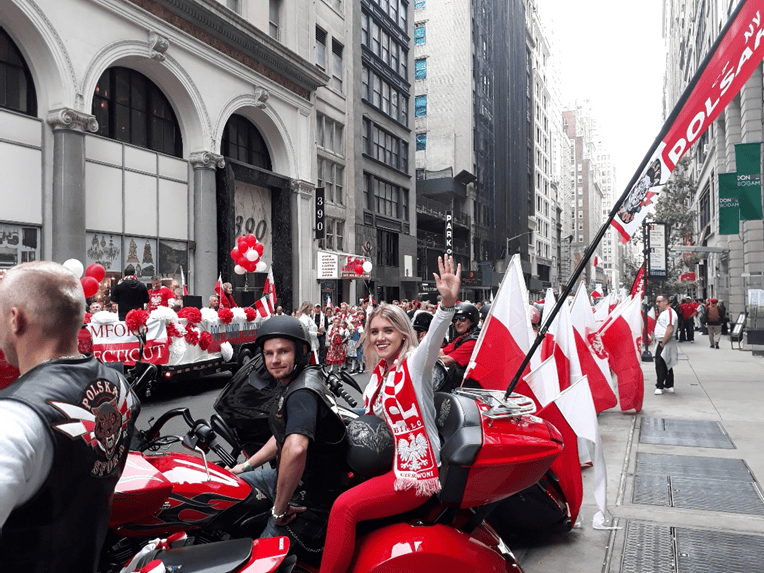
Back out on the street and heading up 5th Avenue, we found the streets lively and colourful with the red and white of the Polish Day parade. This parade is properly called the Pulaski Day Parade, as it commemorates Casimir Pulaski, a Pole who fought during the American War of Independence and who died at the Siege of Savannah. The parade features Polish dancers, marching bands, school groups, sports teams and Polish government ambassadors and other dignitaries. The parade has been held annually since 1937 and takes place along 5th avenue between 35th and 54th streets, including passing St Patrick’s Cathedral. It is also one of the oldest ethnic parades in New York City.
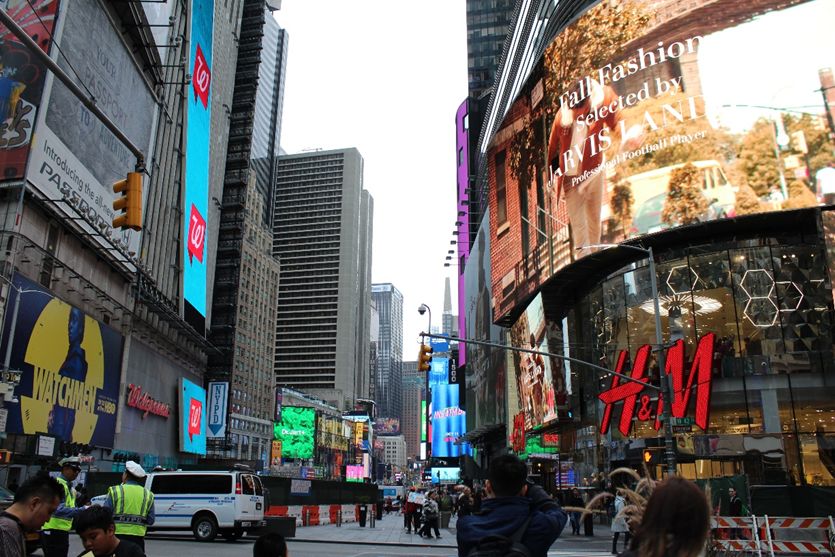
Further up 5th Ave we passed the New York Public Library and turned left along 42nd street and Bryant Park going towards the intersection of Broadway and Times Square. We spent some time wandering around Times Square and photographing the ever-changing neon signs.
By this time we were fairly exhausted so decided to make our way back to the hotel for a brief afternoon rest before venturing out again in the early evening to do some more exploring.
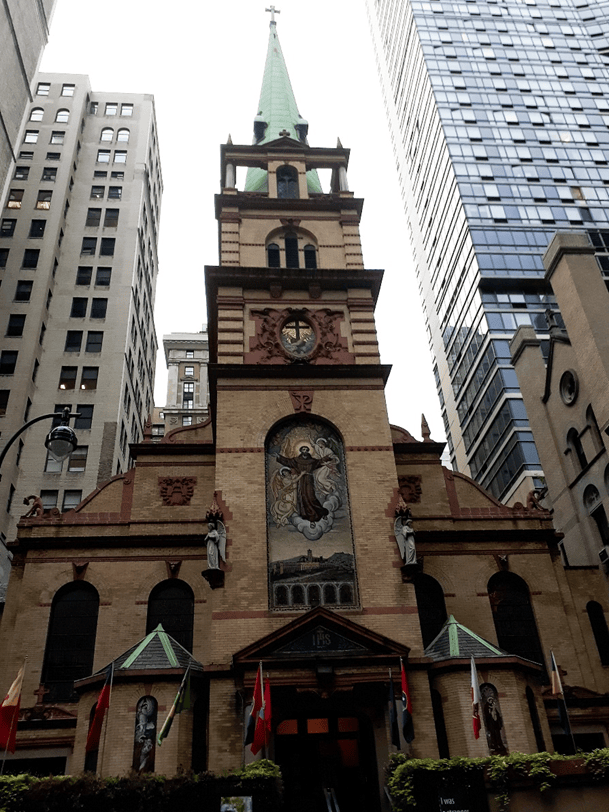
Heading out again somewhat refreshed we stopped to photograph a rather attractive church and church tower almost opposite the hotel. It is the Roman Catholic Church of St Francis of Assisi built in Gothic Revival style in 1892. In 2001 the priest at the church was also chaplain to the Fire Brigade and on 11 September that year when the Twin Towers were attacked, he rushed downtown to minister to the victims and was tragically struck by falling debris and killed instantly.
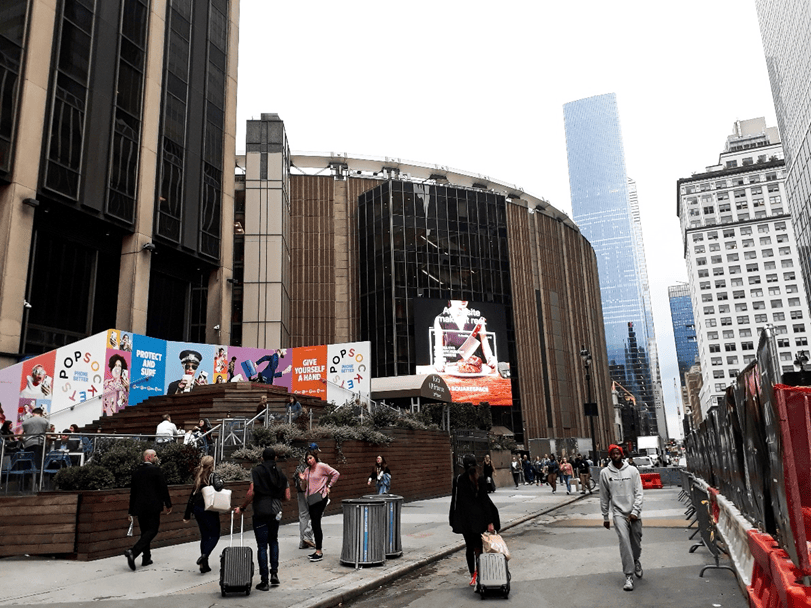
We made our way via Madison Square Garden to Times Square as it was getting dark and we wanted to see the lights more clearly than in broad daylight.
Madison Square Garden is one of New York’s best-known sporting and entertainment arenas. It is home to the New York Knicks, a professional basketball team and the New York Rangers of the National (Ice) Hockey League. It is also the venue for more high-profile concerts than any other New York arena. More than 320 events a year are held at Madison Square Garden.
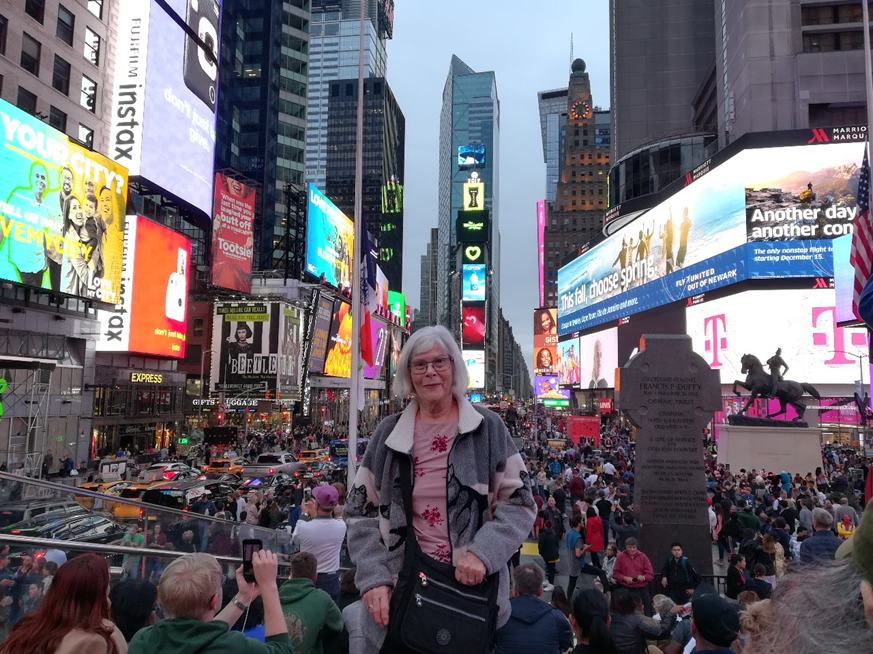
Once we reached Times Square, we wandered around a bit then did the touristy thing and sat on the steps at the northern end of the square looking down the length of 7th Avenue taking photos of the ever-changing light show.
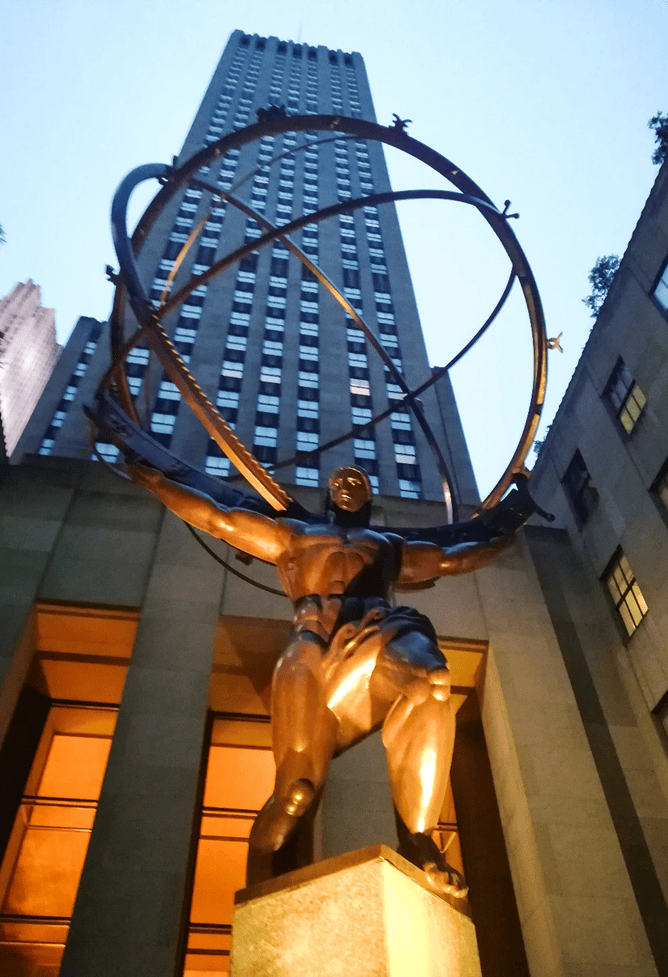
From there we made our way up towards the Rockefeller Centre and Rockefeller Plaza. These buildings cover a couple of blocks around 50th street and 5th Avenue. The famous Art Deco statue of Atlas is on the 5th Avenue side close to St Parick’s Cathedral. It is a bronze statue depicting Atlas holding the vault of the heavens on his shoulders. It was installed in 1937 and its main claim to fame seems to be that it features in several movies as well as almost every episode of the TV series 30 Rock. The name of the series is an abbreviation of the address of the NBC Studios (now the Comcast building) at 30 Rockefeller Plaza.
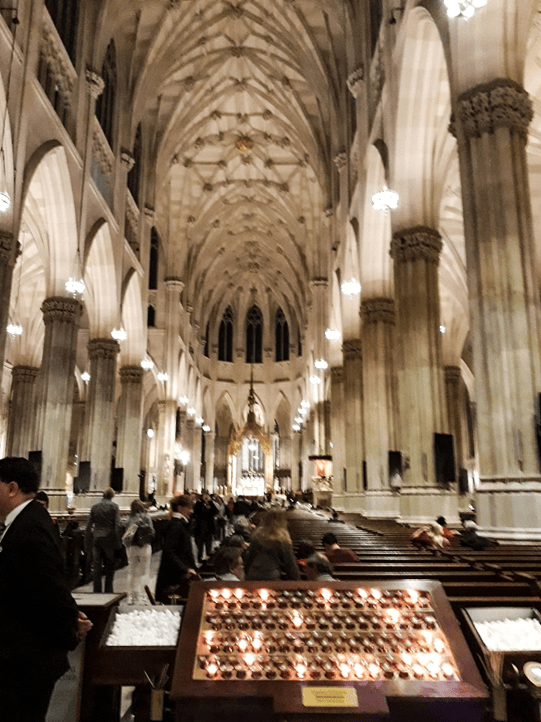
As we were right opposite St Patrick’s Cathedral we crossed the road to have a quick look inside. St Patrick’s Cathedral is a Roman Catholic cathedral located on 5th Avenue. Building started in 1858 but had to be halted during the American Civil War in the 1860s. It was finally completed in 1878.
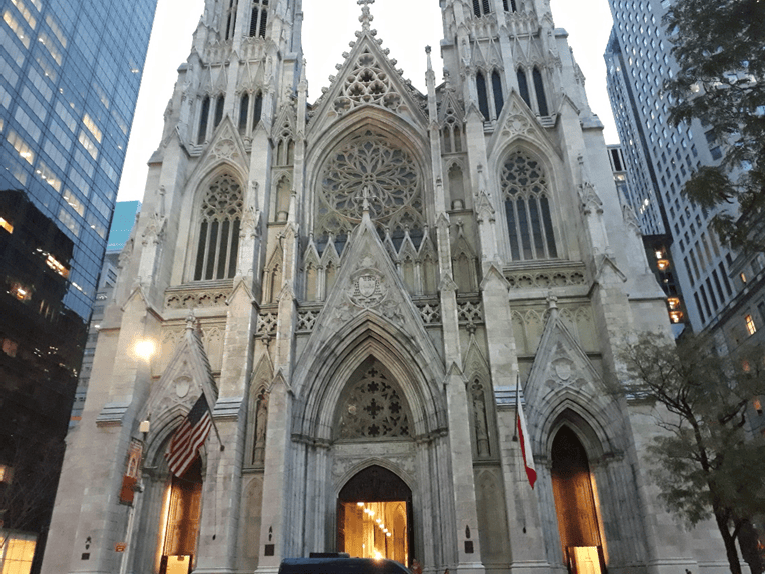
The interior is finished in creamy white marble and on the outside, the bronze double doors opening onto 5th Avenue are flanked by two towers with intricately worked spires.
After a quick tea break and warm up in a local café, we made our way to the Plaza part of the Rockefeller Centre to see if the skating rink had already been set up in preparation for winter. It had been but was not yet being used. We admired the amazing gold covered statue of Prometheus that overlooks the skating rink. It is considered the main artwork of the Rockefeller Centre.
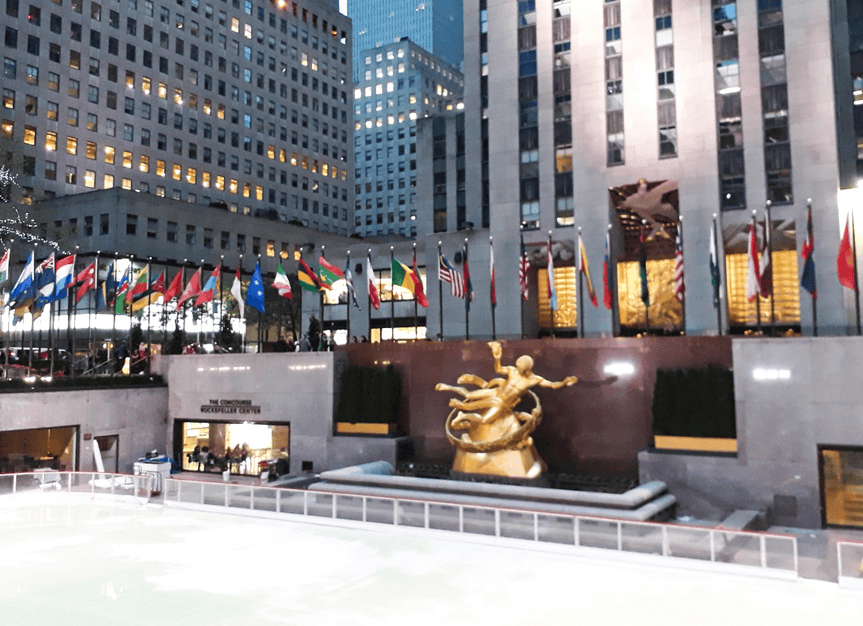
The statue is the work of Paul Manship and was made in 1934. The model for Prometheus was an Italian-American lifeguard who spent 3 months posing for the sculptor! In classical literature, many myths surround the character Prometheus but the main one deals with the stealing of fire from the Olympian gods and giving it to mankind, hence the inscription on the wall behind the statue which reads: “Prometheus, teacher in every art, brought the fire that hath proved to mortals a means to mighty ends.”
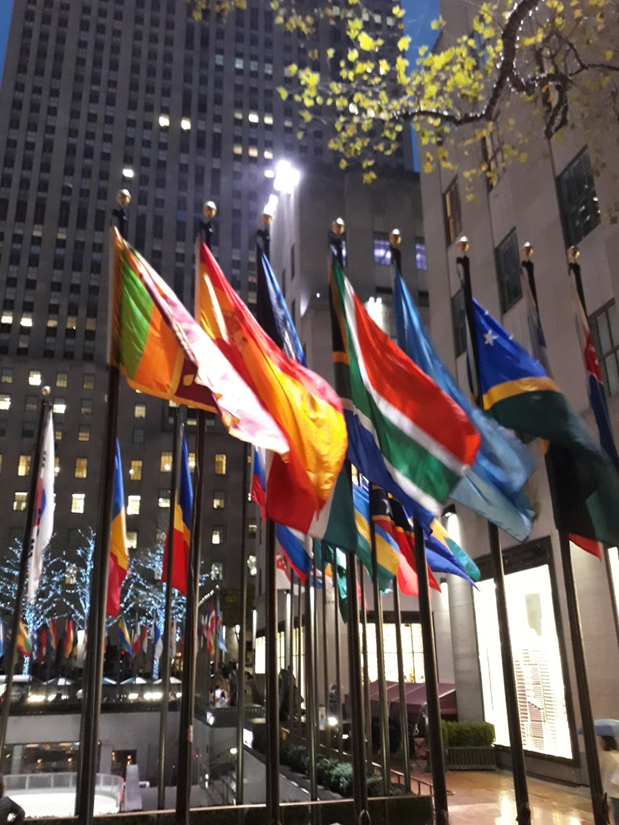
All the flags of the world were displayed around the skating rink so we wandered around until we found the South African flag. It was quite difficult to take photos of it as it was quite windy and it kept being obscured by other flags billowing out.
By this time we were getting hungry and were fairly chilly as it was now quite dark so we made our way back towards the hotel looking out for a likely place to eat. We eventually ended up at an Irish pub almost opposite our hotel, which served good beer and delicious food.
Back in the hotel we climbed into bed exhausted but well satisfied with first New York exploration.
The next day dawned much brighter than the previous day and also promised to be quite a bit warmer. Our first task was to post Kev’s signed certificate of entitlement to the UN Pension Fund. We made enquiries and were told the nearest post office was at Penn Station just a few blocks away. We found it easily and manged to buy a stamp and post the letter without any difficulty. It’s funny the sense of achievement you get from accomplishing small tasks like this in a foreign country!
Our next challenge was to use the New York subway. Penn station was a convenient place to start as the blue line went through it and would mean we didn’t need to change before our getting off near Central Park. We manged to get MTA Metrocards and find out where to get on the line going in the direction of Central Park. It was pretty confusing to start with as the beginning and end place names were unfamiliar and people were rushing all over the place in a hurry to get where they were going but a few helpful people pointed us in the right direction and we found the right platform to wait for our train. Once on the subway train we only had 5 stops till we reached our destination stop, opposite the Museum of Natural History and an entrance to Central Park. Although it would have been very interesting to visit the Museum of Natural History, we had already decided to stay outside and do our natural history exploring in nature itself so we crossed the road and went into Central Park.
We picked up a free map of the Park as we went in. Central Park covers an enormous area so in the short time we had we could only explore a small part of it. The first area that we came to was the Shakespeare Garden – a reminder of an English country garden and planted with trees, shrubs, herbs and flowers that were mentioned in Shakespeare’s plays and poems. The garden was started on 1912 but only focussed on Shakespeare a few years later and was dedicated and officially named in April 1916, coinciding with the tricentennial of Shakespeare’s death. It covers an area of 4 acres.
The garden is close to the Delacorte Theatre, the venue for the Shakespeare In the Park theatrical productions. It is also close to the Swedish Cottage Marionette Theatre, a structure built in Sweden in the 19th century and shipped ready made to New York. It is a rustic-looking wooden building, built in traditional Swedish architectural style. The imposing Belvedere Castle and its terraces overlooks both of these in this particular part of Central Park.
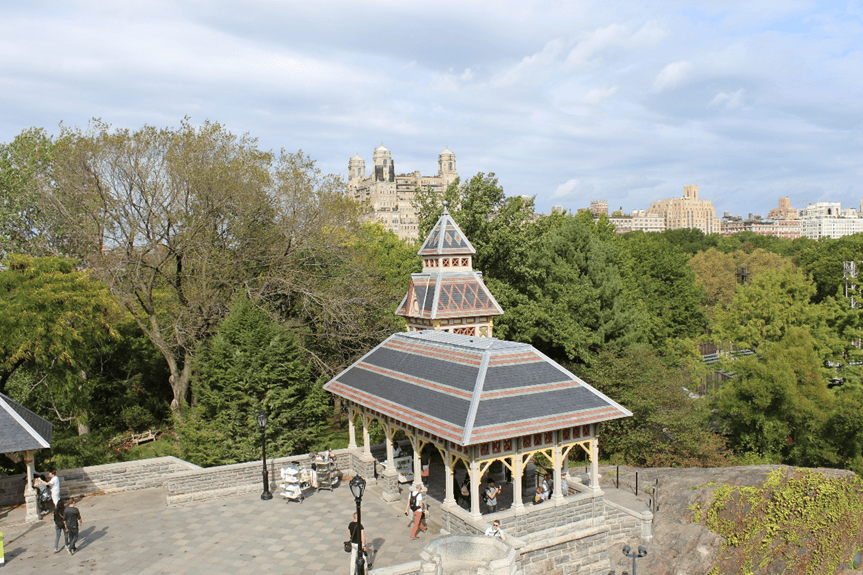
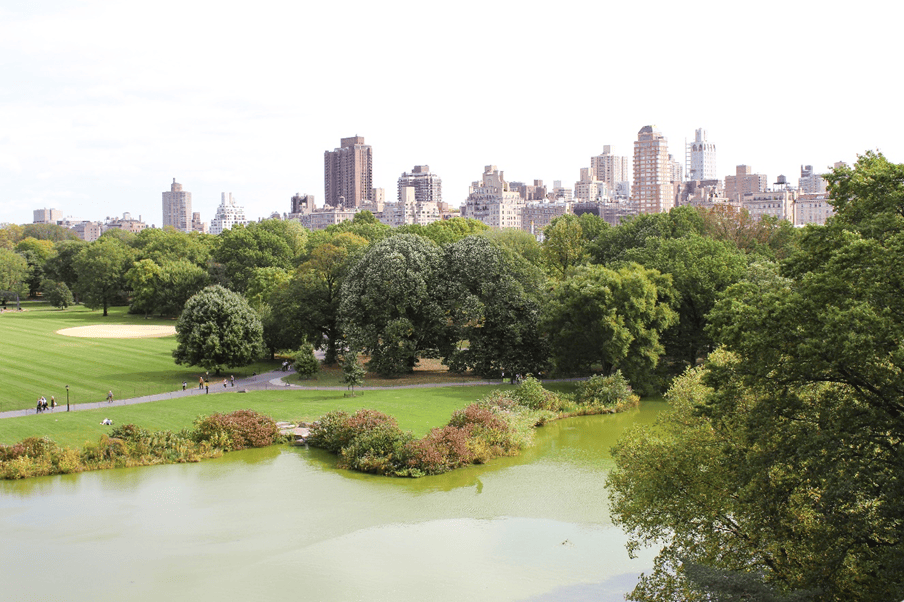
The Belvedere, which translated means “beautiful view”, was designed by Calvert Vaux and Jacob Wrey Mould and was completed in 1872. It was designed to make the most of the views of the surrounding landscape, of the Turtle Pond and Great Lawn to the north and the Ramble to the south. The terraces are built out of Manhattan schist but the structures and tower are wooden. Over the years the buildings have been put to different uses, including being as a weather station from the 1920s until the 1960s, when the US Weather Bureau moved out. After that it fell into disrepair until a major reconstruction was begun an 1983. The 1990s saw more changes and more work has taken place to make the structures waterproof and to restore historic aspects of the design that had been lost.
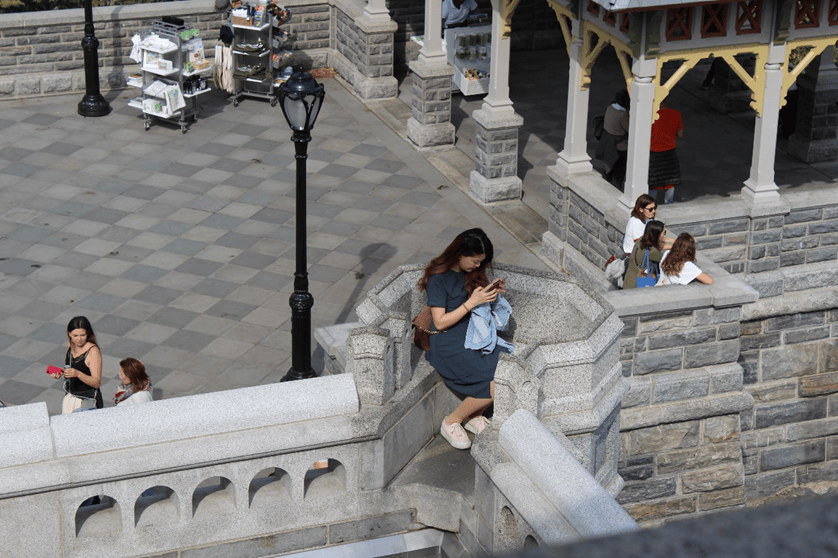
We were fortunate that the building was open and we were able to climb to the top of the tower to get the best views across the Park and the city beyond.
Next we decided to explore the most wild area of the Park, called the Ramble. This is a 36 acre part of Central Park designed to look like the forests of upstate New York. We followed some of the winding paths and meandering streams, admiring the dramatic rocky outcrops and abundant vegetation.
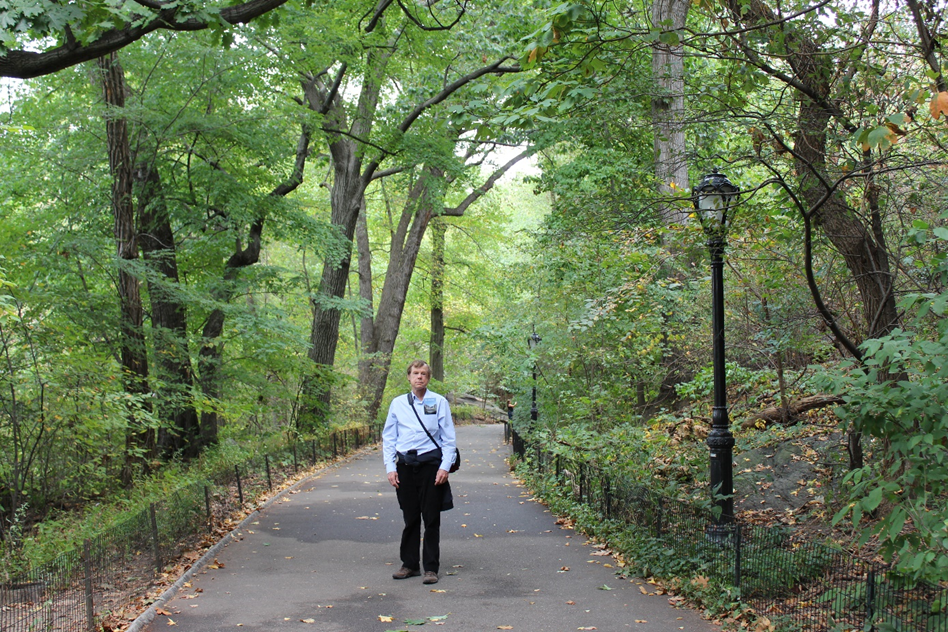
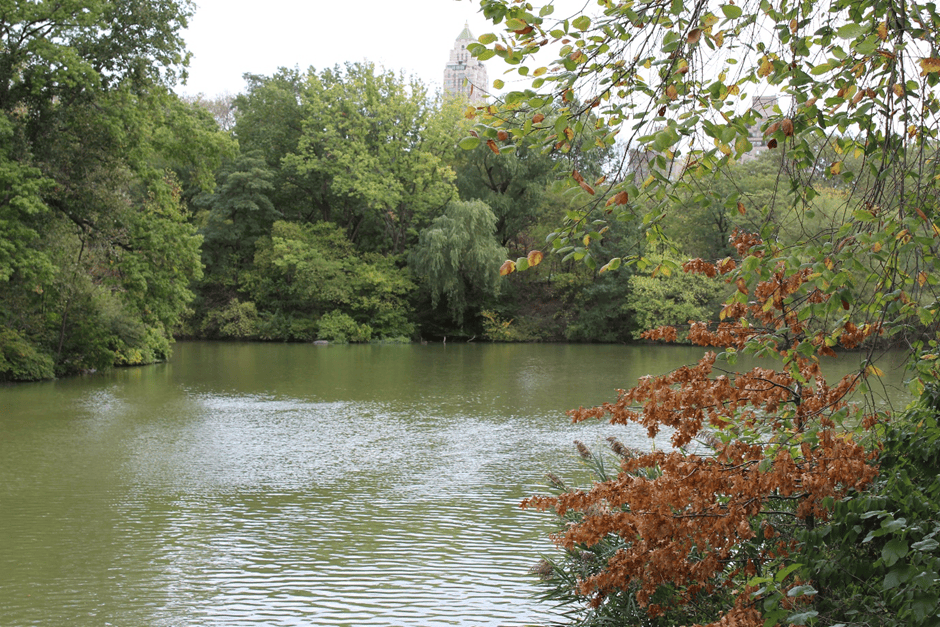
As we were there with Fall approaching the trees were already beginning to turn in colour but the weather was beautiful and warm. We really enjoyed our stroll along the many winding interlinking paths until we reach the Bethesda Terrace, with its fountain and waterlilies. This beautiful fountain is topped by the sculpture “Angel of the Waters” – it is made of bronze and is the figure of an angel with raised wings stepping onto a stone. The water cascades down from this level into two basins and finally into the lily pond at the base.
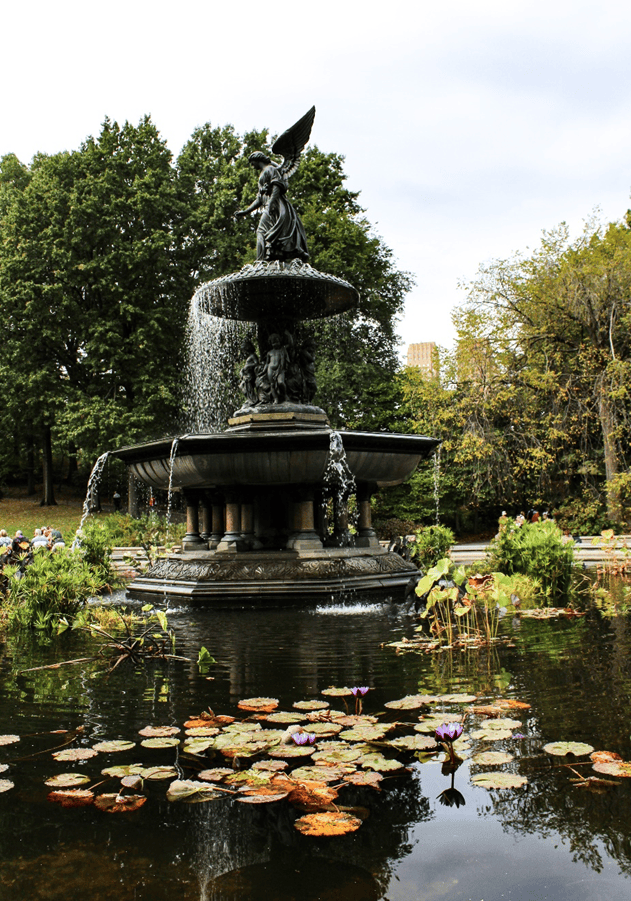
Crossing the Bow Bridge, where an elderly Chinese gentleman was playing soulful music on a strange single-stringed instrument, we wandered back on the west side of the Ramble following the bank of the Lake until we were back at the Shakespeare Garden. We emerged onto the Great Lawn and admired the uninterrupted view of the New York skyline from there.
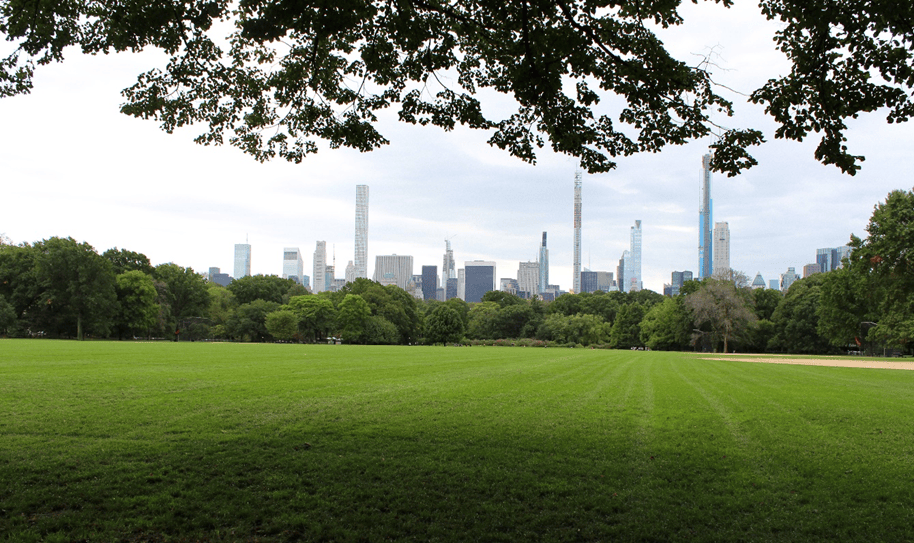
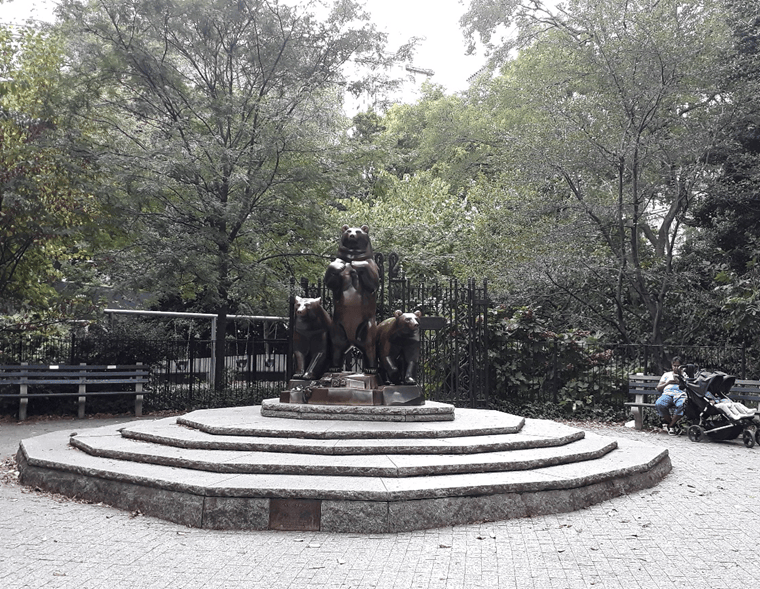
We circled the Lawn looking for a way to enter the Metropolitan Museum of Art but found we had to exit the Park on the east side before entering by the main entrance of the Museum on 5th Avenue. Just before emerging onto the hustle and bustle of 5th Avenue we passed this beautiful statue of three bears.
It is another statue designed by Paul Manship, the creator of the Prometheus statute, who made a plaster model of it in 1932 but it wasn’t until 1989 that Samuel N. Friedman commissioned a cast to be made in honour of his late wife. The statue depicts three life-sized bears and stands next to the Pat Hoffman Friedman Memorial Playground.
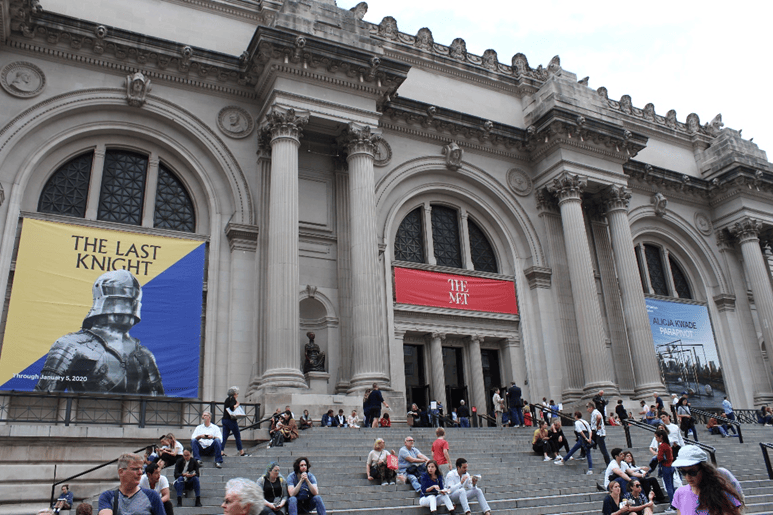
Finally we climbed the steps leading up to the Met, rather weary after all our walking and determined to find a place to sit and have coffee and something to eat before starting on a tour of the Museum.
We found a nice coffee bar in the American Wing and took the time to decide what we wanted to see in the time available.
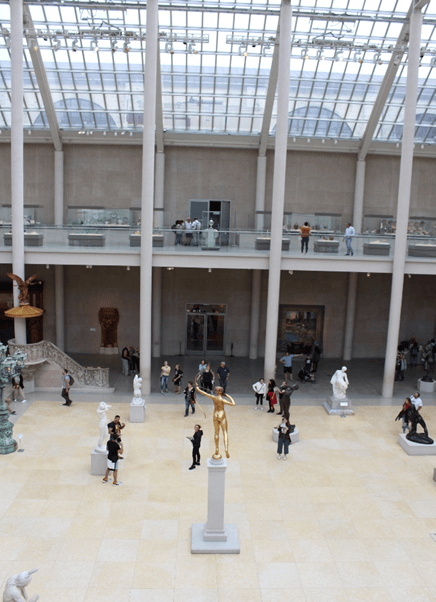
These are some of the highlights we tracked down:
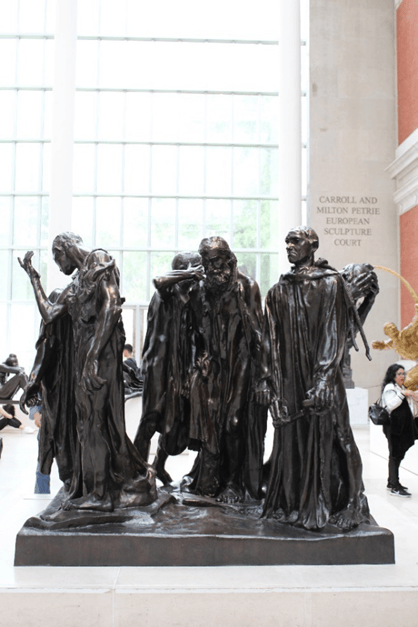
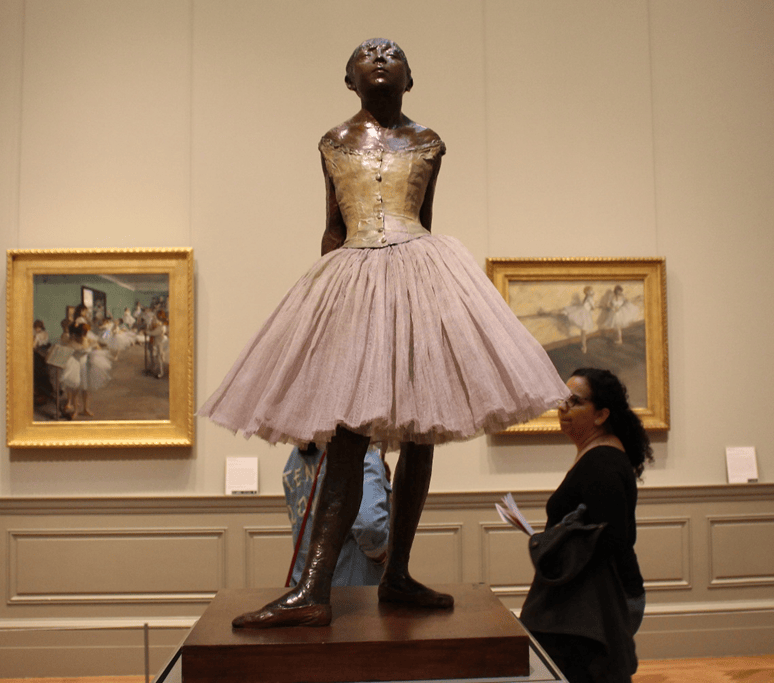
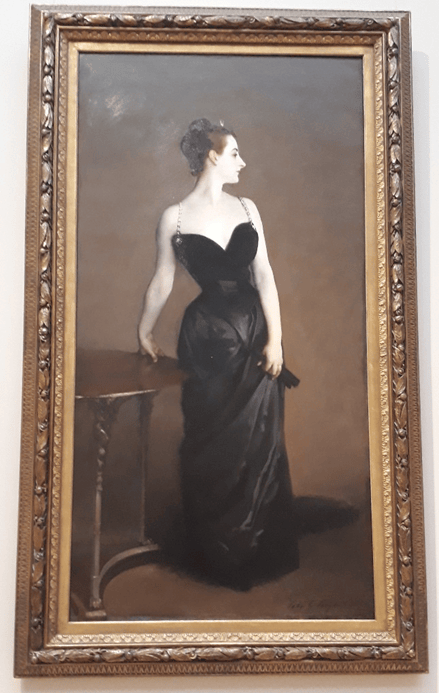
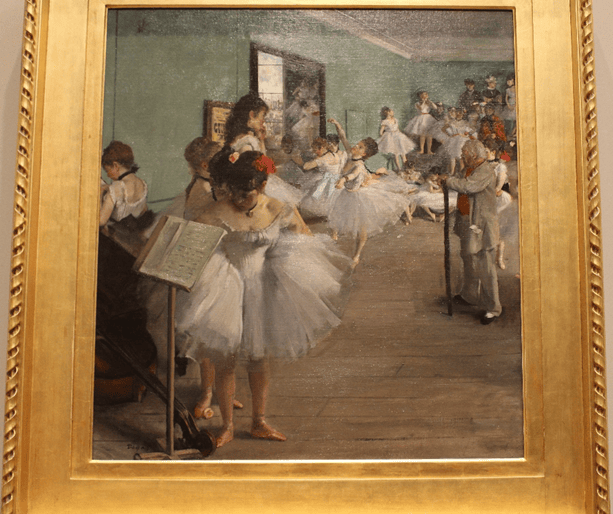
At the top left is the sculpture of the Burghers of Calais sculpture by Rodin, in the middle at the top is Degas’ “The Little Dancer” with a new skirt, and Madame X by John Singer Sargent on the right. Below is another Degas, this is the painting of “The Dance Class”.
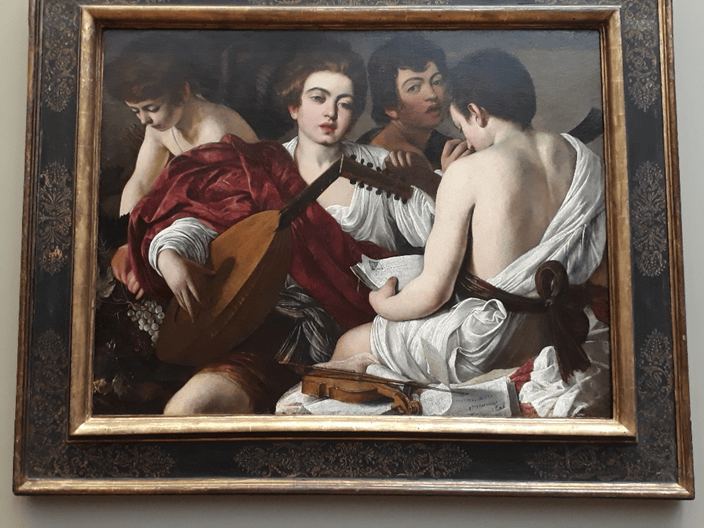
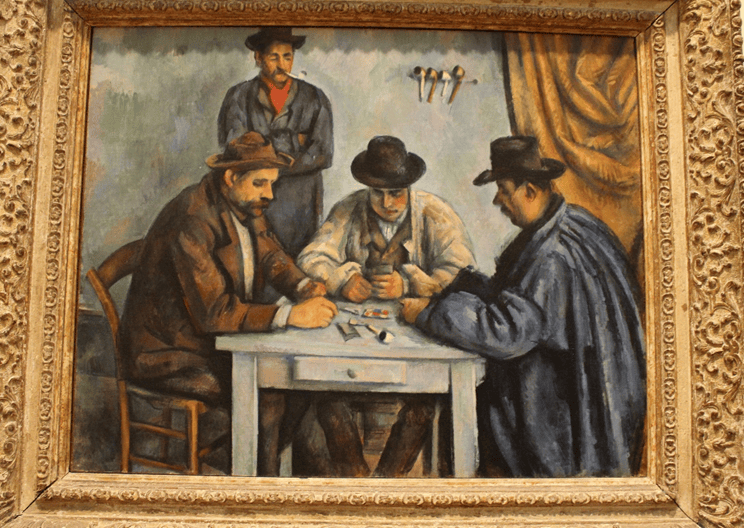
These two are “The Musicians” by Caravaggio on the left and Cezanne’s “The Card Players” on the right.
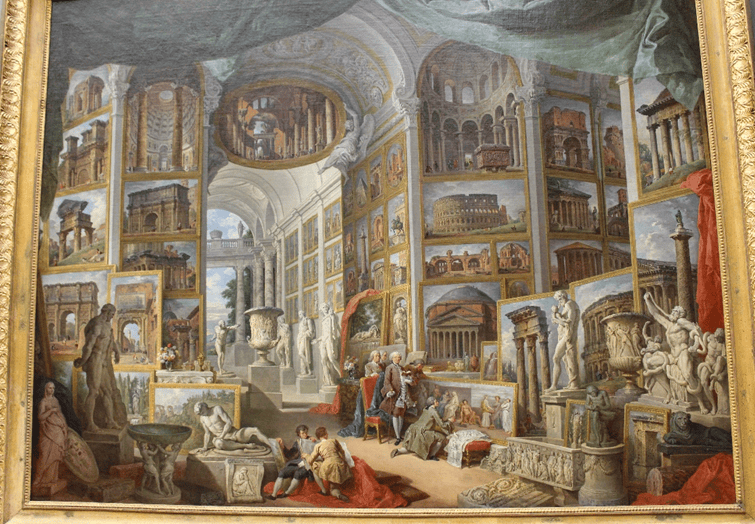
Among many others that we saw was the original painting of a jigsaw puzzle that we have at home of a room full of Roman antiquities! The painting in the Met is one of three painted by Giovanni Pannini all depicting views of Ancient Rome.
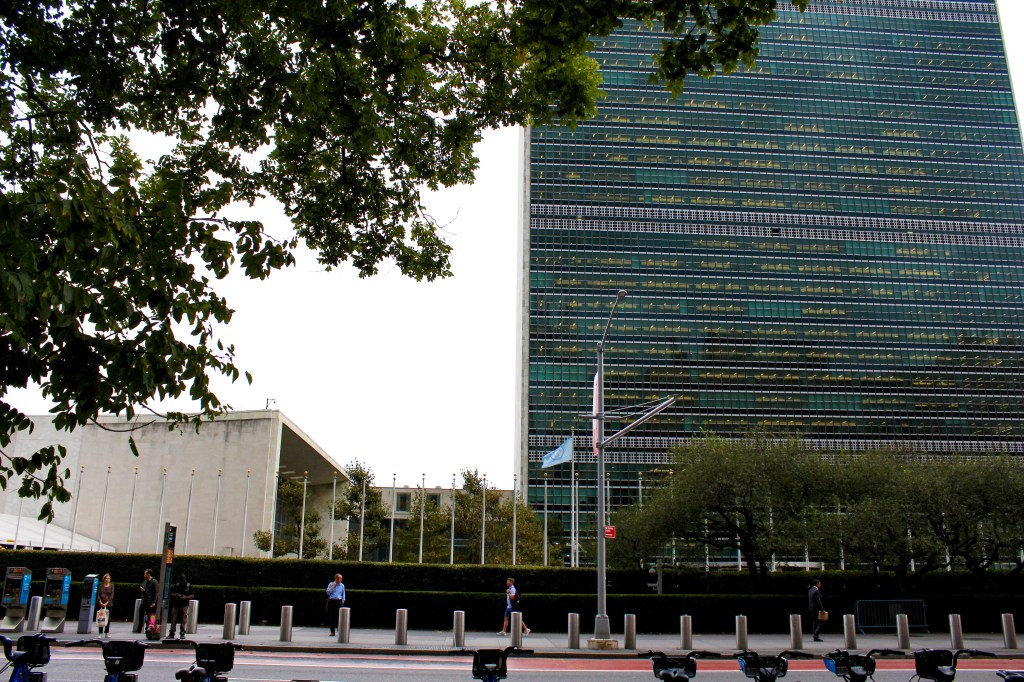
Our final challenge was to find the UN Headquarters – we worked out which Subway line to take but the walk to the station was a bit longer than expected. In the end we did find it and got off at Grand Central station. It was another walk of several blocks to the site of the UN Headquarters overlooking the East River. But it was a nostalgic moment to think we had been associated with the UN for so many years.
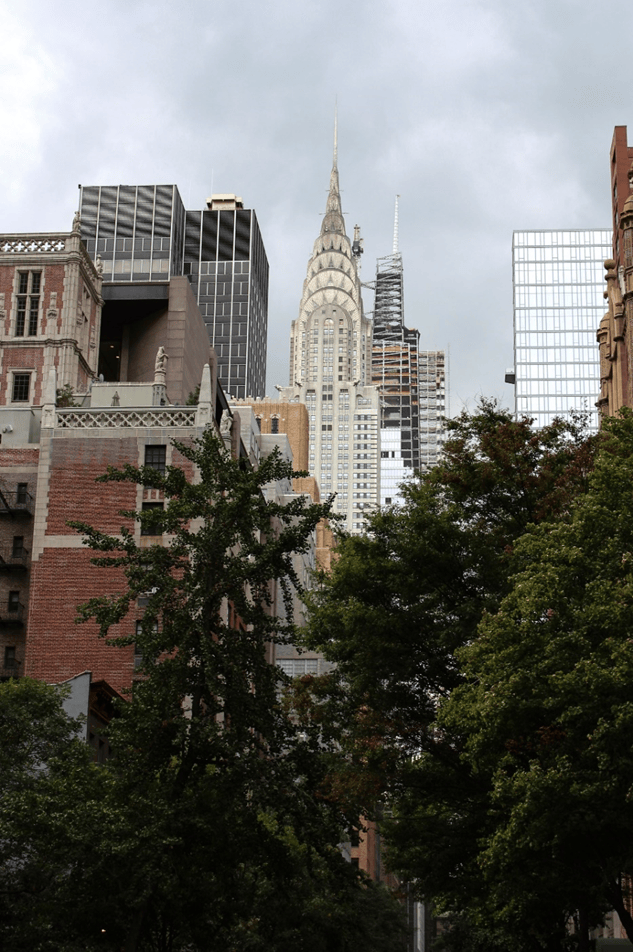
On the way back we could see the striking architecture of the iconic Chrysler Building.
By this time we were exhausted and took the subway back to the closest station to our hotel. For the evening meal we went back to our Irish pub across the road.
Next morning, we were up early to finish packing and take a taxi to La Guardia airport and the flight to Chicago.
This brief visit served only to give us an incentive to come back to New York and spend longer exploring such an iconic city. We barely scratched the surface of the sights and experiences that New York offers but were pleased to have been able to get a feel for the amazing city.

