Part 1
This post is the first of three which cover a period of time in the 1970s when we lived in Rhodesia, now Zimbabwe. I know much has changed since then, including some of the place names but I have used the old names in this post because that was what they were in the time period being written about. It was a troubled and difficult time for all who lived there but this is a personal narrative so political opinions and feelings are not referred to – it is simply the memory of our lives at the time that is relived.
February 1975 – end of April 1977
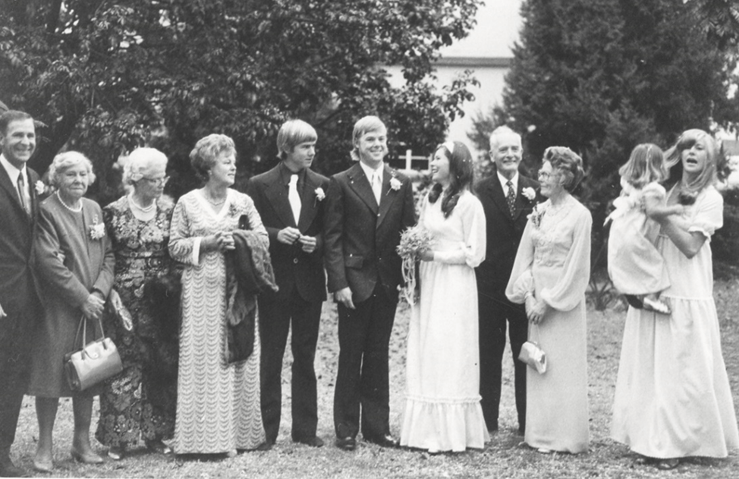
When Kev and I got married in August 1974, we were relief teachers with the Department of Education in Salisbury, Rhodesia but this was not a job we wanted to make a career of.
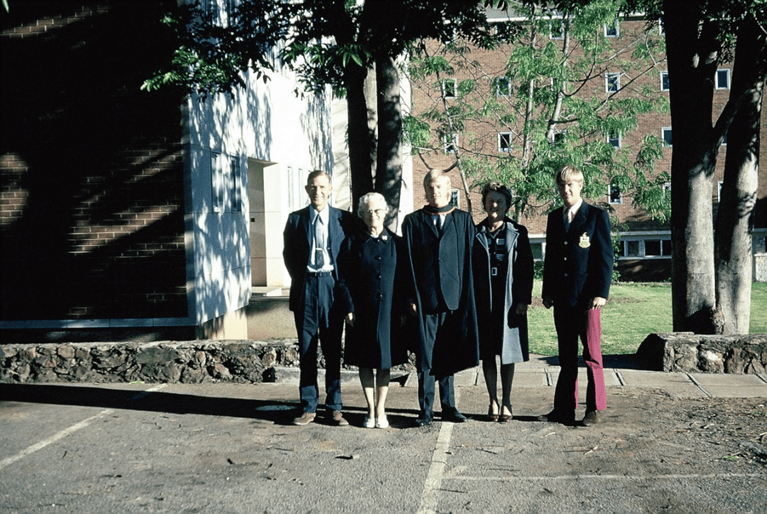
We had both graduated from the University of Rhodesia with science degrees and Kev, in particular, was keen to make use of his chosen field as soon as possible.
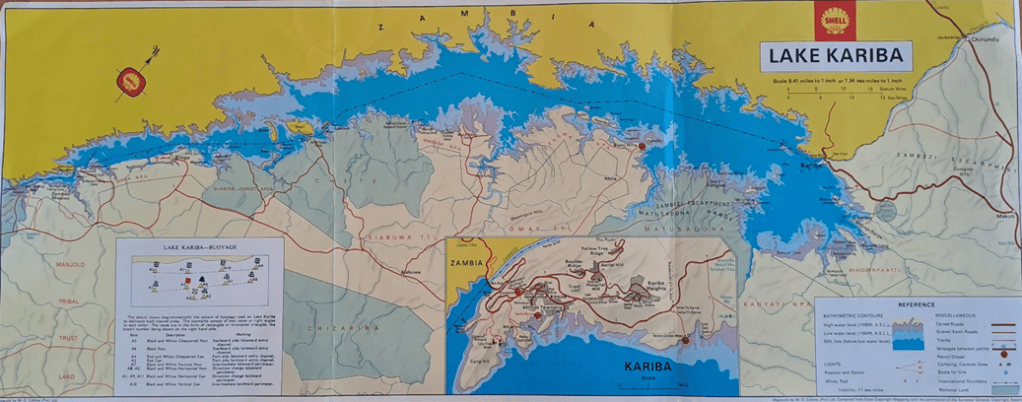
Fortunately, a job with the Lake Kariba Fisheries Research Institute (LKFRI) was advertised in the last months of 1974 and Kev applied immediately. He was successful and before we went on holiday just after Christmas we knew that we would be moving to Kariba at the end of January.
For our holiday we first travelled to Pretoria to pick up Katherine and Gregg, who had been visiting relations there. We then travelled down to Grahamstown to stay with my parents for a couple of weeks, before taking Katherine and Gregg to the airport in Port Elizabeth for their trip back to Durban where they were then living. It was sad to say good-bye to them but we hoped they would be able to visit us in our new home in Kariba. Unfortunately that remained a dream and they were not able to see firsthand the amazing place we were lucky to live in for the next two and bit years. We then made our way back up the length of South Africa and into Rhodesia. It was quite a trip with several stops on the way.
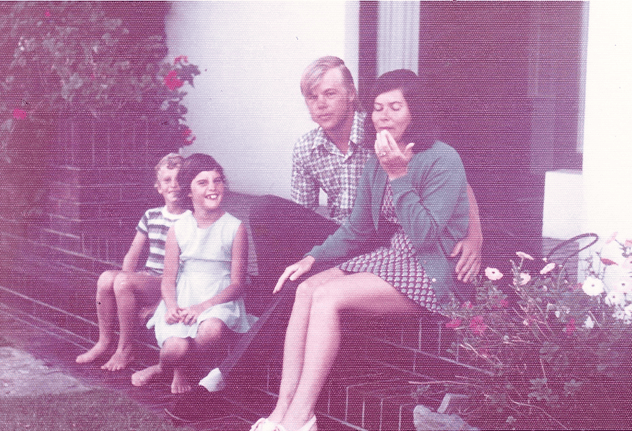
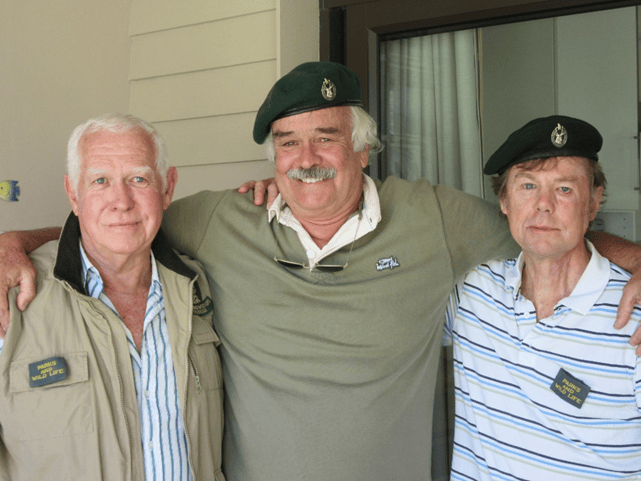
On our return to Salisbury Kev went into the Department of National Parks and Wildlife Management in Salisbury to collect his uniform: shirts and shorts, epaulettes, beret and other bits and pieces. While he was there he bumped into an old rugby and water polo rival from Prince Edward High School, Rob Templeton, who was also collecting his uniform before heading up to Kariba to start work at LFFRI. We became good friends and neighbours with Rob and his soon-to-be wife Kirsty and are still in touch now.
I can remember the excitement of leaving Salisbury and driving out on the Lomugundi road, past Gwebi Agricultural College, Lake McIwaine to the south, on to Banket and Sinoia. The road turns more northerly after Sinoia, through Lion’s Den to Karoi. After Karoi the main road continues towards the border with Zambia, which in those days was closed, but before then comes Makuti and it is here that the road divides and the way to Kariba continues to the south-west, plunging down the escarpment. From the dry highlands, the climate and vegetation change dramatically turning hot and humid with lush tropical growth along the edges of the road.
At some point on the road we have to pass through the tsetse fly control barrier. Up on the highveld there are no tseste flies so cattle (and humans) can live safely without contracting sleeping sickness but down in the lower-lying tropical areas of Rhodesia, sleeping sickness and malaria are constant problems. When you leave this area on the way back to Salisbury, the vehicle has to be sprayed to get rid of, hopefully, any tsetse flies that might be hiding in it.
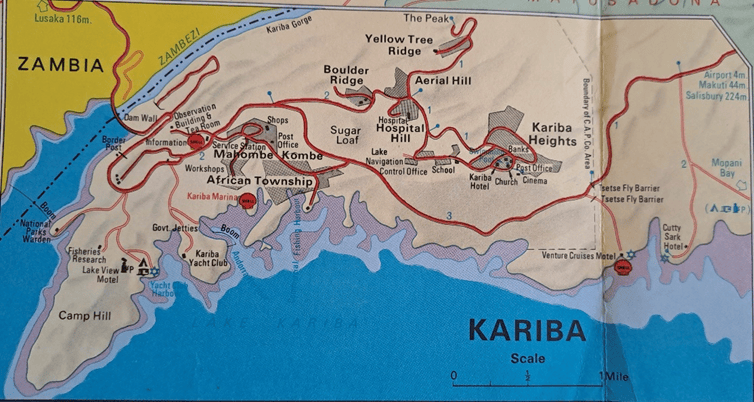
Past the banana farm and the airport, the road follows the lake shore until there is a turn-off to the right and the road becomes steep with twists and turns. Off to the left is the road to Aerial Hill, The Peak and Lake Navigation and the houses of the bosses. A little further and a right turn would take you to the hospital but the little hilltop village centre of Kariba Heights is further yet. This is where the road ends. Up here the views of the lake are breath-taking. In early February the air is still, the humidity energy-sapping, the feeling of being on the edge of the world.
We find our way to Mucharara Crescent. It is on the edge of the town but not overlooking the lake. Instead it looks out onto dense bush and trees, almost claustrophobic in its abundance. The house is quite austere and spartan but has all we need to be comfortable. It is a CAPCO house with three bedrooms, so much too big for us but it was a temporary arrangement while we waited for another LKFRI house to become available.
When our few bits of furniture and boxes of all the other things we possess arrive, we don’t unpack everything because we already know we will be moving in three months’ time. But somehow it seems a long three months! I suppose because everything is new and very different from living in a city where it’s easy to get everything thing you need. The shops in Kariba Heights have very little to offer in the way of groceries and even necessities so we are allowed a day off each month to travel into Salisbury to stock up. Once a week the vegetable truck comes trundling up to the Heights and parks close the hotel on Kariba Heights.
Although we live on the top of a hill in the main centre of Kariba, the rest of the area called Kariba is very spread out. When we first arrive, there are three main hotels on the lake shore – the Cutty Sark, Venture Cruises Motel and the Lake View Motel. In Kariba Heights there is another hotel, with amazing views over the lake. The place where Kev works is also down near the lake, on a small promontory over-looking the Yacht Club and its harbour. He is working at the Lake Kariba Fisheries Research Institute or LKFRI. To get to work, he is picked up from home every morning at 7am and is brought back in the afternoon at about 3.30. The early start is so that you can do most of the work before the sun and humidity take too much of a toll.
Kev loved his job at Kariba. He was given the task of investigating the life cycle of the Lake Tanganyika sardine, or kapenta, to assist in managing the purse seine fishery for it. Kapenta had been introduced from Lake Tanganika (by FAO, a future employer) several years before and had quickly settled into its new home. At that time it was already supporting a small fishery, which grew much bigger in the years to come. His research involved frequent trips on the lake in the Pelican and Sampa to sample water chemistry, plankton and sardine. The main predator of the sardine is the tiger fish so he had to get samples of those too, but he cheated and got help from one of the commercial sardine boats with a purse seine net. I was the only one that caught a reasonable sized tiger fish with a fishing rod while we were there. He used this research for his Masters degree and would have liked to do much more but in the end the Rhodesian bush war and concerns about the future drove us away, far sooner than we would otherwise have liked.
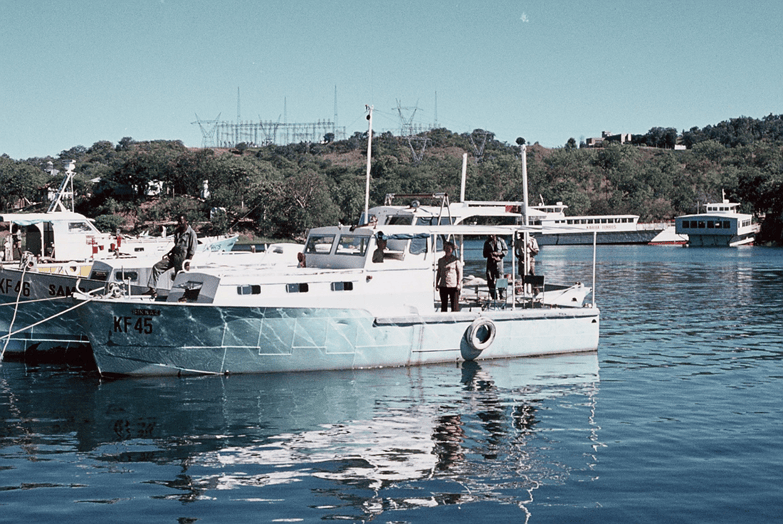
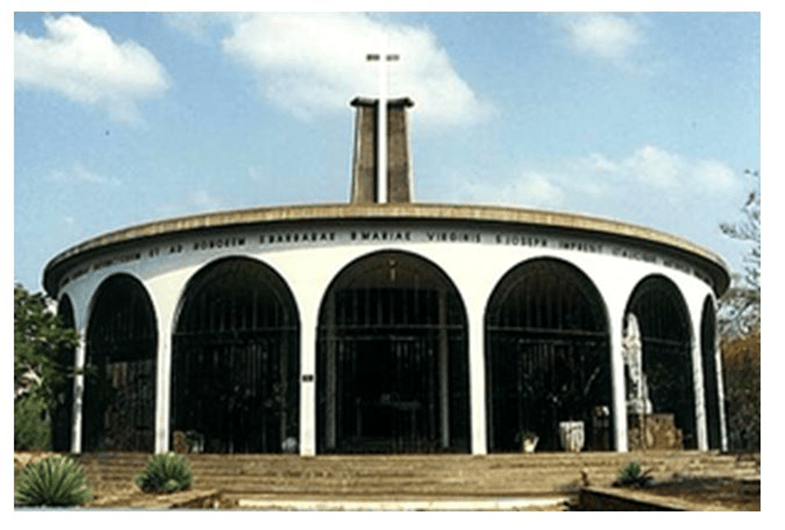
I am left at home to settle us in as far as we need to. It is a strange feeling to be so quiet and peaceful after living in busy Salisbury and working every day. I can wander up to village as its not very far but in the heat and humidity of the day I don’t do it too often! It is much more pleasant to wander up there in the evening and sit on the terrace of the hotel, having a drink and taking in the breath-taking view across the lake to Sanyati Gorge. Or exploring the little Roman Catholic Church, built by the Italians who were the construction team that built the dam wall in the late 1950s.
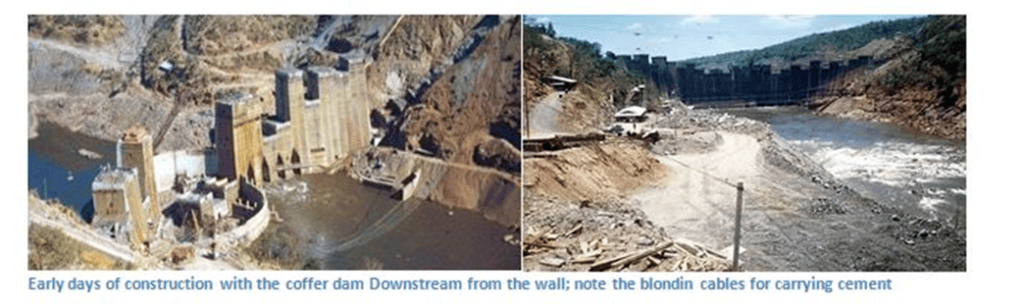
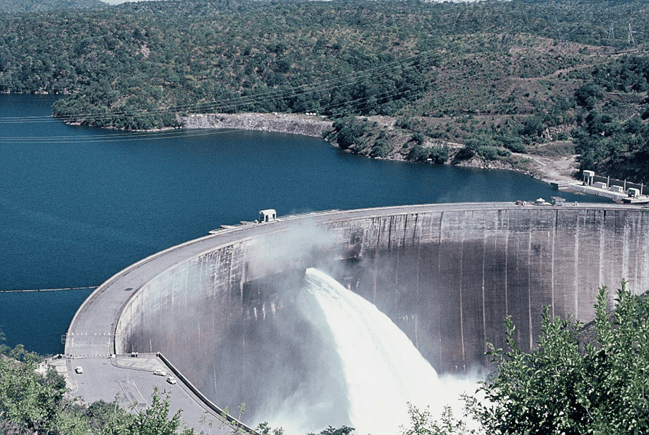
Lake Kariba is a man-made lake, made by damming the Zambezi River at Kariba Gorge. The dam was built to supply hydro-electric power to both Rhodesia and to the Copper Belt of Zambia. Construction started in 1955 by the Italian company Impresit. Initially only the Kariba South power cavern was completed at a cost of $135 million. The North power cavern on the Zambia side of the wall was eventually completed in 1976, during the time we were living in Kariba. The height of the wall is 128 metres or 420 feet and it is 579 metres long (1900feet). The wall itself is a double curvature concrete arch, which holds back Lake Kariba. The lake is 280 kms long and can hold 185 cubic kms of water, and at the time, was the biggest man-made lake in the world.
The curved dam wall connects Rhodesia (Zimbabwe) with Zambia but in the 1970s it is not possible to cross from one country to the other. After the Unilateral Declaration of Independence (or UDI) in 1965, which led to Rhodesia being isolated as a state unrecognised by the international community, ZANU and ZAPU (militant political parties opposed to Ian Smith’s Rhodesian Front) began campaigns of guerilla warfare which escalated from around 1972 and eventually became known as the Rhodesian Bush War. In 1973 Rhodesia accused Zambia of allowing guerillas to have bases in Zambia from which they launched raids into Rhodesian territory and therefore they would close the border between the two countries. Although this decision was reversed a month later, Zambia did not resume cross-border traffic and the border crossing at Kariba remained effectively closed.
During the course of his work, Kev did have to visit the Rhodesian side of the wall sometimes. On one occasion, when the flood gates were being closed, he and some others had to collect elvers, young eels, from below the wall for someone trying to culture them. The young eels migrate up the Zambesi from the sea where they are spawned but they couldn’t get beyond the dam wall and congregated there in their thousands. As the flood gates were closed, the water level below the wall dropped rapidly and the elvers were trapped in pools and crevices where they could easily be collected. We also took walks to the wall, particularly when the Lake was high and the flood gates were open to allow water to flow into the Zambezi River.
Floods were a fairly regular occurrence before the dam was built and even during the construction phase, flood waters caused considerable damage to the foundations of the dam wall and led to delays in building works. The Tonga people, who lived along the banks of the Zambezi River and who had been displaced by the building of the dam, believed that this destruction was the work of the River God, Nyaminyami, because he was angry at the disruption and losses that the building of the dam would cause.
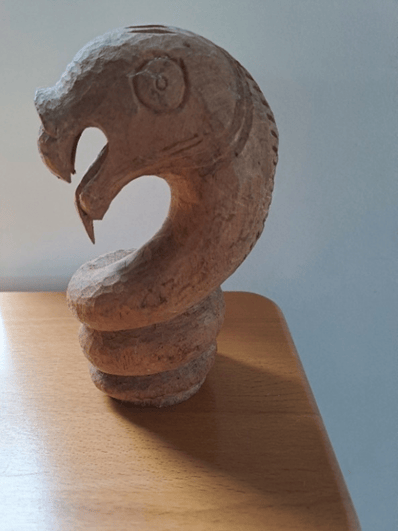
Nyaminyami is usually depicted as having the body of a snake and the head of a fish. He is said to live in the river and control life on and in the river. The Tonga people thought that Nyaminyami and his wife had lived in Kariba Gorge, the site of the dam wall and that they had been separated by it, which was also a cause of his anger. On one of our walks to the dam wall, we bought a carved, wooden figure of Nyaminyami, which we still have.
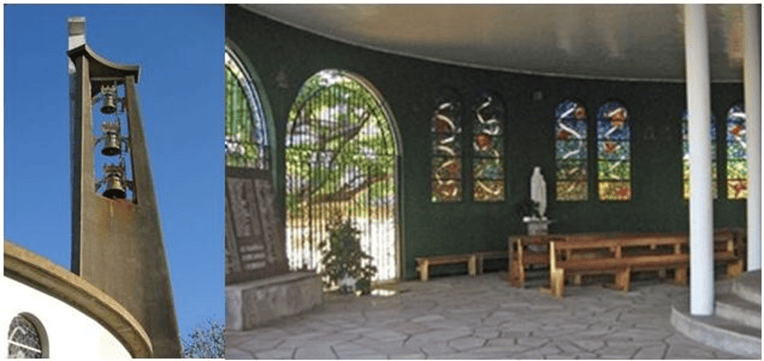
In the coolness of the evening we take a stroll along to the little Church of Santa Barbara, on the top of Kariba Heights hill overlooking the lake. It is an open-air building, appropriate for the climate but also typical of Roman Catholic churches in the use of stained glass and marble statues. Saint Barbara is the patron saint of miners and builders of dams. The church is built in the shape of a coffer dam and is dedicated to the lives of the 86 workmen who lost their lives during the construction of the dam wall and power station. Inside the chapel there is a marble plaque with all the names of those who died engraved on it.
Before we left Salisbury we had tried to keep to an almost vegetarian diet and once in Kariba we decided to try and keep this up. In those early months I had plenty of time to experiment with and invent vegetarian recipes. Kev, of course, was the main person to be presented with these experiments but they were also inflicted on some of his colleagues, in particular Rob Templeton, who was still a bachelor at the stage. Steve Mitchell was another willing or unwilling victim as his wife Jan was quite often in Salisbury and we invited him round to dinner on those occasions. We did, however, make allowances for fish as every Friday the LKFRI staff would be given some fillets of Kariba bream to take home for supper. They came from experimental nets set by the technical staff to provide statistical data for research.
The next part of my story will focus on settling into our new accommodation and some of the adventures we had in the months that followed, especially those including elephants!

