Part 2
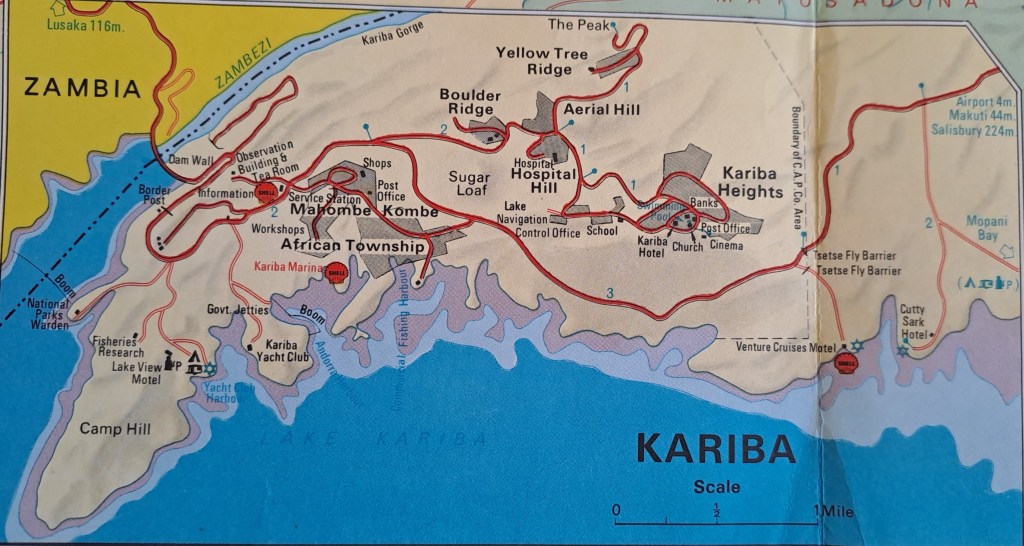
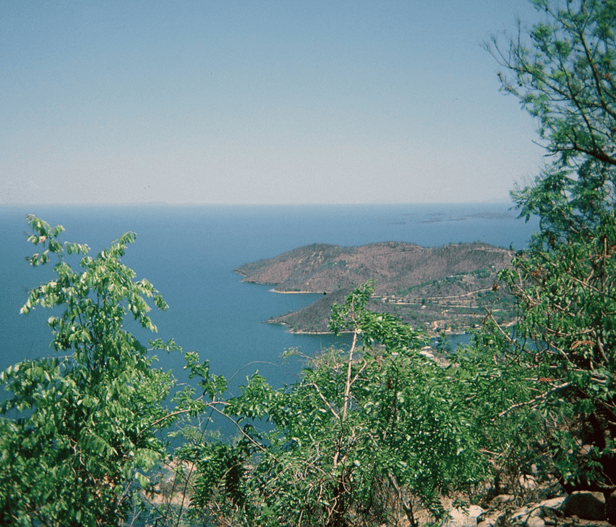
We had moved to Kariba at the end of January 1975 to temporary accommodation and by the end of April the house that we were meant to have became available. The heat in January had been almost overwhelming but by April it was a little cooler, which was fortunate as quite a few items had to be “walked” from one side of Kariba to the other! And the terrain was not flat either. Mucharara Crescent dipped towards Mucharara valley and Jacaranda Close was over the other side of the Heights hill. The new house was still one of the CAPCO built houses with concrete floors and a corrugated iron roof so not friendly in an environmental sense. It did have the most magnificent view though – a view we never tired of seeing and even today I can imagine myself standing at the edge of the garden, a thousand feet above the lake and looking out to the south west some 60 miles down the length of the lake to a point beyond Matusadona and Bumi Hills or due south towards Sanyati Gorge, which you could see on a clear day even though it was about 25 miles across the lake.
This house was a lot smaller than the one Mucharara Crescent but was much more manageable for us. The lounge was a comfortable size and had double doors that opened onto a shaded veranda. The second bedroom was quite small and was just an enclosed part of the veranda. The original kitchen was very small and rather dark but a large extension had been added at some time so we put our extra large fridge there and some cupboards for storage. It was also where the washing machine was kept when not in use. The washing machine will feature quite prominently later on.
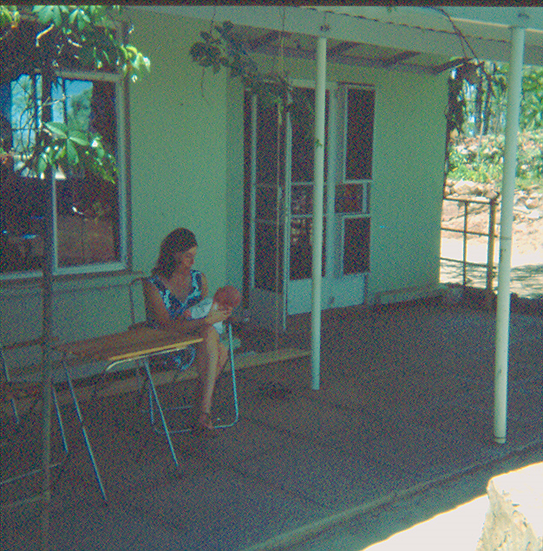
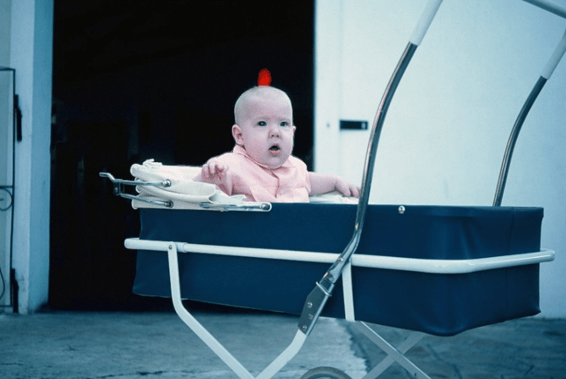
The garden was quite big with a raised lawn shaded by an enormous flamboyant tree (Delonix rex). The lawn was separated from the veranda by a stone wall, which also extended further to the end of the property. A couple of paw-paw trees grew there but that part of the garden was fairly arid. We realised at some point in our time in the house that the stone wall provided a comfortable habitat for snakes, especially a spitting cobra! The paw-paw trees also never actually bore ripe fruit because, as soon as the fruit was large enough, the baboons would come and raid them. The baboons were also a concern (mostly for me) when our son, Shaun, was a baby. I had read that baboons had been known to snatch sleeping babies from prams if left unattended outside – admittedly this is most unlikely – but Shaun was never left to sleep outside in his pram!
At the bottom of the garden on the left-hand side facing the lake was a single roomed stone cottage, generally a haven for spiders and whip-scorpions but when cleaned up did provide a space for visitors to spend the night. The only other disadvantage was the thunderous noise made by the bush babies scampering over the corrugated iron roof which was on their nightly route through our garden.
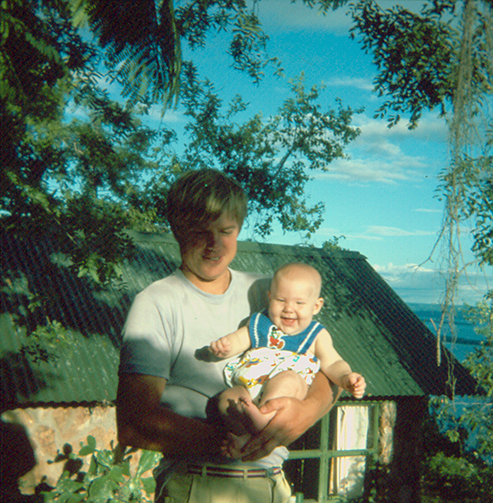
After we left Kariba, the Templetons moved into the house with their twin boys. Shortly after they moved in, Kariba was the target of a rocket attack from the Zambian side of the lake. No one was injured but it prompted Bob Cameron, the tech person at LKFRI to design and make igloo bomb shelters for the houses of the staff.
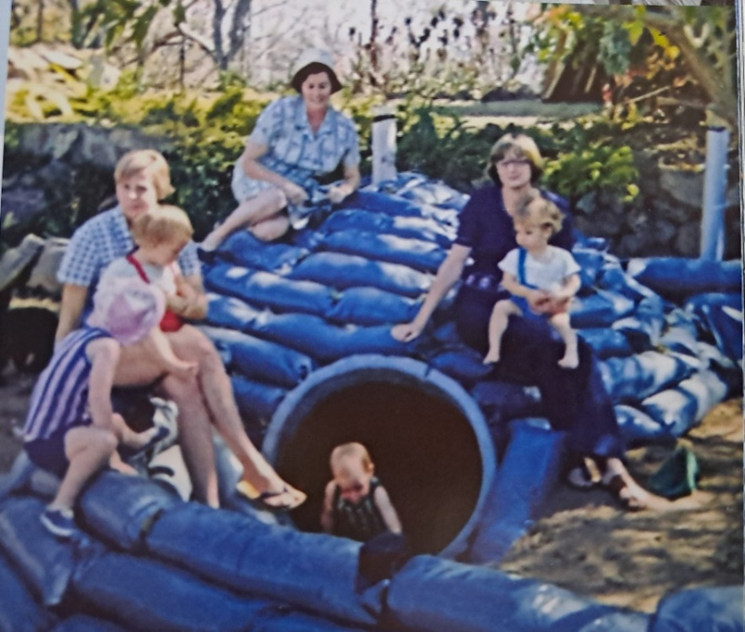
After the Templetons left the house was occupied by a bachelor (John Langerman), who turned the cottage at the bottom of the garden into a pub! It was called the Cock and the Crutch.
Being in Jacaranda Close brought us right opposite the house of one of Kev’s LKFRI colleagues, Steve Mitchell and his wife Jan. This was the start of a friendship that still continues, though we live many miles distant now. As Jan was also a “housewife” it was very convenient to get together over a cup of tea or coffee on a regular basis and we soon found another reason to be friends – we were both pregnant!
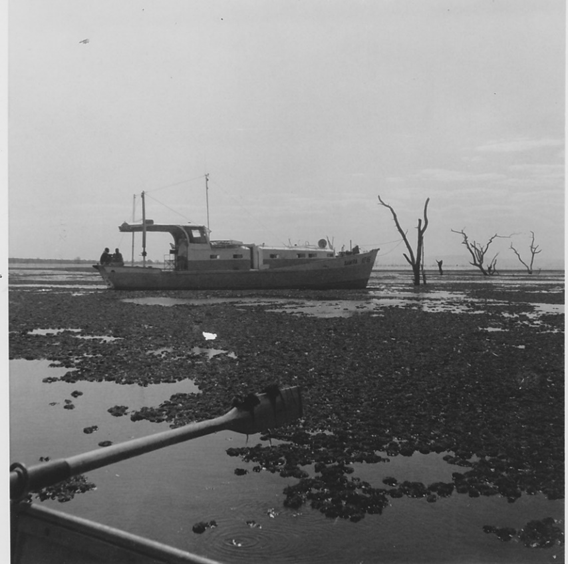
Kev’s work quite often required him to spend one of more nights out on the lake on one of the Institute’s boats. Below is a photograph of the Sampa, one of the research boats.
Fortunately, I was able to accompany him sometimes. When the lake was calm and the weather good, you could imagine yourself on a private yacht, even though the boat was fairly spartan and rustic. We were treated like royalty by the crew, who set up camp chairs on the stern deck, brought us drinks and cooked meals for us. It was all like a bygone era.
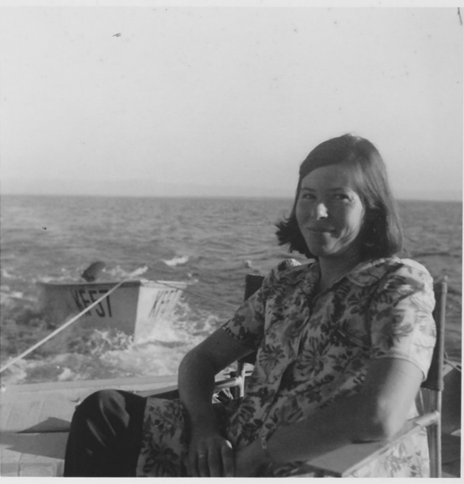
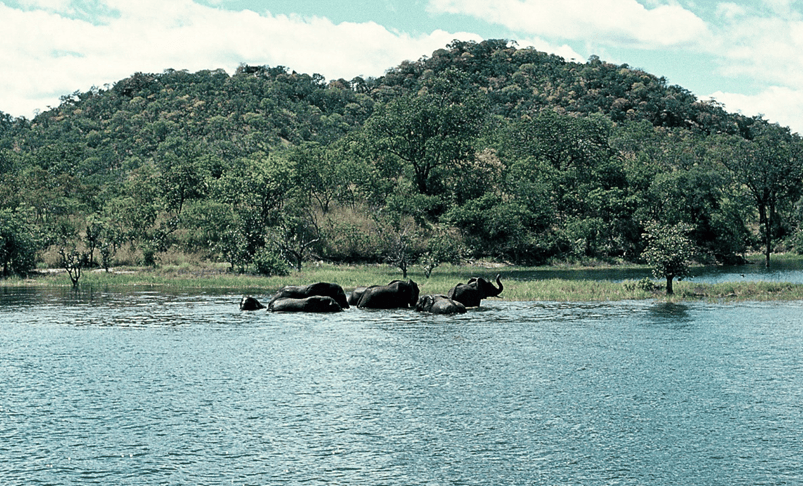
Kev did have to work as well, taking water samples and sometimes fishing for sardine or tigerfish. At night the boat would be tied up to the shore in a sheltered bay or along the banks of one of the tributaries feeding into Kariba. A smaller boat with an outboard motor was usually towed behind the bigger vessel and in the early evening we would cruise the shoreline looking for the herds of game that were abundant on the edge of the lake. There were crocodiles as well, so unfortunately swimming wasn’t an option but drifting slowly along as the sun went down and spotting herds of buffalo and elephant was enough reward.
Sometimes Kev had to go out on the boat at night to catch kapenta. At night they come up from the deeper water where they spent the daylight hours, so fishing was always done at night by attracting the little fish into nets with bright light. I only went out once, on a rather stormy evening. Perhaps you wouldn’t imagine a lake could get rough but Kariba is such a large expanse of water that storms, which are quite common, can whip up quite substantial waves, up to about three metres high. The wave length is shorter than a wave in the sea because of the restricted distances on the lake so the waves tend to be very choppy, which doesn’t make for a comfortable ride, especially for someone susceptible to motion sickness. Probably being pregnant at the time didn’t help but I didn’t try a second time!
By now we were feeling fairly much at home in Kariba, particularly as Kev worked with a friendly and interesting group of colleagues at LKFRI. A gathering place for Kariba residents after work and at weekends was the Jam Jar Inn, a pub that was in the BSAP compound. It was here that we heard about the plight of a litter of puppies, who were looking for a home. It was quite a tragic tale. The mother of the puppies belonged to the Head of the animal side of National Parks and Wildlife, at the time. The family lived on The Peak close to the house of the Lake Navigation Captain. Both families has dogs, one female and one male. The male dog was described as an “Alsatian that shrank in the wash” but I can’t remember what breed the female was. But these two got together and in due course the puppies arrived at the Tomilinson’s house. The house had a flight of stairs leading up to it but mother kept the puppies safely out of sight indoors. Unfortunately, though the local leopard got wind of the puppies and one day the leopard climbed the steps and the mother frantically tried to defend the puppies, and in the end was killed by the leopard. All the puppies survived but were only four weeks old so homes were anxiously sought for them.
One evening, the puppies were brought to the Jam Jar obviously with the aim of finding homes for the pups and, being susceptible to the charms of these rather pathetic little bundles, we agreed to take the runt of the litter! For the first few weeks he slept in a box on my side of the bed. He was quiet and content as long as my hand was touching him so I had an uncomfortable time of it until he was happy enough to sleep without the comfort of human touch. We called him Mickey, though now I can’t remember if there was a specific reason or he just looked like Mickey.
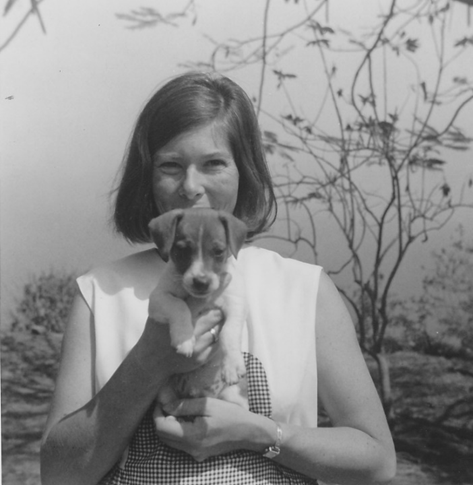
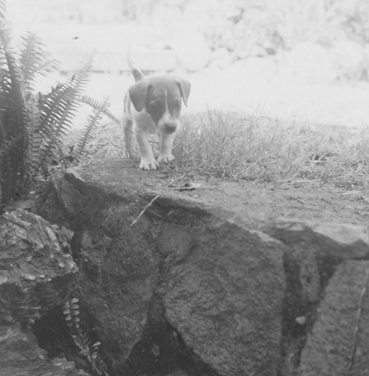
He was a very cute looking little dog – a bit like a Jack Russell with rather long legs and a long tail but white with brown patches like a Jack Russell. He quickly developed a lively personality that nearly had disastrous consequences. To make sure he did not suffer the same fate as his mother, we were very careful about letting him roam around on his own. During the day it was safe enough and he didn’t wander far from our garden but at night when he was let out for a last evening toilet break, he became a very slippery customer. At first he was allowed to go about his business on his own and if he showed signs of straying we would call him back. But after a while he got tired of being controlled and he would sneak deeper and deeper into the shadows and before you knew it, he had vanished completely. Then it was panic stations to find him before a leopard did!. After a few times of scouring Kariba in the dark, he was put on a lead and had to make do with an audience for his nightly ablutions.
The shops in Kariba were very limited in what you could buy but still provided for some interesting outings and purchases. One of the shops was a hairdressers cum record shop. Jet Baker was the hairdresser, and also get a good stock of the most popular LPs of the time. One of our purchases was a double LP by Gordon Lightfoot, which we still enjoy listening too although now in CD format.
Nest door to Jet was a hardware shop run by Muir Adamson, who lived on Hospital Hill. He had great stories of the exploits of the elephants that roamed the valleys around Kariba and quite often blocked the road between the Heights and Hospital Hill. At the junction of the road that looped around the Heights and the way down to the main road was a small disused quarry and for some reason the elephants liked to spend time milling around there. Muir had a nice garden and liked to grow vegetables. Somehow the elephants always knew when the tomatoes were ripe and they would amble up the driveway of the house, raid the tomatoes and leave through the fence.
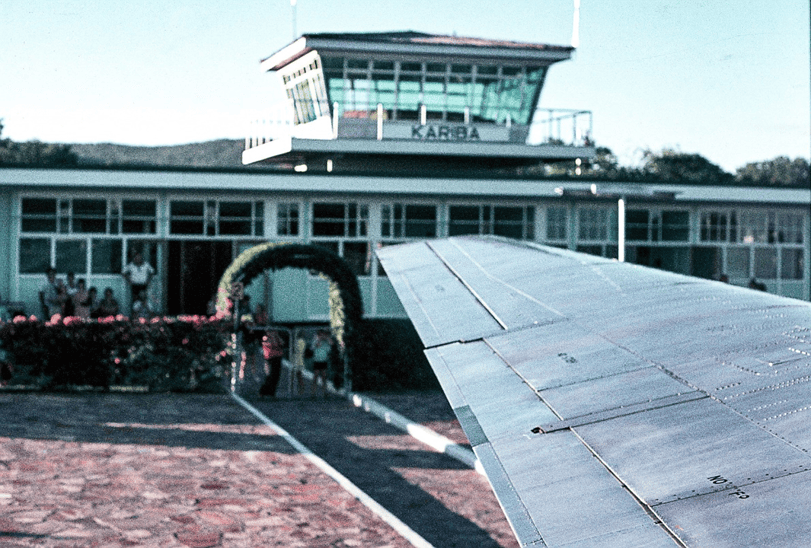
Groceries and fresh vegetables were hard to come by, so we enjoyed our trips into Salisbury every 4 to 6 weeks. We usually drove there but occasionally took the Viscount flight from Kariba airport to Salisbury.
Mostly we stayed with Kev’s parents , occasionally with his sister and her husband. It was always a nice break from the heat and humidity of Kariba, which was a constant all year round. It was a chance, in the cooler months, to wear a jersey!
The temperature in Kariba never got cool enough to wear warm clothes but in the winter months the town swimming pool closed because it was not considered warm enough that people would want to swim. Once spring and summer arrived the pool would be opened but don’t imagine you would have a nice refreshing dip – the water temperature would already be above 30 degrees so a warm bath was what you got!
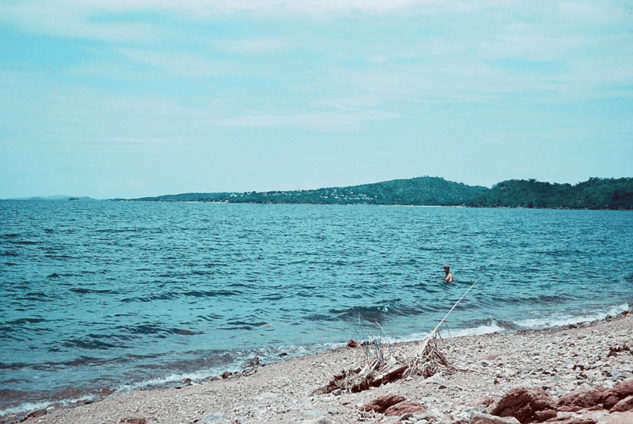
Swimming in the lake near the shore was extremely dangerous because of the abundance of crocodiles and also the threat of getting bilharzia. However, if you were on a boat far enough from shore it was safe to swim because it was too deep for crocs to venture out that far. Occasionally we did take a dip from the boat but it was a funny feeling to know there were so many metres of dark water beneath you. There was a place where it was deemed safe to swim from the shore because it was a very rocky and pebbly shore that crocodiles didn’t like and were never seen there. It was called Mica Point and was accessed by a very steep and rugged road – actually it could hardly be called a road as there were so many rocks and boulders to be negotiated. Most sensible people either avoided it or used a 4×4 vehicle to go down to the beach. One time we decided try the journey in our newly purchased Renault 4. It looked like a fairly rugged vehicle and in fact we made it down without too much trouble but getting back up was another story. We managed to get thoroughly stuck, literally between a rock and a hard place and had to borrow a 4×4 Landrover from the Institute to pull us out!
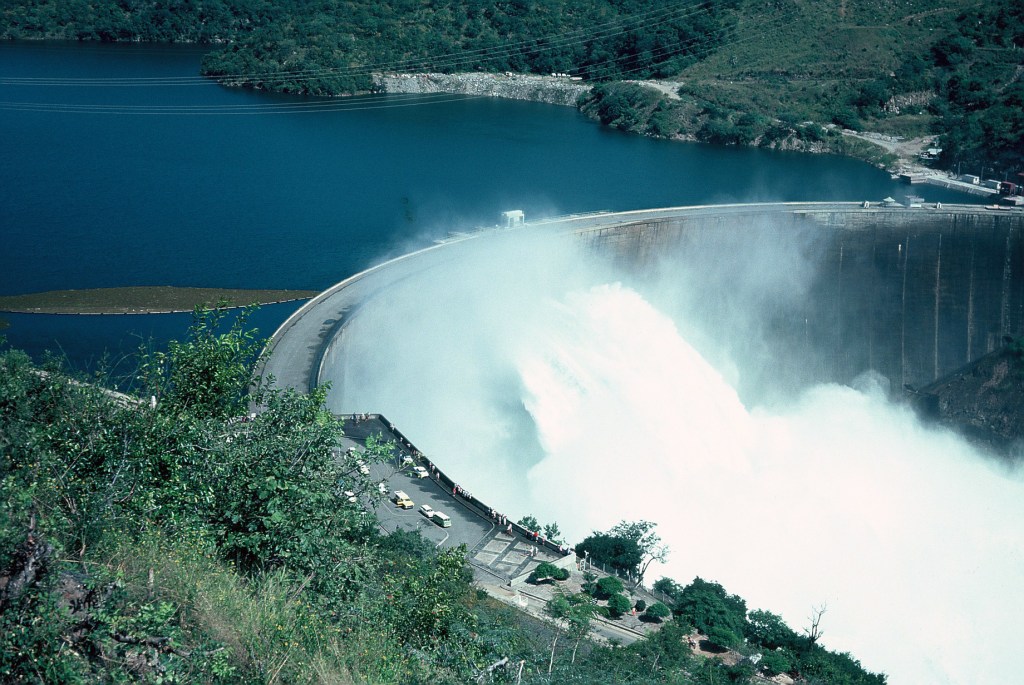
A favourite place for a Sunday afternoon drive was along the power lines which stretched from the turbines at the dam wall to all parts of Rhodesia. Roads, although pretty rough, had been made alongside the power lines and pylons so that engineers had access to them when maintenance and repairs were necessary. The land on either side has also been cleared to some extent and this made for easy game viewing and the open areas were places the elephants and other wildlife visited.
However, these open and accessible areas had a darker side. They made it easier for poachers as well as innocent game viewers. At one point during our time in Kariba, poaching got so bad that the Dept of Parks and Wildlife decided to launch patrols and stakeouts along the power lines as well as other areas to try to stop or at least deter the poachers. Dept of National Parks and Wildlife employees from both the wildlife side and the fisheries side were called on to take part in several nighttime exercises. Kev was partnered by a member from the wildlife side. They were to patrol and stakeout an area along the power lines. Once it got dark the two of them drove one of the department’s Landrovers along the rough roads following the power lines and then stopped at an open spot with all lights switched off. It was a pitch black night with no moon. At one point Kev got out of the vehicle to look around and as he did so he sensed rather than saw or even heard a presence. Not wanting to be seen, he crouched down next to the vehicle and in doing so he could see, by looking underneath, the outline of a huge elephant silhouetted against the dark sky just a few metres away from them. The elephant continued on passing by with not a sound. The irony of this story is that, quite a while later, it came to light that Kev’s patrol companion was one of several local poachers.
Another elephant story caused a problem not because of the elephants themselves but because the chief Wildlife ranger managed to shoot out the electricity power line connecting Kariba Heights to the local electricity grid. It was one Good Friday when everyone was looking forward to a peaceful long weekend. The elephants had been gathering in the little quarry as usual and Derek Tomlinson decided it was time they moved on so he encouraged them to head down towards the Mucharara valley and away from the town. Just to make sure they got the message he fired a shot from the hip over the heads of the elephants and by some unfortunate chance hit the power line! We were without electricity and water, because water had to be pumped up to the reservoir on the Heights and with no power the pumps didn’t function. The municipality had to lay on water bowsers to bring water to all the house and businesses on the Heights everyday. It was not quite the relaxed weekend we’d hoped for.
On the whole the elephants were peaceful and well behaved but occasionally one would turn rogue. My parents, who still lived in South Africa at the time, flew up to Kariba to see where we lived as they had not visited Kariba before. However, they were rather put off staying in our cottage with the whip scorpions and night time disturbance by the nagappies and opted to stay in one of the lakeside hotels instead. They chose the Cutty Sark, a hotel fairly isolated from the residential parts of Kariba town and accessed down a road a couple of kilometres long off the main road to the airport. The power lines crossed this road and to the east was undeveloped land all the way to the airport so it was an area occupied by elephants and other wildlife. Late one afternoon we were driving my parents back to the hotel and going slowly down the rather bumpy narrow road towards the hotel when we first heard then saw a young bull elephant trumpeting a warning to get out of his way. We were unsure of whether to stop and wait for him to pass or speed up and hope to out run him. It soon became clear that he was not going to calm down and pass by leisurely so we had no choice but to speed up as much as possible, being followed by more trumpeting and threatening then breaking into a full blown chase. Fortunately we made it safely into the hotel grounds across a cattle grid which deterred the elephant from following. We heard a few days later that one of the hotel workers who had been walking from nearby accommodation towards the hotel had been caught by the same elephant and killed. In that case there was no choice but to kill the elephant as well. He lived too close to humans and would continue to pose a threat if left alone. It was likely that this elephant was in musth because of elevated male hormones and this can lead to aggressive, unpredictable behaviour.
The third and final part of this brief memoir is about our last 18 months in Kariba and the growing challenges of living in this remote paradise.

