Last Sea day – passing through the Dardanelles
Day 6 was our last day at sea without a shore visit and the day we would be passing through the infamous Dardanelles Strait. The Strait marks the border between Europe and Asia and has been an important landmark throughout history. The Dardanelles is the passageway from the Aegean Sea to the Sea of Marmara, with the peninsula of Gallipoli on the northwestern side of the Strait. As this is a particularly narrow waterway, ships have to proceed very slowly although having a pilot on board is not required.
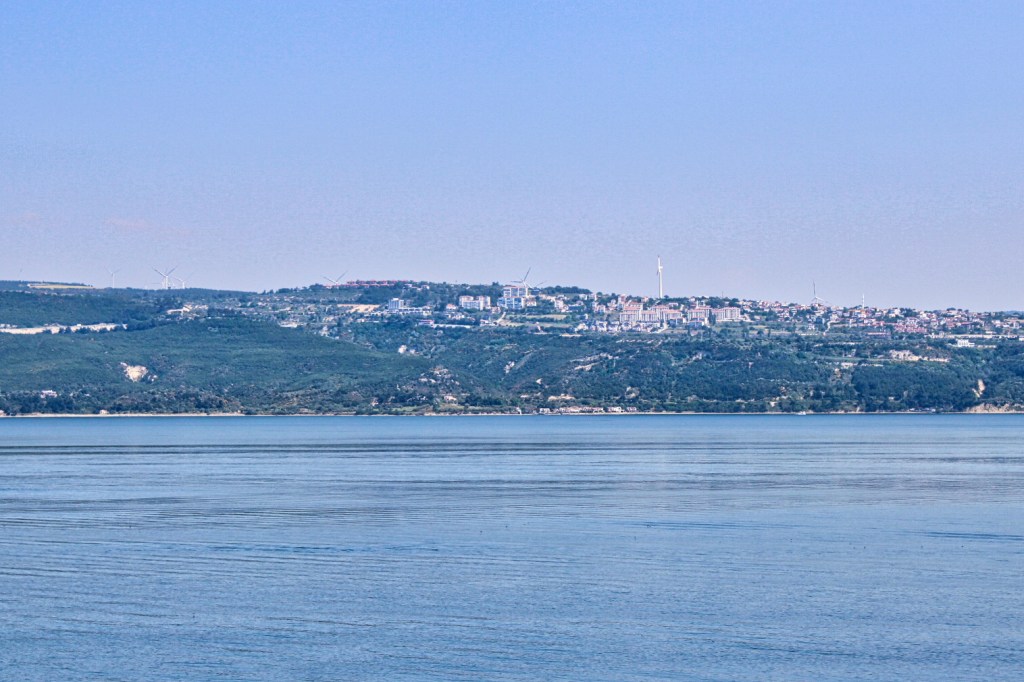
In ancient history the city of Troy was close to one end of the Dardanelles and was able to control who entered the waterway. The Persian Xerxes and later the Maecedonian Alexander the Great crossed this channel on their way to invading each other’s lands. With the advent of the Ottoman Empire in the 14th century, the capture of the Gallipoli Peninsula enabled the Ottomans to control access to Constantinople and the Black Sea.
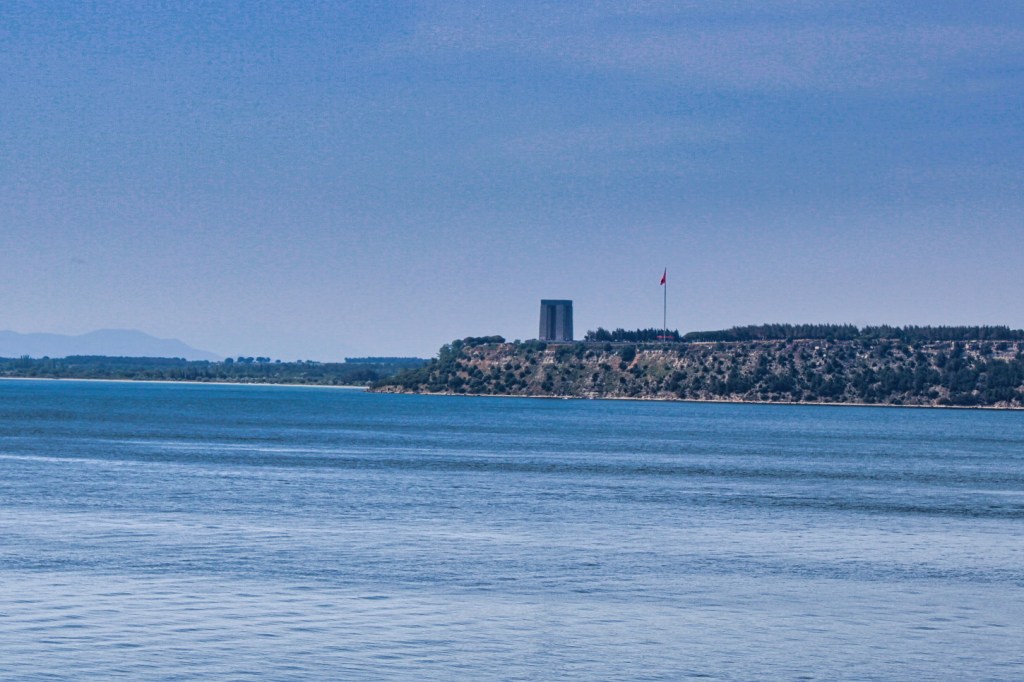
The most tragic events that took place on the Gallipoli Peninsula happened during the 1st World War when the Allies (Britain, France, India, Australia, New Zealand) sent an invasion force with the aim of opening up the Strait and defeating the Turkish Army. The campaign began in February 1915 with a naval attack supported by a number of aircraft but the Turkish mines in the Strait took a heavy toll on the Allied ships and this attempt was abandoned in favour of a land-based attack. After delays as a result of bad weather and logistical difficulties, landings on the southern most tip of the Dardenelles Peninsula began in late April 1915. Initially there was optimism that the campaign would be successful and over relatively quickly but the Allied commanders had underestimated the strength and tenacity of the Turkish forces and battles for dominance on the Peninsula continued for nearly 8 months before the Allies admitted defeat and all troops were withdrawn. Many casualties were sustained on both sides. One of the Turkish commanders was Mustafa Kemel Ataturk, who went on to become the first President of the Republic of Turkey after the war. The Gallipoli Campaign had negative repercussions for a number of British politicians, including Winston Churchill, who was demoted from First Lord of the Admiralty and Herbert Asquith, the then Prime Minister who subsequently resigned.
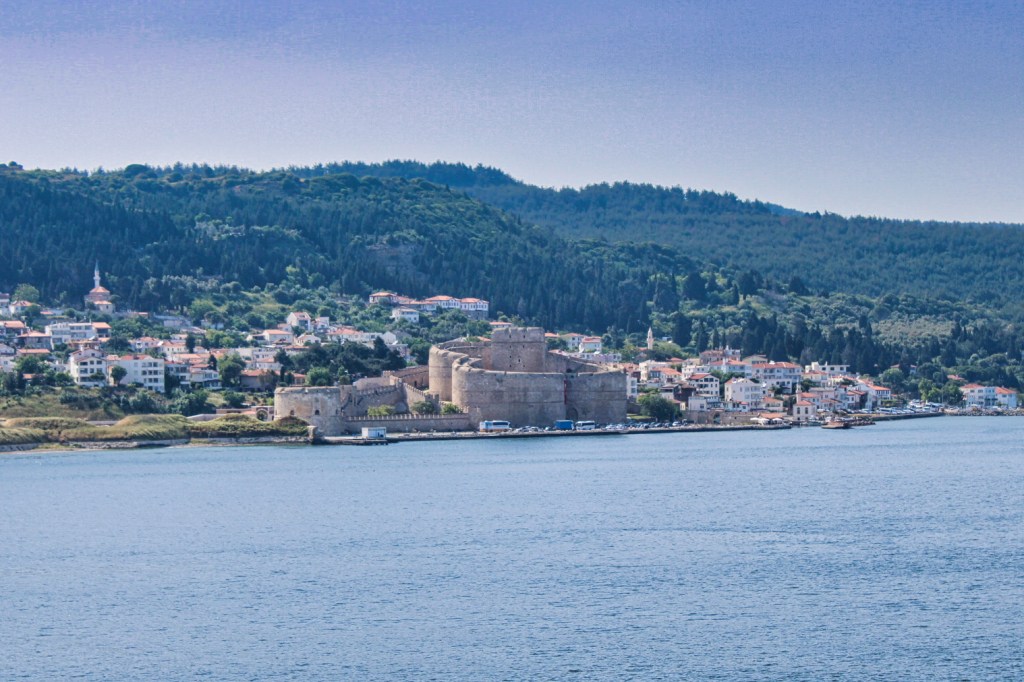
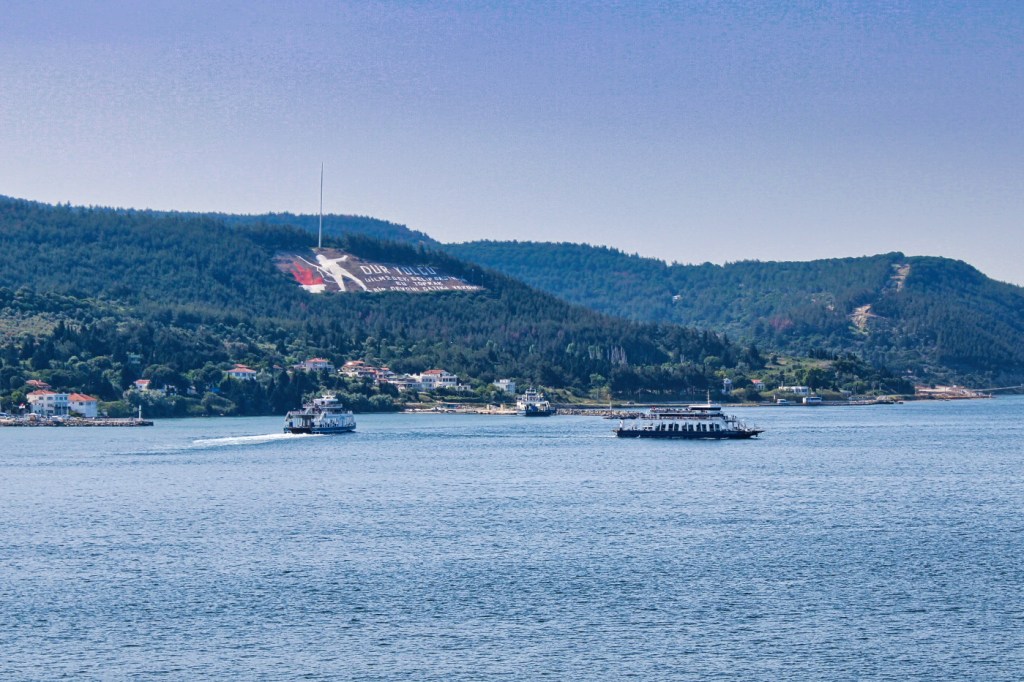
Troops from Australia and New Zealand were landed at Anzac Cove at the start of the campaign and, despite several attacks by Turkish troops on their positions and heavy casualties, the beachhead was never captured by the Turks. In December 1915 all troops were evacuated as the Allied leaders recognised that the situation on the Peninsula had become untenable with the opening of a land route through Bulgaria so that Germany could more easily resupply the Turkish army.
The significance of the Gallipoli Campaign is particularly strong for Australia and New Zealand. At the time they were emerging states in the first stages of independence and the troops and leaders sent to Gallipoli were young and untested in situations of war. The experiences suffered by those involved could be compared to a coming-of-age for the two countries. Today ANZAC Day, celebrated on 25 April each year, has more significance for Australians and New Zealanders than Remembrance Day.
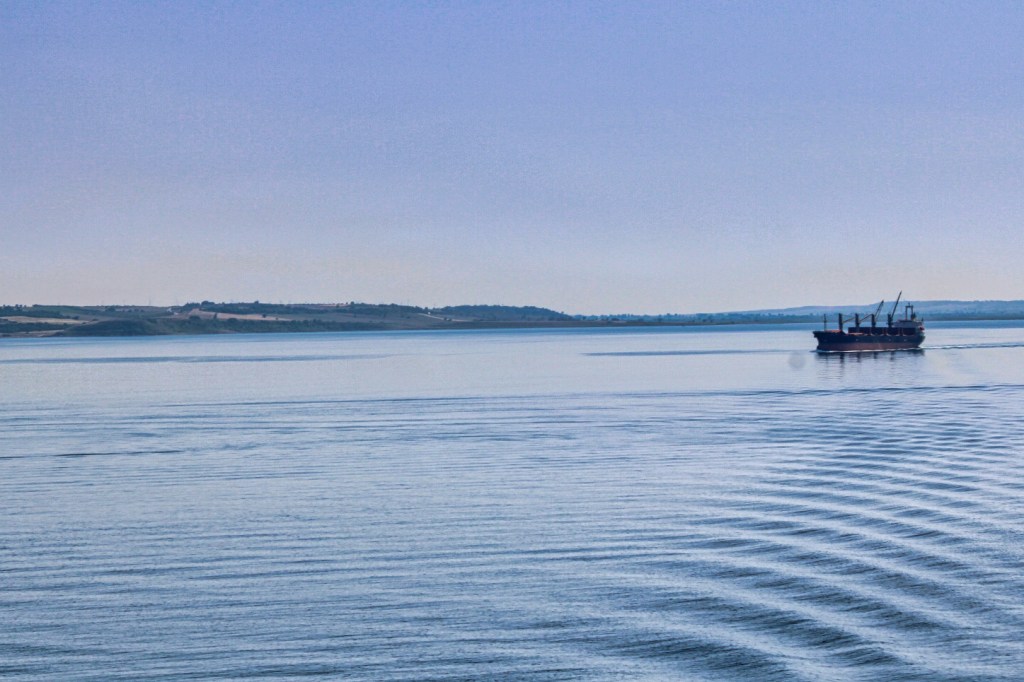
On our passage through the Dardanelles, the captain and crew of the Queen Victoria gave a commentary on the events of the campaign and the mood on board was significantly respectful and subdued. Many passengers lined the decks of the ship and for some it was an obviously emotional experience.
Ataturk himself acknowledged the sacrifice made by all in the conflict. On the occasion of ANZAC Day 1934 he sent this quote to an Australian newspaper: “The landing at Gallipoli on April 25, 1915, and the fighting which took place on the peninsula will never be forgotten. They showed to the world the heroism of all those who shed their blood there. How heartrending for their nations were the losses that this struggle caused.” Earlier, in 1931 he said: “The Turks will always pay our tribute on the soil where the majority of your dead sleep on the windswept wastes of Gallipoli.”
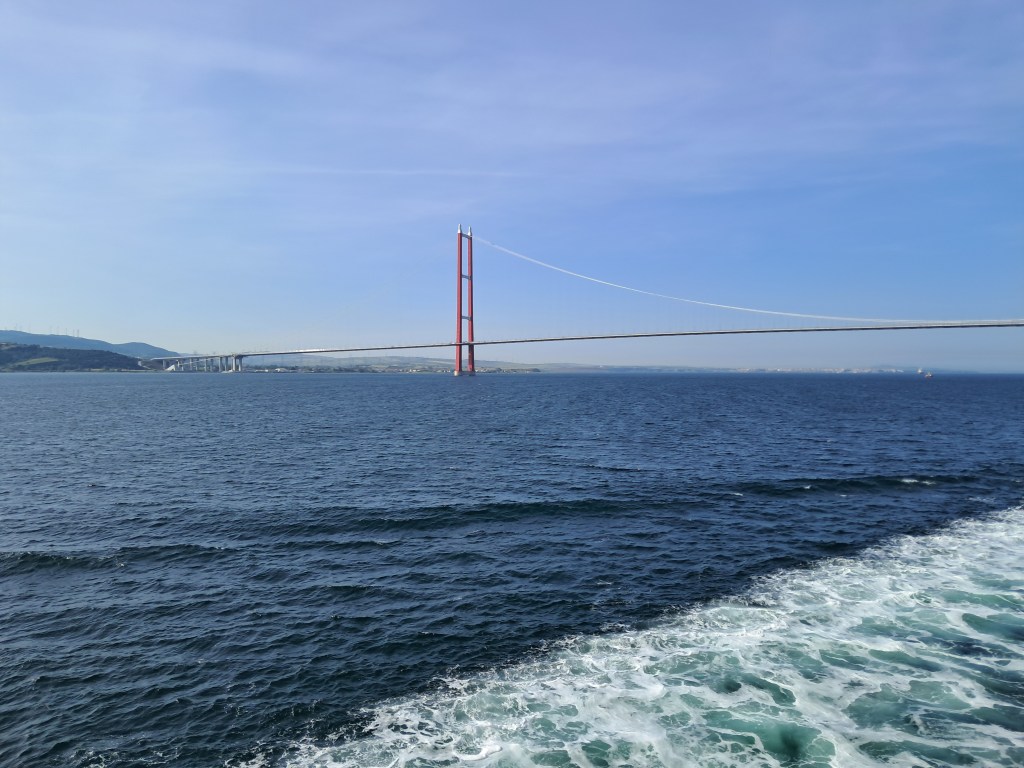
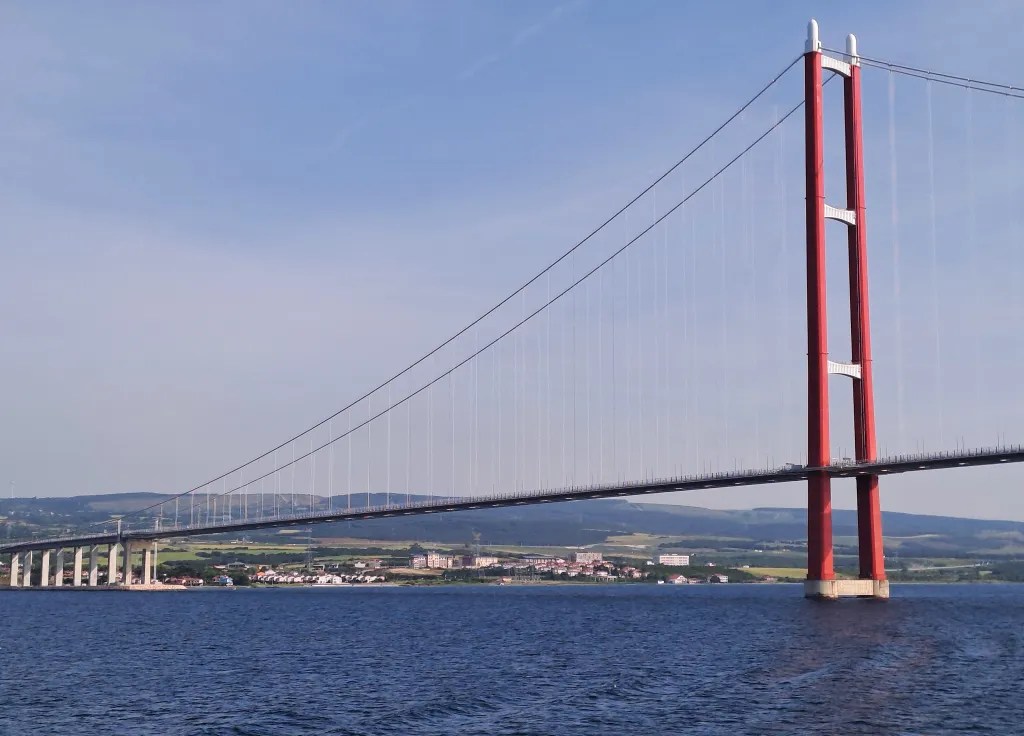
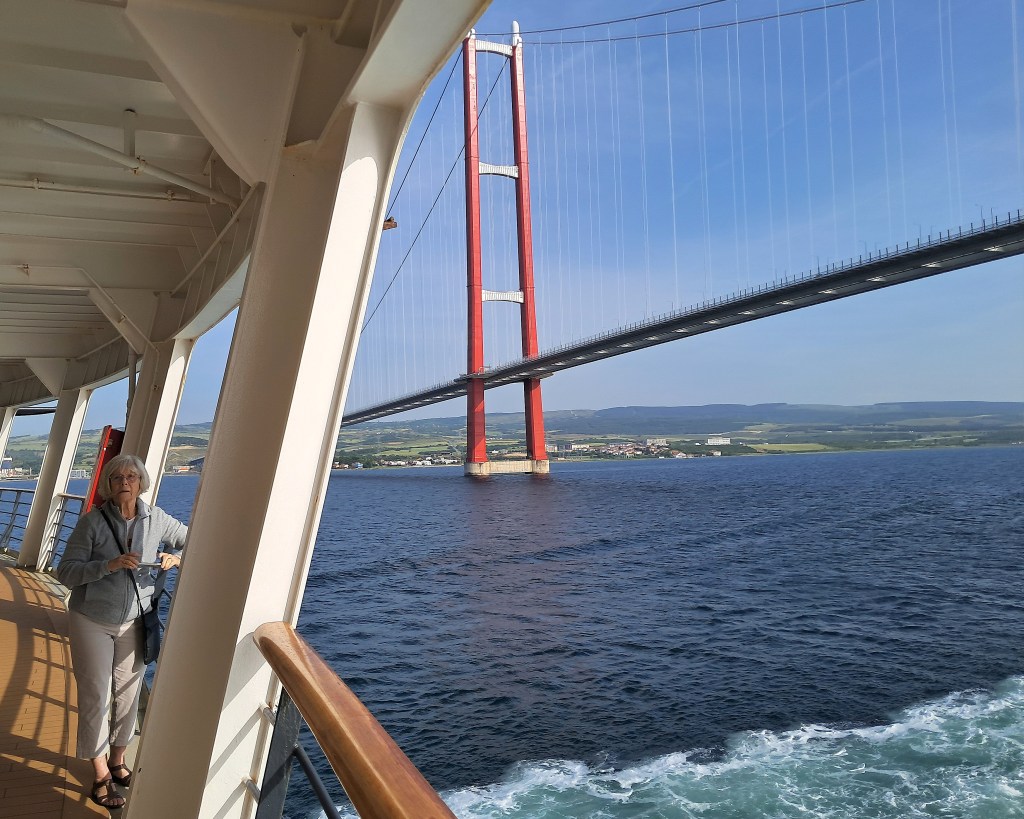
Further along the Dardanelles Strait, about 10 kms west of the Sea of Marmara, is the longest suspension bridge in the world. It joins motorways on the European side of Turkey and the Asian side. Opened in March 2022, the official name of the bridge is 1915 Ϛanakkale Bridge. The 1915 date is significant because it honours the Turkish victory in the Gallipoli Campaign.
Later, when it was dark, we passed into the Sea of Marmara, a small inland sea entirely enclosed by Turkey. On the eastern side the Sea is constrained by the Bosphorus, the narrow passageway connecting to the Black Sea and straddled by the city of Istanbul, our final port.
As the evening attire was designated appropriate for a masquerade ball, we decided to go upstairs to the cafeteria and enjoy a relaxed meal unconstrained by formal dress! We did go to the theatre for the evening show, though and enjoyed Hollywood Rocks, celebrating a history of music for the movies.

