Ephesus
After a peaceful night en route to the western coast of Turkey, we woke in the morning to the Turkish coastline and the entrance to the port of Kusadasi. Today’s tour was one of the reasons we chose this particular cruise because Ephesus was a place we had wanted to visit for sometime.
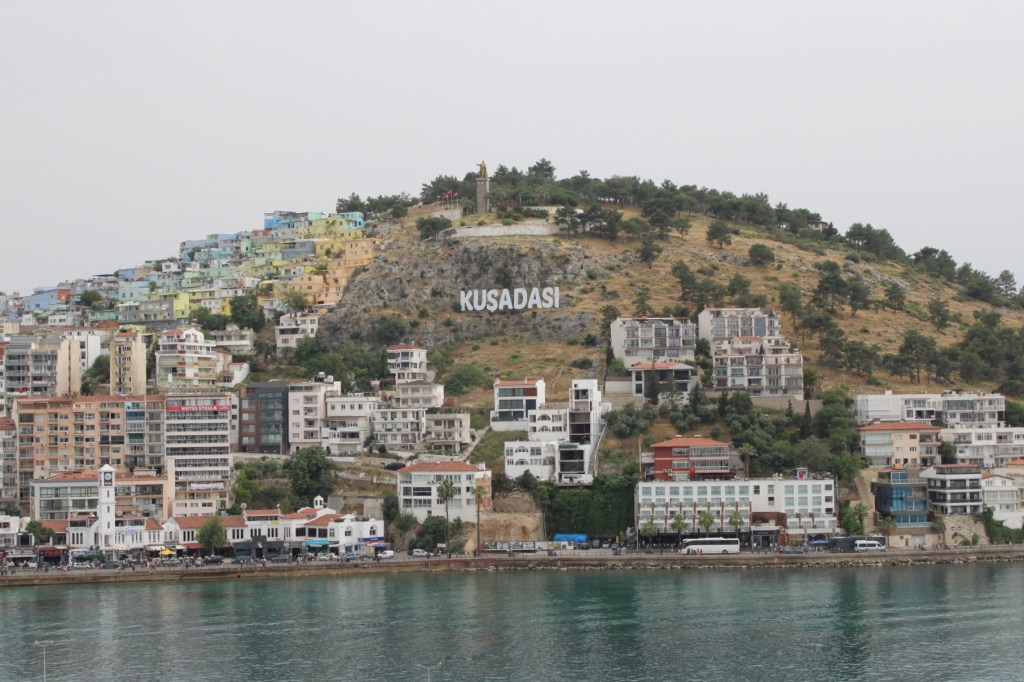
The history of Ephesus and the surrounding area is long and complicated, dating back to 5000 BC, but after thousands of years in development, the city gradually fell into decay and ruin and by the 15th century AD only a small village existed and the great city that was Ephesus remained buried under earth and mud as the river on which it had been built became silted up. The site of Ephesus is now 5 km inland. For several hundred years the location of this important city was not known but in the mid-19th century excavations began on the supposed site of the Temple of Artemis, a short distance from the hillside under which the city lay buried. It was not until well into the 20th century that Ephesus itself began to be unearthed and even today excavations still continue.
Our tour bus took about 45 minutes to drive from Kusadasi to the starting point of our visit. This was on the hill overlooking the city itself. We slowly made our way down past several partially excavated and reconstructed temples and monuments.
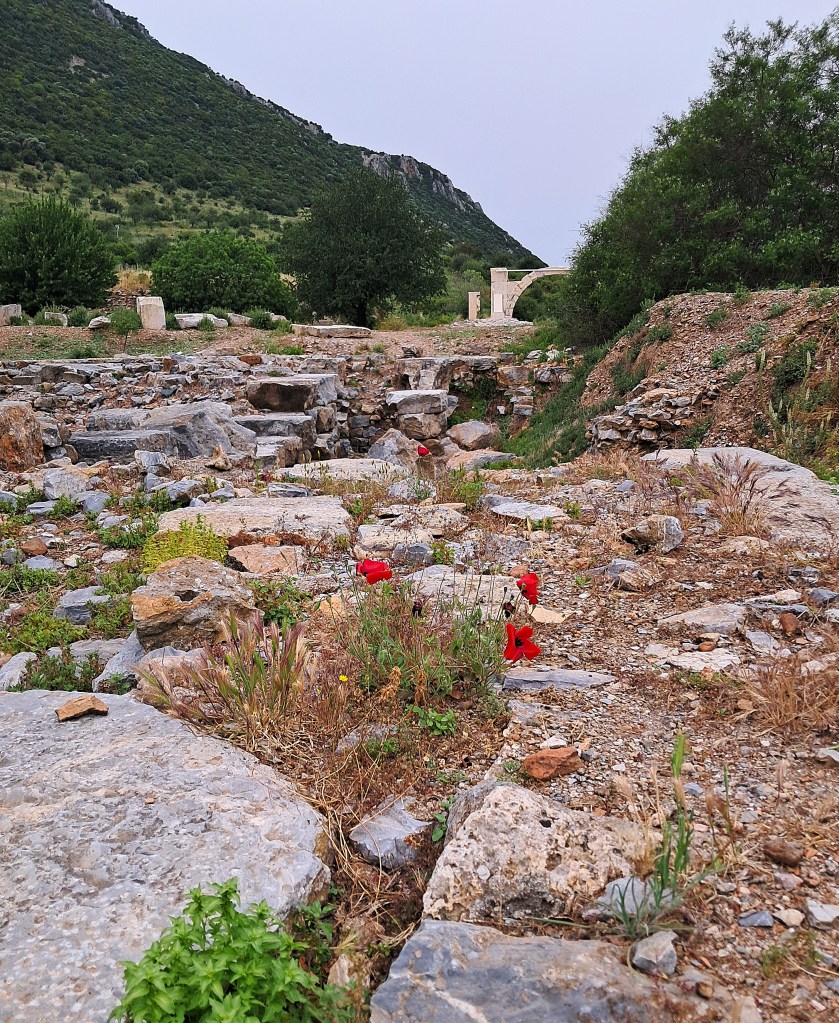
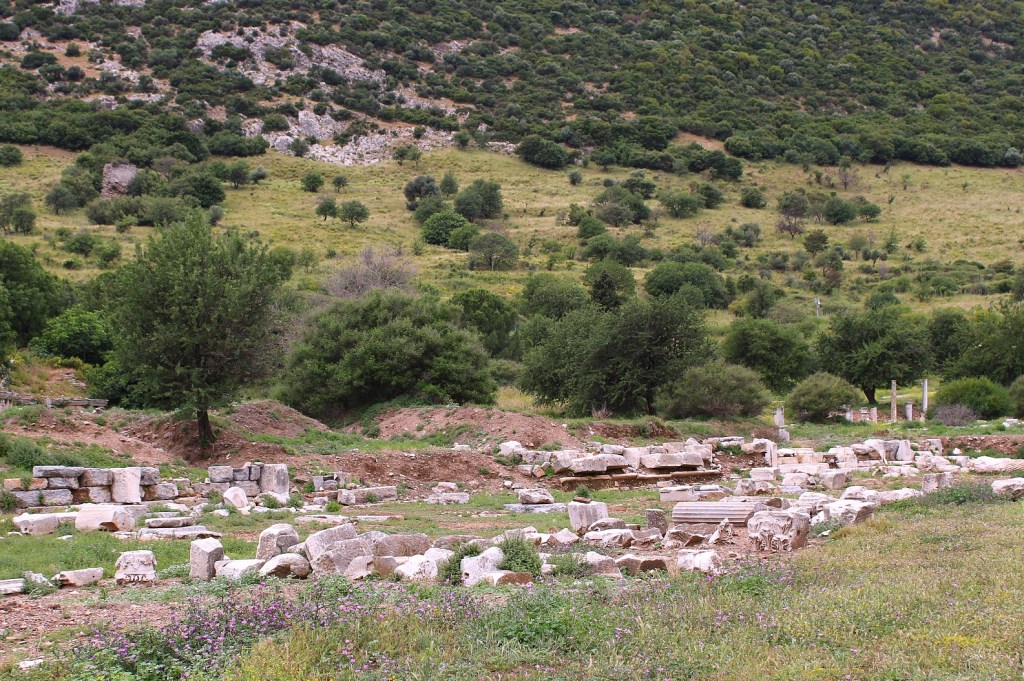
Near to top entrance gate is the Bath of Varius. This was built in about the second century AD. A little further south is a large area that was the State Agora. It was where the business of the government was conducted.
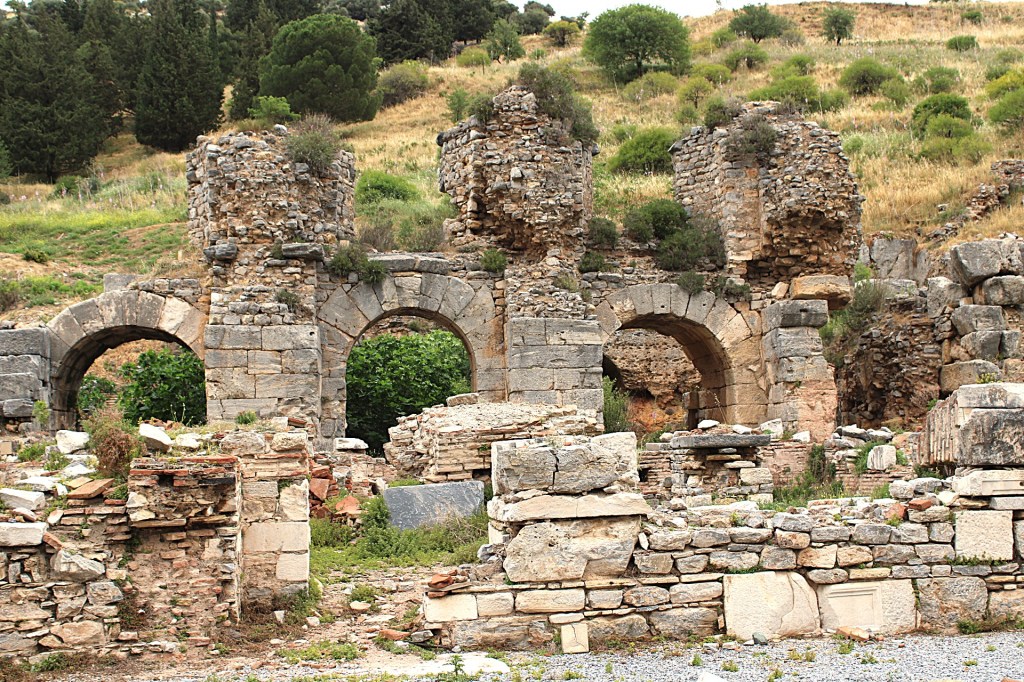
A small theatre called the Odeion lies on the hillside opposite the State Agora. It was built a little earlier than the Varius Bath and was used for concerts as well as for meetings of the city government.
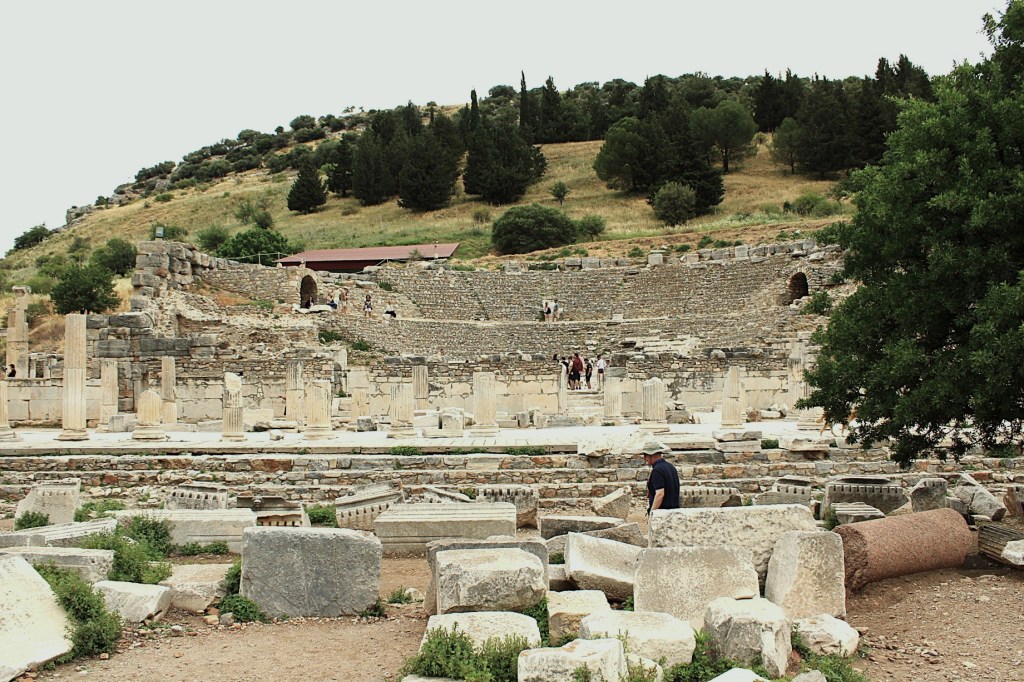
Almost opposite the Odeion is the Prytaneion – this is the seat of government for the city, what we might now call the Town Hall. However, the main function of the head of government was to see that the eternal fire which burnt in a holy fireplace within the building did not go out.
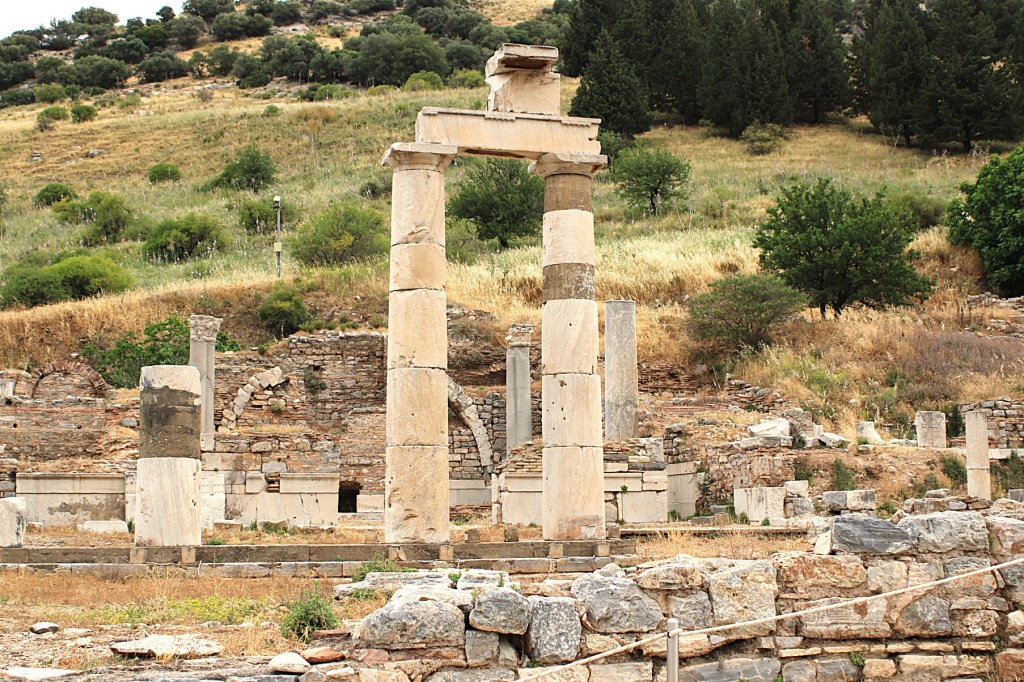
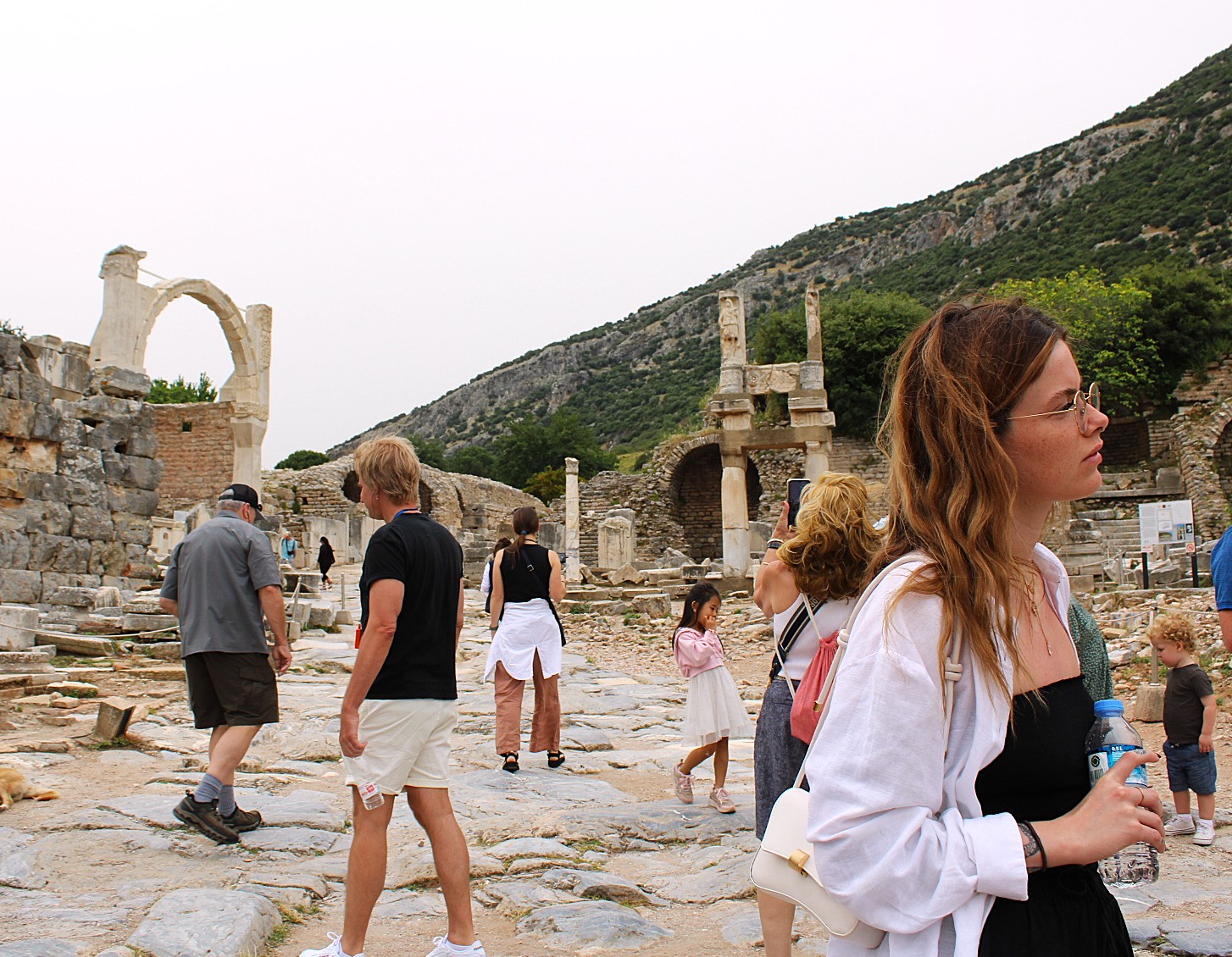
The road downhill became wider but the marble slabs were quite slippery and uneven, making walking quite difficult. More and more recently excavated treasures could be seen on either side of the street.
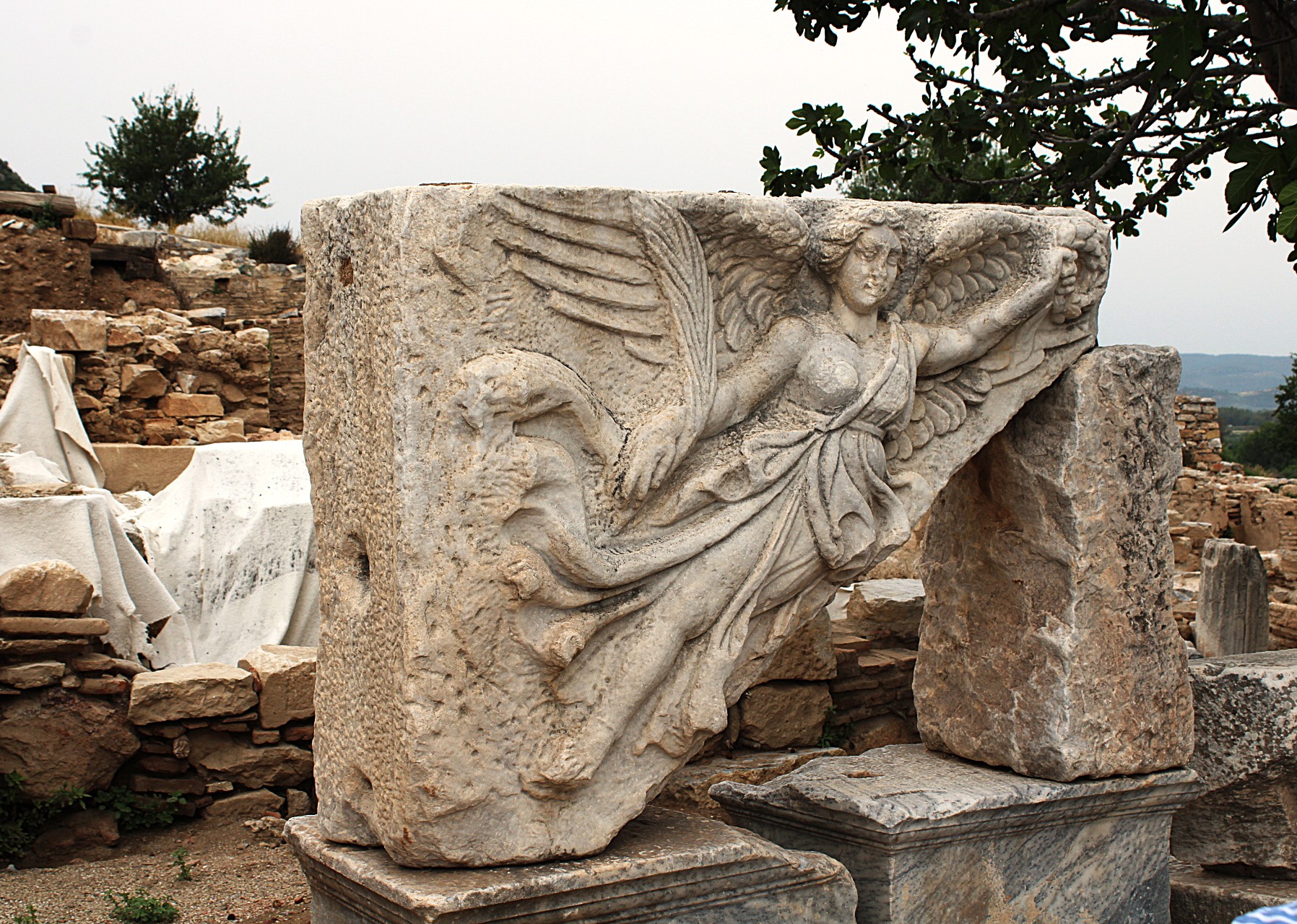
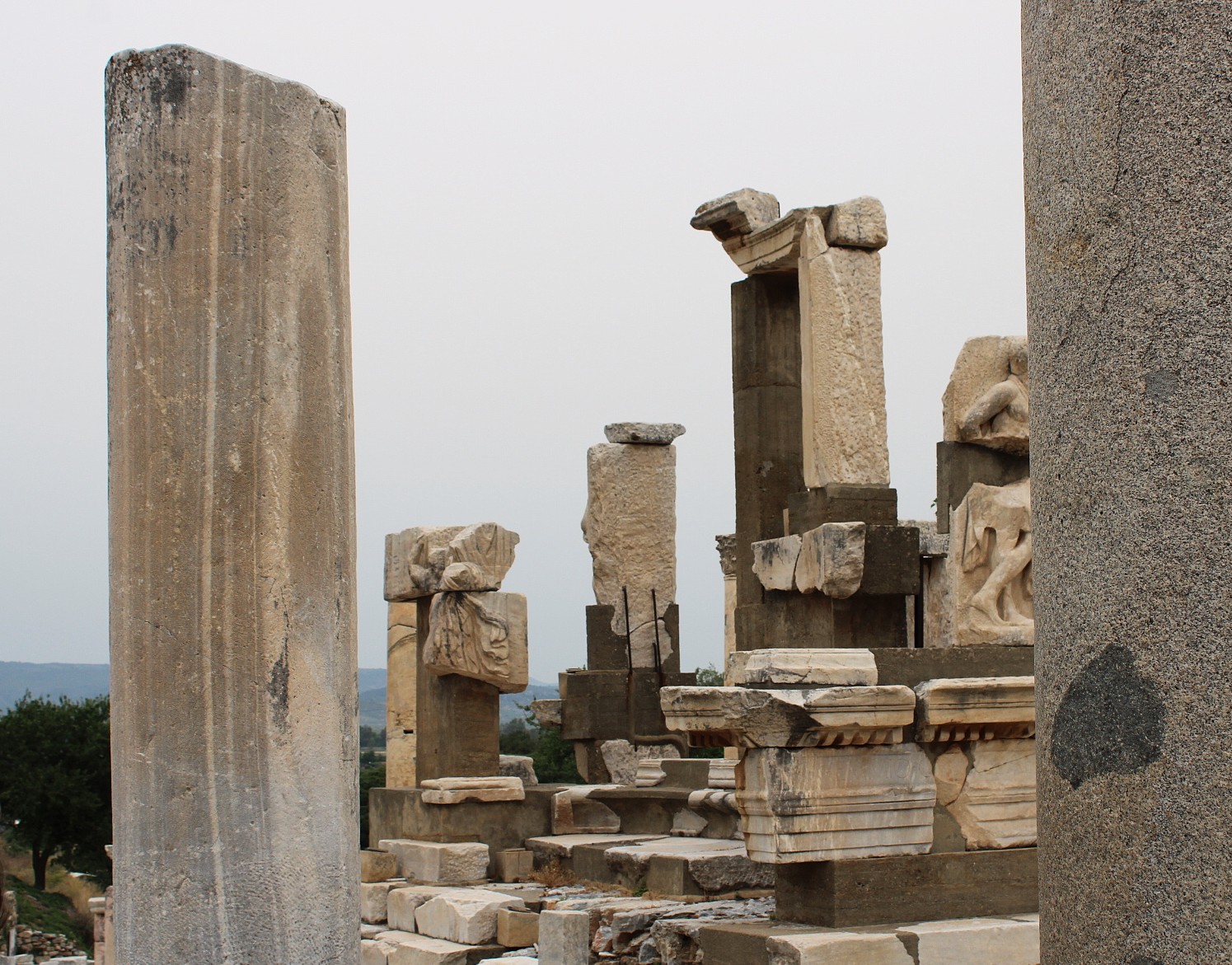
In the photos above, starting on the left is the famous statue of the goddess Nike, top right is the Temple of Memmius and the bottom right shows the site of the Temple of Domitian.
Nike is the goddess of speed and strength – she can run very fast and also fly. This statue is the inspiration for the Nike tick logo.
The road, called Curretes street became even steeper and we now got a glimpse of the Celsus Library at the bottom of the slope.
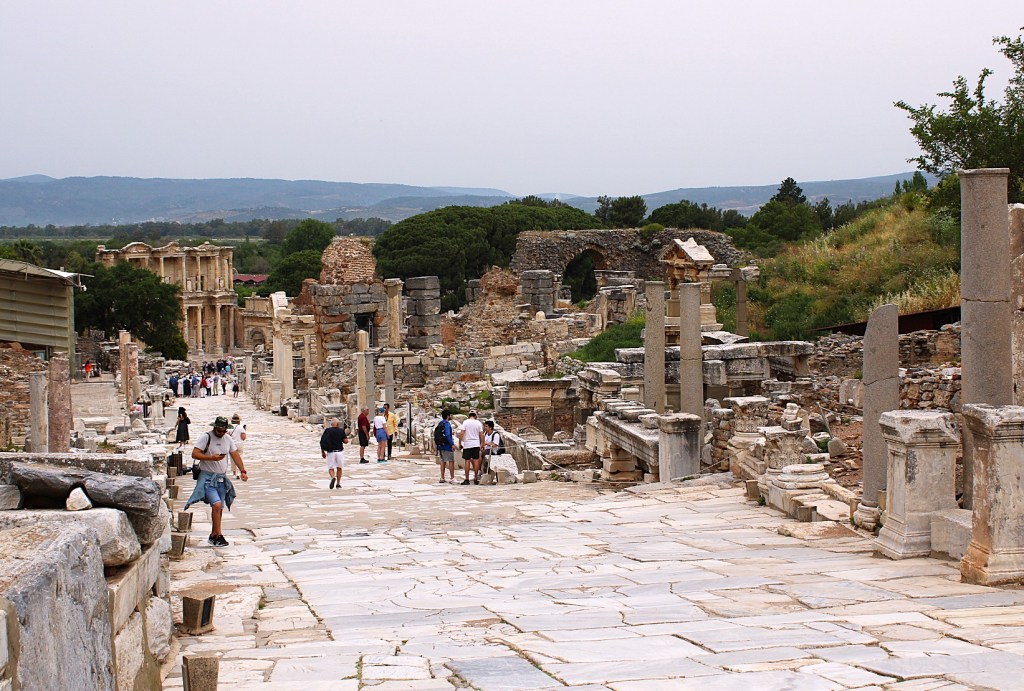
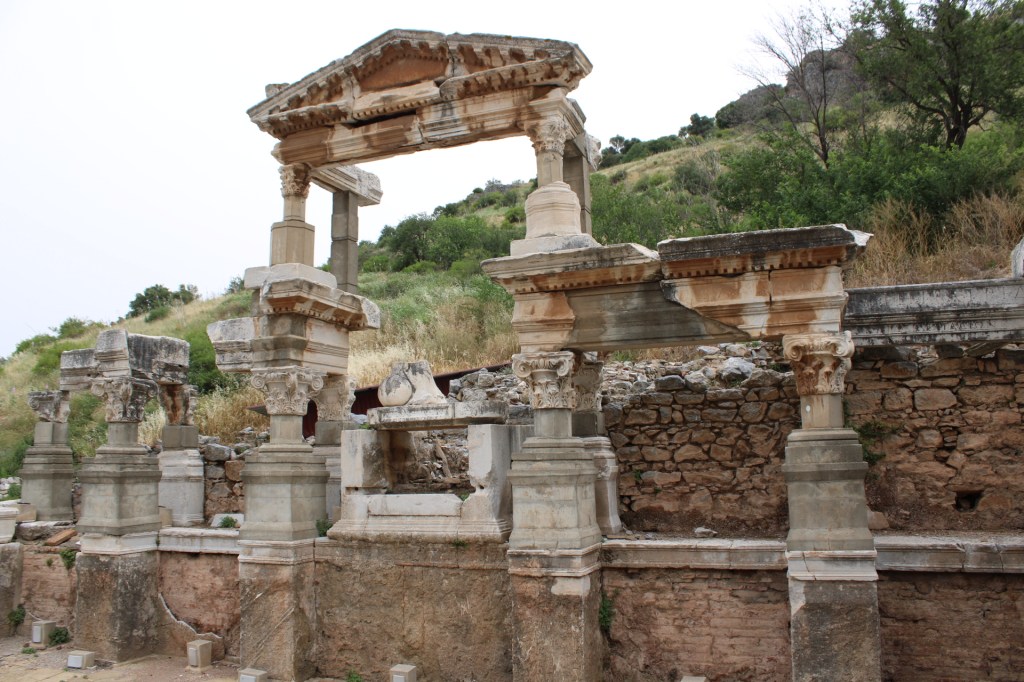
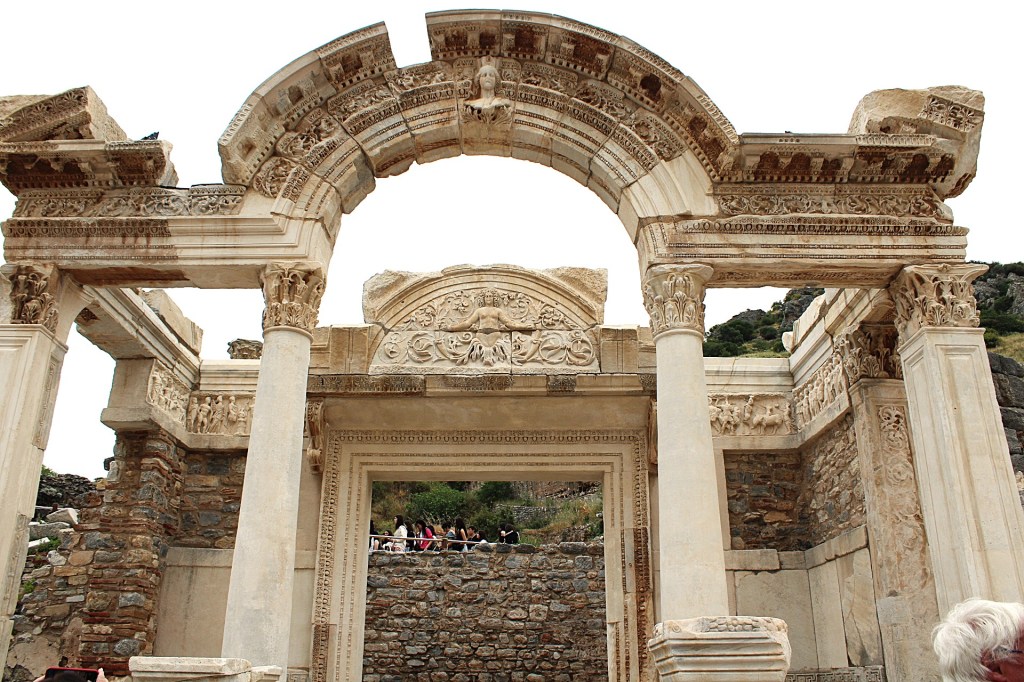
About halfway down Curretes Road is the Fountain of Trajan. It was built during the reign of the Roman emperor Trajan, to whom it is dedicated and a little further on is the beautifully restored Temple of Hadrian.
We were now far enough down the steep road that you were drawn almost irresistibly to the magnificent façade of the Celsus Library, which takes pride of place in the valley at the bottom of Curretes Road. Although it was a Library, it was actually built over the tomb of the Roman senator Tiberius Julius Celsus Polemaeanus, who died in the early part of the 2nd century AD. At the time it was the third largest library in the Greek- Roman world.
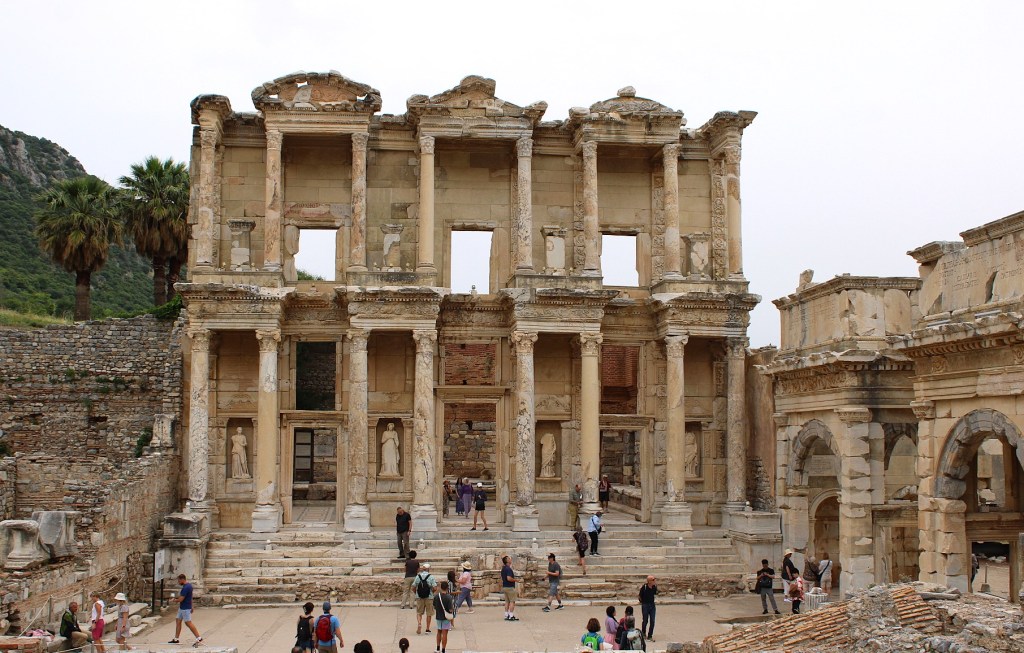
Unfortunately most of the building was destroyed by fire following an earthquake in 262 AD, although the façade survived until the 10th century when it too was destroyed by an earthquake and was never rebuilt. It lay in ruins until the façade was recreated in the 1970’s by two restoration architects.
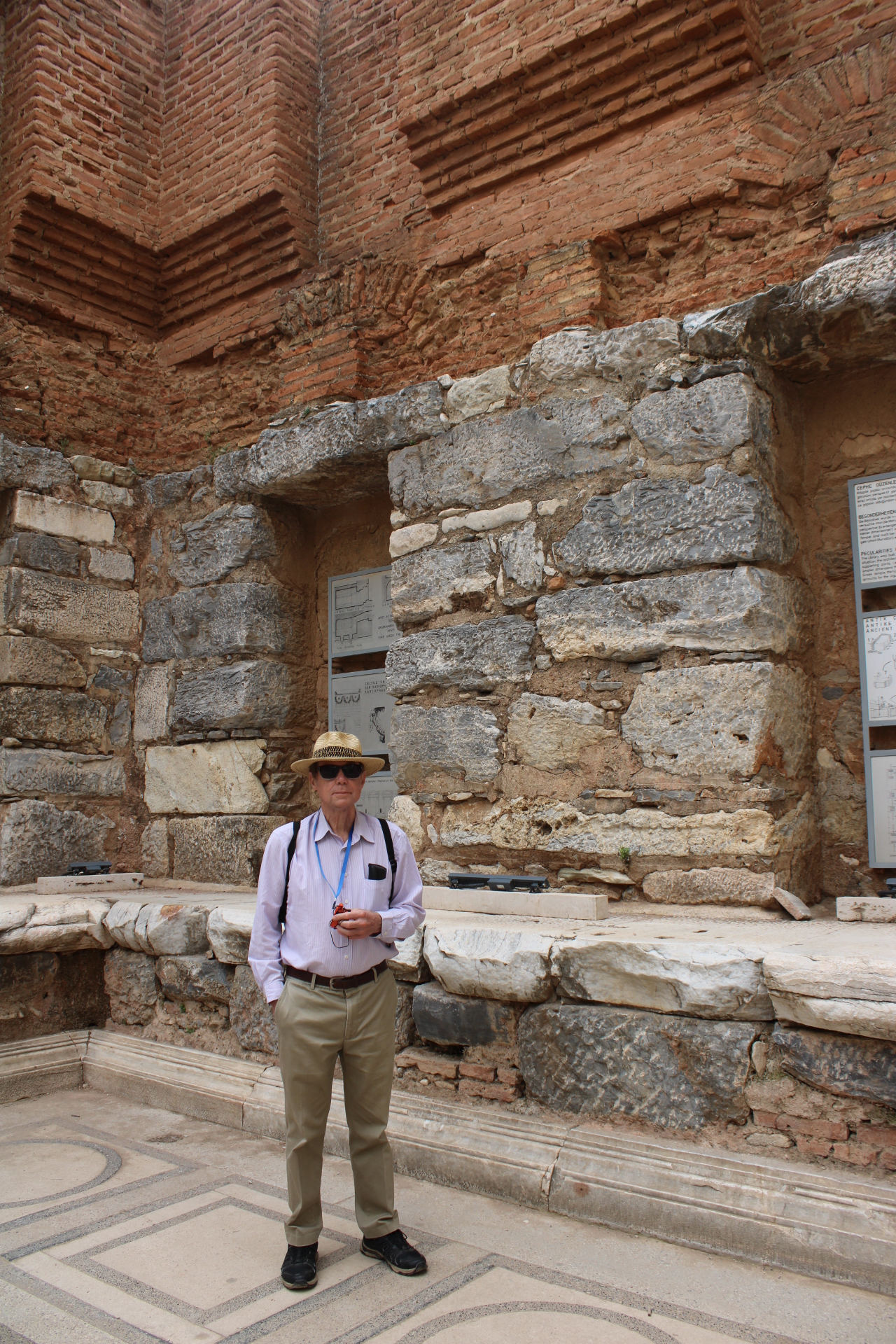
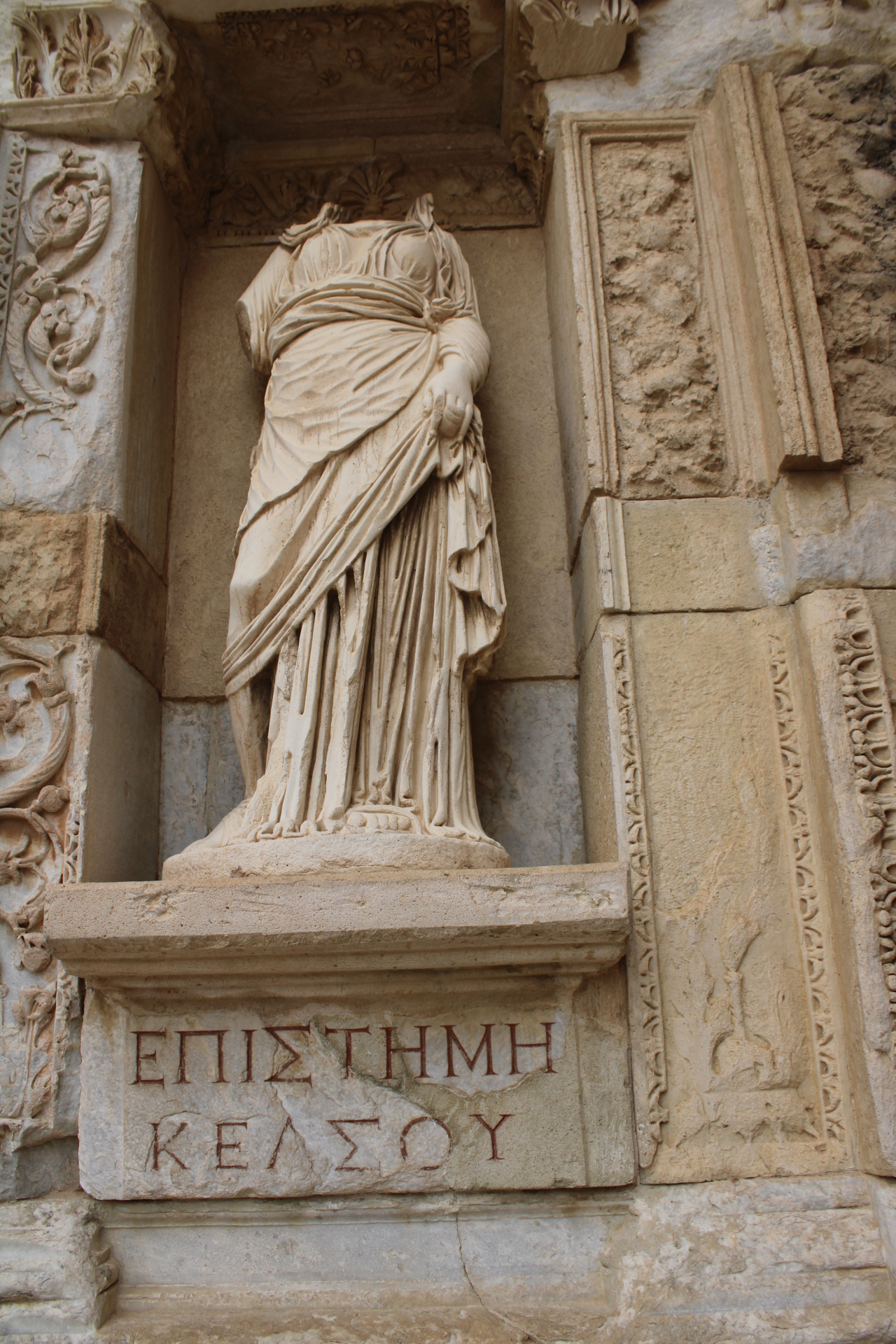
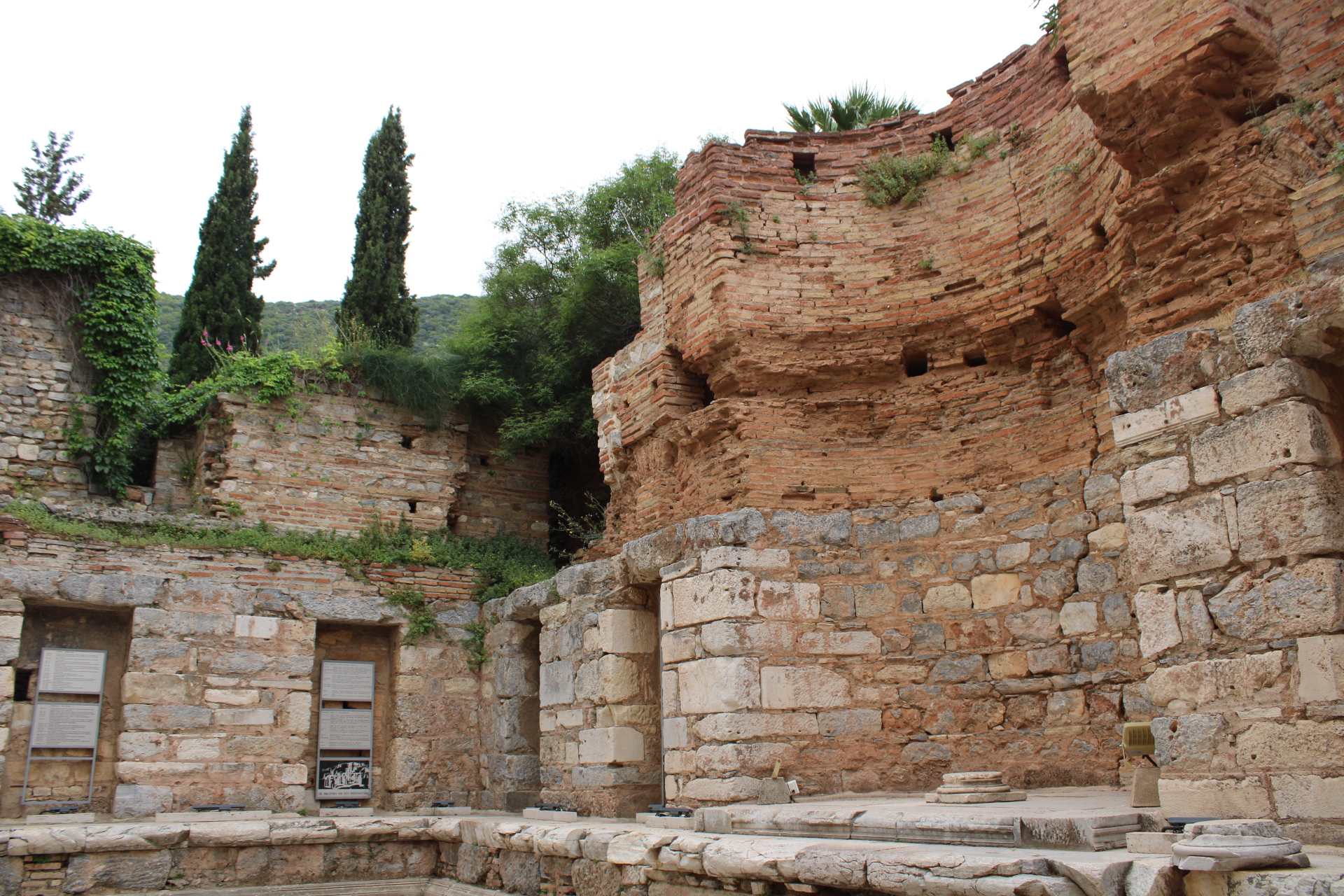
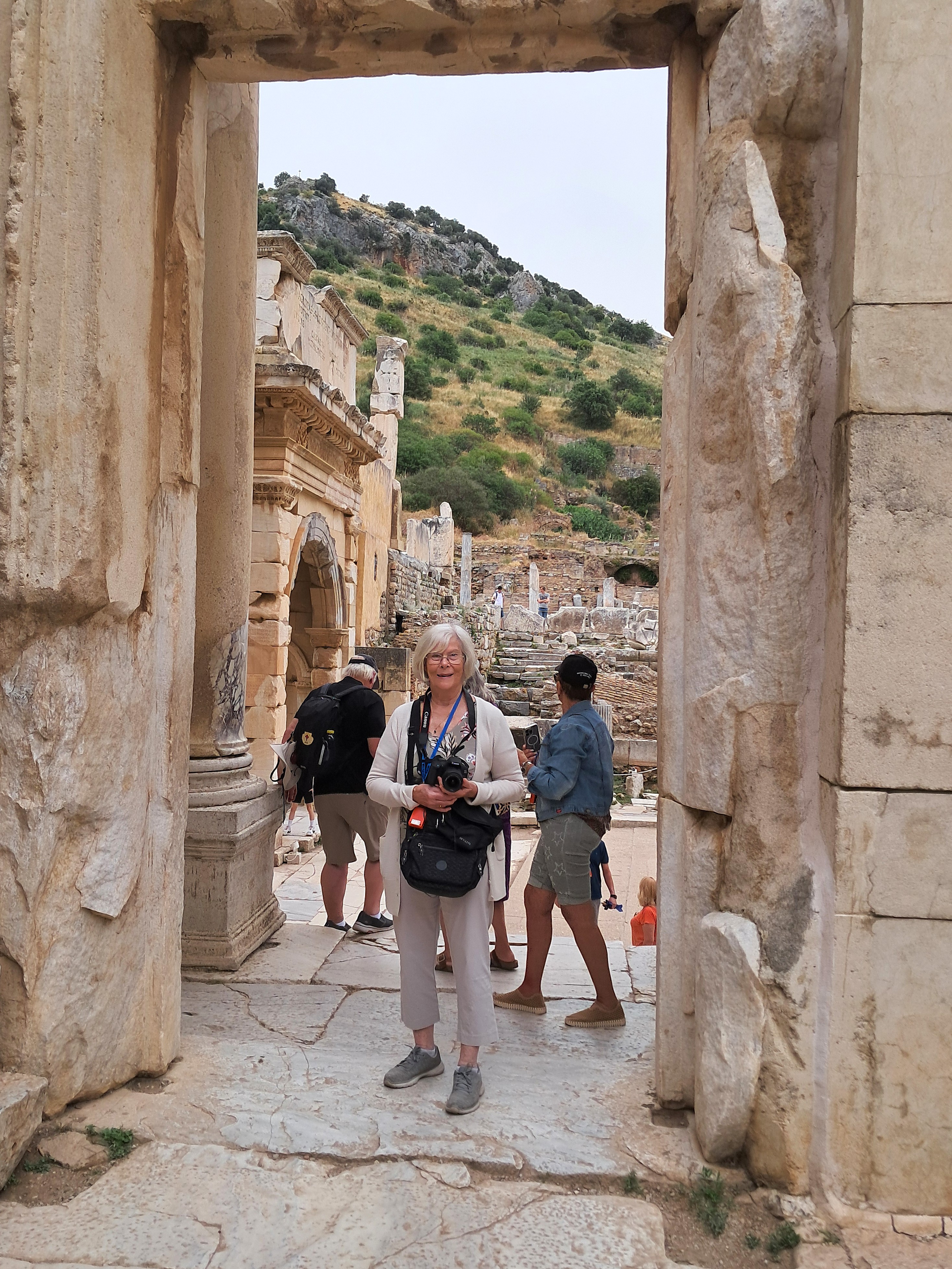
These photos show the inside of the library, one of the statues in a wall niche on the front to the library and a view through the archway to the right of the library leading to the Tetragonas Agora.
The library forms one side of a square at the bottom of Curretes Road and turning right past the facade you pass through the monumental gate called the Mazeus-Mithridates Gate and enter the Marble road. To the left of the road is a large open area where the Tetragonas Agora was found. This was the commercial marketplace for the city and would have been lined with shops selling all the goods and necessities for life in the city.
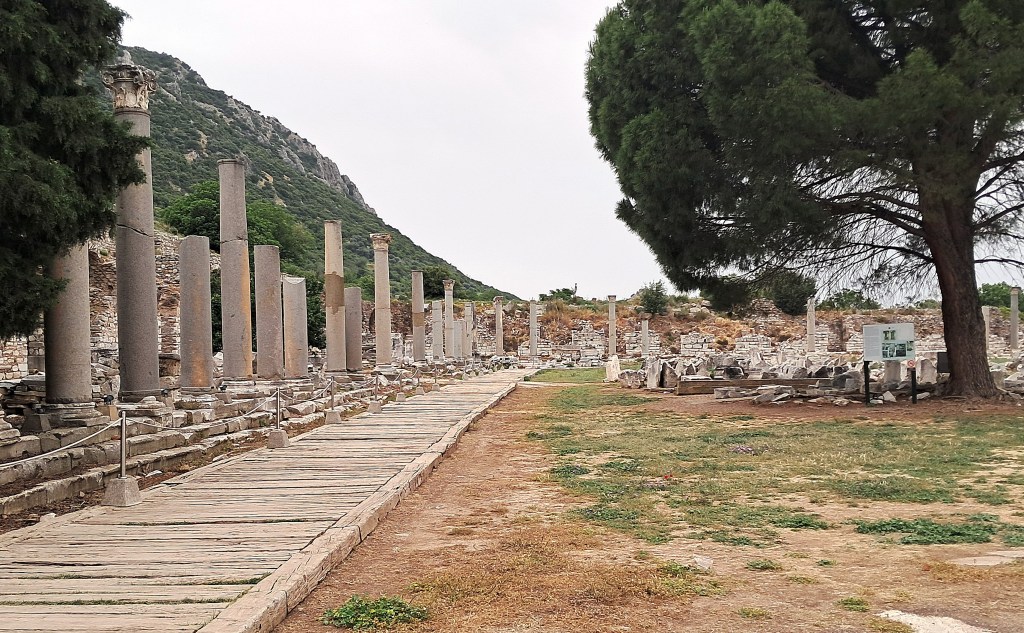
To the east of the Tetragonas Agora, the Marble road runs past the Grand Theatre. The Marble road was called that because it was entirely covered in marble. The street itself was marble and marble colonnades lined the street. Behind the colonnades would have been shops and houses.
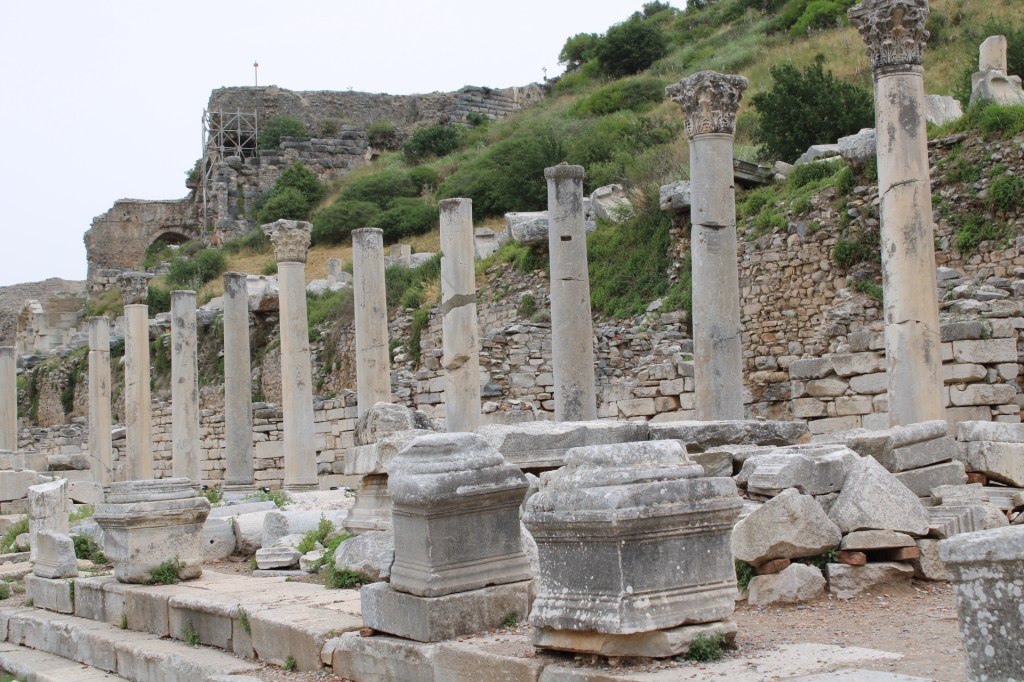
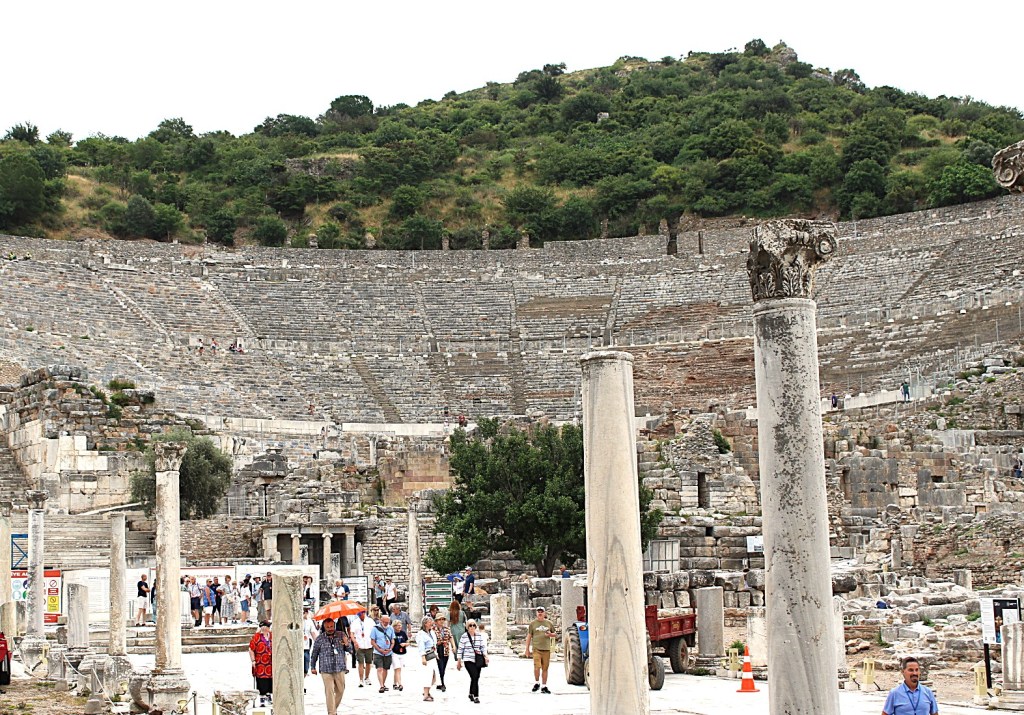
The street, now called Harbour street, continues towards the sea although now that is a long way off. As a result of a massive amount of silt deposited over the years the harbour of Ephesus no longer exists.
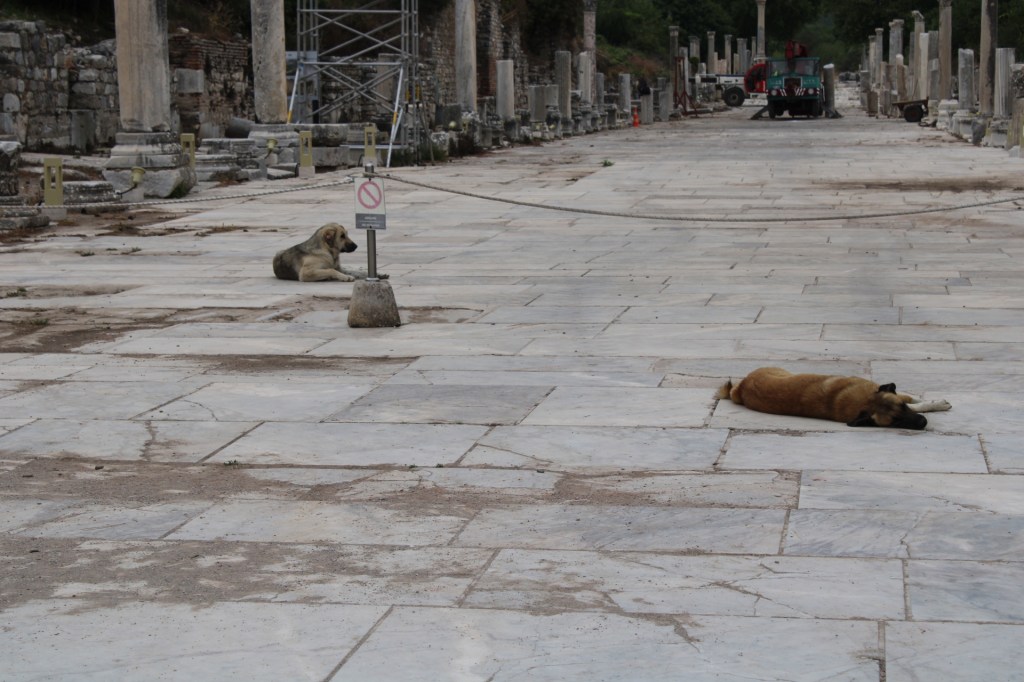
That brought to an end our amazing trip into the past history of the great city that was Ephesus. We emerged into modern day Turkey with a line-up of tourist shops selling artifacts and images as reminders of what we had seen.
Back on the bus, we were taken to our next stop – the Church of St John. This was built in the 6th century AD by Justinian and is said to be the burial place of St John the Apostle.
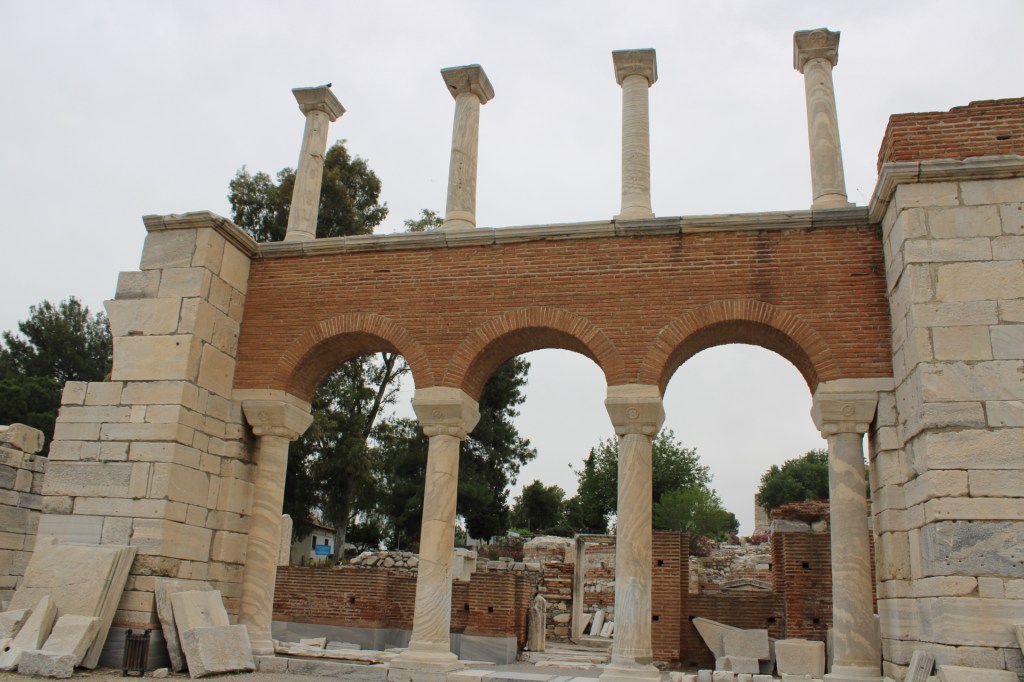
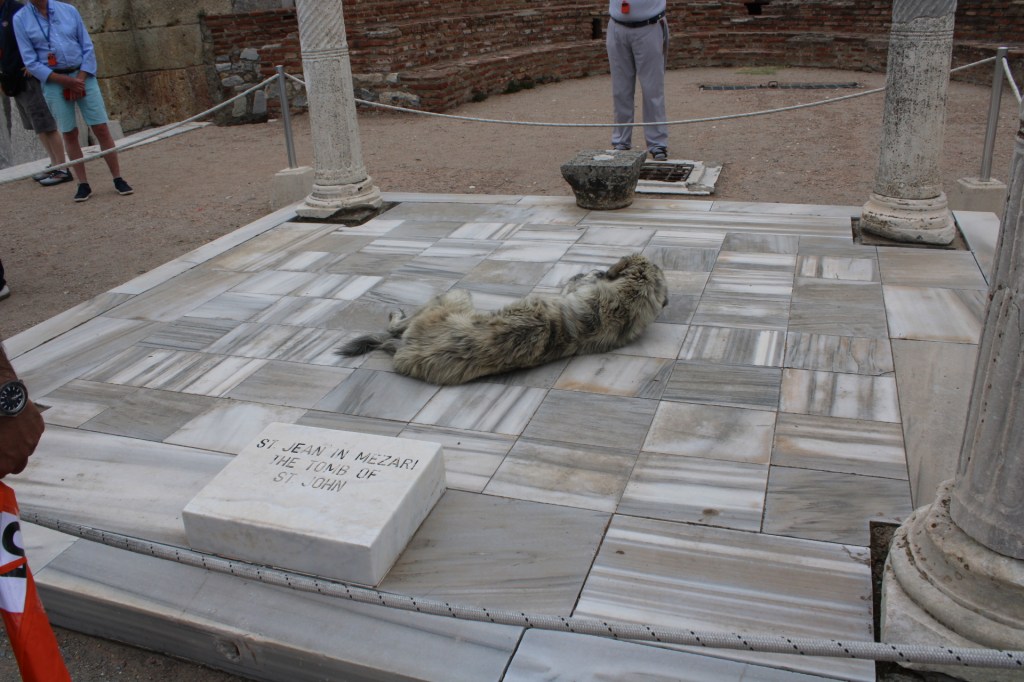
On the hill above the Church of St John is a fortress, built in the 7th century AD to protect the Church following an invasion by Arabs. But 6 centuries later the Seljuk Turks invaded the city and transformed the church into a mosque. Today the Church on the Ayasoluk Hill overlooks the mosque of Isa Bey, built in the 14th century.
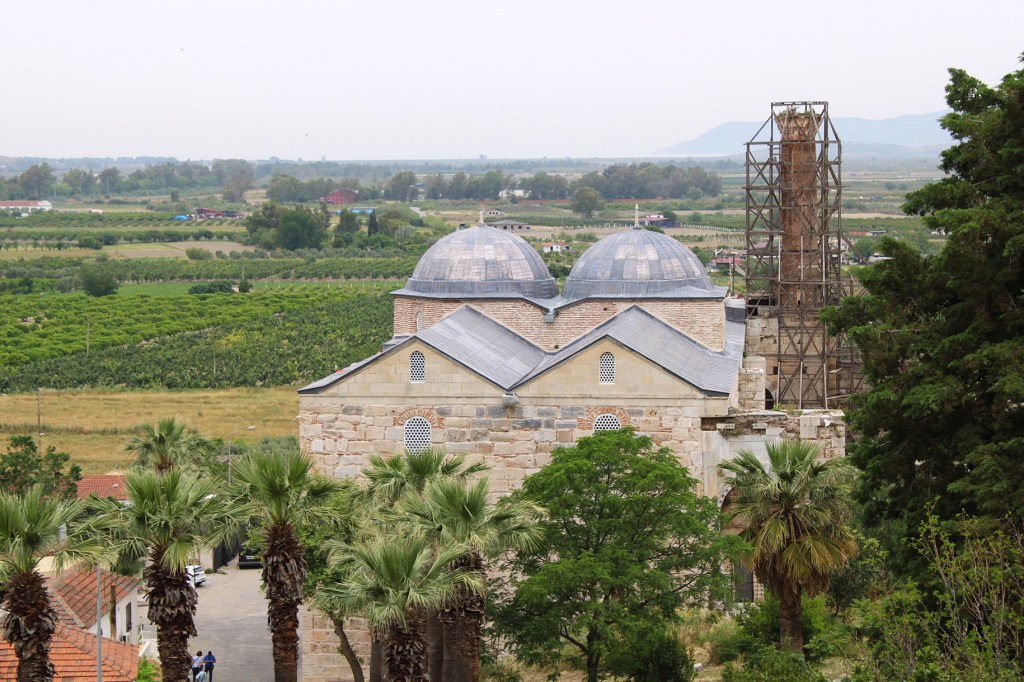
On the day we visited Ephesus the fortress above the Church was adorned with Turkish flags and a picture of Ataturk, who is commemorated in May on Youth and Sports Day.
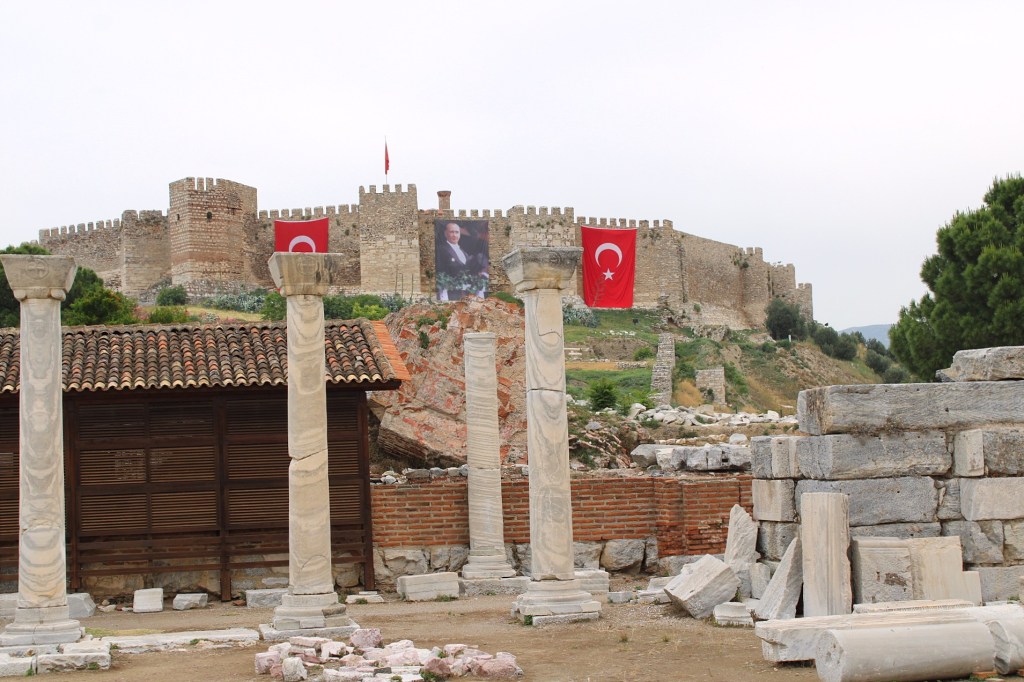
Our last stop on this trip was at the site of the Temple of Artemis.
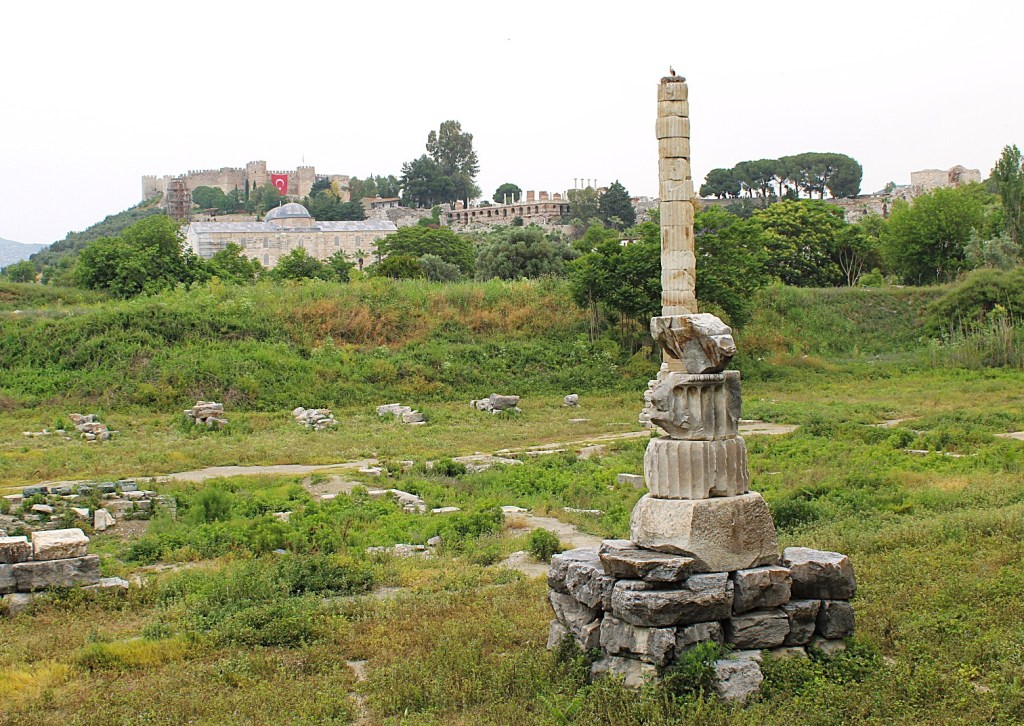
The Temple of Artemis (also known as the Temple of Diana) at Ephesus was one of the wonders of the ancient world but, although its existence was known about, its exact location was not. In the1860s J T Wood, an Englishman sponsored by the British Museum, searched for 6 years before finally rediscovering the site of the Temple. Many artefacts were discovered and are displayed in the British Museum but today the site is marked by a single column constructed from various fragments found on the site.
Then it was back on the bus to Kusadasi and an obligatory visit to a carpet making business. It was interesting to see the demonstration of how Turkish carpets are made. We were then escorted into a large salon to have umpteen carpets thrown at our feet to admire the beautiful craftsmanship of these expensive items. But it was rather disconcerting to have dedicated salespeople trying to persuade us to buy one of them. We had to escape surreptitiously through the back door!
On our way back to the ship we bumped into the duo that made up Habit To, one of the musical groups we enjoyed listening to. The entertainers don’t get many opportunities to sight-see as they are often rehearsing on days in port. We were back on the ship in time to go to Habit To’s Sailaway Party on Deck 9 next to the pool.
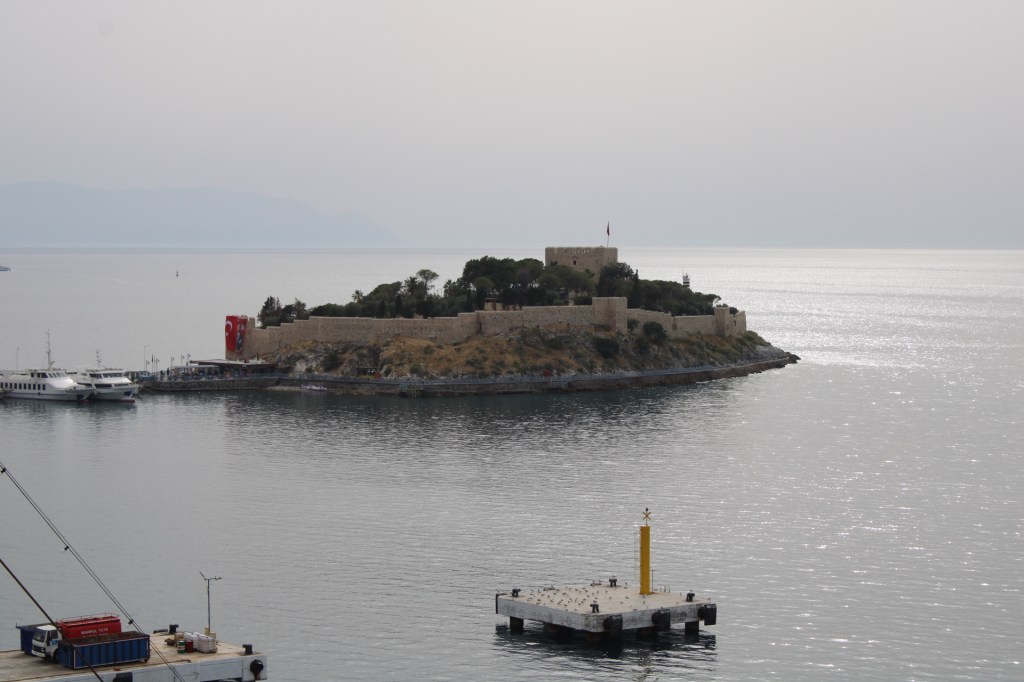
After dinner we watched Cameo Rascale performing their circus type routines in the Royal Court Theatre, then went to bed exhausted and looking forward to a day at sea the next day.

