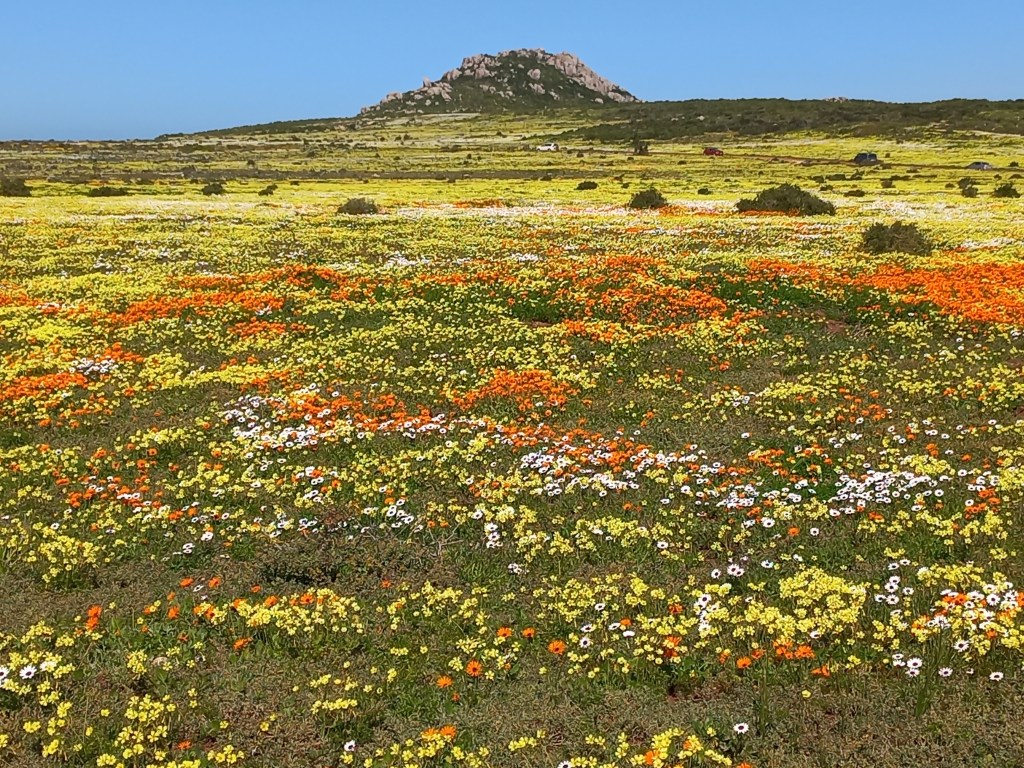
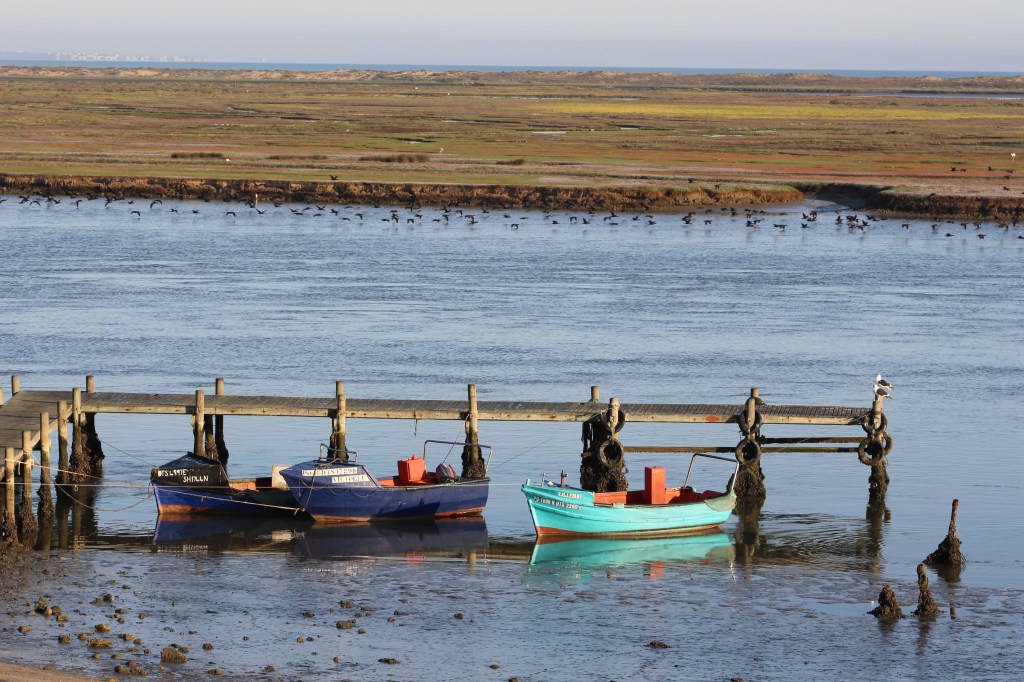
After our long day driving up to Vanrhysdorp and back, we treated ourselves to a flight of beers and a delicious meal at Charlie’s Brewery in the Port Owen Marina. The next morning dawned bright and sunny again, promising wide-awake daisies in the West Coast National Park’s Postberg Section, where we headed after breakfast and watching the cormorants stream by on their way to their fishing grounds.
The West Coast National Park is just south of Langebaan and wraps around the southerly part of Langebaan Lagoon. The Postberg section is only open to the public for two months of the year during the wildflower season. It is often very busy, particularly if it is a good year for flowers, as it is this year. Even on a Monday morning we had to queue to get in but fortunately not too long. The daisies are at their best from about 11am to 3pm so it is a good idea to get there early.
Once through the gate (we came in through the Langebaan entrance), it is a drive of about 30 Km to get to the northern end of the peninsula where the Postberg Section is found.
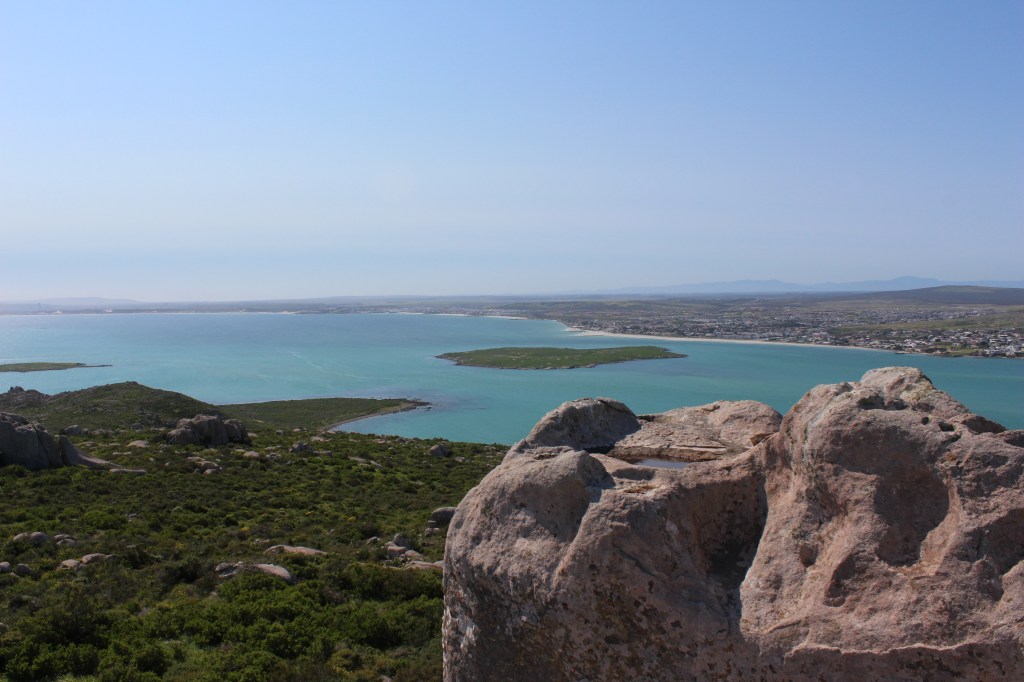
Langebaan Lagoon is spectacular and one of the most beautiful features of the West Coast. Its formation and recent geological history is also very interesting. The underlying base rocks are old granites and shales laid down 500-540 million years ago and the granite hills of Postberg now rise above younger deposits. Around 130 million years ago the peninsula that we see today was not continuous but was separated into a series of small islands, so the lagoon was connected to the open sea through channels between the islands. Over thousands of years the sea level rose and fell and beach and dune deposits shaped the lagoon and surrounding areas in to beautiful features that attract holiday makers and tourists today. There is evidence in the lower deposits of fossil and also human activity. The movement of sand dunes is still ongoing and the most recent unconsolidated dunes move northwards at a rate of 15 m a year. Apart from the granite hills at the northern end, the exposed rocks of the peninsula are a series of overlapping dunes of various ages. The oldest dunes have stable vegetation which is more abundant than the vegetation cover on the stable but more recent dunes, while the youngest, active dunes are only partially vegetated.
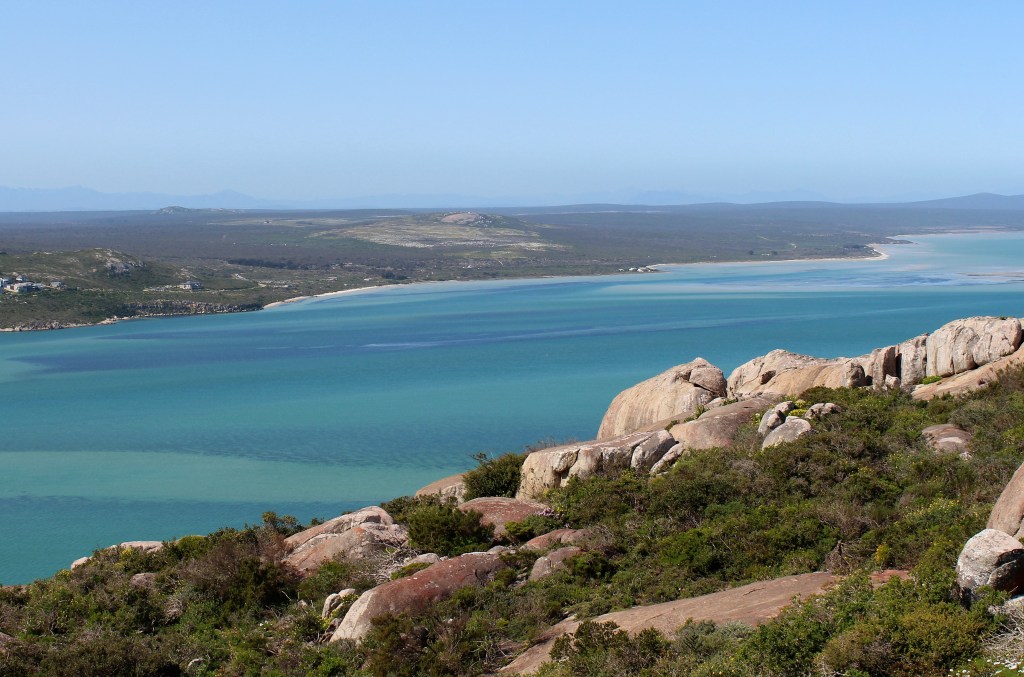
Around the granite koppies in Postberg is where the spectacular displays of wildflowers can be found every August and September. Fields of white, yellow and orange daisies and other species of flowering plants stretch from lagoon side to sea side. This is also the area where you can spot most game – zebra, bontebok and ostrich are frequently seen surrounded by flowers!
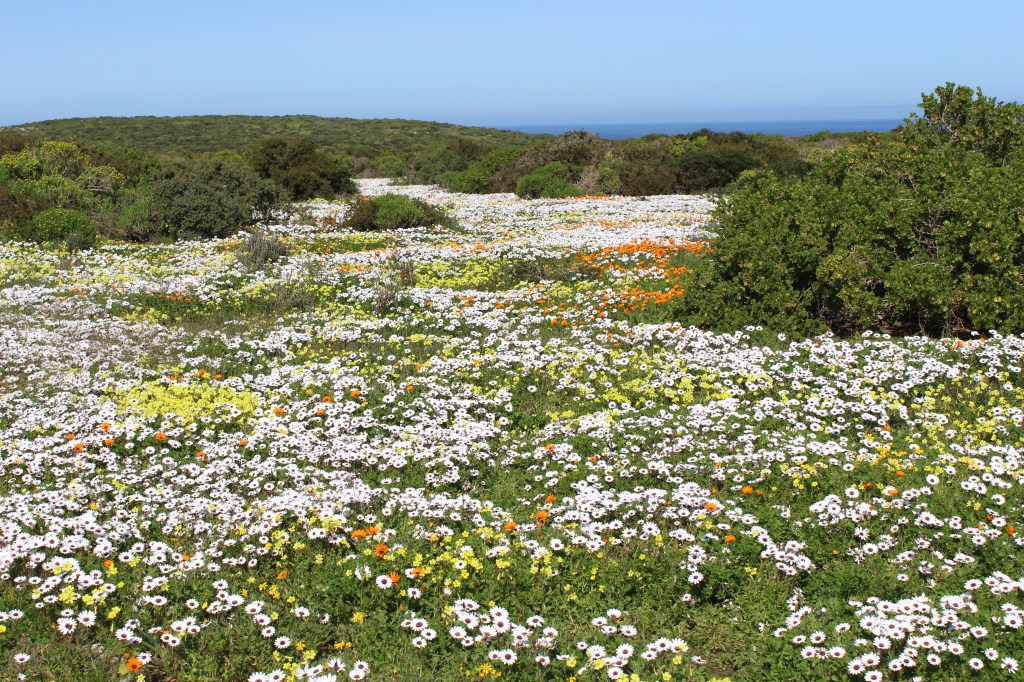
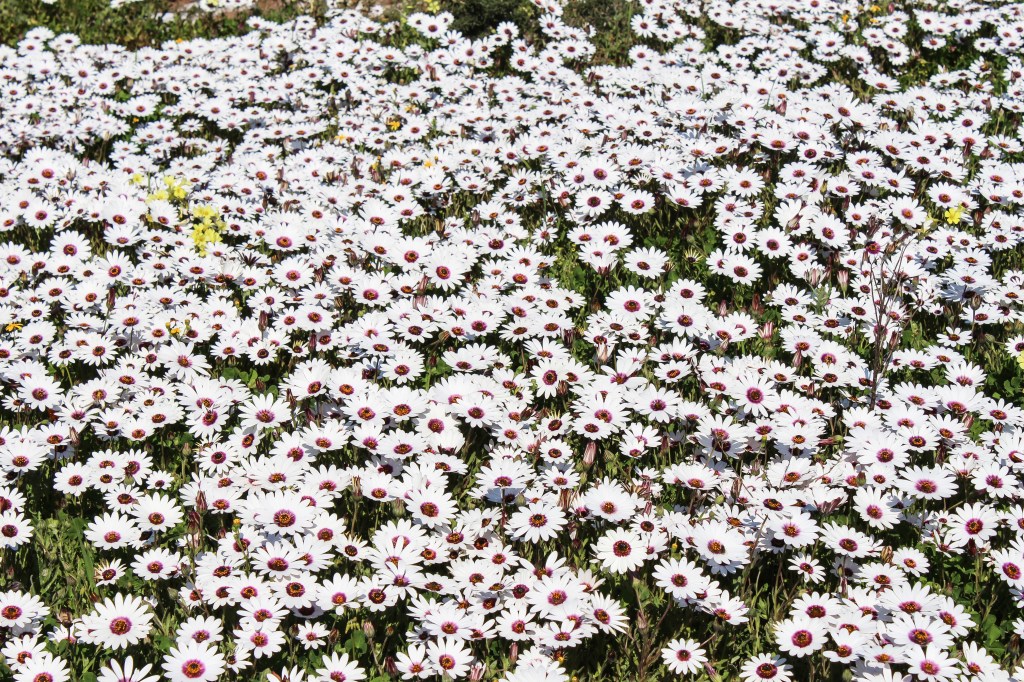
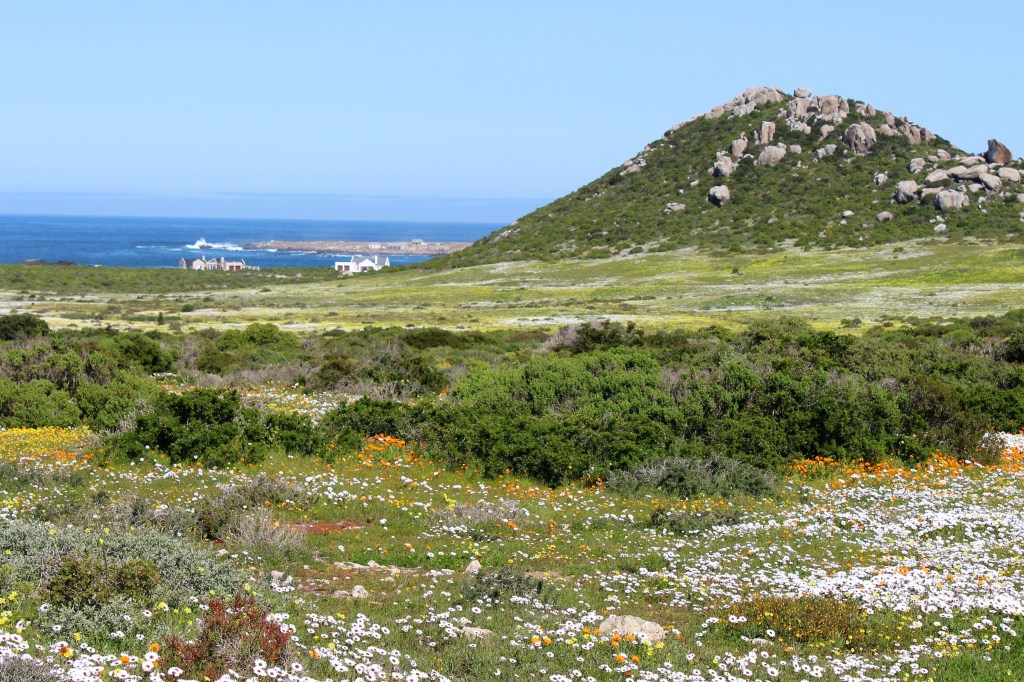
to sea
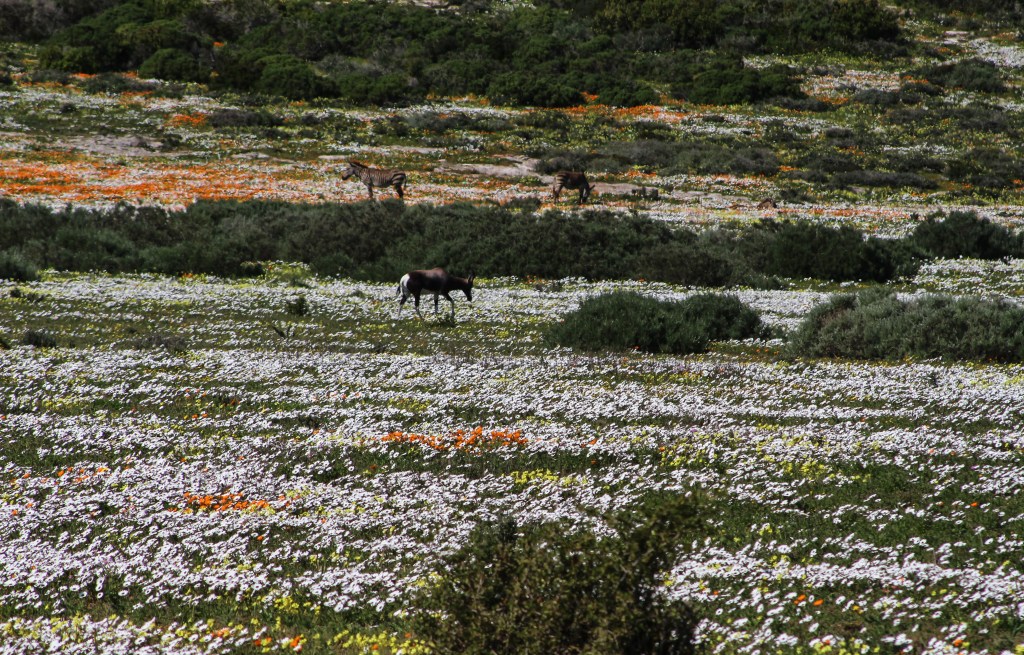
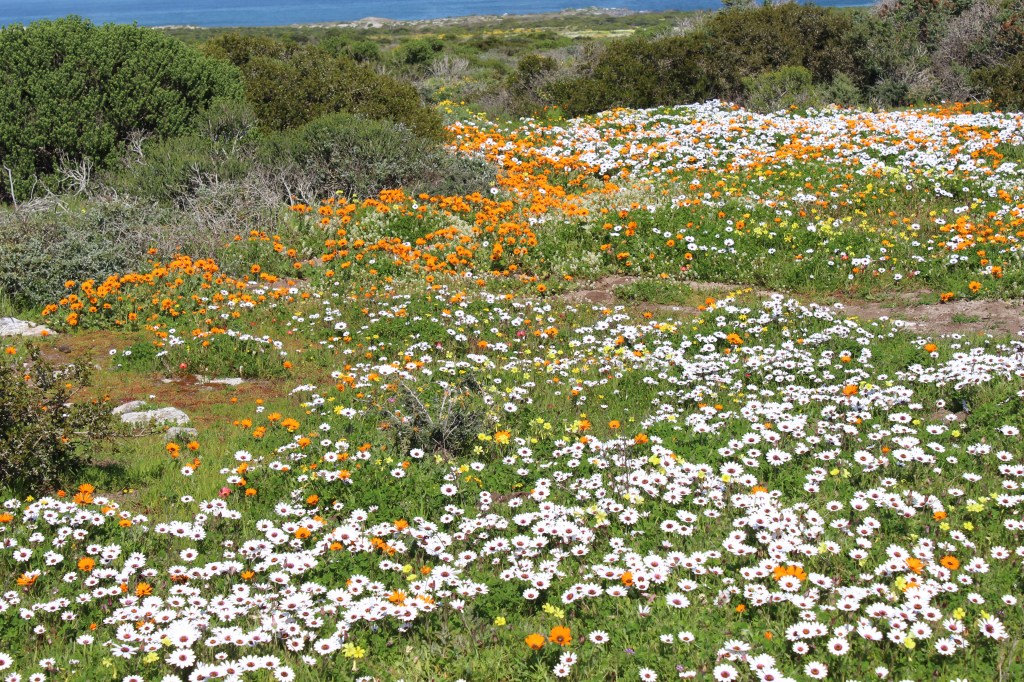
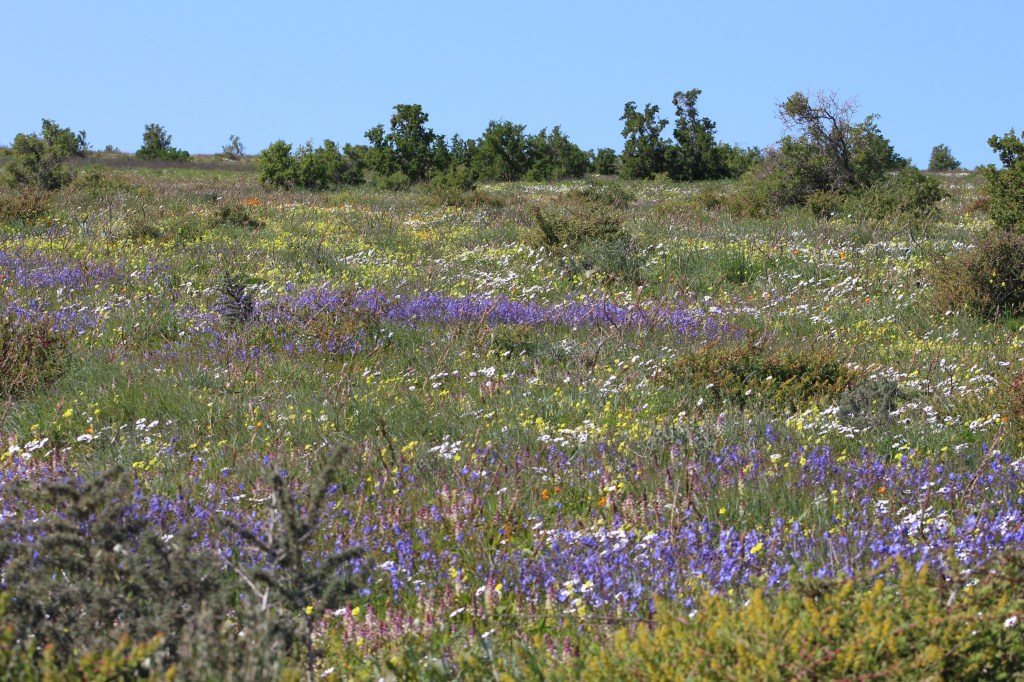
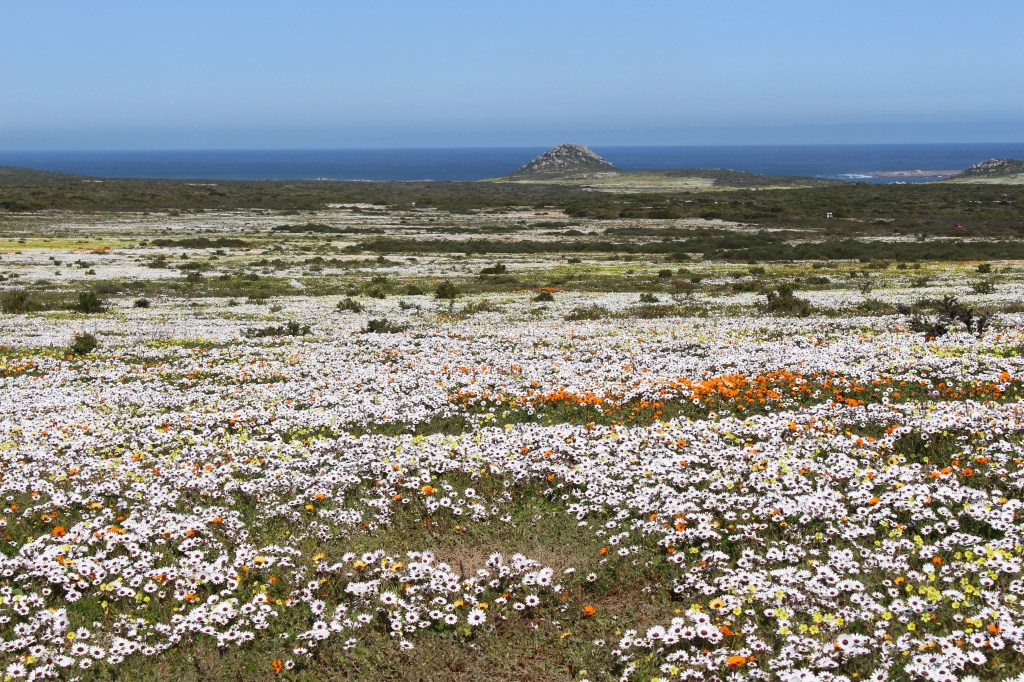
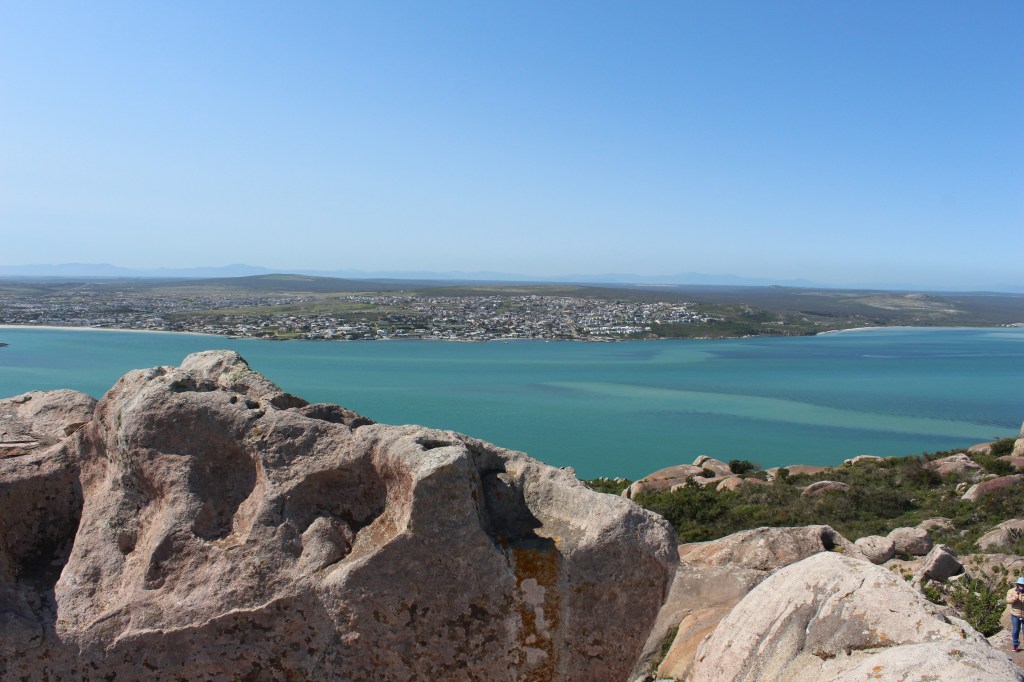
It is a good idea to visit both picnic spots in this part of the Reserve, as they both have unique views. The Uitkyk Picnic spot faces the lagoon and the town of Langebaan. It is situated on top of a granite promontory and has amazing views over the whole lagoon and Langebaan and beyond.
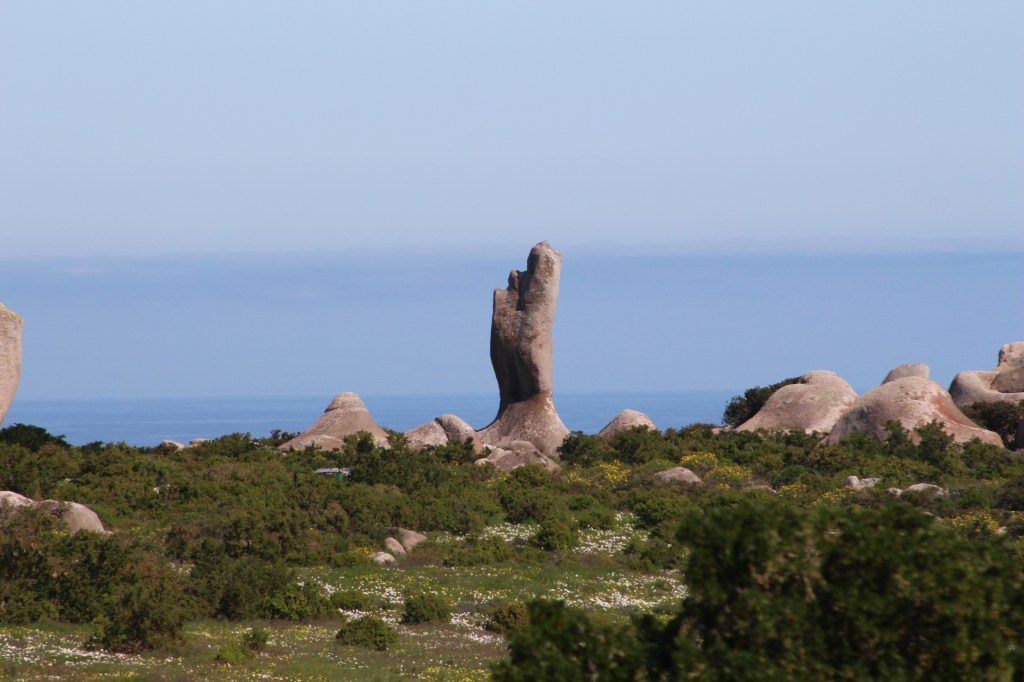
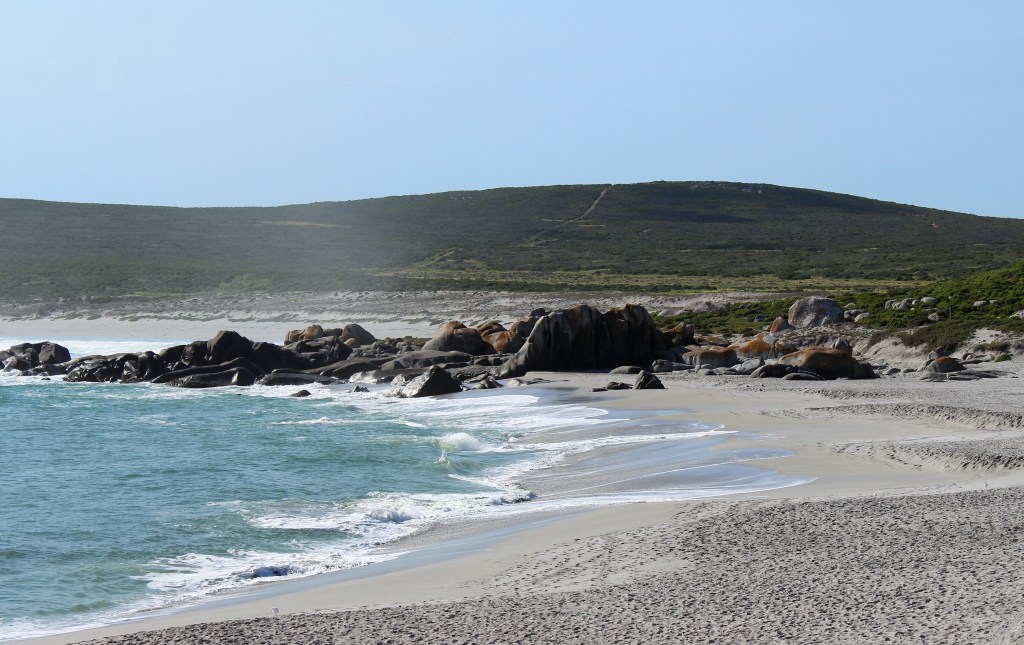
The picnic site at Plankiesbaai faces the sea and a pretty sheltered sandy bay. When we visited many years ago, we watched a mother Southern Right whale and her calf playing in the waves very close to the shore – but not this year!
After eating our usual picnic lunch overlooking Plankiesbaai, we started to head homewards with one last look at the incredible display.