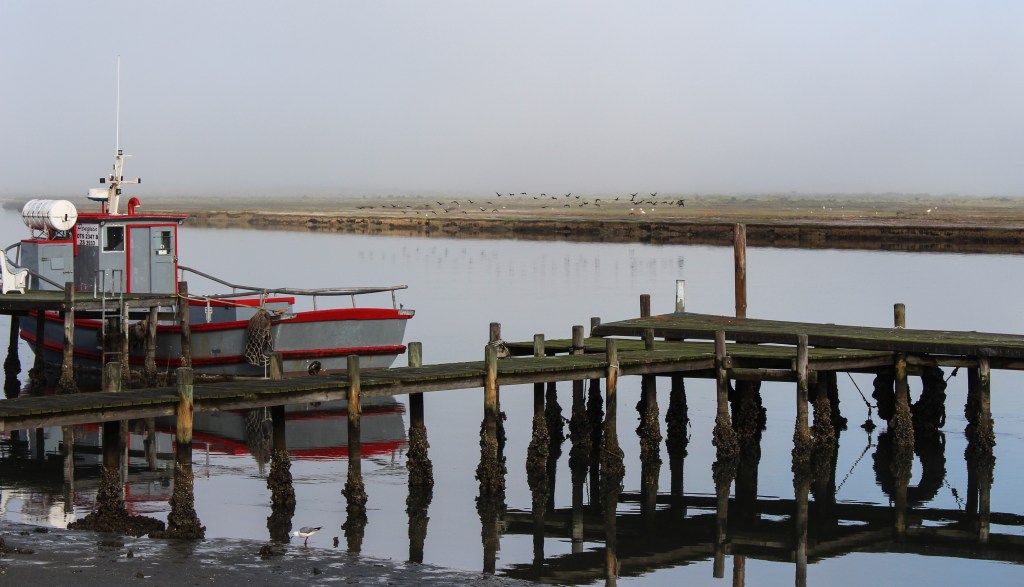
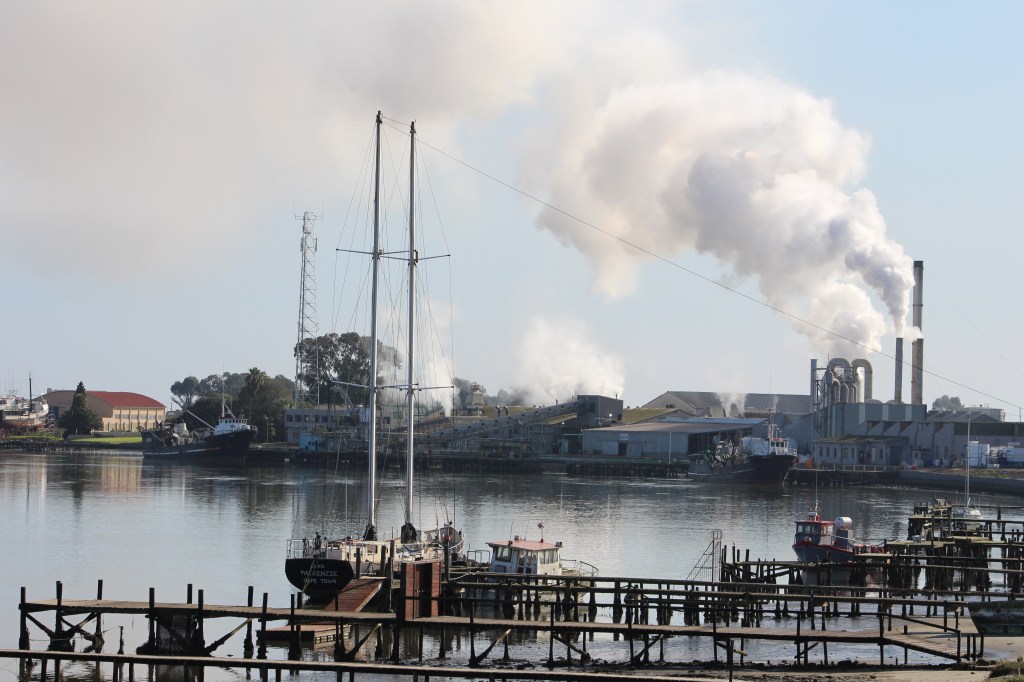
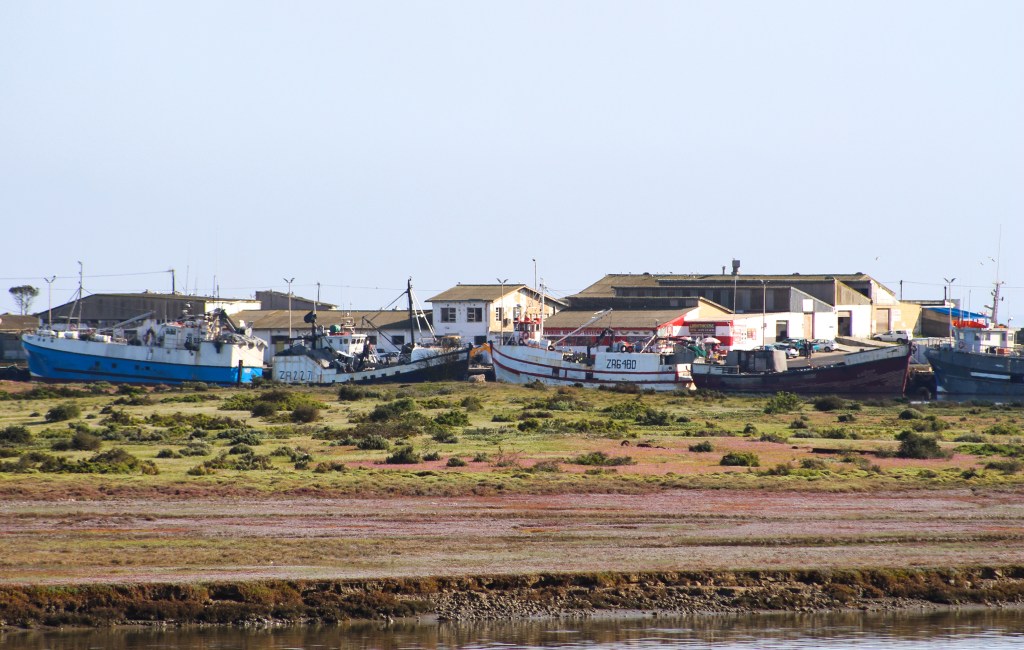
For the last three days we had had glorious sunshine and the flowers had been spectacular but the last day of our trip dawned cloudy with the threat of rain. It was not unexpected as we had been checking the weather forecast and anyway it was an opportunity to explore the area around Velddrif without the distraction of stopping to photograph flowers every few kilometres!
First we headed south across the double bridge over the Berg River, then turned west towards Vredenburg and finally north towards St Helena and St Helena bay. The bay is the largest on the West Coast and is where the Portuguese explorer Vasco da Gama landed in 1497 on his first voyage to find a sea route to India. Today it is home to much of the South African commercial fishing industry. The road through St Helena town follows the sea and passes several fish processing factories, where rock lobster, anchovy and sardines are the main marine products. It is also a popular holiday spot with several resorts and is the only place on the West Coast where the sun rises over the sea. A few kilometers further takes you into Stompneusbaai and the end of the road along St Helena Bay.
From there we cut across the headland south and west to Paternoster, a fishing village and holiday destination. The landscape between St Helena Bay and Saldanha Bay to the south is largely flat with most of the land under agriculture, mainly wheat and sheep farming. The soil here is of quarternary origin, overlying the basement granite and shale which can be seen exposed as low hills and boulders along the coast. The land bulges out west towards the sea while 60 to 70 kilometers inland you can see the dramatic backdrop of the Cedarberg mountains.
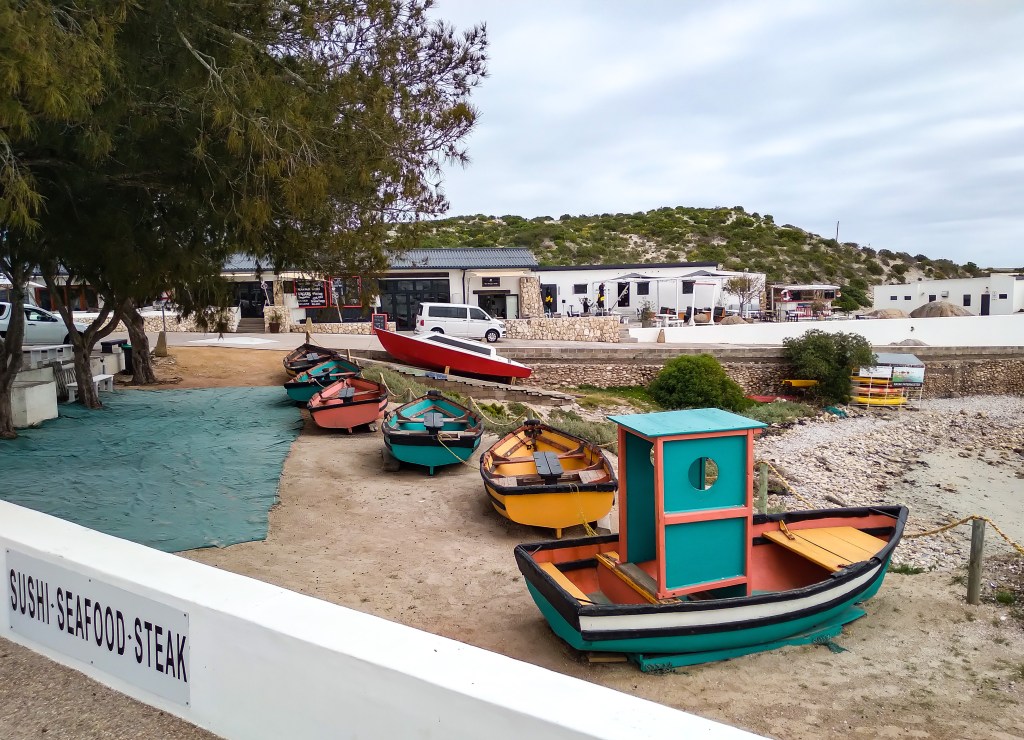
The village of Paternoster started off as a fishing village centred on a beautiful white sandy beach surrounded by steep cliffs and rounded granite boulders. Today it has become a popular tourist spot but fortunately this has not spoilt the essential character of a fishing village with its white washed houses and commercial fishing activities. The Paternoster Waterfront and Crayfish Wharf is a recent development on the south side of the village with restaurants and an art shed. On this cold and rather windy day the Hungry Monk at the Waterfront was a good place to stop and have a cup of coffee!
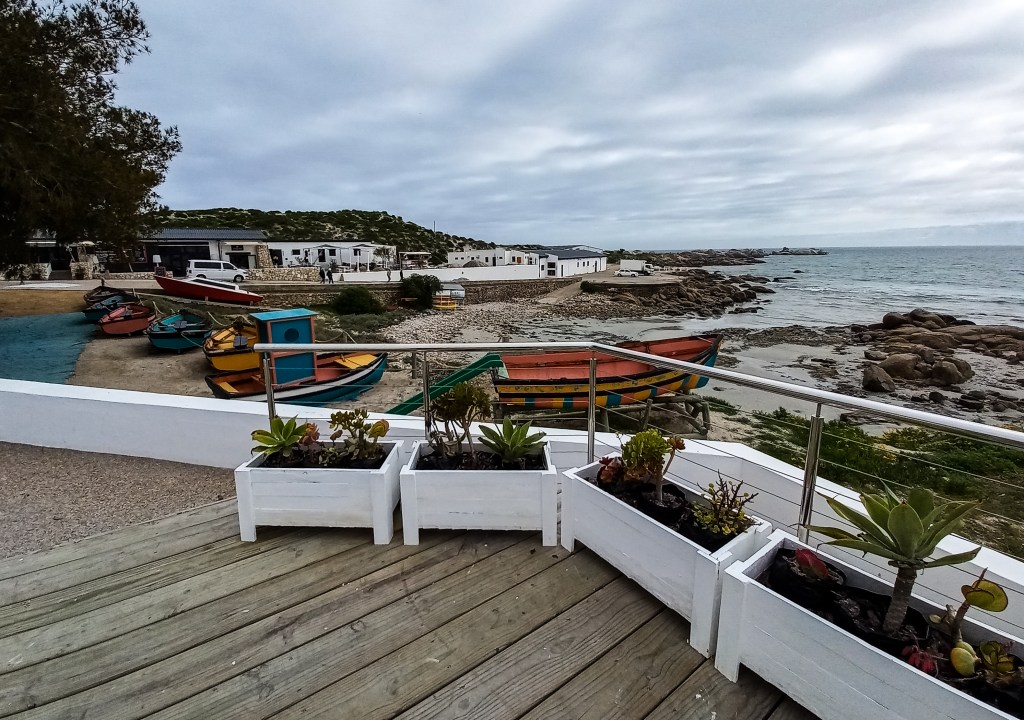
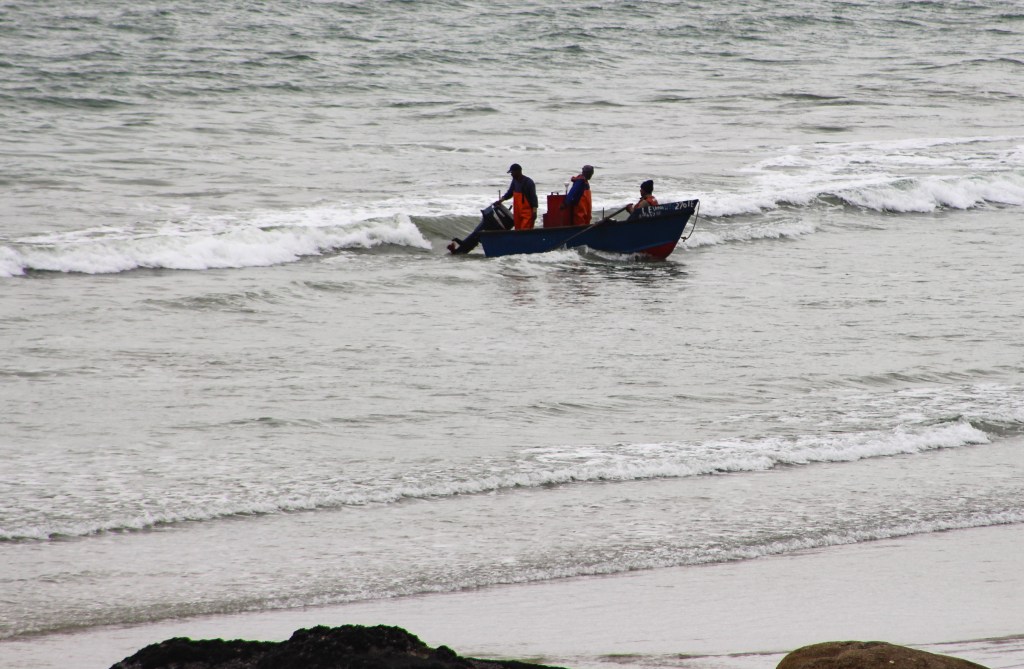
On the way back towards the village centre we could see a fishing boat approaching the beach so we headed down to the landing area to see what had been caught. In the parking area a few buyers were waiting to purchase the fisherman’s catch but on this cloudy and rather threatening day it appeared that not much had been caught and most went away empty handed.
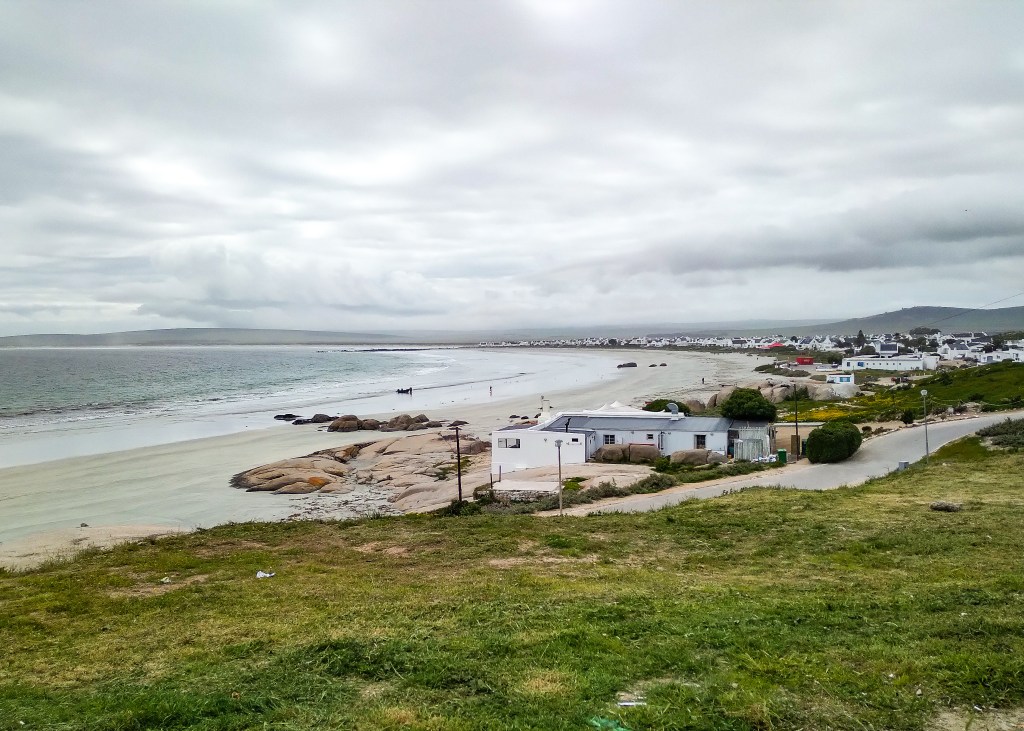
In 2019 a tiny restaurant in Paternoster was named the Best Restaurant in the world by the World Restaurant Awards. To get a booking at the restaurant you have to book months in advance. We looked up the address and found our way to it through the narrow streets of the old part of the village just to have a look from the outside and dream about sampling their menu!
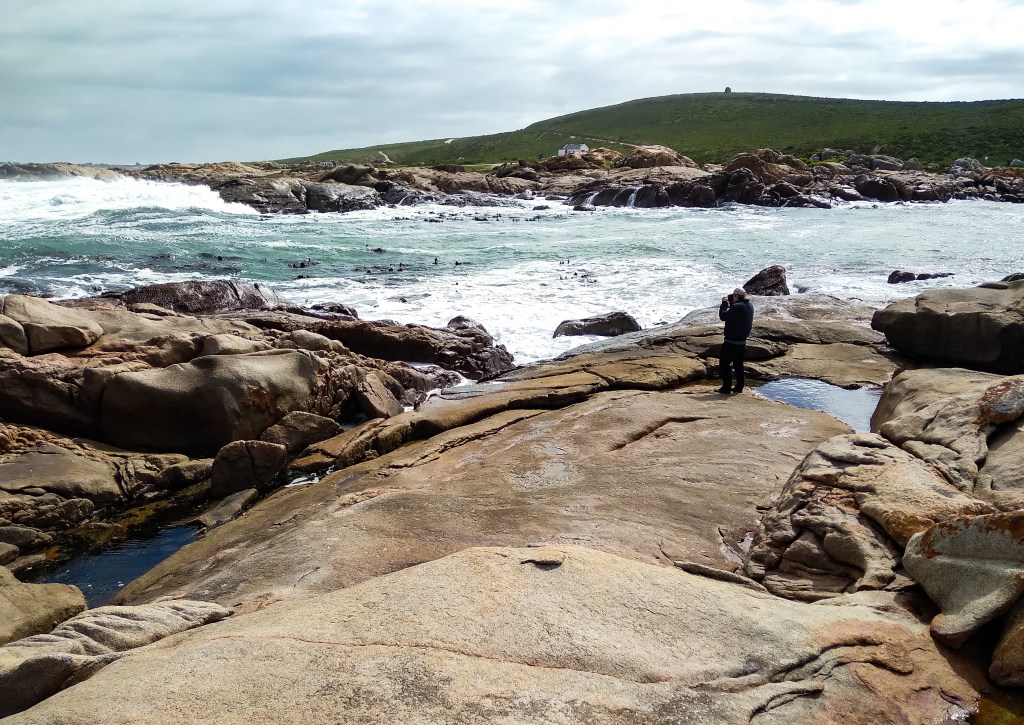
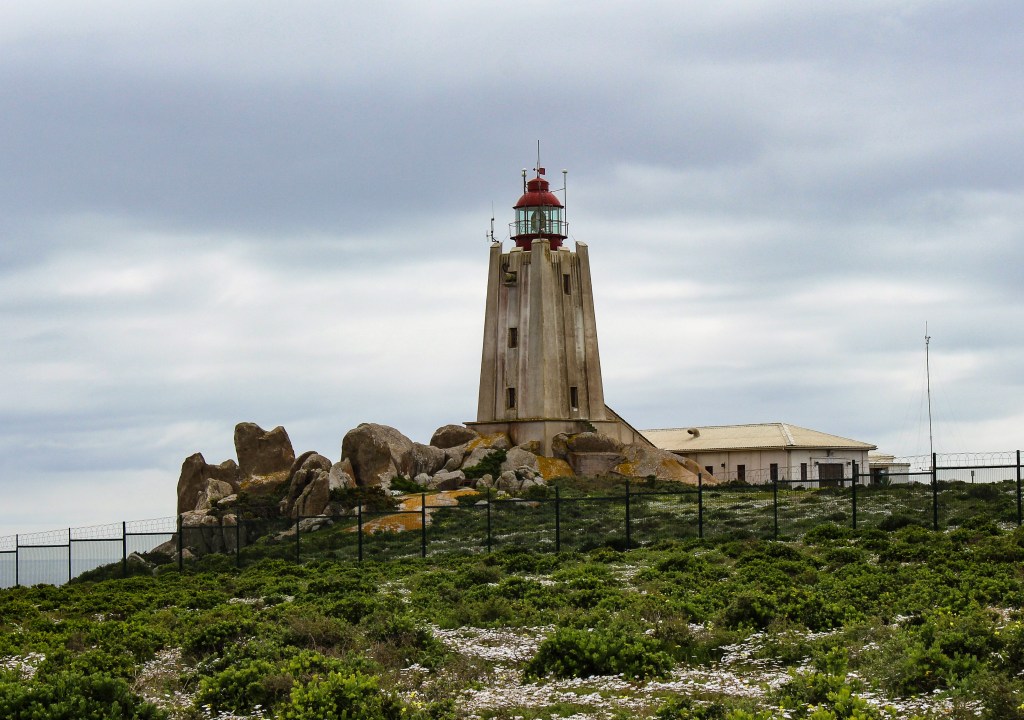
Just to the south of Paternoster is Cape Columbine, South Africa’s last remaining manned lighthouse. It was not open to the public but we could visit the Cape Columbine Reserve which surrounds it. The lighthouse has a very powerful beam that can be seen up to 50 kilometers from the coast. It is named after the barque Columbine, which was wrecked off the coast in 1829. The lighthouse, though, was only built in 1936, after there had been several more shipwrecks off this part of the coast.
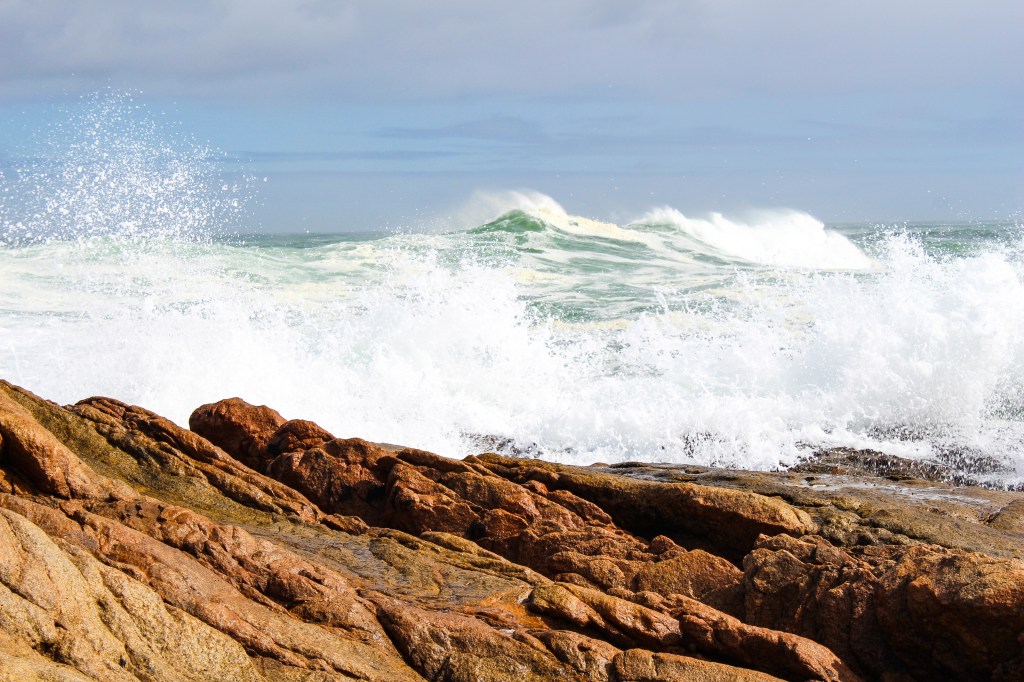
The Reserve, proclaimed in 1973, also includes a large section of wild and rocky coastline and is home to many wildflowers. It is also know as Tittiesbaai Reserve, named after a colonial era French trader Jacques Titius. There is a small fee to pay at the entrance gate but well worth it for the beautiful views, lovely bays, wild flowers and wild seas.
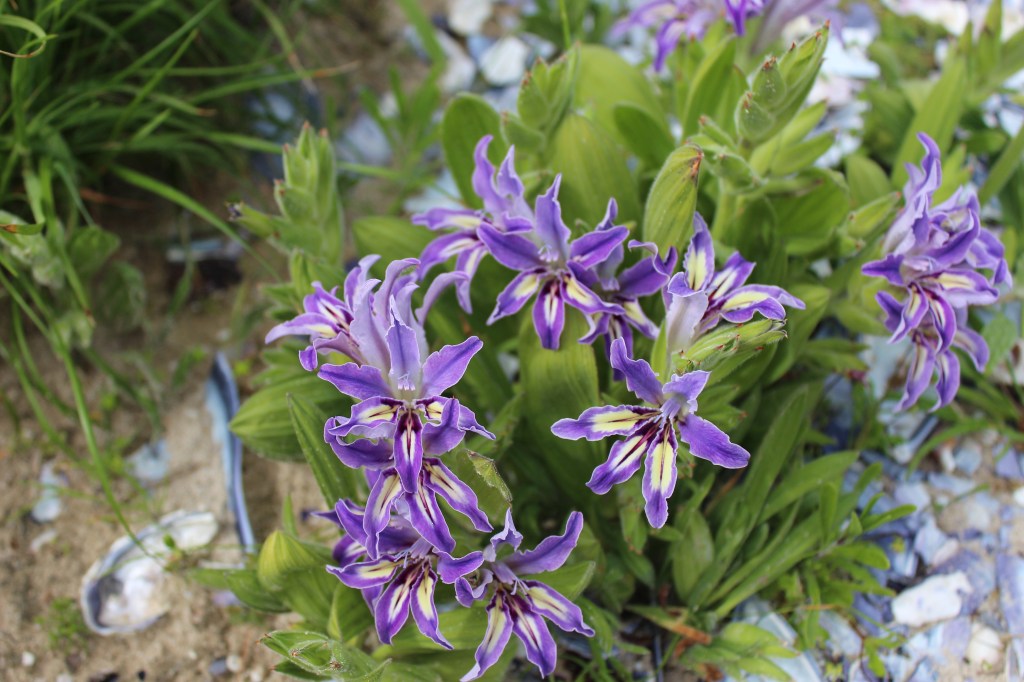
In a sandy but sheltered spot near one of the bays, we found this beautiful flower. It is one of the Babiana species in the Iris family, most likely B. ambigua. It is also called the Baboon flower, as Babiana or baviaantjie is a Dutch word meaning little baboon. The Chacma baboon, native to Southern Africa, is fond of digging up and eating the corms of this plant.
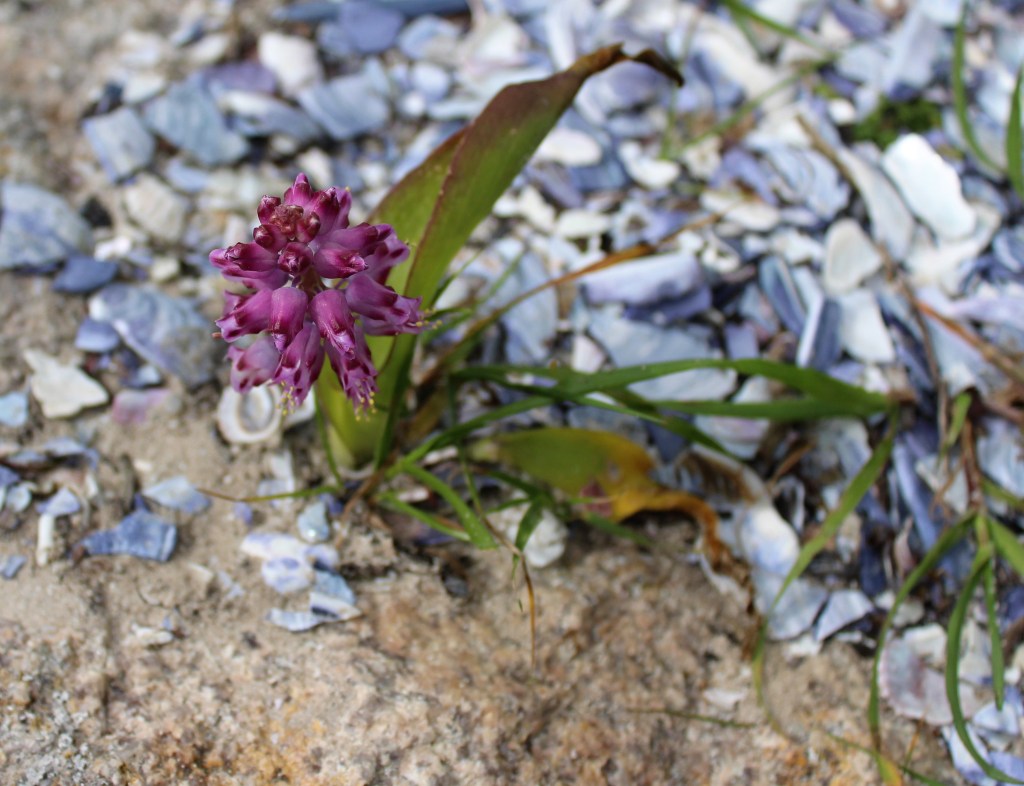
Also found close by is this little example of a Lachanalia species.
The imposing lighthouse stands 80 meters above sea level on Castle rock. It is usually the first lighthouse in South Africa that ships coming from Europe see. At this time of year it is surrounded by lovely white daisies. The views from near the lighthouse down across the bay towards the village of Paternoster are spectacular, even on this rather hazy and cloudy day, especially with a carpet of white daisies in the foreground.
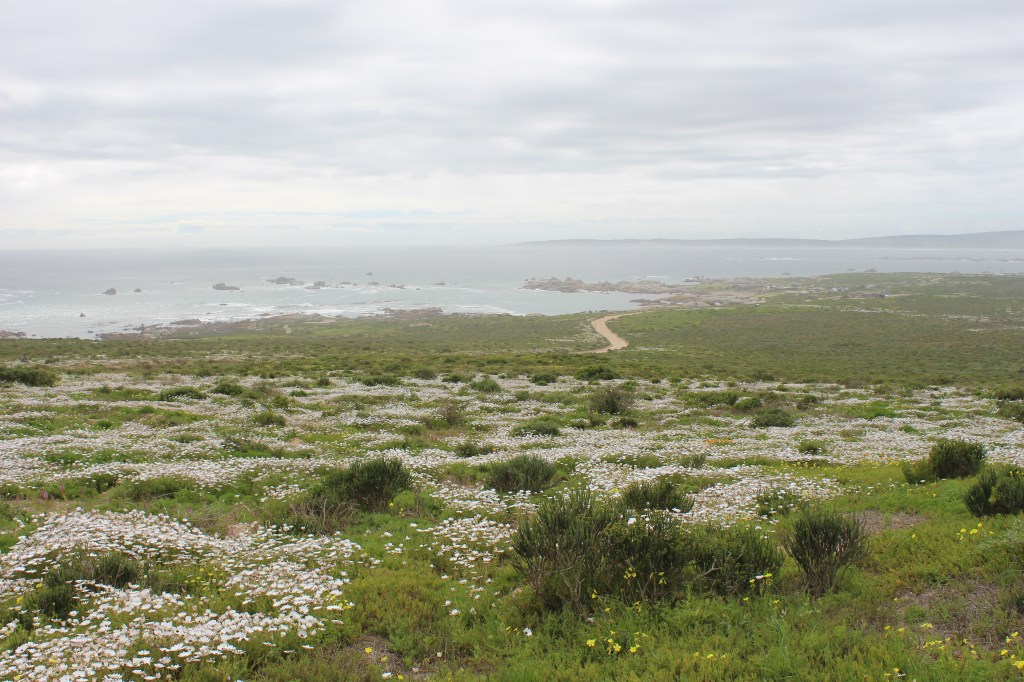
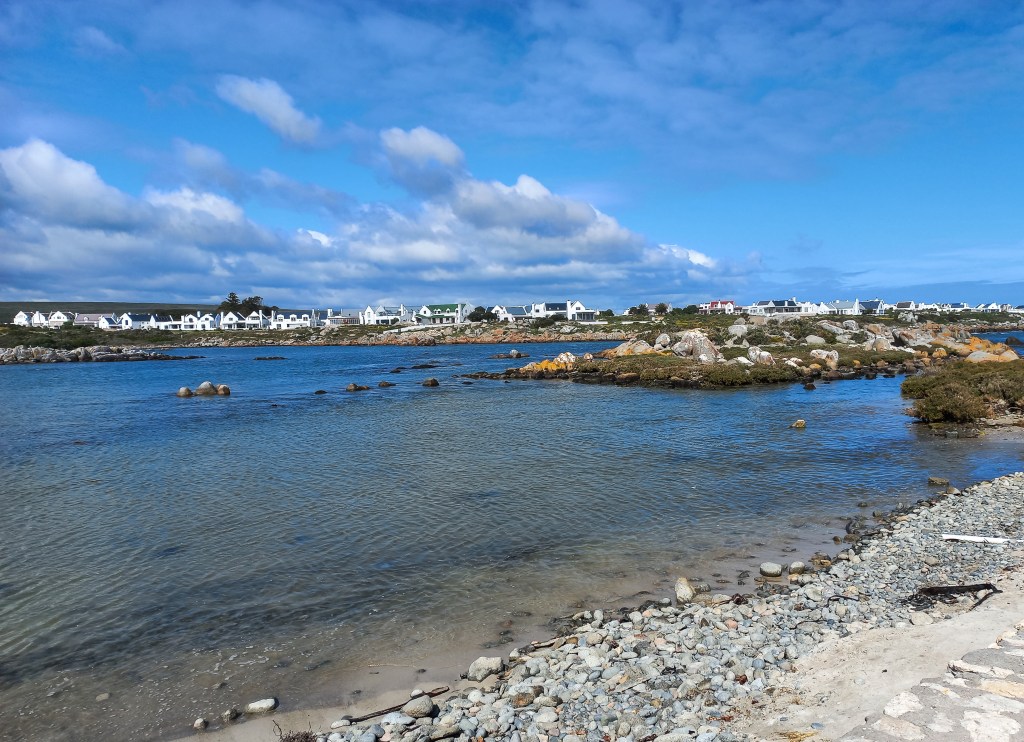
At our coffee stop in the Paternoster Waterfront, the owner suggested that we visit Jacobsbaai, a little further down the coast as this is also a picturesque and tranquil little village. To get there we headed towards Vredenburg, the main commercial centre for the area, before turning west again towards the coast. Jacobsbaai also gets its name from the French trader Jacques Titius, of Tittiesbaai fame. It is known as a good place for crayfish and other local fish species, so it is popular with anglers. The village is largely residential but the style of a simple fishing villages with typical white-washed houses has been maintained. There are seven separate bays along the coast, each with its own character, and it is also famous for its wildflowers – the locals call it “Namaqualand by the sea”.
By now it was mid-afternoon and we decided to head back to Laaiplek, before another evening meal at Charlie’s Brewhouse.
Next morning, our last, we woke to a quiet misty scene, with no cormorant fly-by as yet. We went down to have a last walk along the river before packing up to head homewards.
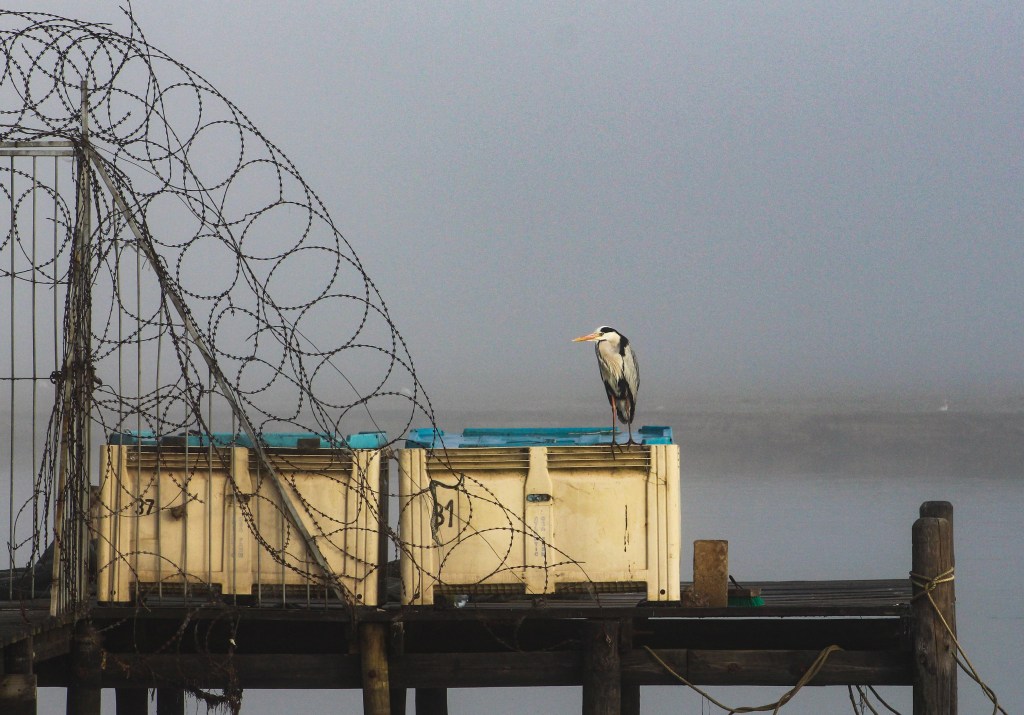
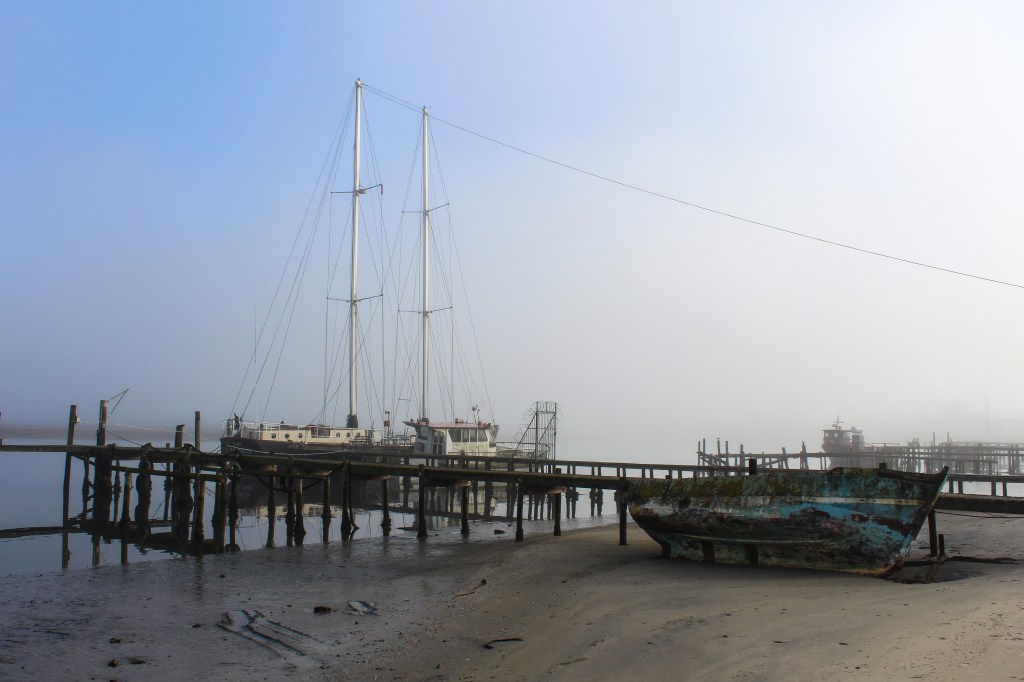
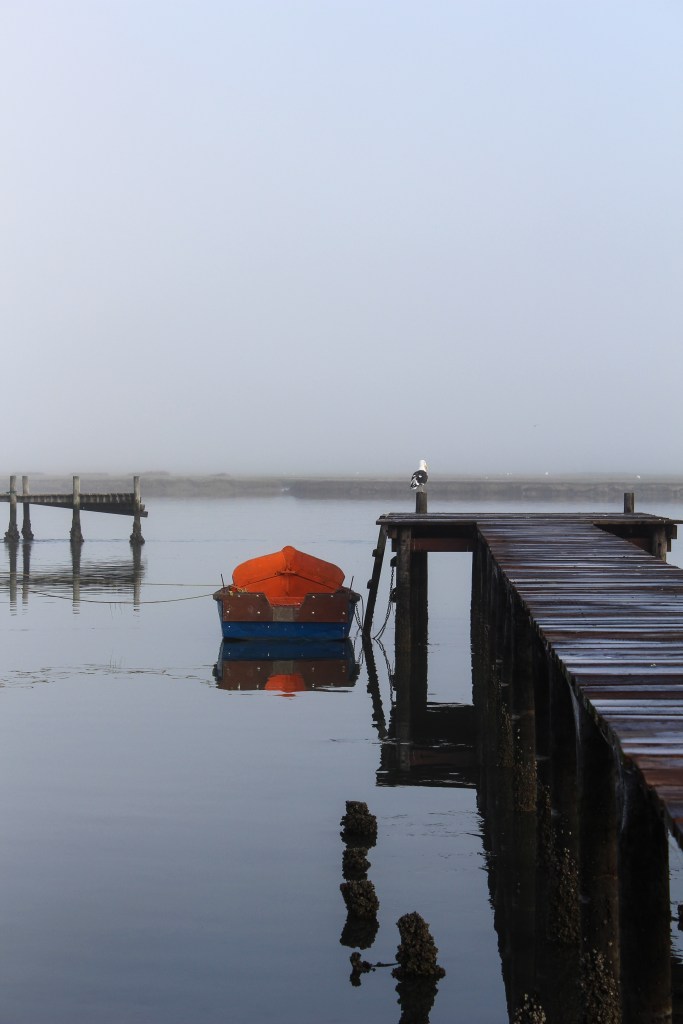
Lone heron on heavily fortified dock, masts in the mist and a splash of colour on the monochromatic river.
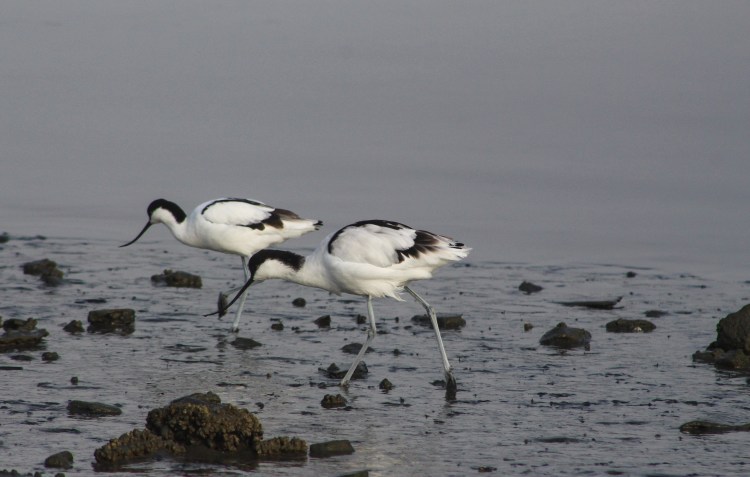
Avocets foraging on the edge of the river.