Our long journey there
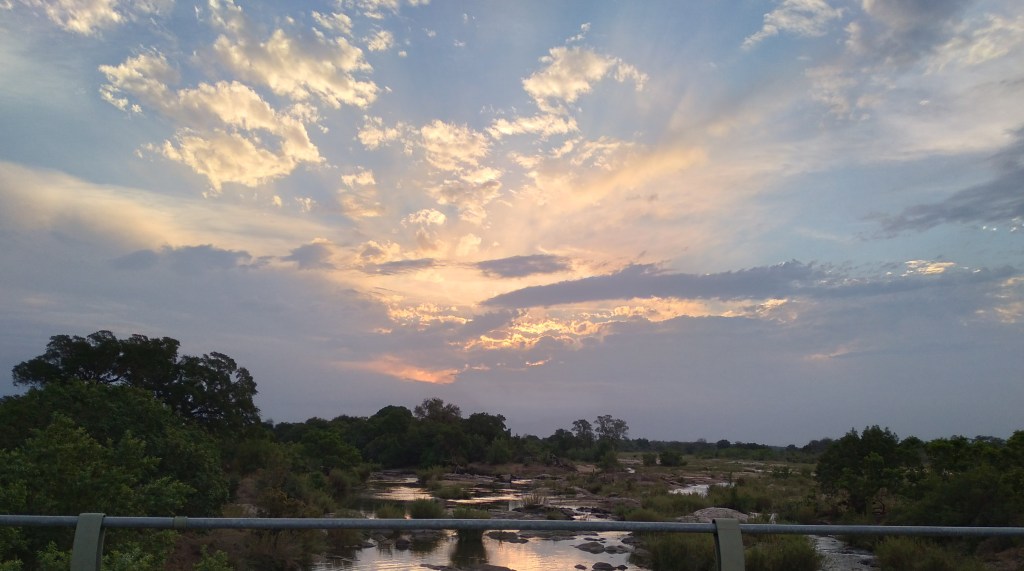
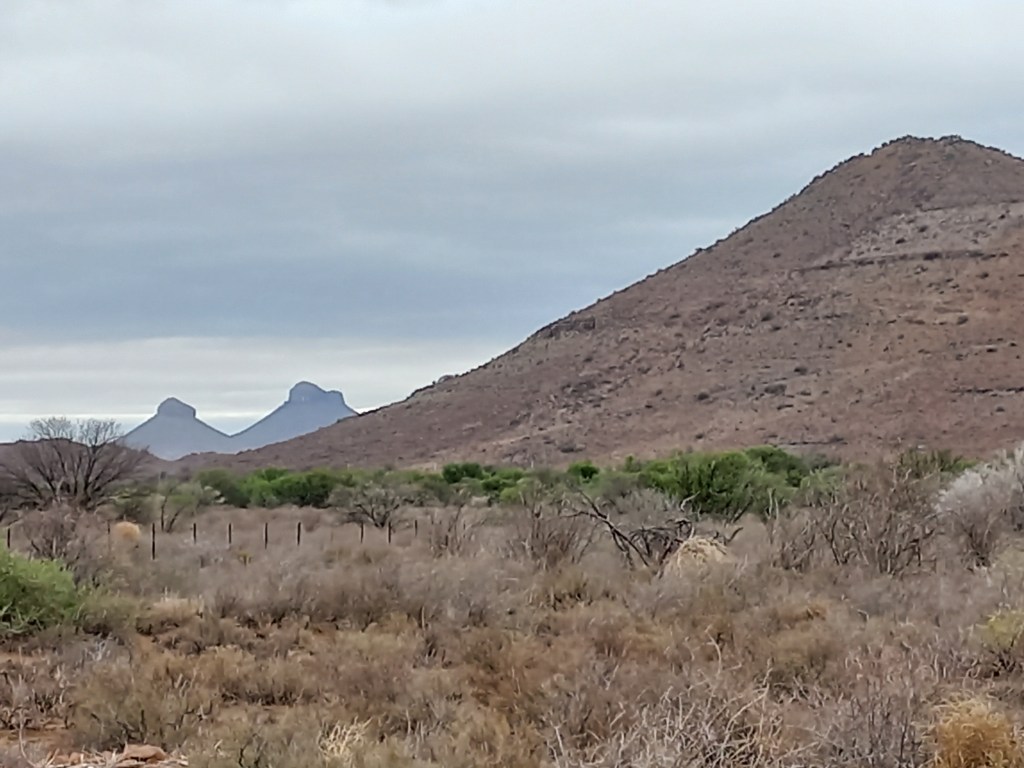
We left Cape Town on 22 October and drove on the N1 through Huguenot Tunnel, passed Worcester and up through the Hex River valley, Touws River and into the Karoo proper. Our overnight stop was about 50 km passed Beaufort West – a guest farm called Travalia near the Three Sisters.
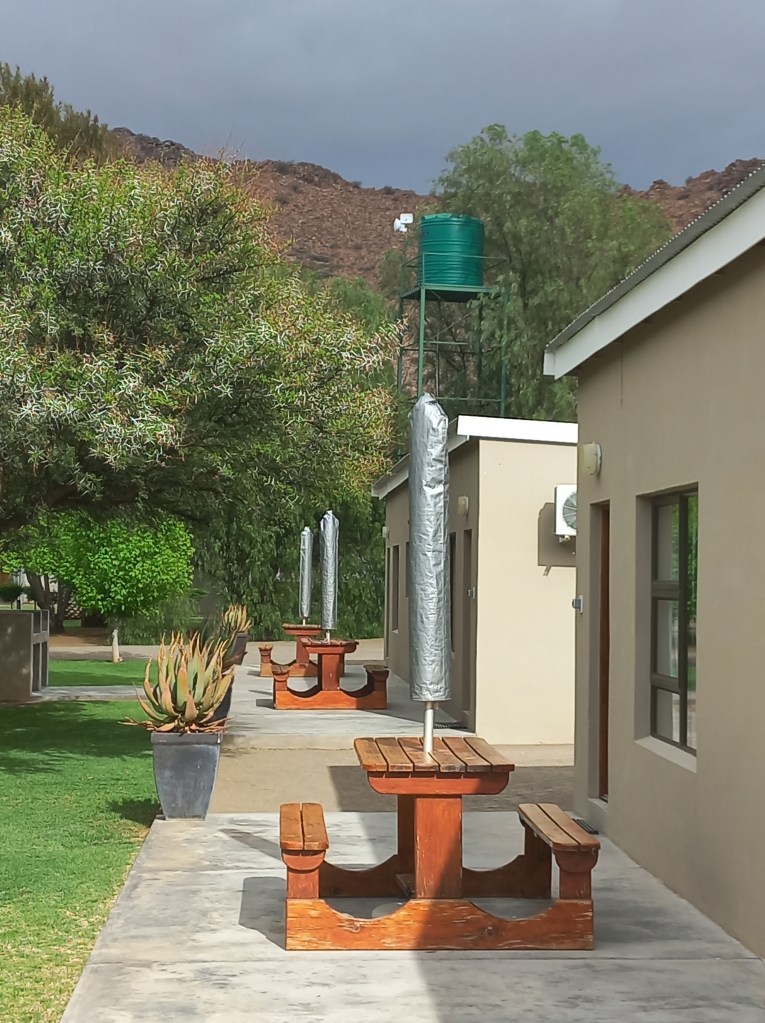
Although the day temperatures were warm, the night was pretty cold with a howling wind. The accommodation was spacious and comfortable (although the air-conditioning didn’t work) and we had delicious pies for supper delivered to our room. It was a beautiful little green oasis in the dry Karoo.
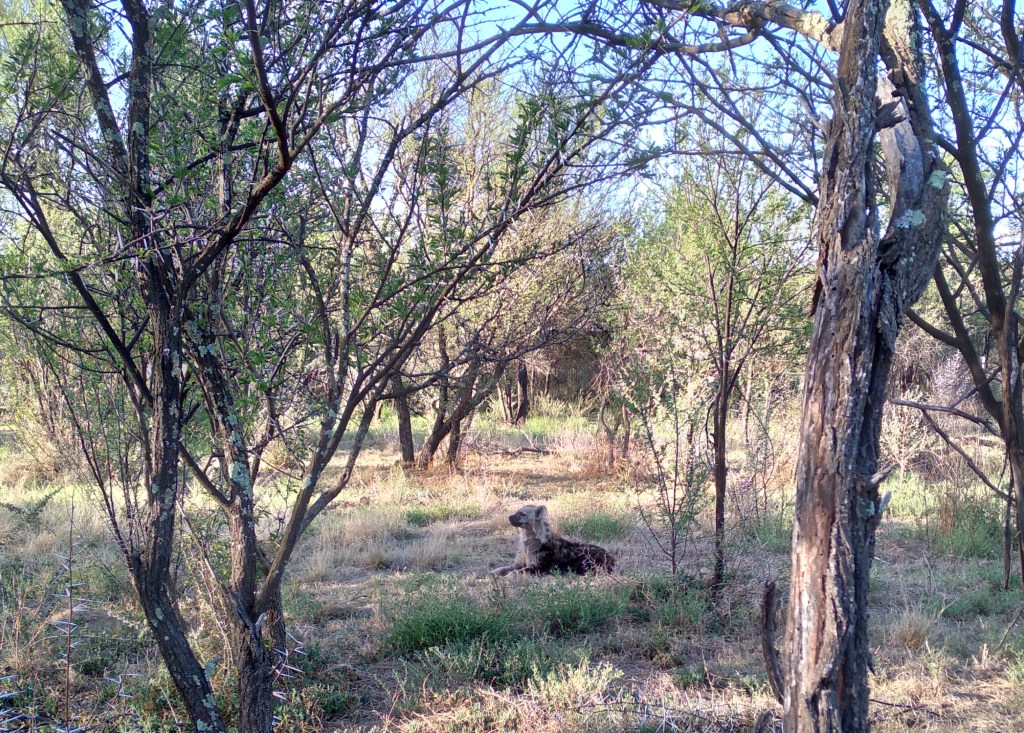
Day 2 23 October. Keeping on the N1 we drove through the remainder of the Karoo up the escarpment and into the Free State. Our overnight stop was Weltevreden Game Farm about 25 kms beyond Bloemfontein. We managed to miss the correct offramp and continued several kms further before realising this and turning back. The access to the Game Farm was a bit tortuous on very corrugated rough roads but it was very attractive once we got there. We had a nice big room on the end of a row with paddocks next to us and behind us. We soon discovered that two young hyenas occupied the enclosure behind us.
There were also two serval in other enclosures but they were curled up sleeping when we went to look for them. The only disadvantage to the accommodation was the open plan bathroom which meant giving the other privacy every now and then! As the night time temperature here was also cold it was a bit of a trial. Fortunately, here we had a nice gas heater which was needed in the evening. That night we heard lions in the distance and wondered where they were kept.
Day 3 24 October. Back on the N1 heading north. We had planned to do this stretch around Jo’burg on a Sunday to avoid traffic and it proved a good plan as there was not much traffic at all and we negotiated all the twists and turns from one highway to the next easily. Once on the N12 though the weather started to close in with a thunderstorm approaching. As we got closer to Witbank (Emahlahleni) the terrible pollution from the open-cast coal mines was also very bad making visibility difficult. Once beyond Witbank and on the N4 the weather broke and we were caught in a tremendous downpour and very tough driving conditions, made even more difficult with the number of trucks going to and from coal mines and power stations. Once we turned off to go through Belfast and on towards Dullstroom, our overnight stop, the weather improved somewhat and we got out of the extreme pollution. The landscape got prettier and prettier the closer we got to Dullstroom. We found the place to collect the key for our “Kliphuisjie” easily and began to look for somewhere for supper – unfortunately not easy on a Sunday night! We managed to get the last two steak and kidney pies at a small shop just before it closed and then headed for the accommodation as the weather started to close in once more. The little complex of Kliphuisjies was very picturesque and fortunately we managed to get most things inside before the mist and rain came down. It was really freezing but our little cottage was lovely and had a fireplace with complimentary wood and firelighters which we really appreciated, all the more so because we had loadshedding later on.
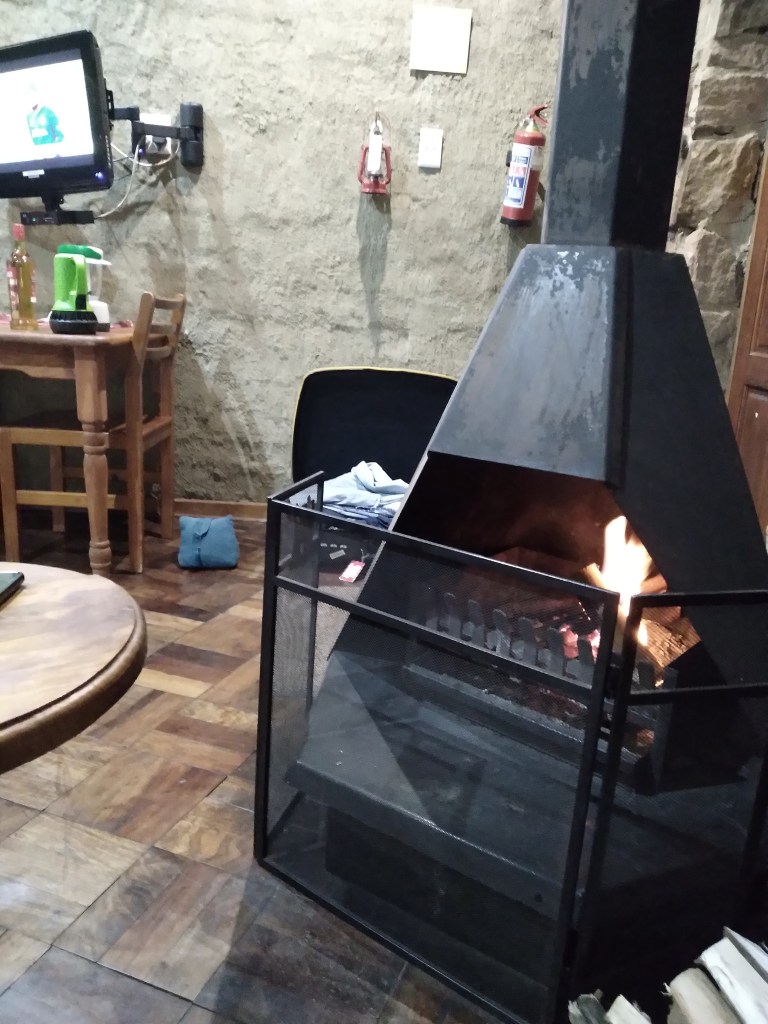
The bathroom here was open plan as well but fortunately the loo had a curtain across it to give some privacy – just as well given the weather so we did not periodically have to vacate the unit!
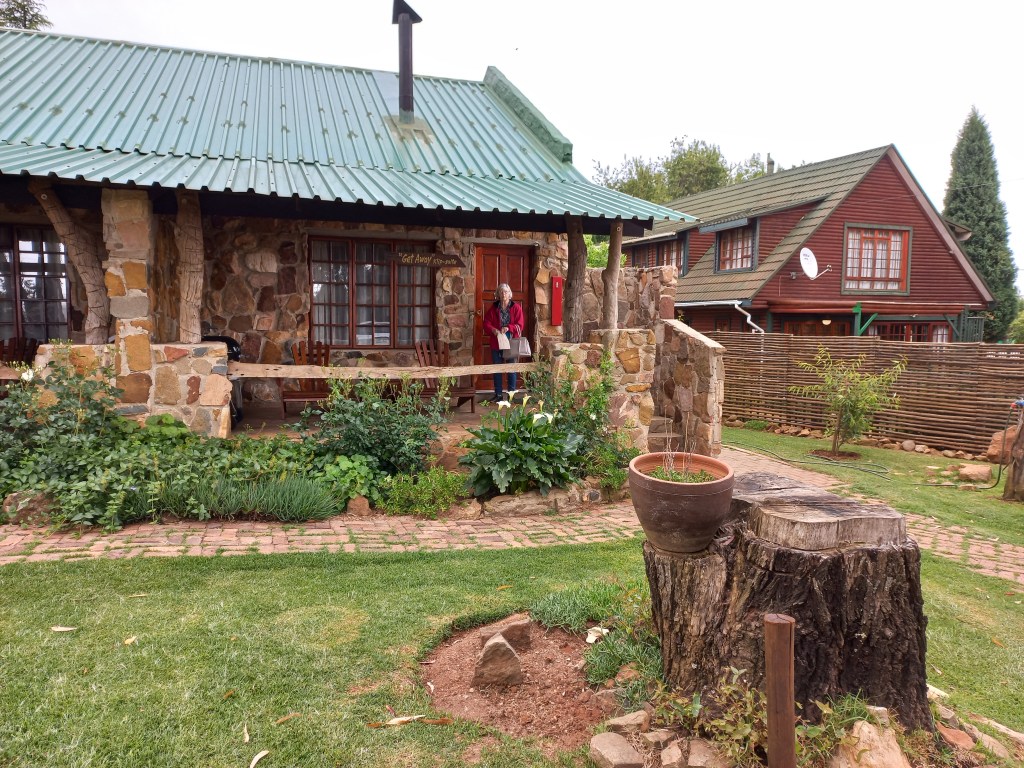
Day 4 25 October. The weather had cleared somewhat by morning and we set off on the last leg towards Kruger. The highveld grasslands and trout dams made for beautiful scenery between Dullstroom and Lydenburg.
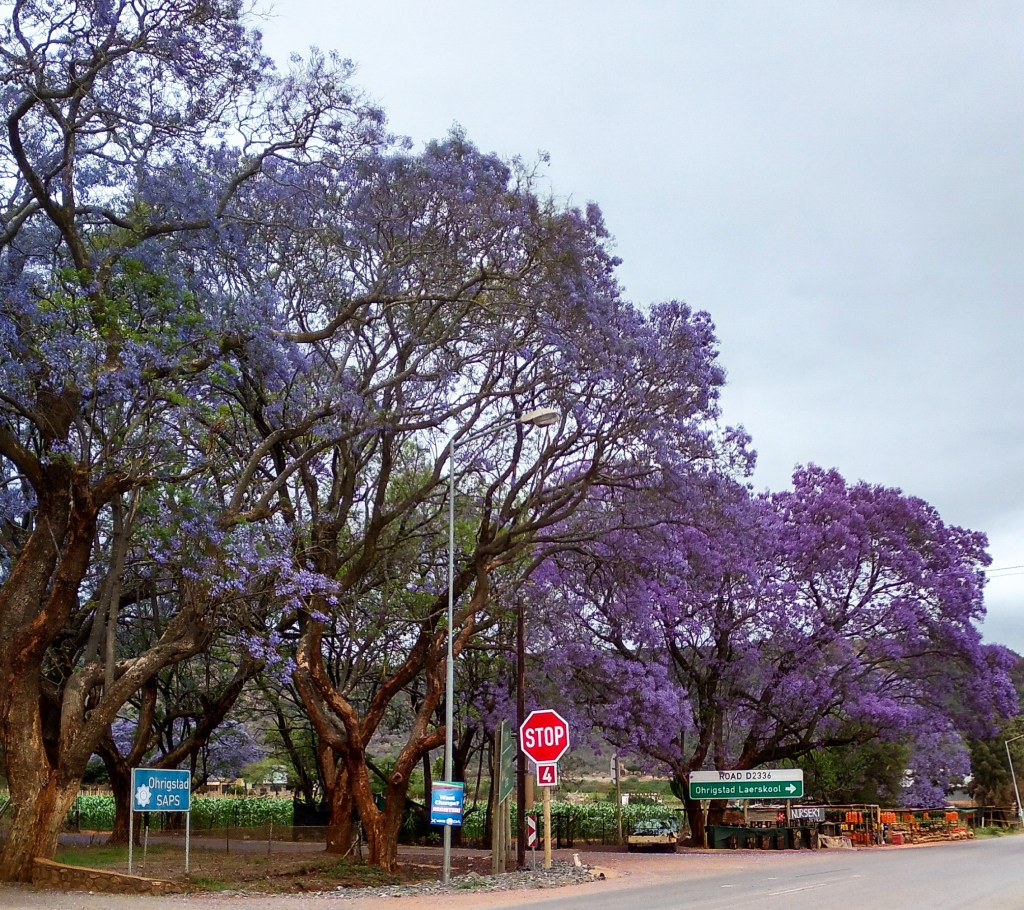
Further on we went up and then down the very spectacular Abel Erasmus Pass into highly productive agricultural areas where more and more citrus farms could be seen. Eventually we went through the JG Strydom Tunnel and into the Lowveld proper. Although we had brought a lot of provisions with us we stopped in Phalaborwa to stock up on fresh food and meat. The central part of the town was very busy and chaotic with shoppers pushing trolleys piled high – must have been payday!
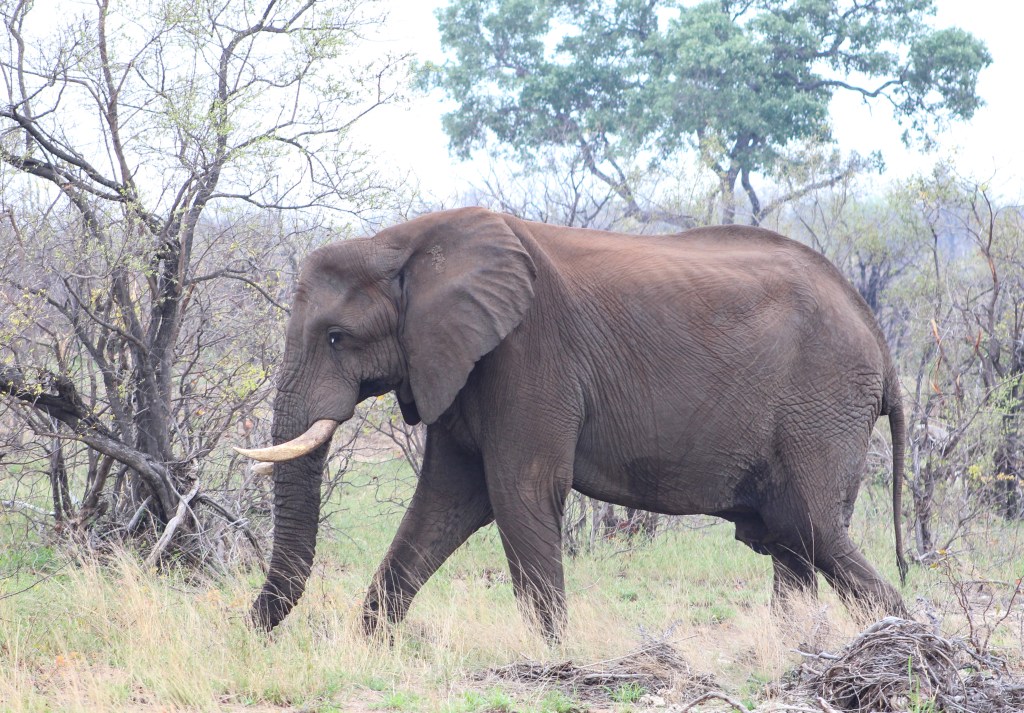
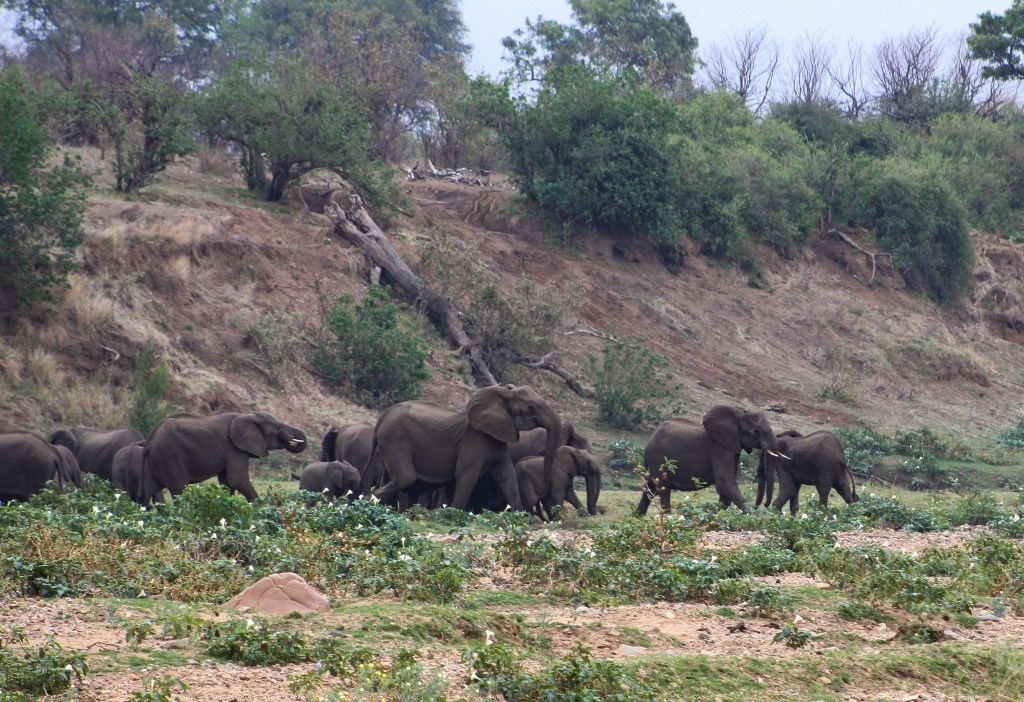
We arrived at the Phalaborwa entrance gate to Kruger just before 2pm and were in the Park shortly after that. Our first large animal sighting, not counting the tree squirrels and hoopoe seen at the Gate, was an elephant. We followed the H9 for just over 6km then turned left onto the H14 heading northeast to the junction with the H1-6. At Nandzana waterhole and the junction of two rivers, we had some lovely sightings of elephant. First a very large lone bull elephant quietly browsing very close to us, then a bit further along and across the river a large herd of females and young ones. They were rather agitated so there might have been other elephants close by that we could not see.
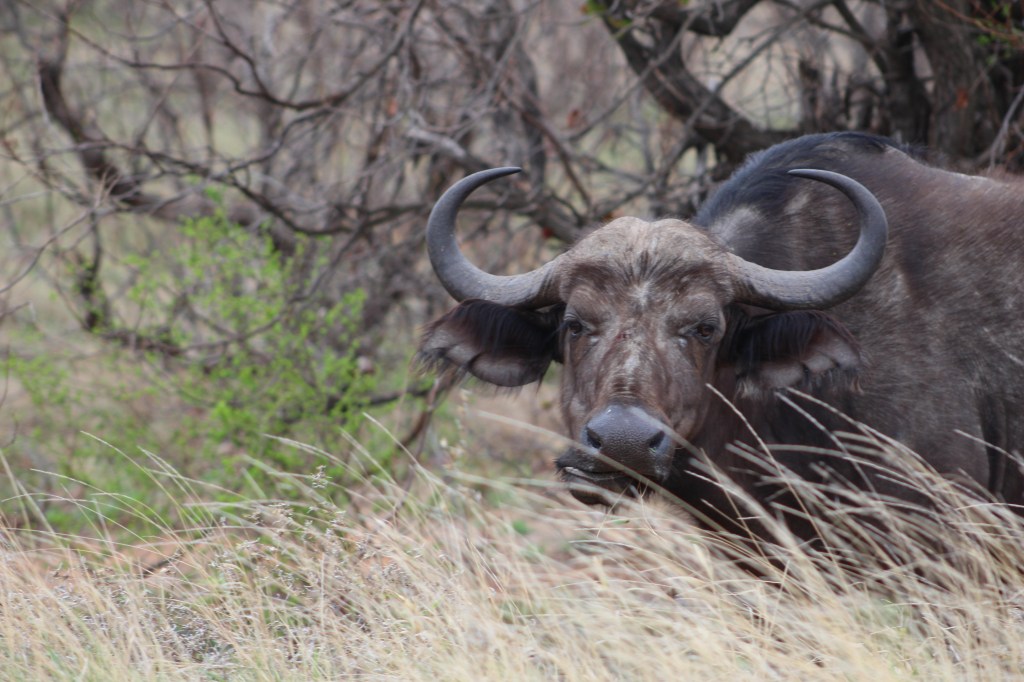
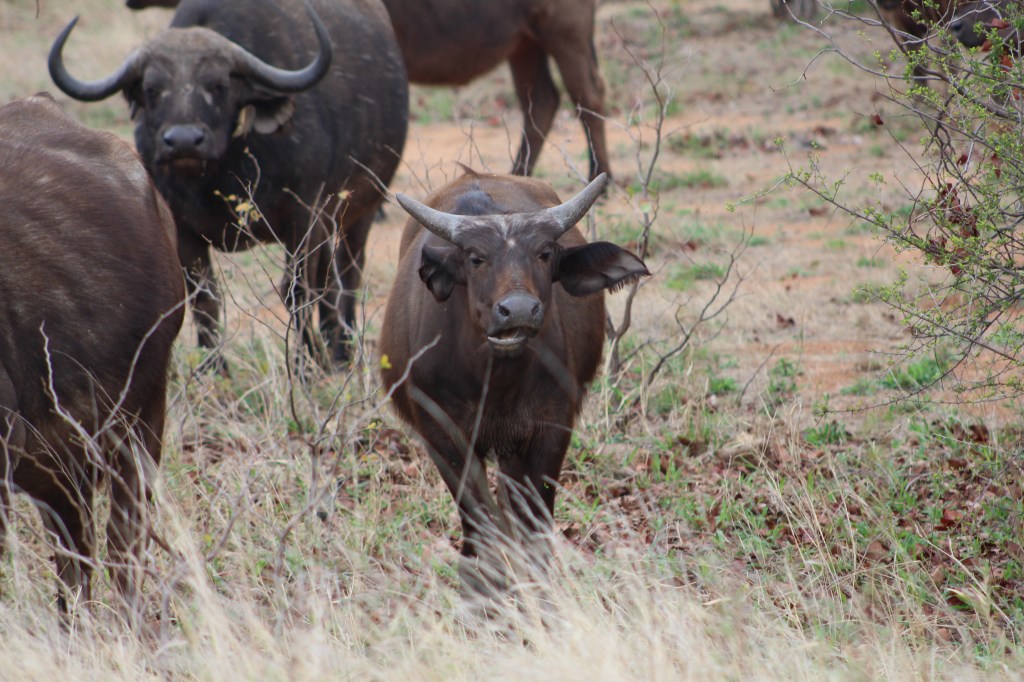
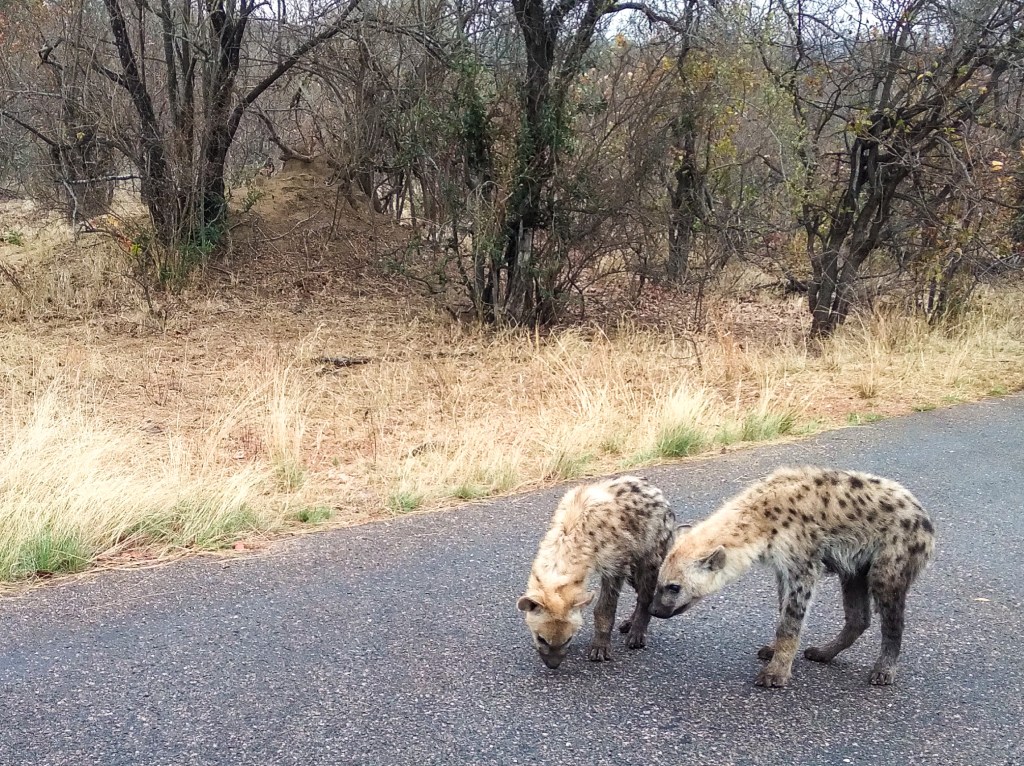
Back on the tar road we came across a large herd of buffalo, which eventually crossed the road in front of us. Still further on we noticed a very young hyena by the side of the road. As we got close to it we could see the mother lying on the other side of the road suckling other babies and then another juvenile joined the first in the road. By this time, the first one was virtually under the car inspecting the tyres.
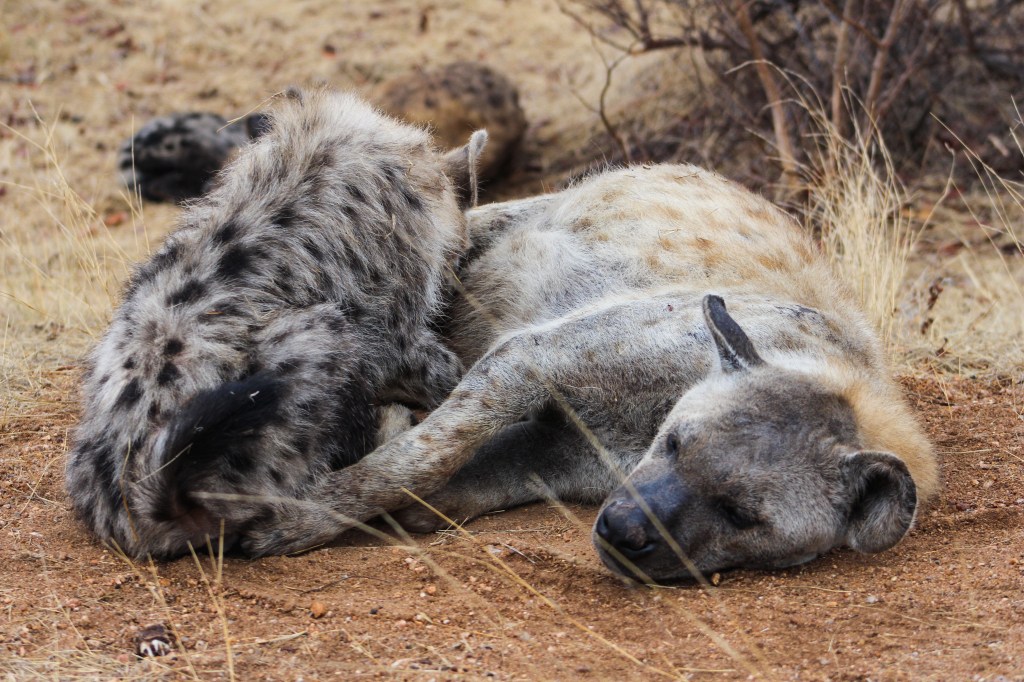
Amazingly, further on, we saw another hyena group close to the road, this time on the other side of the Letaba River. Initially we spotted about four youngsters of differing ages playing with each other but they were quickly joined by an anxious female hyena who tried to corral and control this unruly brood. Although we didn’t see another female, there probably was another out of sight as hyenas seldom have more than two babies in one litter and allo-suckling is not common among hyenas.
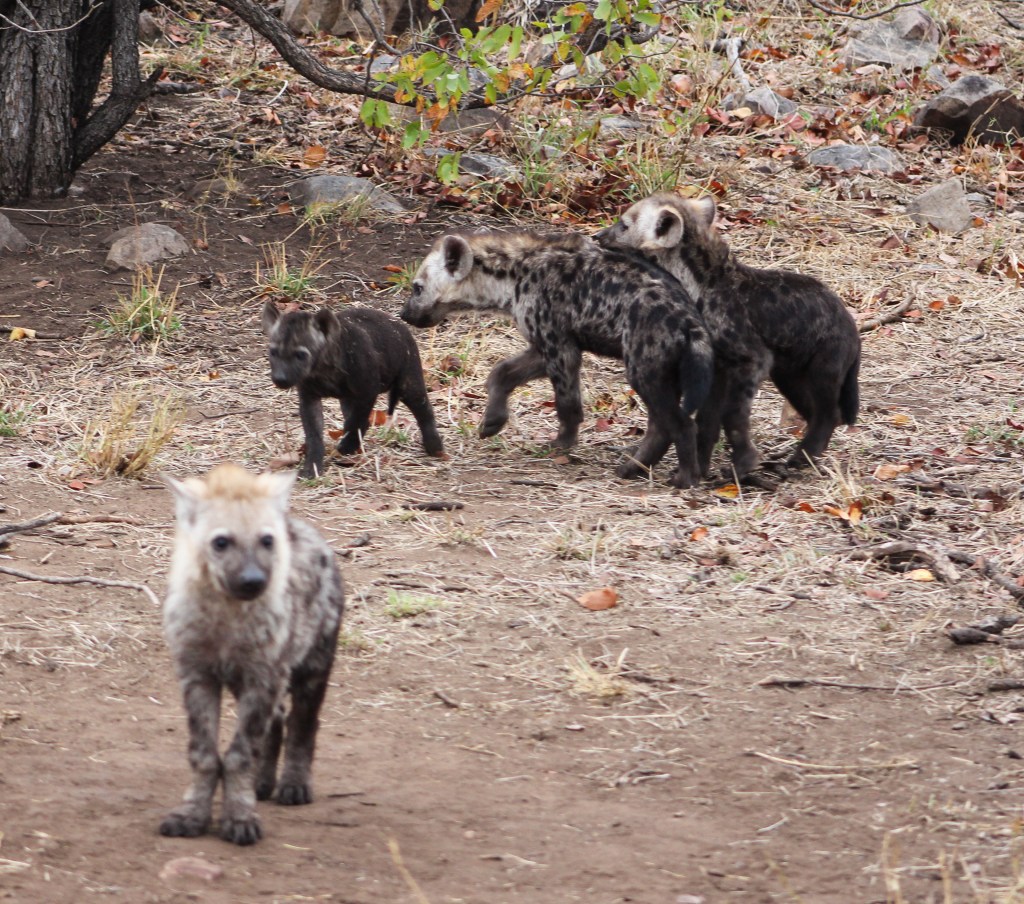
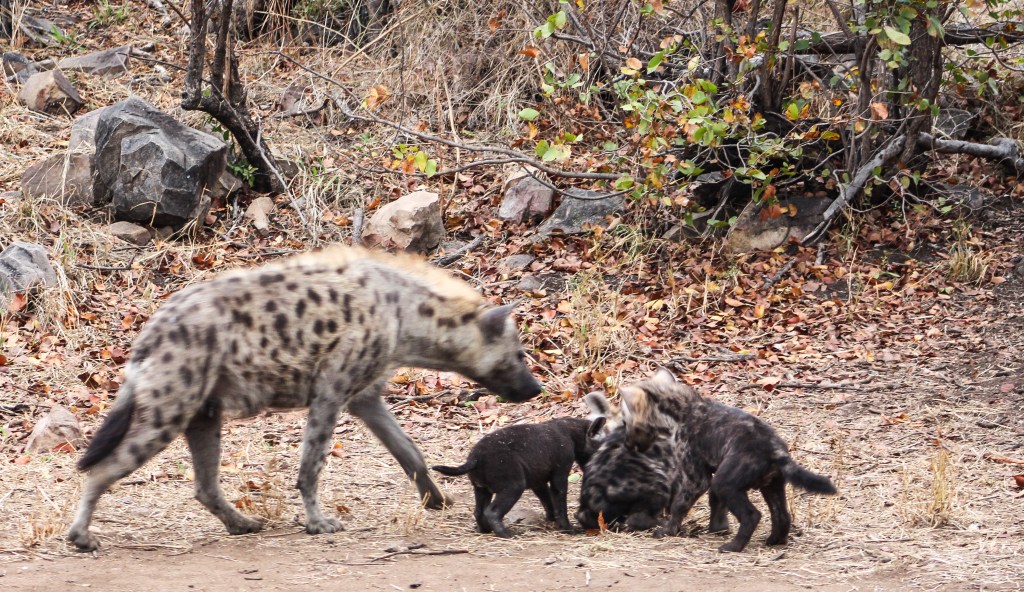
These were the most exciting encounters but we had also seen several impalas, zebra and a giraffe by this time. And crossing the Letaba river we had seen another group of elephants.
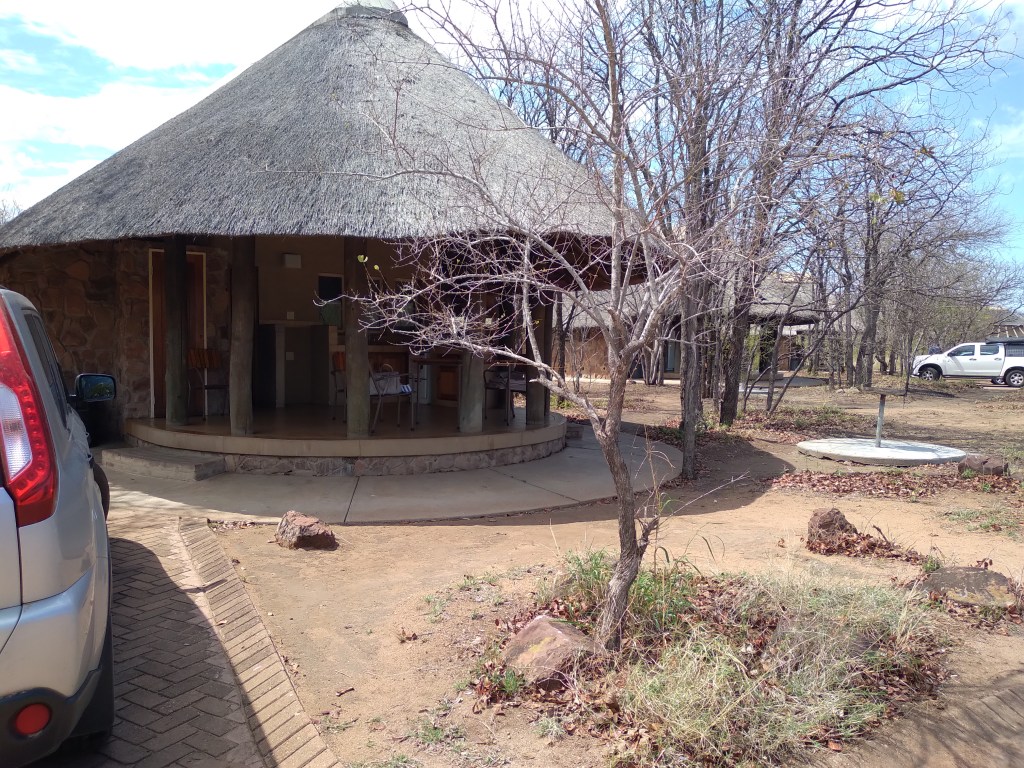
We arrived at Mopani camp around 5pm and started settling into our spacious accommodation – two rooms and two bathrooms as well as a large, covered veranda. The fridge and kitchen were outside on the veranda, with a notice on the fridge door warning you about the honey badgers that have become a nuisance in the camp and that you must place the fridge in a position where they cannot open the door. We did this once we had unpacked the cold boxes and loaded up the fridge and freezer. We decided to give self-catering a break for the evening and went along to the Mpila restaurant for dinner. Mopani is a large spread-out camp with stone thatched bungalows set in mopane woodland. The shop and restaurant complex is surrounded by a wrap-around veranda with beautiful views over Pioneer Dam. In late spring and only at the very beginning of the rainy season the vegetation was quite dry with just a few green leaves and shoots showing through.

