Now the real holiday begins
Finally, after four days of driving from one end of the country almost to the other, we settled into our spacious bungalow in Mopani Camp, in the northern part of Kruger, just a few kilometres south of the Tropic of Capricorn.
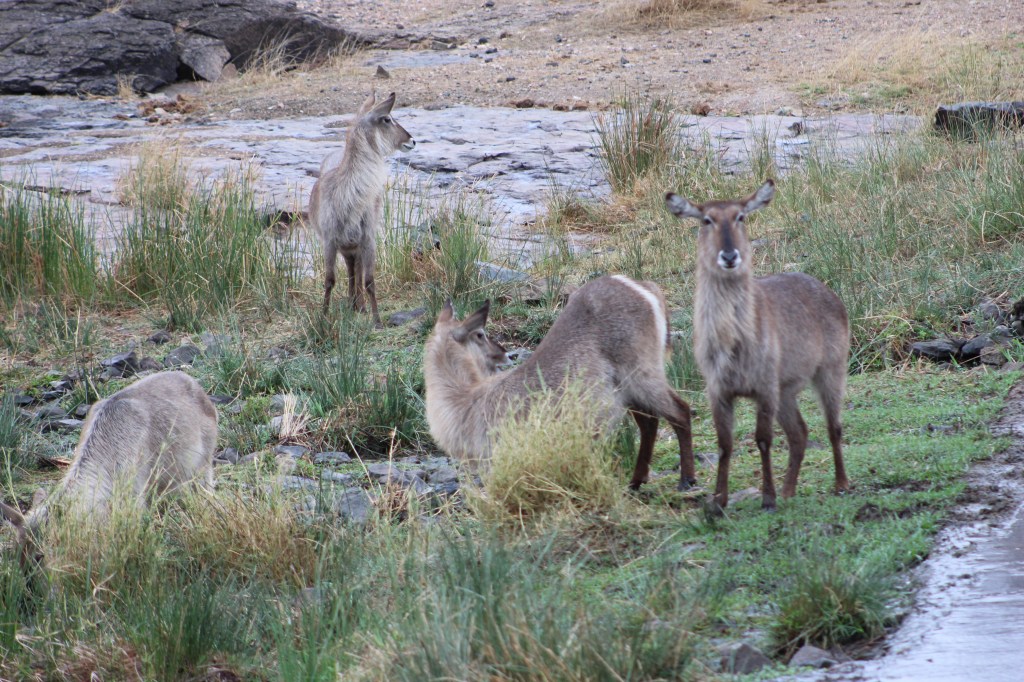
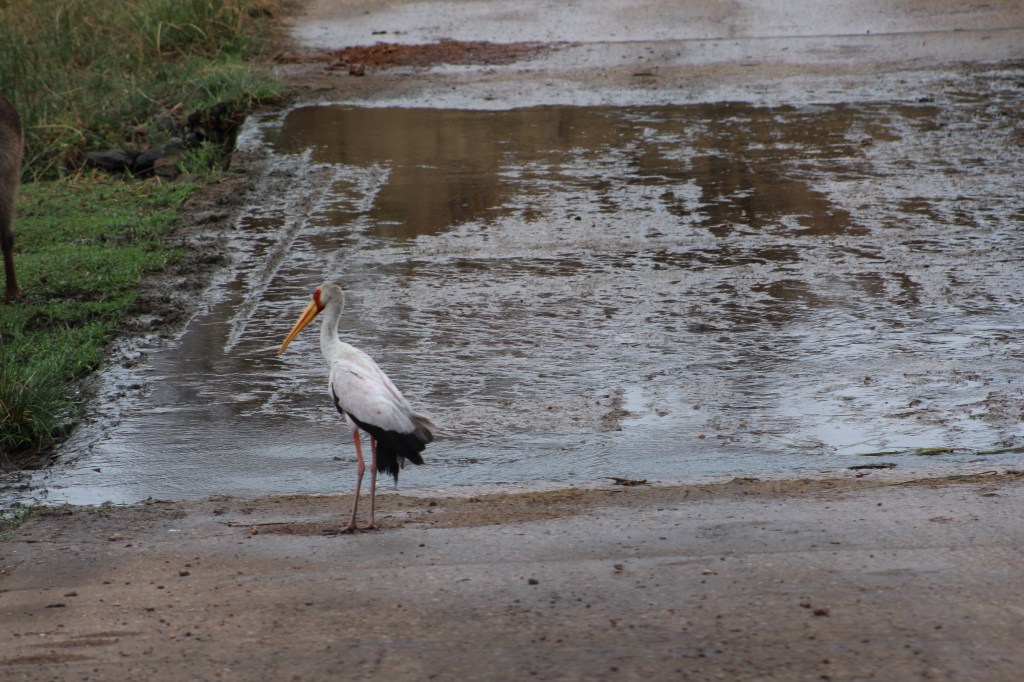
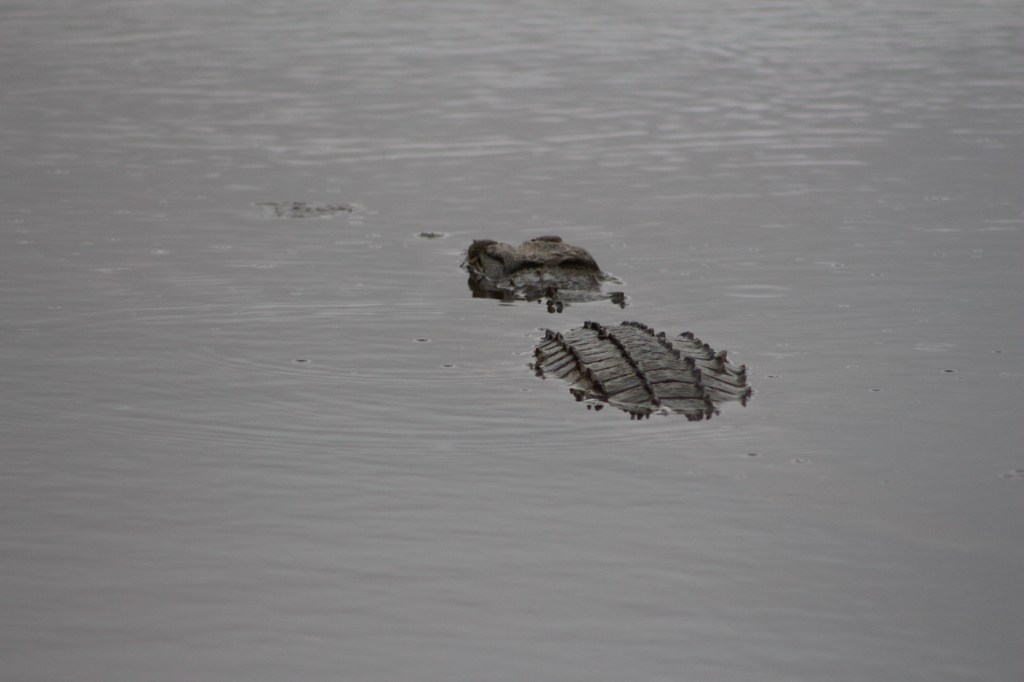
Day 5 26 October. Although we didn’t plan an early morning drive in advance, we woke up fairly early and decided to take a drive before breakfast, so we loaded our flask of tea and packet of rusks into the car and set off. We took the road to Stapelkop Dam (S146), a distance of just over 20km. From the camp, it is a short distance to the turnoff from the main road to the S142 and a winding road that crosses the Tsendze river via a low causeway, where we saw a group of waterbuck, as well as a yellow-billed stork and a large crocodile.
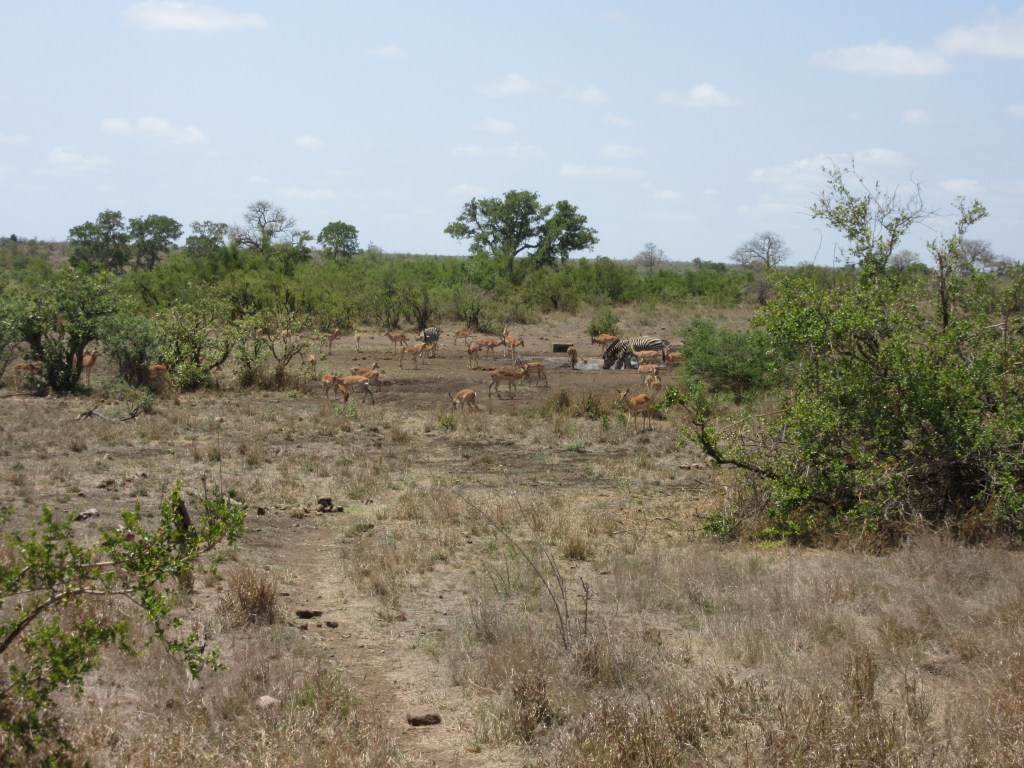
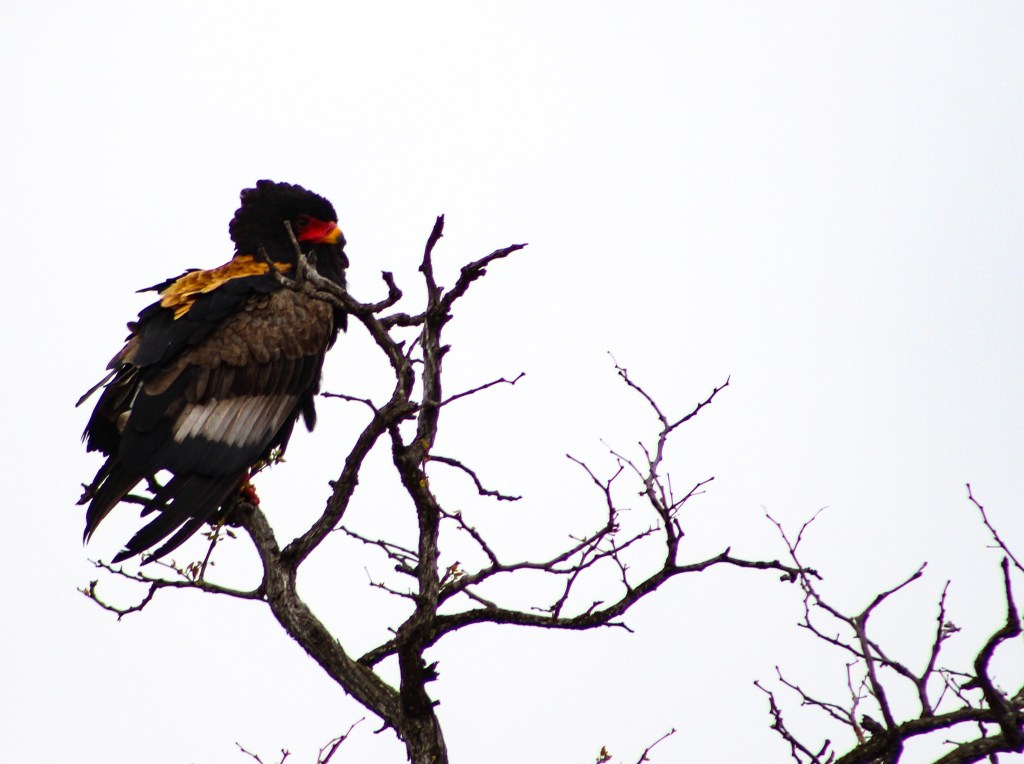
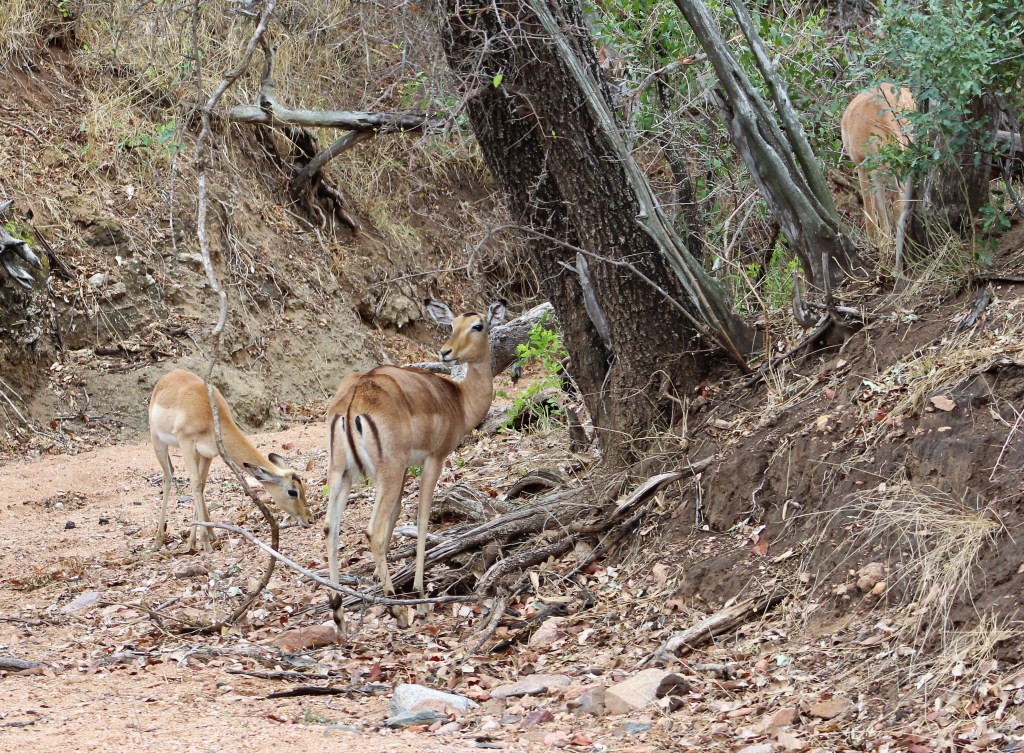
We almost missed the road towards the dam as the signposts were not clear but eventually got on the right road, which wound through fairly dense mopane woodland so spotting game was not always easy. Near a beautiful little koppie with a baobab tree we saw a lone hyena coming towards us on the road. We did see some impala and zebra, and a Bateleur eagle in a dead tree fairly close to the dam.
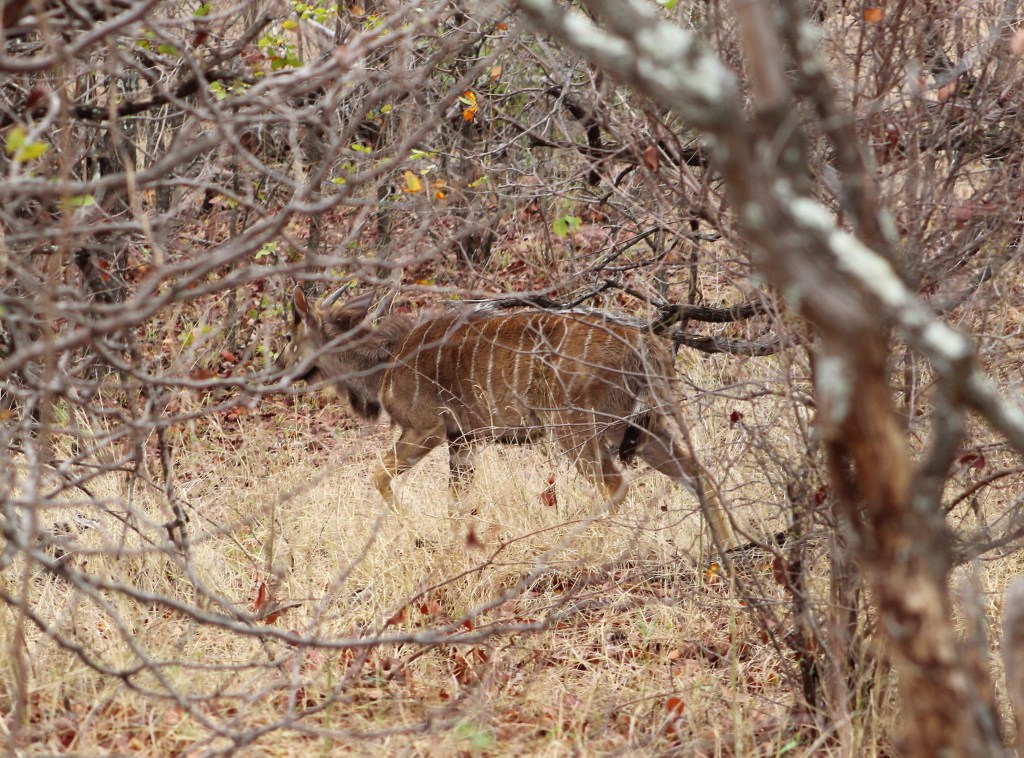
The dam was larger than we had expected but no game had come down to drink that we could see. Birds were abundant but mainly Egyptian geese and Blacksmith plovers. Still, it was a beautiful peaceful place for morning tea. On the way back we saw the hyena again in more of less the same place. We did then take a wrong turn and ended up heading away from the camp down the Shongololo loop but it was fortuitous as we saw a small group of nyala on the river bank as well as elephant and impala before we realised our mistake and turned back.
Back in camp we shared our breakfast with tree squirrels, Natal francolin and red- and yellow-billed hornbills.
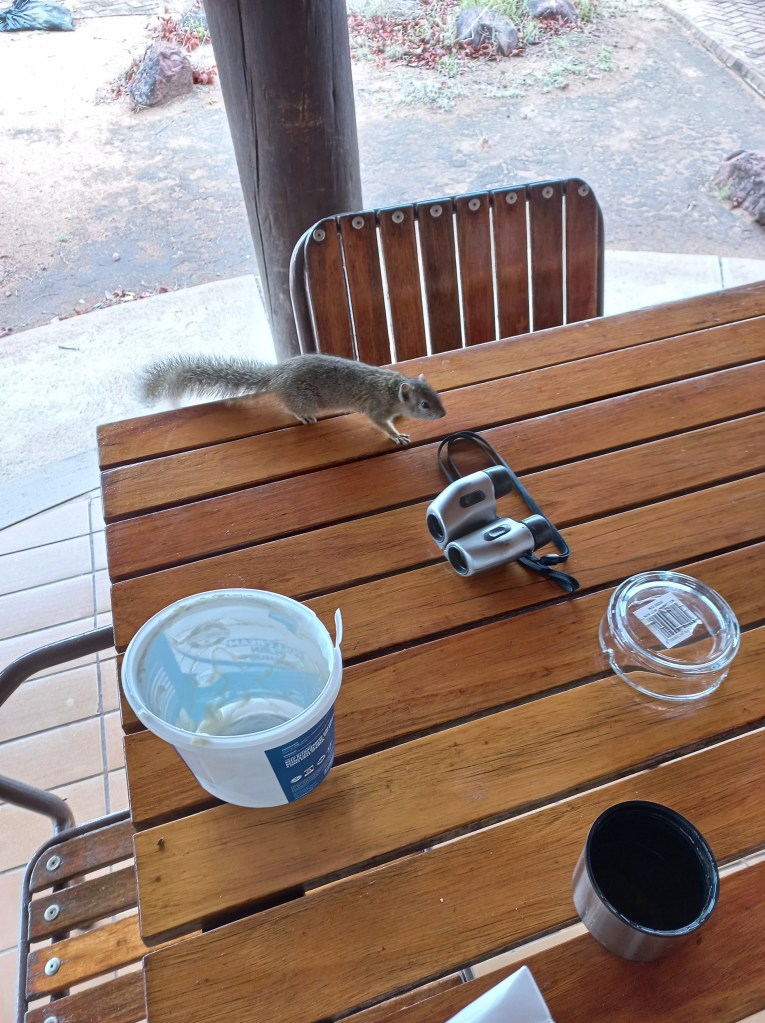
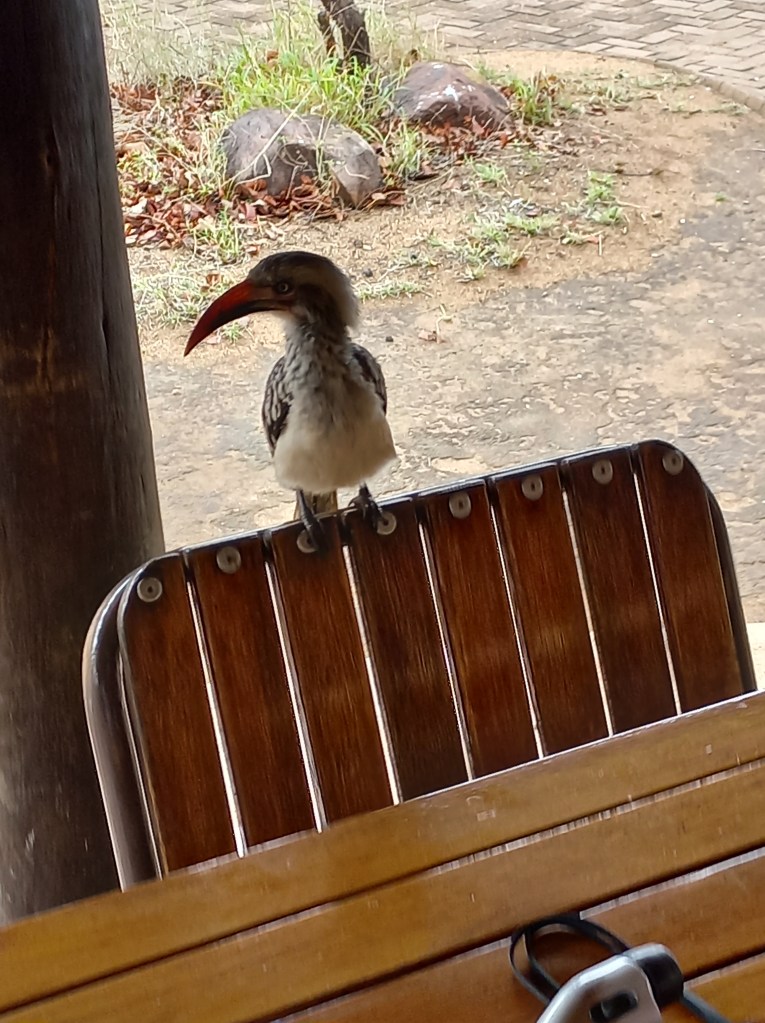
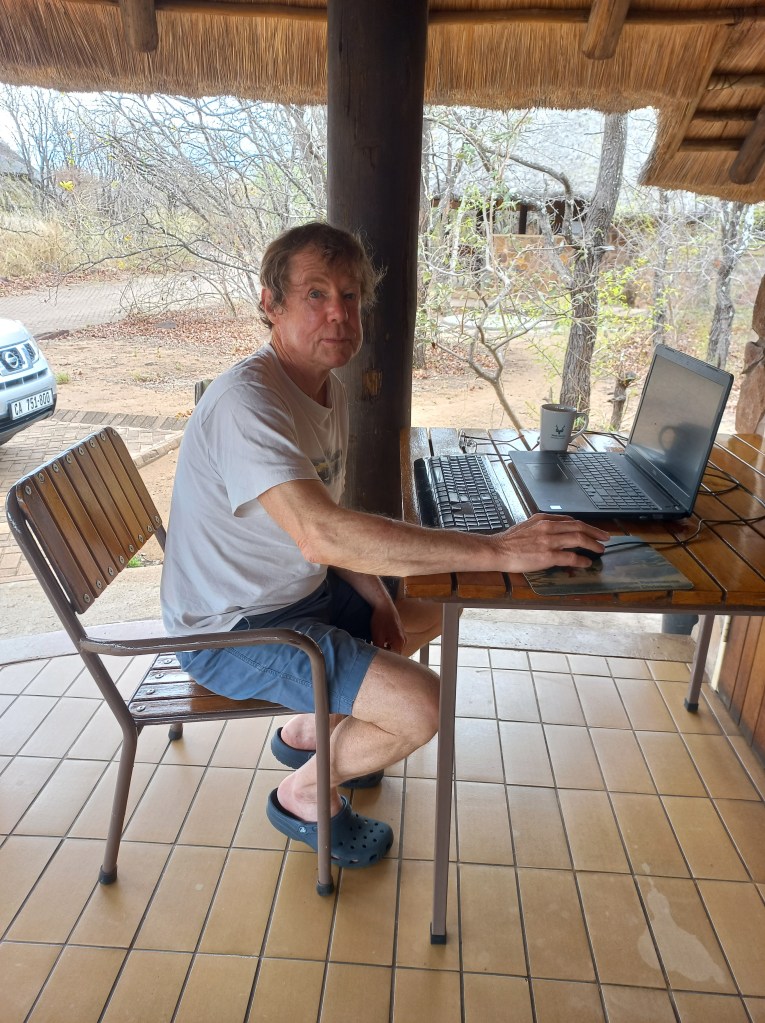
The rest of the morning was spent doing the laundry, which had accumulated considerably during our slow trip up to the Park. Kev had some work to do, sitting out on the veranda with the squirrels and birds for company.
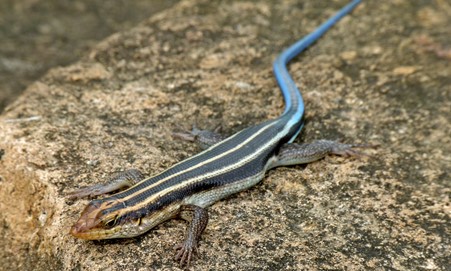
Rainbow skinks were also frequently seen on the edges of the veranda and in the garden. They are strikingly colourful, depending on age and sex. The females retain the distinctive stripes on their backs ending in an electric blue tail. As they get older the males tend to become a bit duller on their bodies and the tail turns orange.
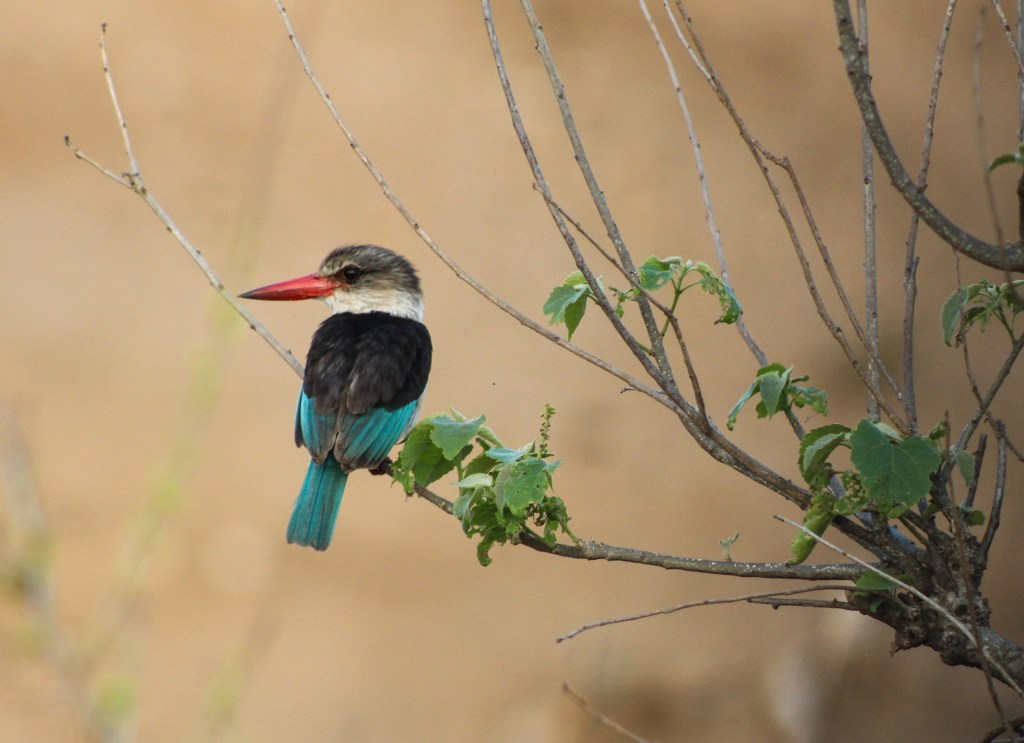
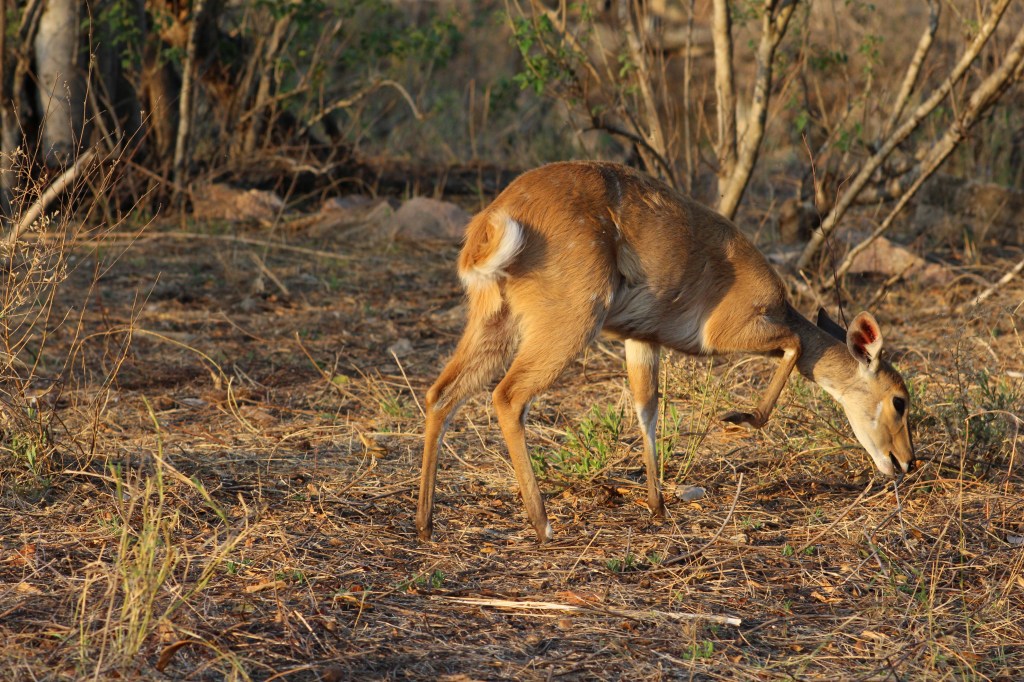
In the late afternoon, we went back along the same route but only as far as Pioneer Hide on the Tsendze river. The hide was quiet with not much to be seen but from nearby we got a good view of hippo close to the causeway so we drove to where we could get the best view. We also saw a black crake, a great egret and some bushbuck but the best sighting was a beautiful brown-headed kingfisher. There were hippos yawning and another big crocodile
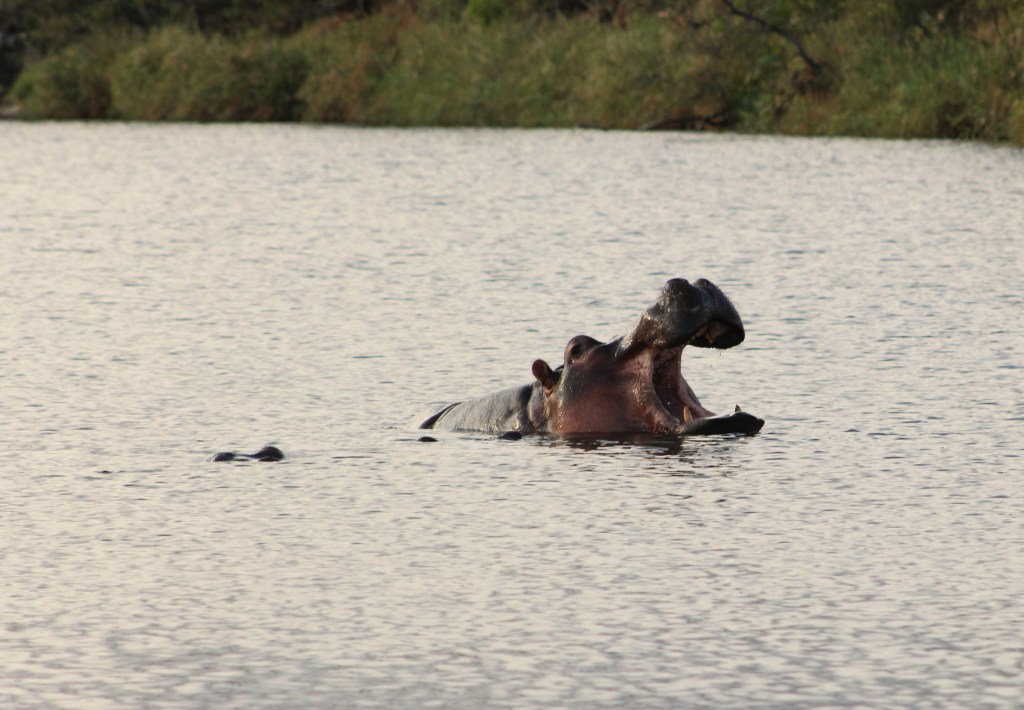
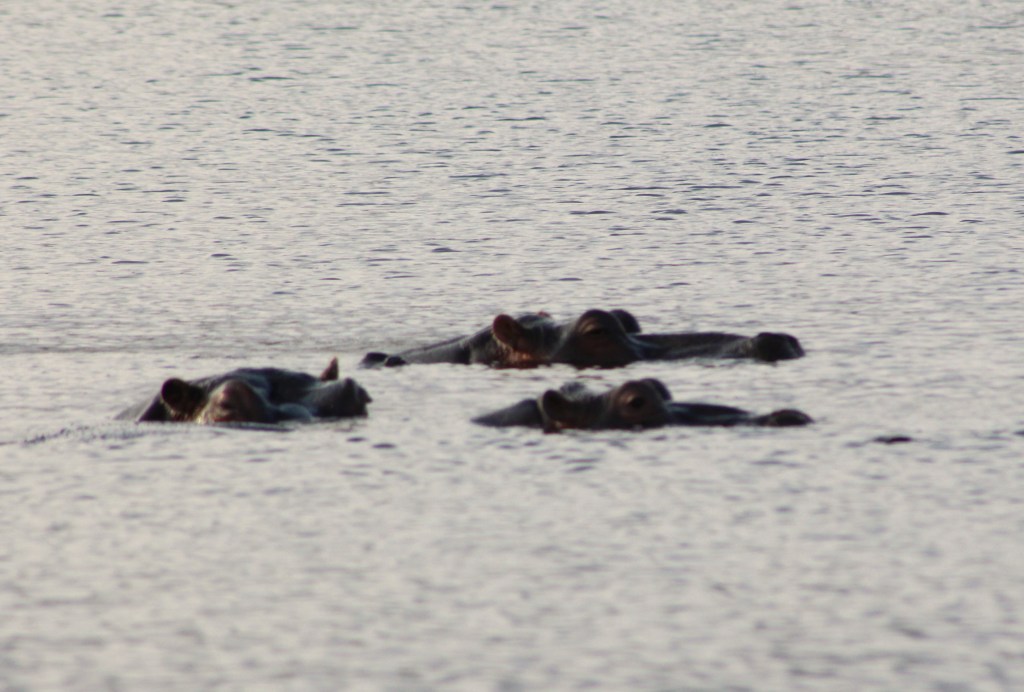
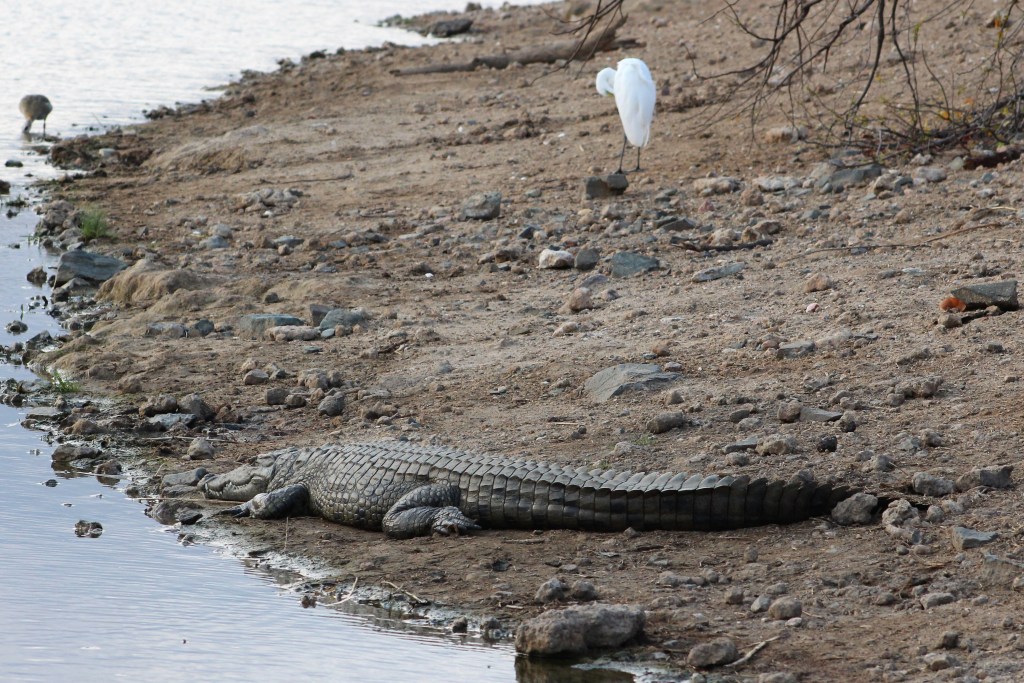
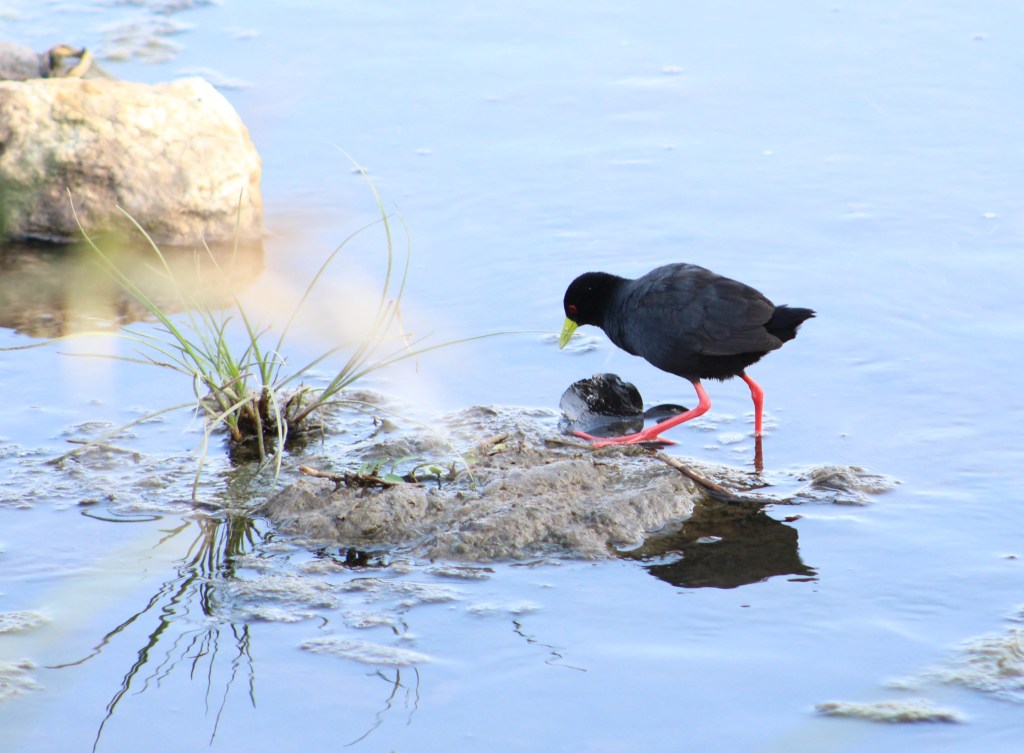
Hippos, a black crake, a large crocodile and an unconcerned egret
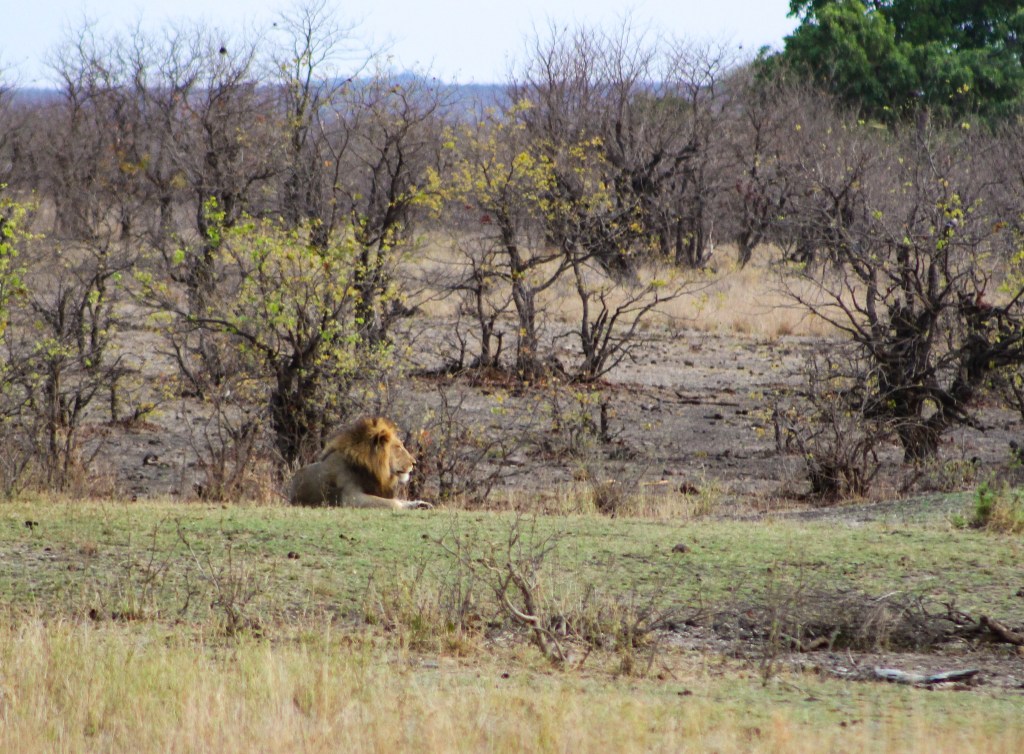
The yellow-billed stork was also next to the causeway as we crossed on the way back to camp. On the main road we had our first good sighting of wildebeest and just before turning into the camp access road there was a majestic male lion resting on a slight rise above the pan alongside the road.
We got back to camp in time to do the trail, which starts, or ends, in the cul-de-sac close to our bungalow. It mostly follows the game fence down towards Pioneer Dam, but about halfway down we disturbed a beautiful male nyala in the camp itself. It moved quickly up the pathway to the pool area. Further along we could first hear, then see, hippo close to the shore but in the dam. We also spotted an unusual bird, later identified as a green-backed heron. As the trail ended up at the shop and restaurant complex, we popped into the shop to buy batteries for Kev’s computer keyboard, before making our way back in the dark. Dusk ends very abruptly so close to the tropics.
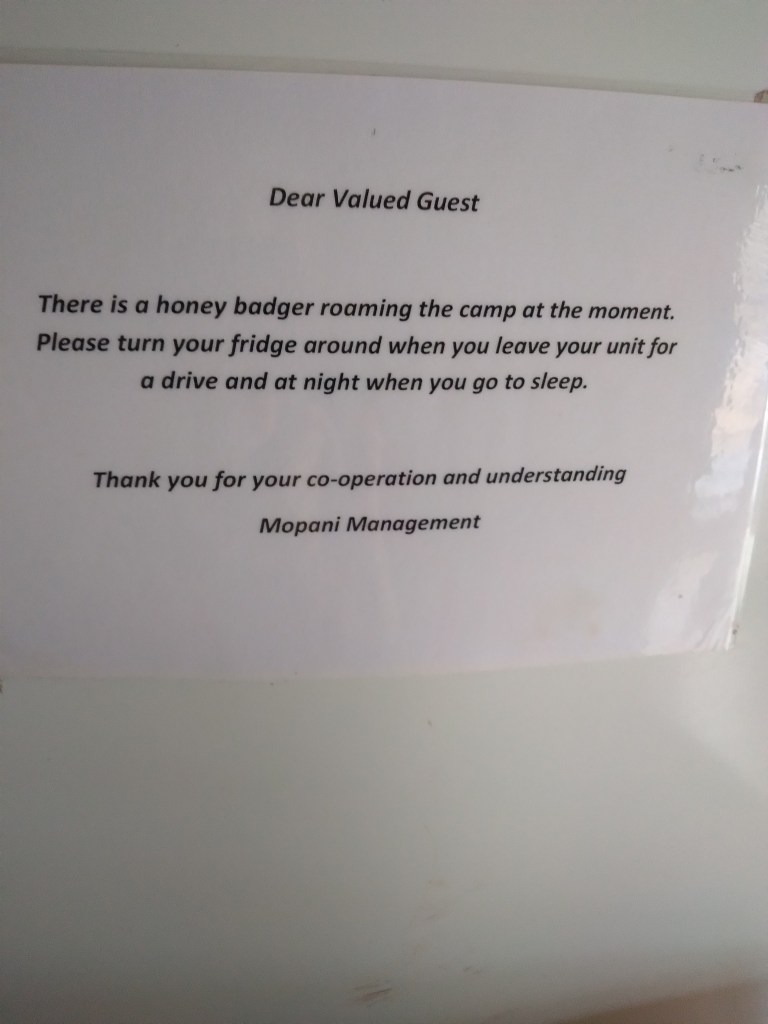
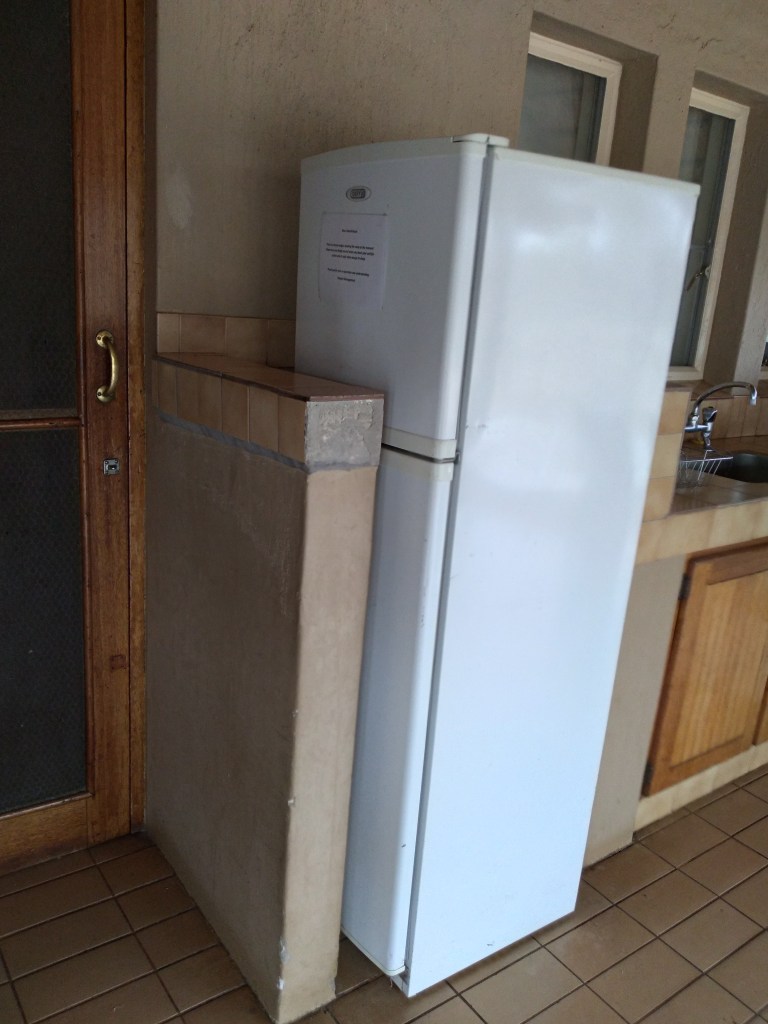
Our dinner in the restaurant the previous night had been so large that we brought back sufficiently large doggie bags of chicken schnitzel to form the basis of supper this evening, supplemented by lentils and zucchini. After we had tidied up and placed the fridge in the “safe” position, we retired indoors to avoid mosquitos and other bugs attracted by the lights. But very shortly, we heard noises and scuffling right outside the door. Kev rushed out to be confronted by an angry honey badger intent on raiding our fridge. Kev managed to see him off and the honey badger rushed next door to try his luck, but he had already moved our fridge, opened the door and clawed out a loaf of bread. Our neighbours heard the disturbance and came rushing out to see what was going on, just in time to defend their territory from the marauding honey badger! It moved off again down the road in search of more spoils. Chatting to our neighbours, we discovered that they had been raided a couple of nights before when the honey badger had made off with 500gm of half-thawed boerewors. Back at our bungalow, we restored the fridge, still with all its contents minus a loaf of bread, to what we thought was an even safer position. As an added precaution, we wedged it in with the table and two chairs before we went back inside to relax for the rest of the evening, as it was getting fairly late and we were exhausted having got up relatively early for us. Probably 20 minutes later we heard muffled noises again – this time I went to see what it was, only to find the table and chairs pulled aside and fridge door wide open. The honey badger had already beaten a hasty retreat but not before leaving claw marks in the butter! Now we were really mad, not to mention very tired, but the only solution was to empty the fridge and put the contents into the cold boxes with the frozen freezer packs and take them inside the bungalow. We did leave the frozen things in the freezer, which was in a separate compartment above the fridge. We then turned the fridge completely so that it faced the wall. Exhausted, we went to bed and didn’t hear a thing all night but when we woke up in the morning and looked out we found that the fridge had been tugged right out from the alcove it was in, turned around and the door left wide open. We could not believe this! Fortunately, the freezer part had not been touched. Later that morning we moved the entire fridge/freezer inside the bungalow. We also heard that others had been raided the previous night, one disgruntled camper muttering “big time”.
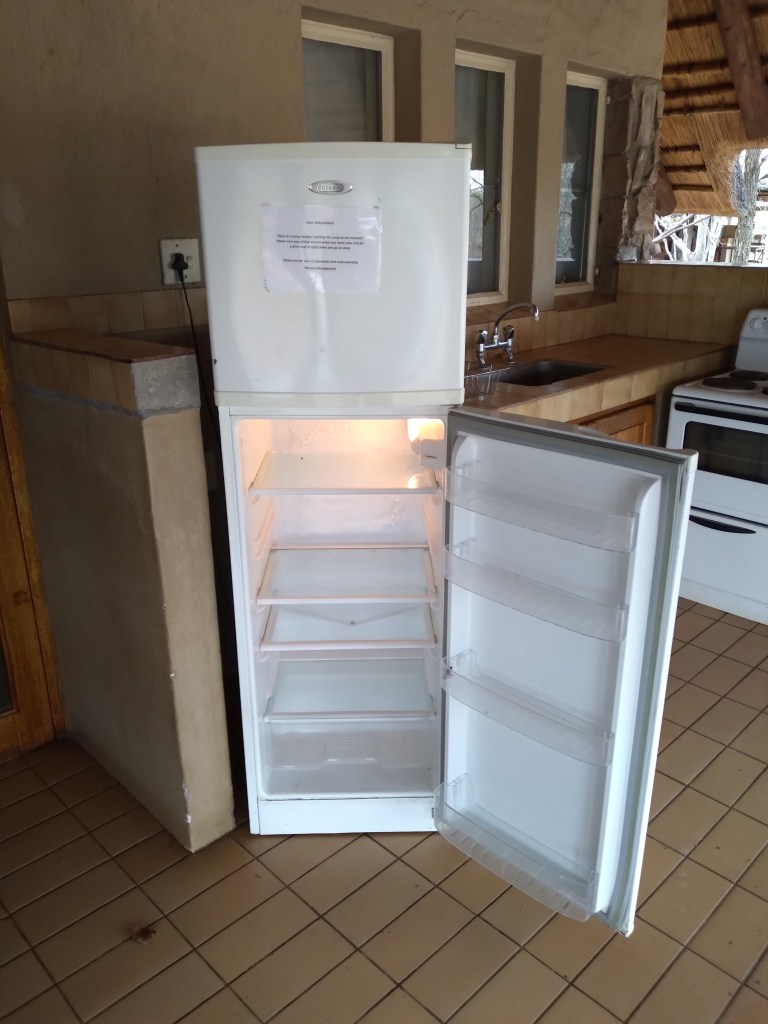
Day 6 27 October. After all the shenanigans of the previous night and having to move the fridge indoors, the rest of the morning was spent in camp, with Kev doing some work and me some writing.
In the afternoon we took some sandwiches for lunch and set off to do the Tropic of Capricorn Loop, first going south on the H1-6, then turning left and northeast along the S50, the road that passes the four Nshawu waterholes. Not far along, we came across a large herd of buffalo, then another herd, mostly lying down, and at the third waterhole an even bigger herd of buffalo and a few zebras.
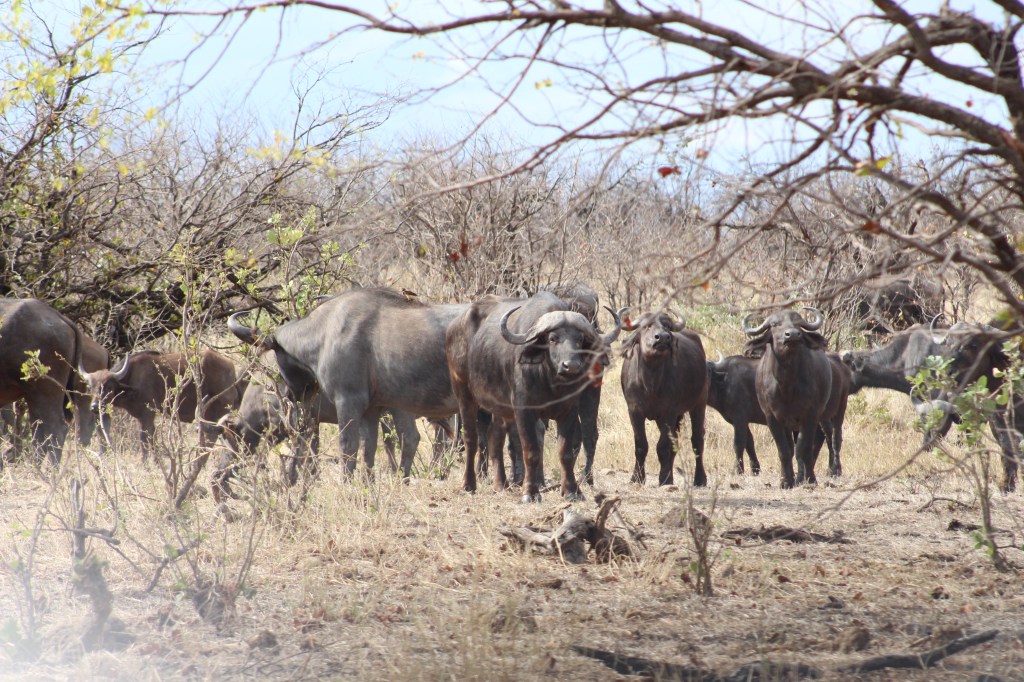
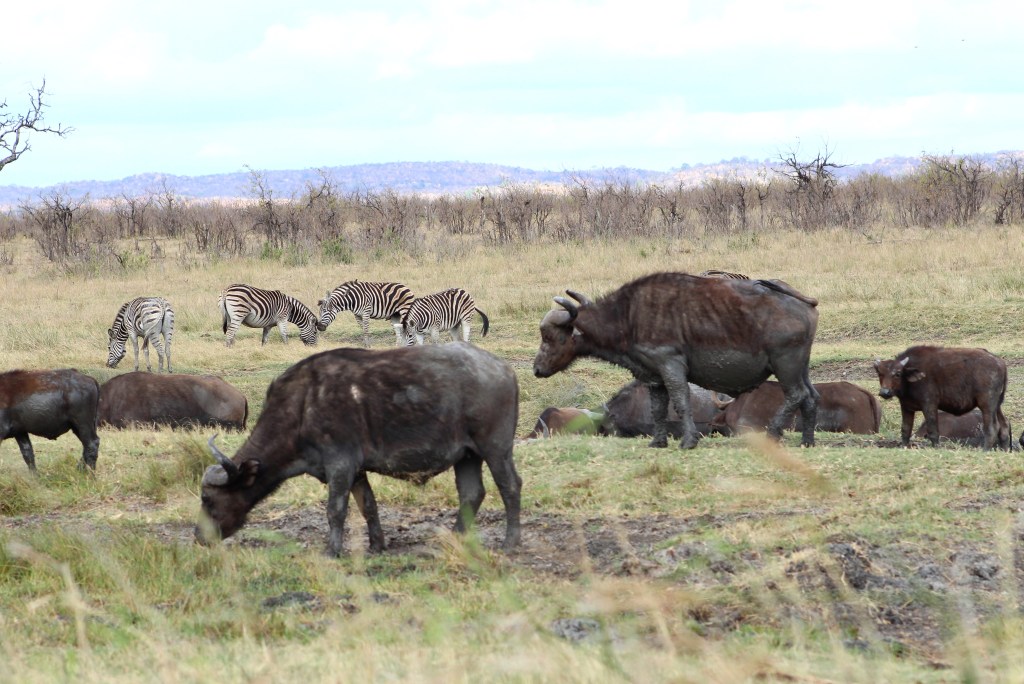
In the distance we could see elephant and some wildebeest, but we have never seen so many buffalo herds in one area before. This is a beautiful loop with good opportunities to see game as you are out of the thick mopani woodland that dominates the westerly parts around Mopani Camp.
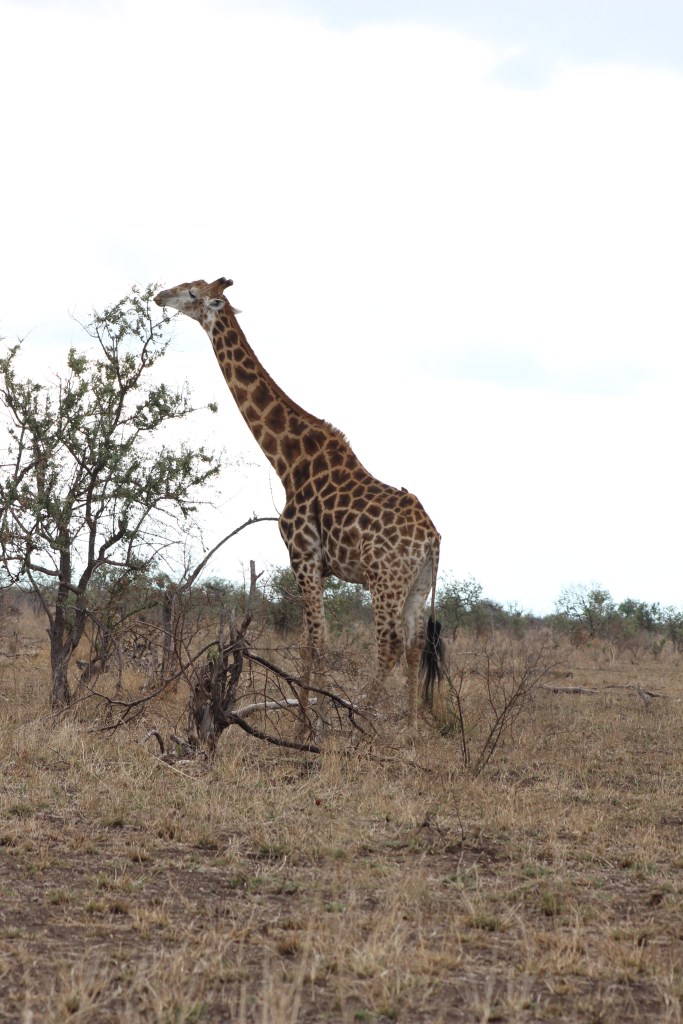
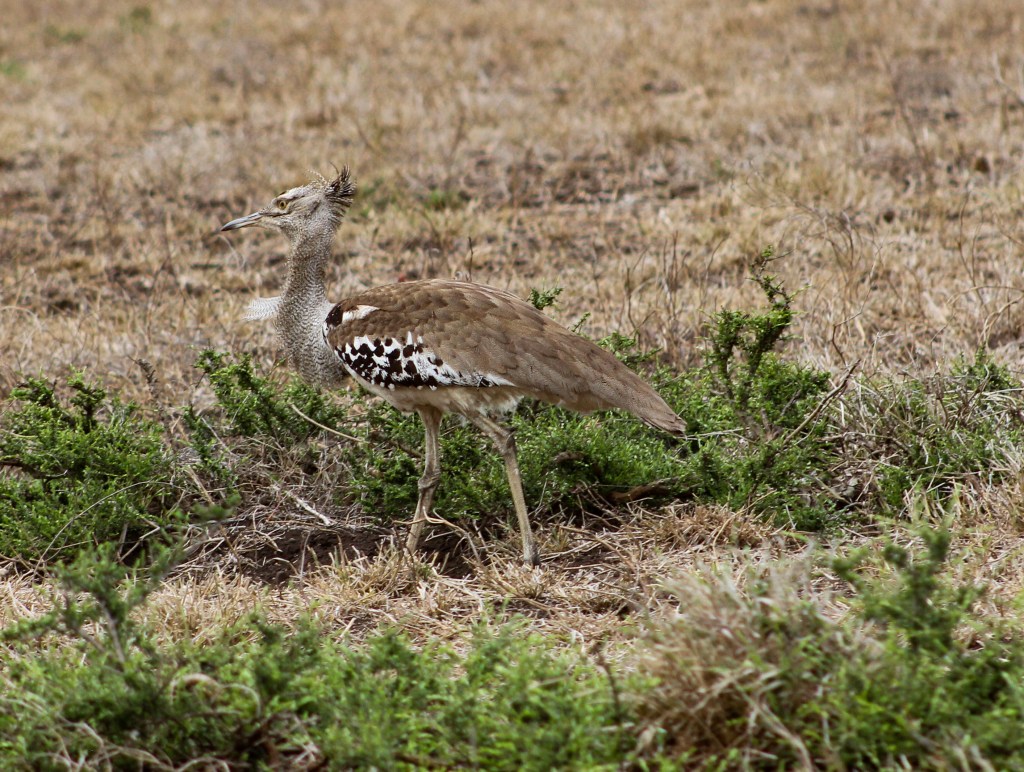
The last of the waterholes is at the Nshawu Marsh and wetland and the loop continues on the S143 to the left. A couple of giraffe marked the turn for us and a little further along we saw two Kori bustards. For such large birds, their ability to camouflage themselves is amazing.
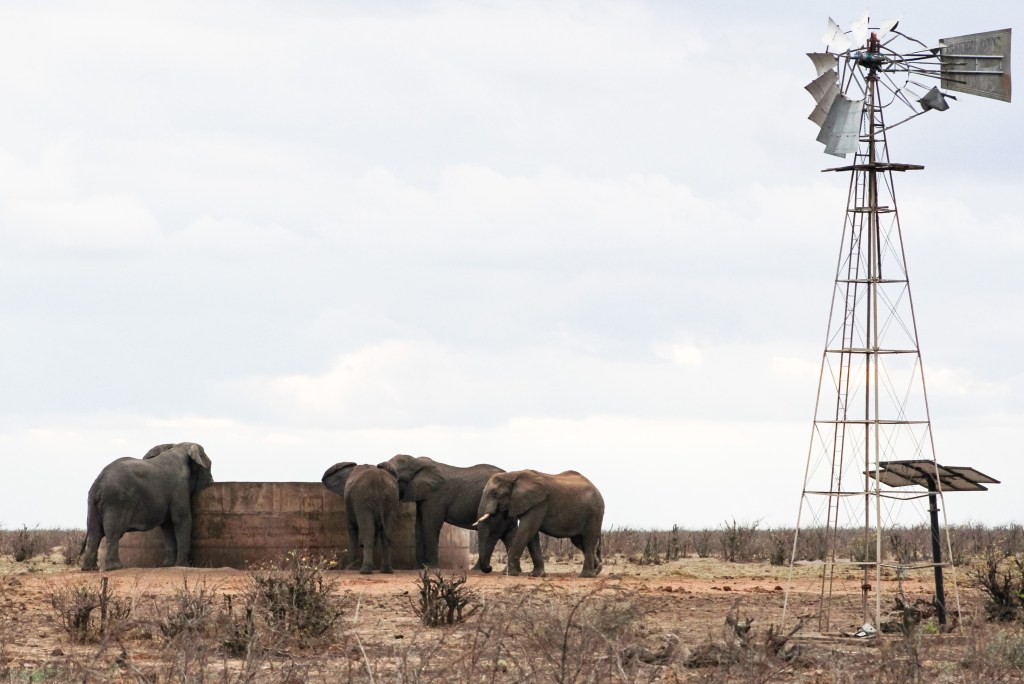
At the Tihongonyeni waterhole, which also has an elevated concrete dam, some elephants were dipping their trunks into the tank.
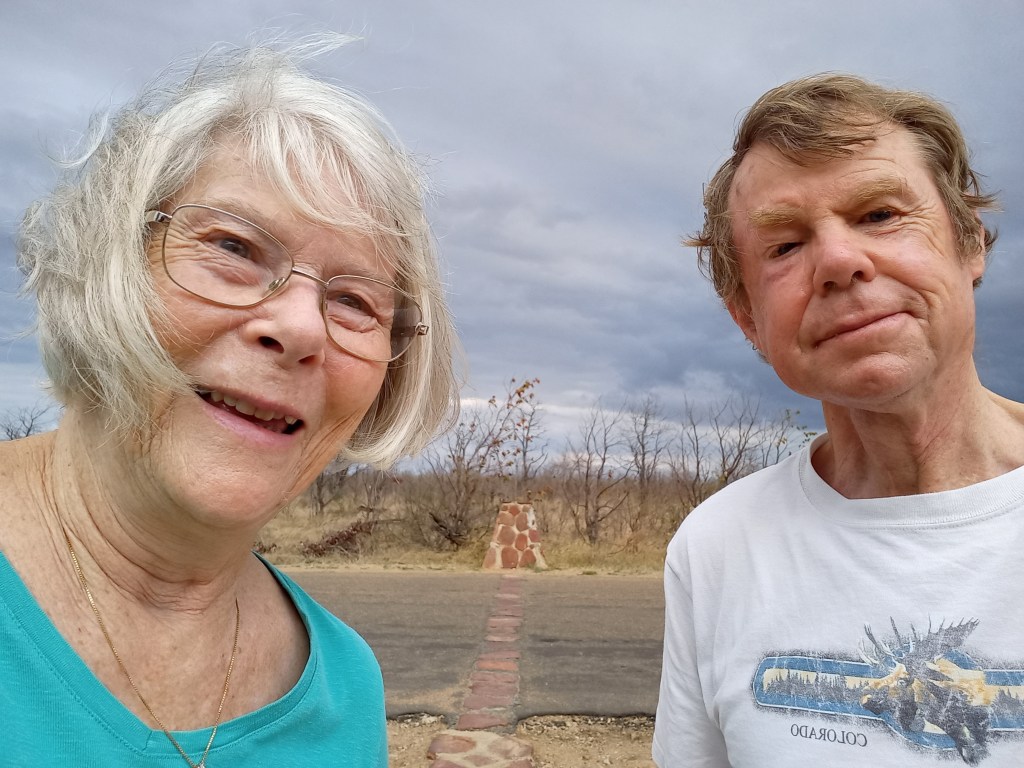
At the end of the gravel roads and the junction with the H1-6, we turned left back towards the camp. Before getting to the camp, though, we stopped at the Tropic of Capricorn monument for an obligatory selfie!
We got back in time to have a peaceful braai, knowing our food had been kept safe inside while we were out.

