Immersed in the natural world
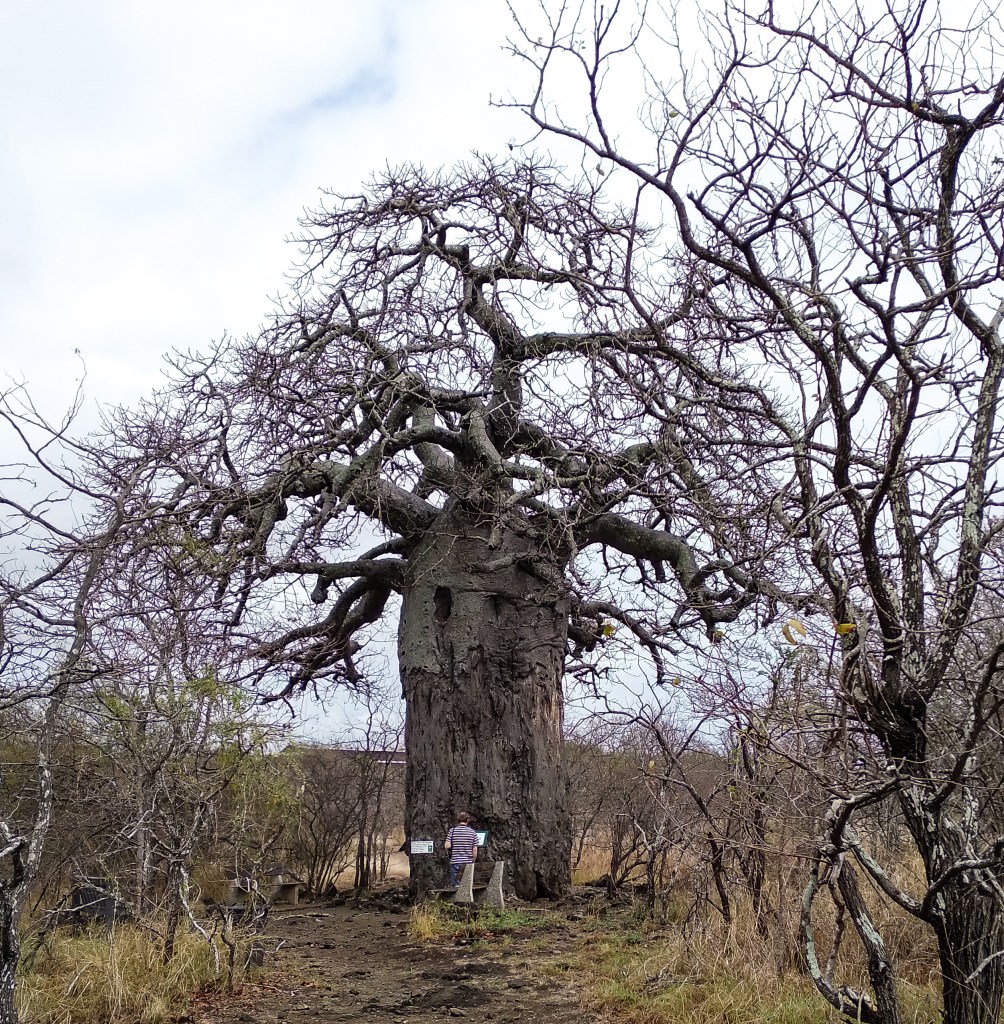
Day 7 28 October. A cooler day after some rain overnight and into the morning so we didn’t go for an early morning drive again. Instead, we walked around the whole of Mopani camp while waiting for our bungalow to be cleaned (which it wasn’t till later!). We had noticed small groups of people going to and from one of the larger bungalows at the end of the cul-de-sac where our bungalow was and eventually asked who they were as they were obviously doing some work around the camp judging by the garden tools they were carrying. They told us they were Voluntary Rangers who were responsible for some of the maintenance work in clearing and rejuvenating the gardens and vegetation around Mopani camp. We bumped into some of them on our walk and in chatting they told us to check out the views from the best situated bungalows. It gave some purpose to our wandering and we made a note of some of the numbers for future bookings! We also stopped at the large baobab in the middle of the camp.
Back at our bungalow and no sign of the cleaning having been done so Kev started to do some work. Eventually someone came looking for our usual cleaner and told us that, as it was month end, several other cleaners had gone off to town to do some shopping and those that were left had to do many more units than usual. Eventually she made her way to us. We decided to give her space to get the job done quickly so we took our computers to the covered area outside the shop and restaurant and treated ourselves to coffee and scones!
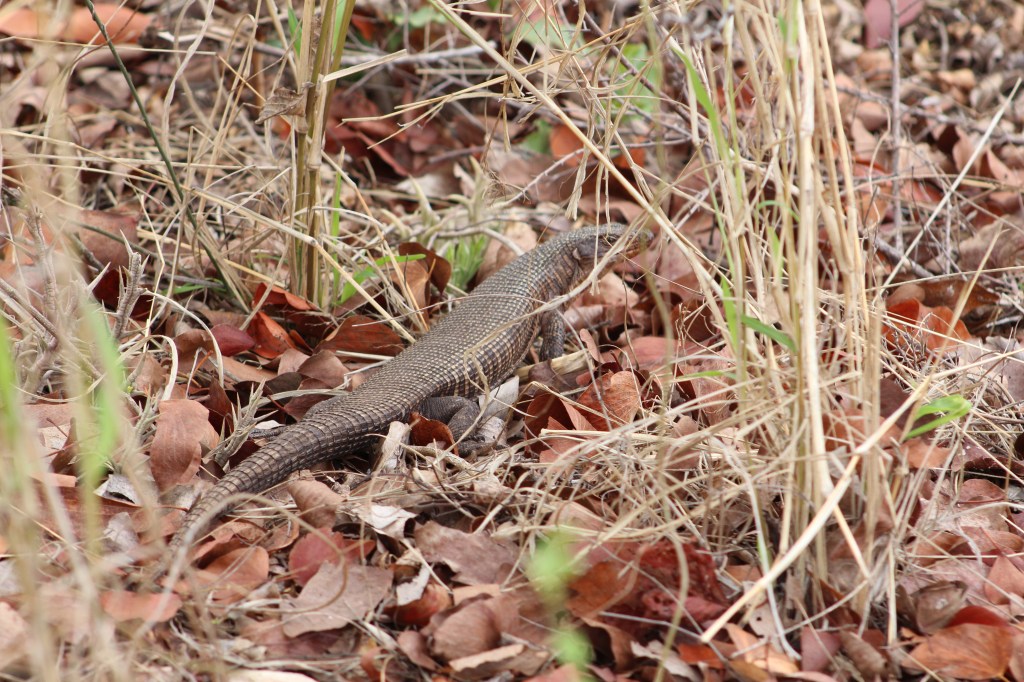
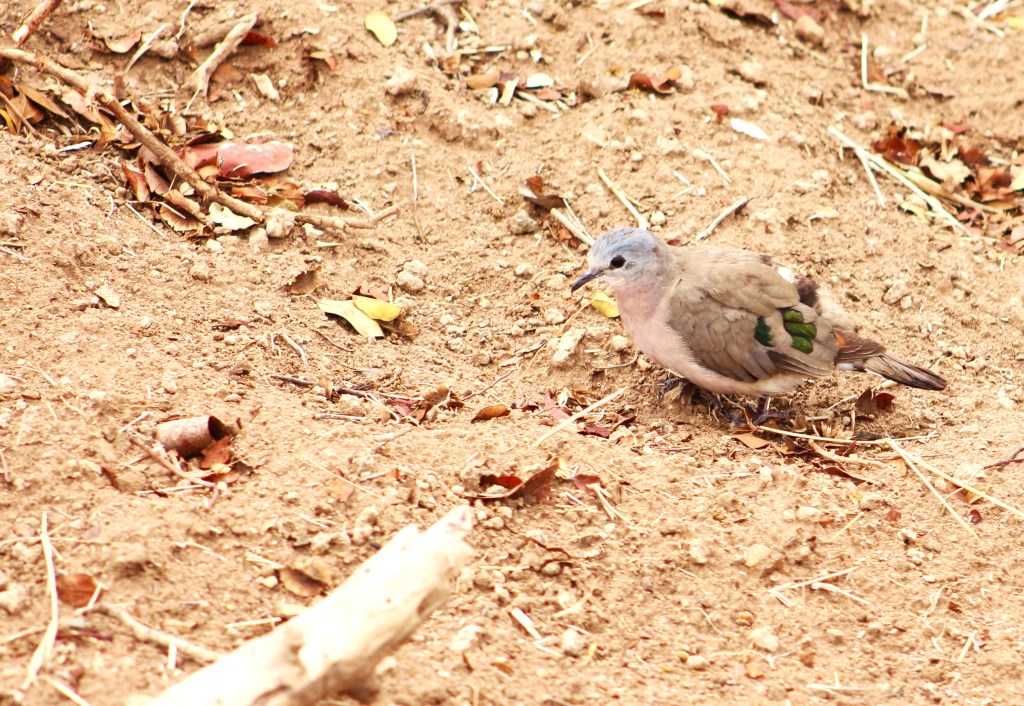
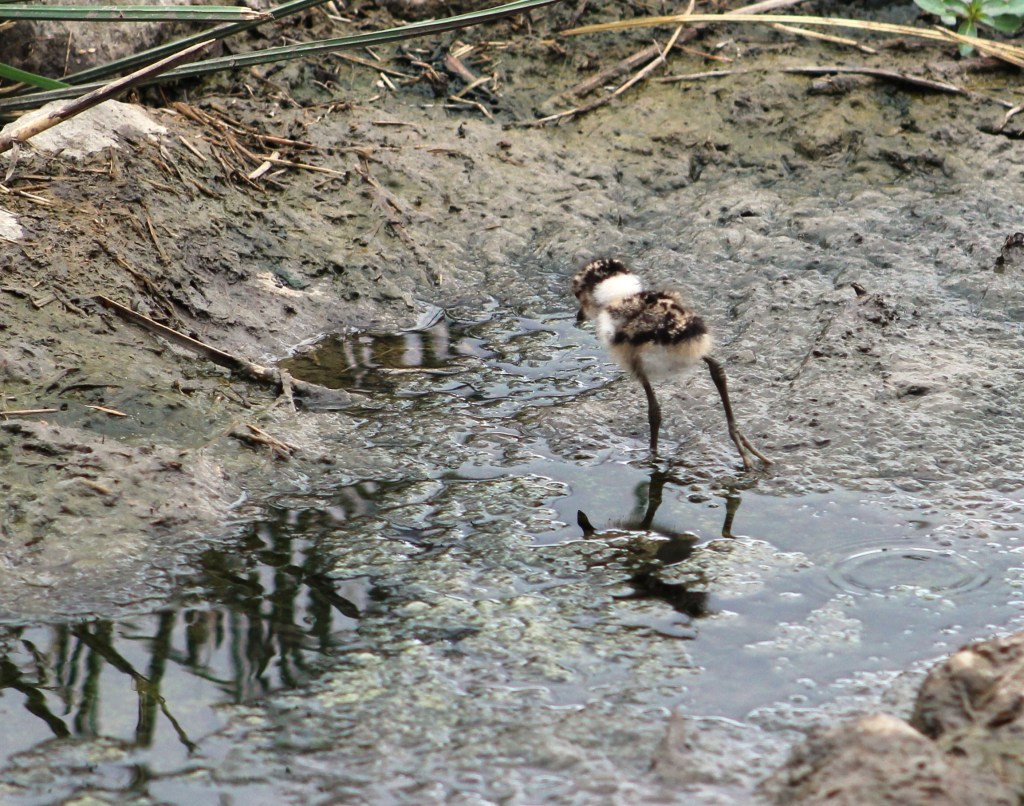
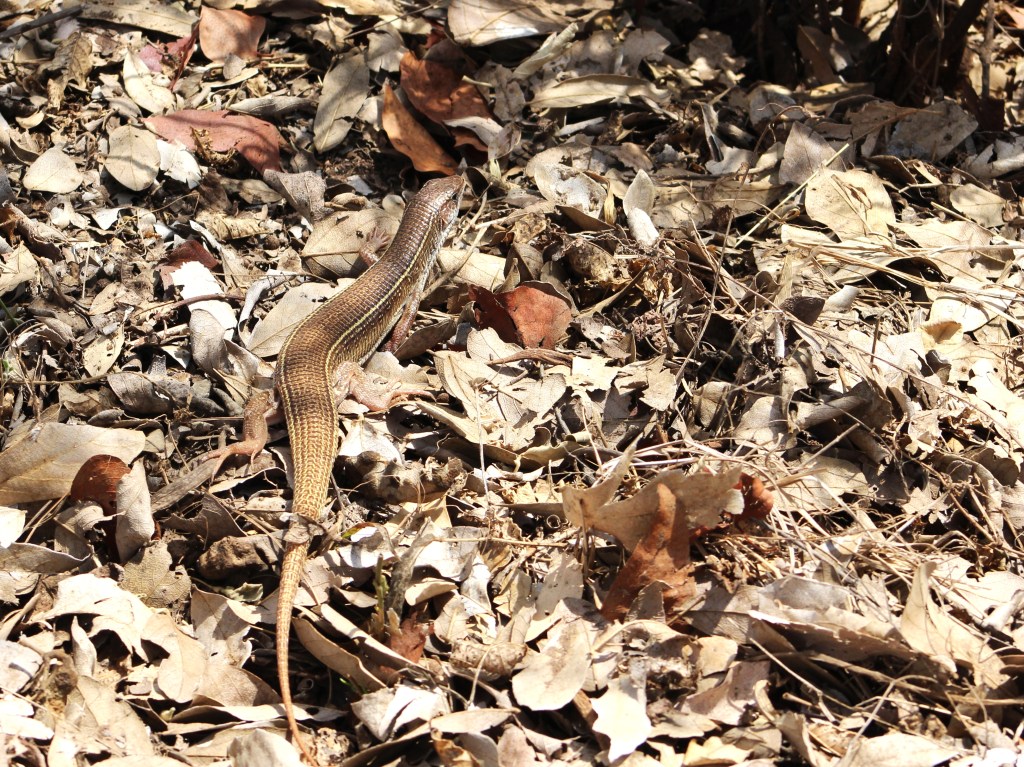
As we returned for lunch, we spotted a large lizard, about 40cm from nose to tail, in the garden opposite. We later identified it as a giant plated lizard. After a brief rest, we made our usual thermos of coffee and headed off to explore the Shonogolo Loop (S142) further. Just before the causeway crossing the river, we saw a pretty emerald-spotted wood dove and next to the causeway a tiny plover-like bird, which we never did manage to identify.
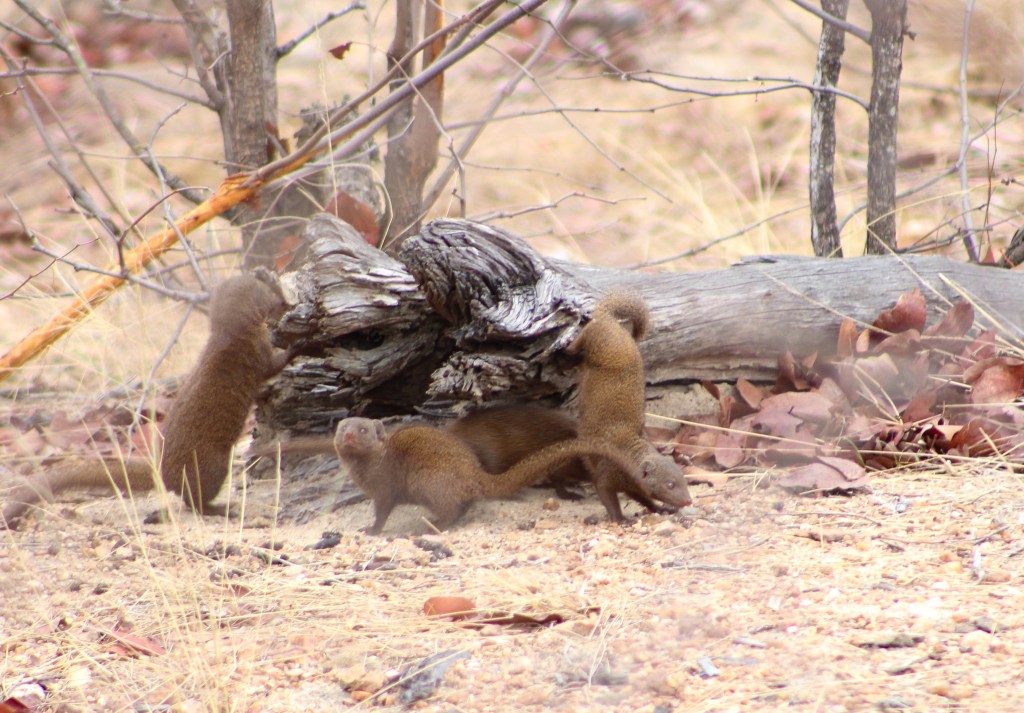
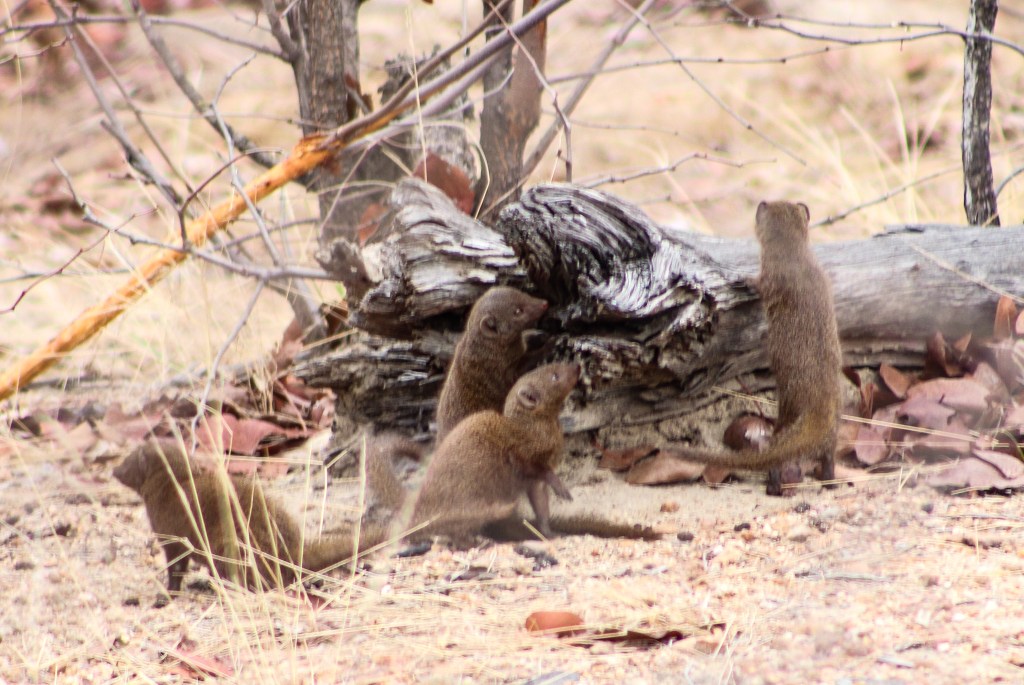
Further along on the Loop proper, we came across a large colony of dwarf mongoose, all rushing around, tumbling over one another and seemingly marking out their territory.
We did not complete the entire Loop as it was too long to get back to camp before the gates closed but it made a pleasant afternoon drive with sightings of impala, waterbuck, elephant, giraffe, zebra and wildebeest.
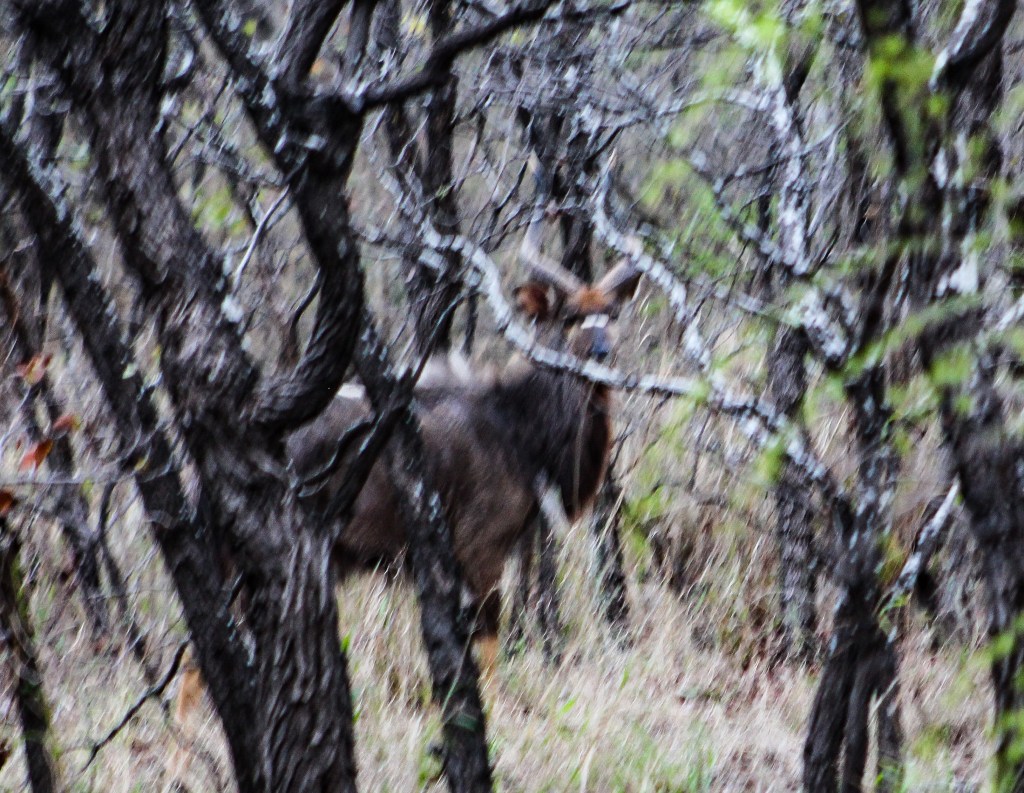
As we drove up towards our bungalow back in camp we spotted the male nyala we had seen previously near the swimming pool. He was just standing quietly between the bungalows so I slipped out of the car hoping to get a photograph. I did manage a couple but the light was not bright enough to focus properly and he soon moved off into the denser bush.
The rest of the evening was quiet and we went to bed early, as we were planning on setting out soon after the gates opened in the morning.
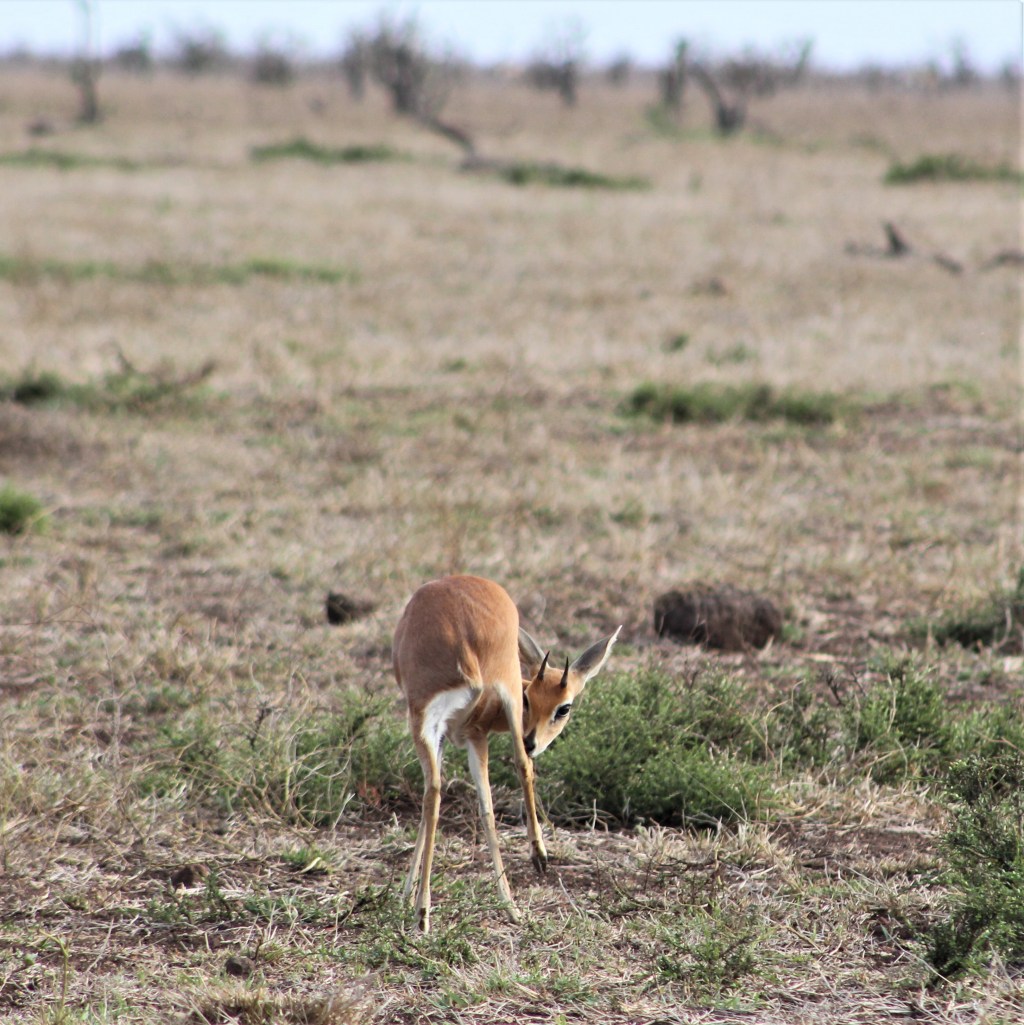
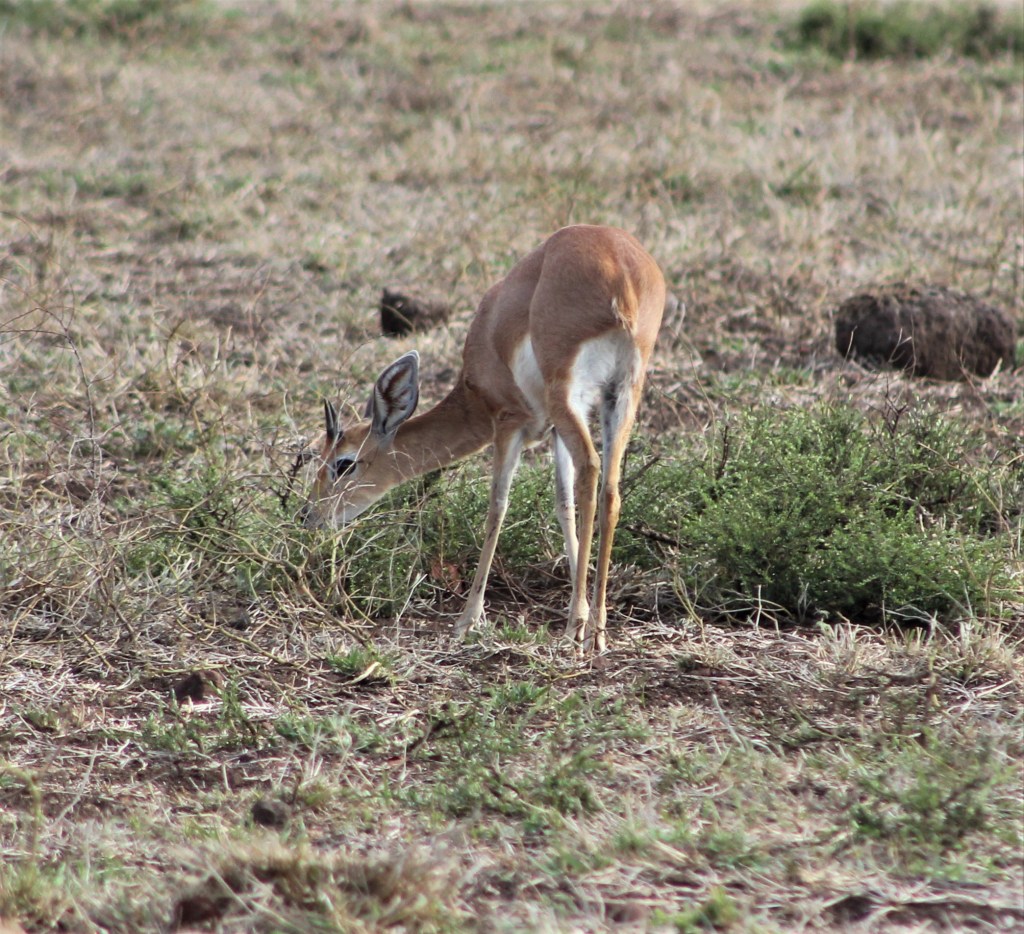
Day 8 29 October. We got up at 5.30, put our tea and rusks in the car and turned left up the H1-6 to do the Tropic of Capricorn Loop in reverse. Once off the tar road, we saw, at various intervals, quite a number of little steenbok, sometimes singly, sometimes in pairs. It was lovely to see them, as we had wondered why we hadn’t seen any up till now.
Perhaps it was the early morning timing. We parked at the Tihongonyeni waterhole as there were zebra and wildebeest coming down to drink, and also because we wanted to try and identify the flocks of little birds we kept seeing in that area.
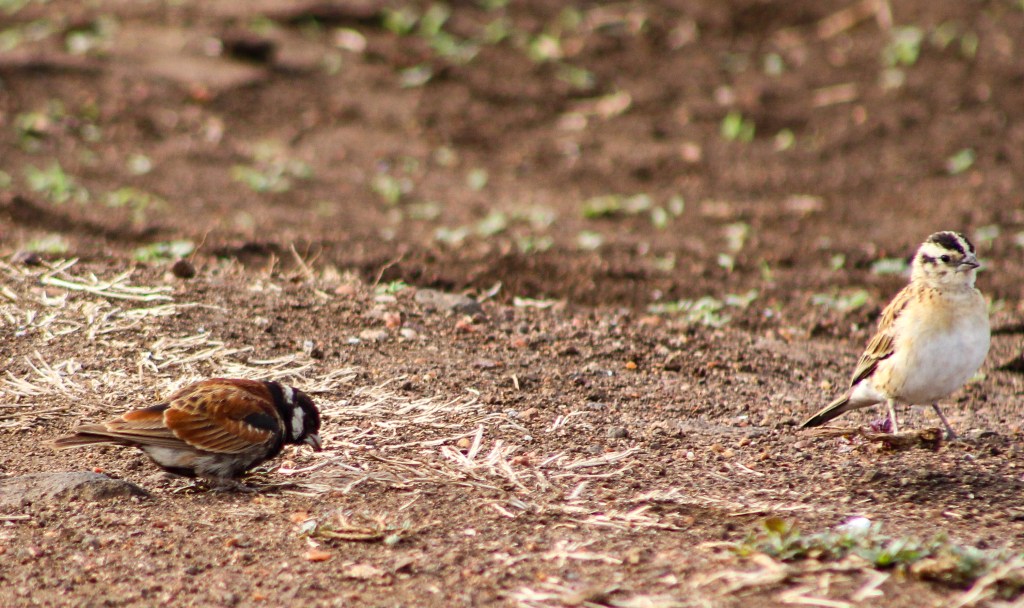
We managed to take masses of photographs of them but those did not help us to identify them until several days later. We eventually realised they were Chestnut-backed sparrow-larks, which form flocks of 50 or more individuals and can be seen in many parts of the Park but not everywhere. They prefer open grasslands, as well as burnt areas and feed on the ground, searching for insects and seeds. We saw several flocks around this loop but not in other parts of the Park.
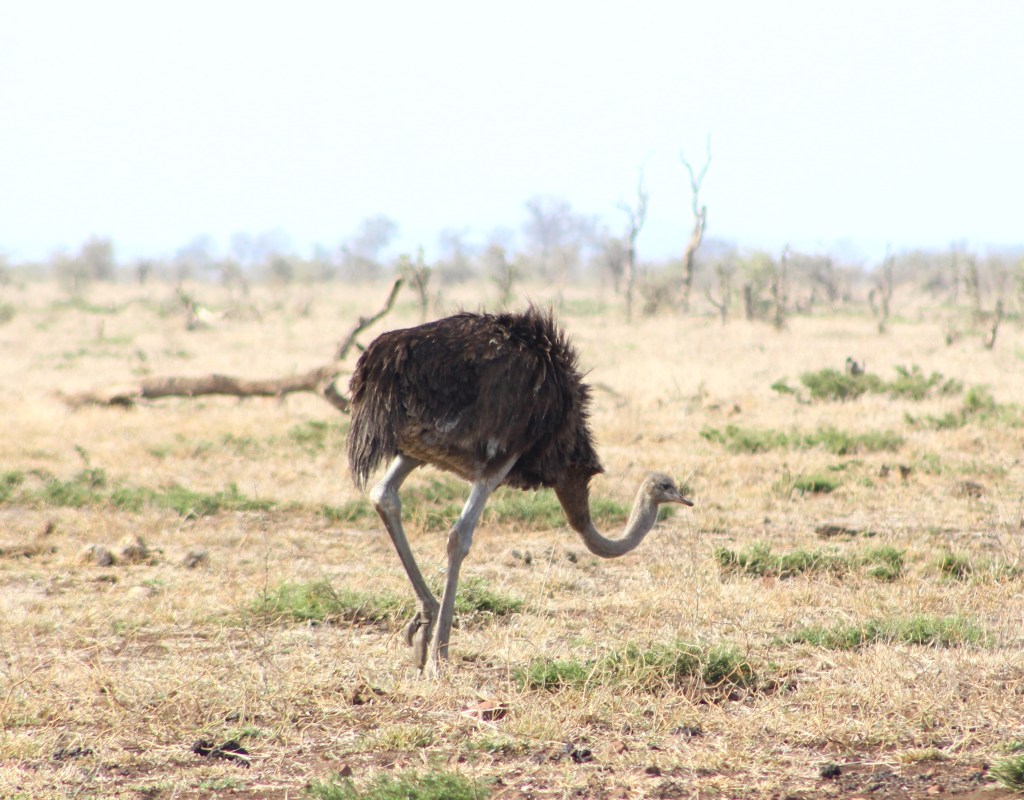
Moving on from the waterhole we came across several ostrich spread out over quite a wide area, as well as more steenbok.
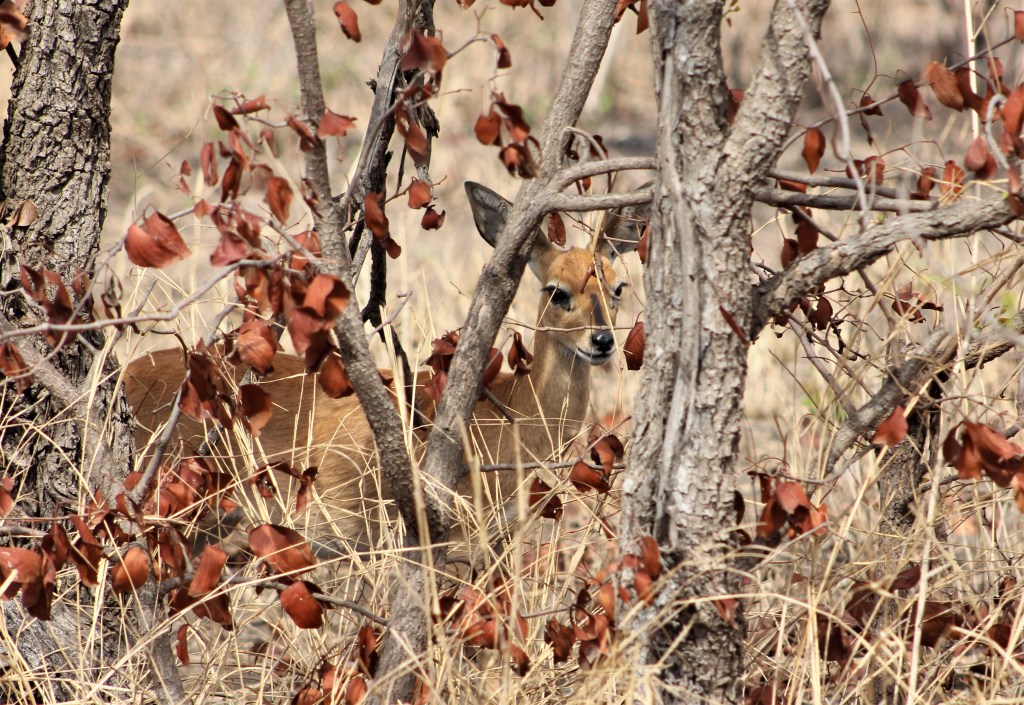
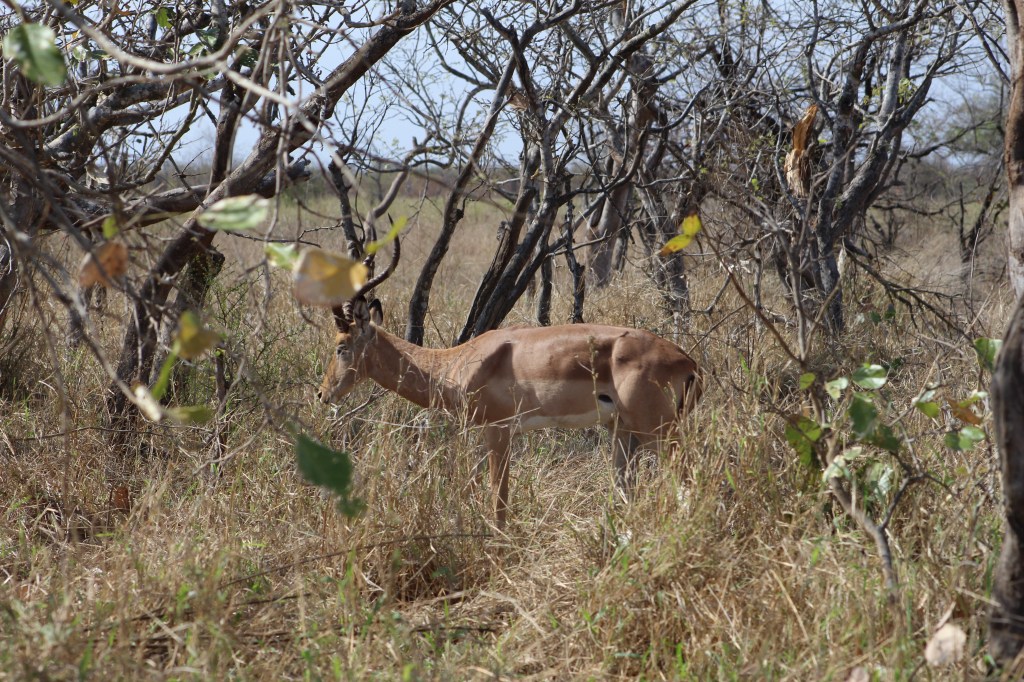
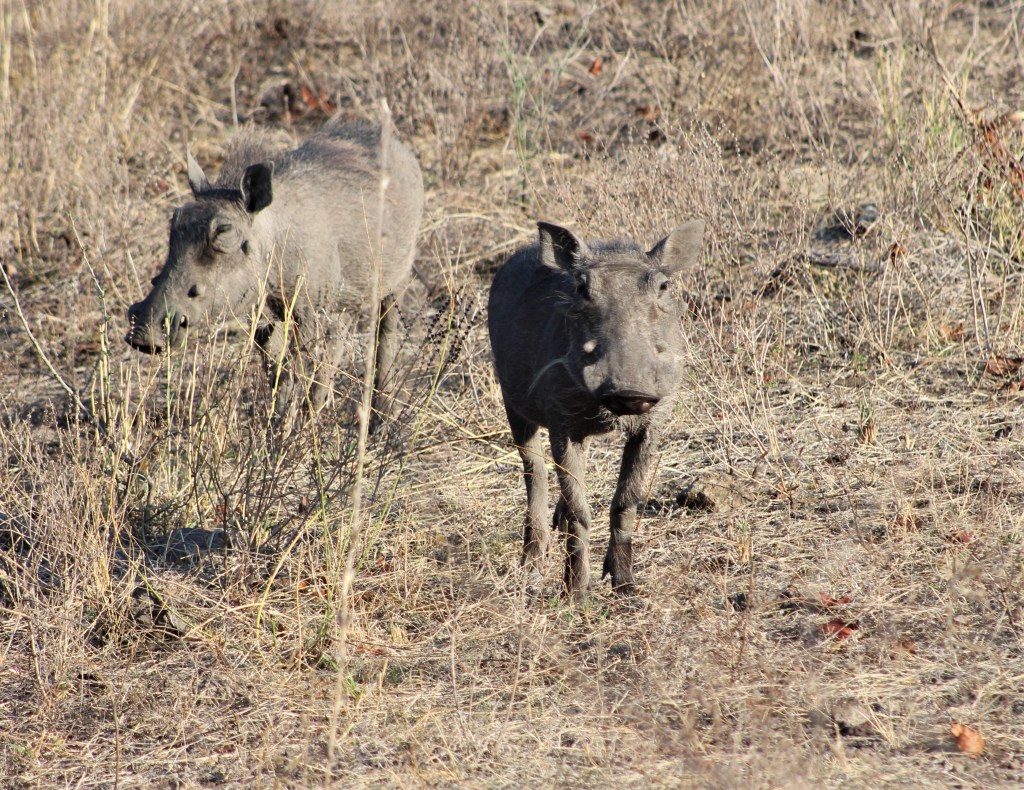
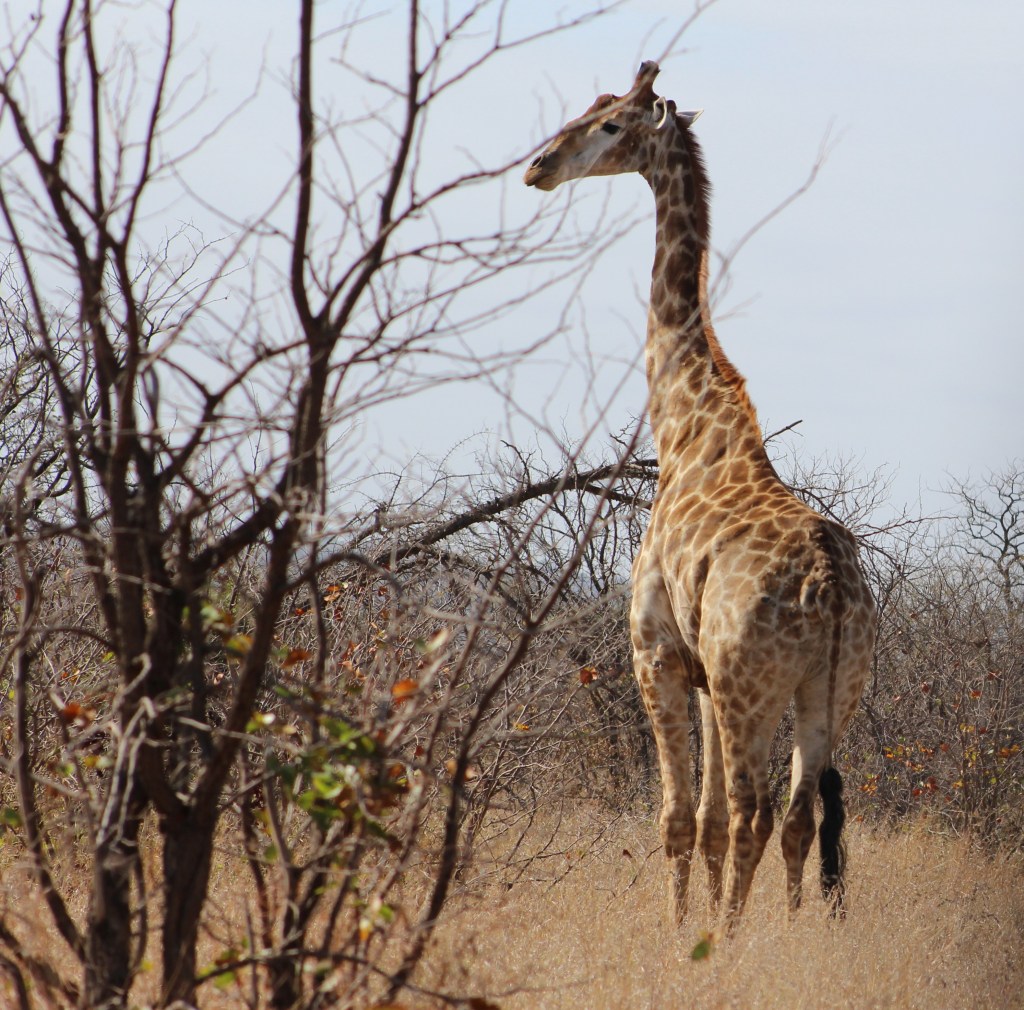
As we continued the species count included giraffe, more zebra, warthog and impala. Instead of turning right at the junction we decided to turn left and go a little further north on the S50.
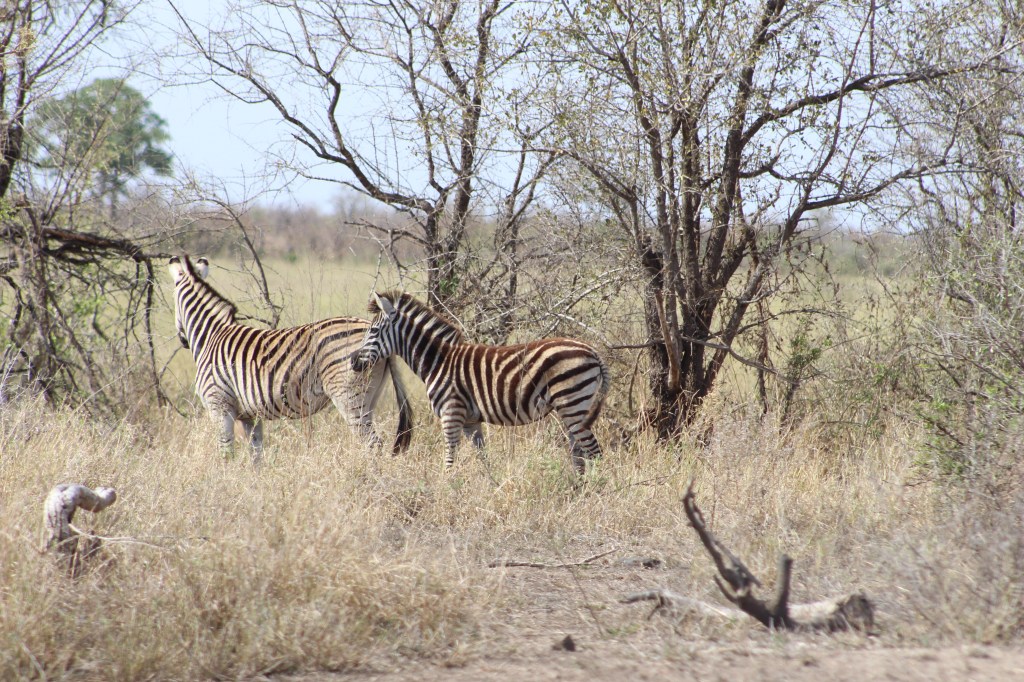
We continued for about 5 kms turning down small loops that overlooked the Nshawu March. Down one of these loops we spotted a jackal in the distance but it disappeared towards the marsh as we got closer. We stopped to look around for it as we could hear it calling to another jackal but couldn’t see either of them. The jackal’s call it like a rather high-pitched yap ot yelp, which sounded eerily magical in the early morning mistiness across the marsh. Turning back , we caught another glimpse of it disappearing into the undergrowth on the other side of the road. We continued back down the S50 , passed the junction with the S143 to one of the Nshawu waterholes where there was a large herd of wildebeest with a few zebra mixed in, all enjoying their morning breakfast and expressing the joys of spring in dashing around, having a roll in the dust and jumping about. It was quite amazing to watch!
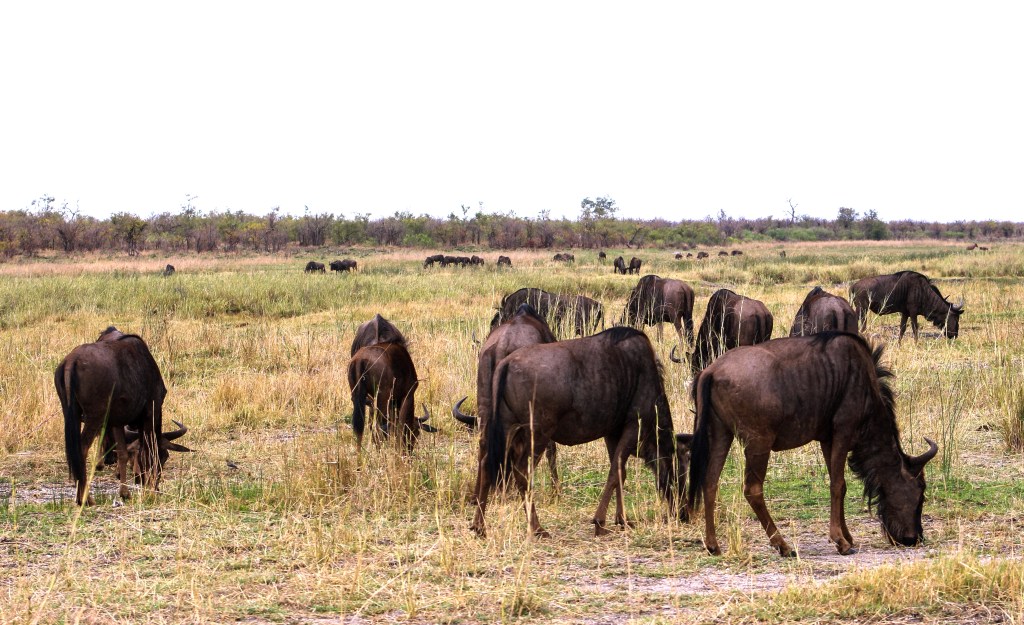
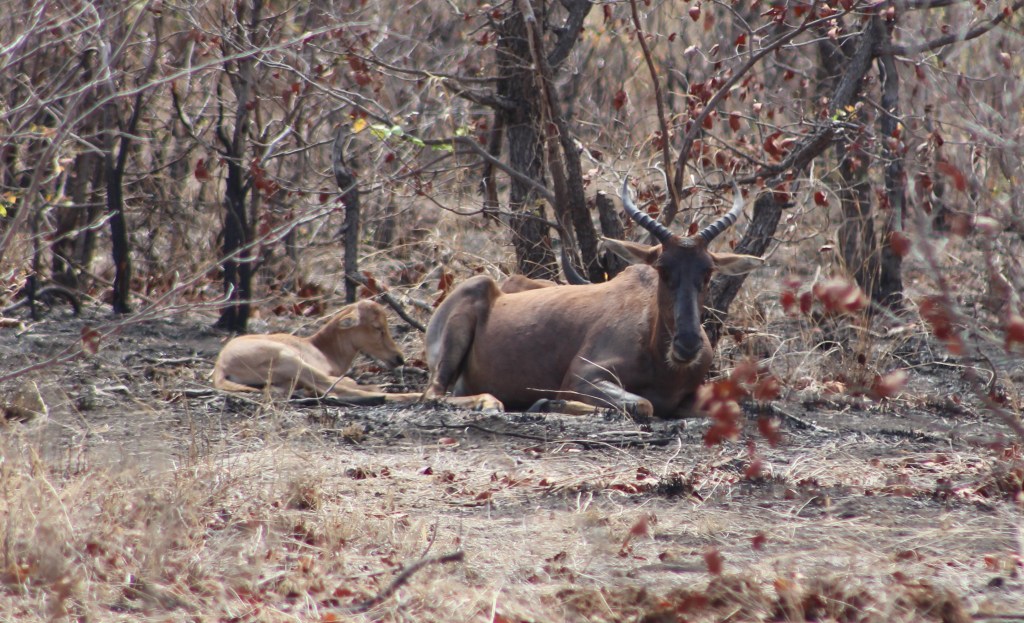
In the distance we could see two or three tsessebe as well. A yellow-billed stork stood under the windmill watching all this frolicking rather disdainfully. When we continued driving on the S50 we came come across several more tsessebe, including a mother and young calf, snoozing in the shade of the small mopane trees. This was, perhaps, one of the first spring babies that we had hoped to see at this time of year.
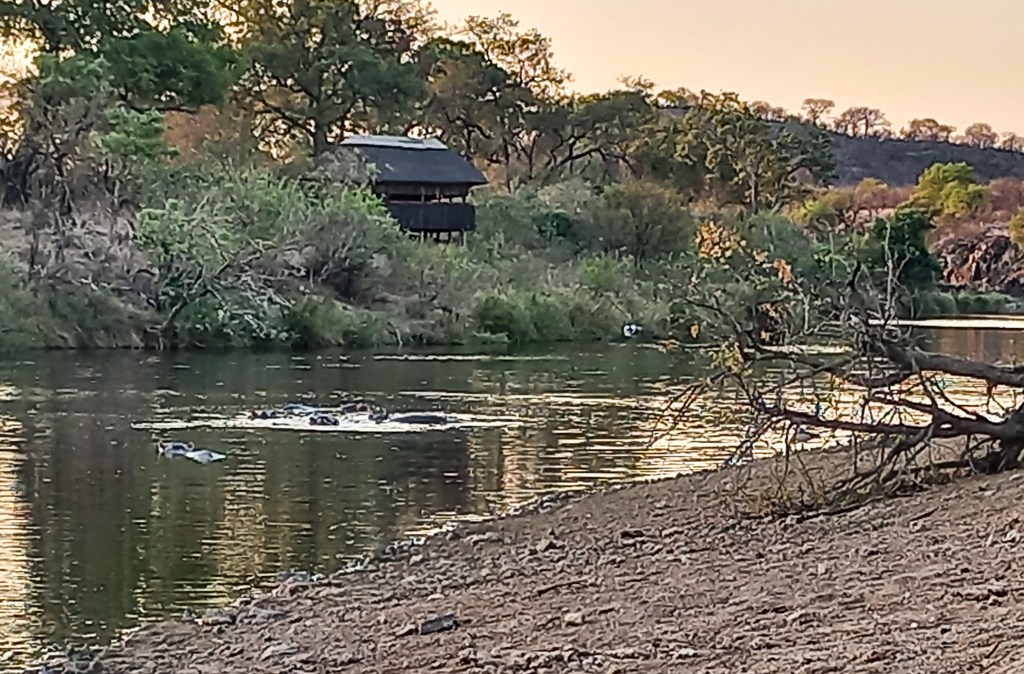
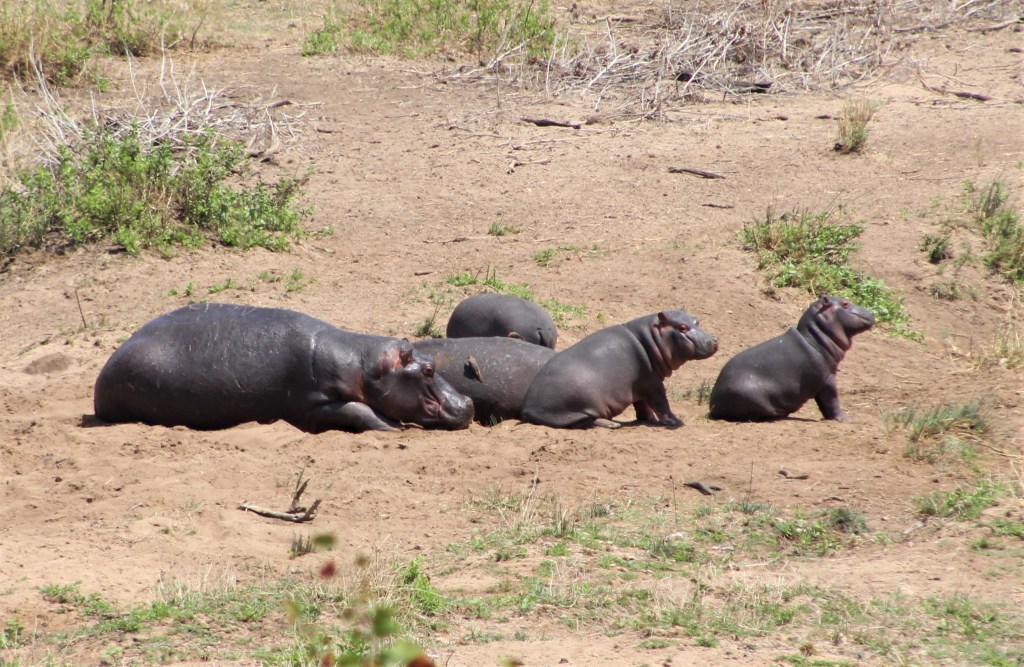
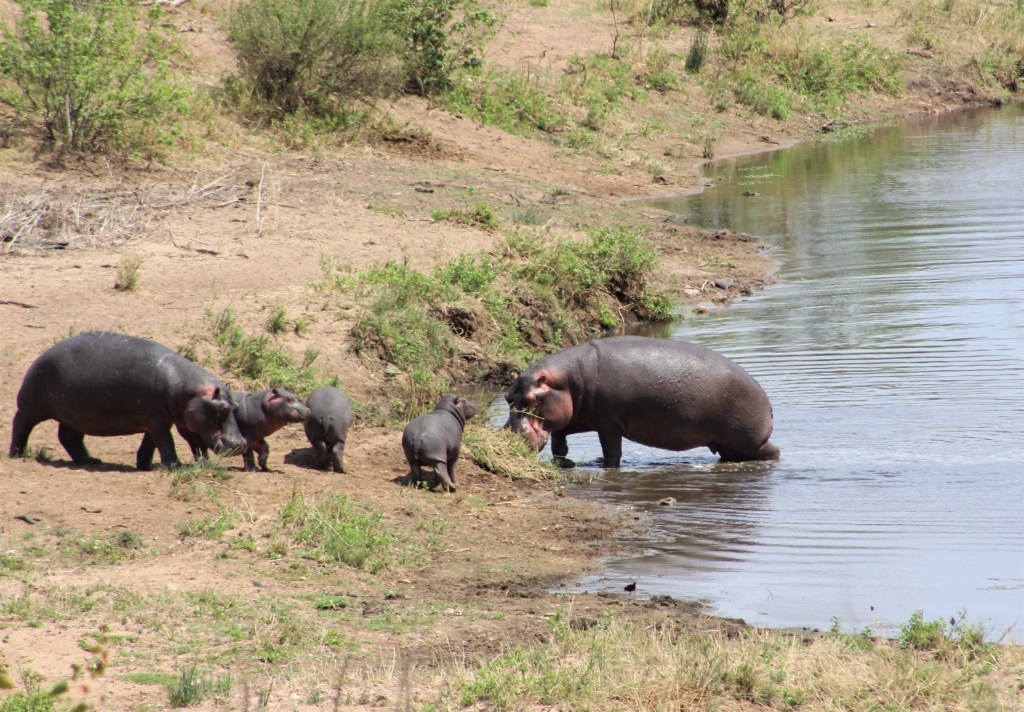
On the way back towards the camp we called in at the Confluence lookout, where two other tributaries join the Tzendze river. It is always a good place for birds, particularly waterbirds. We also stopped in at Mooiplaas, a small picnic site where we could get out of the car and look over the river. This morning we had a wonderful view of hippo – several adults and two or three young ones. We watched them for some time going in and out of the water.
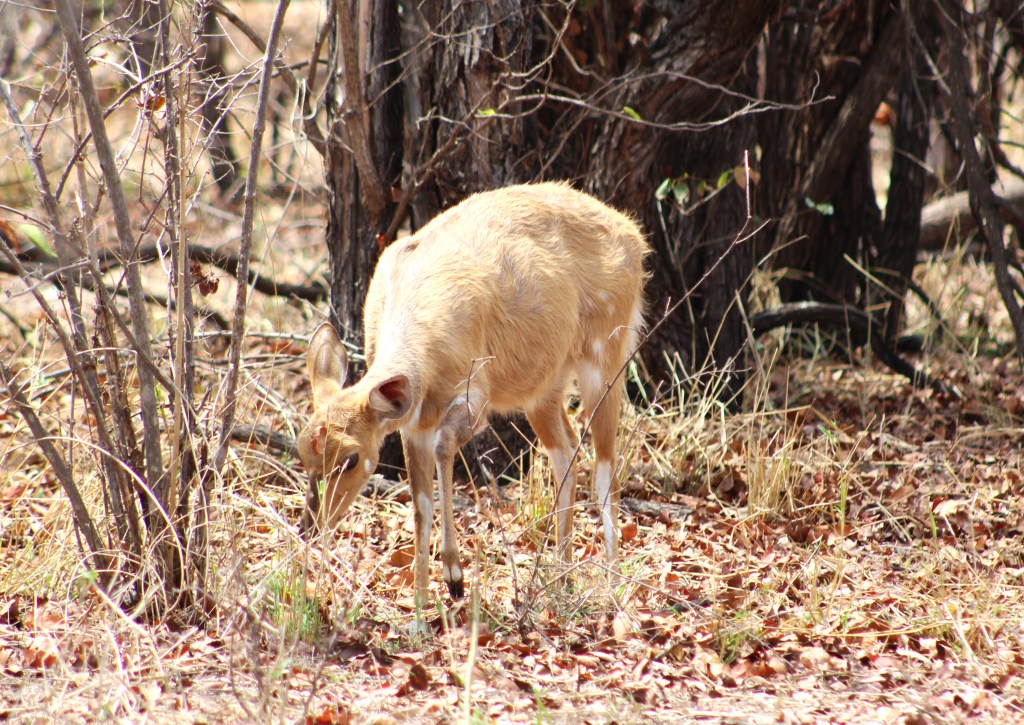
A bushbuck was also wandering around the picnic site and another of the giant plated lizards.
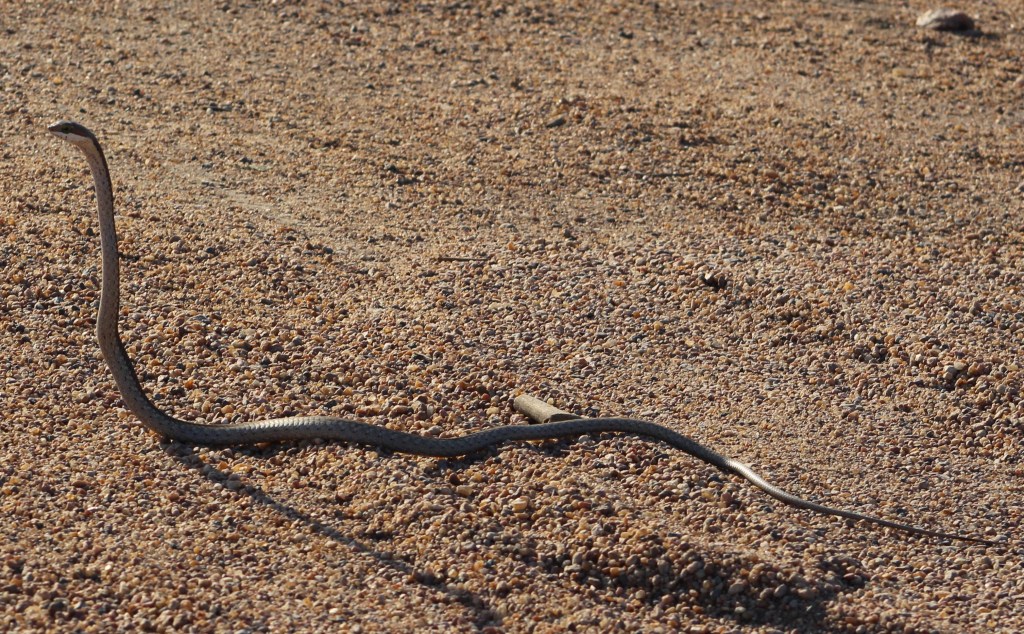
Back in camp we watched a small group of blue waxbills outside our bungalow before having some lunch and a bit of a rest before heading out again in the late afternoon. As it was our last evening in Mopani camp, we stopped in at a few of the nearby favourite spots. At the turning off the H1-6 to the loops along the Tsendze river we saw a pale thin snake crossing the road. When we stopped to look at it, it reared up threateningly, almost like a cobra but without the characteristic hood. We were not at all sure what it was but later did identify it as a female boomslang.
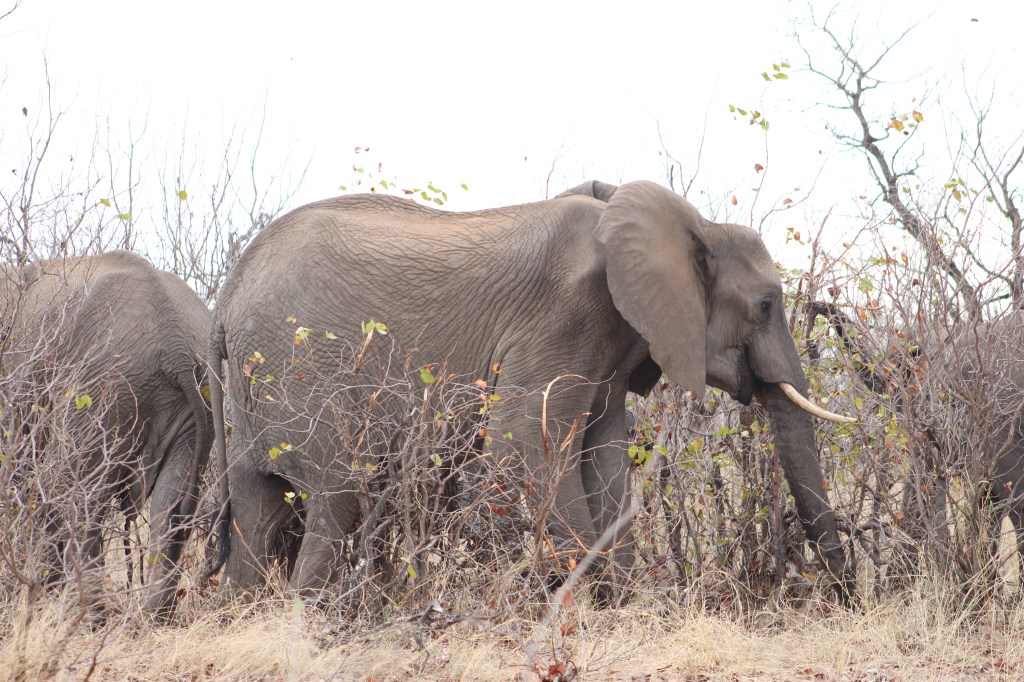
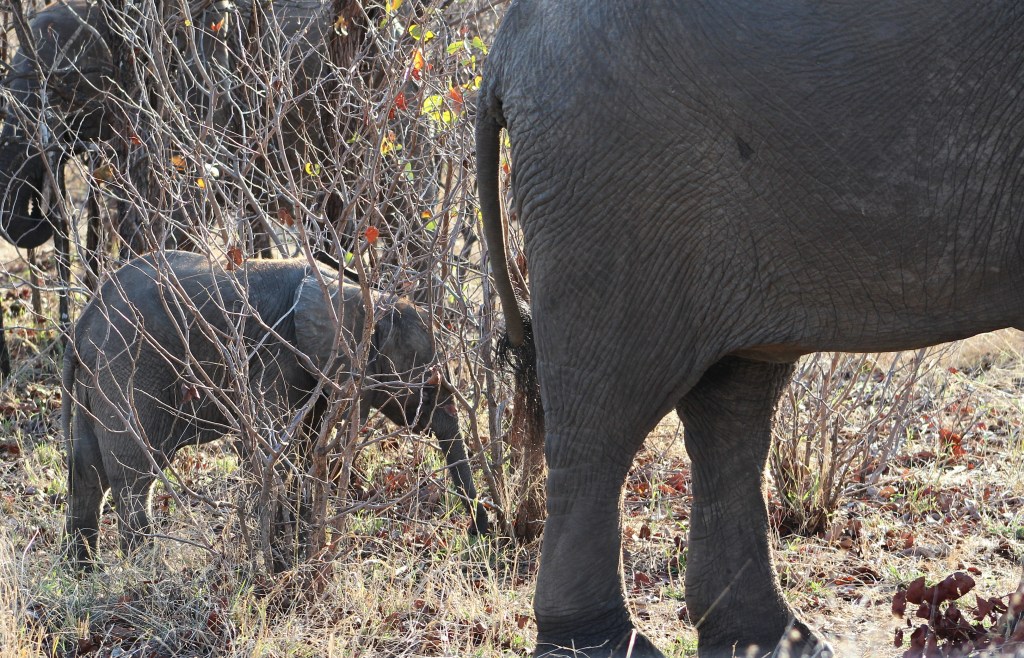
Further along the H1-6 we stopped to watch some elephant with babies, always a lovely sighting.
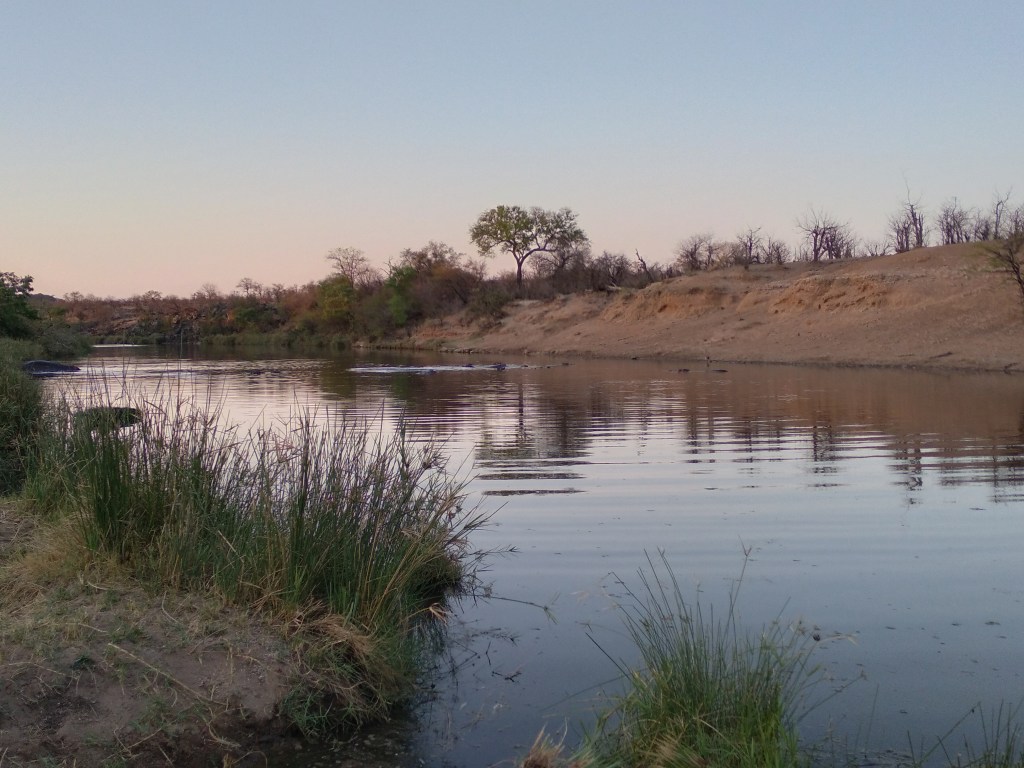
We called in at the Confluence lookout but nothing special to see, just a beautiful peaceful spot for a cup of tea. Also popped in to Mooiplaas before quickly heading for a last look at our most favourite spot – the causeway on the Tsendze river. On the hillside to the left of the causeway is a cluster of strange looking trees – they are one of the five species of Euphorbia found in the Park. And there in the river, was a family of hippos quite close to the road.