Moving Day – on to the next camp
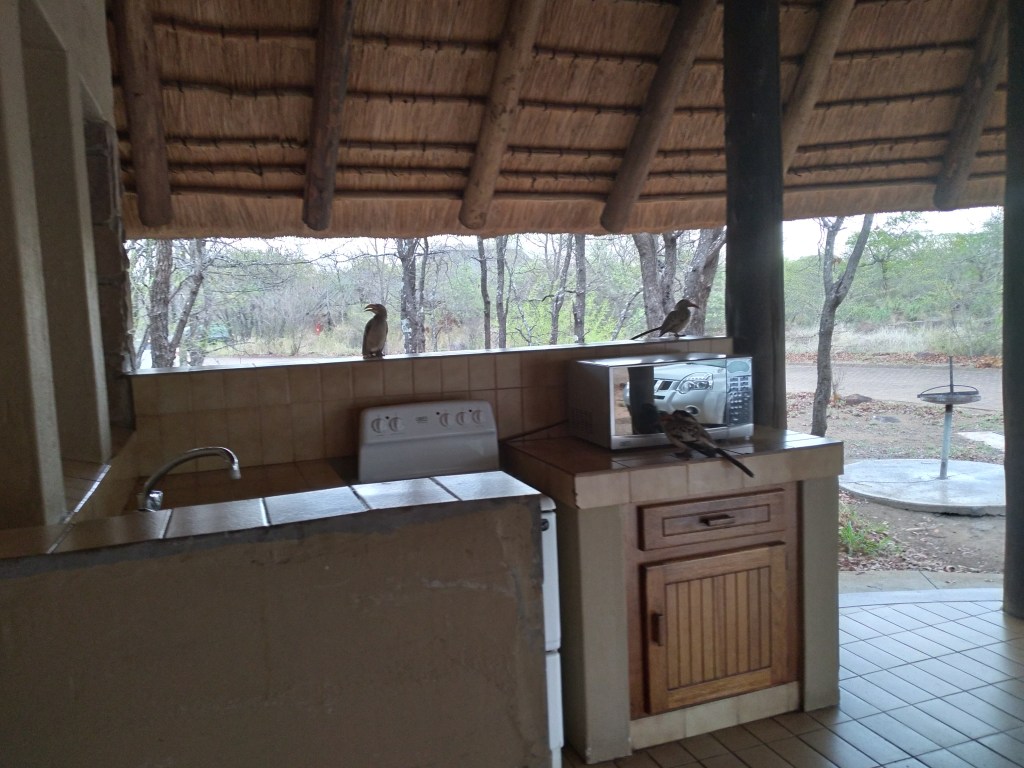
Day 9 30 October. Packing up! Before even opening the door this morning I could hear a bit of a noise on the veranda and peered through the curtains to see what was making it. It was a group of three hornbills all trying to admire themselves in the shiny door of the microwave which was acting like a mirror.
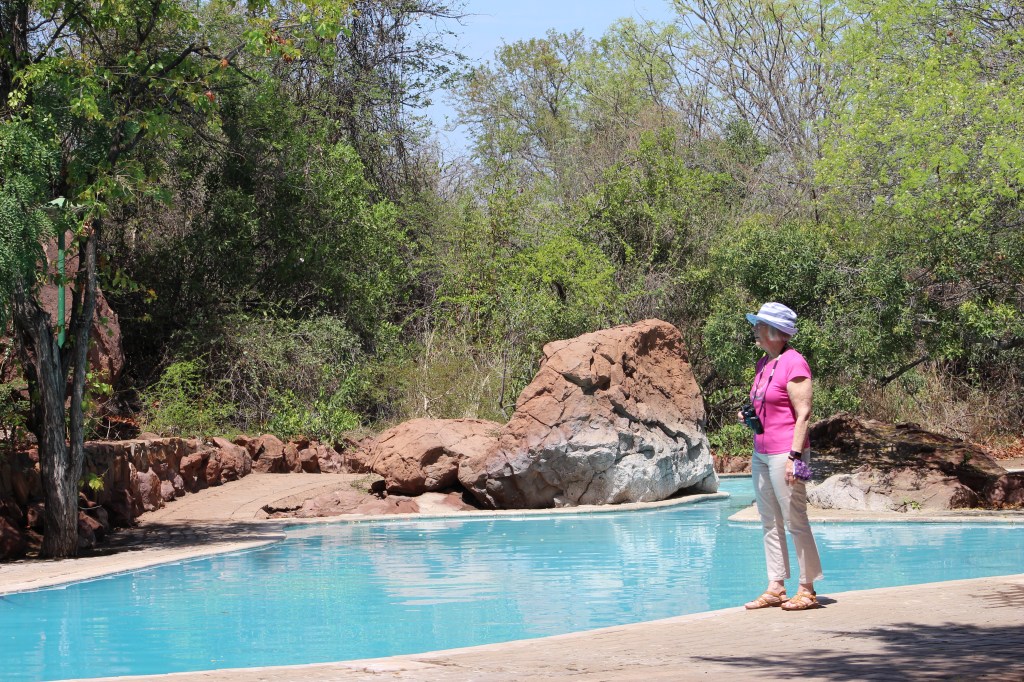
Once packed and the car loaded, we had a last wander round the camp, starting off by walking through the pool area. It is a beautiful pool but although the weather had been pleasant, it hadn’t enticed us to swim.
After the pool area we made our way through to the path along the fence and could almost immediately see that a herd of elephant was coming down to the edge of the dam and we watched them as they lined up opposite us to drink – there were quite a large number of adults and a small baby.
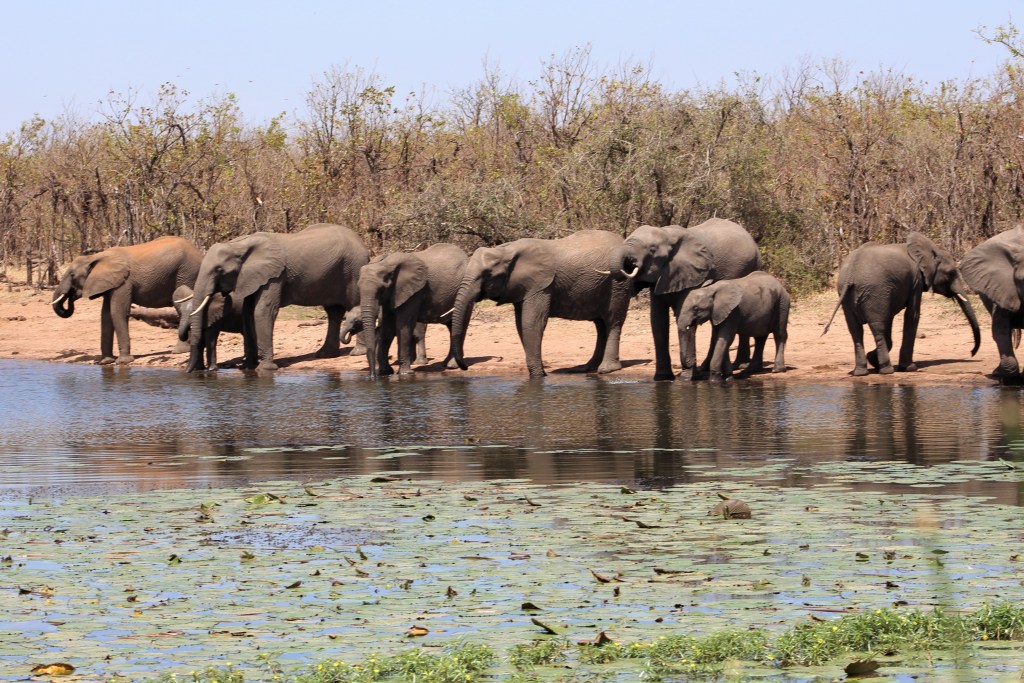
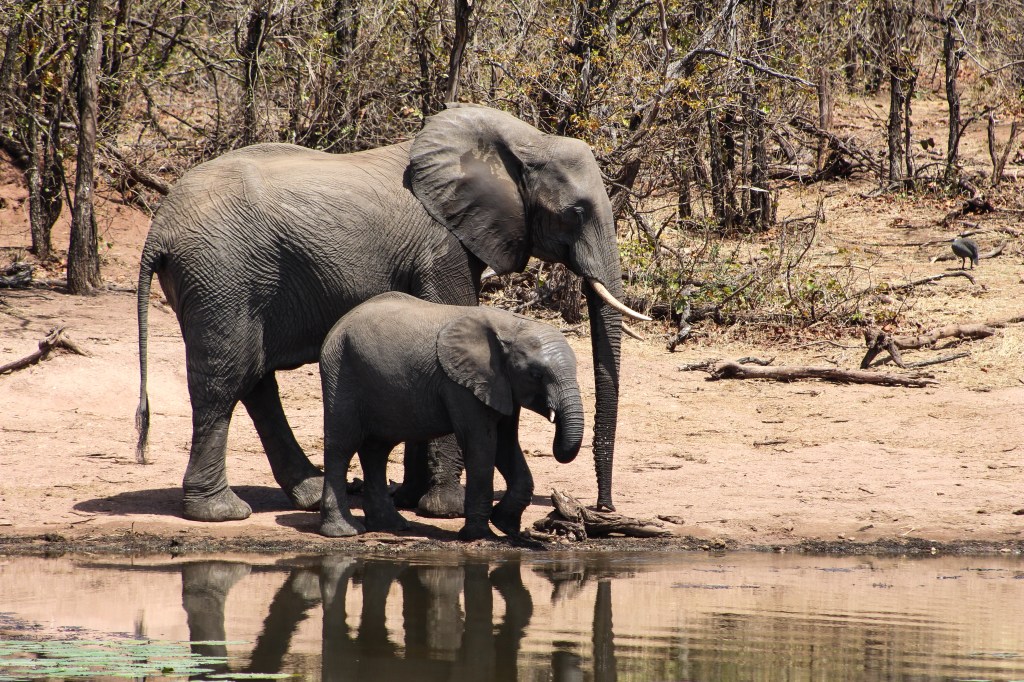
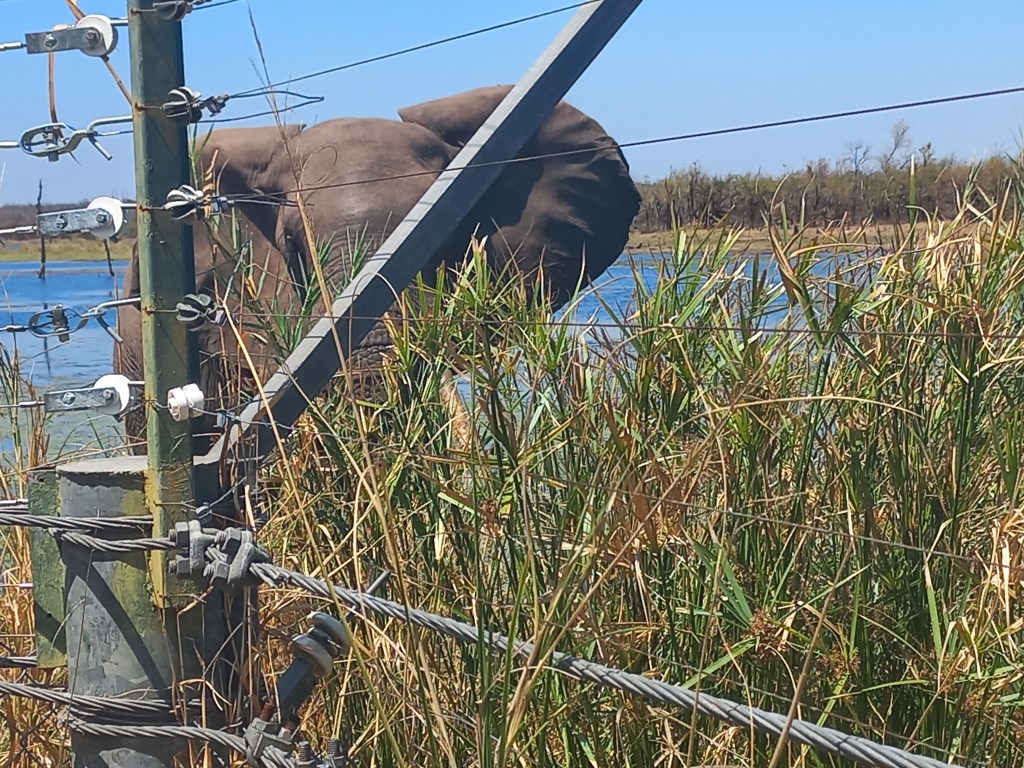
We were so engrossed in watching them that we almost missed an elephant on our side of the dam just a few metres from us – fortunately on the other side of a high and strong electrified fence! It didn’t take much notice of us even when we moved quietly and carefully passed it. Just a brief shake of the head telling us to be careful.
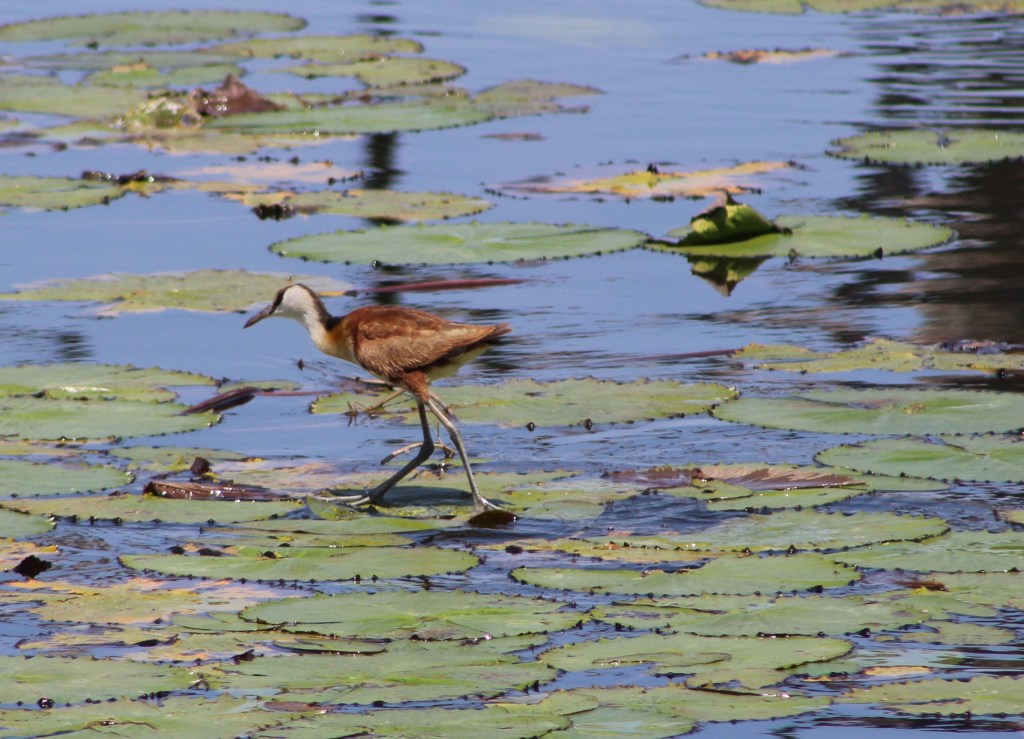
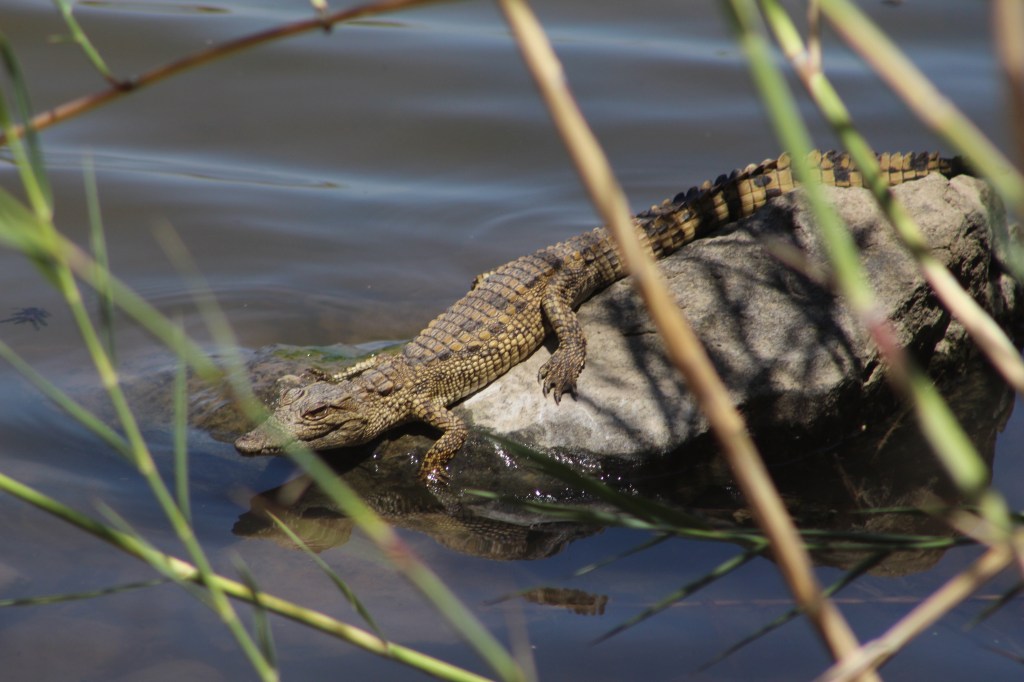
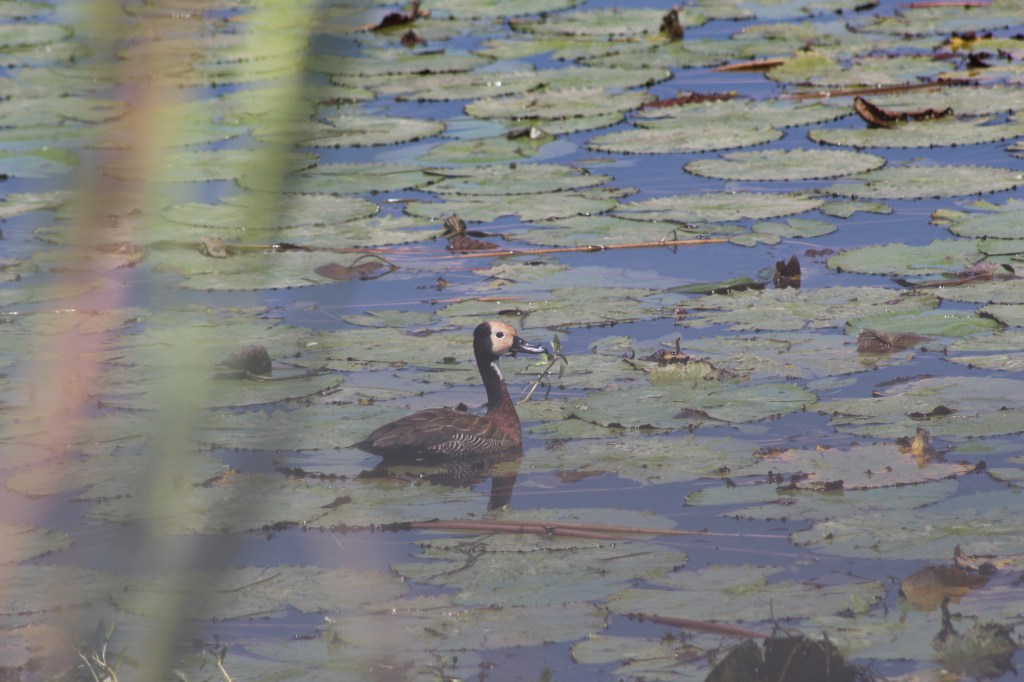
After the elephants on the other side of the dam had silently gone on their way, we watched the white-faced whistling ducks and a jacana as well as a very small crocodile basking on a rock.
Back to the car and on our way, sad to leave such a beautiful camp but looking forward to new roads to explore.
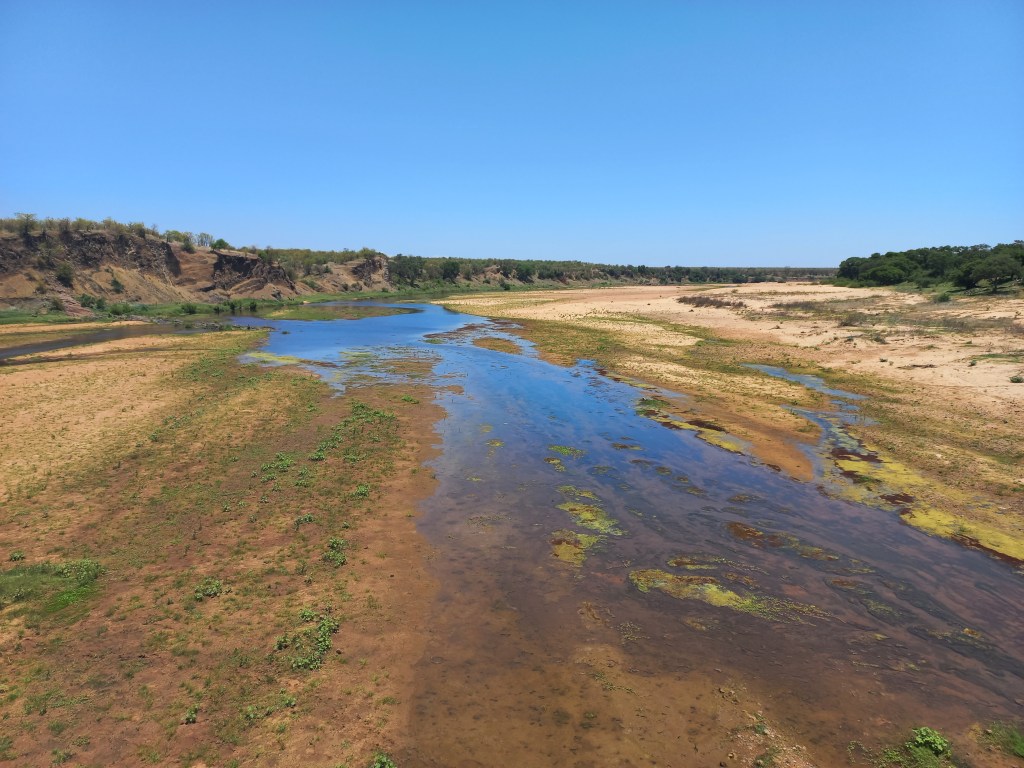
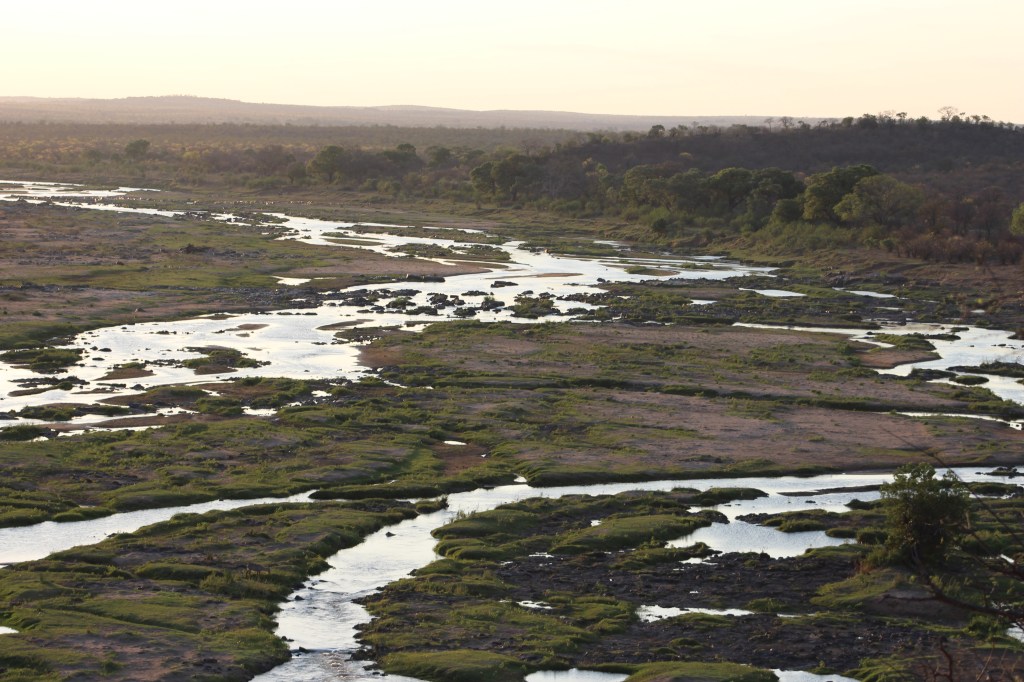
First stop was on the bridge over the Letaba River. Always amazing to see these lovely meandering lowveld rivers with valleys carved by centuries of rain and floods bringing water and life to an otherwise dry country. We also stopped in at the Letaba camp and treated ourselves to a cold coffee milkshake on the terrace overlooking the river. The summer heat was beginning to kick in. There was plenty of game to be seen between Mopani and Olifants – all the usual species such as impala, elephant, zebra, giraffe, wildebeest but no new species to add to the list.
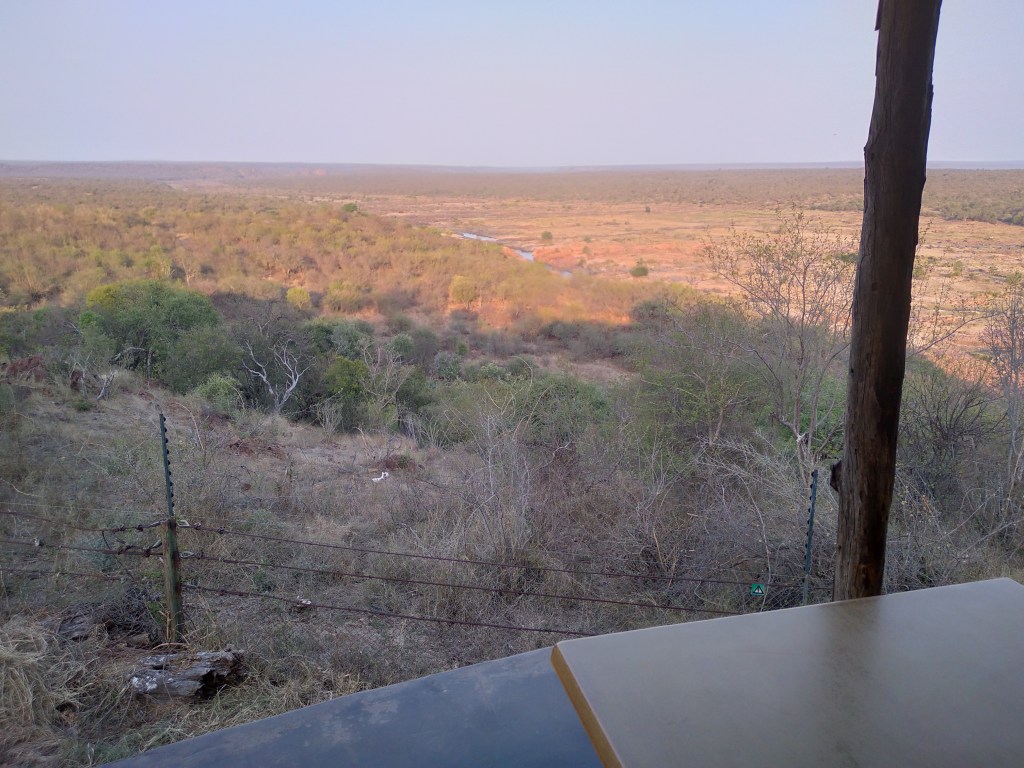
Once we had checked in at Olifants reception we found our bungalow on the lowest level of the perimeter of the camp with a spectacular view across the Olifants River. We could see and hear hippos every single day we were there, once we saw elephant and most other days we could see a few waterbuck and giraffe coming down to drink.
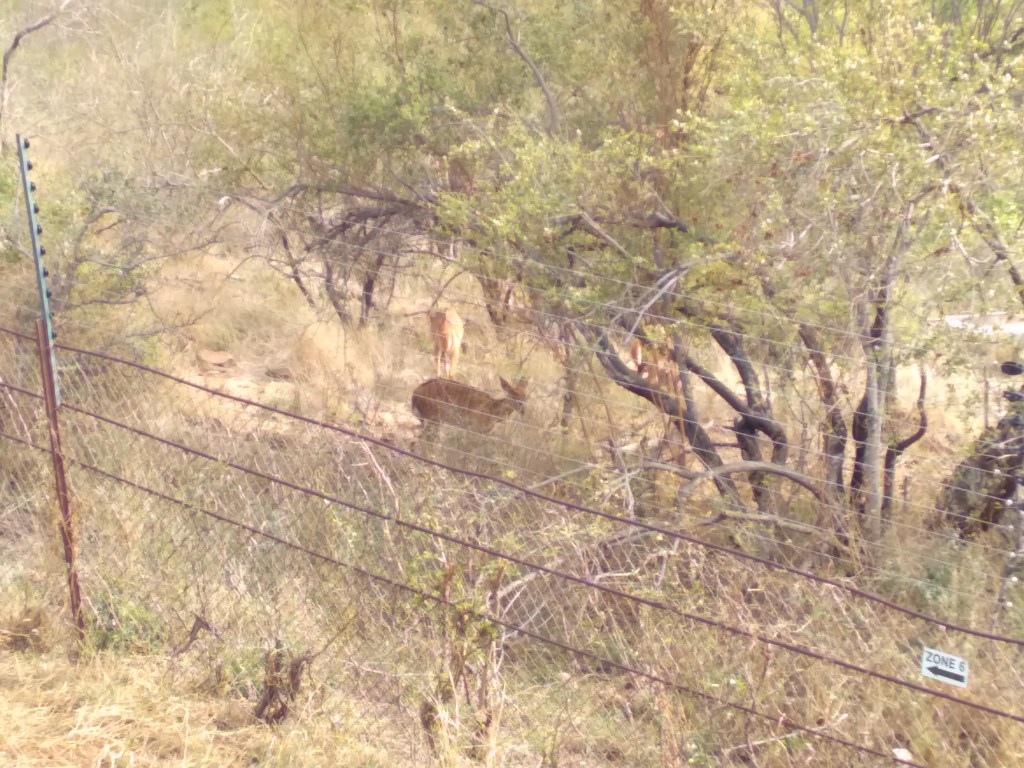
As we were right on the fence, we also saw bushbuck and waterbuck just the other side of the fence and had a couple of visits from the vervet monkeys.
Fortunately, the fridge was already inside the bungalow when we arrived and we kept all our food inside as well.
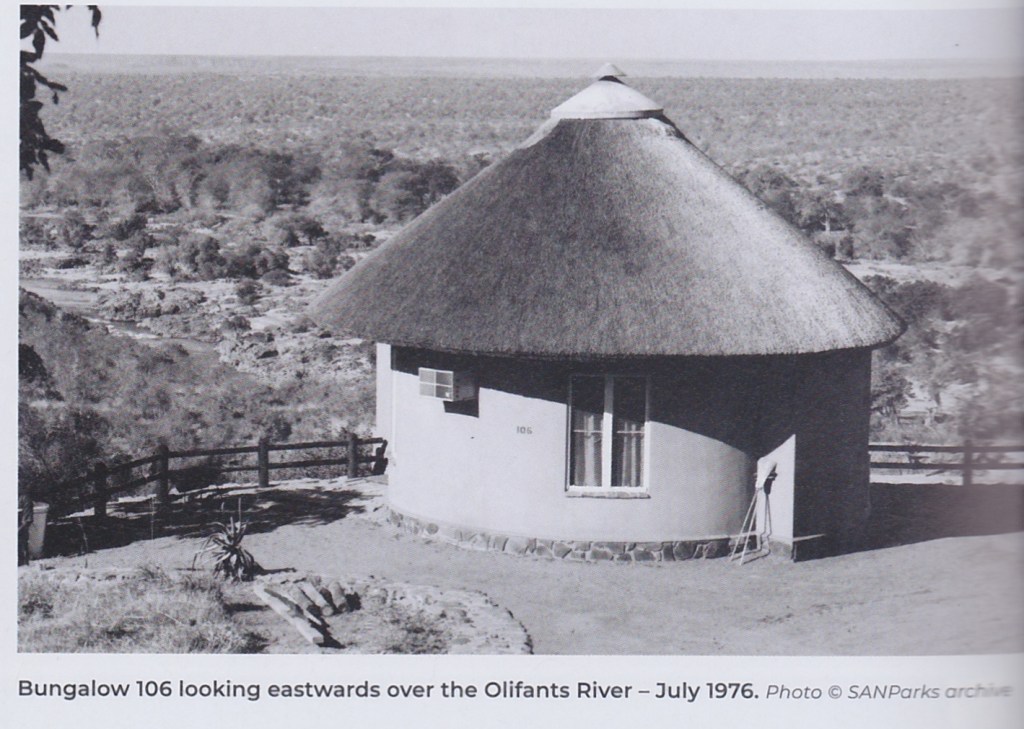
While in Kruger we bought the most recent copy of Kruger Magazine, a high-quality glossy magazine about various aspects of the Greater Kruger area, which proved very useful in identifying the euphorbias we had seen near Mopani. When we got back home we bought the next issue and we astounded to see an article on the history of Olifants camp, including a picture taken in 1976 of the very hut we had stayed in!
After we had unpacked and settled in we took a late afternoon drive down towards Balule on the S92 and then back along the S91 onto the tar H1-5, stopping on the edge of the river just beyond the turning to go back up to the camp. There was a group of hippo in the river just below us but it was getting too dark to take good photos.
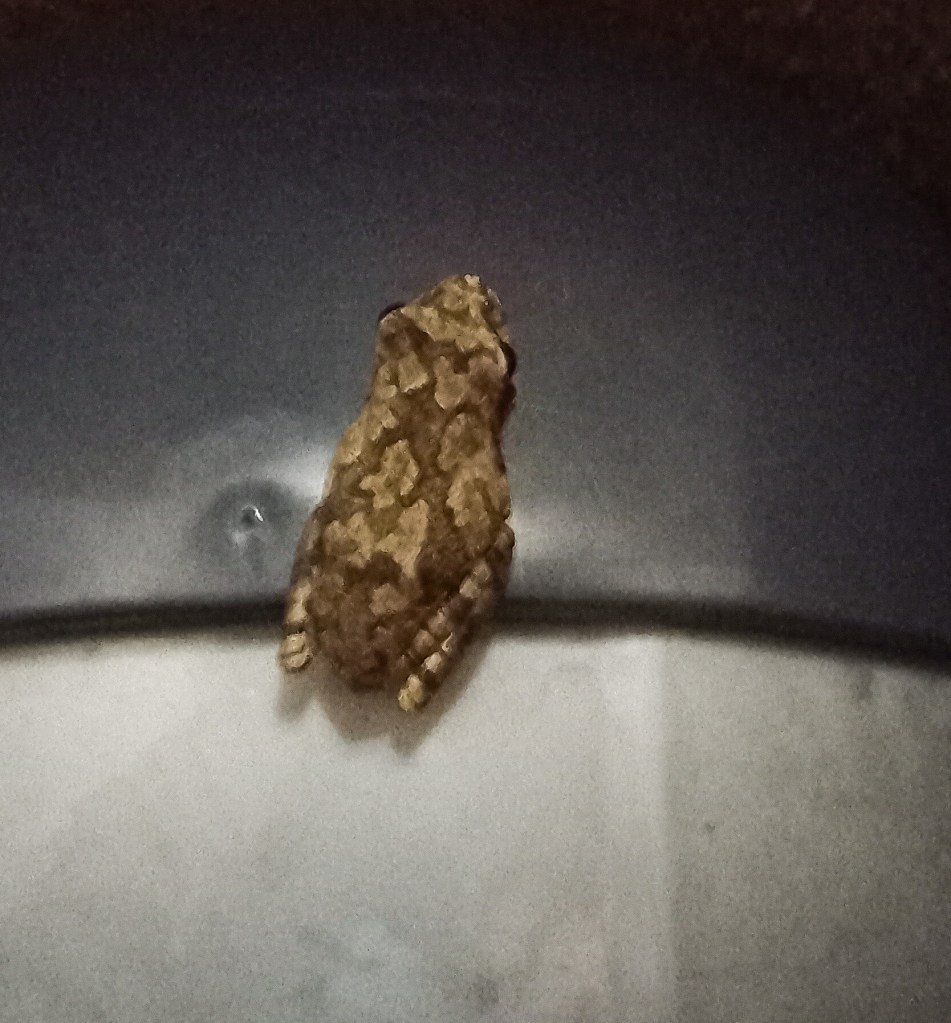
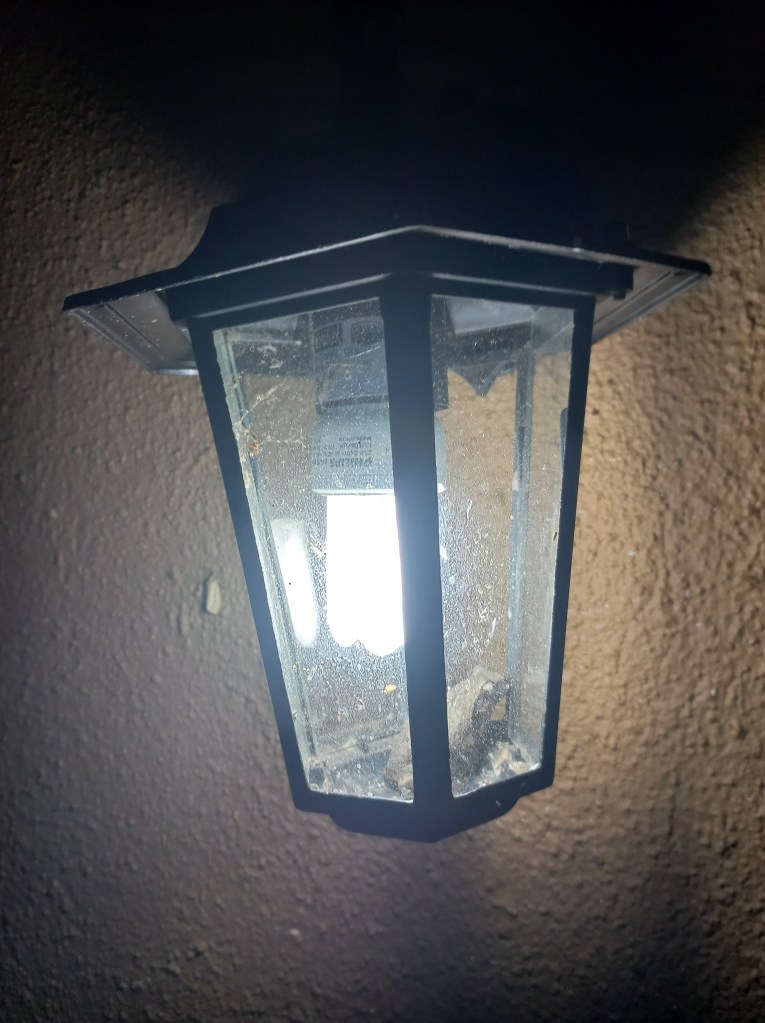
In the evening as we were getting supper, we noticed that there was a frog inside the glass lamp providing light in the kitchen area – it seemed to be enjoying the moths and insects that were attracted to the light and got trapped inside the glass casing. As we didn’t have our frog book with us, identification had to wait till we got back home but once we could check we found it was a Southern Foam Nest frog.
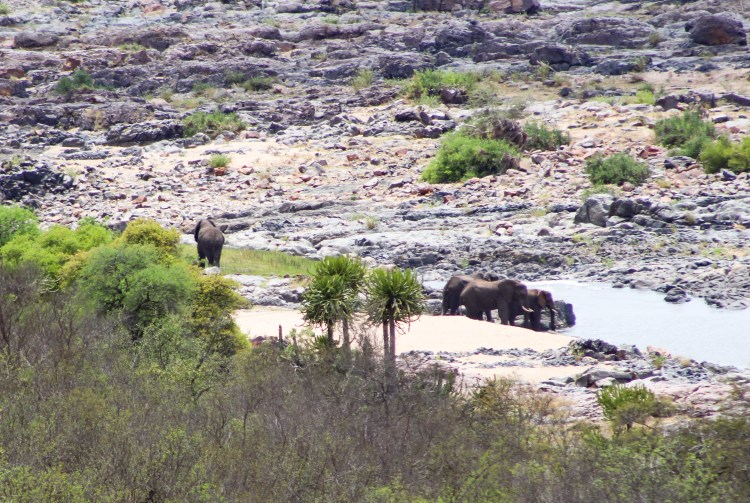
Day 10 31 October. A lazy morning after our moving day the day before and time to do another batch of laundry. First we had to check what coins were needed, then to the shop to the right change. After putting the clothes into wash, I went back to the bungalow in time to see four elephants coming down to drink on a little sandbank next to the river some way below us.
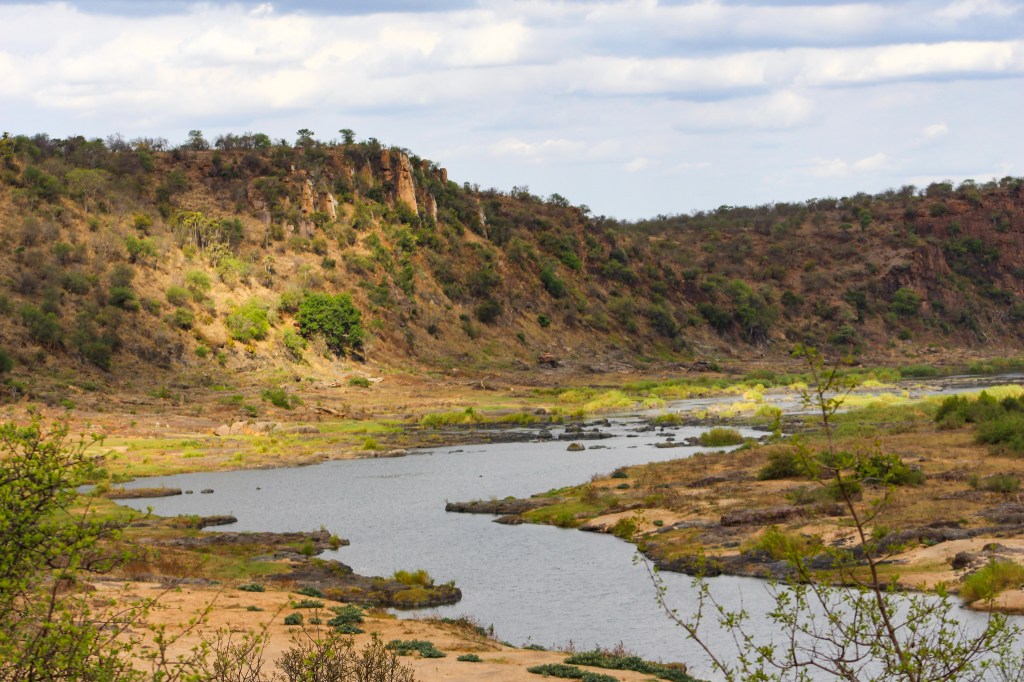
After lunch we went for a drive along the S44 gravel road which eventually gets back to Letaba. There is a lovely view site above the Olifants River and close to the rhyolite foothills of the Lebombo mountains about 7 kms from the camp.
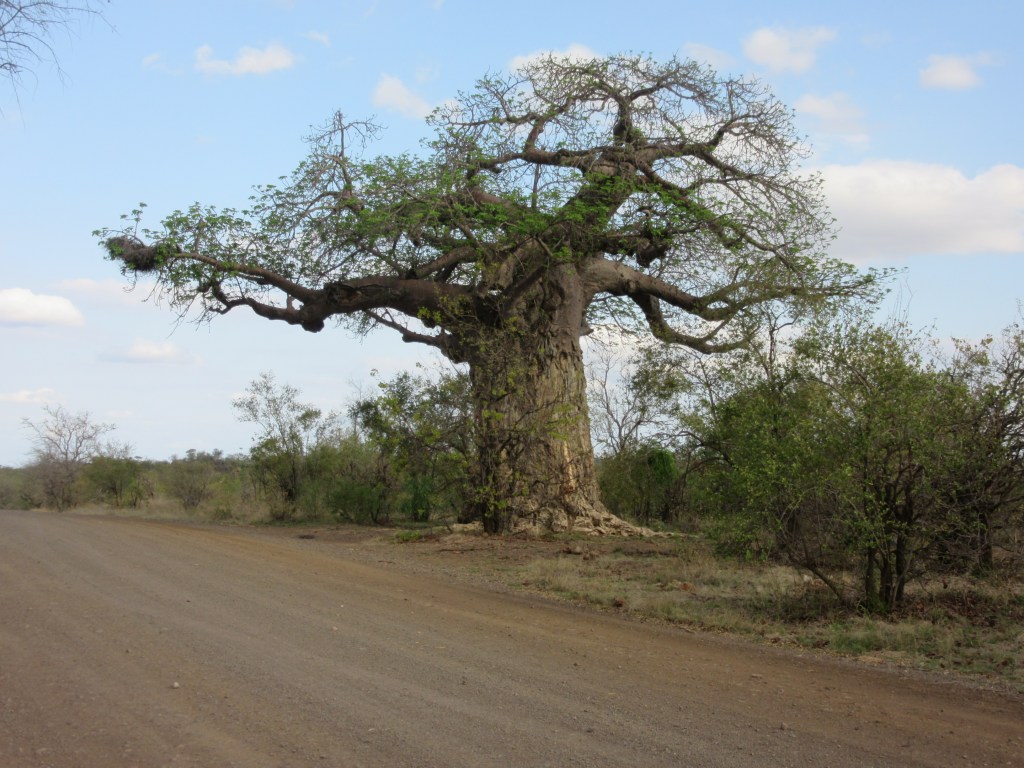
Further on we found von Weilligh’s baobab on the S93.
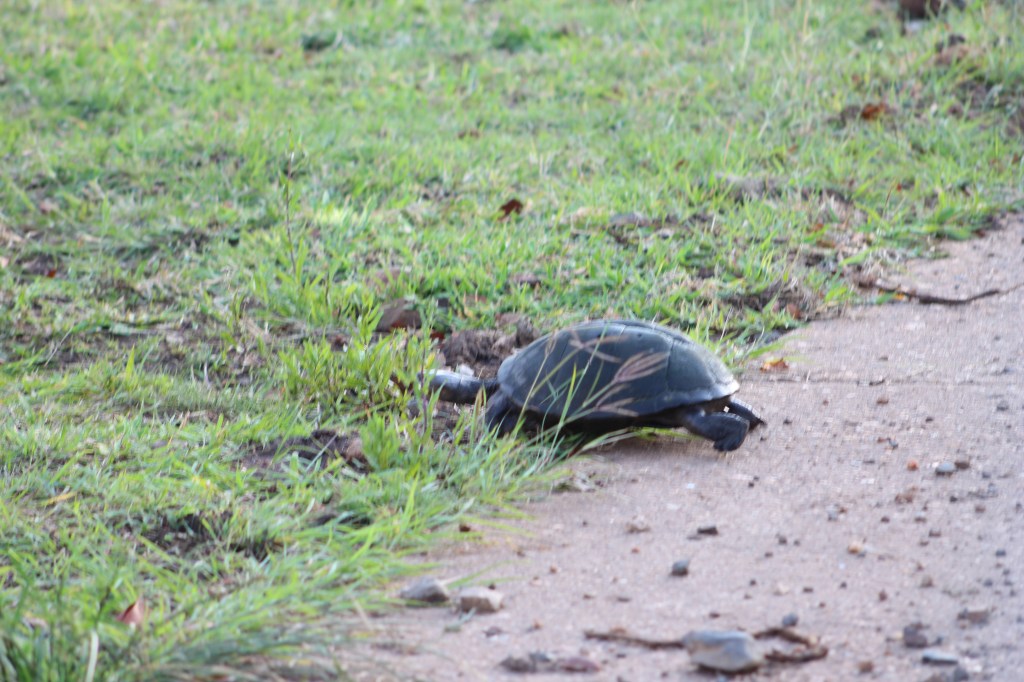
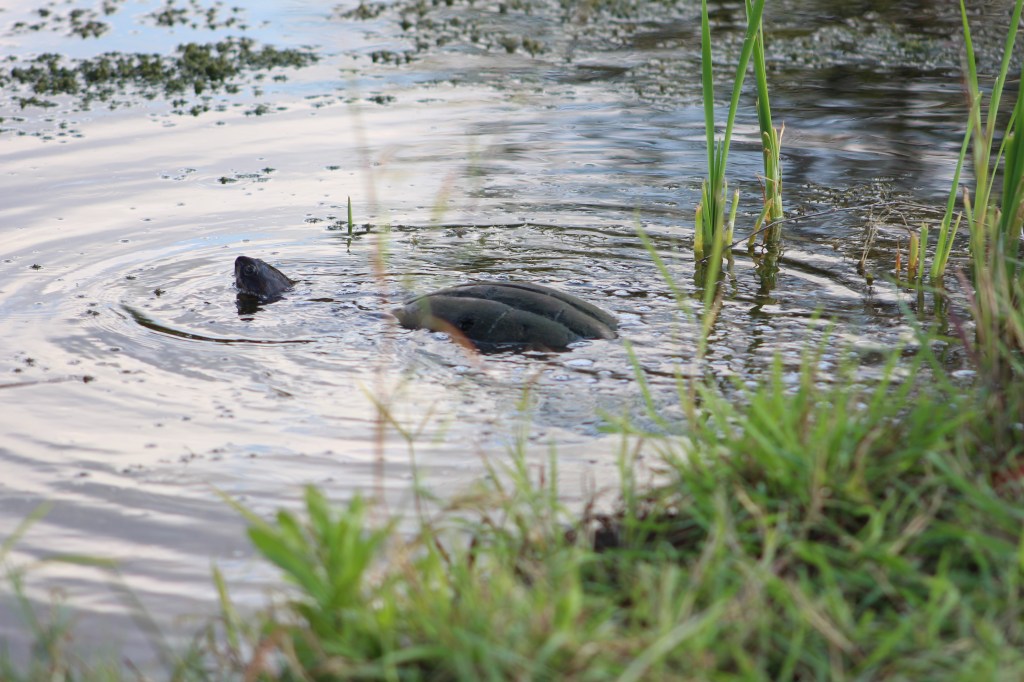
Game was not particularly abundant along these roads, but we did come across a determined terrapin quickly crossing the ford across the road before sliding into the water on the other side.
We drove back on the S4 and S46 to the tar H1-5 road and up to the view site overlooking the Olifants river, where there were hippos in the river. We watched the sun going down before heading back up the hill to the camp.
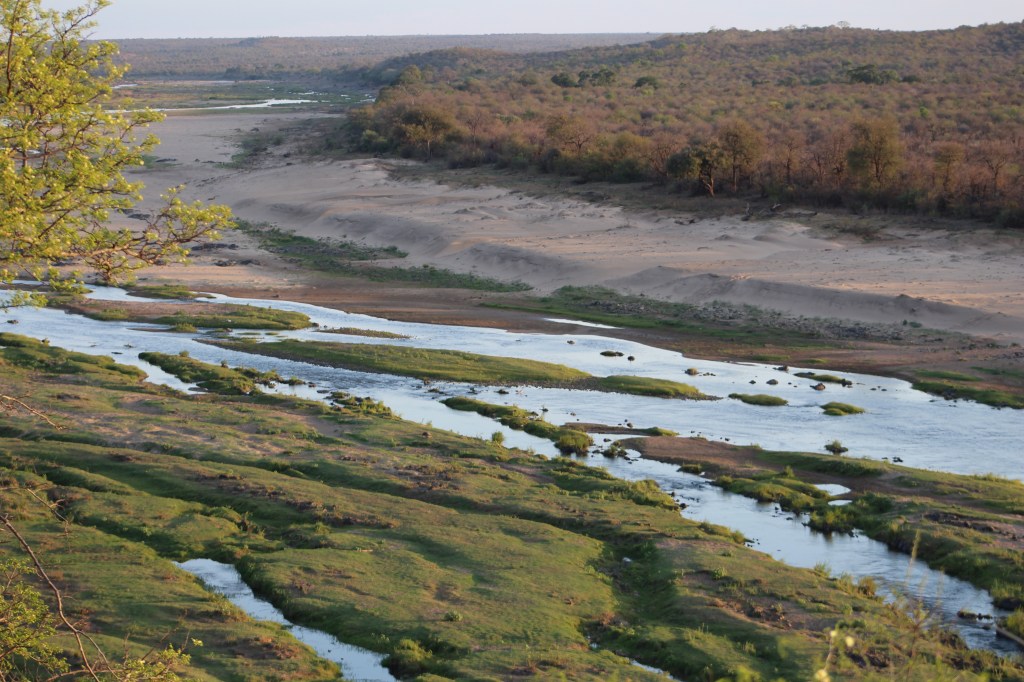
Day 11 1 November. Election day for municipalities today – there is a polling station at Olifants camp for Parks staff who can’t get into Phalaborwa to vote. We got up reasonably early and were on the road by 6.30. Our aim for the morning drive was to go south as far as the Timbavati picnic site and head back another way from there. We drove slowly down the access road from the main road up to Olifants in the hope of seeing the supposed resident leopard but as usual we didn’t see it! Once on the H1-5 we turned south towards the bridge crossing the Olifants river. This is place where you can stop and get out of your car between the demarcated section on the bridge. There was not much to be seen in the river bed itself but at the southern end the road was blocked by a large troop of baboons, some even lying stretched out on the tar, perhaps for warmth? By the time we were ready to move on, the baboons had moved off the road and we were able to pass without fear of running them over. A bit further south we turned off on the S39, a gravel road going south towards the Timbavati picnic site.
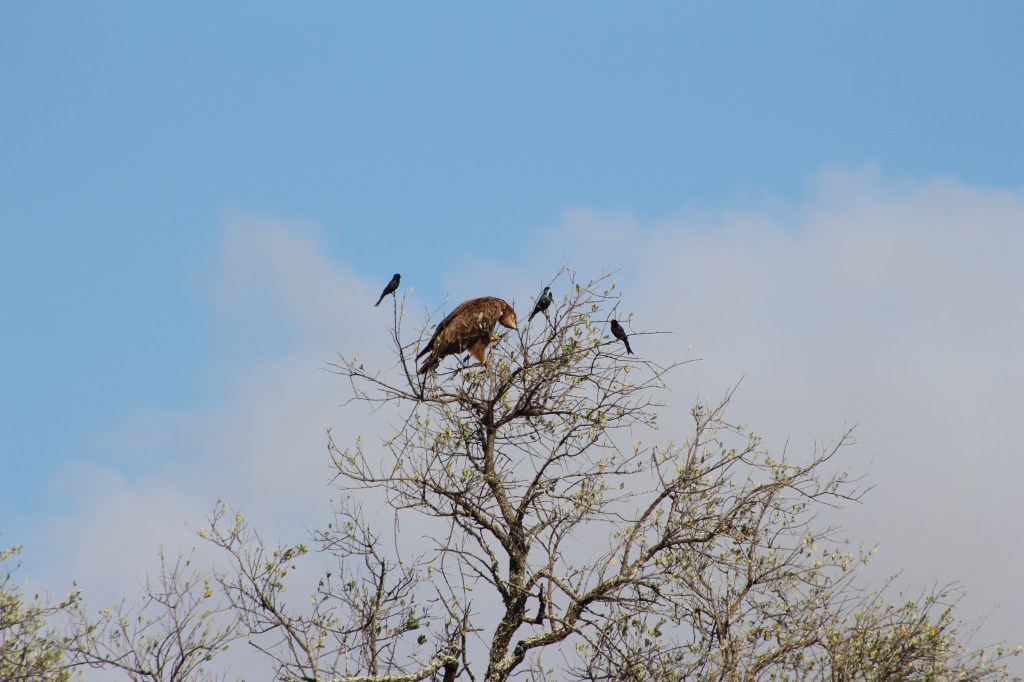
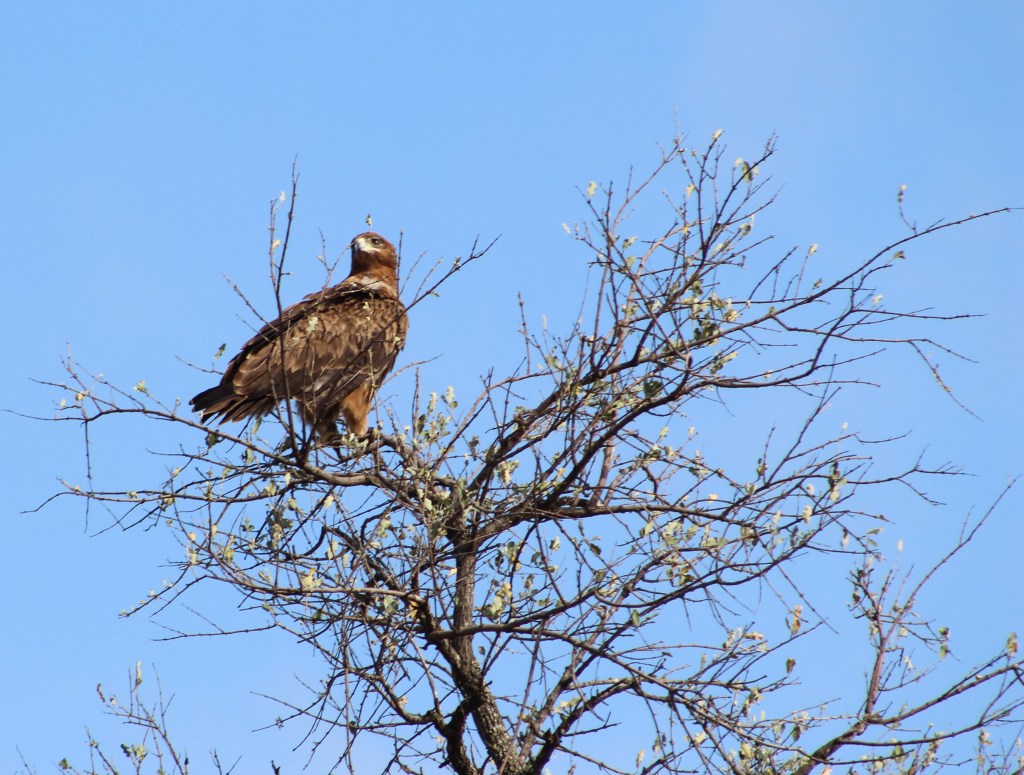
Just after the turnoff, we stopped to identify a large, impressive looking raptor perched in a tree close to the road. After some deliberation we decided it was a Steppe eagle. There were also some fork-tailed drongos dive-bombing it but the eagle was not budging.
Carrying on along the road, it became very corrugated making it difficult for the driver (me) to concentrate on game spotting as well as driving. As it was already getting hot there were not that many animals to spot anyway. We did see some of the usual species – zebra, impala, wildebeest. But we would have missed the best sighting of all if it had not been for a car coming the other way stopping us and the driver saying, “there’s a cheetah behind you”! We quickly turned the car around and parked by the side of the road to get a good view of the cheetah, who had decided to settle down in the cool shade of a small shrub not far off the road. We spent some time photographing and watching it. At one point it started digging in the sand underneath the bush, presumably to expose cooler sand in which to lie in the shade of the bush.
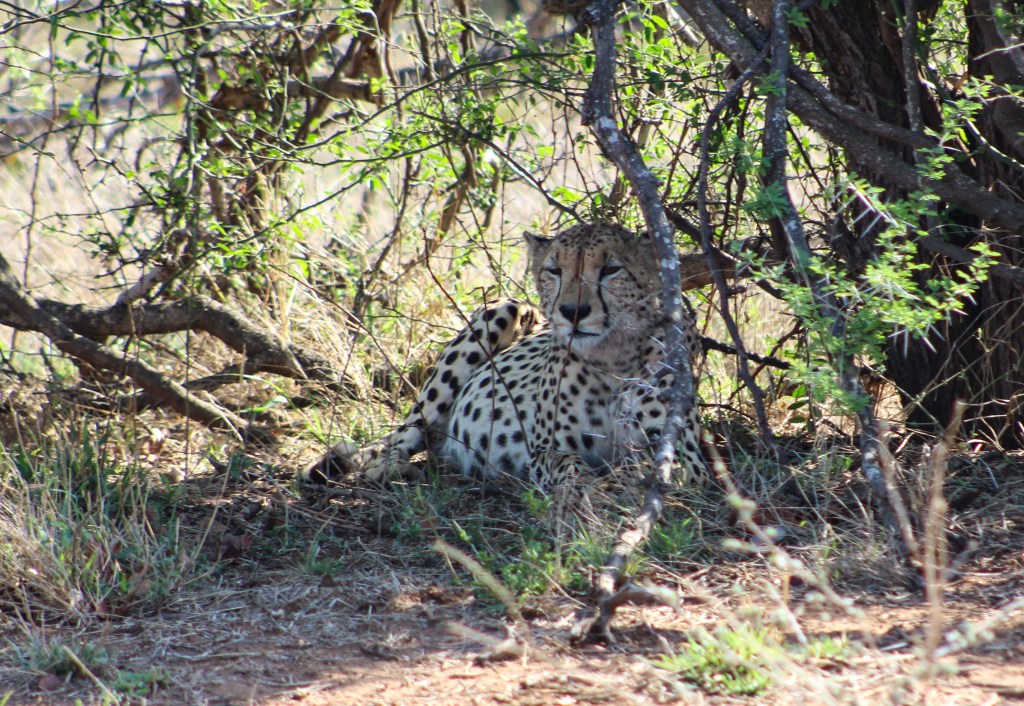
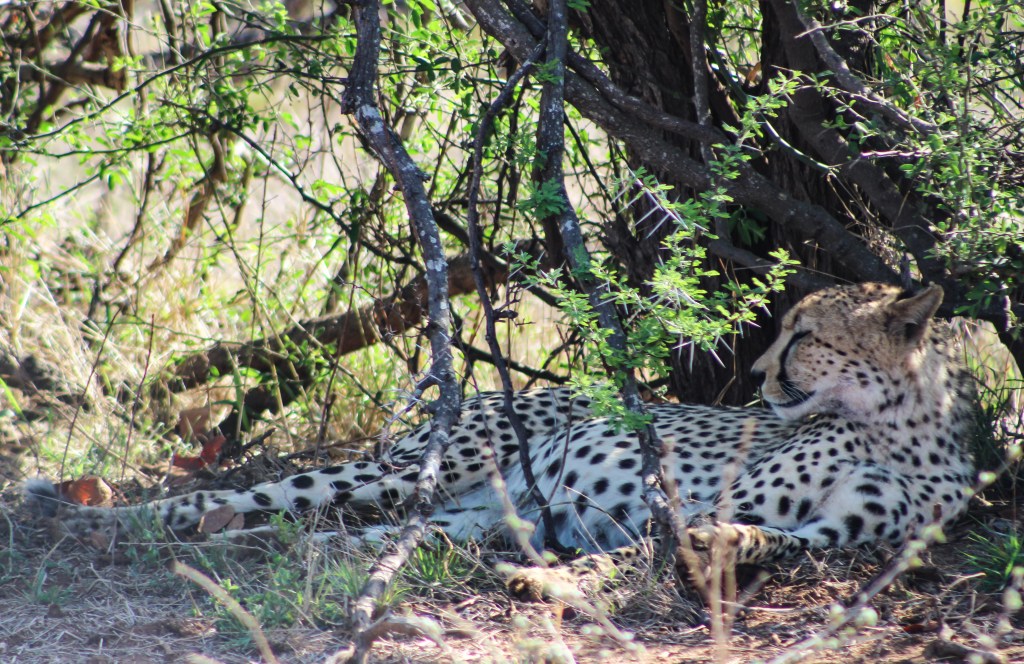
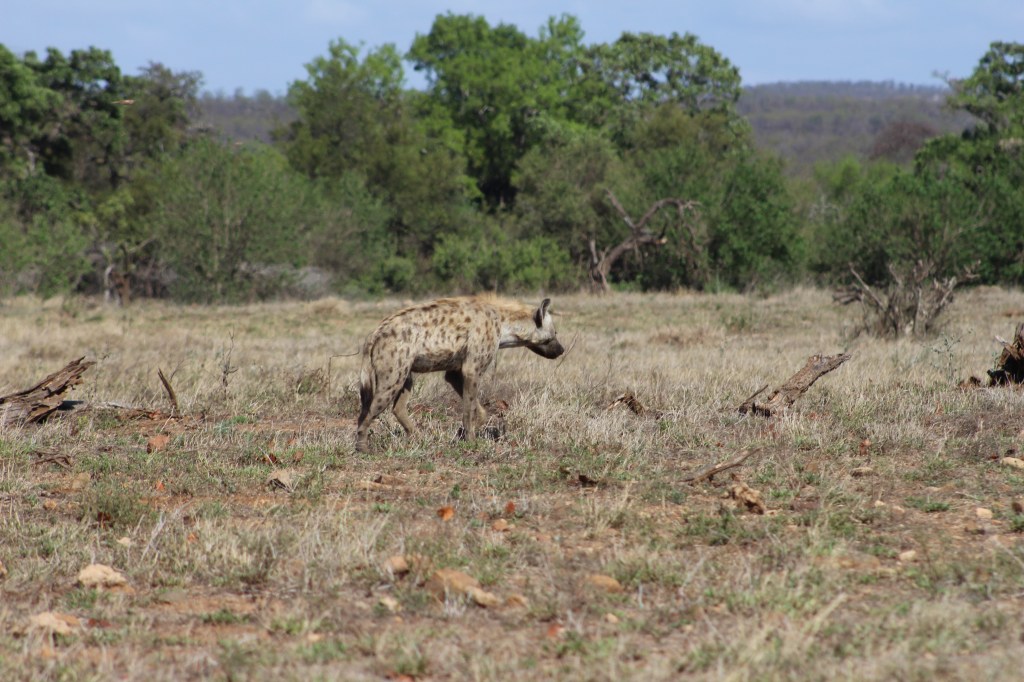
Once we had got good photos and the cheetah showed no sign of doing anything but snoozing, we decided to carry one with our drive. By this time there were quite a few cars parked watching the cheetah but as we drove off, we noticed an hyena slinking by on the other side of the road, unnoticed by those with eyes glued on the cheetah.
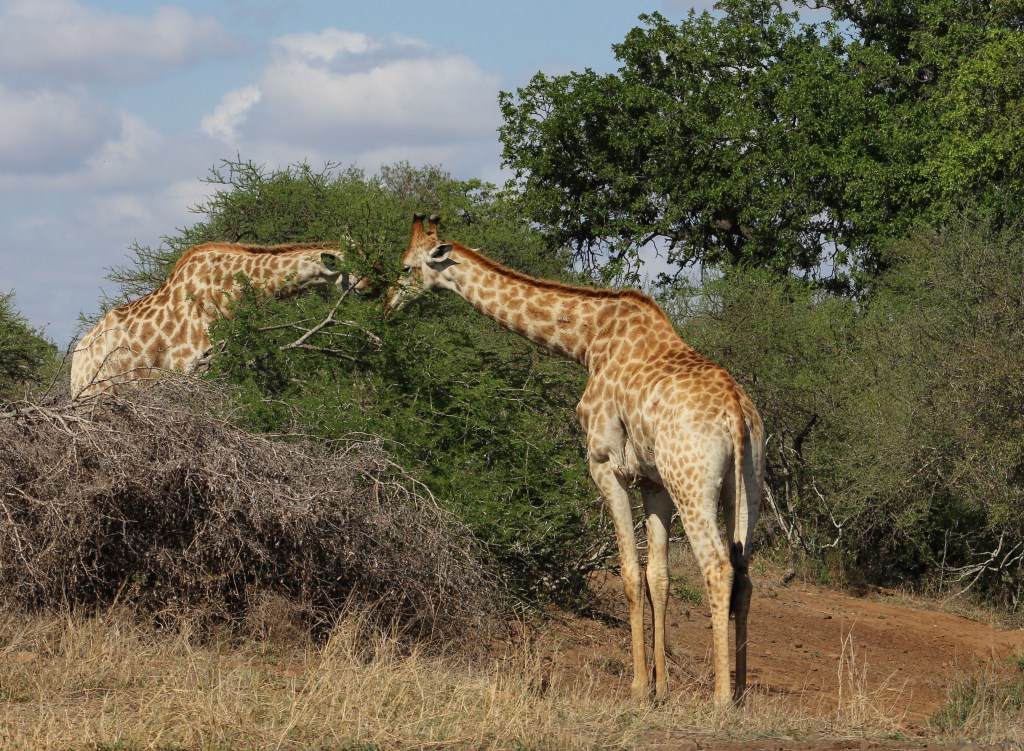
Further along the gravel road we came across two giraffes facing each other across a small tree they were both enjoying.
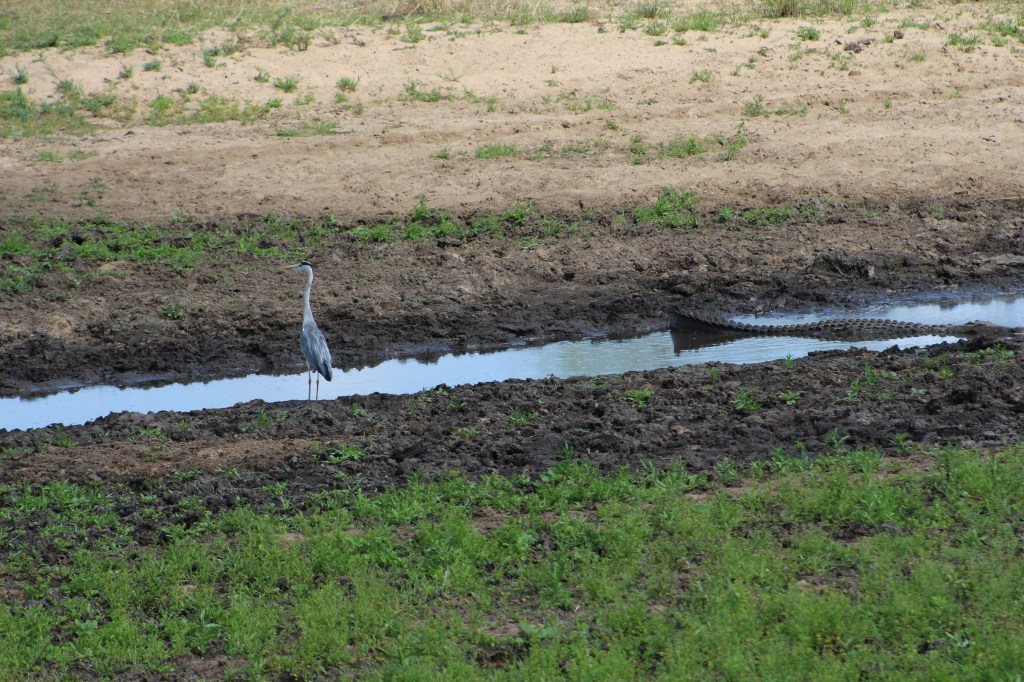
We saw some elephant and a few other species as we bumped along to the Ratel Pan hide, where we got out to see what was on view from the hide. There was not much water in the shallow river but we spotted a grey heron and a huge crocodile.
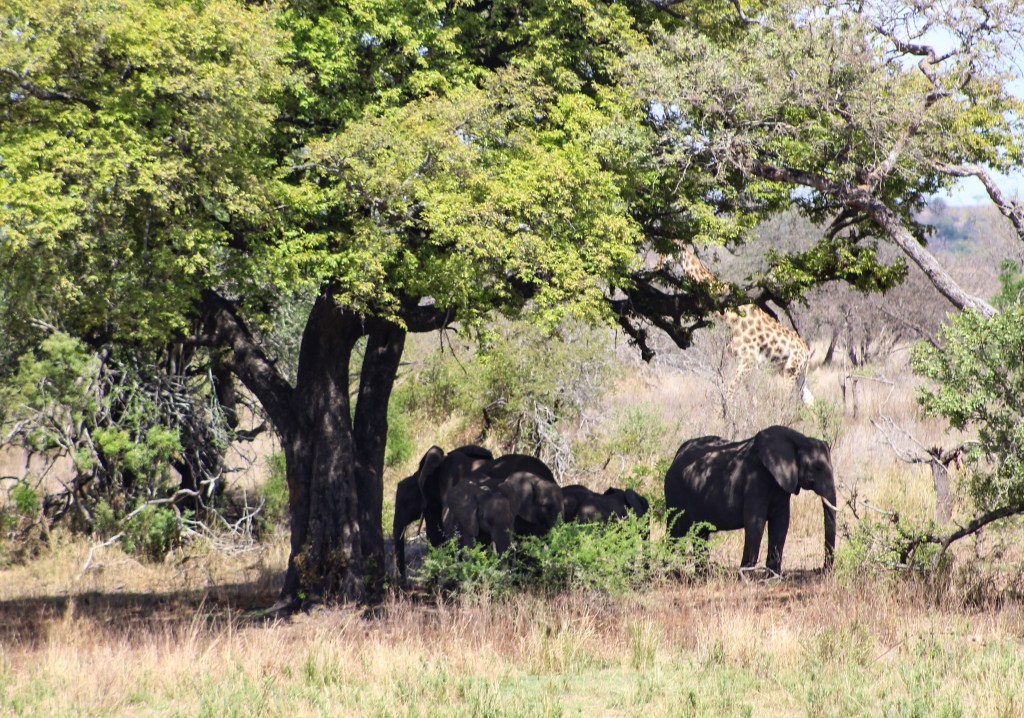
While we were watching them a family of elephants appeared on the other side of the stream and took shelter from the sun in the shade of a big tree, while a tall giraffe drifted passed them in the background – a restful, beautiful scene.
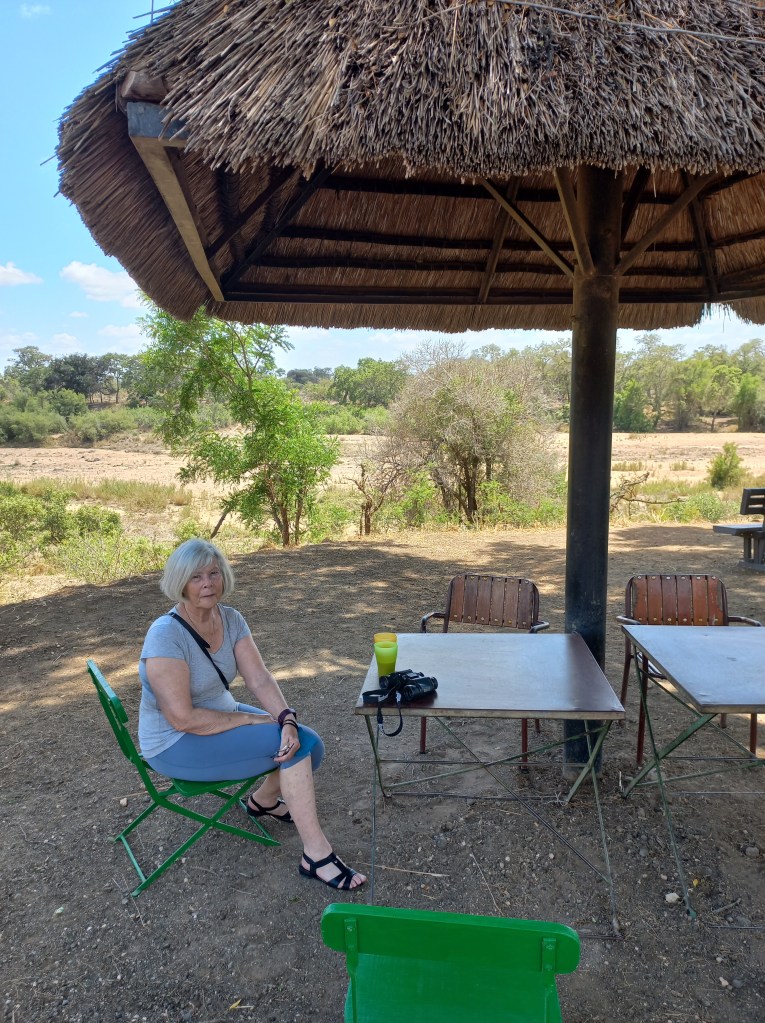
On to the Timbavati picnic site not far away and a welcome break to have some coffee and rusks. It was a peaceful stop as we were not harassed by monkeys or baboons, who often need watching so you don’t lose valuable food items.
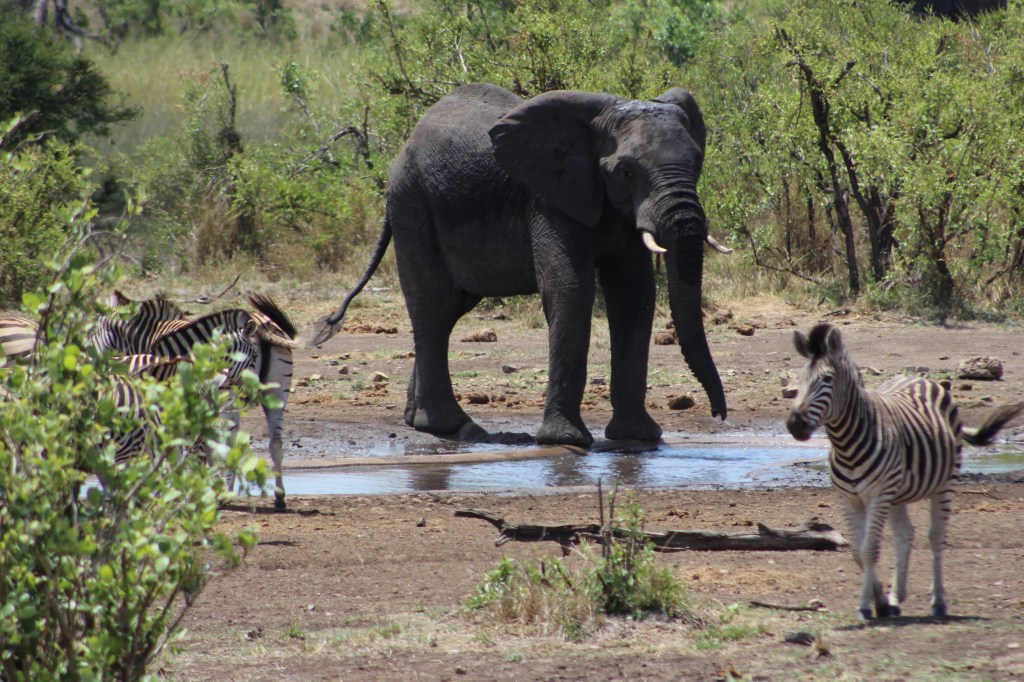
We headed back towards the main tar road (now the H1-4) via the S127. Heading back north again at a waterhole close to the road was a small elephant and a few zebra drinking together, although the little elephant was not too happy to share the space with the zebra and shook his head and attempted a mock charge to warn the zebra not to come too close.
Further on another waterhole was shared more peacefully by elephant and impala standing in the shade of the big riverine trees. It was getting really hot now. Still further north we saw a sign to what we thought was a waterhole a couple of kms off the road – we took the turning and continued for several kilometres without finding an obvious waterhole and end of the road. We saw several elephant, singly and in small groups, so kept on going. We had noticed a one-way sign at the start of the road but had not thought too much about it. However, as the road continued on and on we realised it was not going to come to a place where we could turn back to the main road so we had to keep going till we came to another way out. Our map book was not very helpful but as it was several years old, we decided things might have changed since it was published. It was a very attractive area along little rivers and marshy areas but the road was not that good and we were a bit concerned as to where we would end up. Eventually we came out on a regular gravel road and turned in the direction that we thought would take us to the Balule road, only to find that we ended up back on the main H1! Later we bought a newer version of the map book and could see where we had been.
Back in camp we adjourned to the restaurant and had a welcome beer and sandwich on the terrace, followed by a rest in our bungalow. Later in the afternoon we ventured out again for a short drive to the Olifants river view site on the way to Letaba (S44) intending to have a peaceful tea there. But when we got there, we could hear voices coming from the edge of the viewing area and went to see what was attracting their attention. It turned out to be two couples who had come from Alaska to visit the Park – one couple had been here before but for the other it was their first visit and they were really excited about it. It seemed that they had already had some amazing sightings and the one they were witnessing in the river below was equally incredible. They told us that they had noticed the carcass of a recently drowned impala in a little bay close to the shore and a large crocodile trying to drag it away. As they watched they realised there were actually two crocodiles and they were having a tug-of-war with the poor impala, which fortunately would not have known about it. We were able to catch glimpses of the action still going on sporadically but did not really want to watch for long. We had a hasty tea and then headed back towards camp. As we crossed one of the little fords across the road, we noticed a small crocodile lying in the water and stopped to watch it. It was almost as if it had spotted us and it began swimming determinedly towards us to investigate these intruders. We managed to get a nice video of its approach!
Back in camp we were able to get a better photo of the lamp-loving frog, this time on the outside of the glass.