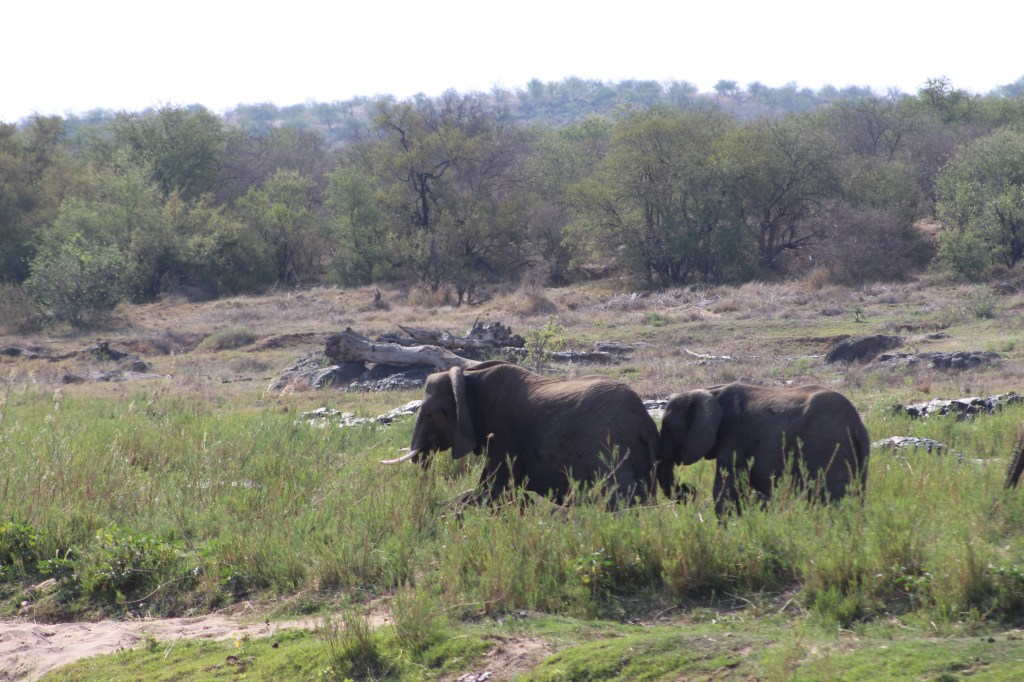
A river full of elephant and baboons!
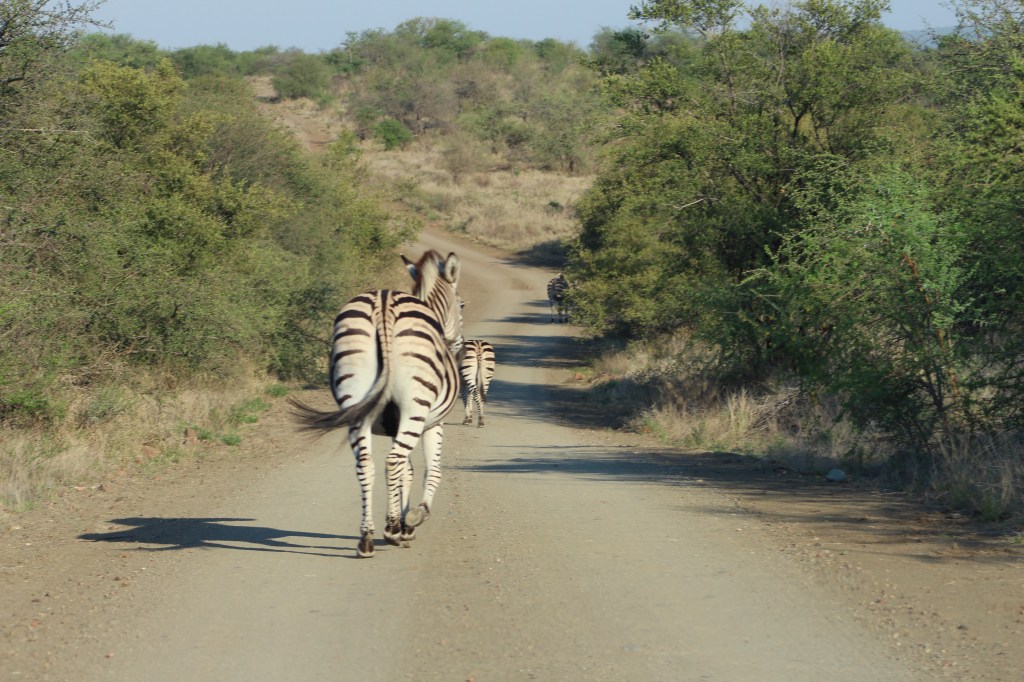
Day 12 2 November. Another early start – on the road by 6.15. This time we went north towards Letaba again on the S44. There was not much game to be seen, except for a few zebras heading down the road in procession and then at last, some impala babies.
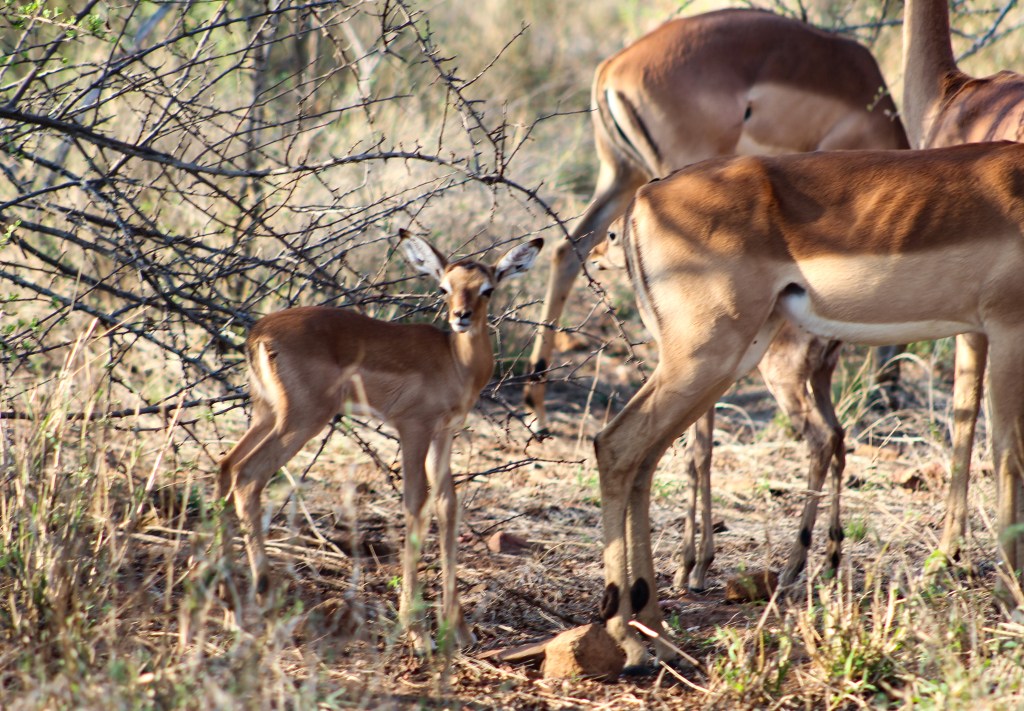
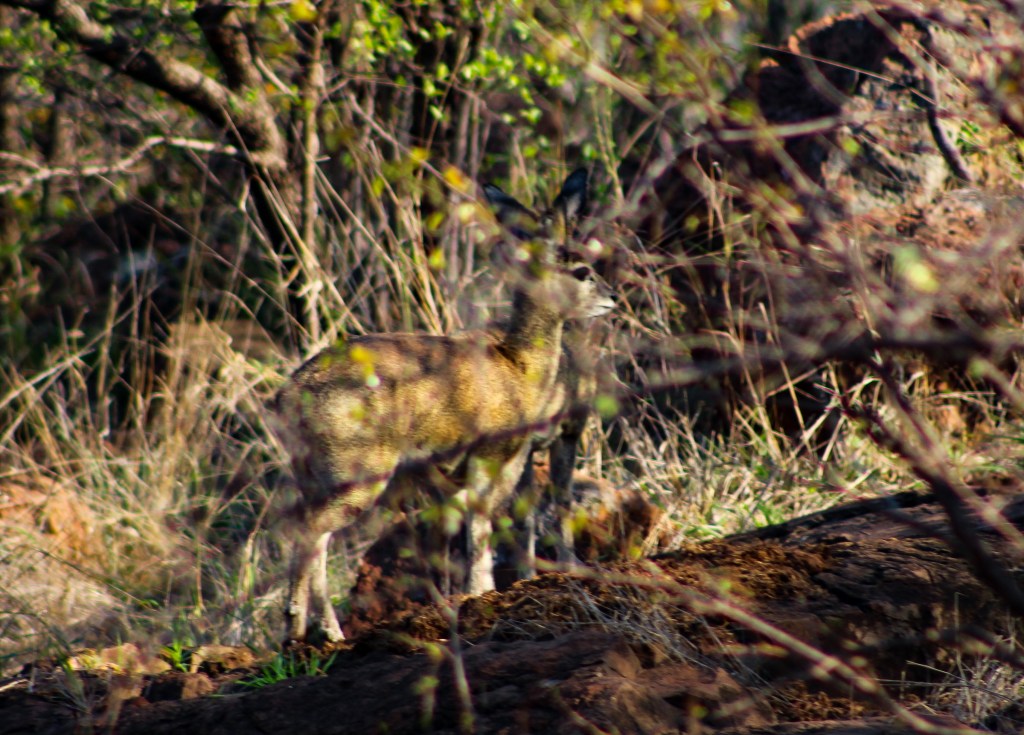
We had been on the lookout for little ones, although it was still quite early in the lambing season. Also saw a new species – a little group of klipspringers dashed across the road in front of us and disappeared up into the rocks on the other side of the road, showing how well camouflaged they are.
Our immediate destination was the Day Visitors picnic site outside Letaba camp. We were the only people there when we arrived so had our pick of places to set up our little gas stove for our traditional coffee and condensed milk, shared only with the hornbills, doves and Natal francolin – also crested barbets in the trees and a Kurrichane thrush grubbing in the undergrowth.
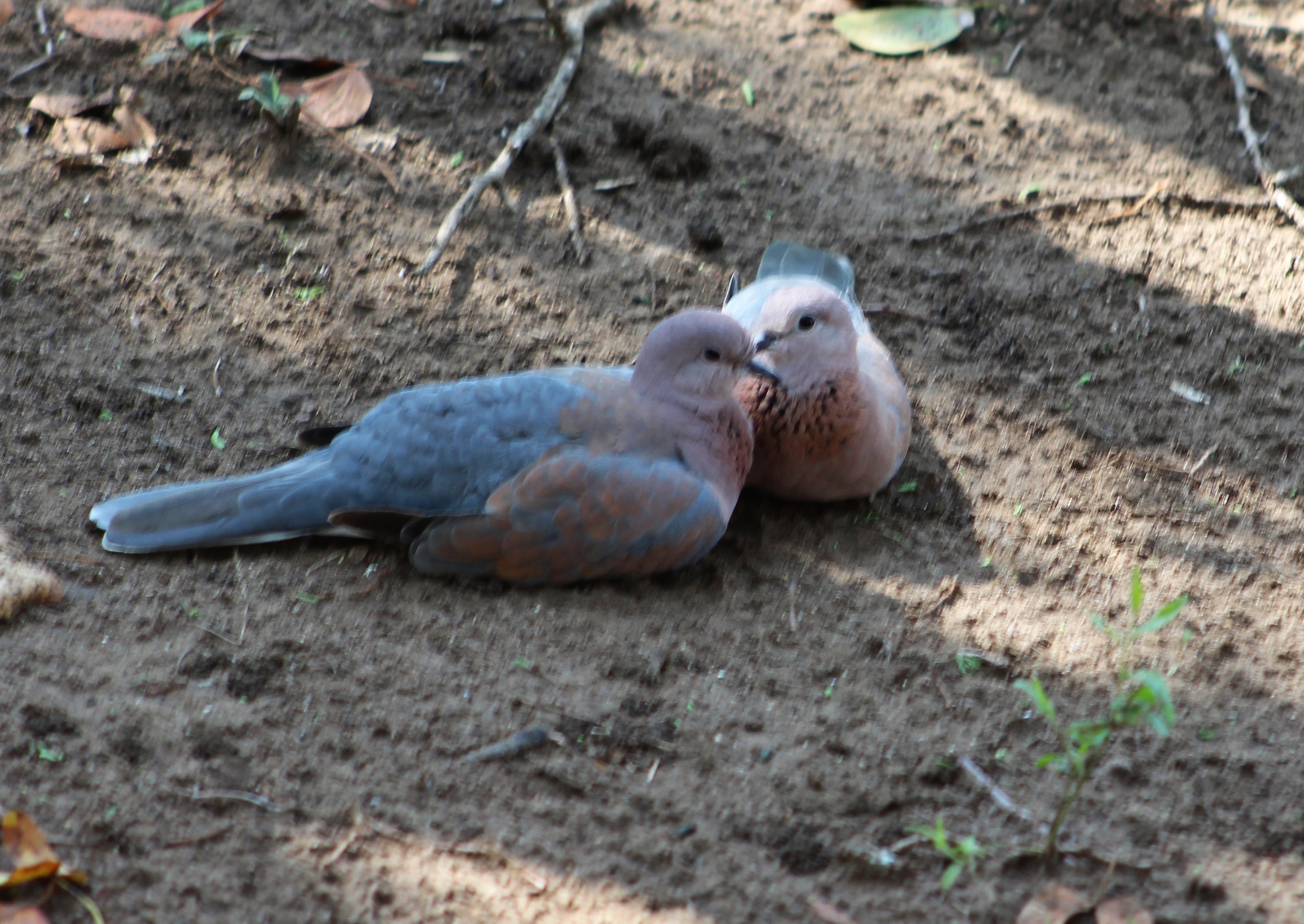
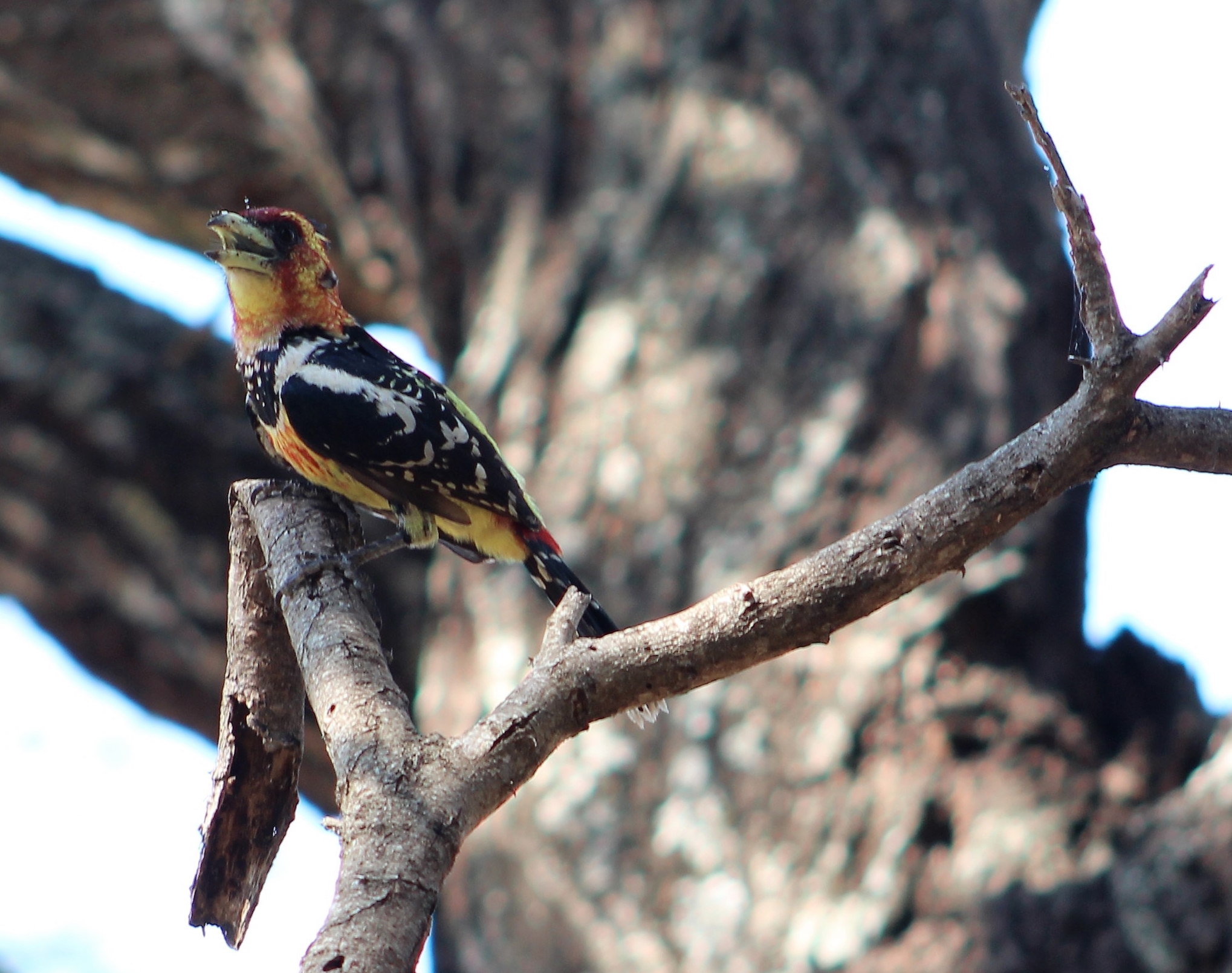
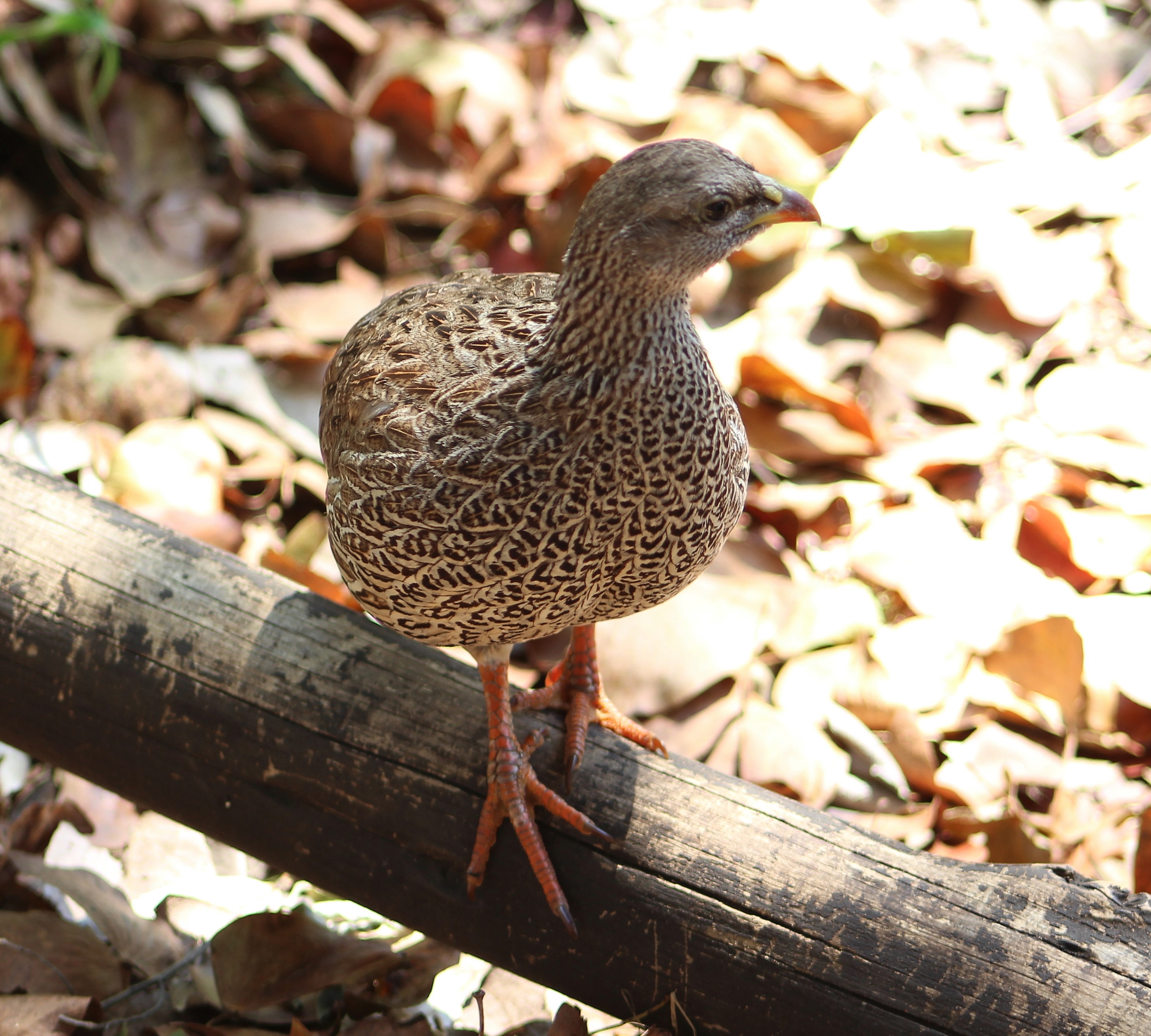
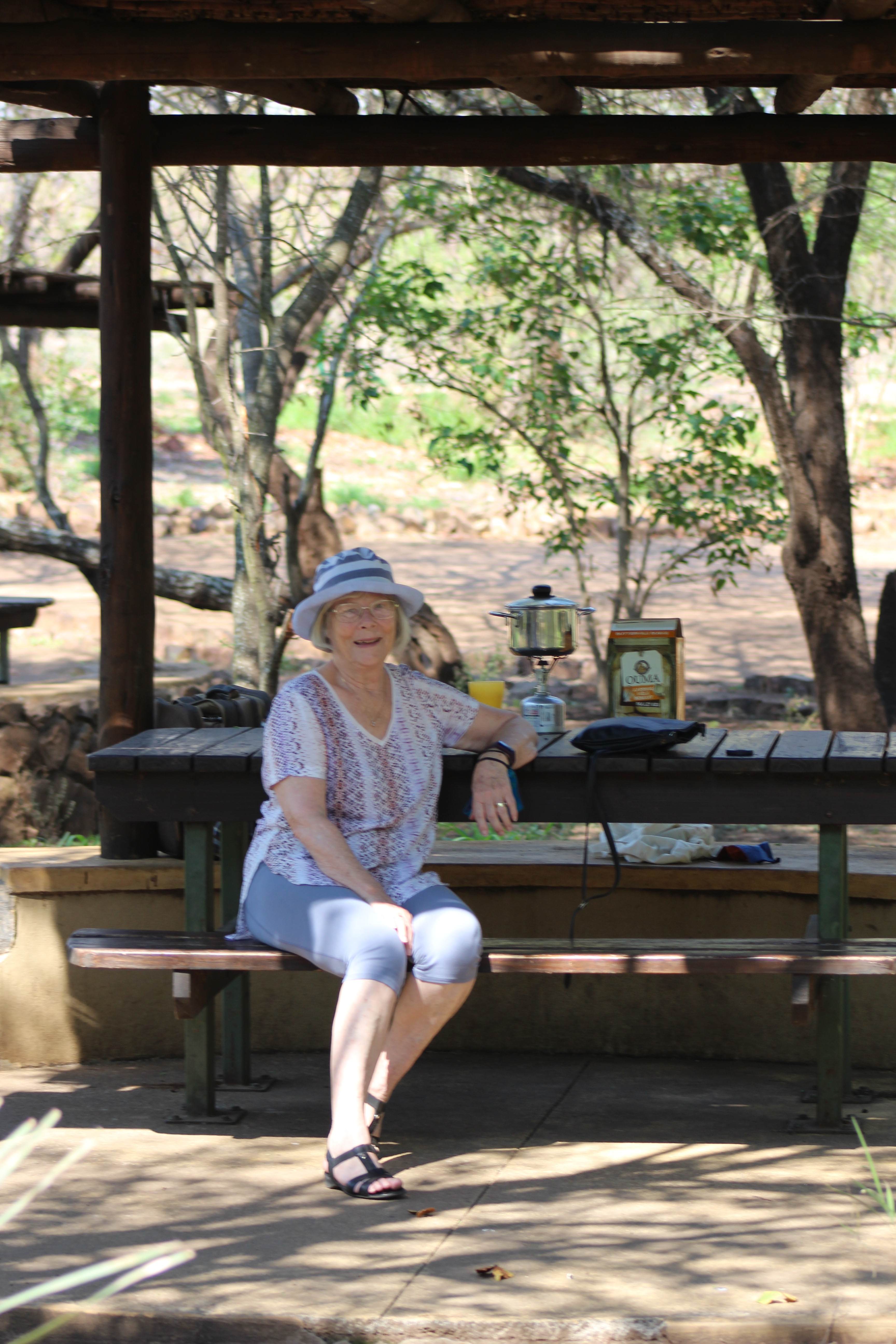
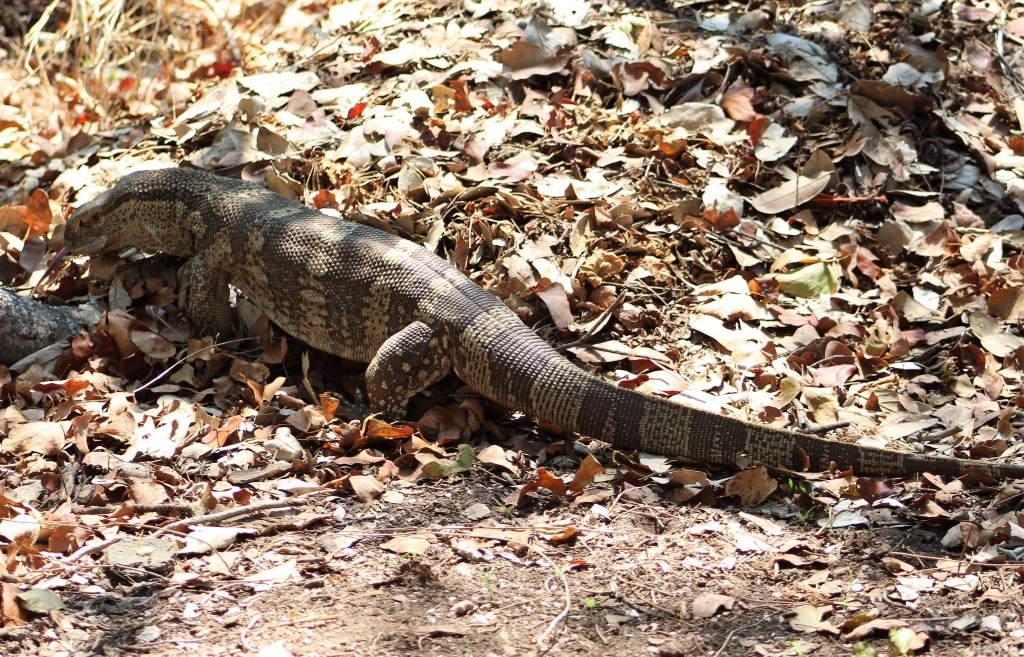
We really enjoyed relaxing there in the shade and watching the birds come and go. As we got ready to leave, we saw an enormous Rock Monitor slowly making its way through the leaves and fallen branches to the side of the picnic area. We drove back to Olifants along the tar H1-5 but hardly saw anything.
Back in camp for breakfast and then spent the rest of the morning downloading photos while Kev did some work. In the late afternoon, just before the storm broke, we went swimming in the pool near Reception. It was good to cool off after a hot day.
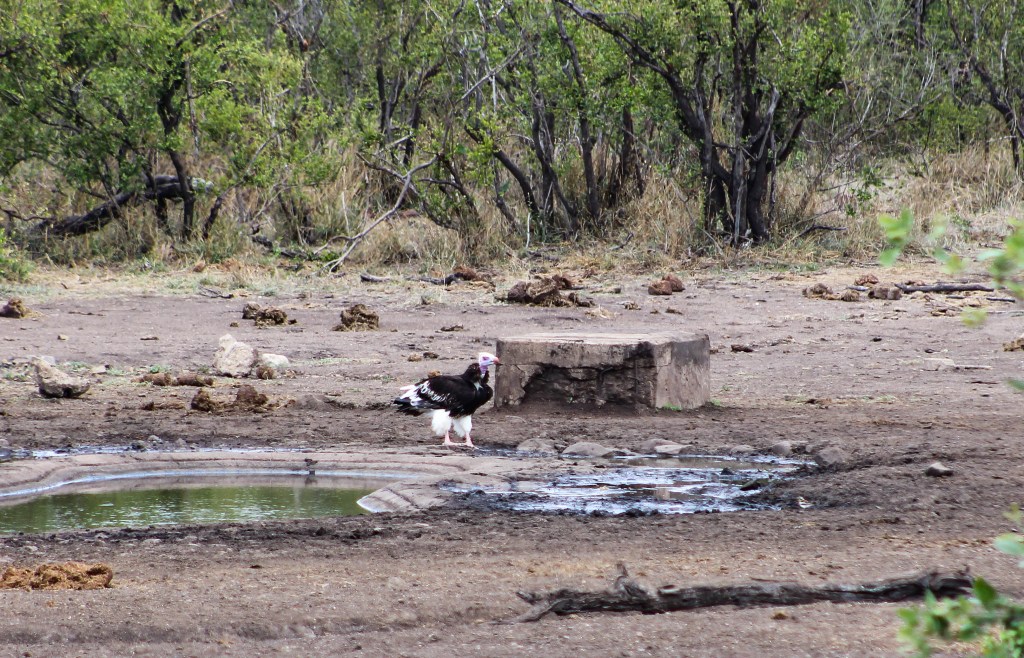
Day 13 3 November. We had a lazy morning and eventually left late and drove down the main road towards Satara. As it was already hot, we didn’t see much activity although the usual species (elephant, impala, zebra, wildebeest, kudu, warthog) were around, mostly standing in the shade of trees. At one of the Ngotso waterholes we saw an unusual vulture, which we identified as a White-headed vulture. These are quite rare in Kruger, with only about 500 breeding pairs in the whole of South Africa. One of the places where they are known to occur is in broadleaf woodland north and west of Satara so we were in the right place at the right time. They are also known to nest in baobabs.
A bit further on, a group of male kudu with particularly large horns were feeding close to the road. Still further on, this time in an open grassy area we spotted a secretary bird. Unfortunately, it did not put its quills up for us but we could see them laid neatly along the neck.
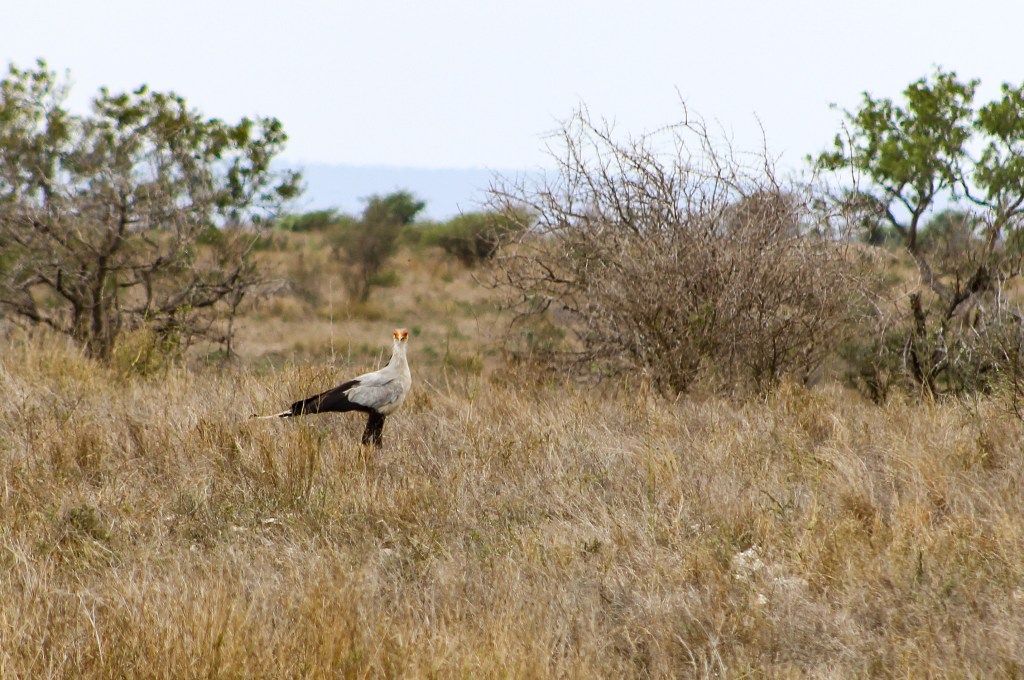
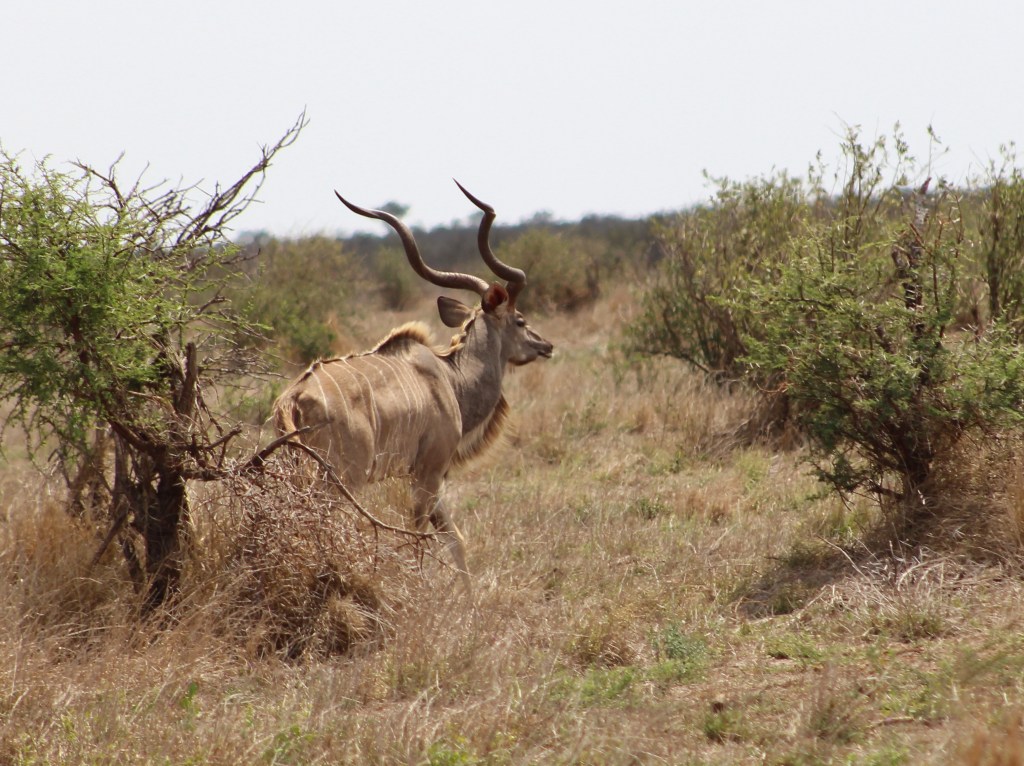
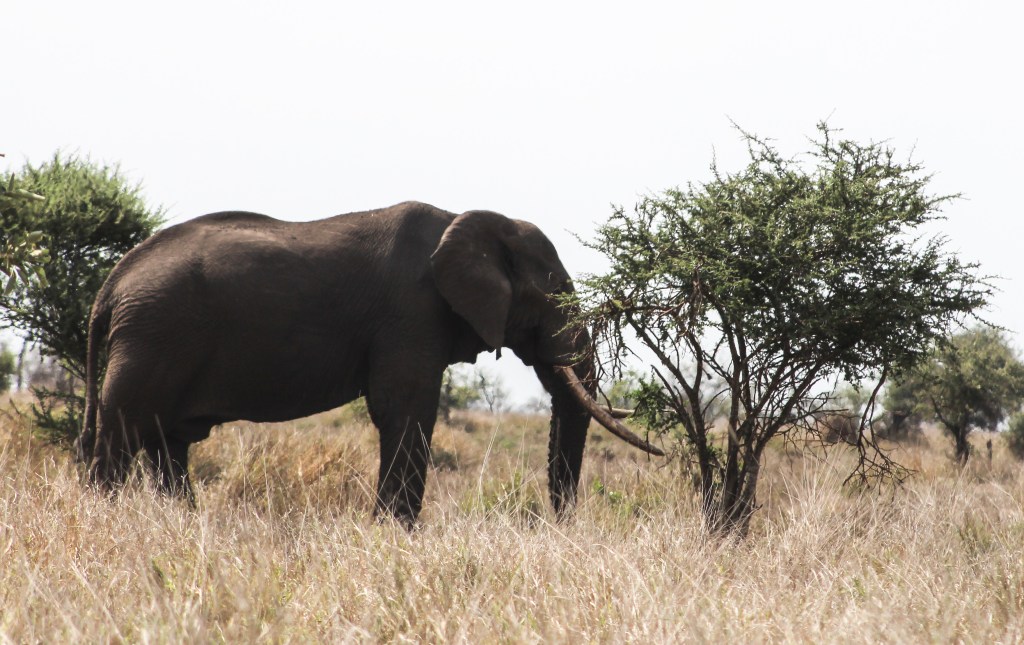
We drove to within a few kilometres of Satara before deciding to turn back and take the gravel road (S90) back towards Balule. This road, which was the original Main north-south road in Kruger, passes through knobthrorn savanna grasslands and follows the Bangu river drainage area. There were very few other cars on the road, other than a broken-down Parks vehicle waiting for help, so it seemed very remote and isolated with wide open vistas and the Lebombo Mountains off to the east. There was not much game to see but we did notice quite a number of large bull elephants, usually on their own, with large tusks.
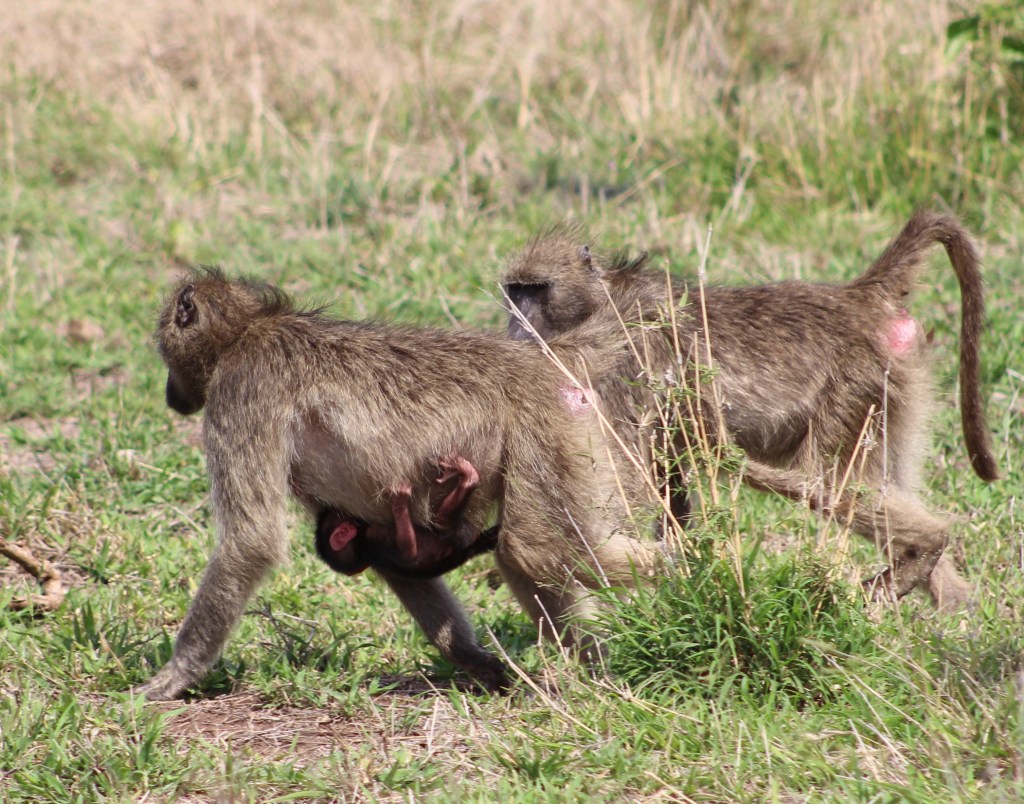
Close to the Guzani waterhole we saw a troop of baboons with a tiny little baby being carried underneath its mother’s chest.
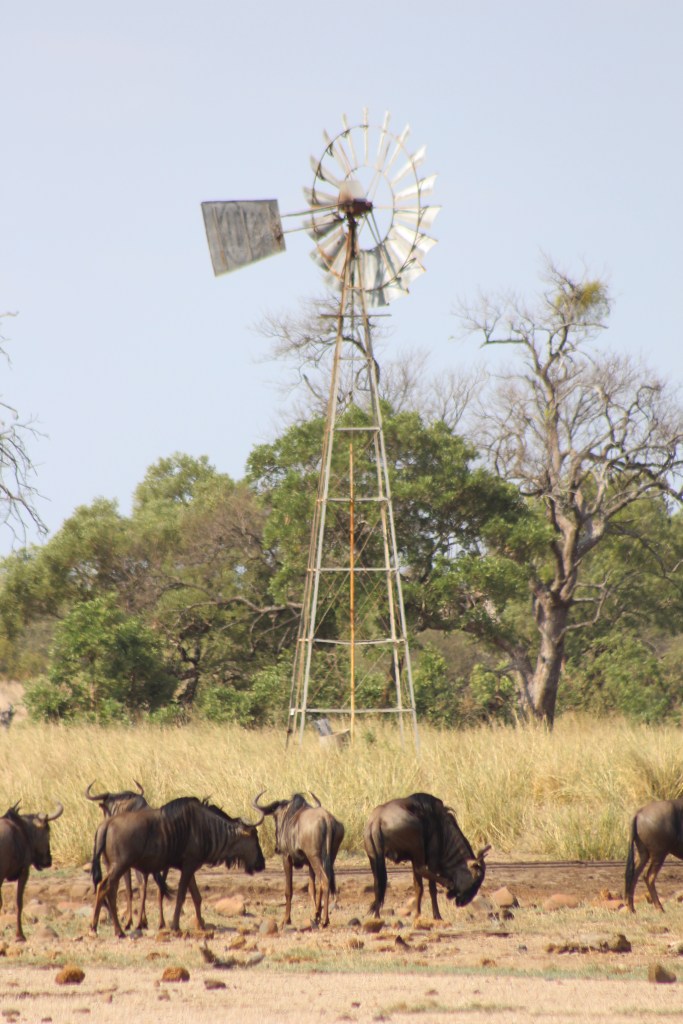
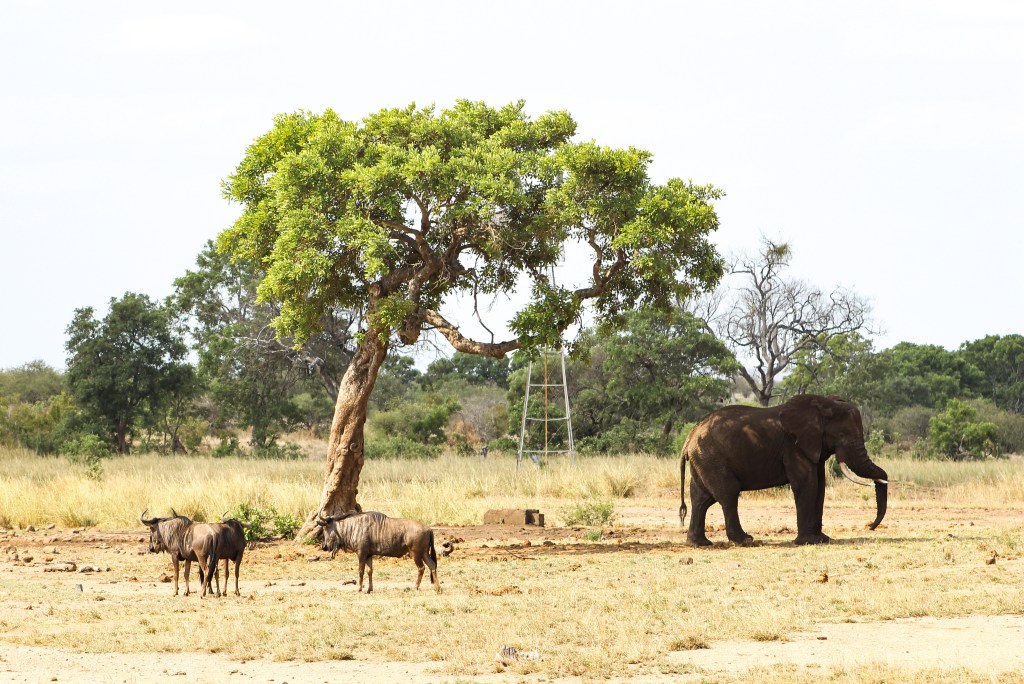
Further on, at the Bangu waterhole we stopped to watch a peaceful scene of wildebeest making their way down to drink at the waterhole while a large lone bull elephant stood peacefully in the shade of the only big tree close to the waterhole, resting his trunk on one of his tusks.
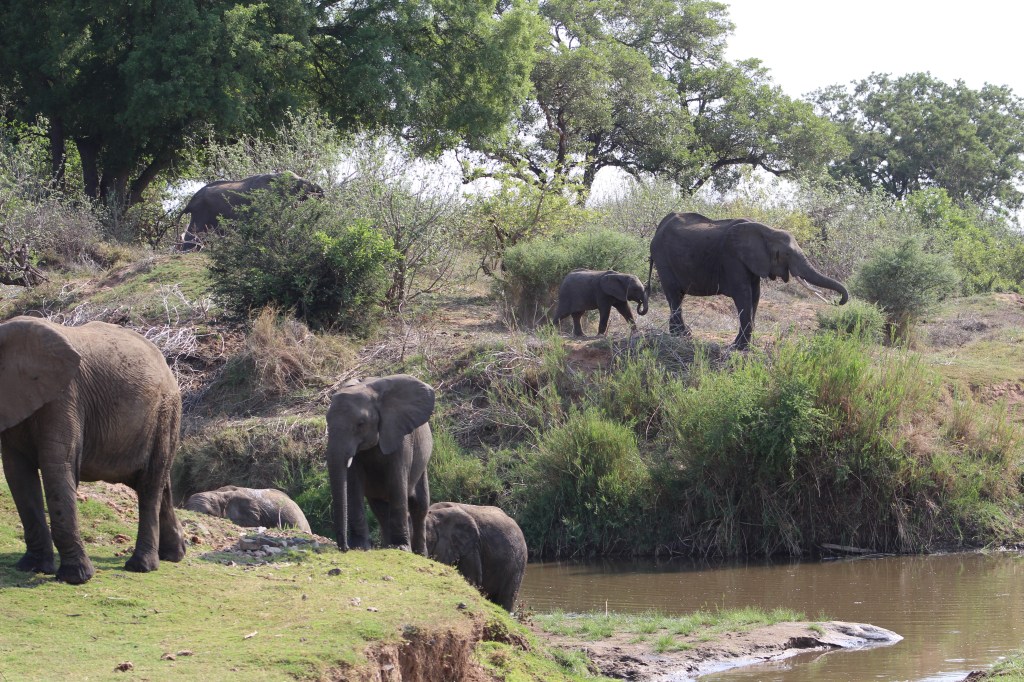
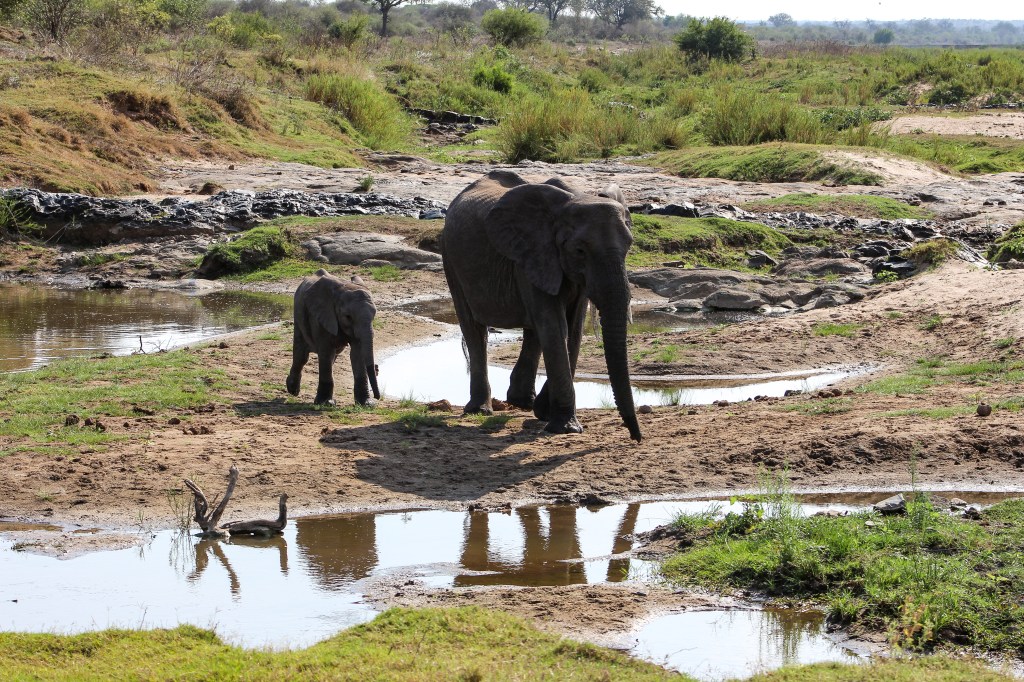
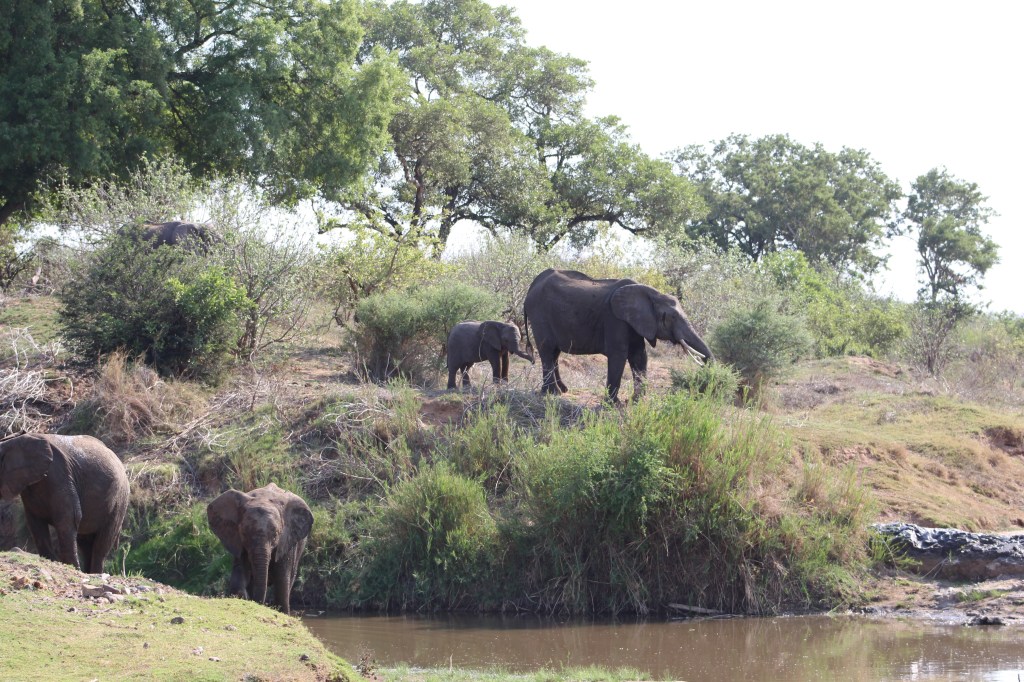
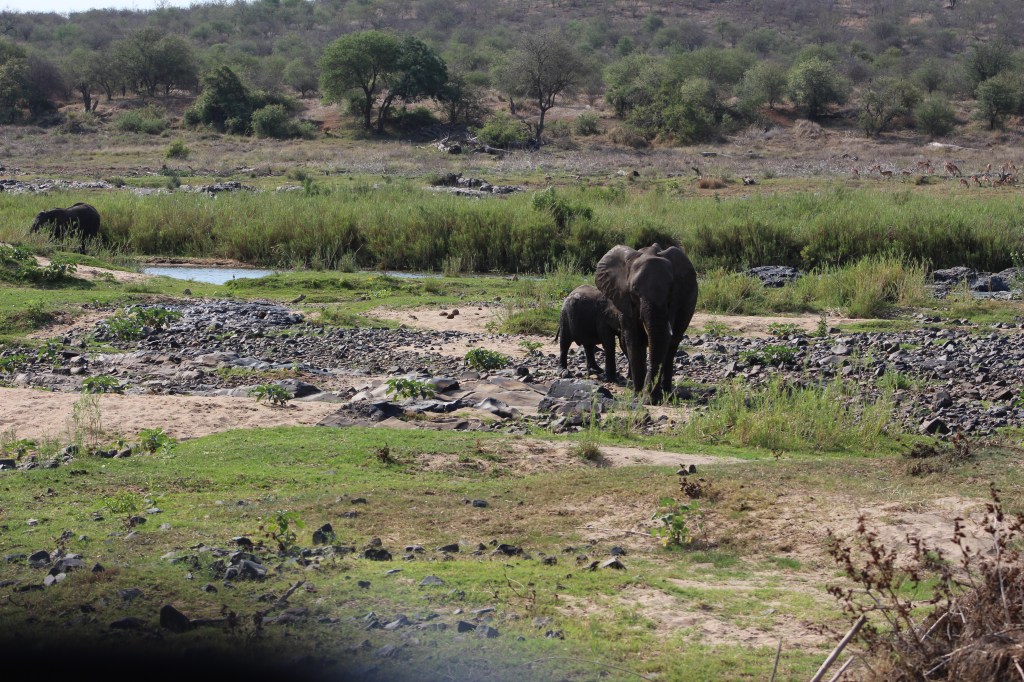
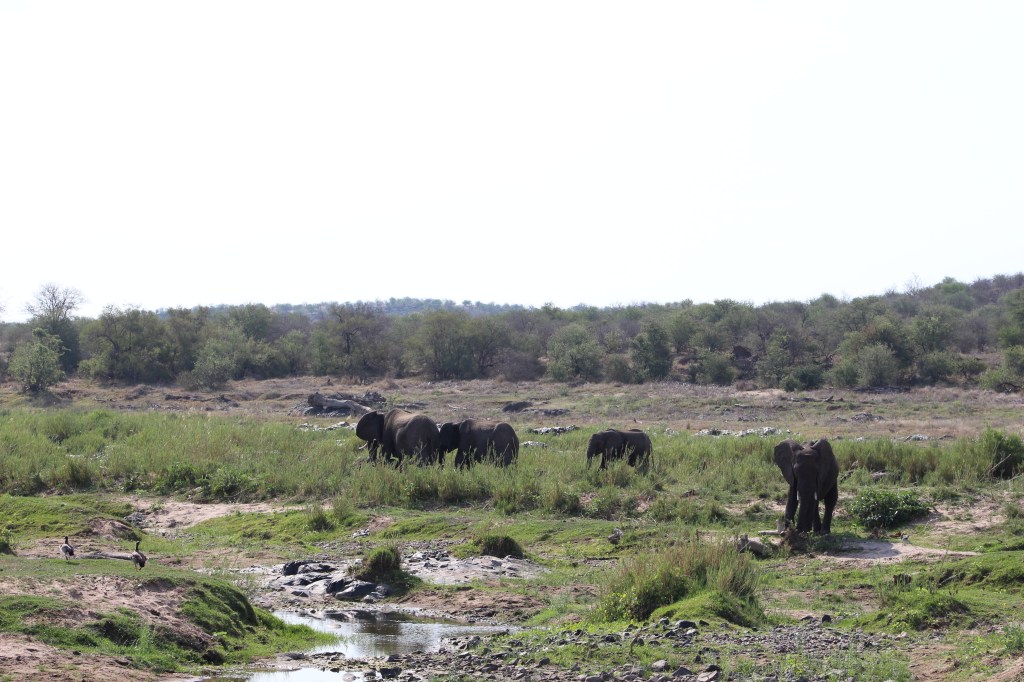
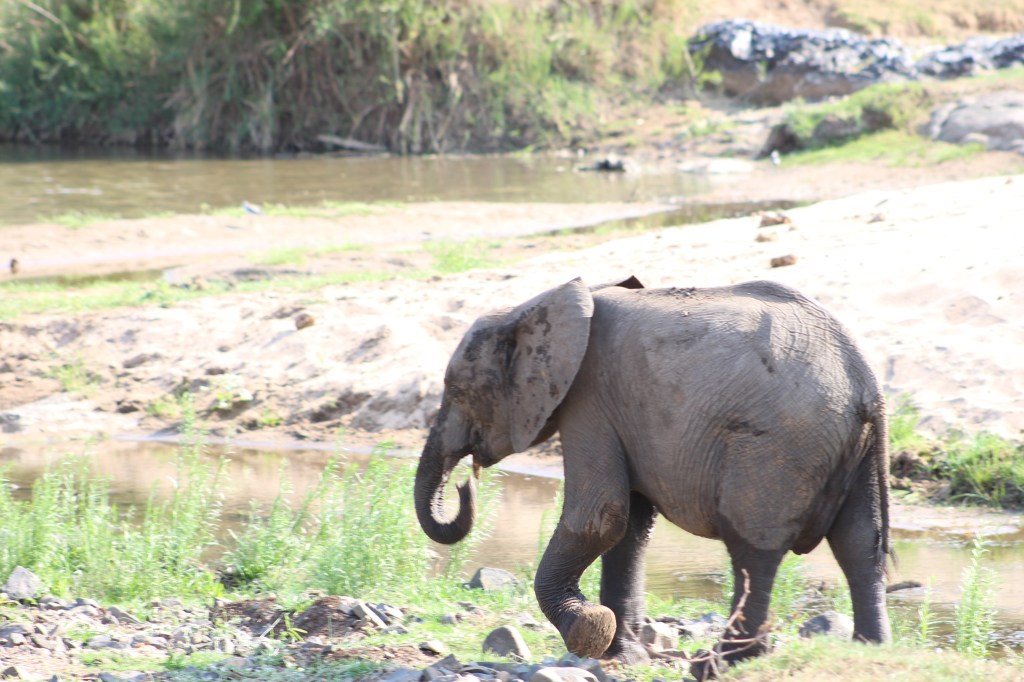
We drove down towards the Balule camp as we were curious to see what it looked like but unless you are resident there, you are not allowed to go in – it looked green and well-shaded by large trees but they prevented us from seeing much of the camp itself. We headed towards the causeway over the Olifants river and could see several cars parked in the alcoves of the bridge designed for cars passing each other so we hoped that there was game in the riverbed that was causing interest. We were not disappointed. To the left of the causeway there were two or three separate groups of elephants either drinking or slowly making their way over the uneven terrain towards the banks while on the right was a very large and active troop of baboons ranging from big adult males to tiny babies being carried by their mothers. We spent quite some time watching all this activity, photographing and videoing the beautiful scene.
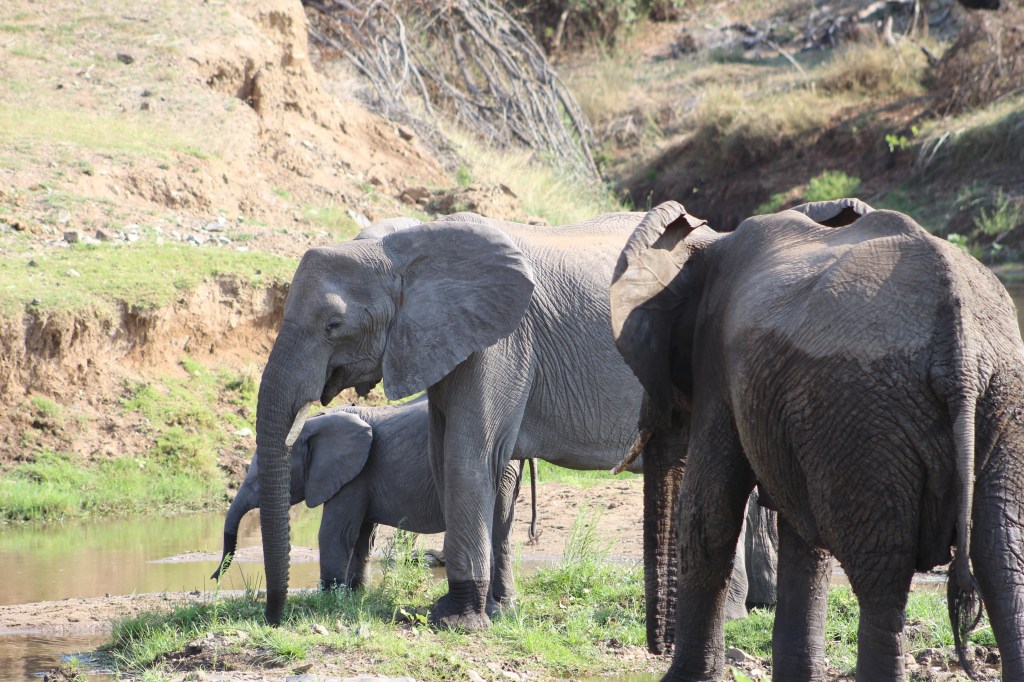
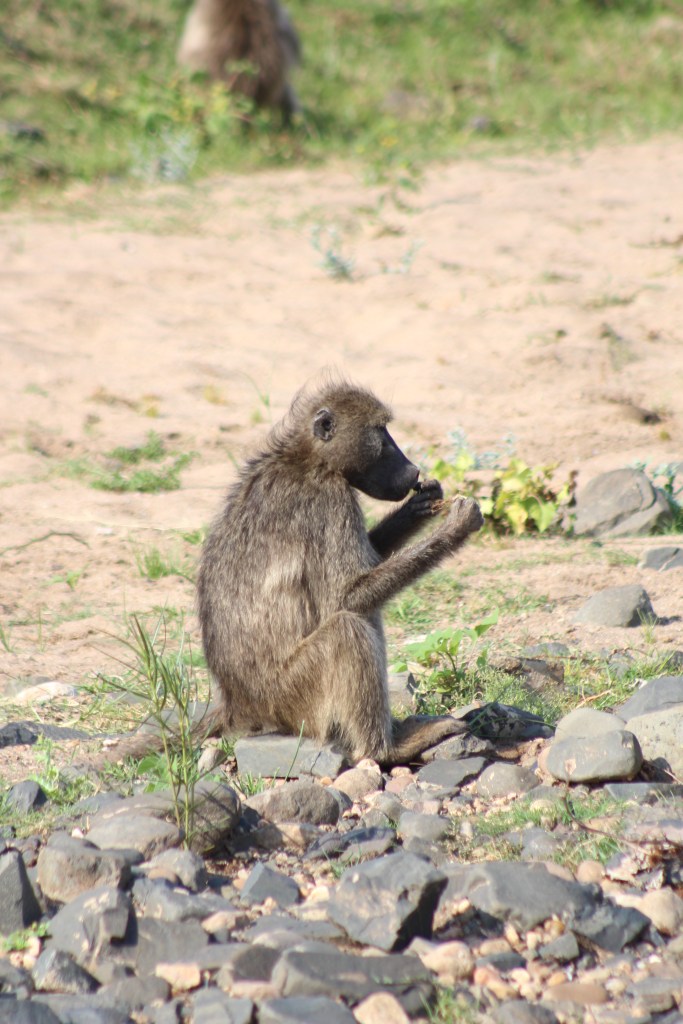
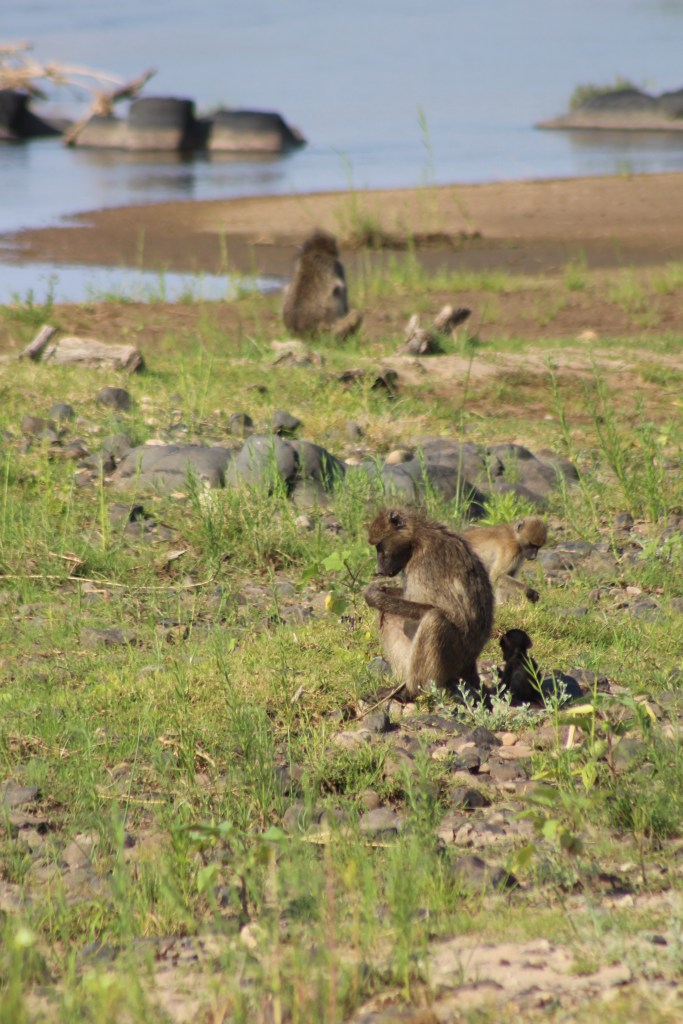
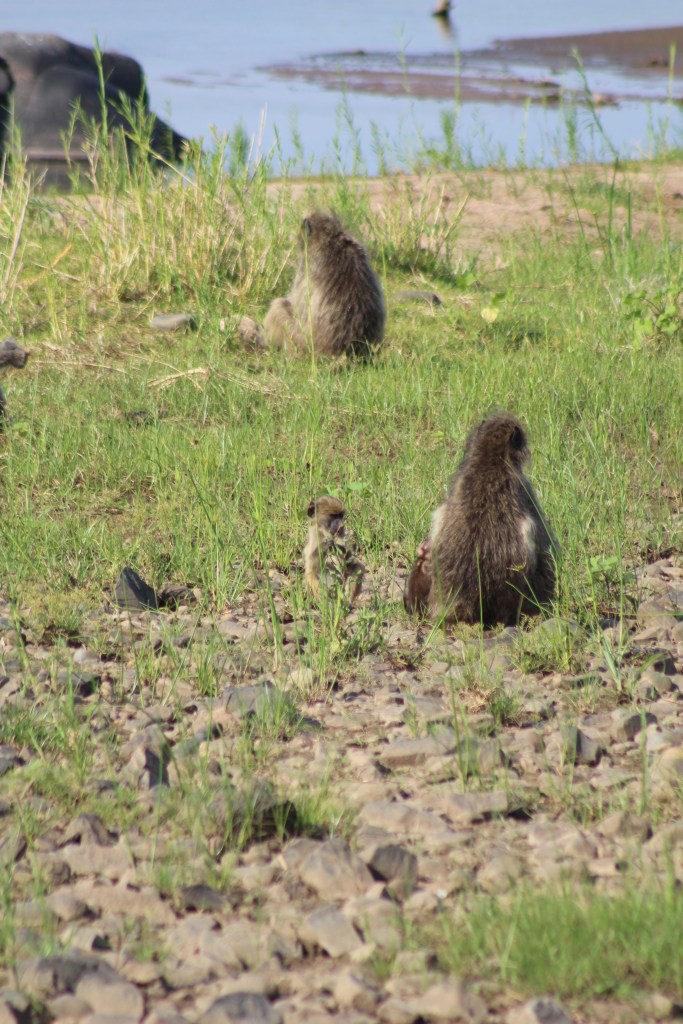
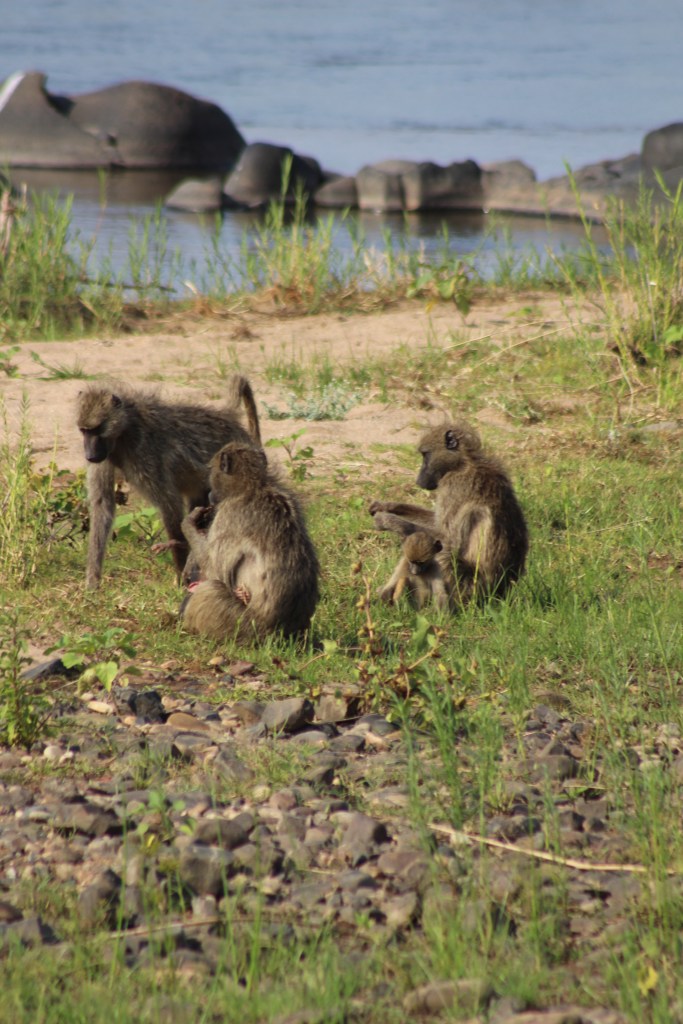
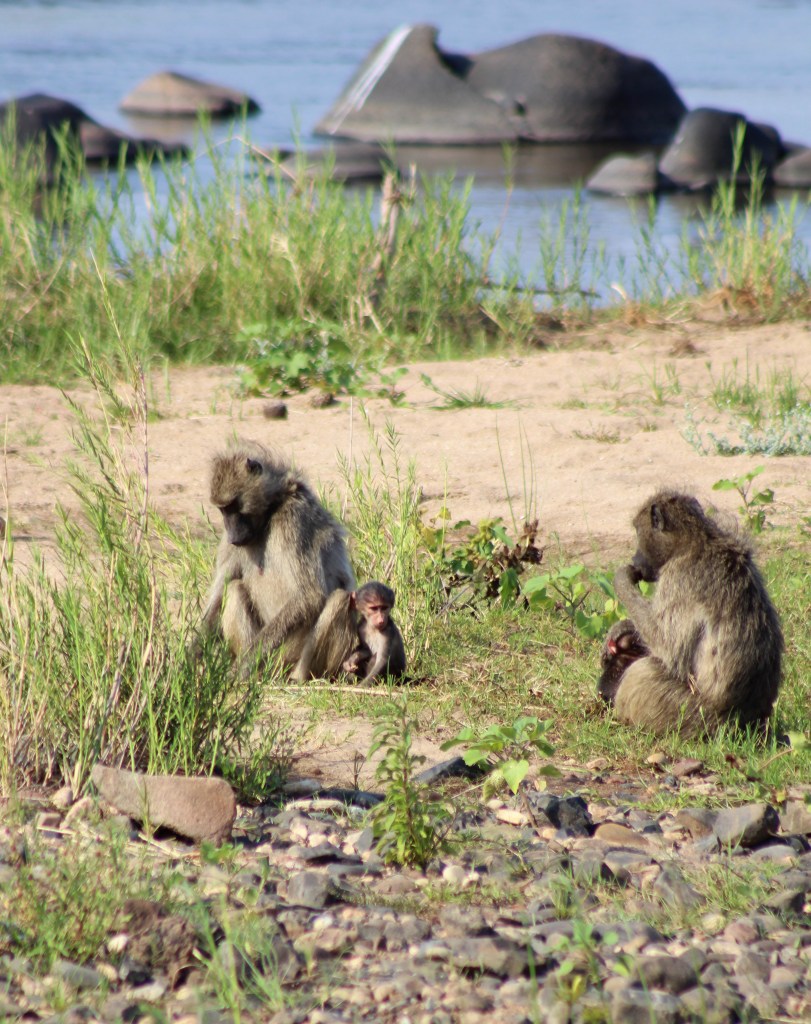
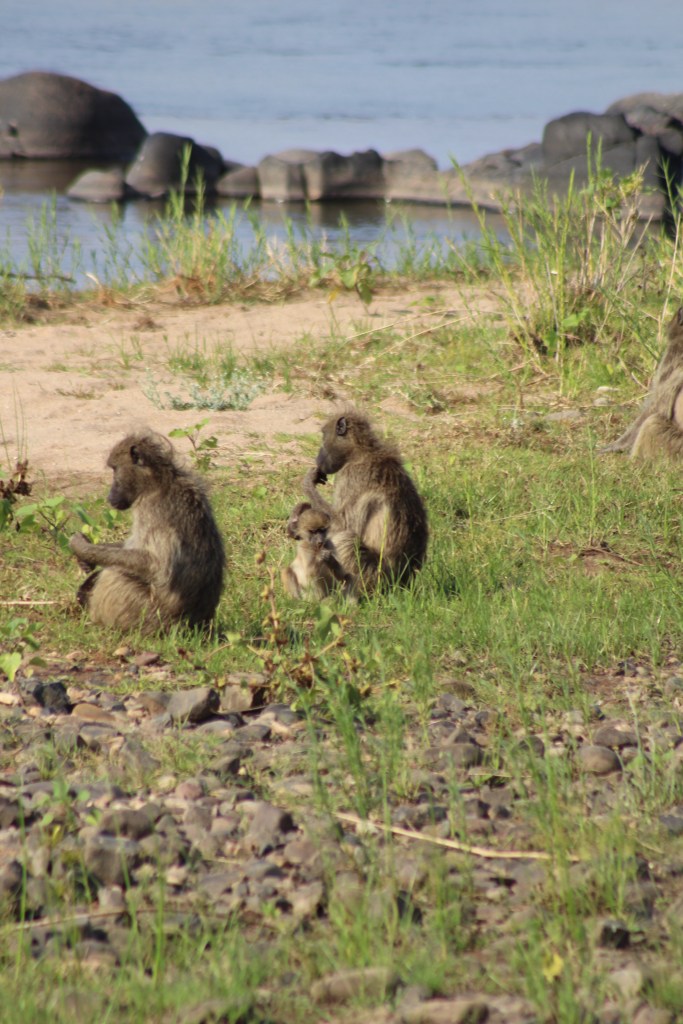
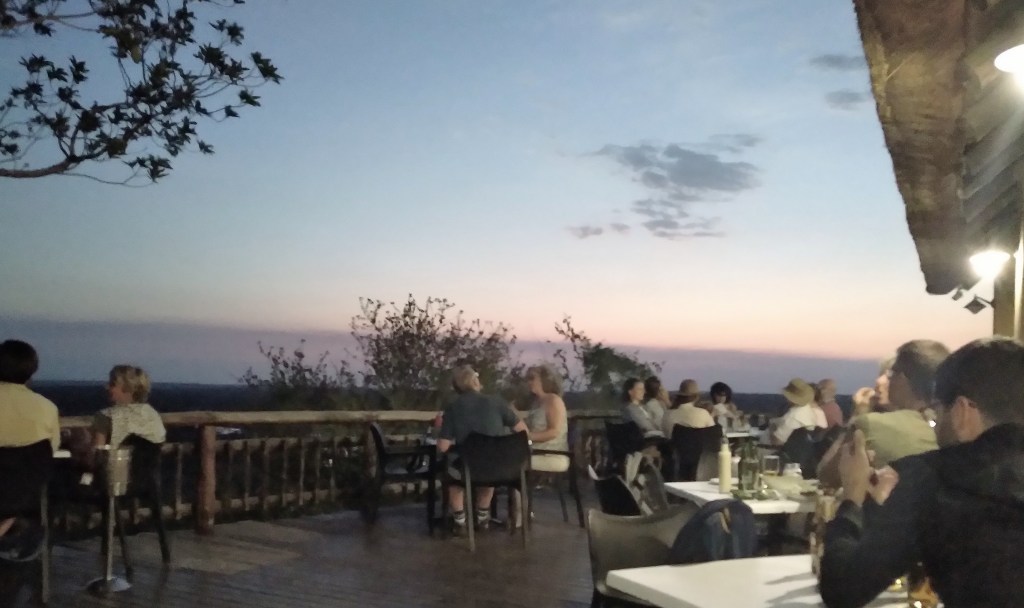
We got back to camp for a very late lunch and then, as it was our last evening at Olifants, we went to the restaurant for dinner, sitting out on the terrace as the sun went down. It was interesting to hear different languages, French, German and Dutch, being spoken and we realised that, at last, some tourists were able to come back to South Africa. We spoke to our waitress about it and she told us that, although staff had not been laid off, they had had fewer shifts as they needed to be shared among all the staff. Her hope was that by December they would be almost back to full capacity. Unfortunately, we now know this did not happen and the Omicron variant of Covid-19 led to widespread travel bans against Southern African countries that devastated the tourism industry here yet again.
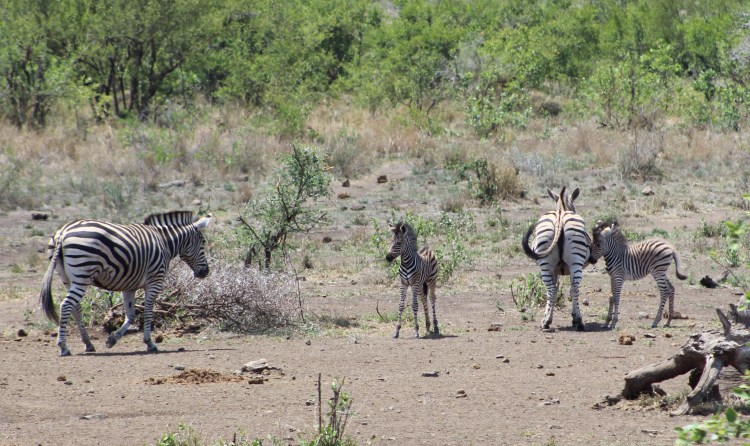
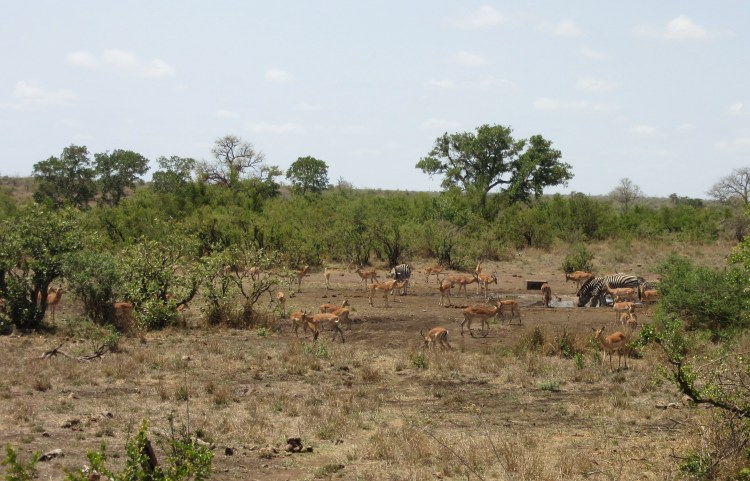
Day 14 4 November. On to Skukuza, our last Kruger camp. We packed up and left Olifants around 9.30, sad to be leaving our beautiful view but looking forward to the different sights that awaited us in the south of the Park, where the vegetation is denser and the big rivers meander through the landscape. The H1-4 part of the main north-south road is always a good area for concentrations of game and we enjoyed this last slow drive between Olifants and Satara as we saw plenty of zebra, wildebeest, impala, giraffe, kudu, warthog and some elephant. At one of the waterholes, we saw a very young zebra, another sign that spring had arrived and maybe we would see more babies before we left the Park. A big herd of impala were also at the same waterhole, enjoying a drink on this day that promised to get very warm.
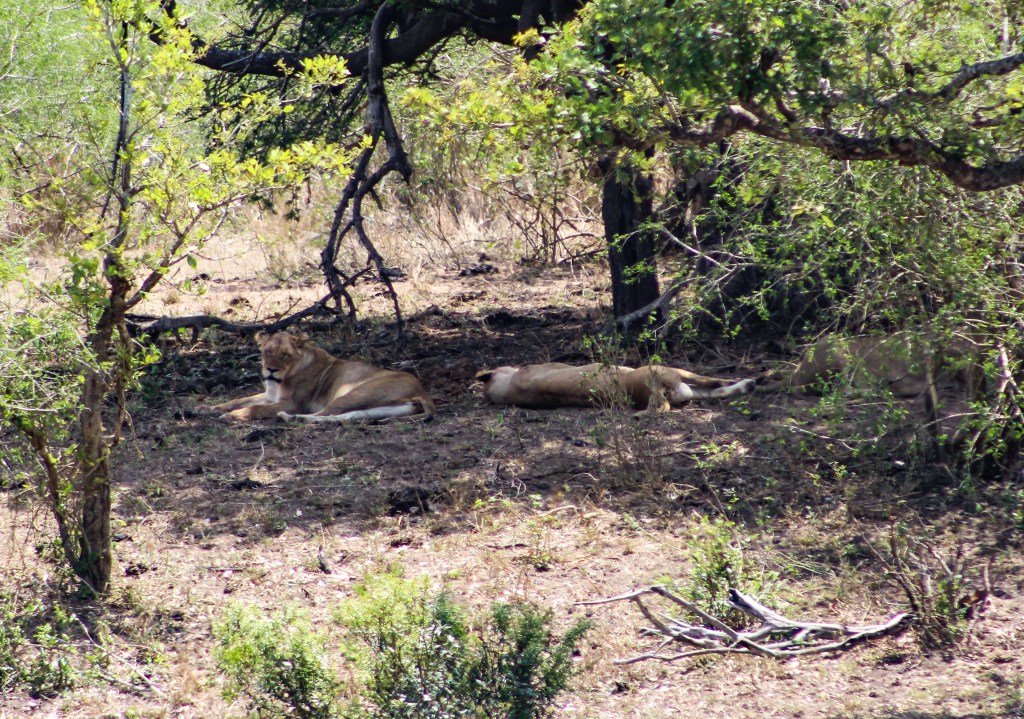
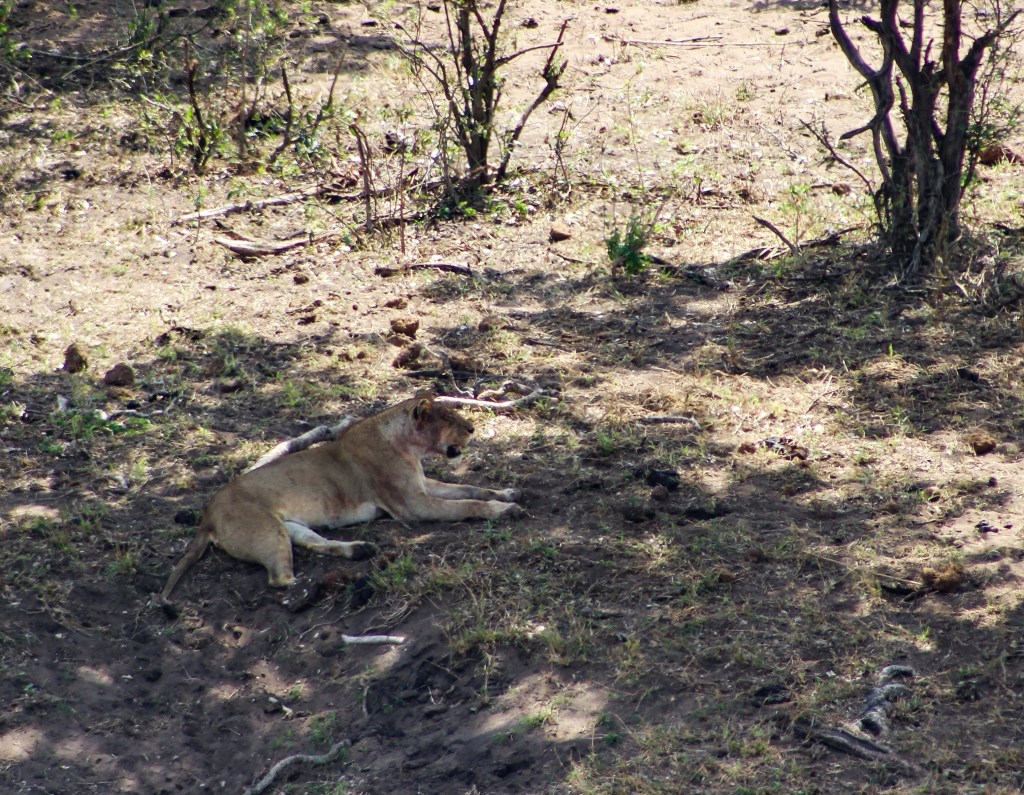
We pulled into Satara for a coffee break before continuing on towards Tshokwane now on the H1-3. Just before reaching this picnic site, we noticed a car had stopped in a little loop overlooking a small river so we thought we would have a look too. The car pulled out before we parked so we were not hopeful that there would be anything interesting to see but we were wrong! There on the other side of a little river were at least four lionesses. Two (and maybe others that we couldn’t see) were in the shade at the top of the slope and two others were a bit further down. They barely moved all the time we watched them, unsurprisingly as the weather was very hot and snoozing in the shade is what lions do best during the day.
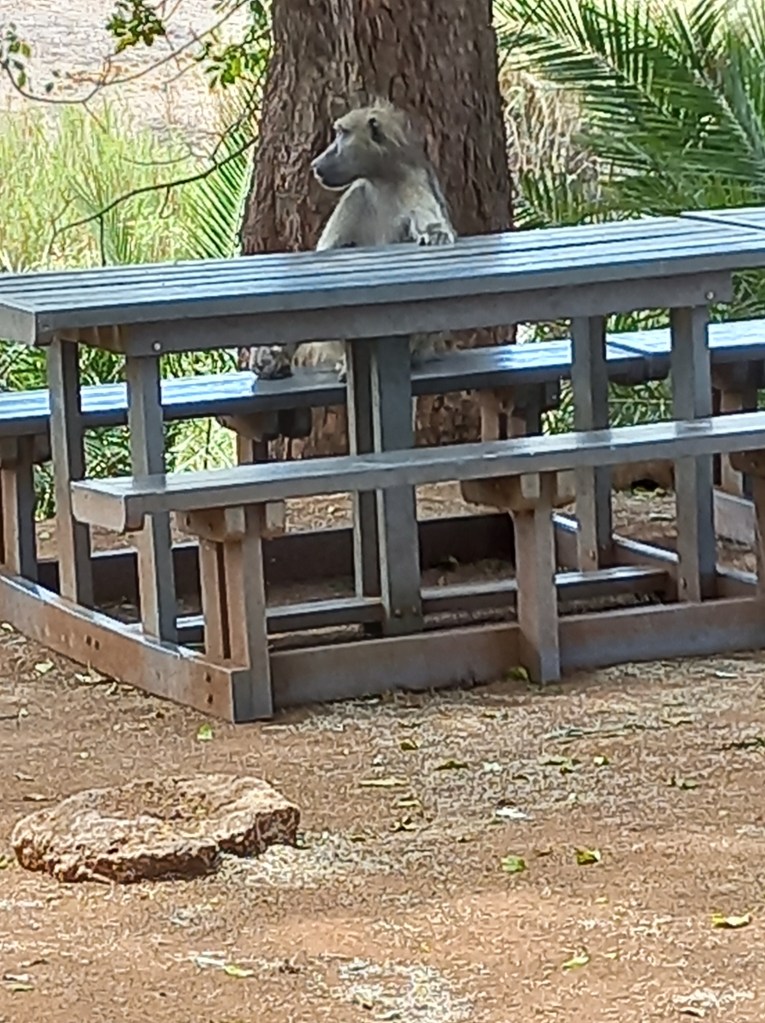
We stopped at Tshokwane to have our lunch – sandwiches prepared before we left Olifants. It was an interesting experience. We had barely sat down when a troop of baboons started rushing around, jumping on the roofs and trying to intimidate people eating their lunch. One baboon sat quietly at one of the beaches for a while, looking as if it was waiting to be served.
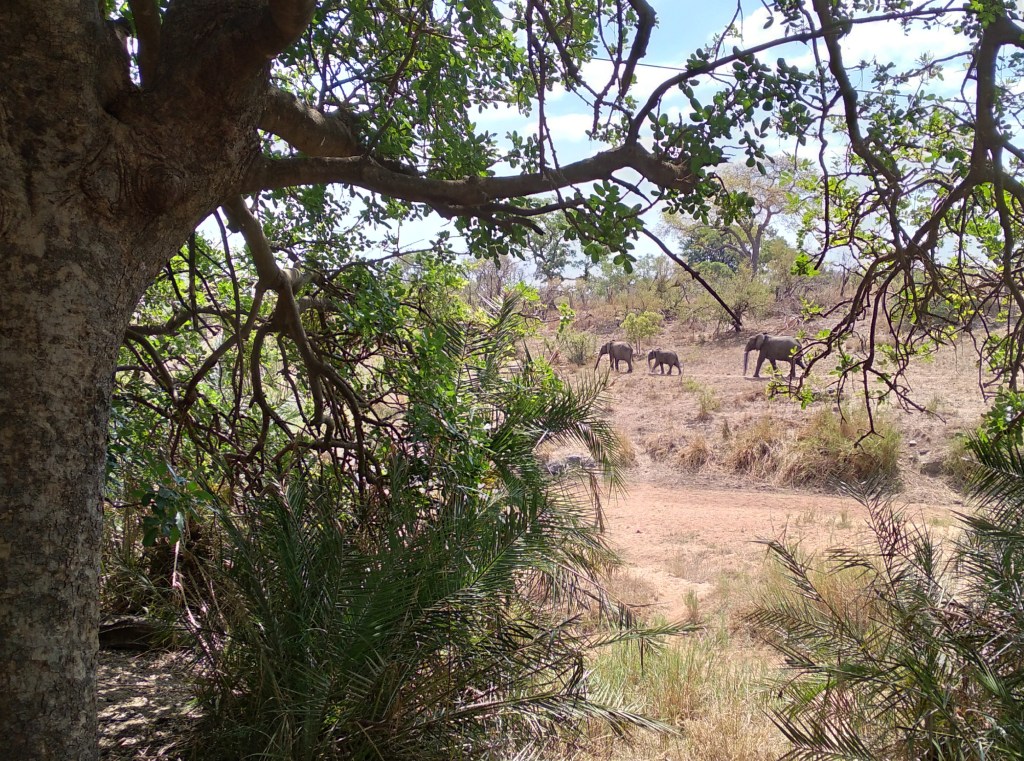
We had to keep a close eye on them while we had our sandwiches, but that did not stop the hornbills from landing on the table and trying to get a bite to eat. Even though we were rather preoccupied with protecting our food from various marauders, we still had time to notice a little family of elephant drifting by on the other side of the dry riverbed, a young one, sandwiched between two adults.
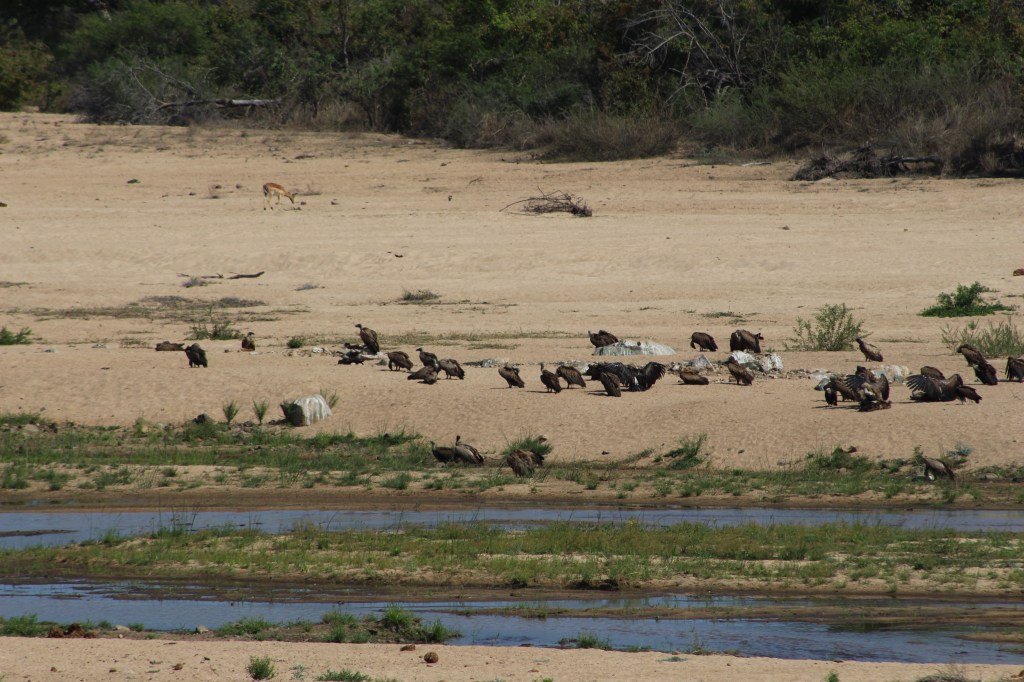
After lunch we continued on towards Skukuza on the H1-2, eventually following the course of the Sand River, a tributary of the Sabie River. At one point in the wide, sandy riverbed there were a large number of vultures, their dark feathers making the guano covered stones shine white in the sun.
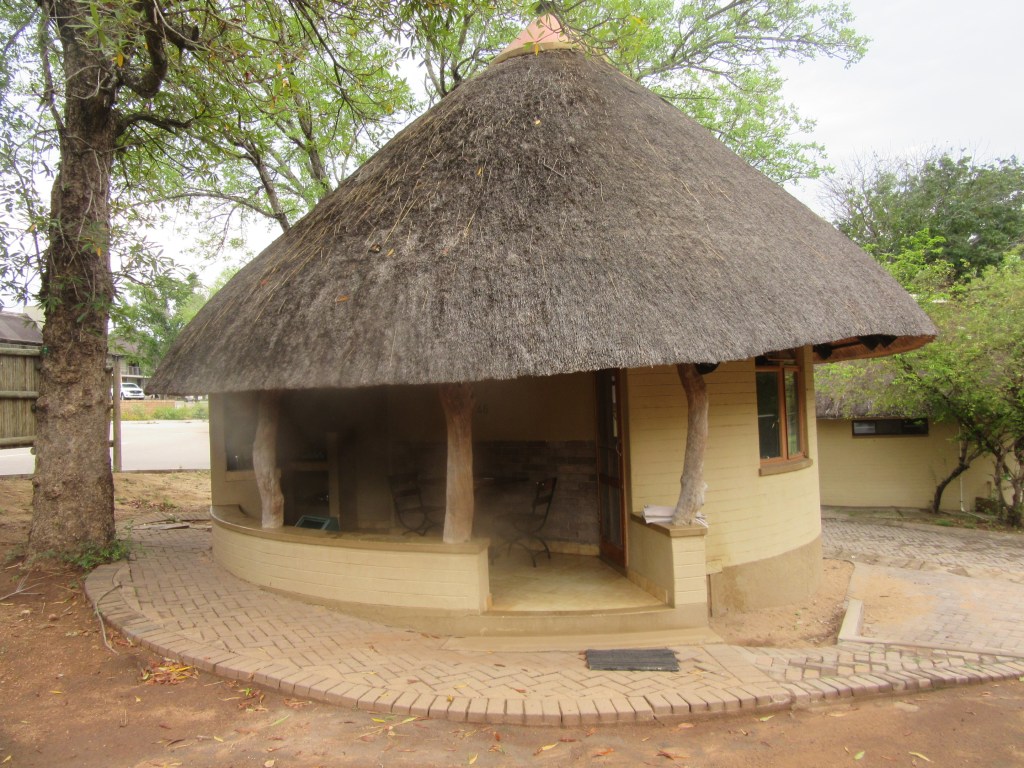
A little further on, a large crocodile was trying to camouflage itself underneath some branches brought down the river in the recent rains. We got to the camp around mid-afternoon and found our small bungalow at the end of a road near the newly built hotel. It was the smallest of the accommodations we had had and was a little run-down compared with the others. Again the fridge was inside the bungalow, for which in a few days’ time, we were very grateful. We unpacked quickly and headed out again for a late afternoon drive along the Sabie River.
We drove out of camp and turned left to take the road that encircles the camp area and where it meets the H4-1, we turned right to follow the Sabie River. We hadn’t gone very far before we came across a large number of cars all jostling for position on the main road but also several others on a parallel gravel road. We decided to turn back and take the loop we had just passed that would take us along the parallel road. It was a good move as we had a wonderful sighting of a very large pack of wild dogs, playing around in an open but shady area under some trees and getting ready to go out hunting as the day cooled down.
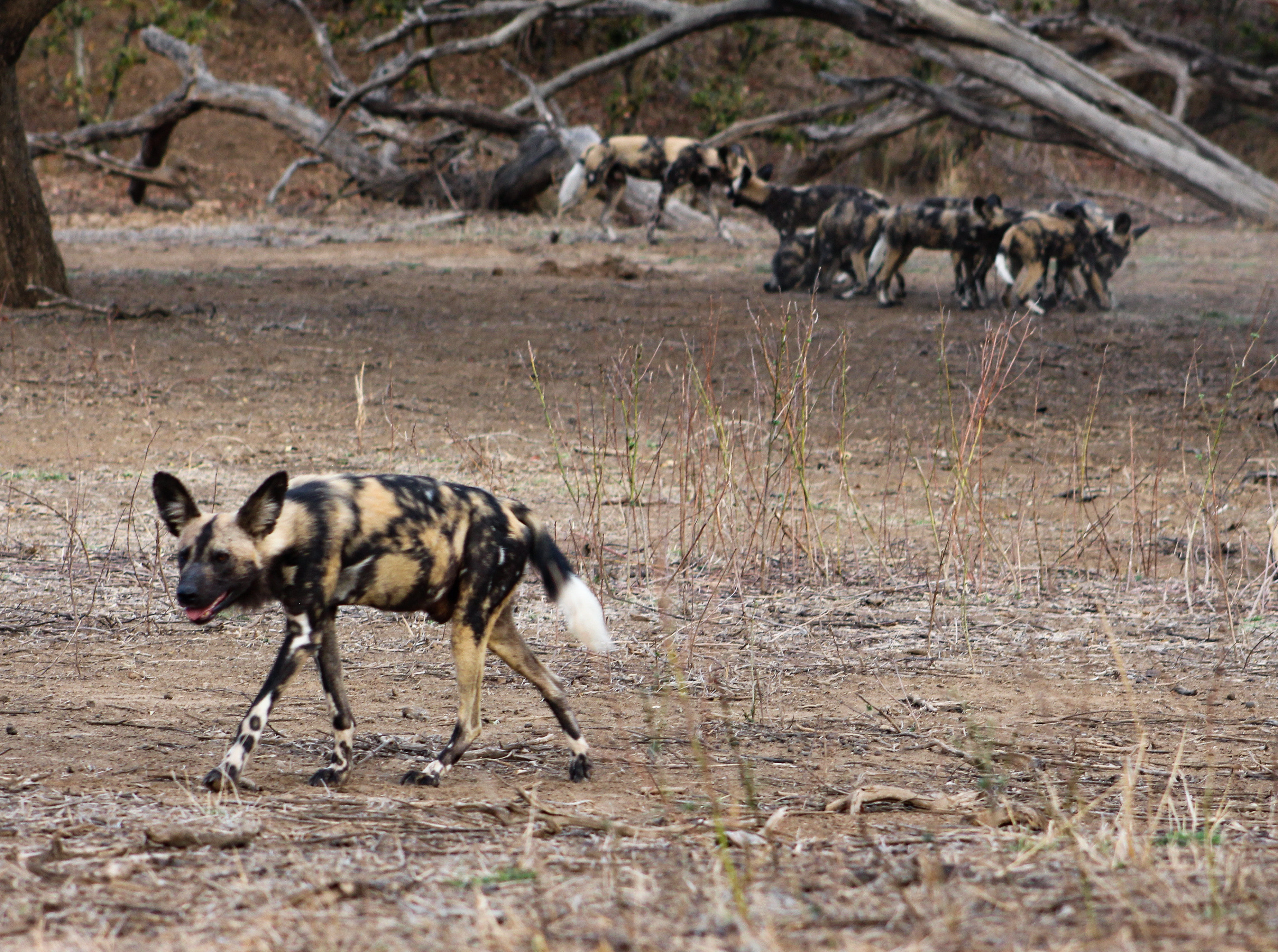
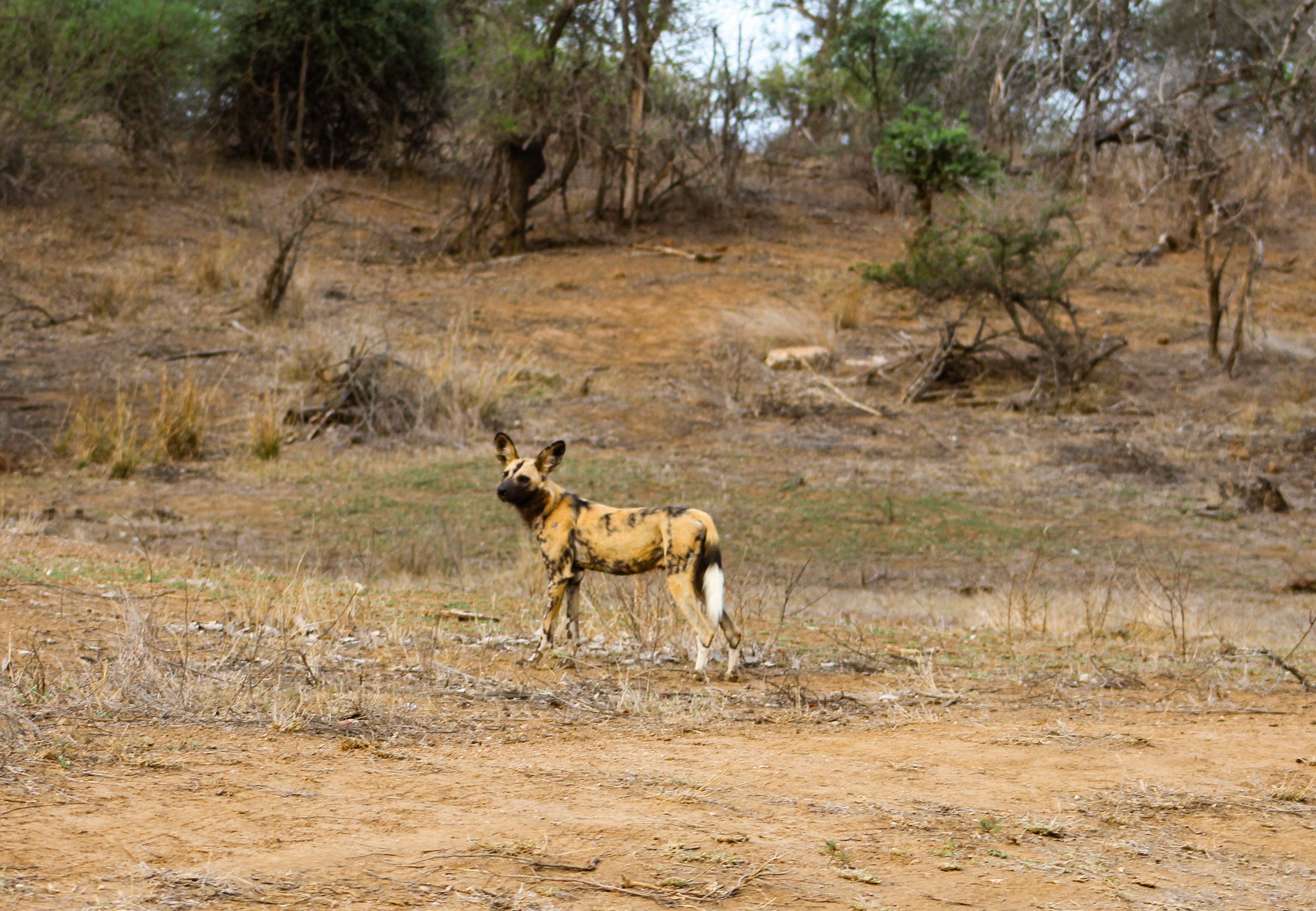
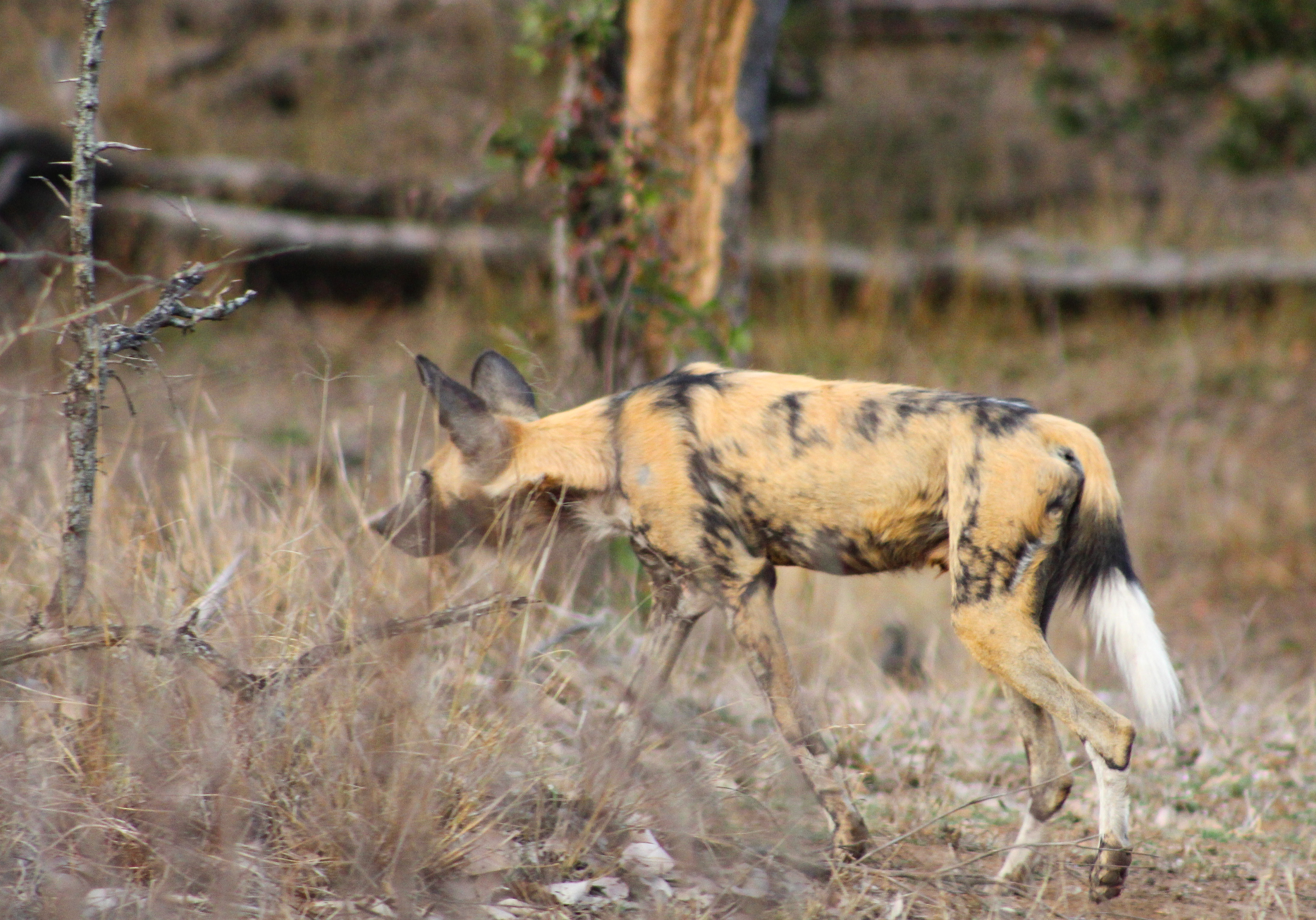
Amazing sighting of a large pack of wild dogs, getting ready for an evening’s hunting
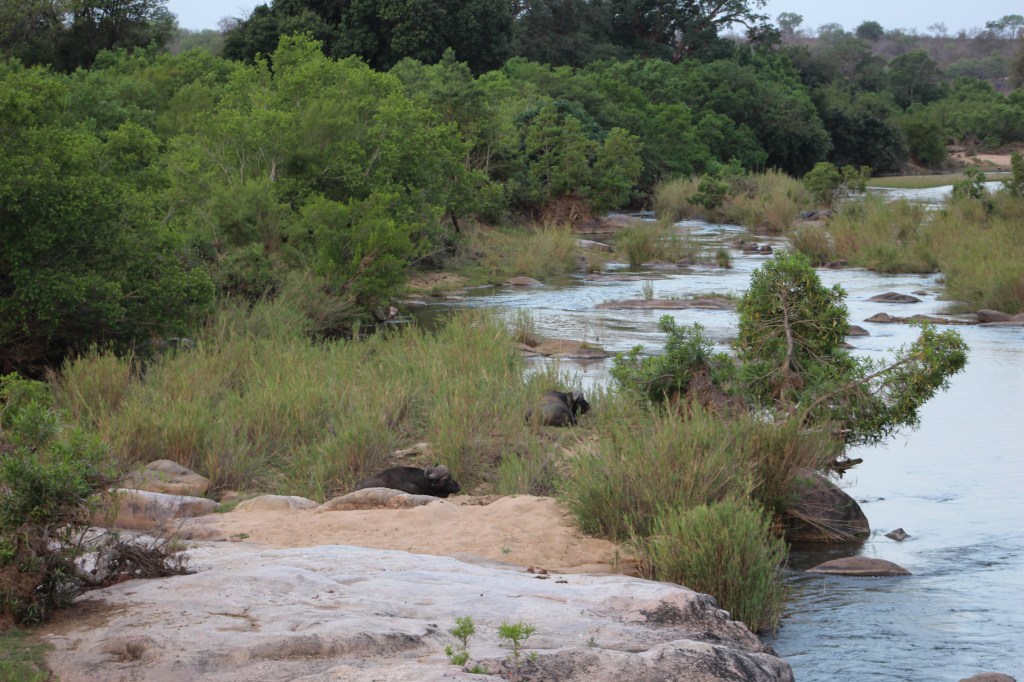
We drove further along the H4-1 towards Lower Sabie but only as far as the low bridge over the river about 15 kilometres from Skukuza. From the bridge we had a beautiful view of the sun going down in the west towards Skukuza and on the other side on a small island in the river, two old buffalo were lying peacefully enjoying the cool grass and running water.
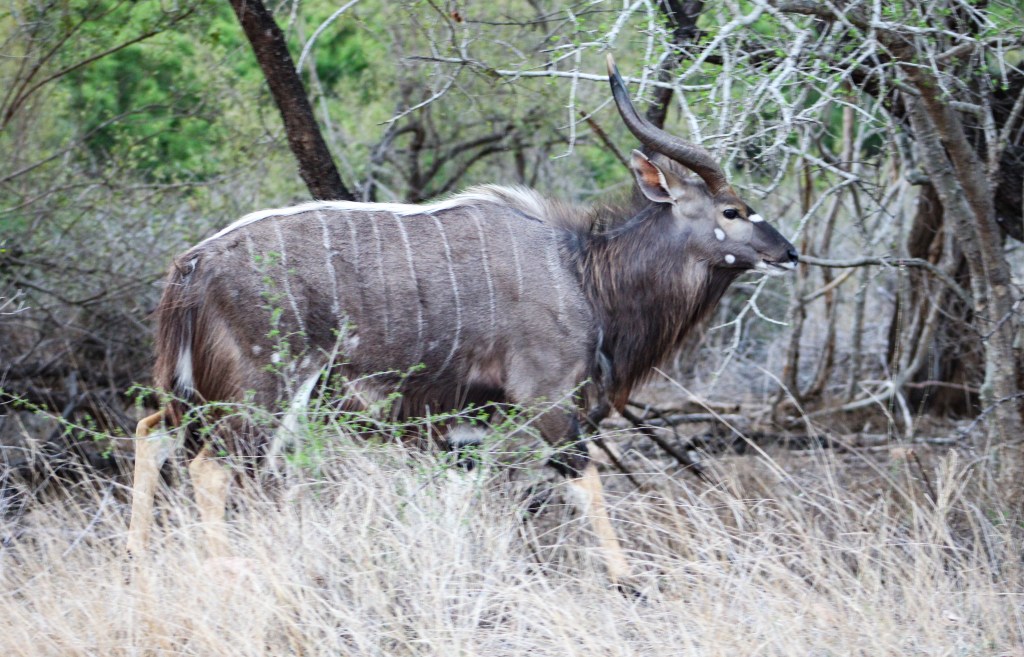
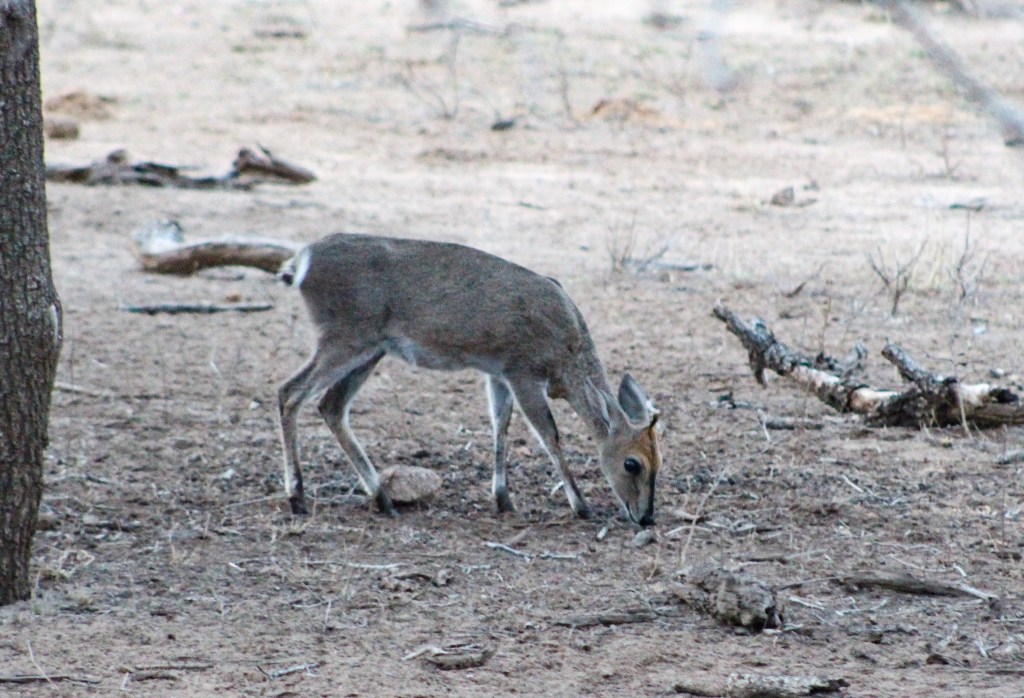
From there we headed back towards camp, passing a large, handsome nyala bull and a small duiker feeding quietly by the side of the road.