Part 1 Civitavecchia: Italian cruise port
We flew from London to Rome Fiumicino on a Saturday afternoon, hoping to give ourselves a day to visit old haunts in Rome, but staying in Civitavecchia, a city about 60 kms northwest of Rome on the Tyrrhenian Sea.
We had booked a small hotel fairly close to the cruise terminal so it would be easy to get there on Monday to join the cruise. The hotel sent a taxi to meet us at the airport and it was a nostalgic trip up the coast – one we had done many times during our 16 years in Rome.
The little hotel, called La Lanterna sul Como, was very comfortable and the owner was extremely welcoming and hospitable and spoke perfect English, which was a help as our Italian is rather rusty! The hotel was in a quiet area out of the main shopping area but within easy walking distance of the old town and the centre, as well as the port.
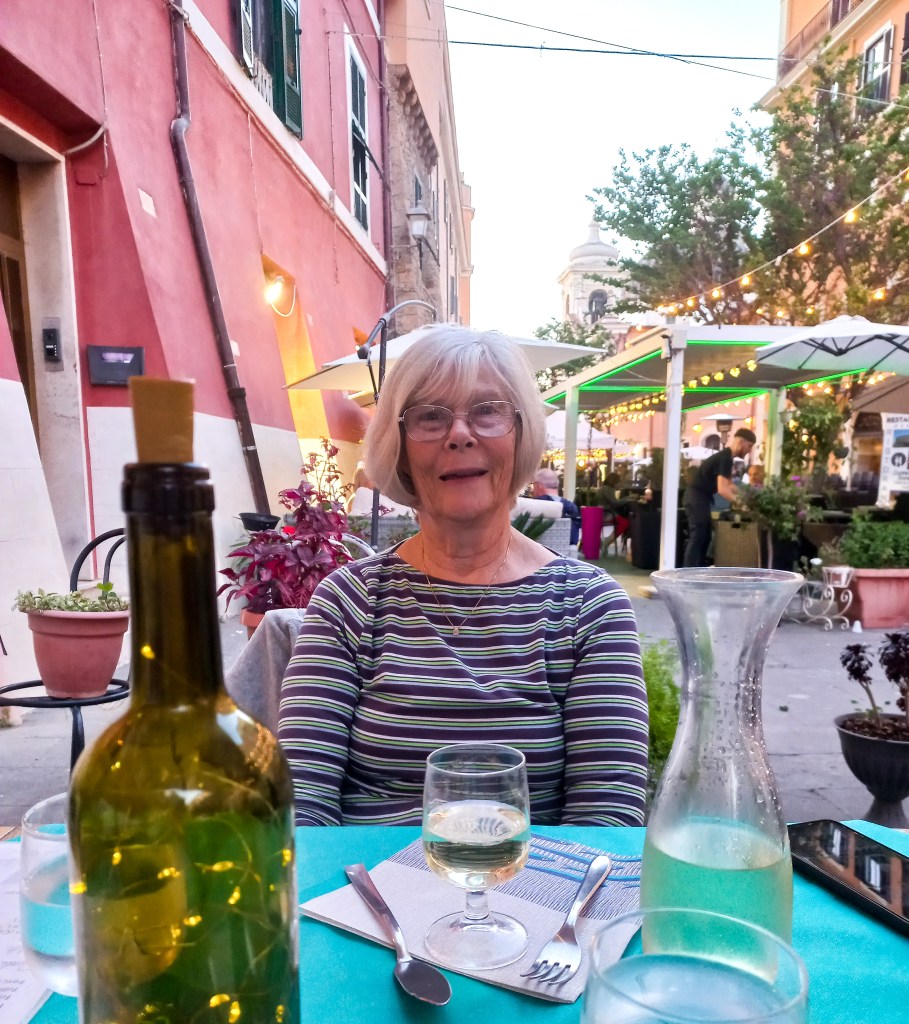
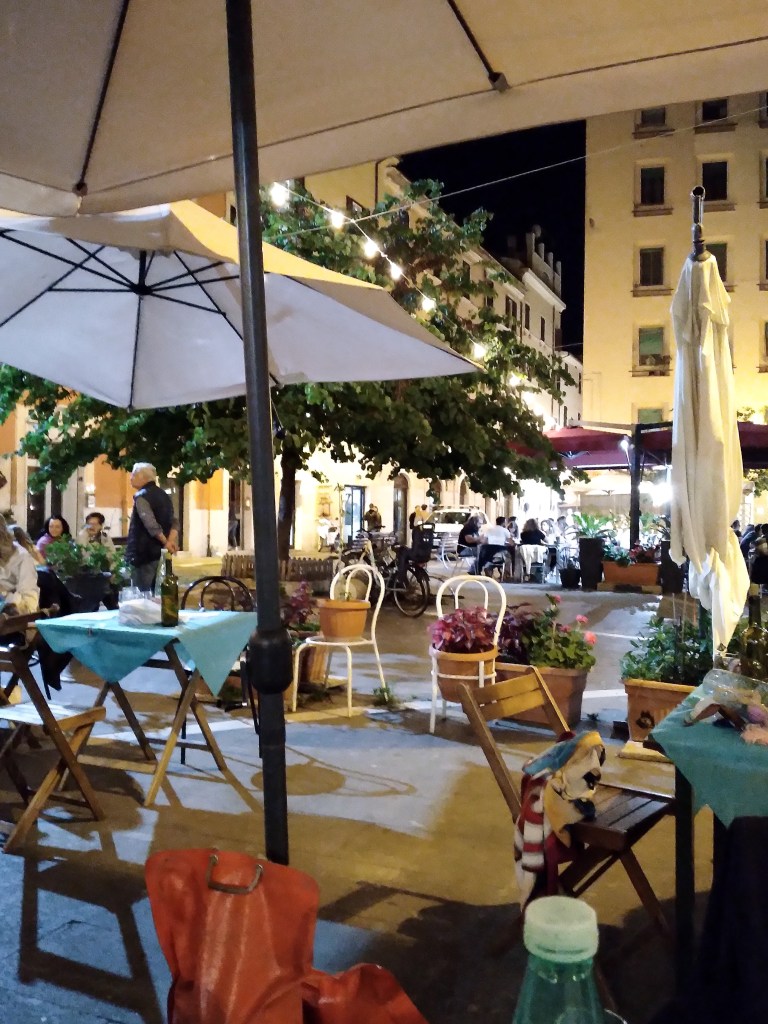
In the evening we walked down to the old part of the town to find a restaurant. The main street in the old town was lined with places to eat – as the weather was getting warmer most had tables set out on the street itself. We had to walk up and down a couple of times before we decided which one to choose! We had a simple pasta and a carafe of white house wine sitting outside in the piazza watching Italian life unfold as the evening got darker.
The next morning we enquired how to get to the station to catch a train into Rome. It turned out to be a pleasant walk down to the seafront and along the main street to the station. But when we got there, we realised that that there were a lot of people milling around not seeming to be able to go anywhere. We were also puzzled because the bar, where we had been told to get tickets from, refused to sell them. We went into the stations ticket office and were warned not to buy tickets as the trains were running very late. Eventually we worked out that there had been a sad incident on the tracks at another town on the way to Rome and the line was closed. Nobody was able to tell us when the line would reopen so eventually we walked back to the centre of Civitavecchia and decided to make the best of exploring the town. It turned out to be the right decision as the line didn’t open until late that evening and the owner of the hotel had to drive into Rome to fetch his girlfriend as no trains were running from Rome to Civitavecchia either.
In the 16 years we spent in Rome, we had only been to Civitavecchia once and that was to catch a ferry to Sardinia. We drove there as we were taking the car across on the ferry so didn’t see anything of the city itself. Occasionally, when we drove further north to Monte Argenteria, we drove passed the city but no more than that. So perhaps it was fortuitous that we had to take some time to see some of the sights.
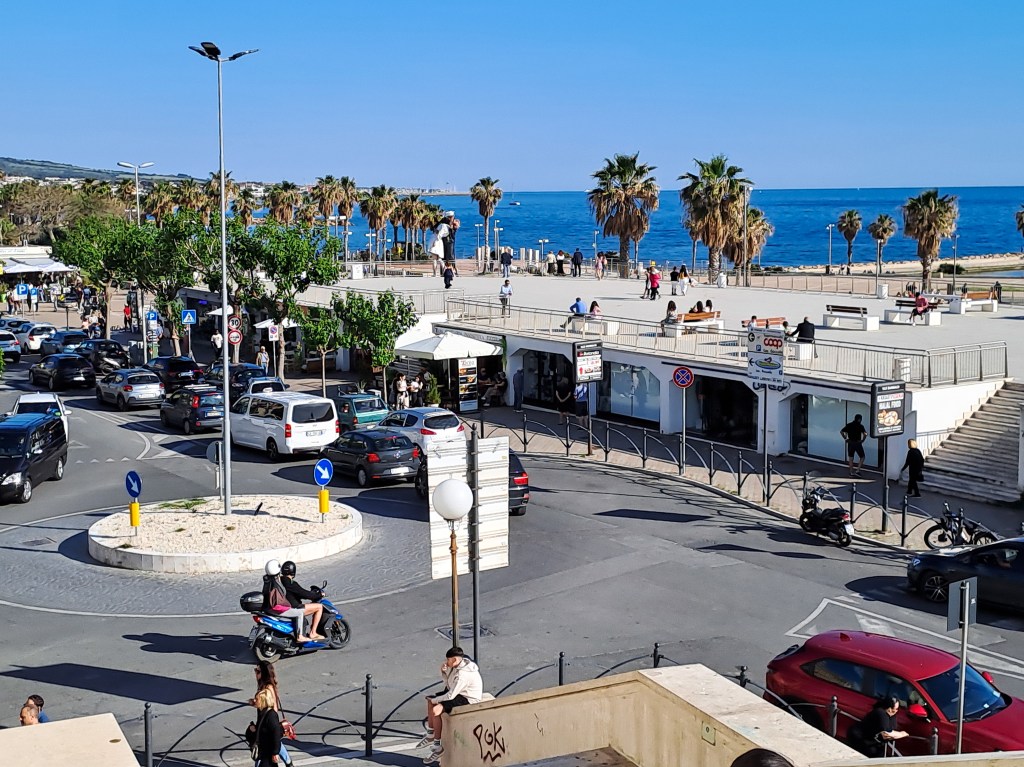
It was a beautiful warm spring day so ideal for strolling round, starting with the beach area on the way back from the station. We noticed a very large statue on the beach front, of a sailor kissing a girl, dressed in nurse’s uniform. Several people were lined up to take photos in front of the statue.
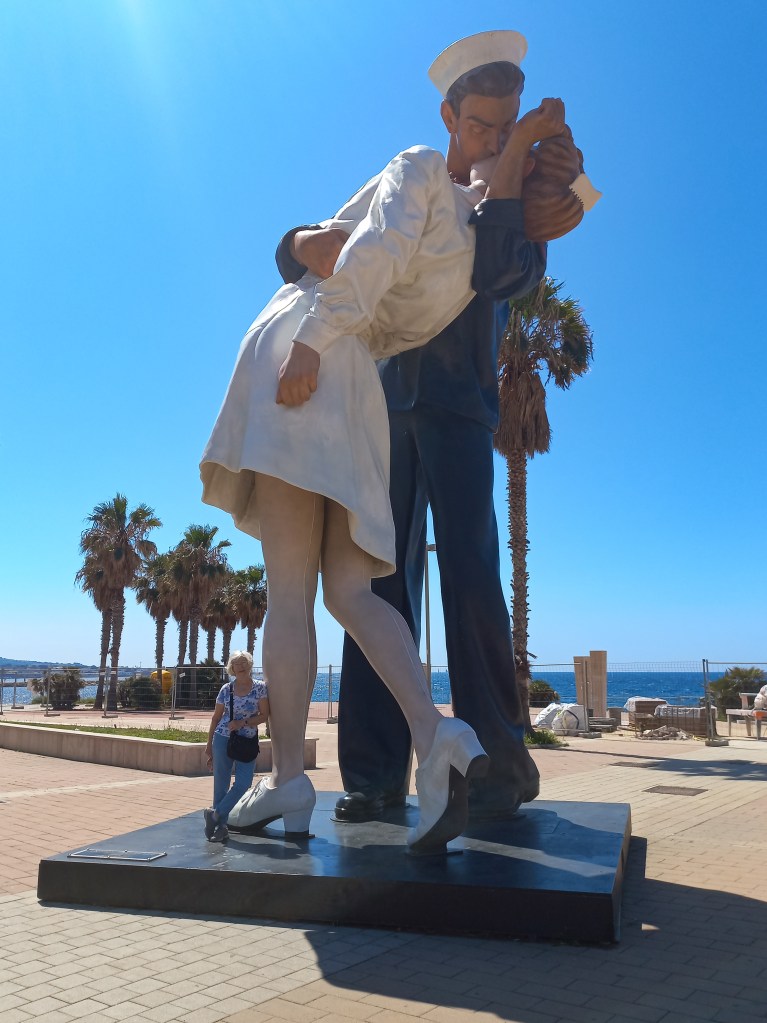
We wondered what significance the statue had and later learned that it was one of several erected in various parts of the world. Seward Johnson is the creator and he made a series of computer-generated statutes based on a World War 2 photograph of a sailor kissing a girl in Times Square, New York on V-J Day. The first statue was erected in Sarasota, Florida and initially these statues were entitled Unconditional Surrender. The statues have encountered controversy in several different ways – they were often criticised as being cheap, cartoon-like and not really art. They were also felt to be inappropriate and could suggest sexual predation. In 2012 a version of the statue was erected in Civitavecchia but in 2014 it was taken down and reinstalled in Caen, Normandy, leading to demonstration’s and protests against its dismantling in Civitavecchia. A French feminist group, however, objected to the statue in Caen and demanded that it be sent back to America! At some point the statue returned to Civitavecchia, where it stands overlooking the sea and a short walk from the cruise terminal. Johnson now identifies the statues as Embracing Peace, a tongue-in-cheek way of answering his critics perhaps!
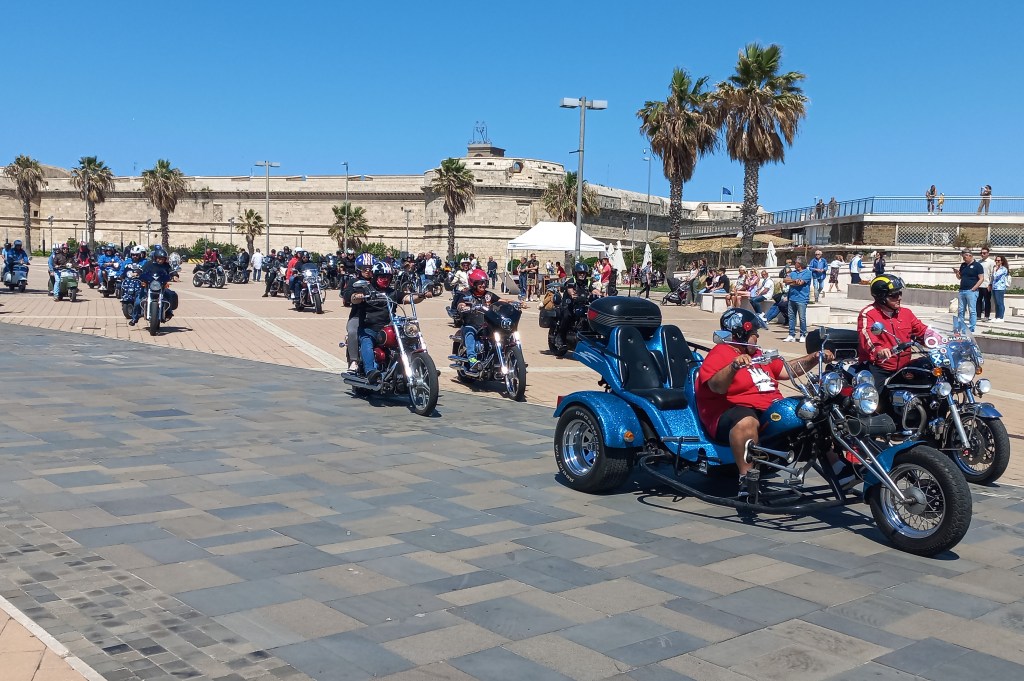
Almost next to the statue was a huge gathering of motorcycles, motorini, Vespas and their riders, all lining up to begin some sort of parade. Gradually they all began to move off one following another. We watched them process slowly around the main streets for a while with much hooting and fanfare.
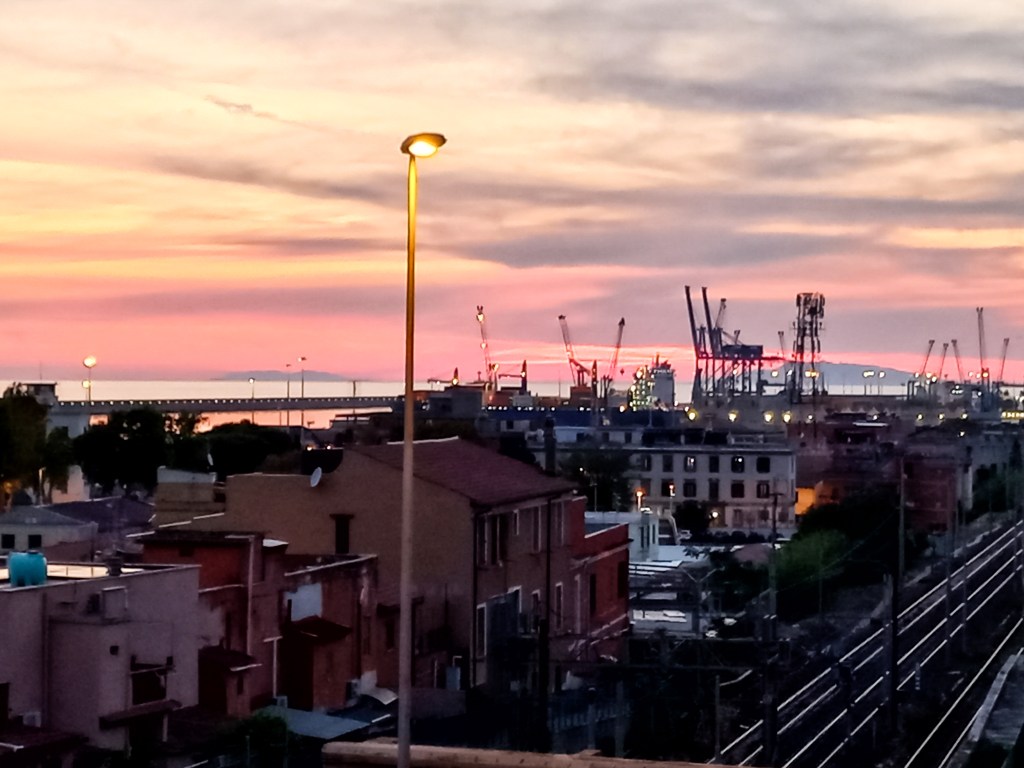
By this time it was almost lunch time so we walked back up the main street, stopping of for a coffee and a cornetto at a bar before finding a small supermarket to buy some salads to take back to the hotel. On the roof top there was a pleasant shaded terrazzo with views of the city and port. We enjoyed a relaxing lunch there before heading down to our room for a nap.
Once it was a bit cooler we headed out again to explore a bit further. We made our way down to the historic port of Civitavecchia and the Fort of Michaelangelo.
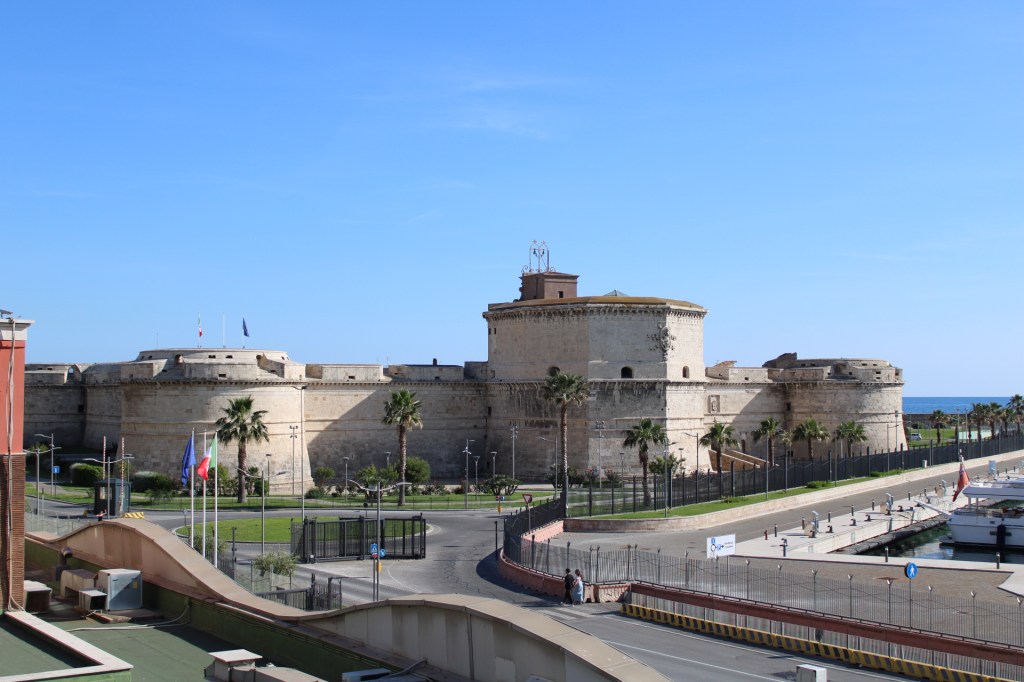
The history of the city goes back much further than the 16th century fortress commissioned by Pope Julius II. A small settlement occupied by the Etruscans is thought to have existed in the 6-7 centuries BC. Later it became an important port in Roman times. In the 2nd century AD, the Emperor Trajan made the harbour much bigger and by the 4th and 5th centuries it became even more important because the port of Ostia at the mouth of the Tevere river became silted up. Today the port is regarded as the cruise terminal for Rome and also the ferry port for ferries connecting Sardinia with the mainland of Italy.
The Fort of Michaelangelo is enclosed in the port area but by walking along the walls above the fort, you get a better view of it and can see the full extent of the fortress.
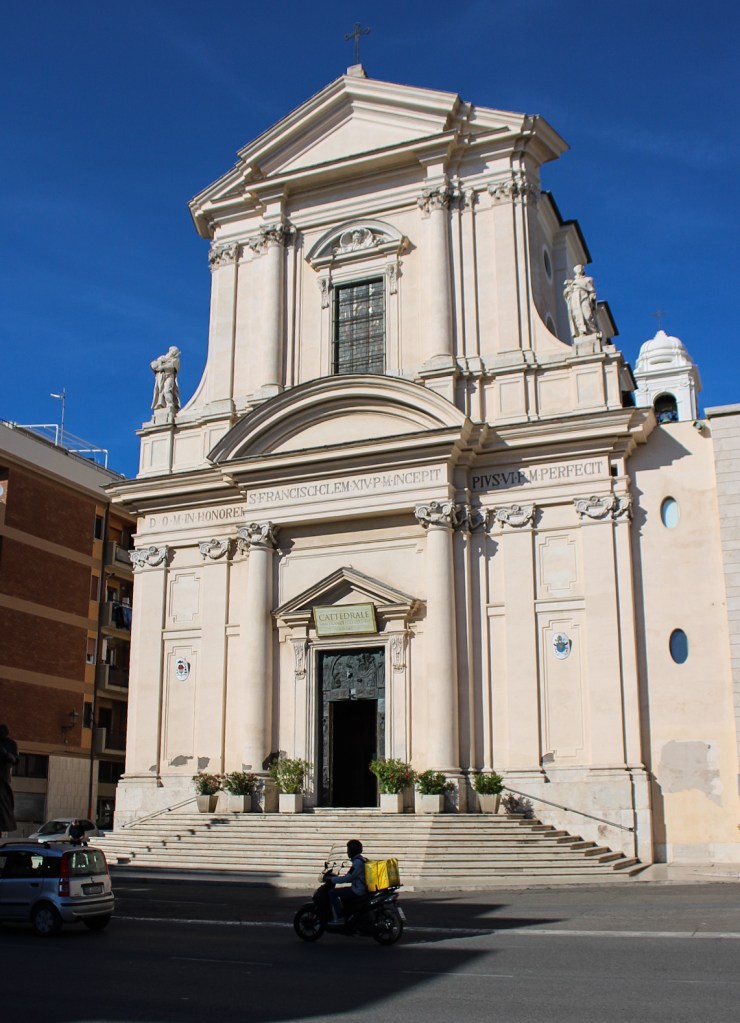
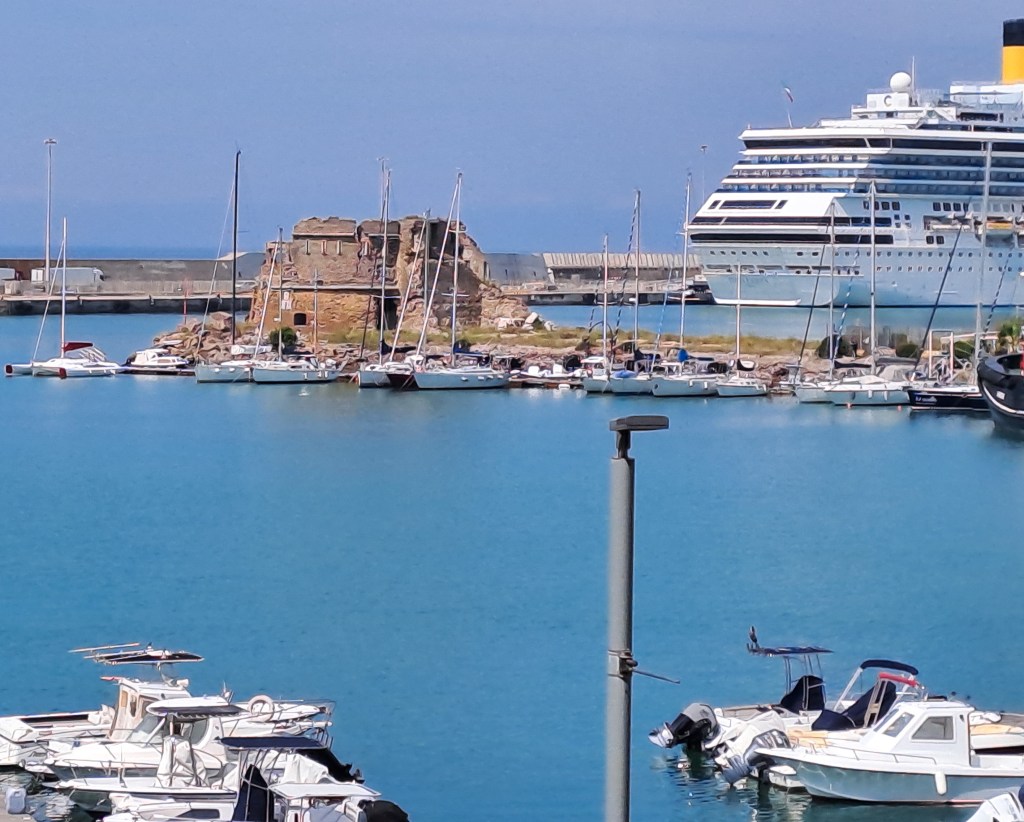
Out in the port itself an even older structure can be seen. This is the remains of the tower of Lazzaretto, probably built during the time of Trajan and most likely served as a lighthouse. Close to the entrance of the port is the main cathedral of Civitavecchia, Cattedrale di San Francesco. Originally built in the 17th century and extensively rebuilt in the 18th century, the church suffered much damage during the second world war. It was restored in the 1950s. Two big statues, one of St Francis and the other St Antony of Padua, stand high above the entrance façade.
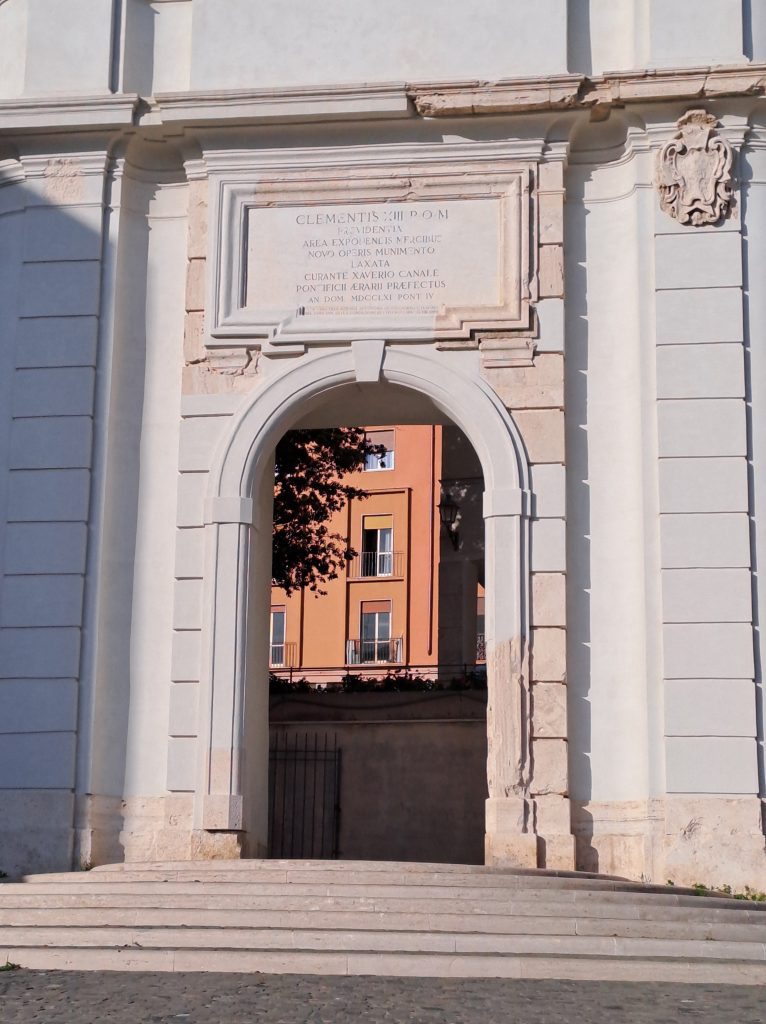
We also walked into the port area and alongside the massive defensive walls passed the Fontana del Vanvitelli to the Porto Livorno, built in 1761 at the request of Pope Clemens XIII, and is a gateway from the port to the northern part of the city.
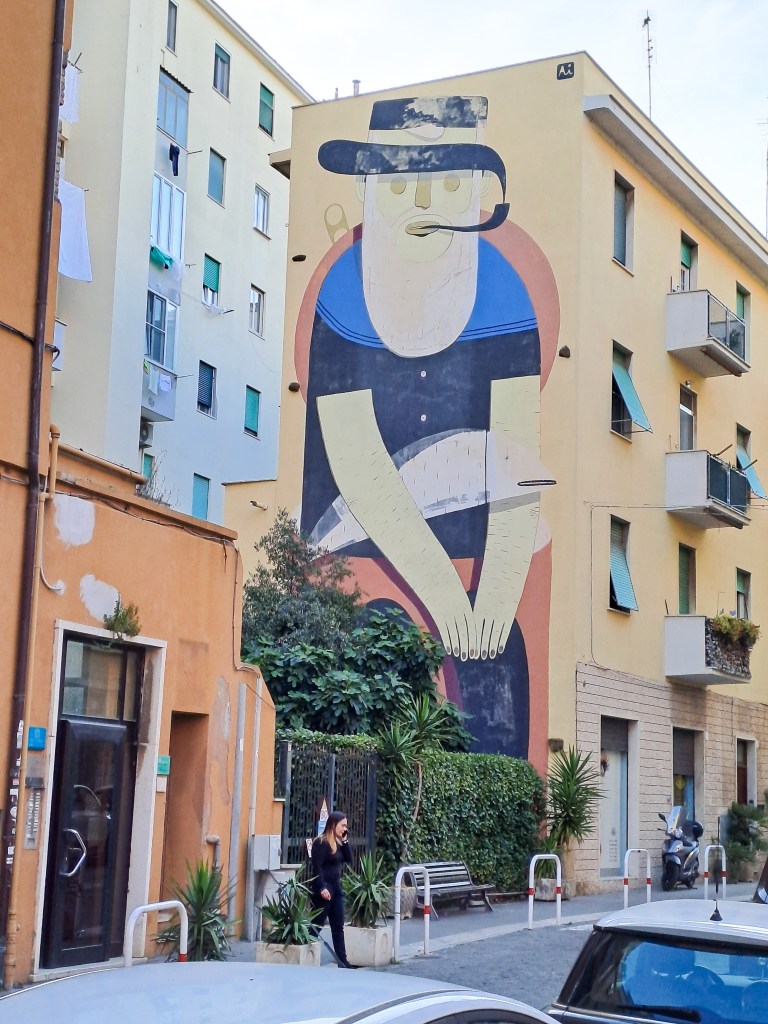
By now it was time to head back to the old part of the city to decide on which restaurant to choose for dinner this evening. First we walked along one of the main streets and spotted some colourful murals, painted of the walls of apartment buildings.
We also noticed what looked like part of old fortifications which seemed to form the cornerstone of another apartment building.
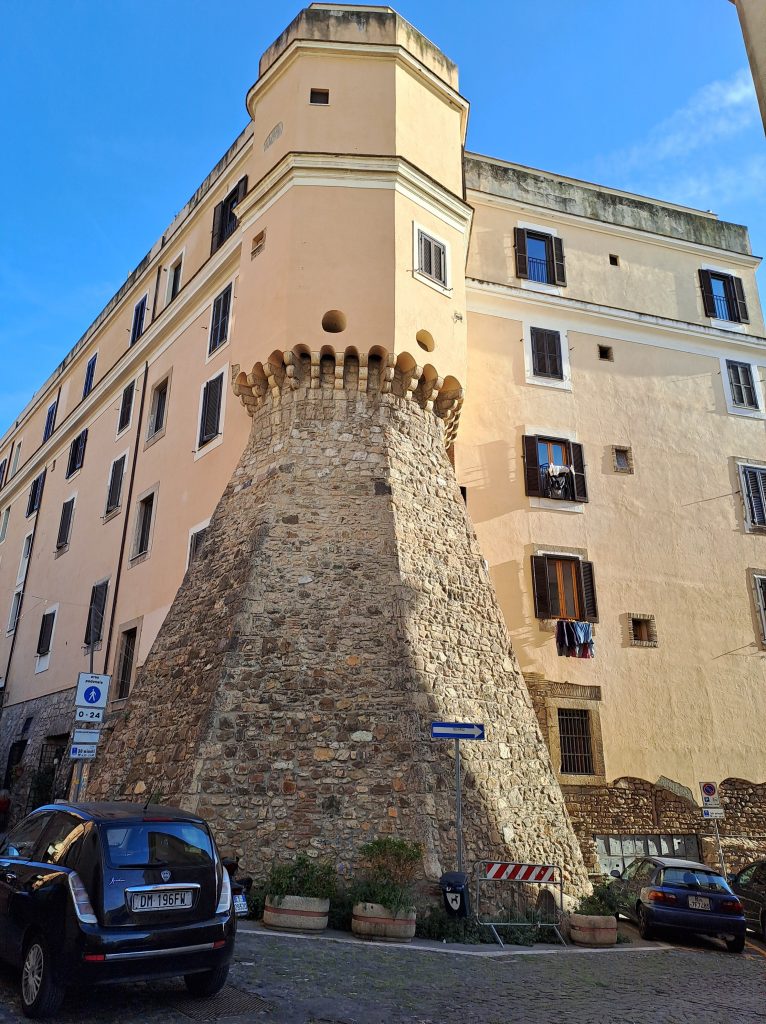
The first piazza we came to in the Old Town is Pizza Leandra where the small church of the Star can be found. There is also a small arched passage way from this piazza through to the one above.
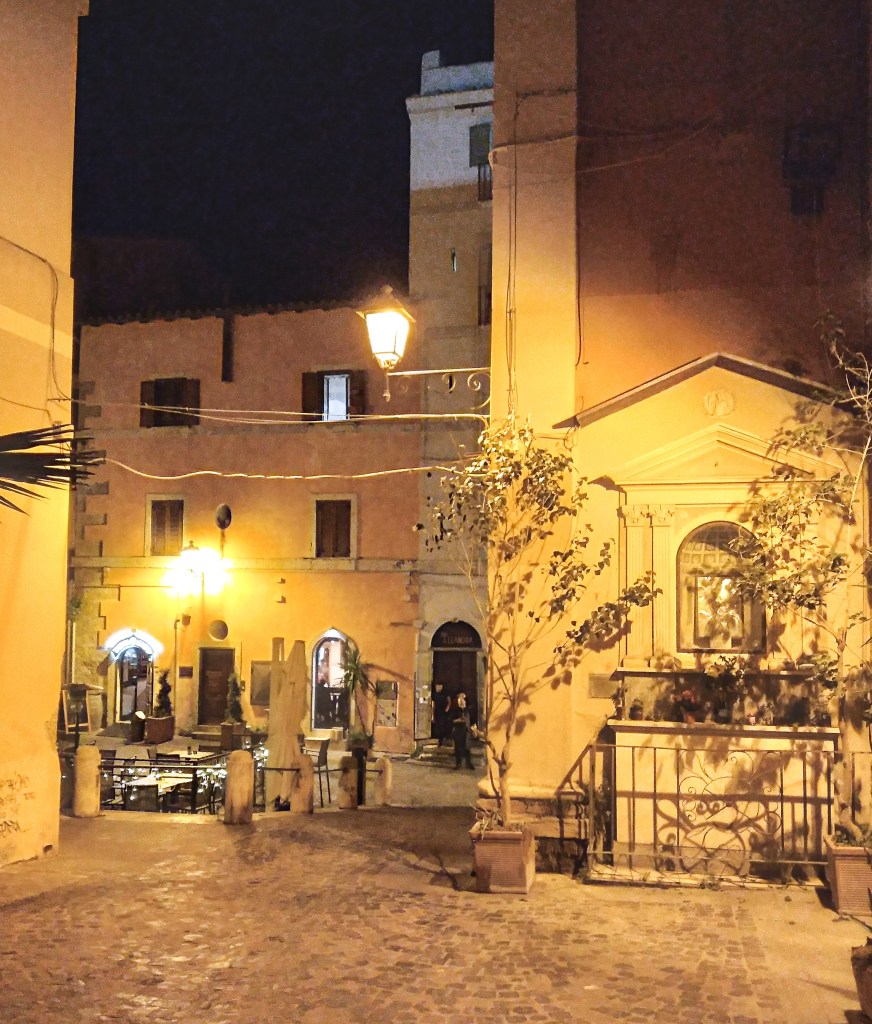
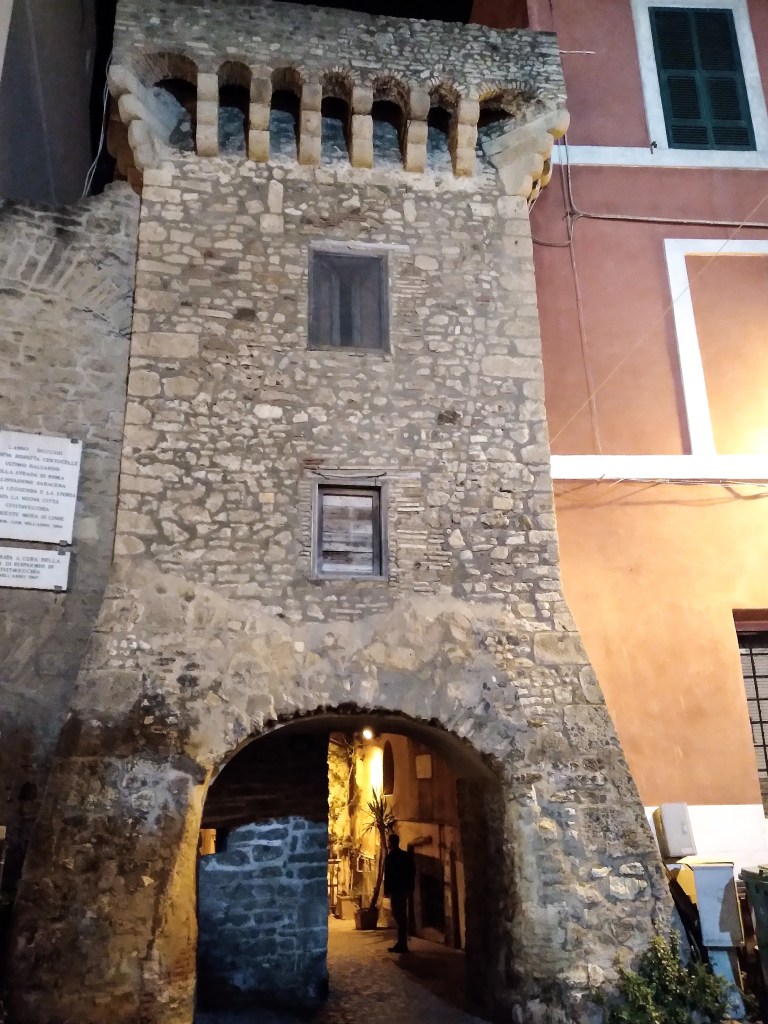
It is called the Archetto and runs under the old city walls. From this passage you get to Piazza Aurelio Staffi, where most of the restaurants are.
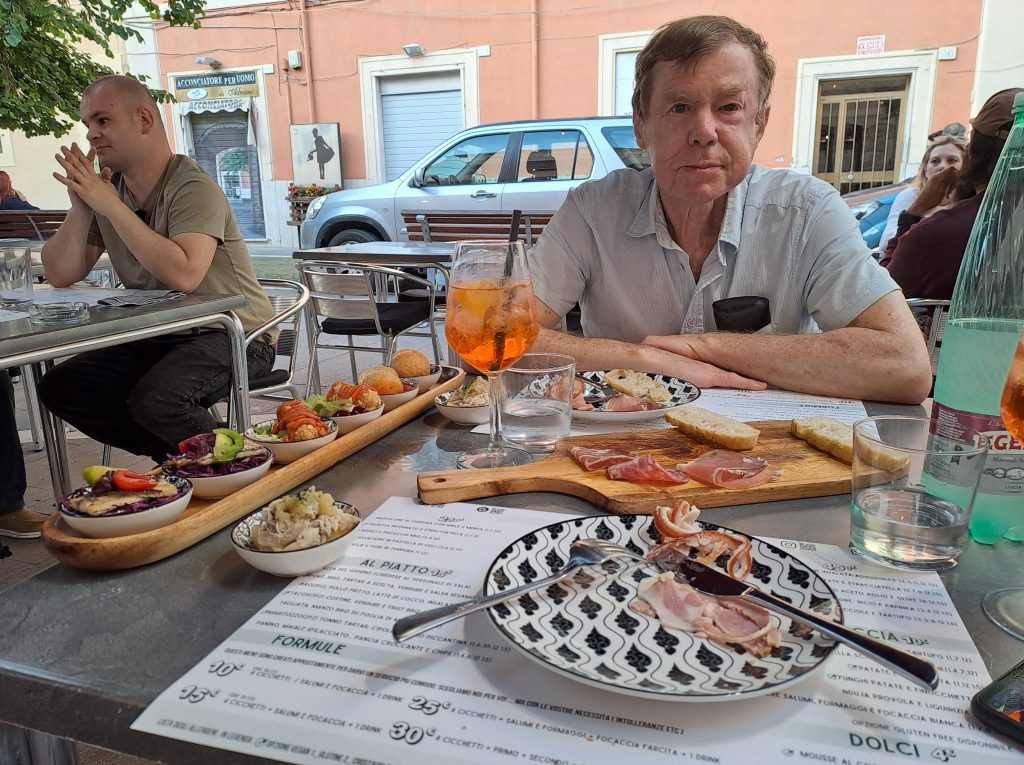
This evening, instead of doing classic Italian again, we chose an Italian/Asian fusion restaurant called Otto Zero. This was on the recommendation of the owner of the hotel. We were not disappointed. We had a mixture of tapas-like dishes, mainly seafood, recommended by the waiter, as well as the more traditional aperitivi of proscuito and cheeses and of course some local wine.
As it got dark we wandered back to the hotel, catching a glimpse of the huge bulb shaped dome of the Church of St Mary of the Prayer, also known as the Church of Death. It is the oldest church in Civitavecchia.
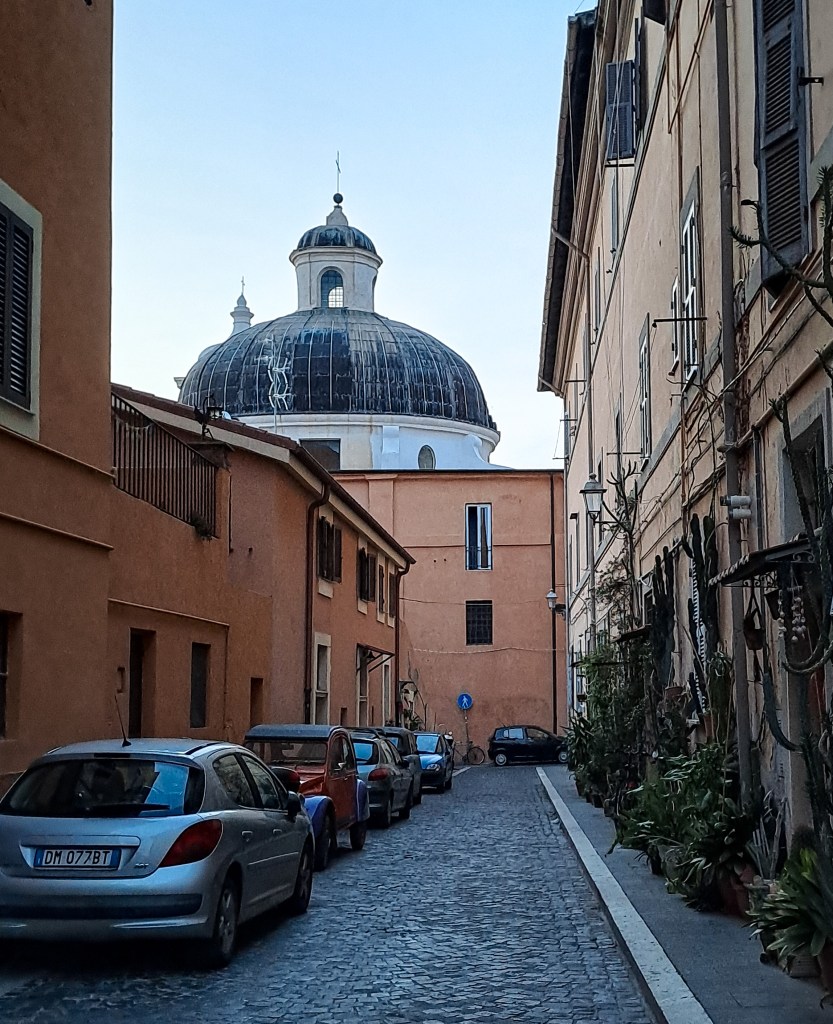
Once back at the hotel, we went up to the terrazzo on the roof to admire the view of the city and port at night.
As the cruise was not due to leave until late afternoon, we had a leisurely breakfast, finished off the packing so we could leave the room free and store our suitcases downstairs before taking a walk down to the beach front for another cappuccino at one of the beachside bars.
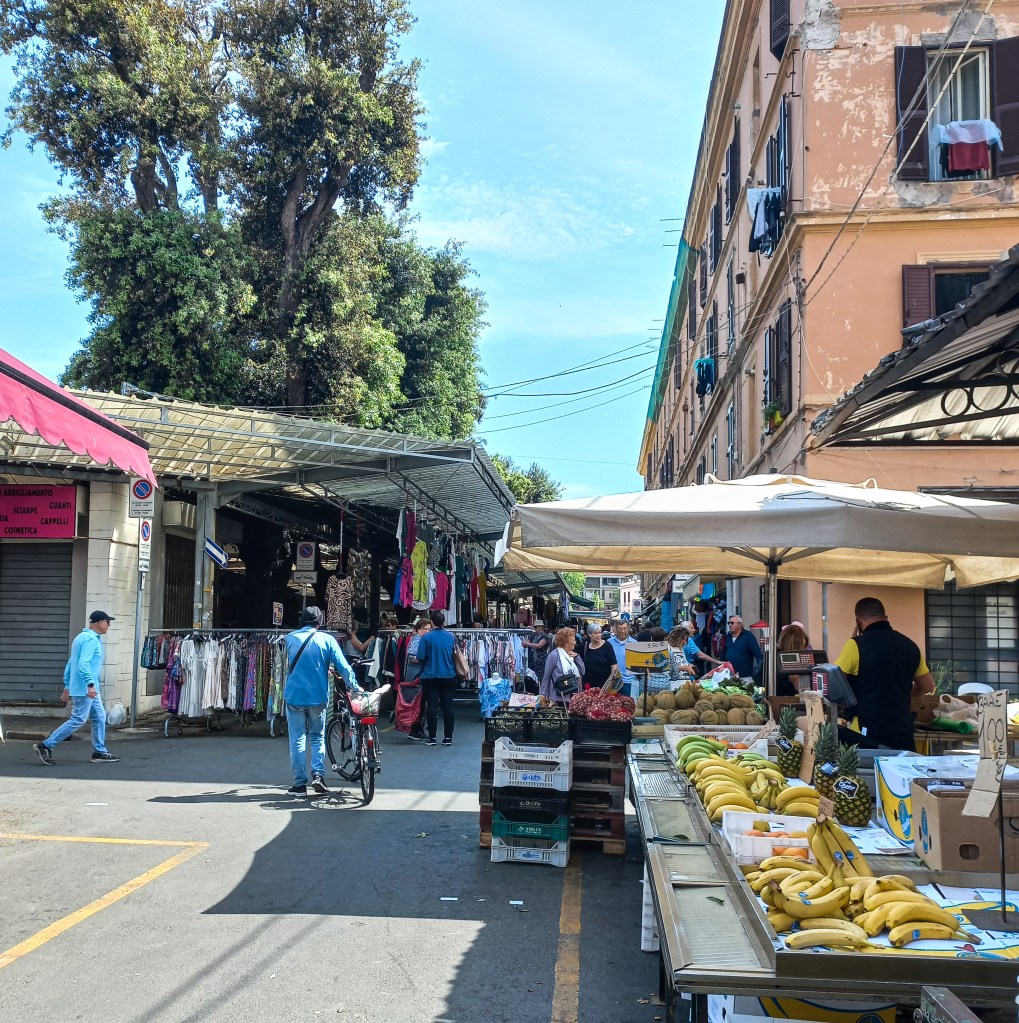
After coffee, we walked back into the main part of town to look for the Civitavecchia market somewhere in the back streets. Italian markets are always lively, busy places and this was no exception. There were stalls selling fresh meats, others selling cured products like prosciutto and salami, yet others selling fresh vegetables and fruit. There was a whole room selling fresh fish, although not much had arrived yet as it was early in the day. A huge covered area was devoted to colourful clothing for men, women and children as well as a huge variety of household goods. Many Italians are still fairly traditional and buy most of their daily needs at markets and this was obviously no exception, judging by the number of people queuing up at the various stalls.
We then wandered down to the port area, climbed the steps up to the walkway above the old walls and looked to see if the Queen Victoria was already berthed in the harbour. There were several cruise ships in port but we were able to pick out the Queen Victoria berthed on the furthest arm of the harbour and easily distinguishable by her large red funnel.
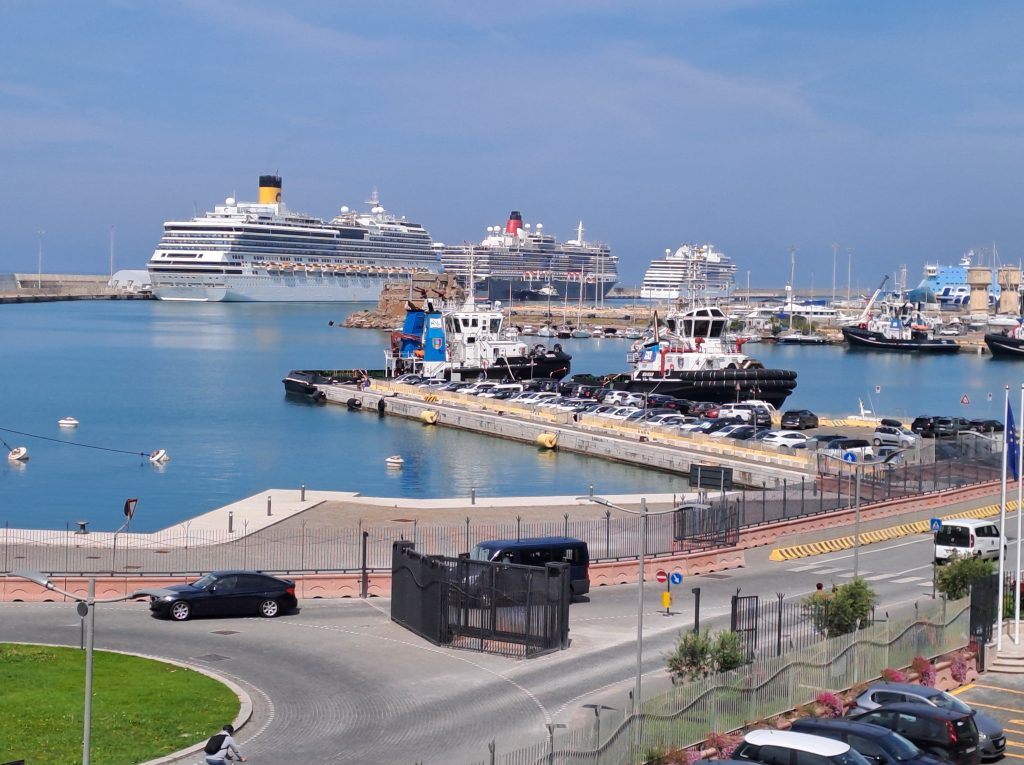
We also had a good view of the Tower of Lazzaretto on the spur of land separating the small boat harbour from the cruise port.
Now it was time to head back to the hotel, collect our luggage and walk down to the Civitavecchia transport terminal from where a bus would take us out to the cruise ship.
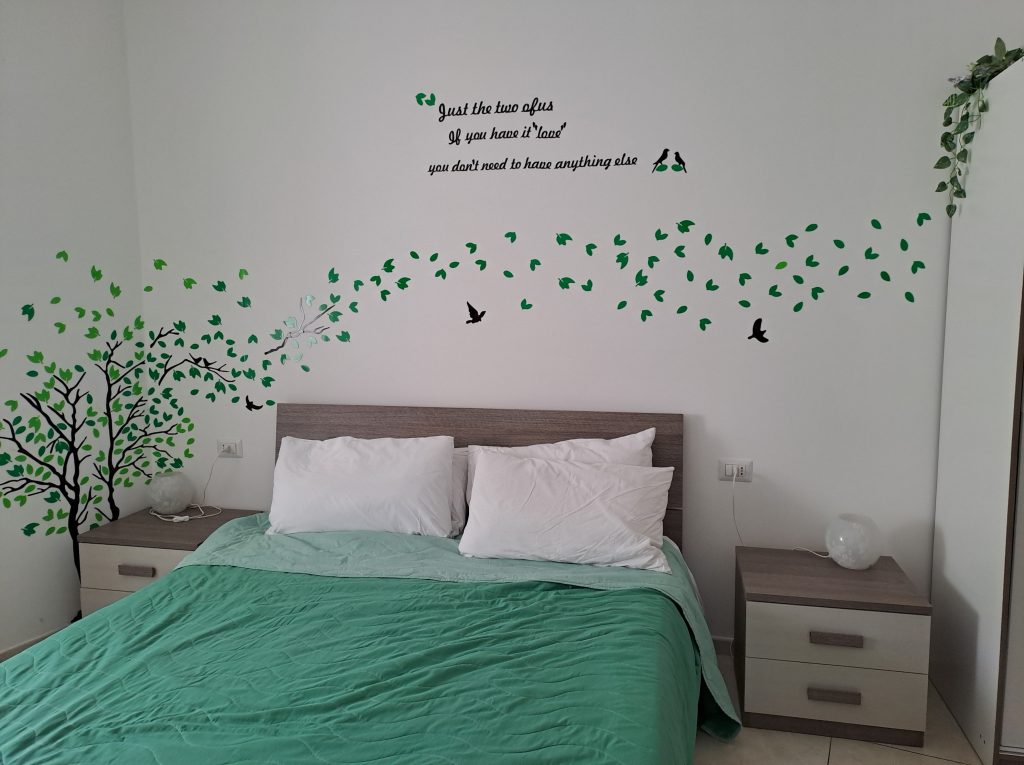
A last look at our hotel room – quite simple but beautifully decorated. To be recommended!

